Philip Morris International U.S. CEO: Nicotine has "cognitive benefits"

Add Axios as your preferred source to
see more of our stories on Google.
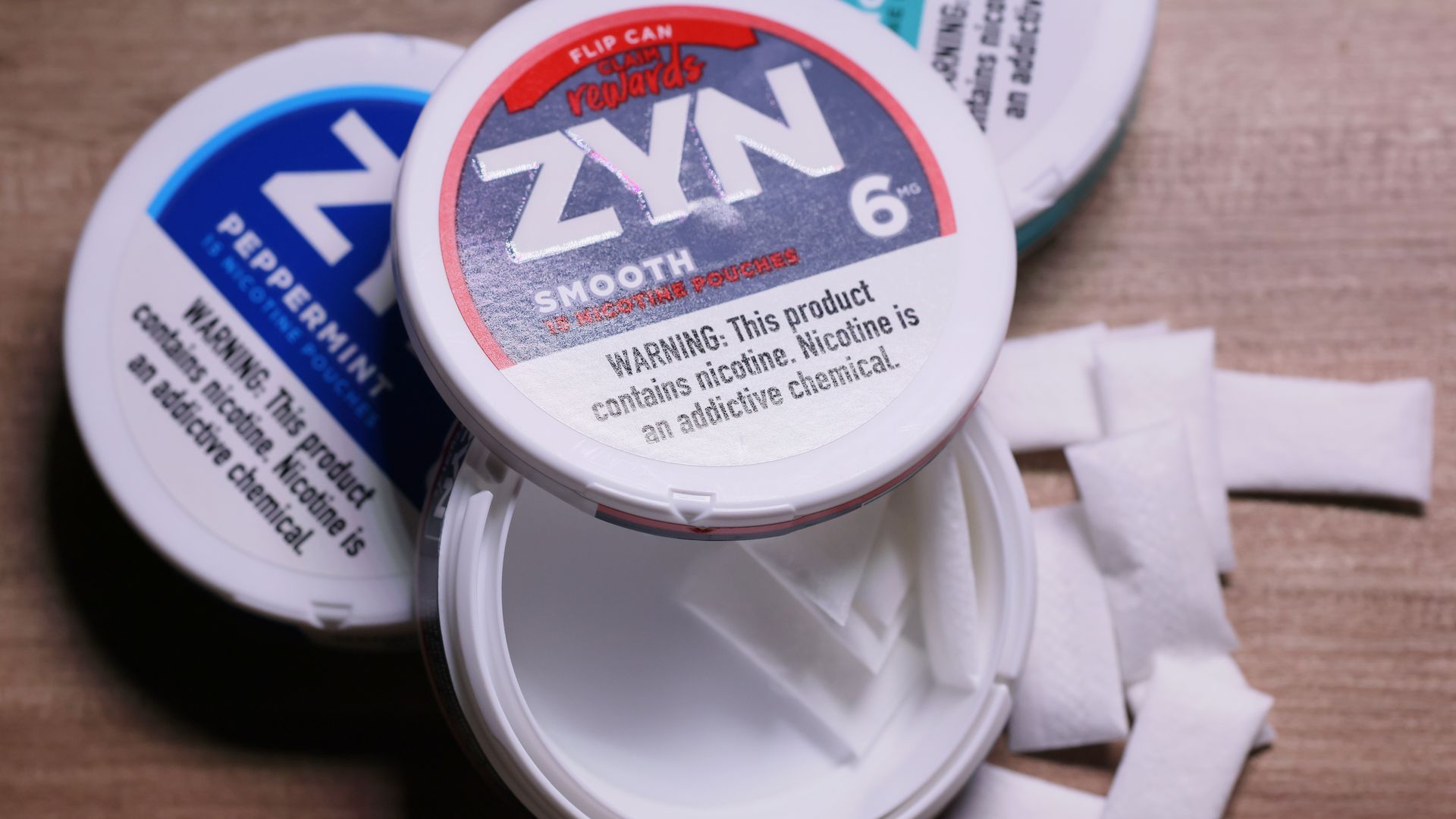
Zyn nicotine are soaring in popularity. Photo: Michael M. Santiago/Getty Images
The CEO of Philip Morris International's U.S. business argued that nicotine is "misunderstood" and contains "cognitive benefits," contending that American regulators should embrace smoking alternatives as the company pursues its goal of eliminating cigarette sales.
Why it matters: The Trump administration is shaking up the federal government, putting newly appointed Health and Human Services Secretary Robert F. Kennedy Jr. in a position to reshape the regulatory framework for Big Tobacco if he wants to.
The big picture: Sales of PMI's Zyn nicotine pouches are skyrocketing in the U.S., where the company is investing heavily in new manufacturing to keep up with demand.
- Shipments of PMI nicotine pouches in the Americas rose 53.8% in the first quarter of 2025, compared with the same period a year earlier. The company got 42% of its revenue from smoke-free products in the quarter, up from 25% a year earlier.
- PMI — which sells cigarettes outside of the U.S. but does not sell them here — still gets a majority of its revenue from smokers, but that's likely to flip soon as Zyn sales continue to grow. (PMI split off from Philip Morris USA owner Altria Group in 2008. Their deal called for Altria to sell Marlboro cigarettes in the U.S., while Philip Morris International would sell them in other markets.)
Zoom in: Stacey Kennedy, CEO of PMI's U.S. division, told Axios in an interview that the company is "very hopeful that new FDA leadership" will be "amping up the communication to smokers and the rest of society about the risk of smoking and the alternatives that are vastly better." (Stacey Kennedy is not related to RFK.)
- "You have to be able to separate out the misconceptions of what causes harm — and nicotine is probably one of the most misunderstood compounds, because many people believe that nicotine is responsible for smoking-related disease, and it's not," she said. "It's not a carcinogen, and nicotine is not the primary cause of smoking-related disease."
Yes, but: Nicotine is addictive — and tobacco industry watchdogs say products that contain nicotine, such as pouches and e-cigarettes, can serve as a gateway to smoking, especially for teens.
- "Tobacco companies have a long history of lying to Congress and the public about the addictiveness of nicotine, so they're not a credible source of information about nicotine," Yolonda C. Richardson, CEO of the Campaign for Tobacco-Free Kids, tells Axios in an email.
- "These comments by Philip Morris International show they haven't changed and continue to mislead the public today. The scientific evidence is clear that nicotine is a powerfully addictive drug that often leads to lifetime use of tobacco products that causes enormous harm to human health."
Stacey Kennedy said the decline in cigarette usage among Americans — youth tobacco usage hit an all-time low in 2024, according to the CDC — tells a different story.
- "Tell me how it can be a gateway to smoking when cigarette smoking volumes continue to decline in the United States," she said.
- She acknowledged that nicotine addiction is a reality but noted that Americans have a wide range of addictions: "There's actually some cognitive benefits in nicotine — and while addictive and not risk free, it's certainly by no means among the most harmful addictions that Americans face."
State of play: In the final days of the Biden administration, PMI scored a big victory when the FDA authorized the marketing of 20 Zyn nicotine pouch products after an extensive scientific review.
- Sales of Zyn were already soaring before that approval, prompting PMI to run a Kentucky factory around the clock and invest in construction of a new $600 million Zyn plant in Aurora, Colorado.
- Matthew Farrelly, director of the Office of Science in the FDA's Center for Tobacco Products, noted in the FDA's announcement about Zyn's marketing approval that "the data show that these nicotine pouch products" are "benefiting adults who use cigarettes and/or smokeless tobacco products and completely switch to these products."
The intrigue: There's new leadership in place at HHS and the FDA — and they've said little about their approach to tobacco and nicotine product regulation so far.
- An HHS spokesperson told Axios that the FDA's "position is centered on reducing the harm caused by nicotine addiction — particularly through combustible tobacco products like cigarettes — while exploring strategies to make less harmful alternatives available to adults who are trying to quit smoking."
- "Nicotine itself, while addictive, is not the primary cause of smoking-related disease and death. Those are caused by the thousands of harmful chemicals in combustible tobacco," the spokesperson said.
- The FDA is "working to reduce nicotine levels in cigarettes to minimally addictive or non-addictive levels, aiming to prevent youth initiation and help current smokers quit."
Joanna Cohen, director of the Institute for Global Tobacco Control at the Johns Hopkins Bloomberg School of Public Health, said not enough is known about the "short-term and long-term effects of nicotine products such as Zyn," so it's critical that regulators control promotional efforts.
- "Comprehensively regulating how and where manufacturers can promote these products is an action that is supported by existing research and falls well within policymakers' capacity to implement and enforce," Cohen told Axios in an email.
The big question: Is PMI's stated goal of eliminating cigarette usage achievable?
- Kennedy declined to set a timeline for the goal. "We would say as soon as possible," she said, arguing that the FDA should amplify messages about smoking alternatives.
The bottom line: Industry leaders and watchdogs are awaiting any indication of how the Trump administration might change the federal government's approach to nicotine regulation.
