Google CEO Pichai: AI will be huge part of search

Add Axios as your preferred source to
see more of our stories on Google.
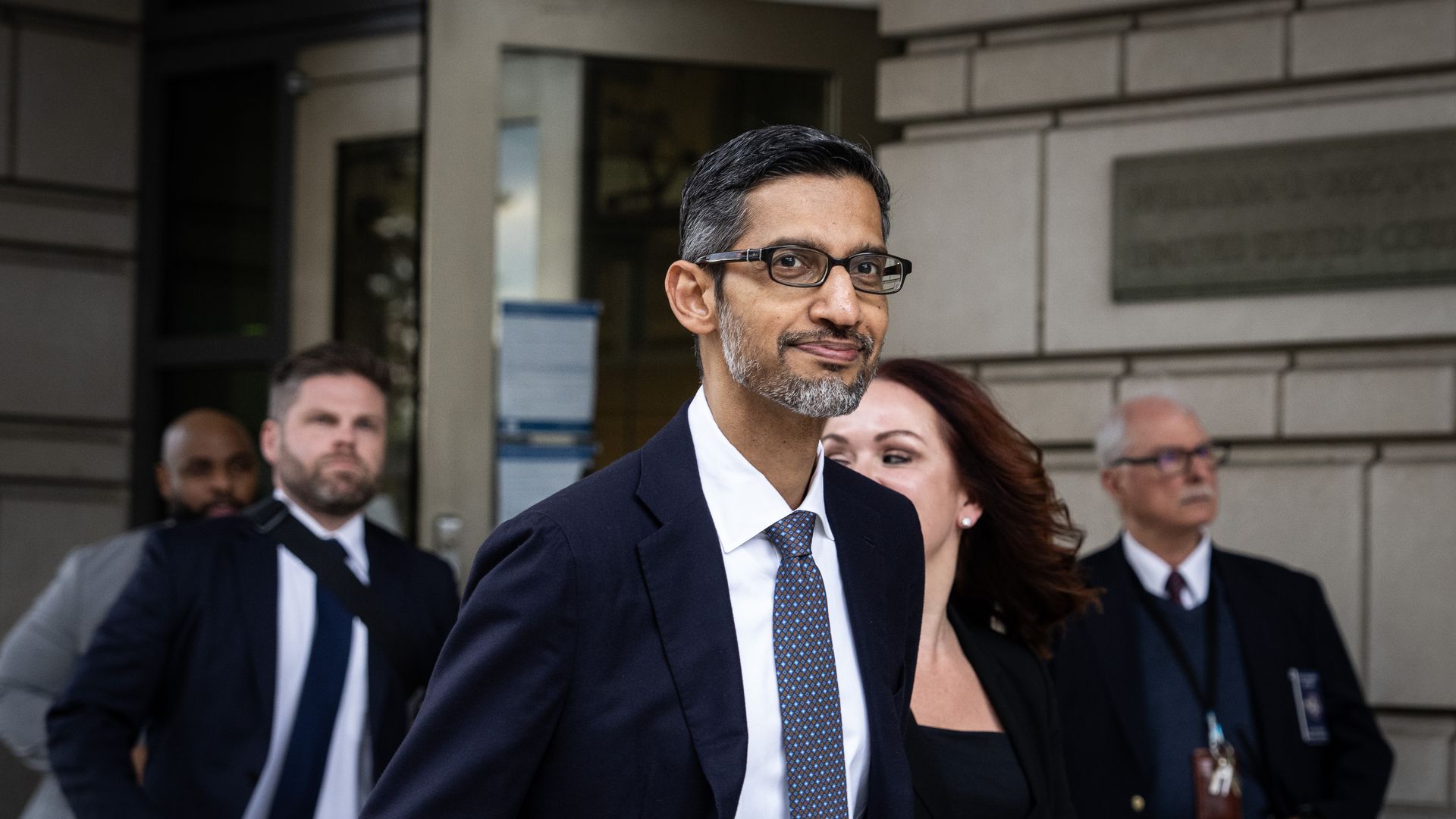
Google and Alphabet CEO Sundar Pichai departs federal court on Oct. 30, 2023, in Washington, D.C. Photo: Drew Angerer/Getty Images
Gemini AI will be a part of paid agreements with other companies to feature Google's products, just like Google Search has been, CEO Sundar Pichai said in federal court Wednesday.
Driving the news: Pichai testified in a federal court in Washington, D.C., as part of the DOJ's search antitrust case against the tech giant.
- That trial is currently in the phase of working out remedies for Judge Amit Mehta's earlier finding that Google is illegally maintaining a monopoly in the search market.
How it works: The DOJ and Google have different ideas for what those remedies should be, and are hashing that out in court. Google disputes that it is a monopoly altogether and plans to dispute Mehta's ruling after the remedy phase is over.
What they're saying: Google attorney John Schmidtlein asked Pichai about Google's investments in AI with its Gemini product, and how it plans on tying it into Google search:
- "We took a very early bet on AI," Pichai said, arguing that Gemini competes with plenty of other generative AI products, including OpenAI. "It expands the type of questions people feel confident asking."
Pichai argued that Google has not shut off other companies' ability to compete in the rapidly growing generative AI space:
- "I think it's one of the most dynamic moments in the industry. There are many companies, both big and small, which are both building models as well as using models to build chatbots or generative AI applications."
Pichai also said Google would experiment with putting advertisements in Gemini search results in the future, and that it was hashing out an agreement with Apple that would offer Gemini AI as an option for inquiries to Apple Intelligence by "the middle of this year."
- Pichai said the DOJ's proposed remedies, which might include spinning off the Google Chrome web browser and sharing data with competitors, would compromise Google's intellectual property along with data security and user privacy.
The intrigue: Originally filed in 2020 under the first Trump administration, the DOJ initially went after Google for its costly agreements with device makers and browsers to favor Google search, which smaller tech companies and browsers have argued completely cut off their ability to compete in the space.
- Now, with the explosion of generative AI and Google's investments in its Gemini AI product, which is used in Google Search, figuring out what to do about Google being found a monopolist has evolved to reflect today's climate.
- Earlier in this phase of the trial, companies like Perplexity and OpenAI both said Google's behavior hurt their businesses and that they'd be open to buying Chrome if it were spun off.
What's next: Judge Mehta should make a ruling on the remedies by August.
