Exclusive: PBS CEO would "vigorously" defend board from any political interference


Add Axios as your preferred source to
see more of our stories on Google.
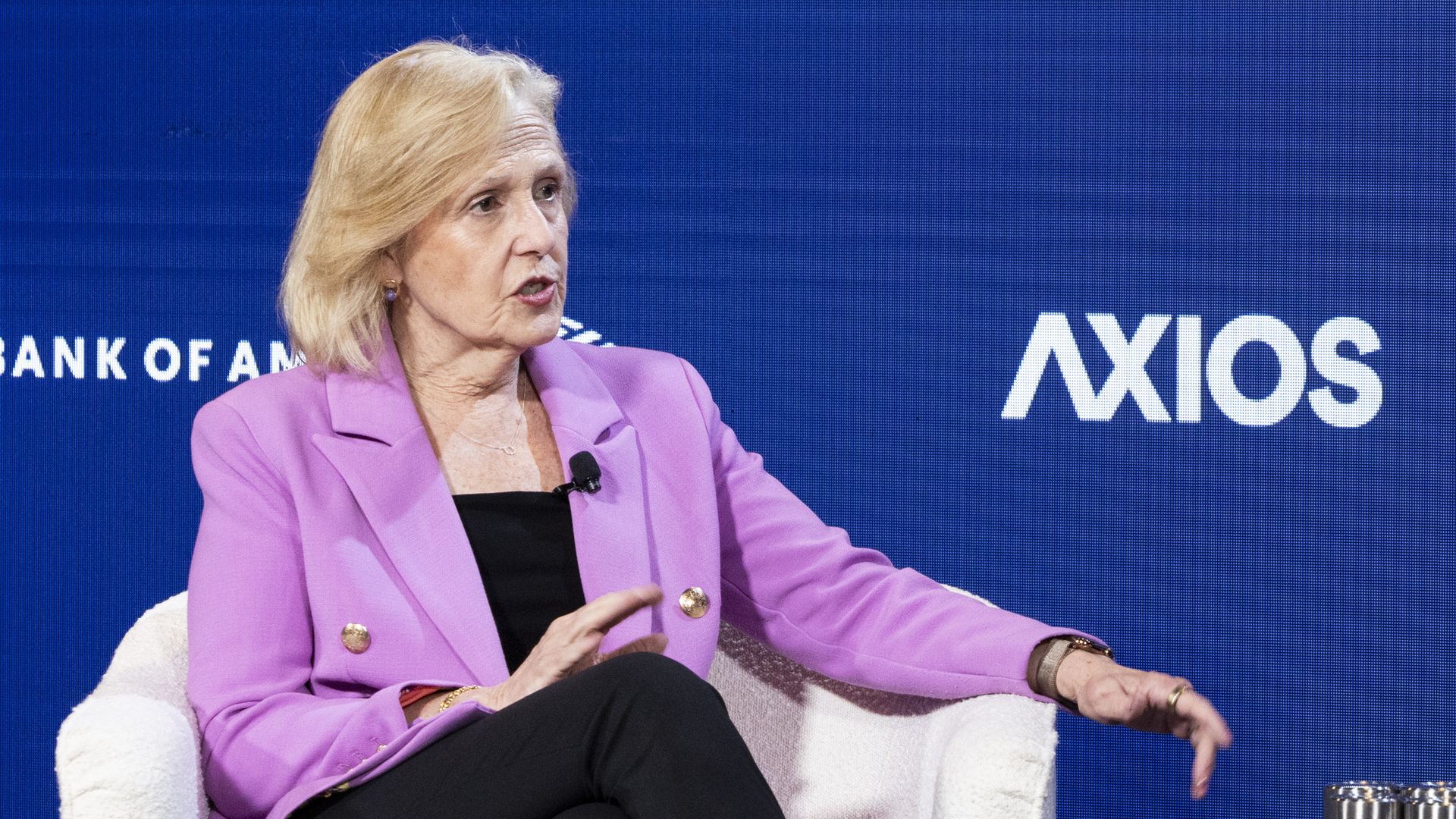
Photo credits: Kristoffer Triplaar on behalf of Axios
PBS CEO Paula Kerger said she was prepared to "vigorously" defend the independent broadcaster's board, when asked if she would sue the Trump administration if it tried to fire any of PBS' board directors.
Why it matters: On Tuesday, the Corporation for Public Broadcasting, which allocates around $535 million in federal funding annually to NPR and PBS, sued Trump and several administration officials for attempting to fire three members of CPB's board. A federal judge granted it an emergency injunction hours later.
Zoom out: For decades, PBS and NPR have enjoyed bipartisan support from lawmakers responsible for approving their government funds.
- Kerger said she's "hopeful" more Republicans will back the the public broadcaster as the Trump administration is trying to convince Congress to cut its federal funding.
- "We've always had bipartisan support. This is not the first time there's been a debate of whether there should be federal funding or no federal funding," Kerger told Axios' Sara Fischer at an Axios News Shapers event in D.C.
Between the lines: Kerger's comments come shortly after House Speaker Mike Johnson (R-La.) said it is fair for elected representatives to evaluate whether something is a "good use of taxpayer dollars."
- Kerger agreed that anyone asking for federal funding should be "very clear" on why it's important.
- The Hill reported Wednesday that lawmakers including Rep. Don Bacon (R-Neb.) and Rep. Mike Simpson (R-Idaho) have spoken positively about the broadcaster, which has member stations all over the country.
- "These are also extraordinary times. So you know, I am hopeful, because many of the people that you're talking about have great relationships with their local stations. They know what's at risk."
Catch up quick: The idea of defunding public media outlets gained more steam during the first Trump administration, but the White House didn't lead any major efforts to defund PBS and NPR.
- Support for PBS and NPR has long been considered non-partisan, but in recent years Republicans have targeted public broadcasters as an area to cut budgets.
- In 2012, then-Presidential candidate Mitt Romney said during a presidential debate that he was "gonna stop the subsidy to PBS," if elected.
- Ahead of Trump's second administration, Project 2025 wrote in a detailed memo foreshadowing the president's agenda ways the administration could pull funding for public broadcasters. The Trump administration started taking actions to scrutinize public broadcasters shortly thereafter.
State of play: Rep. Marjorie Taylor Greene (R-Ga.) in March held a DOGE subcommittee hearing on what she described as "systemically biased content" from federally funded radio and TV organizations. Kerger and NPR CEO Katherine Maher both testified.
- Weeks later, it was reported that the Trump administration had drafted a memo to Congress outlining its plans to cut federal funding for public broadcasters. The memo has not yet been sent.
- The Federal Communications Commission is also investigating the two broadcasters over whether their member stations violated FCC rules around airing commercial ads. PBS has complied with that investigation, Kerger said.
How it works: Both NPR and PBS are mostly funded by nongovernment sources, such as corporate sponsorships or reader donations, but government funding through the CPB is still essential.
- Local member stations for PBS and NPR rely heavily on that funding, and use that money to pay dues to the national PBS and NPR entities, which provide nationally syndicated shows, newsgathering and resources.
- Cutting those funds would be devastating for hyper-local stations, Kerger said.
- "These are funds that we were already counting on, because it's already appropriated. So, we're anxious to see what they're talking about, and we will be responding very quickly," she said.
What to watch: Most Americans still support funding public broadcasters, a recent Pew Research Center poll shows.
- "I am hopeful ... that not just people that work in public broadcasting, but constituents, people that rely on their local stations for content that makes a difference in their lives," Kerger said.
- The debate over federal funding isn't hurting PBS' reputation, Kerger said, but instead making people "pay attention to whether this is something that's important."
- "Legislators are responsive to what the needs are within their communities, and I think that's what will make the difference of whether we're successful here or not."
Editor's note: This story has been updated with new details and background.
