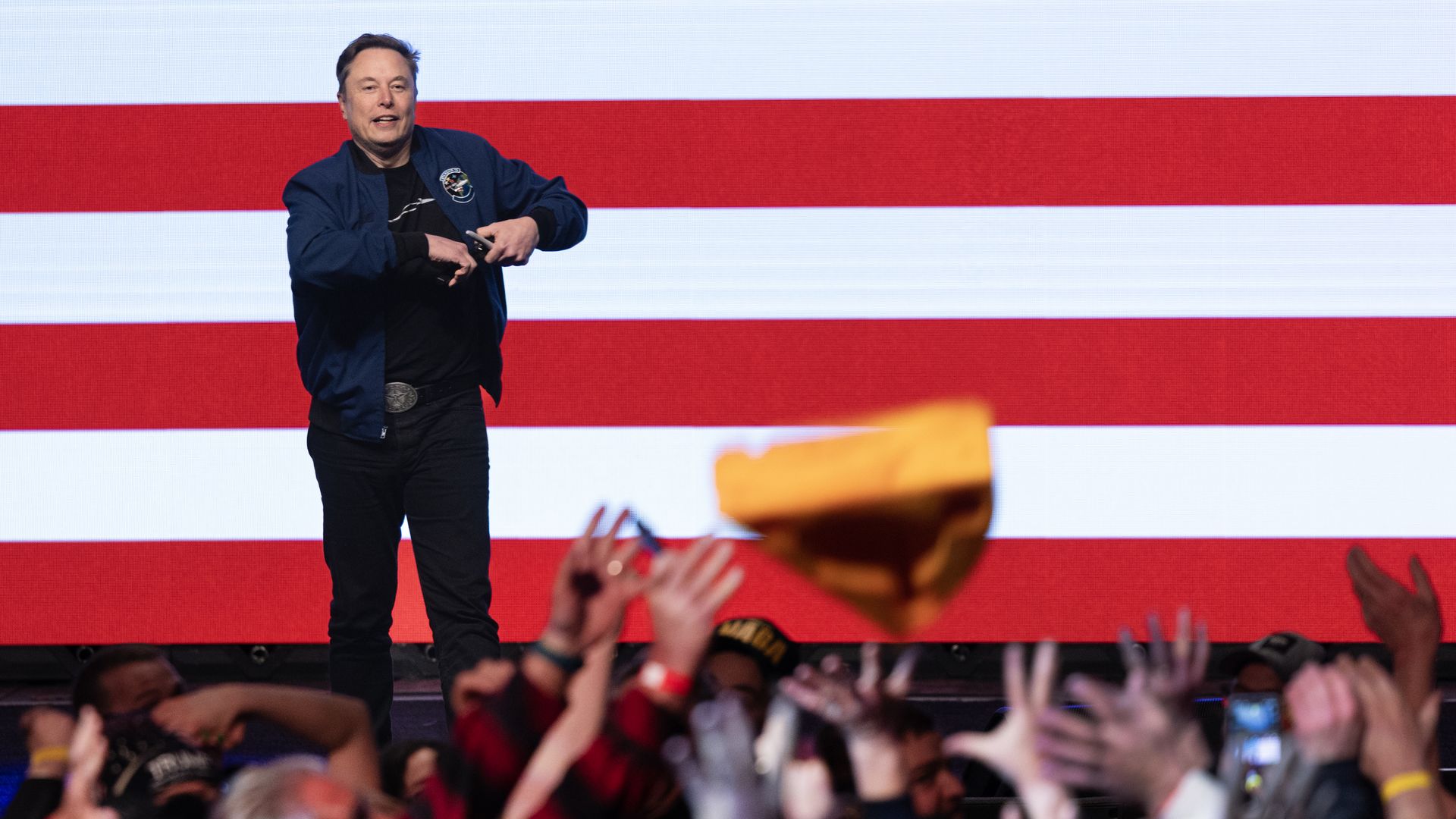
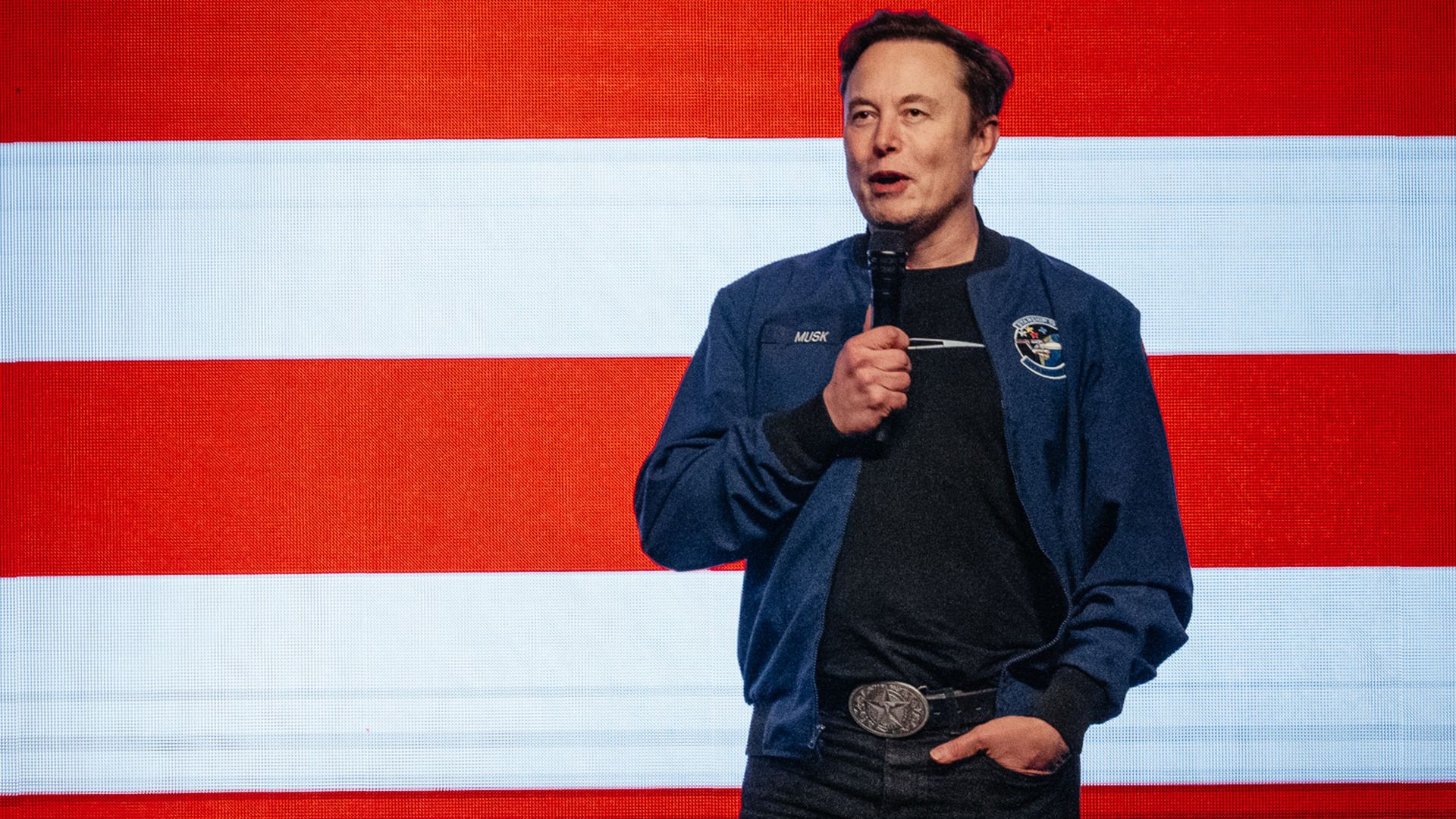
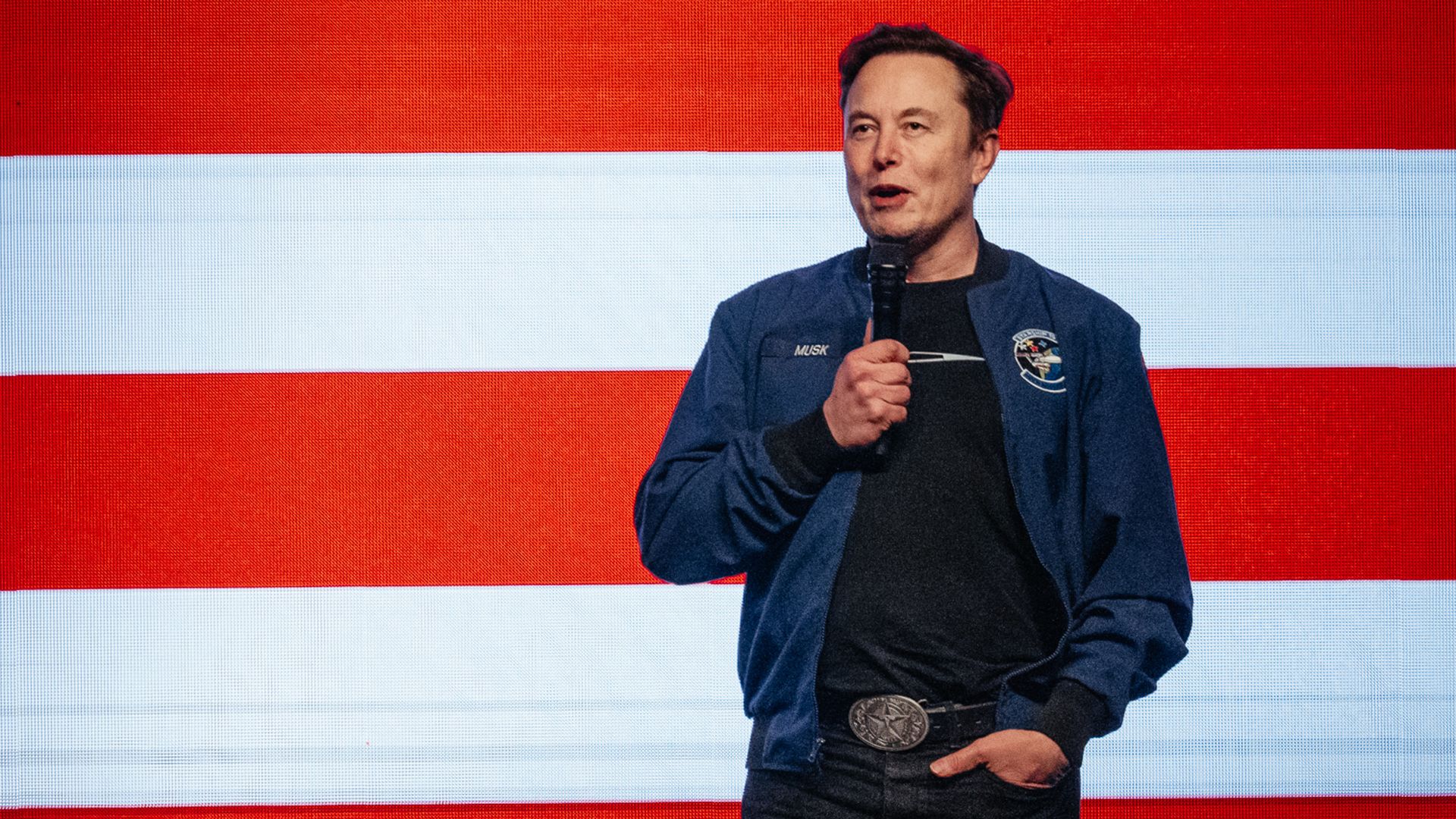
A group of House Democrats is launching a concerted campaign to force Elon Musk out of the Trump administration by May 30, Axios has learned.
Why it matters: The effort is hinged on a legal requirement that special government employees — the designation given to Musk as he leads DOGE — not serve past 130 days.
The past eight days have proven to be perhaps the highest-stakes study yet in how President Trump negotiates.
Why it matters: "Many of you in the media clearly missed the art of the deal," White House press secretary Karoline Leavitt said Wednesday, after the President announced a tariff pause.
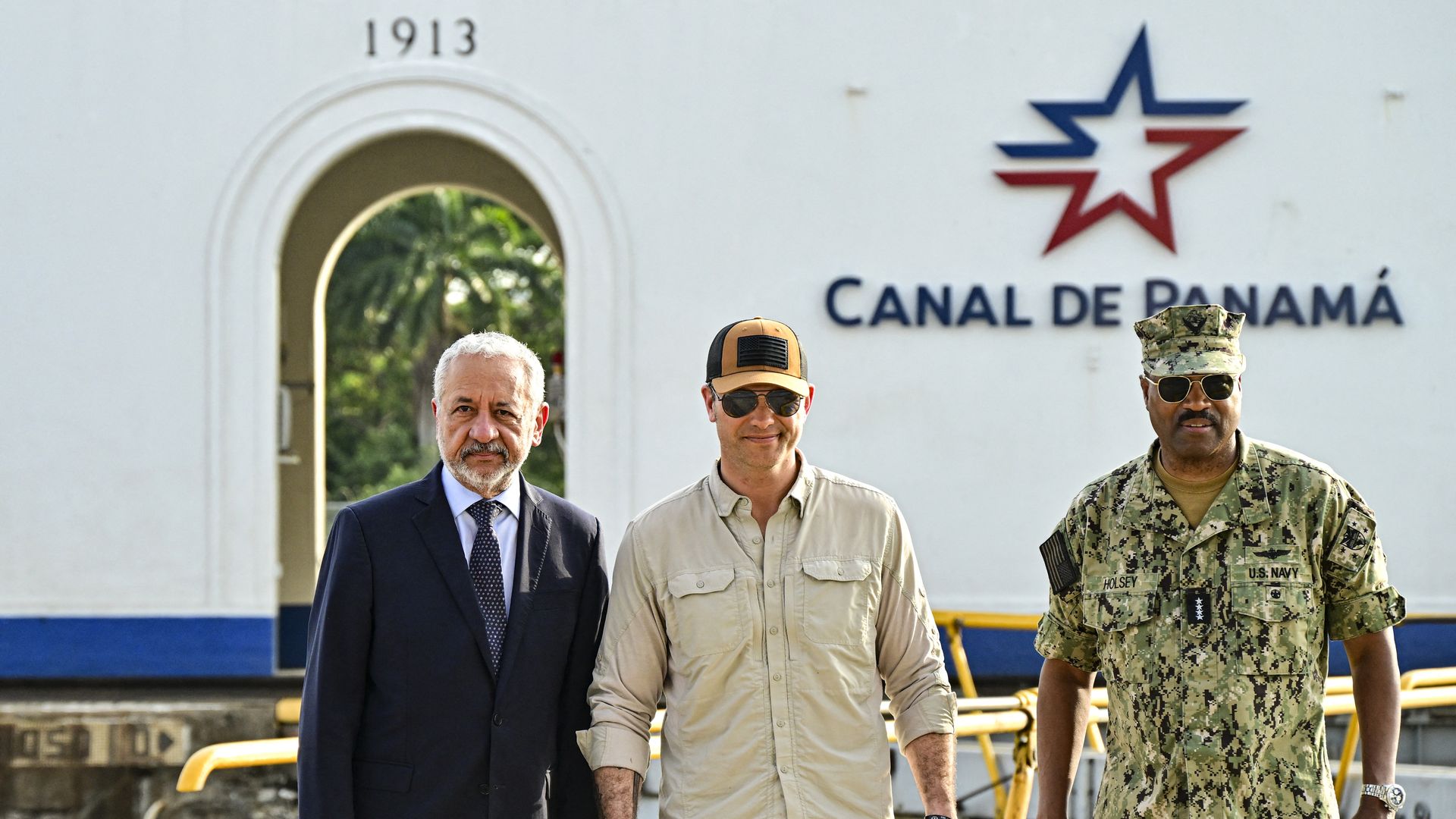
Defense Secretary Pete Hegseth said the Panama Canal faces "ongoing threats" as he singled out China during a visit to the key trade route on Tuesday.
The big picture: Hegseth's comments following a meeting with Panama President José Raúl Mulino that the U.S. and Panamanian officials would "take back" the key trade route "from China's influence" built on previous warnings from Trump administration officials, and they drew a strong rebuke from Beijing.
With his new tariff announcement on Wednesday afternoon, President Trump has cemented his reputation for being unpredictable.
Why it matters: The markets like 10% tariffs more than they like the broad-brush application of a potentially erroneously calculated formula. But investors are still far from happy.
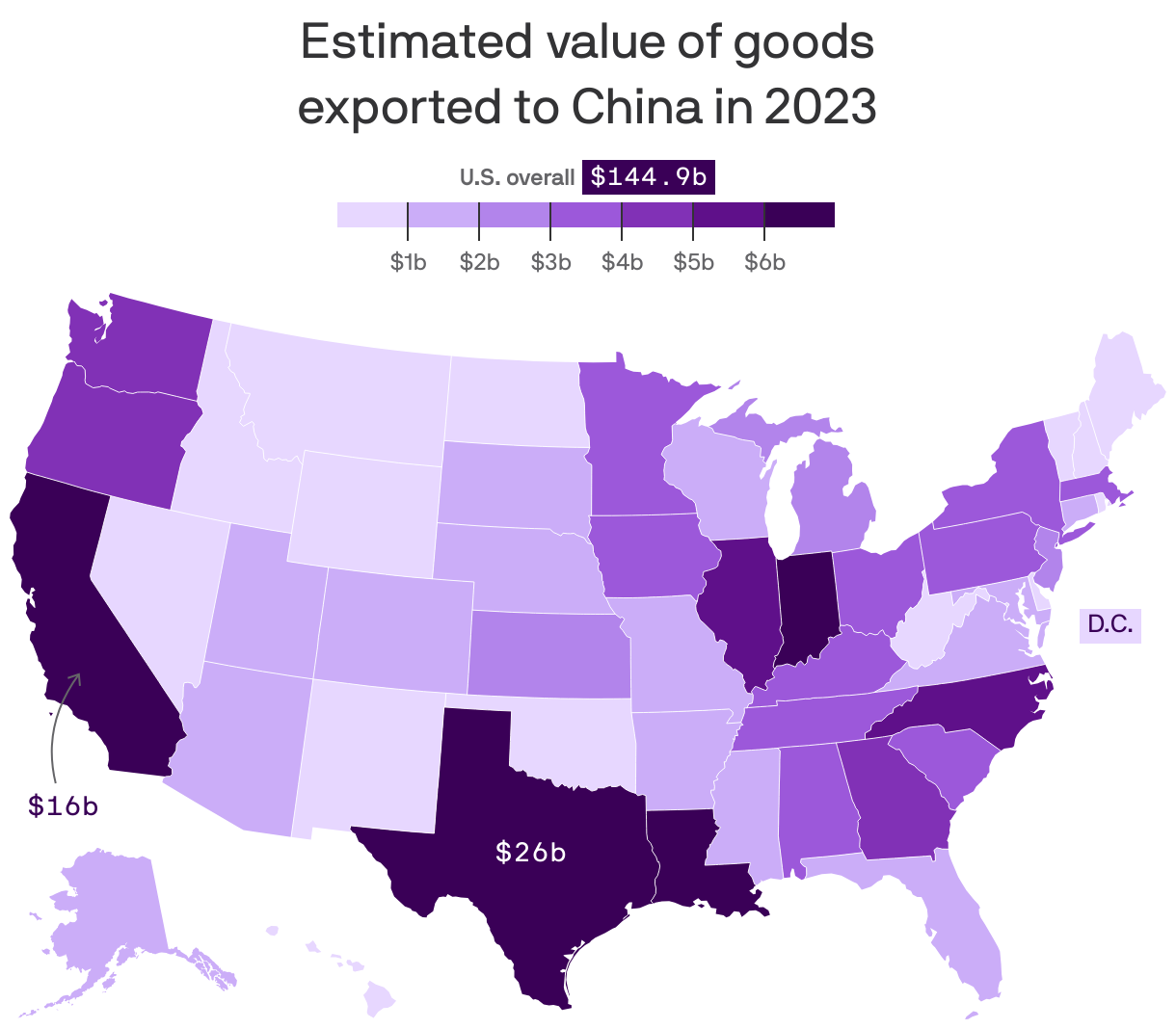
U.S. exports to China account for hundreds of billions of dollars and hundreds of thousands of jobs — but that's all now caught up in a fast-escalating trade war.
Why it matters: If sky-high tariff rates announced Wednesday remain in place, many U.S. companies will no longer be able to compete in China's market.
President Trump blew up global trade and rattled the economy with huge, hotly disputed tariffs on major trading partners. Exactly one week later, he said never mind.
Why it matters: The new question for top CEOs and Wall Street traders is which of Trump's "burn-it-all-down" economic policies actually stick.
The big picture: The self-inflicted market meltdown rattled Trump's allies across Wall Street, Silicon Valley billionaires like Elon Musk, anxious congressional Republicans and even supportive podcasters in the Manosphere.
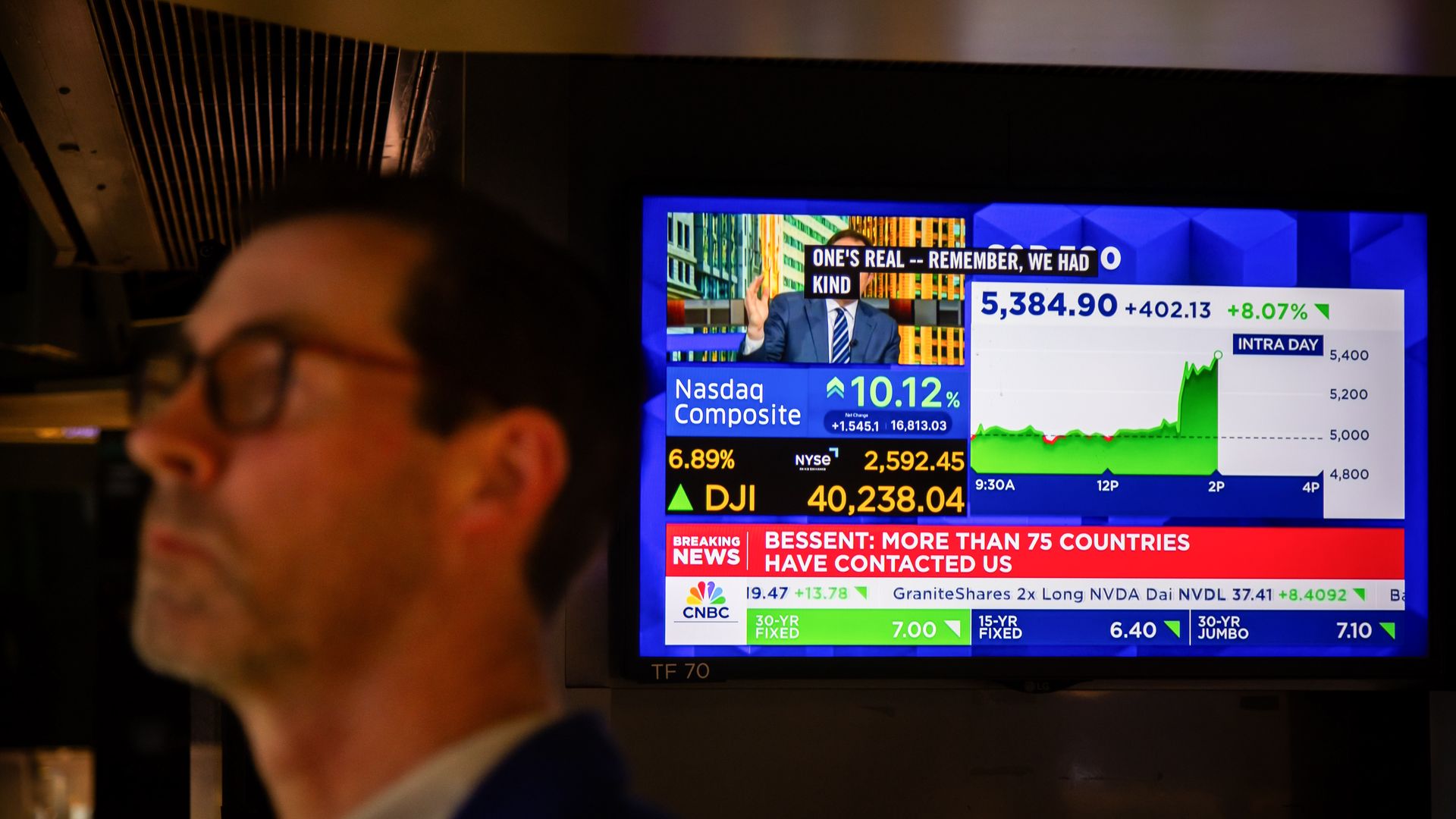
Why it matters: The market had been on a stretcher since Trump announced reciprocal tariffs on nearly all foreign countries last week, bringing the S&P 500 to the brink of a 20% bear-market fall in a little over a month.
If markets learned one thing from the last week's White House tariff drama, it was that President Trump is still paying attention.
Why it matters: The "Trump put" that investors relied on in his first term — the notion that Trump would change policy if stocks or bonds had a bad reaction — looked like it might be dead in the second term. Until Wednesday.
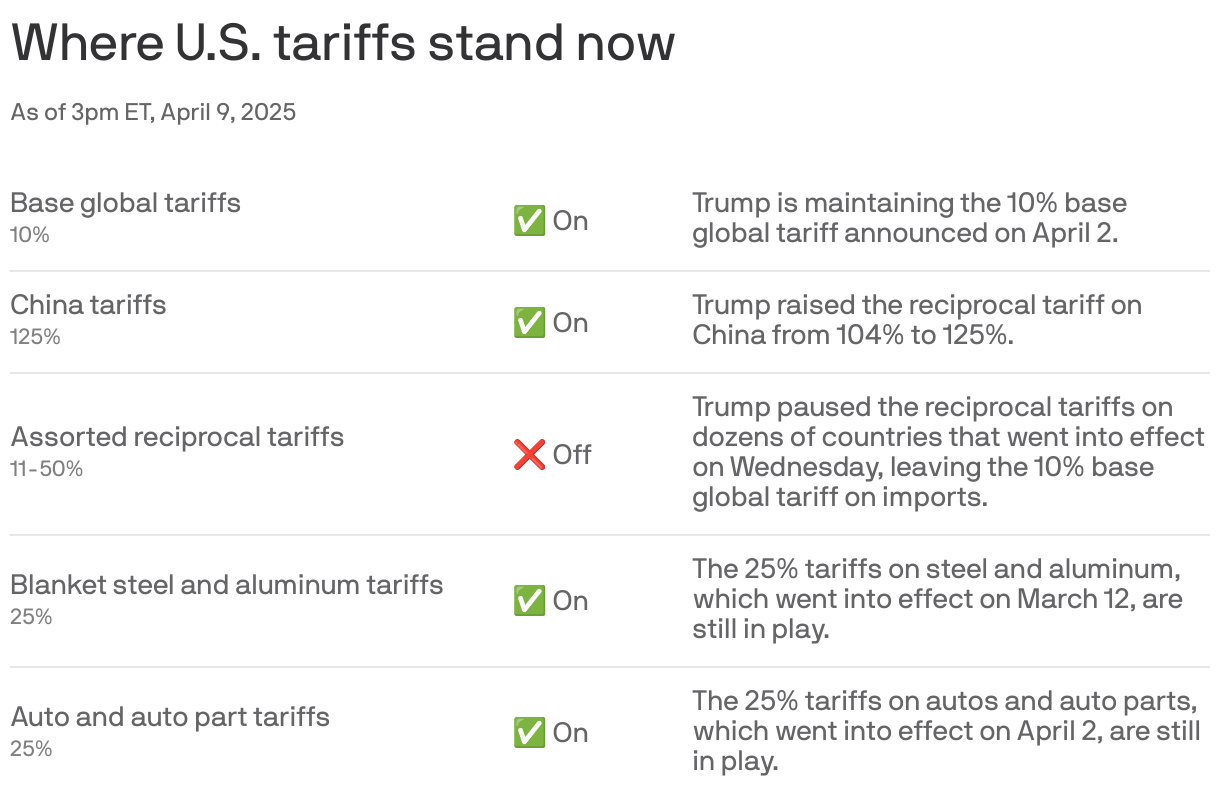
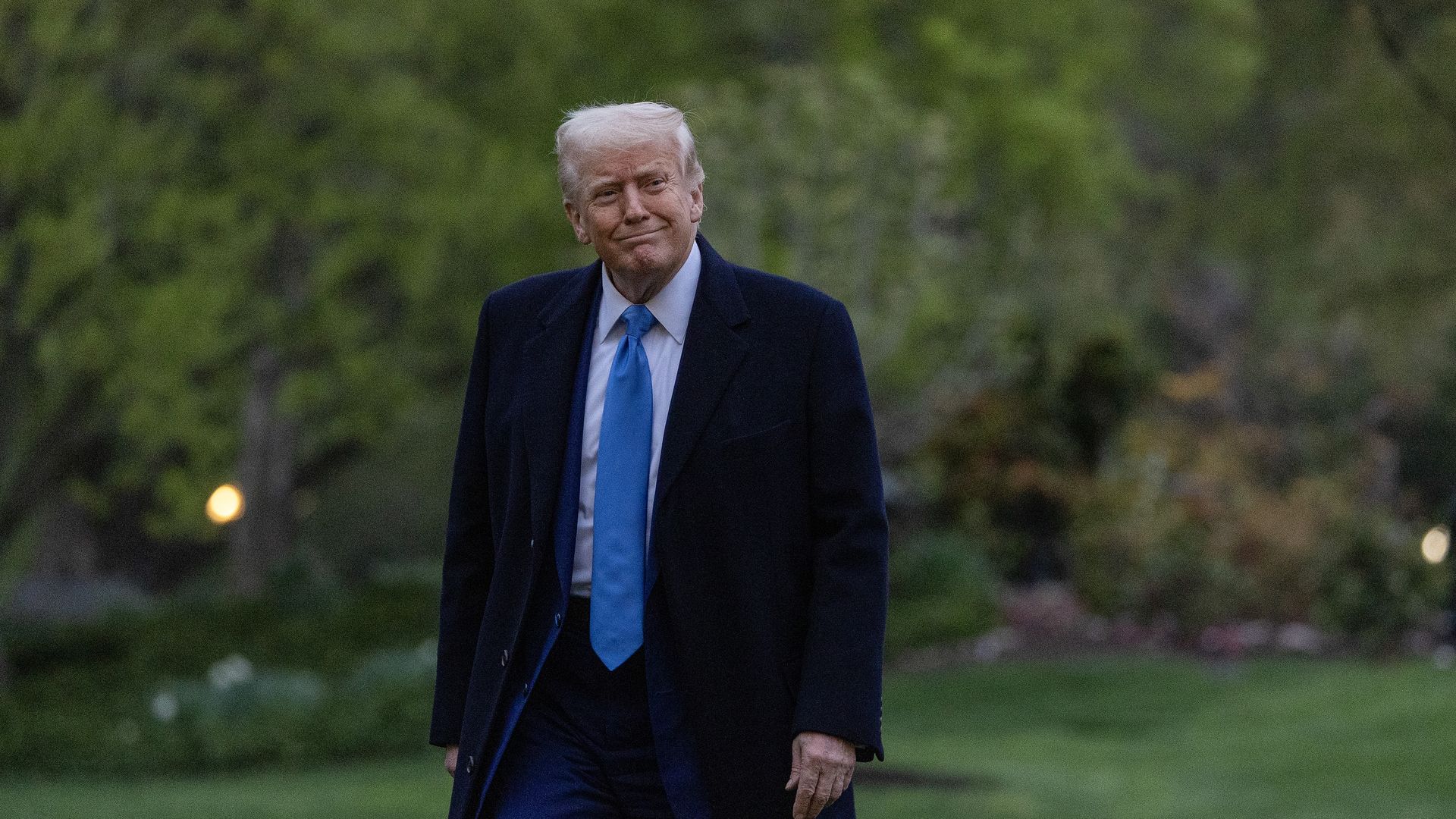
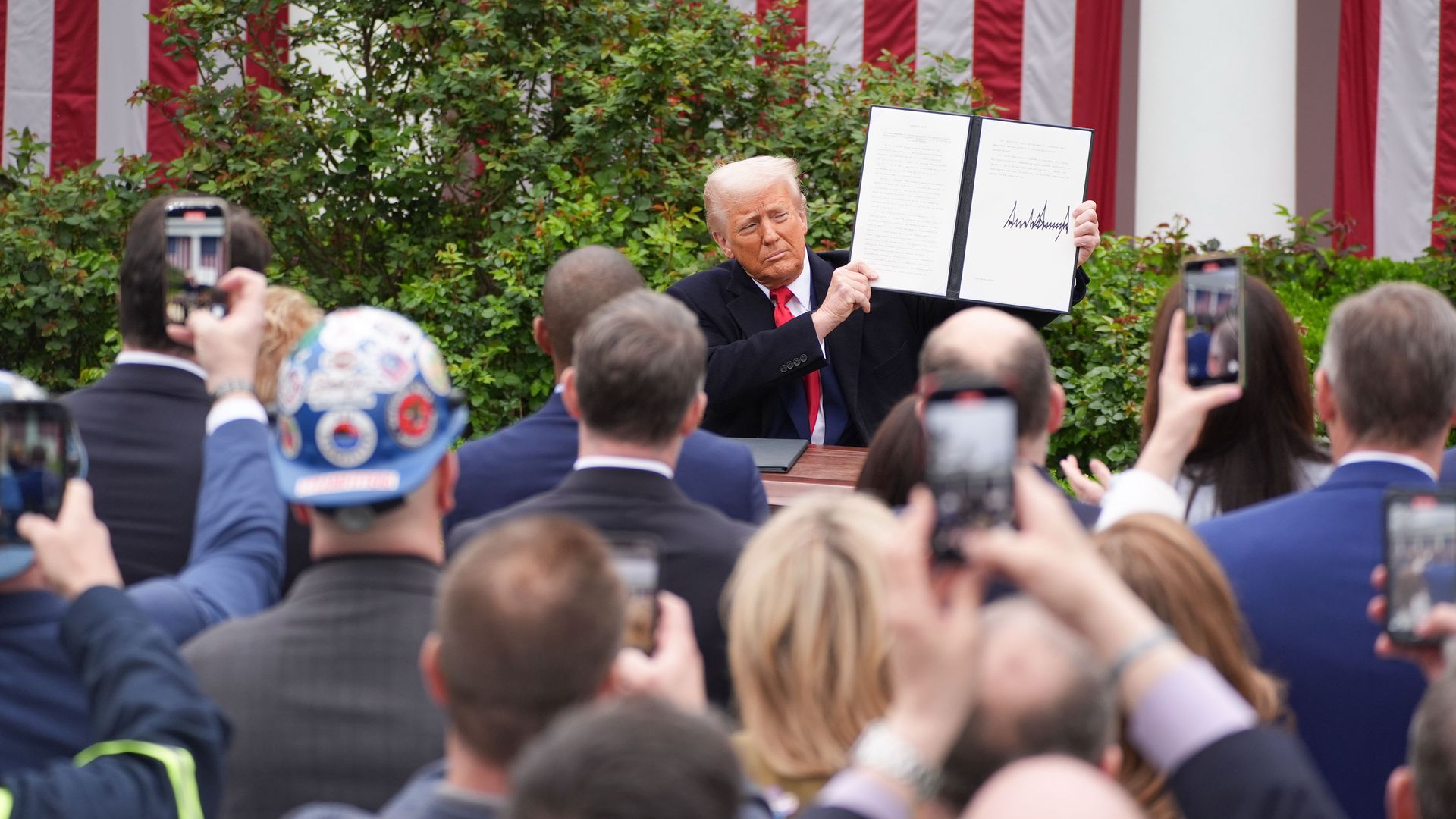
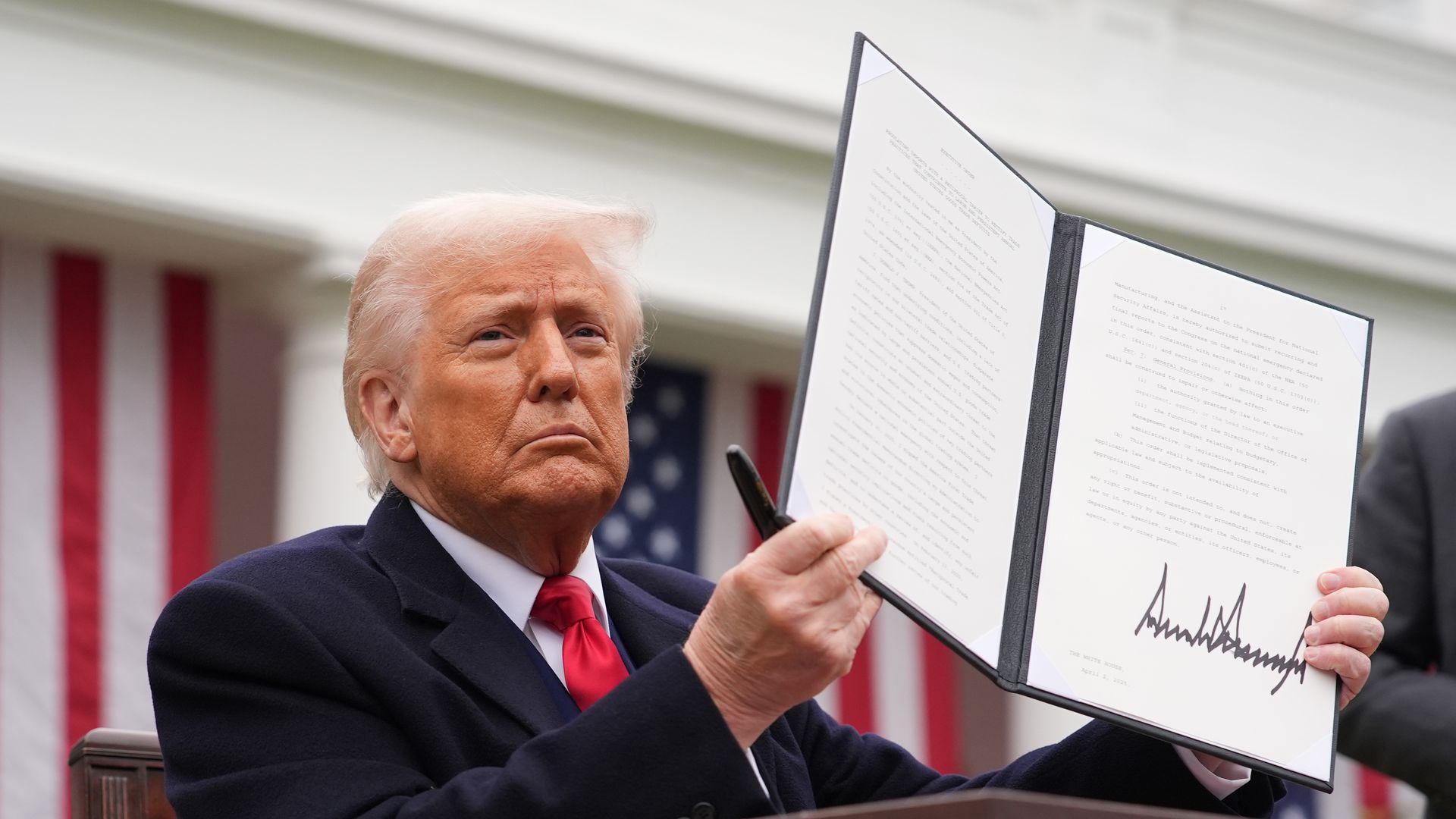
President Trump paused the sweeping reciprocal tariffs the U.S. imposed this week, saying dozens of countries had reached out to negotiate new trade deals.
Why it matters: It's the relief global markets, U.S. allies and many Trump advisers wanted, as fears of a global crisis mounted. But Trumpdidn't back off fully, keeping 10% baseline tariffs in place while increasing tariffs on China to 125%.
China retaliated against President Trump's tariffs on Wednesday with a new 84% levy on exports from the U.S., threatening American jobs and industry that rely on the crucial trade partner.
Why it matters: There's very little modern precedent for one of the largest importers of U.S. goods throwing up such a giant barrier. The full scope of the consequences for the economy are not yet clear.
JPMorgan Chase CEO Jamie Dimon on Wednesday said he expects a recession as President Trump's tariffs roil global financial markets.
Why it matters: Dimon's comments come amid a historic plunge in the bond market, part of what some strategists are calling a "sell America" trade.
Driving the news: Trumpmade good on his promise to charge reciprocal tariffs on about 60 countries on Wednesday, on top of the baseline 10% tariffs the U.S. started collecting last Saturday.
DALLAS — Walmart officials pledged Wednesday to keep prices low despite uncertainty about the impact of President Trump's tariffs.
Why it matters: The world's largest retailer — whose brand is inextricably linked to low prices and affordability — is "not immune to some of the effects" in the short term, Walmart CEO Doug McMillon said.
As robotaxi services begin to spread across America, ride-hailing drivers could worry that they'll be pushed aside in favor of robots — or at least that their incomes will shrink.
Why it matters: Like manufacturing, retailing and other industries, transportation is a prime target for automation.
Reality check: Cashiers aren't going away, and neither are factory workers or Uber drivers.
Instead, they'll work alongside robots for the foreseeable future.
Driving the news: Uber and Lyft are starting to offer robotaxis as a ride option in select cities, joining Waymo, which is already in San Francisco, Los Angeles and Phoenix.
In the beginning, these robotaxis will be confined to certain neighborhoods and will only operate in optimal conditions.
But they'll help Uber and Lyft manage their networks more efficiently, such as during peak demand when prices often surge.
Longer term, as technology advances and costs come down, robotaxis could also mean cheaper fares for riders.
By the numbers: Uber controls about 75% of the U.S. ride-hailing market; Lyft owns the rest.
Drivers on both networks earn about $23 per hour, according to Gridwise Analytics, which collects driver data to track the gig economy.
Uber drivers earn an average of $513 per week, while Lyft drivers gross $318.
Where it stands: So far, the presence of robotaxis in San Francisco, LA and Phoenix hasn't affected ride-hailing drivers much, Gridwise found.
"Drivers are still working at the same pace, getting the same incentives, and taking as many trips as before," co-founder and CEO Ryan Green tells Axios.
The big picture: The hassles and costs of owning a car in urban areas have fueled the growth of ride-hailing platforms, especially among younger people.
That growth is expected to accelerate sharply over the next 15 years, as more people turn to ride-hailing for their daily commutes instead of just occasional use, say forecasters at S&P Global Mobility.
"Gen Z and Gen Alpha have a different mindset when it comes to mobility," Mario Franjicevic, a principal research analyst at the firm, tells Axios.
"They don't own CDs or vinyl. They don't own DVDs. They subscribe to Netflix and Spotify. They will do the same with mobility. Owning a car is not a status symbol to them."
By 2040, S&P Global Mobility is projecting 15 billion ride-hailing trips a year in the U.S., up from 3.6 billion in 2024.
The intrigue: About half of those trips will be in robotaxis; the other half will still be driven by humans.
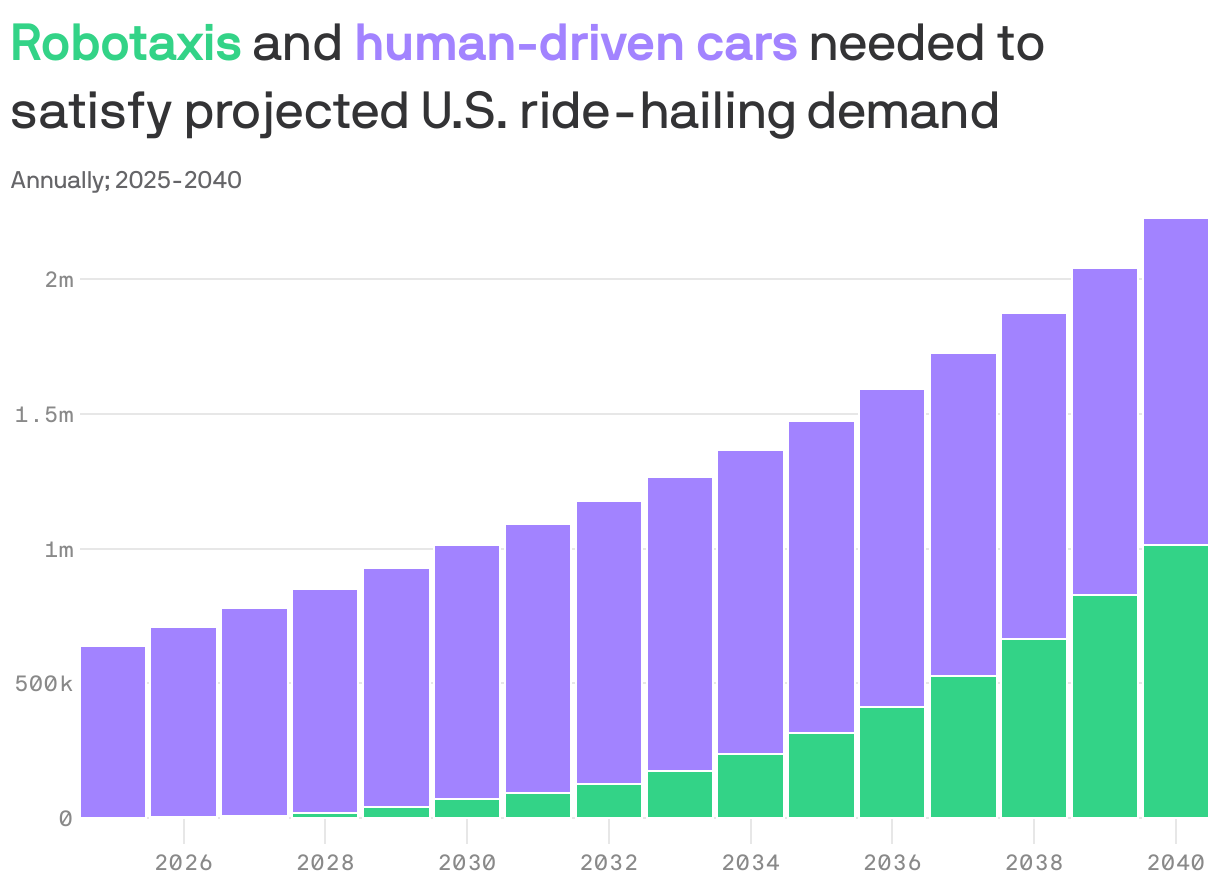
Data: S&P Global Mobility; Chart: Erin Davis/Axios Visuals
Between the lines: Jeremy Bird, Lyft's executive vice president of driver experience, described three phases of the robotaxi transition in a recent blog post.
Adoption: Robotaxis are still a novelty. There aren't enough of them to meet a city's transportation needs, and they can't operate in certain weather conditions or on certain roads. (That's where we are today.)
Hybrid network: Some riders will select robotaxis, but others will still prefer a human driver for extra assistance or premium service.
Lyft-ready network: Anyone's automated car can be deployed on the ride-hailing network to generate income when they're not using it. Entrepreneurial drivers could run an entire fleet of robotaxis on Lyft.
The bottom line: The ride-hailing pie is still growing, and robotaxis aren't going to eat it all.
As robotaxi services begin to spread across America, ride-hailing drivers could worry that they'll be pushed aside in favor of robots — or at least that their incomes will shrink.
Why it matters: Like manufacturing, retailing and other industries, transportation is a prime target for automation.
Reality check: Cashiers aren't going away, and neither are factory workers or Uber drivers.
Instead, they'll work alongside robots for the foreseeable future.
Driving the news: Uber and Lyft are starting to offer robotaxis as a ride option in select cities, joining Waymo, which is already in San Francisco, Los Angeles and Phoenix.
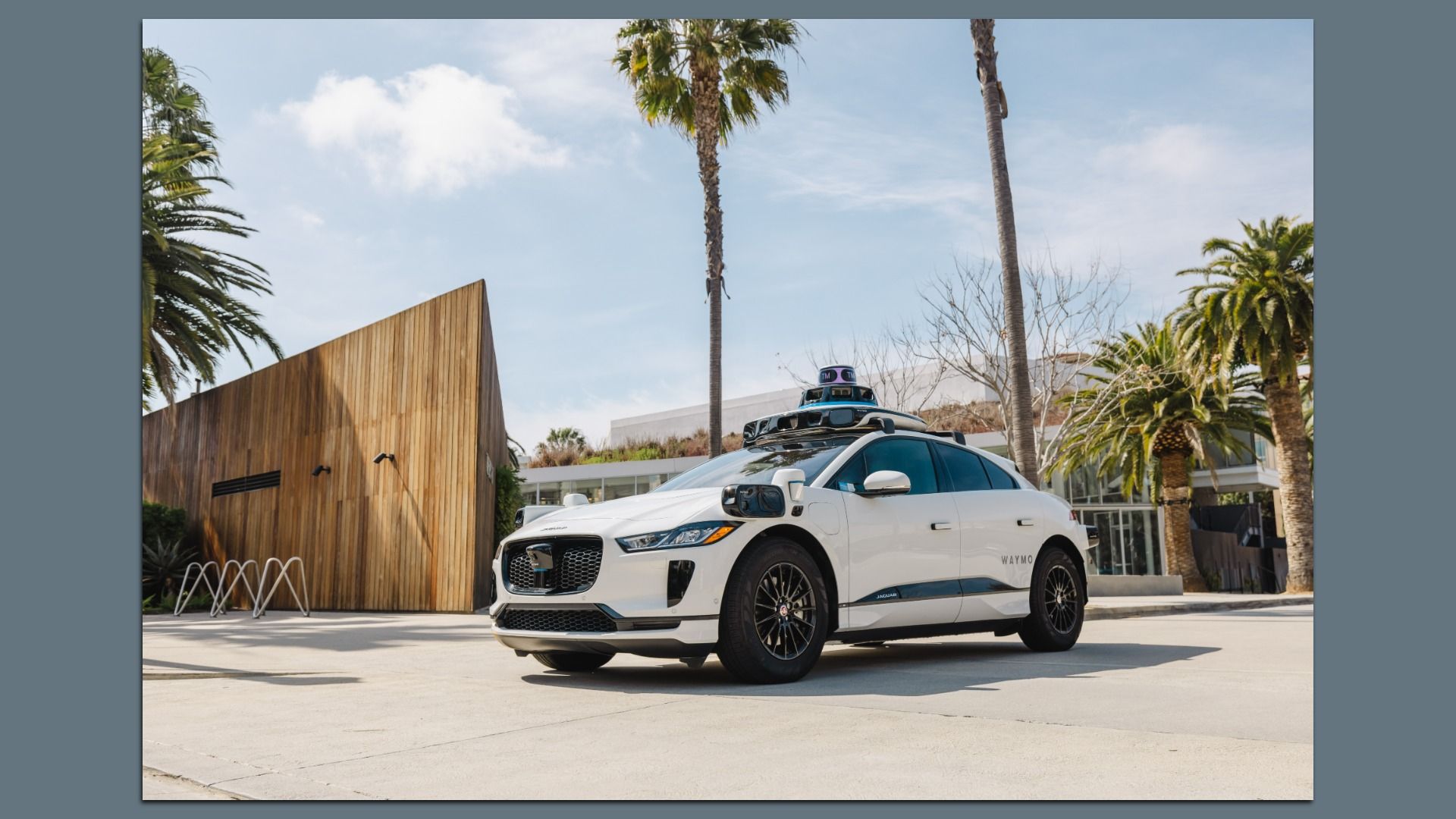
After a day spent crisscrossing Los Angeles in a series of Waymo robotaxis, I can confidently say: I'm a convert.
Why it matters: Self-driving cars, which once seemed like science fiction, are now real, and hailing a driverless taxi is an increasing option in more cities via popular apps like Uber and Lyft or directly with the Waymo One app.
The big picture: While other AV companies are still in the development phase — or have disappeared altogether — Waymo has a legit commercial robotaxi service that's expanding.
It provides more than 200,000 rides per week in San Francisco, Los Angeles and Phoenix. In 2024, it racked up more than 4 million paid passenger trips.
A secretive EV startup backed by Amazon's Jeff Bezos and others plans to produce an affordable, low-cost electric pickup as soon as next year in Indiana, TechCrunch scooped.
Why it matters: Creating a car company from scratch is not for the faint of heart, but Slate Auto, based in Troy, Michigan, has already raised at least $111 million.
And it has hired hundreds of employees from Ford, General Motors, Stellantis and Harley-Davidson, TechCrunch reported.
The intrigue: Slate appears to be trying a different business model from most EV startups.
Instead of starting with an exclusive, high-end model like Tesla, Lucid and Rivian did, Slate aims to produce a $25,000 entry-level EV, taking inspiration from Ford's Model T and the original Volkswagen Beetle.
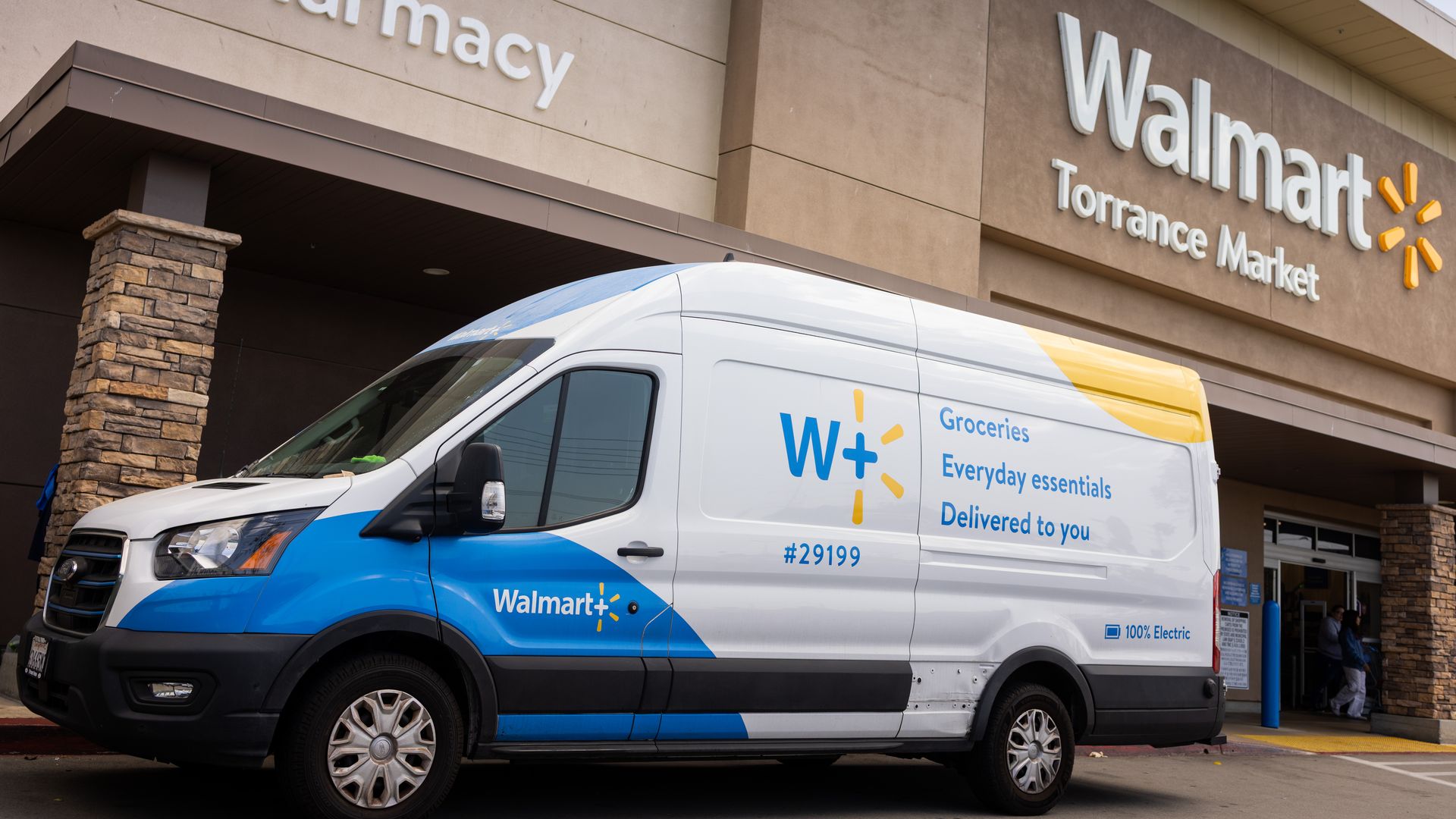
Walmart's newest delivery service, which launched this week at a superstore in Mesquite, Texas, marks the debut of a sophisticated pair of mother-baby drones from Zipline.
How it works: An employee places the customer's order inside the baby drone, called the Delivery Zip, which is about the size of a small cooler.
The Delivery Zip is then lifted automatically into the belly of the larger mother Zip, which takes off from a free-standing charging dock in the Walmart parking lot.
At the destination, the aircraft hovers silently at 300 feet while the Delivery Zip is lowered by a tether, using sensors and fans to autonomously stick its high-precision landing.
It's a technological leap over Zipline's original system, which drops packages via parachute.
China and the European Union retaliated on Wednesday against President Trump's tariffs with new levies on more than $150 billion of U.S. exports.
Why it matters: The levies are the latest escalation stemming from Trump's trade war, which is deepening even as the U.S. says it's open to negotiations.
If the current level of tariffs remains in place, the U.S. appears likely to find itself in a recession.
What's much less clear, however, is how severe such a recession would be, and therefore how much incentive the Trump administration has to try to avoid that outcome.
Why it matters: Even with the tariffs fully in place, any recession might be shallow enough — and early enough in the electoral cycle — for the White House to decide it's worth just riding it out.
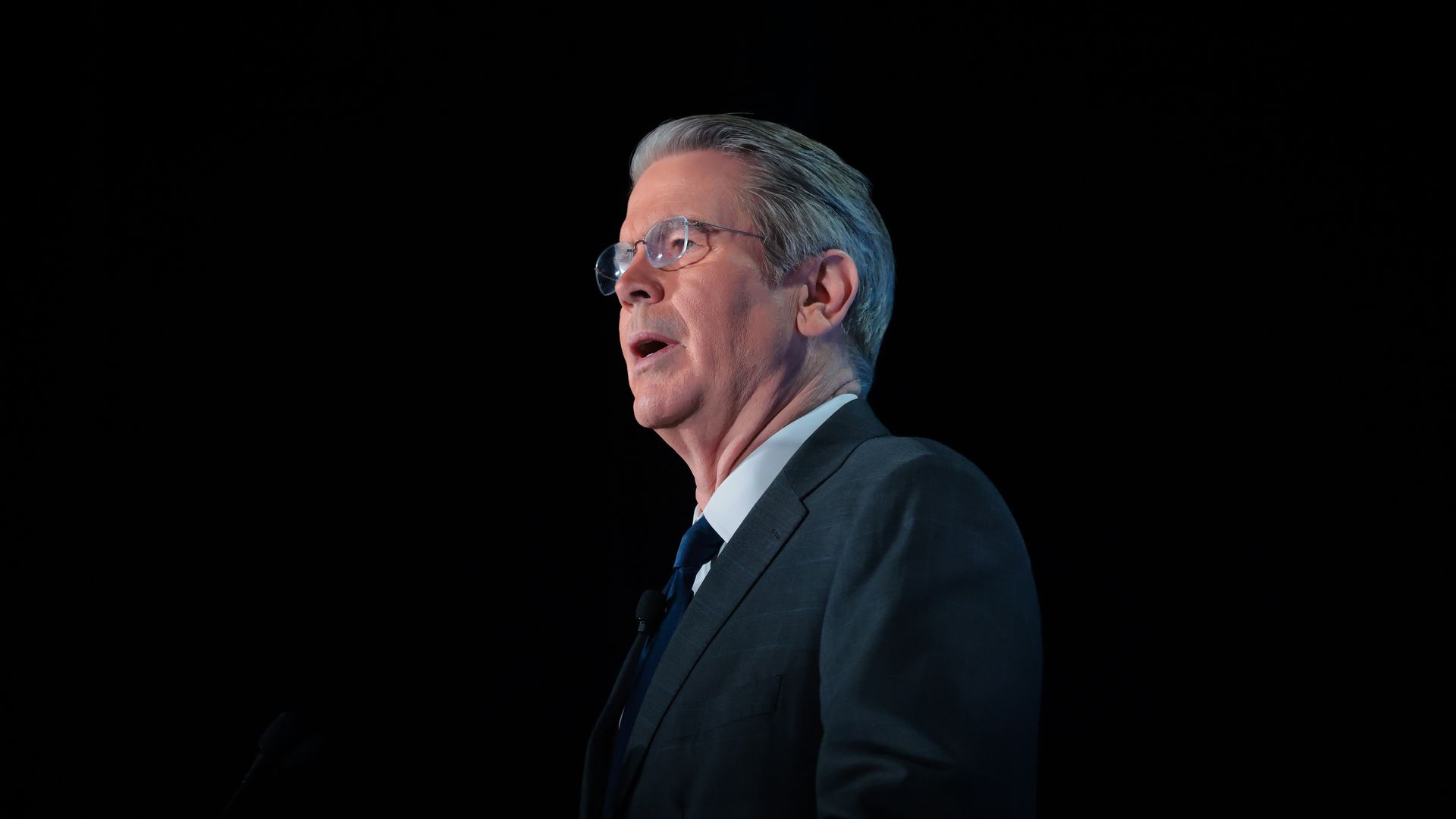
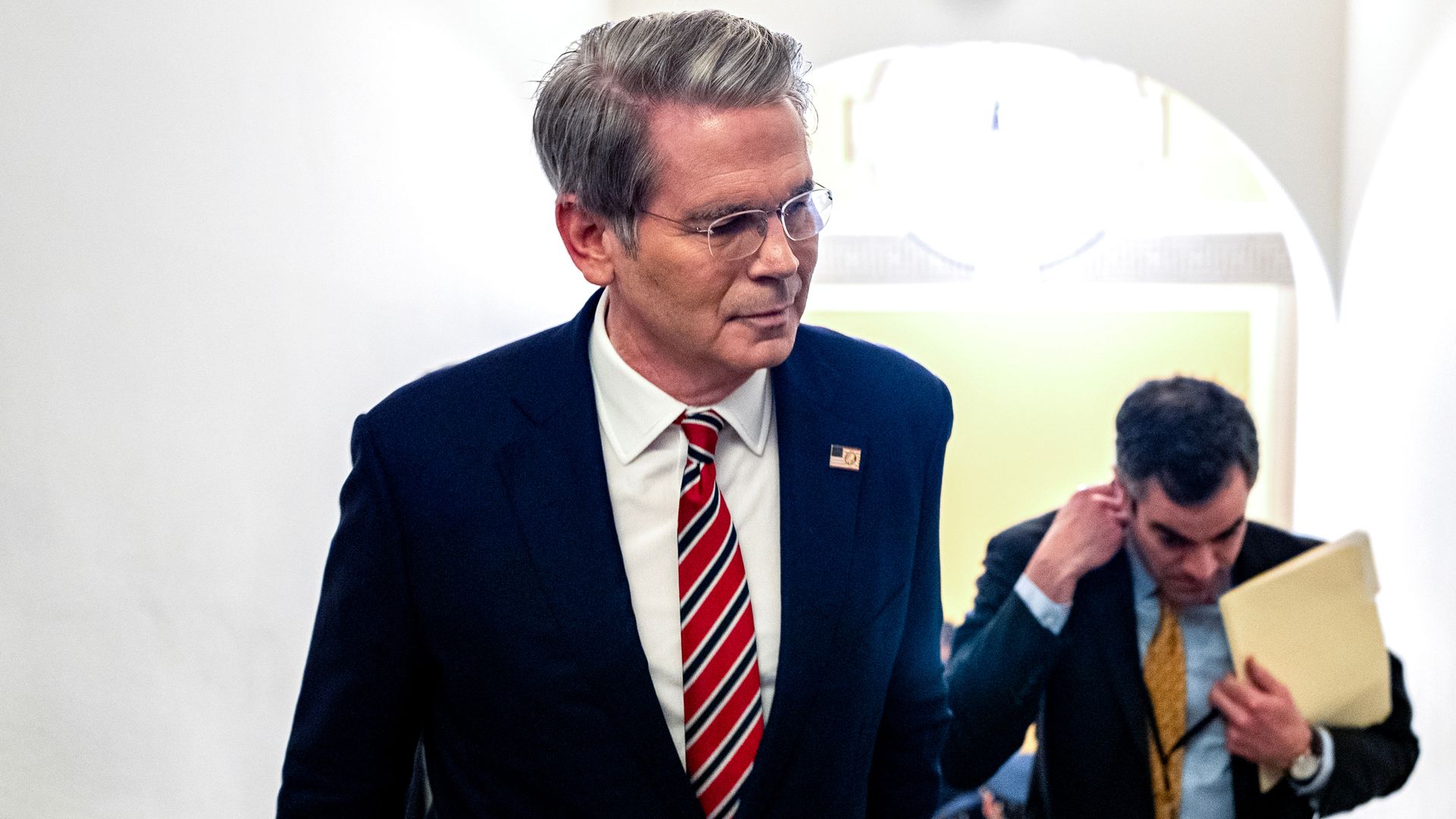
Treasury Secretary Scott Bessent on Wednesday declined to rule out the possibility of delisting Chinese stocks from U.S. exchanges, during an interview on Fox Business Network.
Why it matters: The trade war could bleed beyond tariffs.
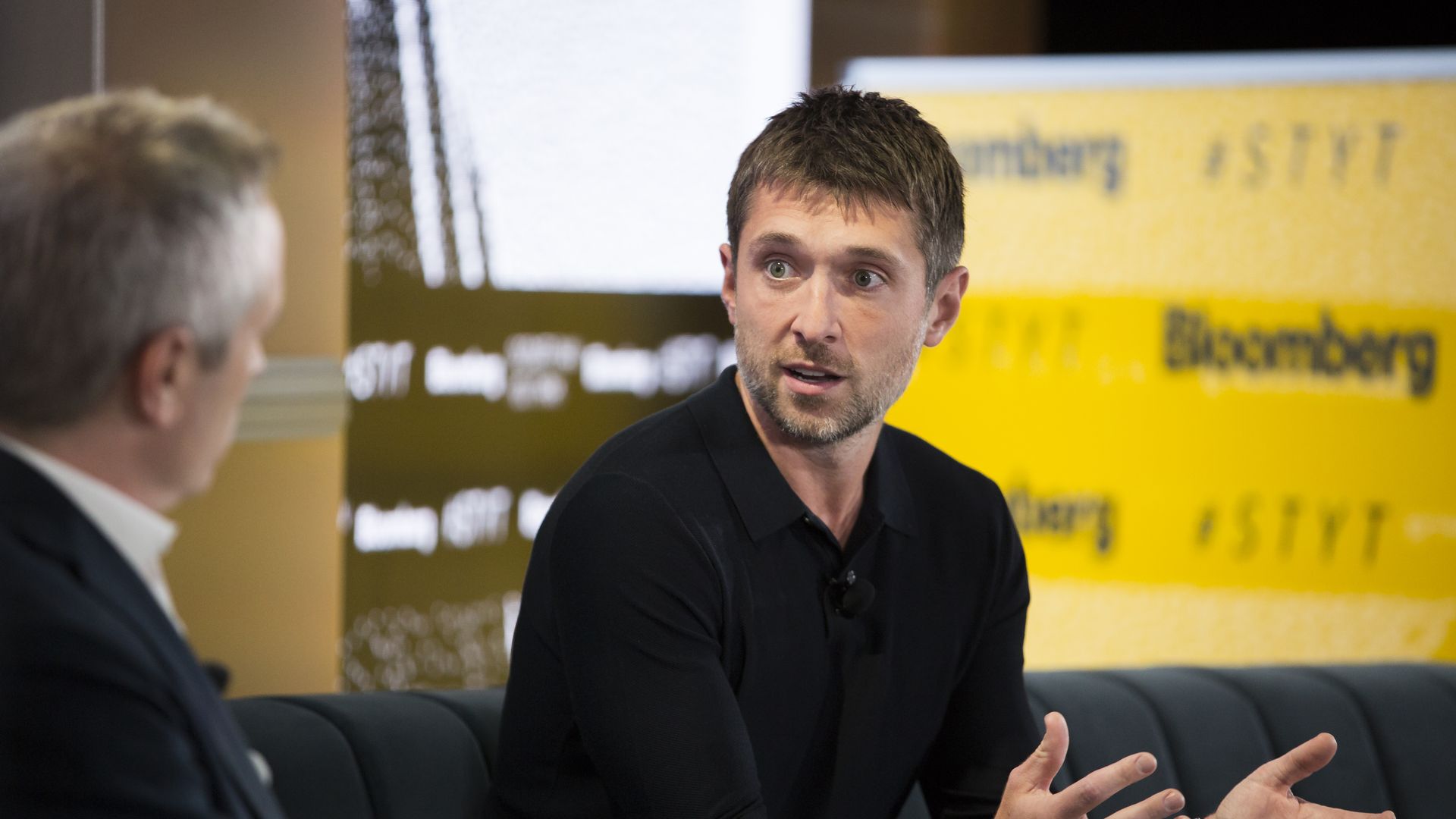
Lerer Hippeau has raised $200 million for its ninth flagship VC fund, the firm tells Axios exclusively.
Why it matters: It's been 30 years since "Silicon Alley" was coined to describe New York City's tech scene, and 25 years since its development was bolstered by the formation of what would become Lerer Hippeau.
Sports Illustrated is debuting a brand new biennial event this fall called the SI Women's Games that will feature elite athletes competing across six sports for a prize pool payout.
Why it matters: The breadth and scale of the event shows how much Minute Media is looking to invest in the 70-year-old sports magazine.
The price of Mega Millions tickets more than doubled from $2 to $5 last week as a new version of the game rolled out.
Why it matters: Americans are paying big money — $113 billion on lottery products in the 2024 fiscal year — for the chance to win a life-changing jackpot.
State of play: The price change comes along with other tweaks, including the removal of one gold Mega Ball from the game.
That slightly increases the oddsof winning, Mega Millions said, and there will be bigger and more frequent jackpots and faster-growing prizes.
Drawings are held in Atlanta at 8pm PT on Tuesdays and Fridays and posted on the Mega Millions YouTube page
JPMorgan Chase CEO Jamie Dimon on Wednesday said he expects there to be a recession and for defaults to rise as President Trump's tariffs roil global financial markets.
Why it matters: Dimon's blunt forecast puts a headline on the market's broad fears that Trump's trade war has already set in motion a lasting global crisis.
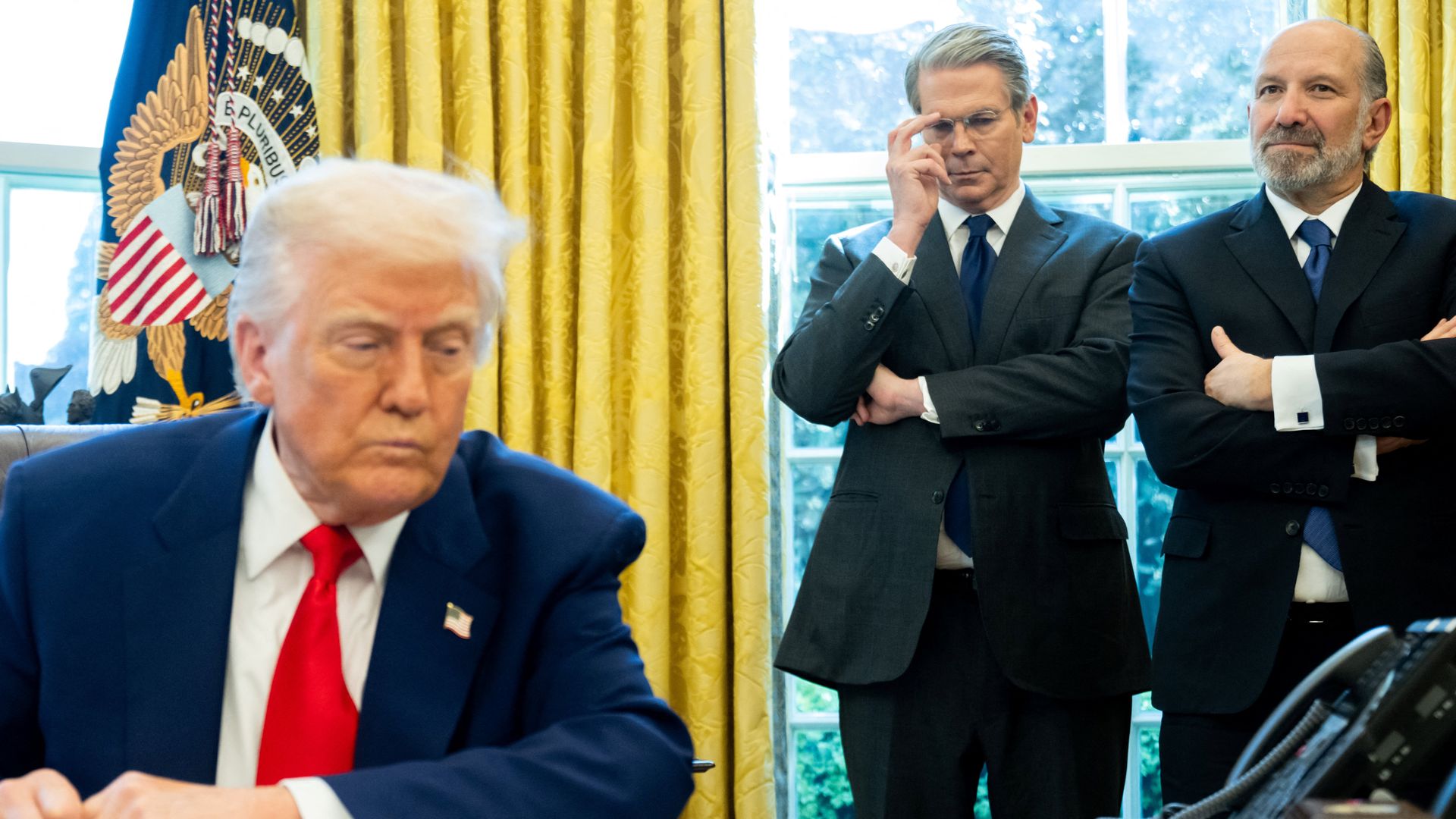
Treasury Secretary Scott Bessent said on Wednesday that the economy was on steady footing, and played down the panic on display in financial markets as a result of the escalating global trade war.
Why it matters: The comments come hours after President Trump's reciprocal tariffs took effect, further unnerving investors worried that the economy might take a hit.
The price of U.S. Treasury bonds is plunging, in what Treasury Secretary Scott Bessent on Wednesday called "deleveraging convulsions." The effect is to raise borrowing costs just as recession fears spike.
Why it matters: The last thing America needed amid a global trade war and a stock market meltdown was a debt crisis, too. But that now seems to be a real possibility.
The conventional wisdom aboutU.S. coal's grim prognosis is a tad murkier after President Trump threw unprecedented government weight behind the fuel.
Why it matters: His plan will test whether forces long battering coal — cheap gas, pollution regs, renewables' rise and more — can be undone by rising power demand and federal intervention.
Warm weather, affordability and politics have prompted a teenage migration from the Northeastto the South.
Why it matters: Large Southern state schools — including the University of Texas — are attracting a geographically diverse student body as Americans are increasingly disillusioned with the value of higher education.
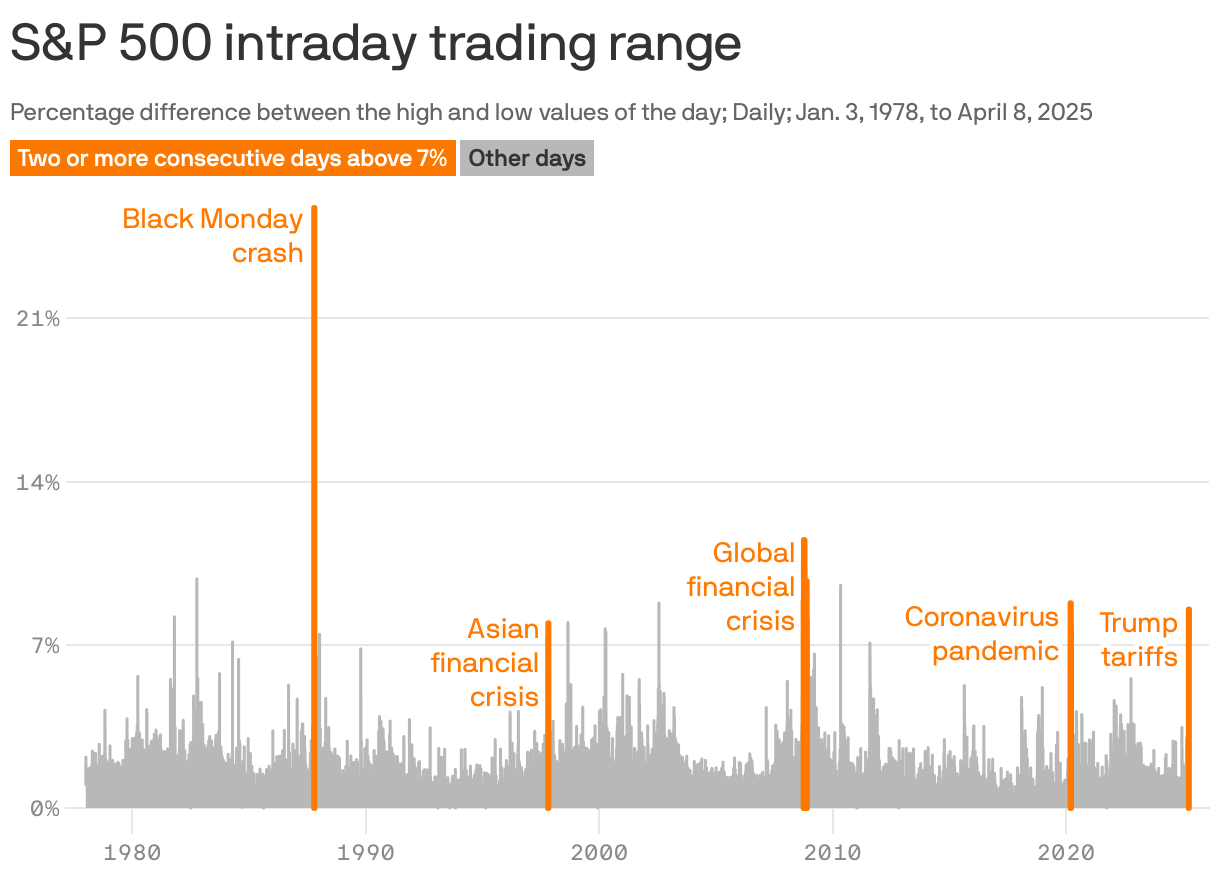
The volatility we've seen in the markets this week is not unprecedented, but it's extremely rare, and has happened only four previous times since 1978.
Why it matters: This kind of noise is a sign that we've now entered a world of radical uncertainty, and that the markets are finding it impossible to do their main job, which is price discovery.
A pair of House Democrats is introducing a bill that would force DOGE to open its books to Congress and provide insight into its firings and other changes to federal agencies, Axios has learned.
Why it matters: The bill is likely a long shot in the Republican-controlled Congress, but it is the latest demonstration of how Democrats are trying to put their efforts to counter DOGE on display for voters.
When President Trump imposed tariffs on China during his first term, U.S. importers paid the price, that we know (now). Exactly how those costs were passed on to U.S. consumers, though, is surprisingly less clear.
Why it matters: The key question for anyone in the U.S. who buys stuff — i.e., all of us — is who pays for Trump's latest tariff increases.
The big picture: With the U.S. importing nearly all of its clothing and shoes — more than half from China, Vietnam and Bangladesh alone — soaring apparel prices could send shoppers thrifting.
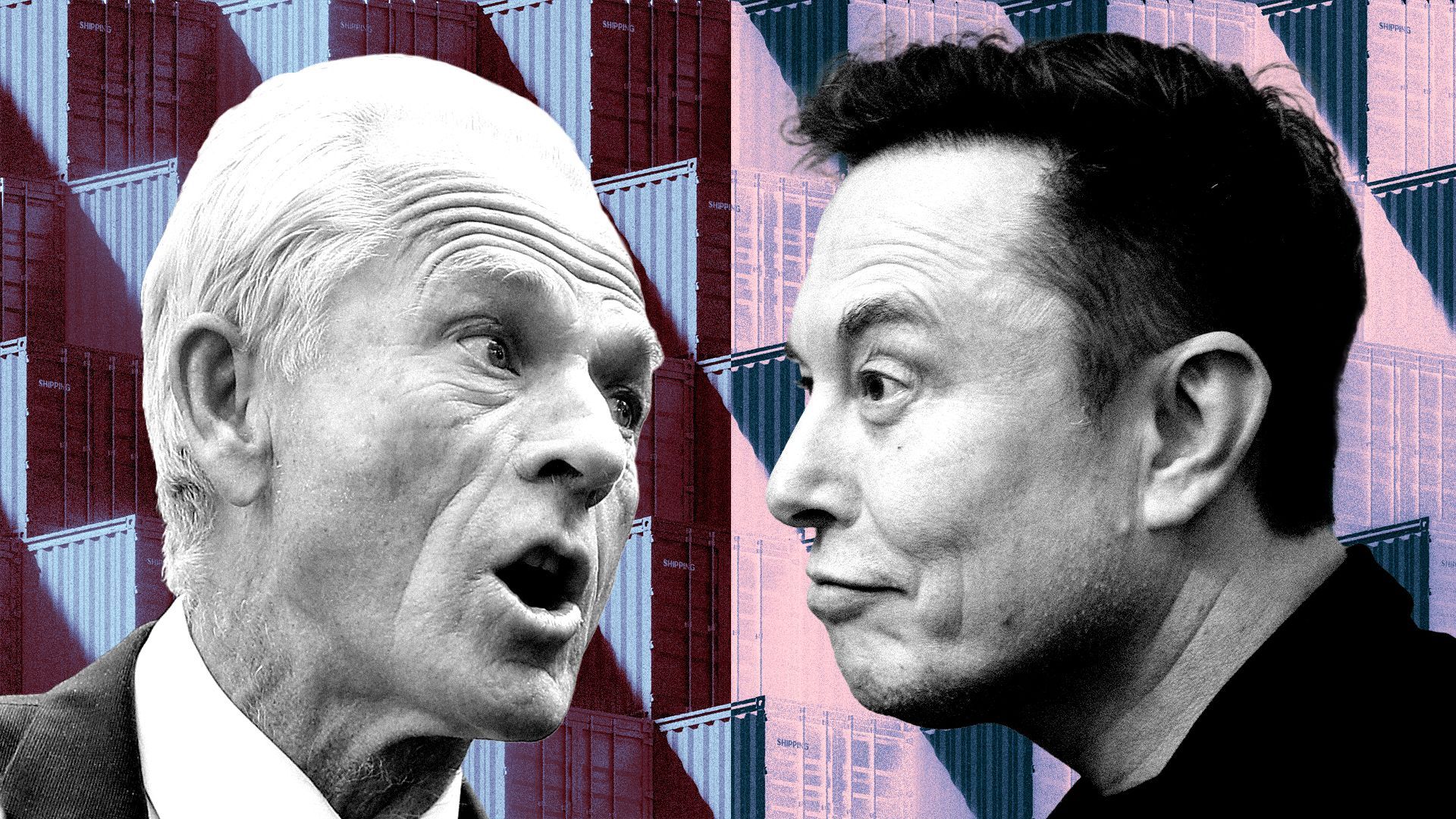
Backstabbing was rampant in President Trump's first White House. In Trump 2.0, it's front-stabbing:
Trump's trade adviser, Peter Navarro, slights Elon Musk's car company on TV. Musk, a senior adviser to Trump, then calls Navarro a "moron" on social media.
At the White House, staffers shrug and chuckle. "Boys will be boys," Press Secretary Karoline Leavitt says.
After a day spent criss-crossing Los Angeles in a series of Waymo robotaxis, I can confidently say: I'm a convert.
Why it matters: Self-driving cars, which once seemed like science fiction, are now real, and hailing a driverless taxi is an increasing option in more cities via popular apps like Uber and Lyft or directly with Waymo.
President Trump's sweeping attempt to reorder the global economy went into effect early Wednesday, with historic tariffs on dozens of countries.
Why it matters: Trump says it'll revitalize the U.S. economy and bringing about a fairer global order. Economists and executives say it'll fracture global alliances and lead to a painful recession.
Meta whistleblower Sarah Wynn-Williams is set to testify before the Senate Judiciary Subcommittee on Crime and Counterterrorism on Wednesday.
The big picture: The former global public policy director at Facebook, now Meta, will allege that Facebook cooperated with China's ruling Communist Party, per her opening testimony, as seen by Axios.
The Trump administration, which already closed a trade loophole that allowed cheap goods from China to avoid tariffs, is now tripling the planned levy.
Why it matters: Packages valued at less than $800 have enjoyed the "de minimis" exemption from added duties, which has enabled foreign online retailers like Temu and Shein to sell super-cheap items to American consumers.