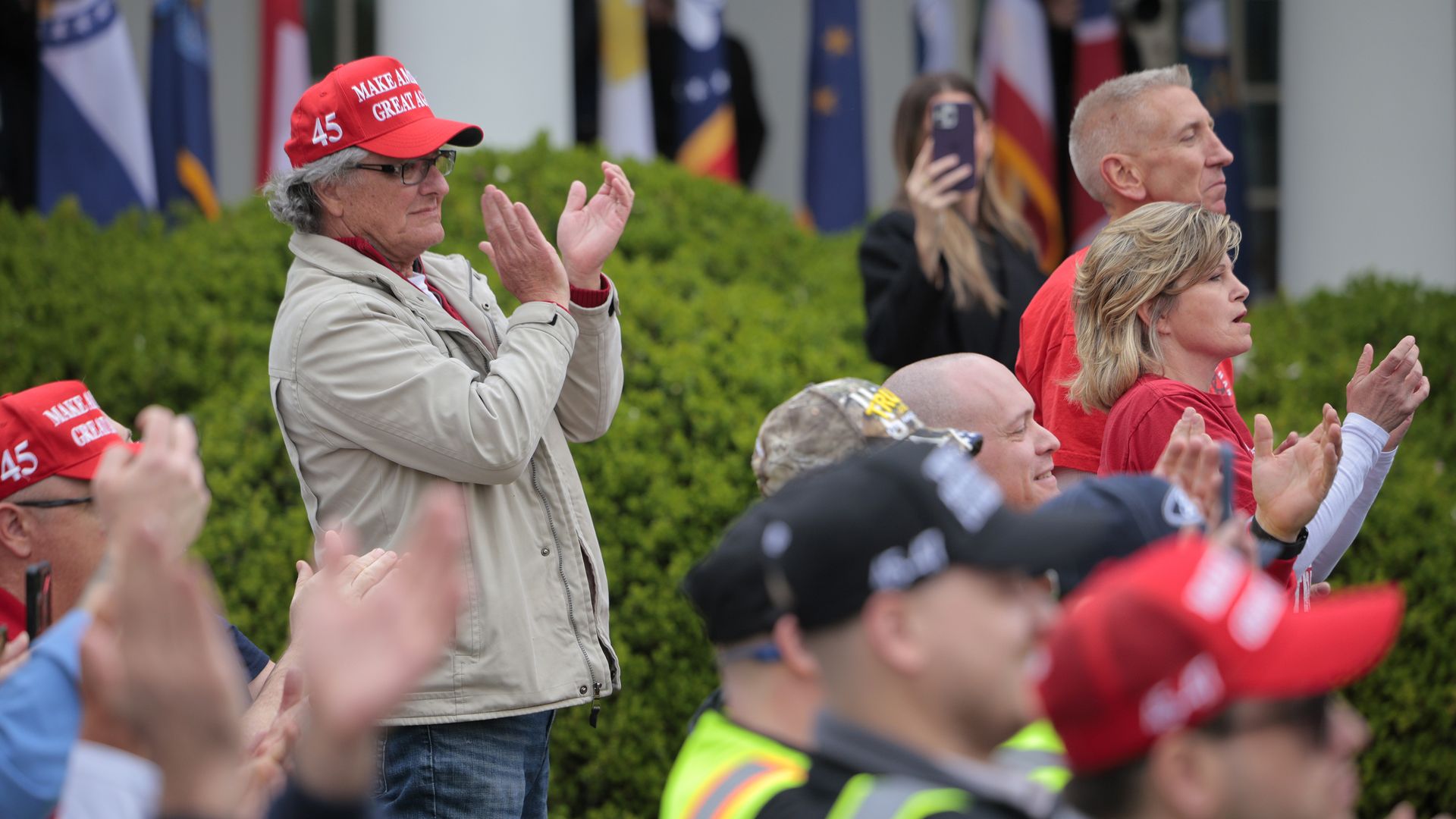
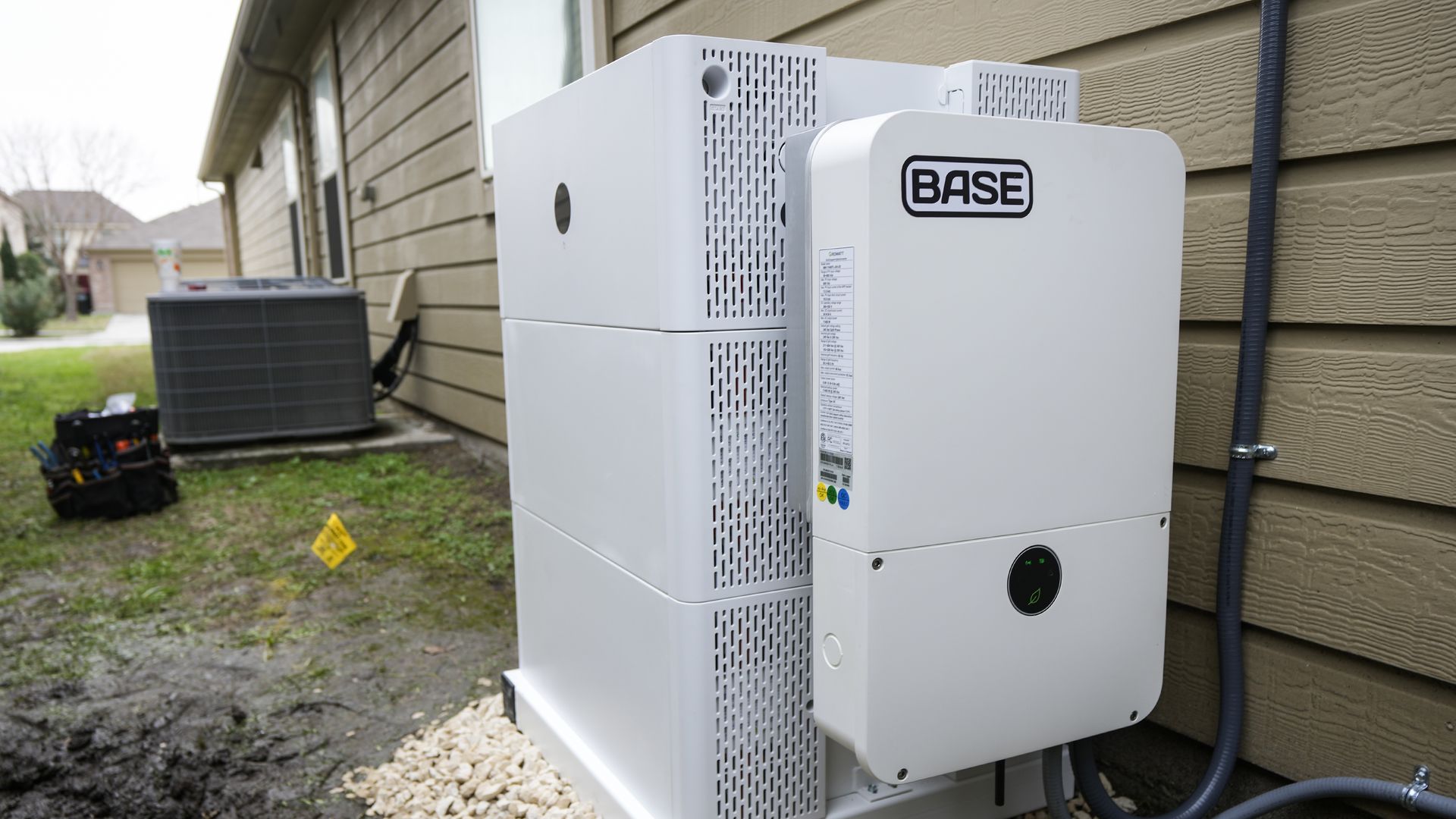
UAW workers are poised to stomach thousands of dollars in reduced payments because of President Trump's auto tariffs, according to new estimates.
Why it matters: The left-leaning union is supporting the Republican's auto tariffs, saying free trade hurts American manufacturing and arguing that the automakers can afford to absorb the financial blow.
Chagee, a Chinese teahouse operator and franchisor, on Thursday launched an IPO that could raise over $400 million at a $5.1 billion valuation.
Why it matters: The IPO market has been catatonic since President Trump announced new tariffs, so it would be ironic if the first major listing after "Liberation Day" comes from the one country still in his crosshairs.
People launched a new app Thursday meant to cater to the next generation of fans who prefer video-first mobile experiences over text-heavy articles.
Why it matters: People has long been one of the most widely distributed magazines in the country. Under its new owner, Dotdash Meredith, it's moved to become a much more digitally focused brand.
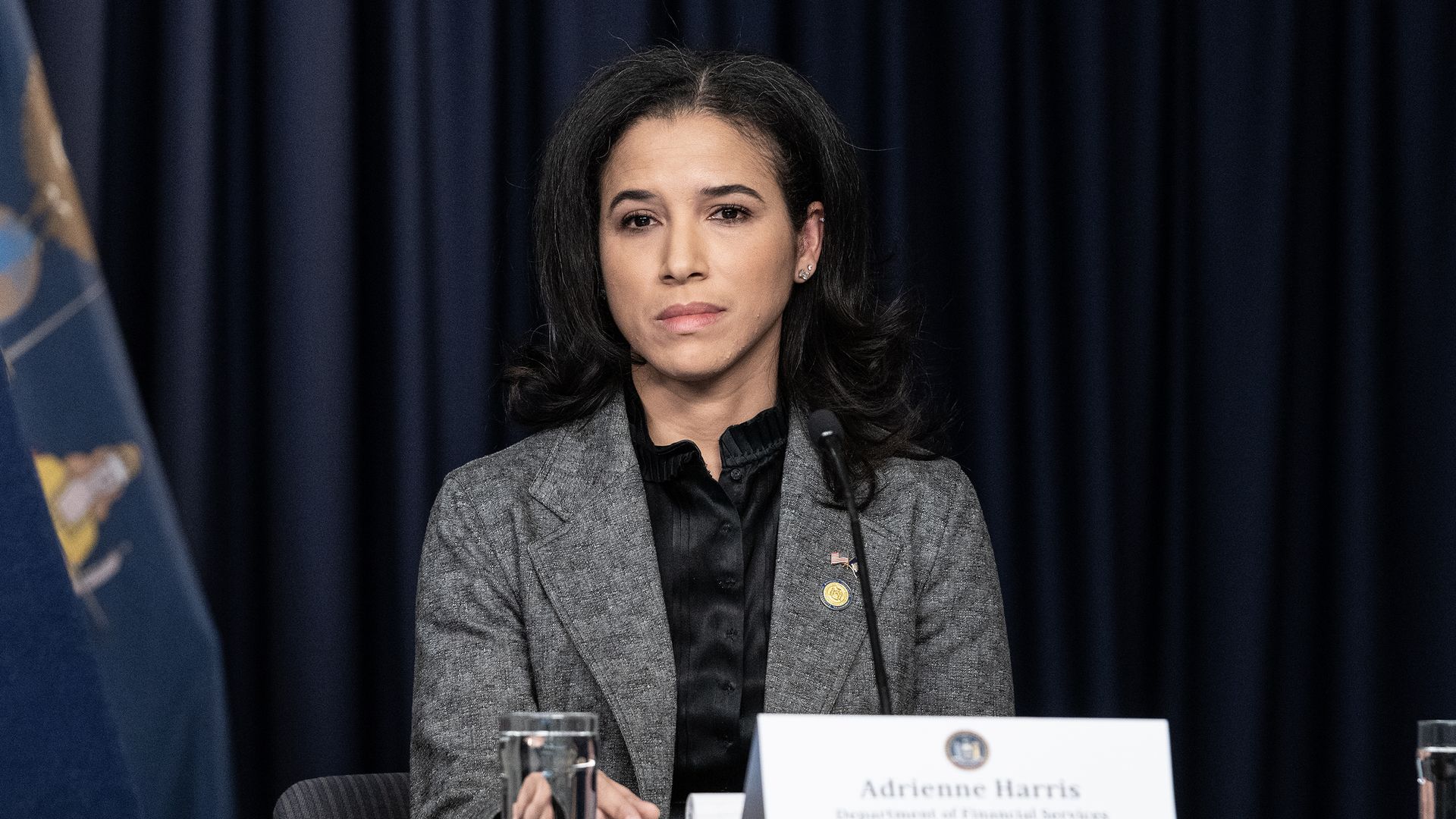
Block is paying $40 million to settle charges by New York's financial regulator alleging failures with the company's money transmitting safeguards in its peer-to-peer service Cash App, which also allows bitcoin transactions.
Why it matters: Compliance with the Bank Secrecy Act is one of the primary means regulators use to stem the flow of funds to terrorists and international criminal organizations.
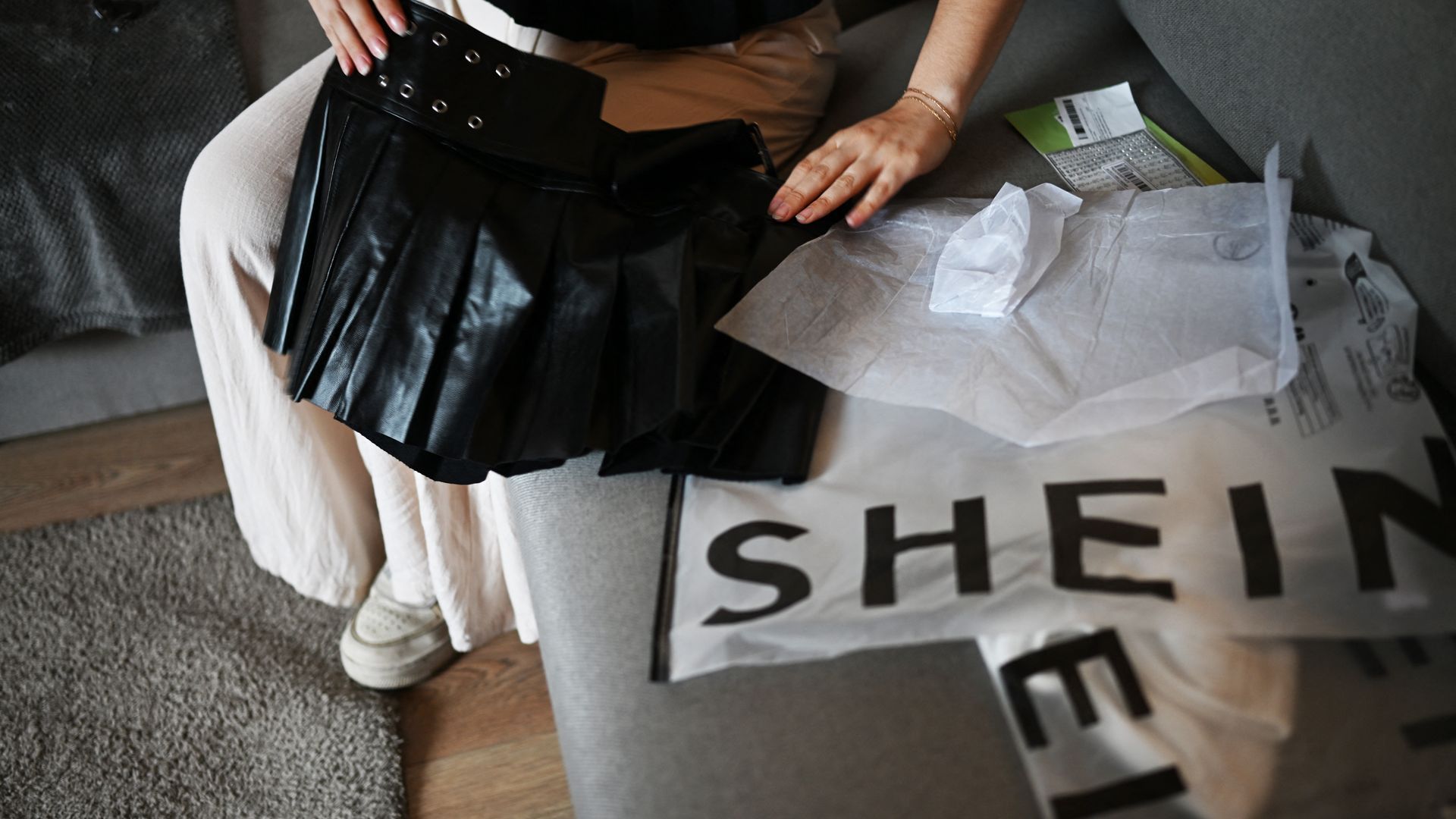
Packages from the likes of low-cost Chinese retailers Temu and Shein are facing another tariff hike from President Trump.
Why it matters: Imported shipments valued at less than $800 had enjoyed the "de minimis" exemption from added duties, which enabled foreign online retailers like Temu and Shein to sell super-cheap items to American consumers without facing tariffs.
While CEOs have stayed mostly mum on tariffs for fear of retribution, earnings season has forced some executives to discuss how Trump's trade policies could affect their businesses.
Why it matters: America's top business leaders are starting to communicate through the uncertainty in anticipation of changing consumer habits and prices.
Democrats are bashing President Trump for sharing market advice with his Truth Social followers Wednesday hours before announcing a 90-day pause on most of his sweeping tariffs, elevating calls for a ban on congressional stock trading.
Why it matters: The badly bruised market soared on Wednesday following Trump's freeze on the historic levies — leaving some critics questioning who benefitted from the market mayhem.
Inflation was notably cooler than expected in March: The overall Consumer Price Index dropped as energy prices plummeted, while the core measure that excludes food and energy rose just slightly.
Why it matters: Inflation moved down as President Trump began ratcheting up the global trade war last month — a relief after warnings that inflation progress had stalled out.
The Trump administration has discussed plans to collapse functions of the Federal Deposit Insurance Corporation into other regulators — setting the stage for further cuts to the critical regulatory agency.
Why it matters: The idea raises questions as to what would happen to the FDIC's two vital roles in the U.S. banking system: insuring depositors' funds and supervising banks for safety and soundness.
President Trump's boosters hailed his decision to pause tariff increases for countries around the world as a strategic masterstroke.
But few are buying the spin. Trump buckled under tremendous, mounting-by-the-minute pressure from CEOs ... friends ... GOP senators ... the markets ... and bond prices. Trump himself admits he blinked when "people were getting a little queasy" about the bond market.
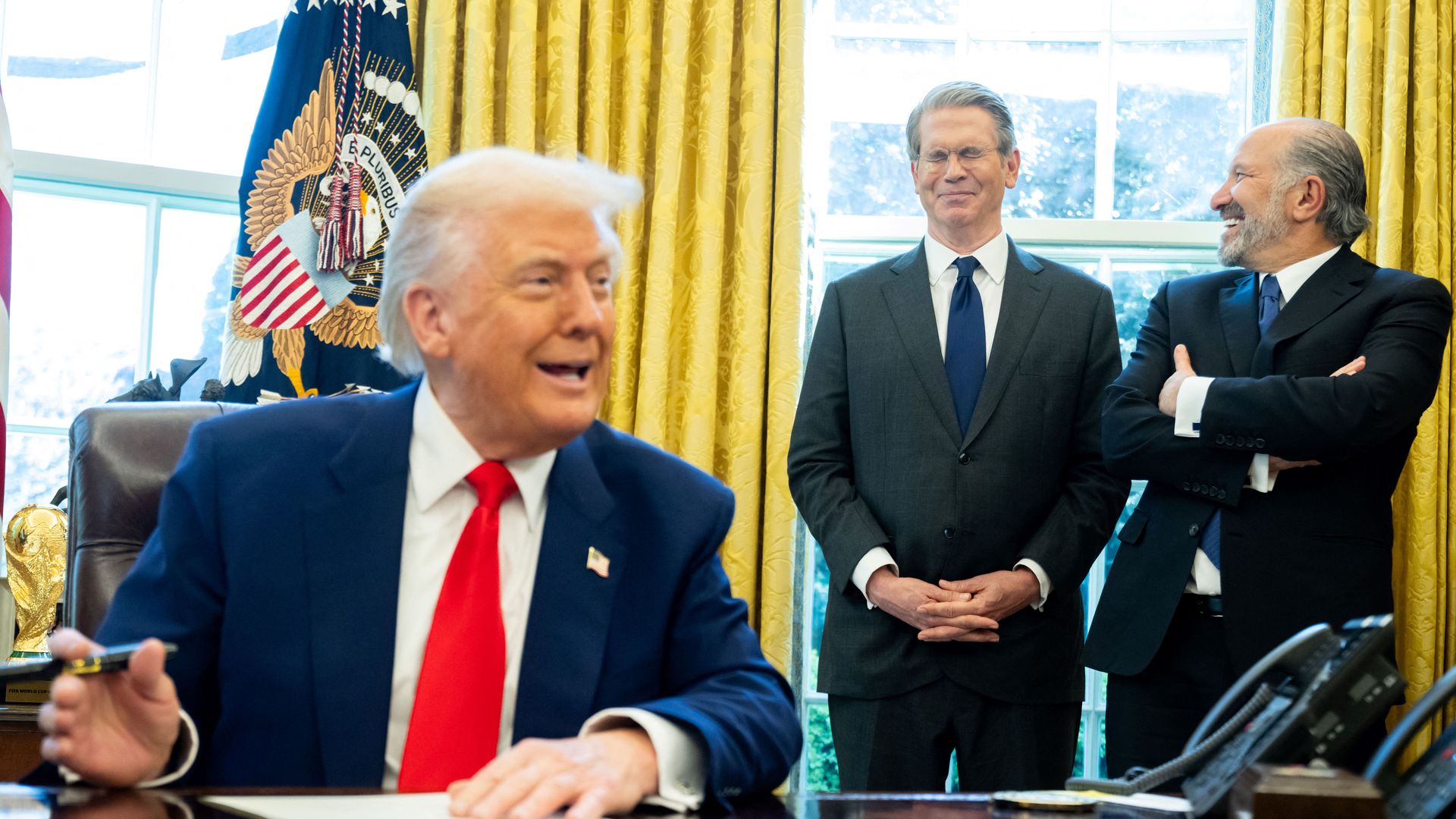
President Trump's epic tariff retreat shows there is no grand strategy for revolutionizing global trade, and that he's governing — as he always has — through gut instinct.
Why it matters: Trump's allies see a genius at work. His critics see a madman steering the economy toward crisis. And Wall Street sees, for the first time in weeks, a president who is receptive to external pain.
To make a manufacturing renaissance happen in America, President Trump needs three things to happen simultaneously:
The private sector needs to commit capital, in size and with confidence, to support a national campaign to build factories, ships and the like.
There needs to be a willing labor force for that construction — either American workers agreeing to take lower-wage construction jobs, or a reversal of the immigration crackdown that's straining the labor market.
All of the above needs to happen, nationally and in real time, without runaway inflation, as everyone seeks the same steel, lumber, workers, etc.
The big picture: No one can yet square that magical thinking with reality. Until they do, trillions of dollars in investments may be on hold.
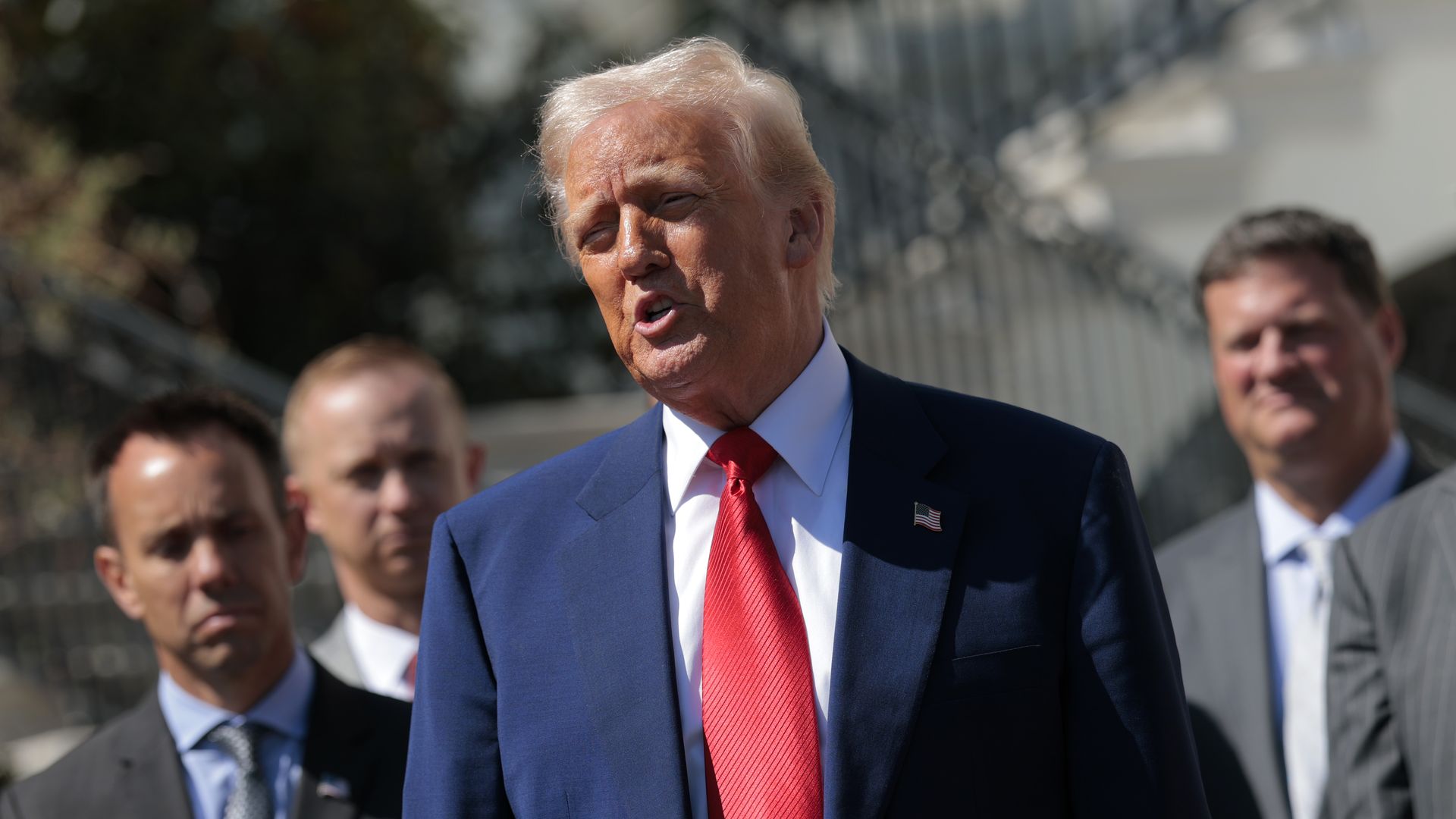
President Trump said his sudden announcement to pause hard-hitting tariffs except on Chinese imports the day they took effect on Wednesday happened after he'd been thinking about the matter "for a few days."
The big picture: Trump's sweeping tariffs push sent stock markets spiralling and the president noted to reporters at the White House on Wednesday about his abrupt reversal the day they took effect that stocks had since surged.
The Senate has voted 52-44 to confirm former Securities and Exchange Commission member, Paul Atkins, to return to the body as its chair, through June 5, 2026.
Why it matters: Atkins is seen as in line with the Republican Party's philosophy of market regulation, particularly with regard to digital asset policy (an area in which his predecessor became a flashpoint).
OpenAI countersued Elon Musk on Wednesday, arguing in its lawsuit that he "could not tolerate seeing" the company's success and that he sought to build a direct competitor "not for humanity" but for himself.
The big picture: It's the latest in a high profile legal battle pitting the AI revolution's standard-bearing company against the tech billionaire who helped found it.
The Trump family's digital asset ventures are making some Republican lawmakers uneasy about long-awaited, bipartisan crypto legislation.
Why it matters: The White House is boosting stablecoin legislation just as World Liberty Financial, a company tied to the Trump family, is promising to launch such a token.