Block settles with New York for $40 million over compliance failures

Add Axios as your preferred source to
see more of our stories on Google.
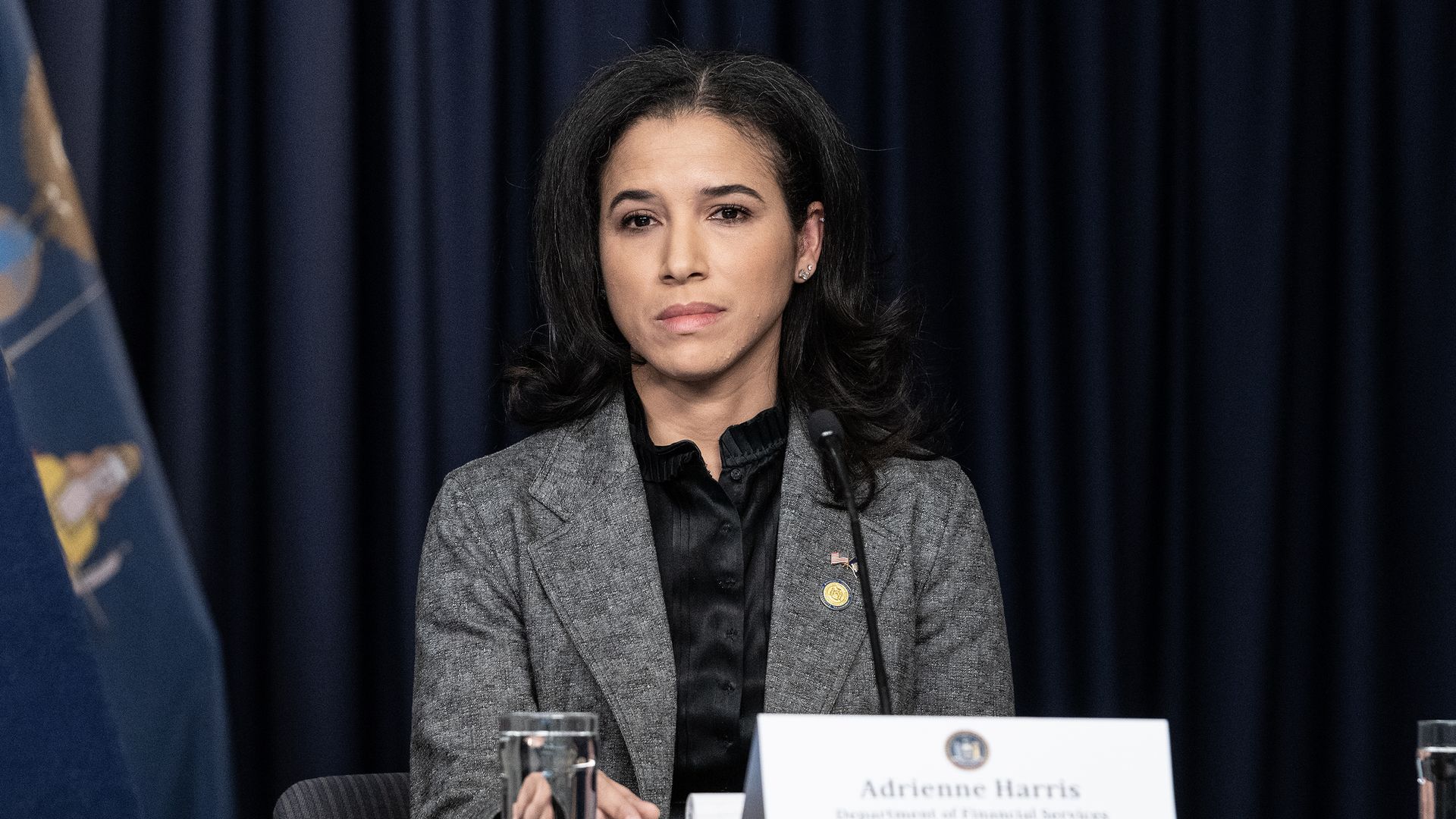
Adrienne Harris, superintendent of the New York State Department of Financial Services. Photo: Lev Radin/Pacific Press/LightRocket via Getty Images
Block is paying $40 million to settle charges by New York's financial regulator alleging failures with the company's money transmitting safeguards in its peer-to-peer service Cash App, which also allows bitcoin transactions.
Why it matters: Compliance with the Bank Secrecy Act is one of the primary means regulators use to stem the flow of funds to terrorists and international criminal organizations.
The settlement with New York's Department of Financial Services details findings in two reviews of Block's anti-money laundering program that spanned from spring 2021 to Fall 2022.
- The most striking allegation from the regulator was the existence of a system within Block that withheld the automatic prevention of bitcoin transactions to some wallets found to have smaller exposures to terrorism-connected wallets, a violation of rules within the BSA and required by the Office of Foreign Assets Control, or OFAC.
- Block's system, the complaint alleges, only blocked transactions when the recipient's wallet exceeded a 10% exposure to terrorism-related transactions.
It further alleges that Block was turning over suspicious activity reports much more slowly than it should have.
- Block is also alleged to have rated transactions with exposure to anonymity-enabling mixing services as "medium" risk, when the department says it should have been rated as "high," based on its guidance.
Know your customer deficiencies also piled up at Block, with customers finding a number of ways to work around identity checks or limits imposed on users.
- For example, the department found 25 to 30 individuals linked to a Russian criminal organization that were able to open 8,539 accounts using slightly different identifying information, such as different emails or phone numbers, according to the complaint.
- It also found a number of other deficiencies, such as in disaster recovery planning and consumer disclosures.
What's inside: "NYDFS imposed a monitor here, which is significant. Monitorships potentially present substantial expenses to a company," Anand Sithian, partner at Crowell & Moring and an alum of the Department of Justice's anti-money laundering section, tells Axios.
- "That could create additional risks to the company in terms of potential questions from OFAC."
What they're saying: "The rapid growth of Block's Cash App absent a robust compliance function created risk and vulnerabilities that violated the rules financial services companies operating in New York must adhere to," New York Superintendent of Financial Services, Adrienne A. Harris, said in a statement.
- In its own statement, Block said this was its last state money transmission case that needed to close. "Cash App has devoted significant financial and other resources to compliance remediation and enhancements," the statement said.
By the numbers: Cash App represented well over half of Block, Inc's gross profit in 2024, at $5.24 billion.
- Bitcoin transactions contribute greatly to Block's revenue, but its profit margin on that revenue is only around 3%.
Zoom out: New guidance to the Department of Justice prosecutors indicate that they should pursue cases against people doing crime, and not cases against services, such as mixers, that criminal or terrorist organizations might make use of.
