The global economy's next problem: When to trust Trump

Add Axios as your preferred source to
see more of our stories on Google.
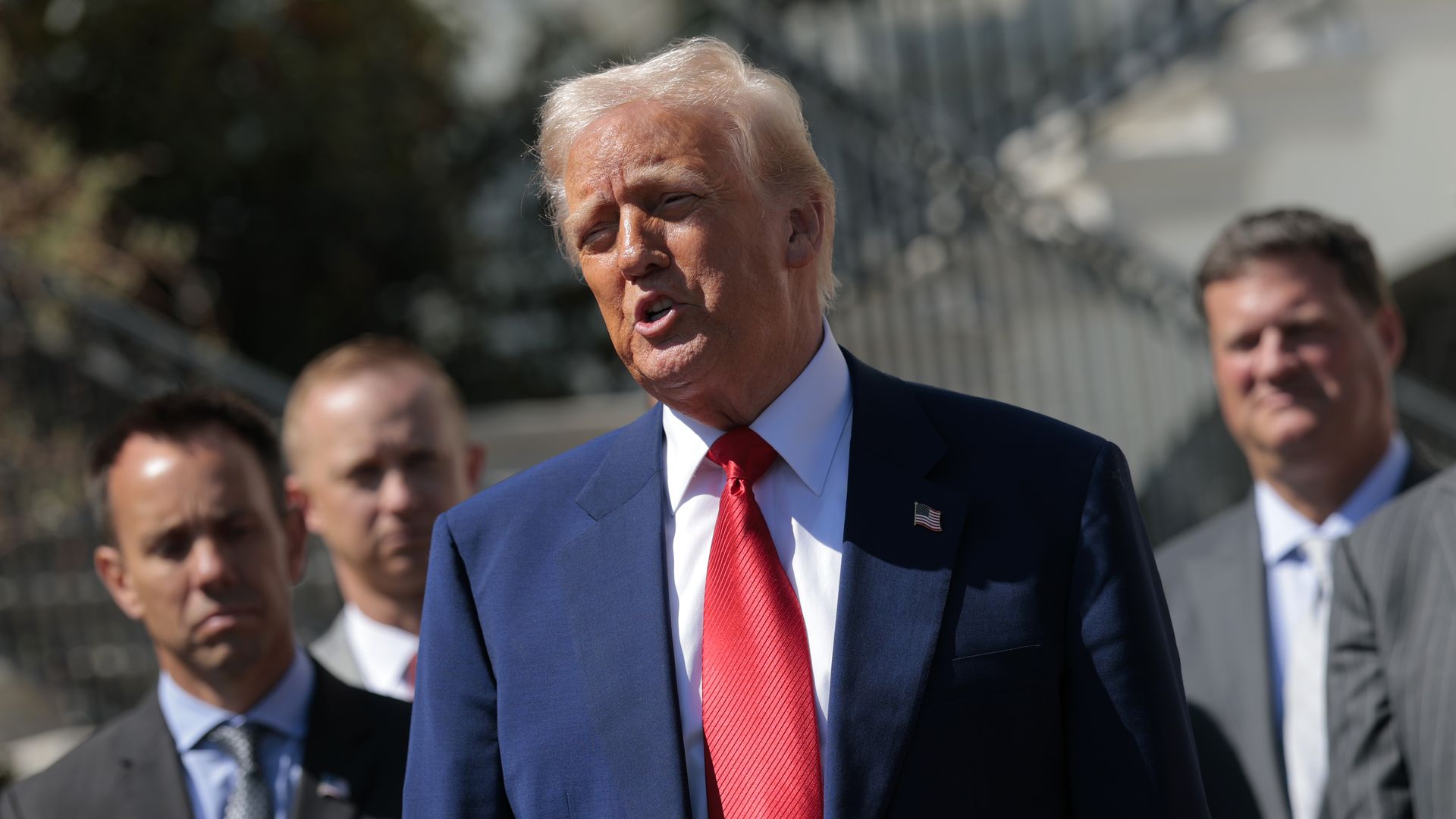
Trump speaks to the media at the White House today. Photo: Anna Moneymaker/Getty Images
President Trump blew up global trade and rattled the economy with huge, hotly disputed tariffs on major trading partners. Exactly one week later, he said never mind.
Why it matters: The new question for top CEOs and Wall Street traders is which of Trump's "burn-it-all-down" economic policies actually stick.
- "125% on China + permanent uncertainty that this volcano can erupt again at any moment probably means a recession can still happen," investor Spencer Hakimian posted to X — though he noted it was still better for growth than the alternative.
The intrigue: The reciprocal tariffs are paused, though at least two threats to the global economy have only grown:
- Forever uncertainty and eroding trust — a combination that makes it unpalatable for businesses to expand or invest.
- Global allies may see trade deals as more flimsy than in recent years, further crushing the reliability of the U.S. as a trading partner.
Threat level: If businesses pivot to adjust to Trump's trade policies, they might get burned by a policy reversal.
- But a slow pivot could be equally painful, if promised negotiations fall through and huge tariffs loom on the other side of the White House freeze.
What they're saying: The reciprocal tariff freeze is a positive development but "on-again, off-again tariff announcements must have our partners perplexed, not knowing what could come next," former acting deputy U.S. trade representative Wendy Cutler tells Axios.
- "It's even possible that with more time U.S. negotiating requests increase, making the already difficult negotiations more complex."
For businesses, Cutler adds, "it does little to create confidence and certainty, leading many to hold off on further investment decisions for at least a few months."
- Economists agree. "Companies will slow walk hiring and investment decisions until they get clarity on trade policies," Bill Adams, chief economist at Comerica, wrote in a note to clients.
- It's not great for markets either. "Certainly investor confidence in the predictability of policy in the US has gone down, maybe not permanently, but certainly for the short term," wrote Chris Marangi, co-CIO of Value at Gabelli Funds, in a note.
The big picture: By leaving a 10% baseline levy in place, the U.S. economy must still grapple with tariffs — plus those on steel, aluminum and more — that would be massive in any other context. All U.S.-bound Chinese goods now face a staggering tariff of 125%.
- But in the eyes of Wall Street traders, what looked like a worldwide trade war now primarily looks like a U.S.-China trade war — a step down that suggests further tariff easing down the line. But that is no guarantee.
- Goldman Sachs rescinded its call of higher recession odds after the White House tariff pause — just hours after the note was published to clients.
What to watch: The White House insisted there would be no pause in the reciprocal tariffs. Then came a pause.
- Advisers said the reciprocal tariffs were non-negotiable. But today Treasury Secretary Scott Bessent said he would help lead trade negotiations with dozens of nations.
"You have to have flexibility," Trump said, responding to a question about his credibility on Wednesday.
- "I could say, 'here's a wall, I'm going to go through it no matter what,' and you keep going and you can't go through the wall," he said. "Sometimes you have to go under the wall, around the wall or over the wall."
