How the White House talked about tariffs after "Liberation Day"

Add Axios as your preferred source to
see more of our stories on Google.
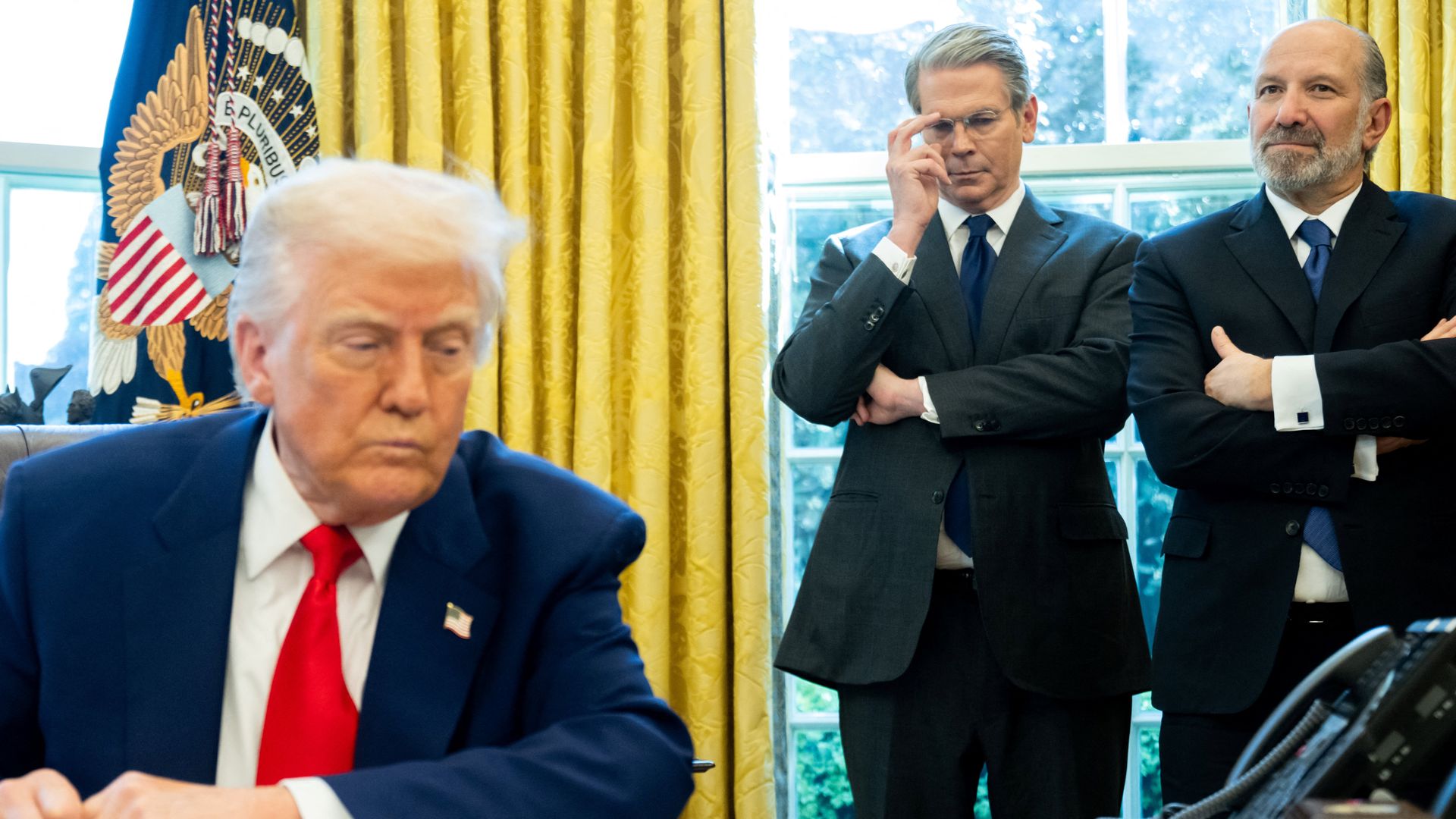
US Treasury Secretary Scott Bessent (2nd R) and Commerce Secretary Howard Lutnick look on as President Donald Trump speaks in the Oval Office. Photo: Saul Loeb / AFP via Getty Images
The past eight days have proven to be perhaps the highest-stakes study yet in how President Trump negotiates.
Why it matters: "Many of you in the media clearly missed the art of the deal," White House press secretary Karoline Leavitt said Wednesday, after the President announced a tariff pause.
- "You clearly failed to see what President Trump is doing here."
What happened:
Wednesday, April 2, Trump announced the "reciprocal" tariffs.
- "This is not a negotiation," a senior administration official told reporters. "This is a national emergency."
Thursday: "I don't think there's any chance that President Trump's going to back off his tariffs," Commerce Secretary Howard Lutnick said on CNN, the day after Trump's announcement.
- The stock market was at the start of a historic two-day fall.
Saturday cracks appeared between pro-tariff trade adviser Peter Navarro and Elon Musk, who spoke via video at an Italian conference about the possibility of zero tariffs with Europe, saying that was "my view," per Bloomberg.
- He traded barbs with Navarro through the weekend.
Sunday, Bessent and Lutnick stuck to the script."The tariffs are coming," the commerce secretary told CBS's "Face the Nation. "He announced it and he wasn't kidding."
- Bessent struck a similar note on NBC's Meet the Press, when asked if the president was open to negotiation: "No. No, no, no. I think that we are going to have to see the path forward. Because, you know, after 20, 30, 40, 50 years of bad behavior, you can't just wipe the slate clean."
Meanwhile, fears grew over what would happen when stock markets opened the next day.
Monday morning, the President posted on Truth Social.: "Negotiations with other countries, which have also requested meetings, will begin taking place immediately."
- A few hours later, on X, Bessent announced trade negotiations with Japan.
- Meanwhile, that day, the Financial Times, published an opinion piece by Navarro: "This is not a negotiation," he wrote. "For the US, it is a national emergency triggered by trade deficits caused by a rigged system."
Tuesday: Musk called Navarro "truly a moron," over comments that the trade adviser had made about the Tesla CEO's business.
- Bessent told CNBC that since the "reciprocal tariffs" were announced, the White House had heard from 70 countries who wanted to come negotiate.
- "It's all President Trump's decision, and he had a view after 'Liberation Day' that we should go into quiet mode and let our partners think about the shock and awe that he presented," he said.
- "I would say that the negotiations are the result of the massive inflow of inbound calls to come and negotiate. It had nothing to do with the market," he said. "If they come to the table with solid proposals, I think we can end up with some good deals."
Wednesday, though no deals had yet been announced with other countries, Trump paused reciprocal tariffs.
- He left in place a 10% across-the board tax — and increased China tariffs to 125%.
- "The world is ready to work with President Trump to fix global trade, and China has chosen the opposite direction," Lutnick said on X.
What they're saying: "President Trump hiked tariffs on China and paused other reciprocal tariffs for 90 days after he and his economic team received good-faith commitments from a majority of our trading partners willing to strike favorable trade deals," White House spokesman Kush Desai said in an emailed statement.
- "The Trump administration remains committed to using every tool at our disposal to address the national emergency posed by chronic trade deficits – including both tariffs and negotiations."
Editor's Note: This story has been updated with White House comments.
