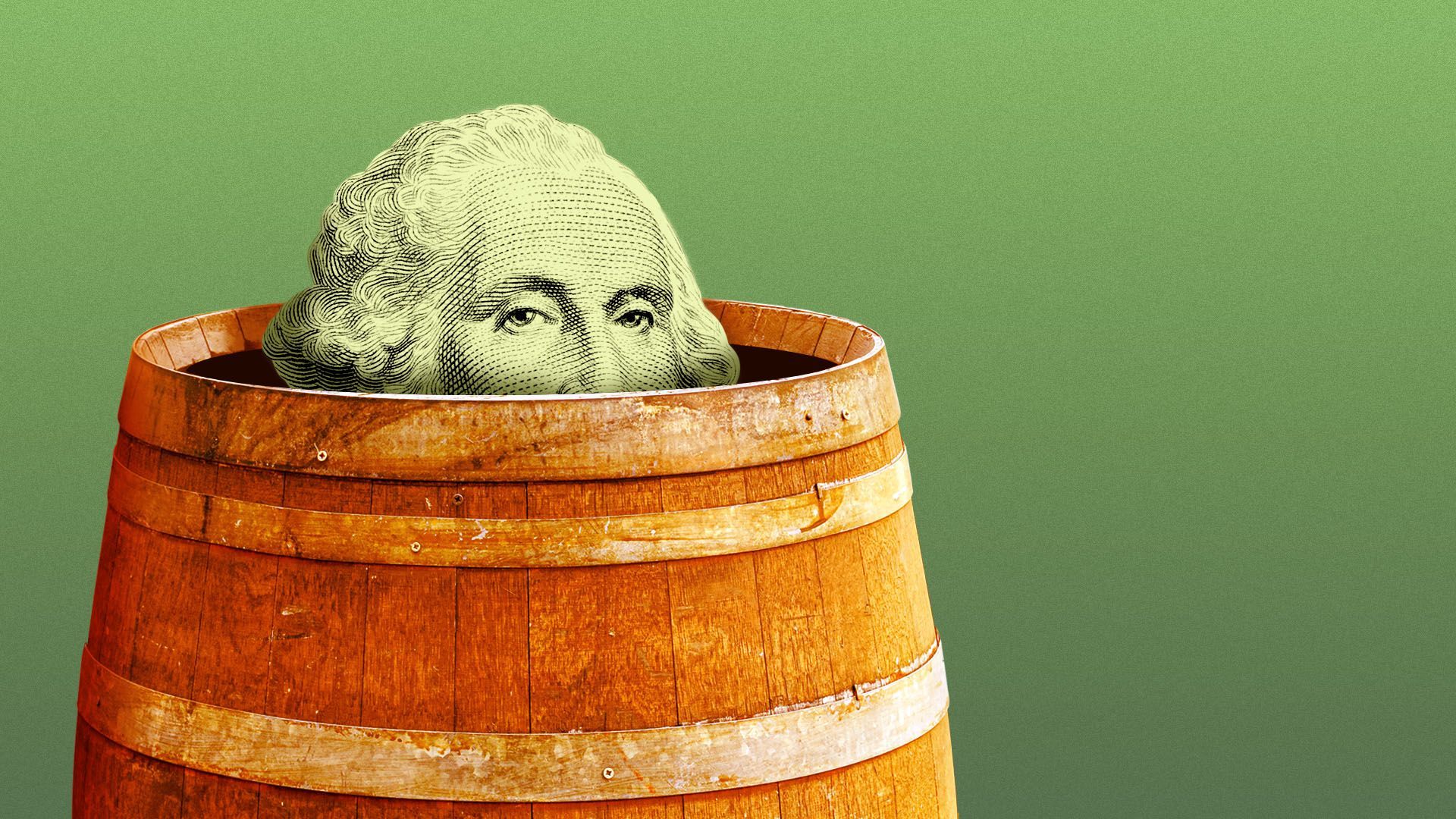
Some private equity firms buy alcohol companies, while others are teetotalers that avoid all "sin" deals. Then there's Cordillera, which is investing in the actual fermented fluids.
Driving the news: Cordillera last week announced that it's raised $62 million for a fund dedicated to buying and aging whiskey barrels.
Backstory: The Bay Area firm was founded 10 years ago to invest in niche, non-correlated assets. Or, as co-founder Chris Heller puts it, "off-the-beaten-path, weird stuff."
Early efforts included music royalties and litigation, although Cordillera likes to exit once others begin to enter. That led it to new areas like boating marinas and, more recently, barrels of whiskey.
"We had three different players in the spirits space point out to us an anomaly, which was that the aging curve for whiskey was particularly steep because the bourbon boom had caused demand to massively outstrip supply," Heller explains.
"So we ended up making a couple investments out of our second and third funds, and then decided it was worth a dedicated effort."
What to know: Most bourbon makers used to be vertically integrated, which meant they did the distilling, aging and distribution. Jim Beam, Jack Daniel's, etc.
But then came a new generation of craft brands that didn't have the money to build their own distilleries, and instead preferred to buy barrels.
Cordillera plays in that middle space, buying barrels from distillers, aging them, and then selling them to premium and ultra-premium brands.
The risk: It's been 17 years since "Mad Men" made brown liquor cool again, and there are some signs that demand growth is slowing.
In fact, Heller says he expects this to be his firm's only whiskey-dedicated fund, because the returns won't be as attractive in a few years.
Meanwhile, there also are some supply side worries that large, vertically integrated players could have a glut of shadow inventory that they'll roll into the market. Kind of like what happened when Seagram shut down in 1990.
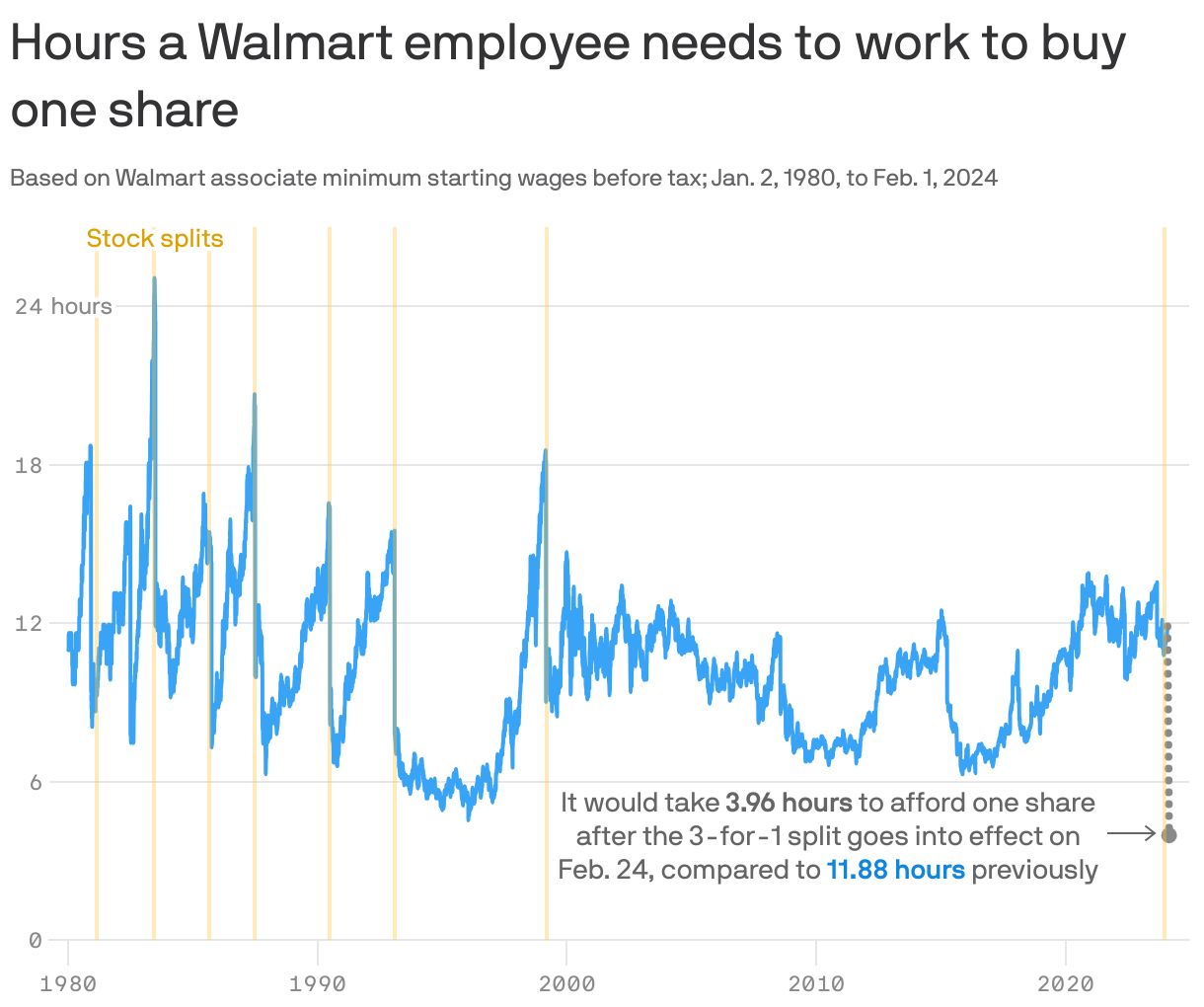
Walmart stock splits used to be a regular event — there were six of them just between November 1980 and June 1990. But it's now almost 25 years since the last one, in March 1999.
Why it matters: Nowadays, almost every brokerage, including Walmart's own Associate Stock Purchase Plan, allows the purchase of fractional shares, making a company's nominal share price less important than ever.
Deep reservoirs of individual and philanthropic wealth are being tapped in an attempt to save or rebuild the news industry. In reality, however, large amounts of up-front liquidity never seem to be the solution to the problem.
Driving the news: The demise of The Messenger this week is just the latest in a stream of headlines about small or fast news-media implosions. Its founder, Jimmy Finkelstein, wrote this in his note to staff:
Over the past few weeks, literally until earlier today, we exhausted every option available and have endeavored to raise sufficient capital to reach profitability.
Gambling platforms are unleashing plans to become the next great sports media companies.
Why it matters: Online sports betting is one of the fastest-growing markets — and it's only going to get even more competitive. The best content may well be key to winning the pot.
The U.S. Securities and Exchange Commission this week said it would not amend its controversial "gag rule" tied to settlement agreements.
Why it matters: The long-standing policy has been criticized over the years by targets of its enforcement actions, advocacy groups and even judges, who say the policy flies in the face of the First Amendment.
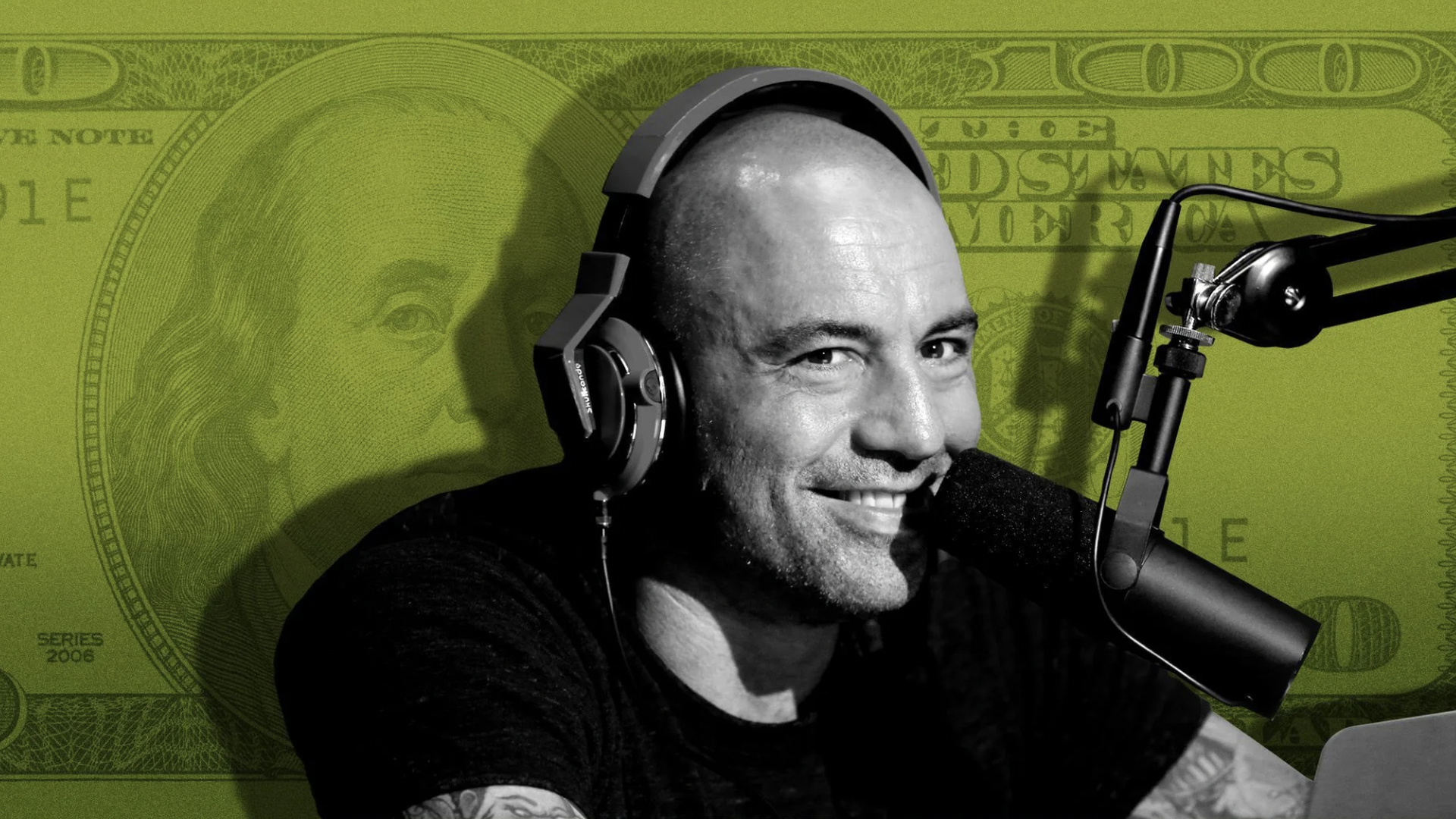
Spotify on Friday announced a new multiyear deal to distribute "The Joe Rogan Experience" podcast exclusively, while still allowing the show to be available on other platforms, including Apple, Amazon and YouTube.
Why it matters: The deal represents a shift in Spotify's podcast strategy toward owning the distribution and monetization rights to the show across its platform and others.
What we're watching: A zany ad featuring Sir Patrick Stewart and Peppa Pig, debuts for Lionel Messi and Kris Jenner, and a viral moment recreation from David and Victoria Beckham.
S&P Global has promoted Christina Twomey to global head of communications, Axios has learned.
Why it matters: In this role, she will oversee communications for all of S&P's global businesses divisions.
Details: Twomey reports to chief purpose officer Dimitra Manis and manages a team of more than 50 communicators who oversee reputation management, media relations, risk mitigation and internal communication.
What she's saying: "Today's communications landscape is more dynamic than ever," says Twomey.
"My role now is focused on ensuring a cohesive, omnichannel communications strategy that amplifies the impact of our strategic vision and investment areas."
What she's watching: Growing stakeholder demands, the increase of misinformation and disinformation, and the adoption of generative AI.
The Weber Shandwick Collective named Laura Schoen as chief health care officer; Pam Jenkins as chief public health officer; Jamie Dowd as president for health, Americas;Rachael Pay as president for health, EMEA; Nicole Arens as D.C. health care team lead; and Jamie Murphy Dawson as senior vice president.
Believeco:Partners has named Boston Consulting Group alum Mario Simon as CEO.
Axios:Andrew Childers is senior news editor; Claire Reillyis a social host for Axios Local — San Francisco; and Gregory Castillo is a social host for Axios Local — Texas.
Bloomberg:Brad Stoneis editor of Businessweek, and Tom Giles is senior executive editor for global technology news.
The Boston Globe: Erin Douglas is a climate reporter.
Business Insider:Julia Naftulin is an editor for special projects.
Chicago Tribune: Olivia Olander will cover state government.
Divorce has become a major life milestone replete with specialized parties, large support networks and a whole industry ready to capitalize on the big change — just like weddings.
Why it matters: Cultural attitudes toward ending a marriage have become far less negative, and in the process divorce has gotten more commodified, from services marking the transition to digital culture that lightens the mood.
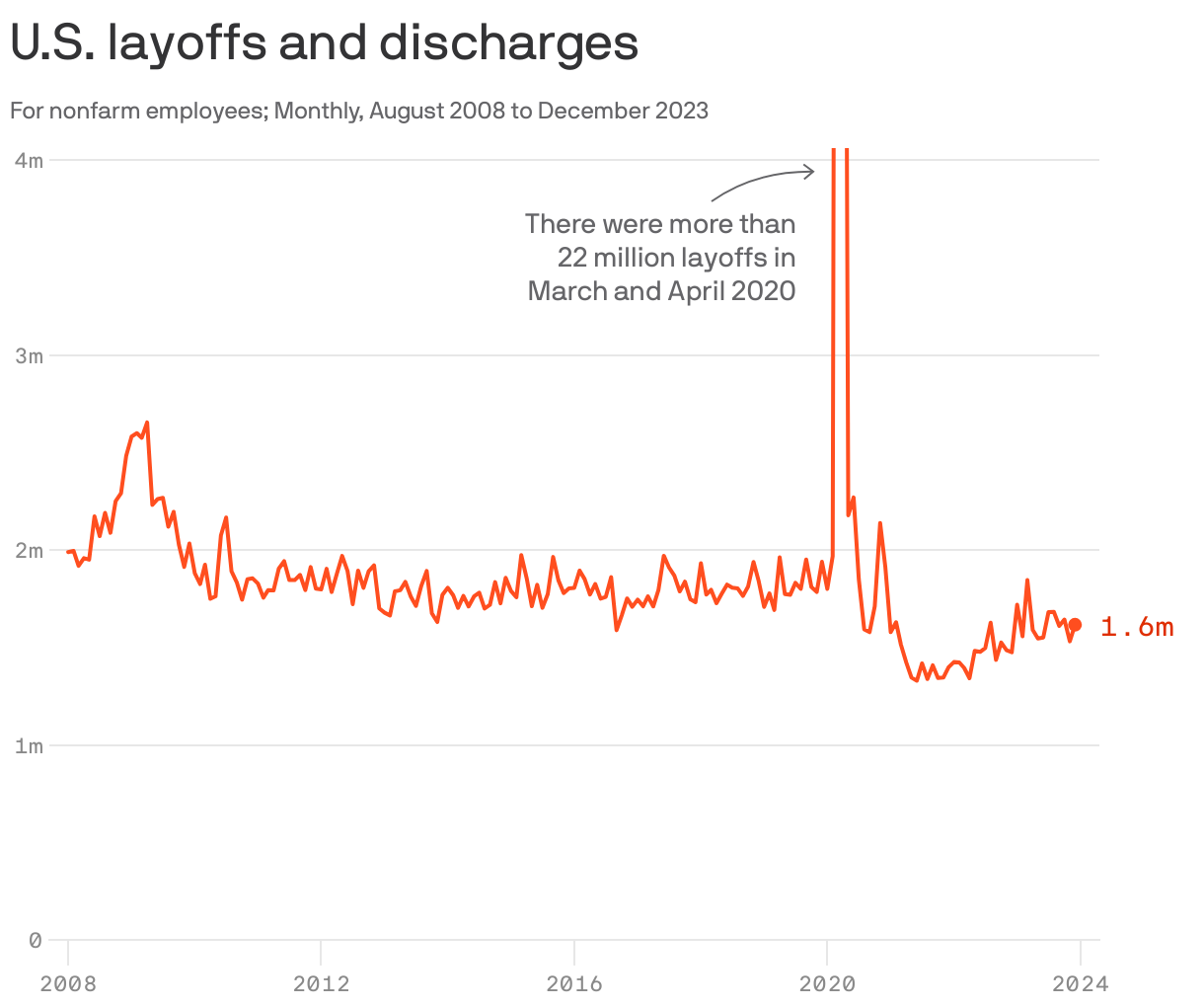
Data: Bureau of Labor Statistics, Fred; Chart: Axios Visuals
The stories about layoffs in media and tech are starting to make people freak out a bit over the health of the economy. But taking a step back, the high-level economic data isn't so worrying.
The big picture: The job market is cooling, but it's still pretty strong.
Welcome to the era of "loud budgeting," where speaking up about saving money and not overspending is no longer taboo.
Why it matters: The new personal finance trend — born on TikTok — is a quick reversal from last year's social media fad of flaunting luxurious purchases.
Stewart Butterfield, co-founder of Slack, told me the most searing lesson he learned starting a unicorn business is the seeping insidiousness of growing staff so fast that it creates mounds of make-believe, make-work, Jim VandeHei writes.
He calls it "hyper-realistic, work-like activities."
Why it matters: Most leaders and managers always want more — more staff, more budget. But more staff and budget beget more work. This can quickly create work just to fill time — and not fulfill critical work needs.
The Messenger was sued in a class action lawsuit by former employees Thursday, a day after the company shuttered, leaving roughly 300 people without jobs, or severance pay, according to the suit.
Why it matters: The lawsuit adds to the drama surrounding the sudden closure of the news site — which burned $50 million in cash in a few months after launching, leading to its demise.


















/2024/02/01/1706822187755.gif?w=3840)