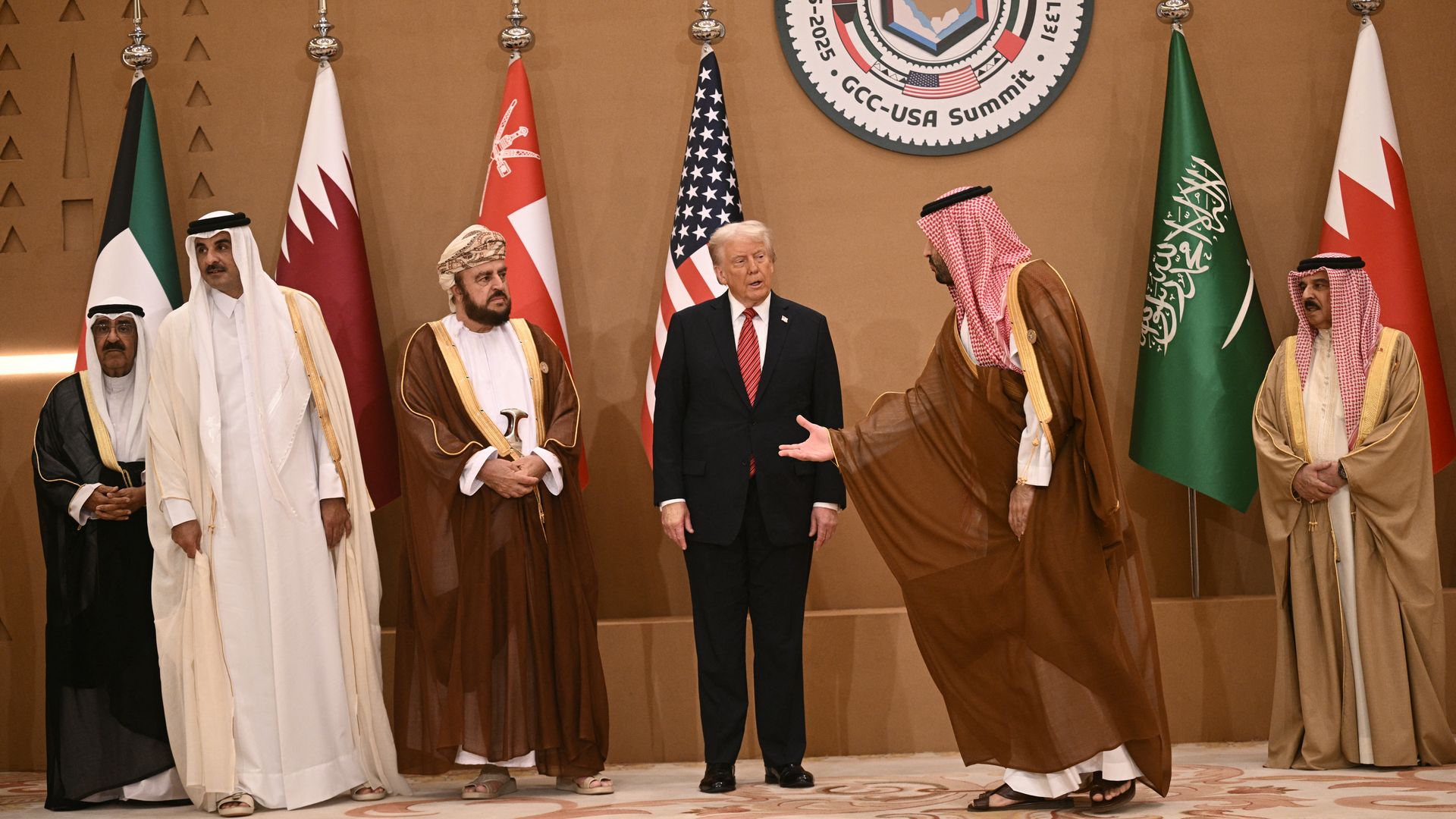
President Trump is expected to hold a meeting with Gulf leaders on the sidelines of the UN General Assembly in New York next Tuesday to discuss the next steps in the war with Iran, three sources with direct knowledge tell Axios.
Why it matters: The meeting is expected to focus on U.S. ideas for a postwar strategy as Trump and his senior team work on a day-after plan expected to be finalized after the midterms.
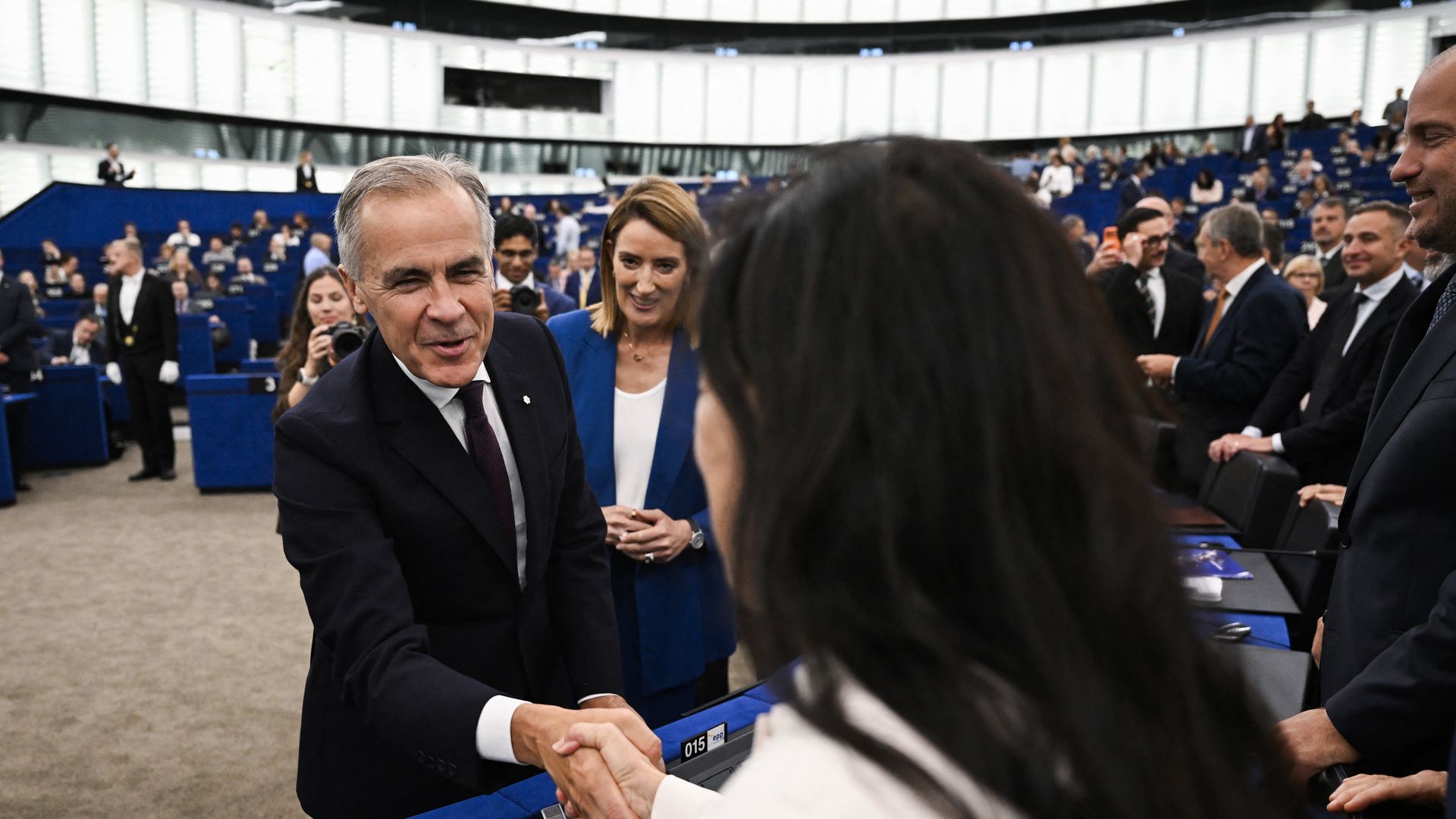
European Commission President Ursula von der Leyen on Wednesday proposed making Canada the European Union's first "associate member."
Why it matters: Canada and the EU are testing whether a nation deeply dependent on the U.S. market can find economic independence by moving closer to Europe.
This could also present one of the most permanent effects of President Trump's trade wars: U.S. allies building markets, supply chains and security ties designed to make them less vulnerable to Washington.
The House passed a sweeping Russia sanctions bill Thursday, sending the long-awaited legislation to President Trump's desk.
Why it matters: The measure would significantly expand economic pressure on Russia while handing Trump fresh authority to impose secondary tariffs of up to 100% on buyers of Russian oil and gas.
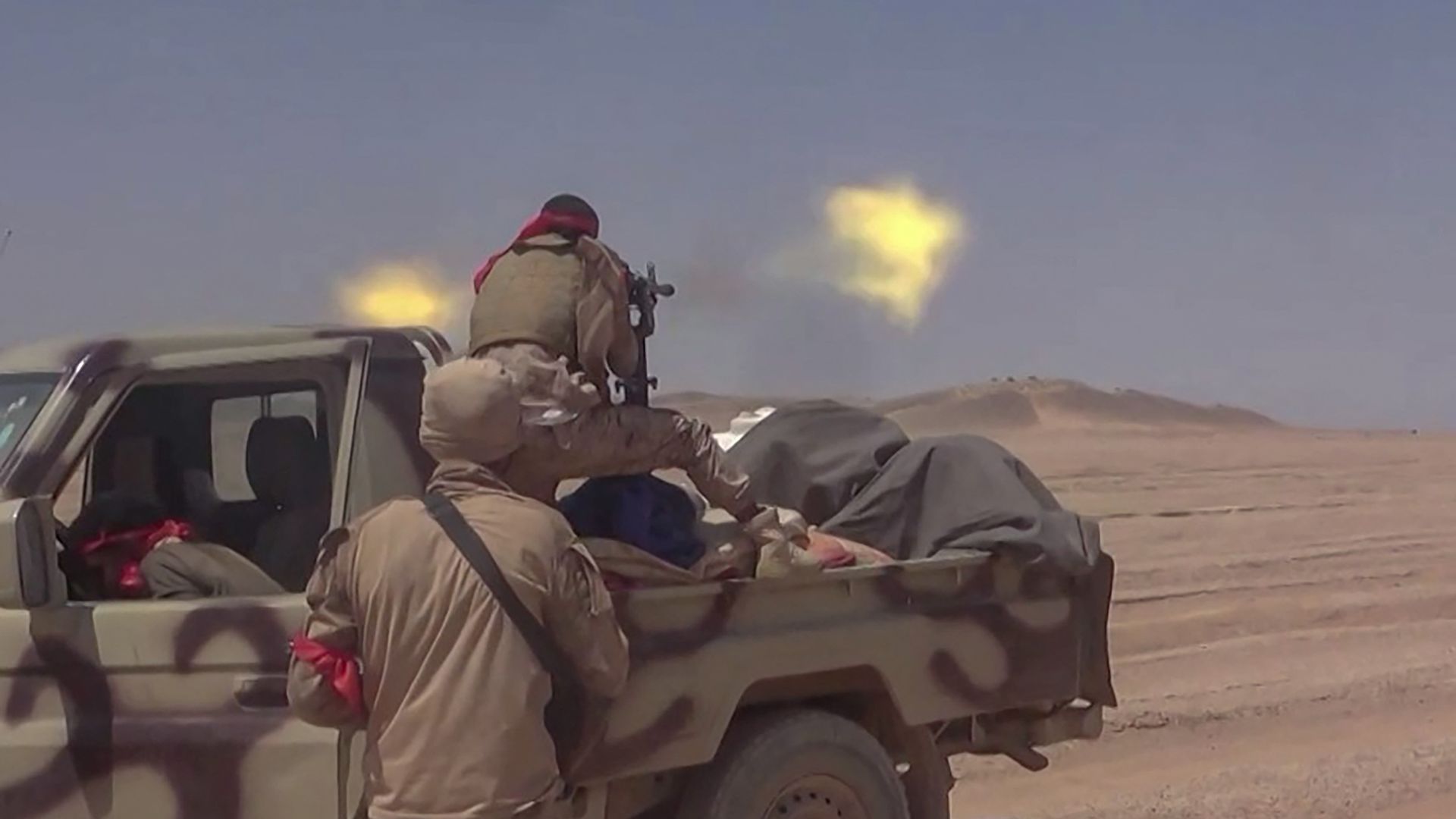
American diplomats met over the weekend with Houthi representatives at the U.S. embassy in Oman and discussed tensions in the Red Sea, a regional source familiar with the issue confirmed.
Why it matters: The meeting in Muscat, which was organized with the help of the Omani government, focused on maintaining a ceasefire between the U.S. and Houthis and guaranteeing that the Bab al-Mandeb Strait stays open, the source said.
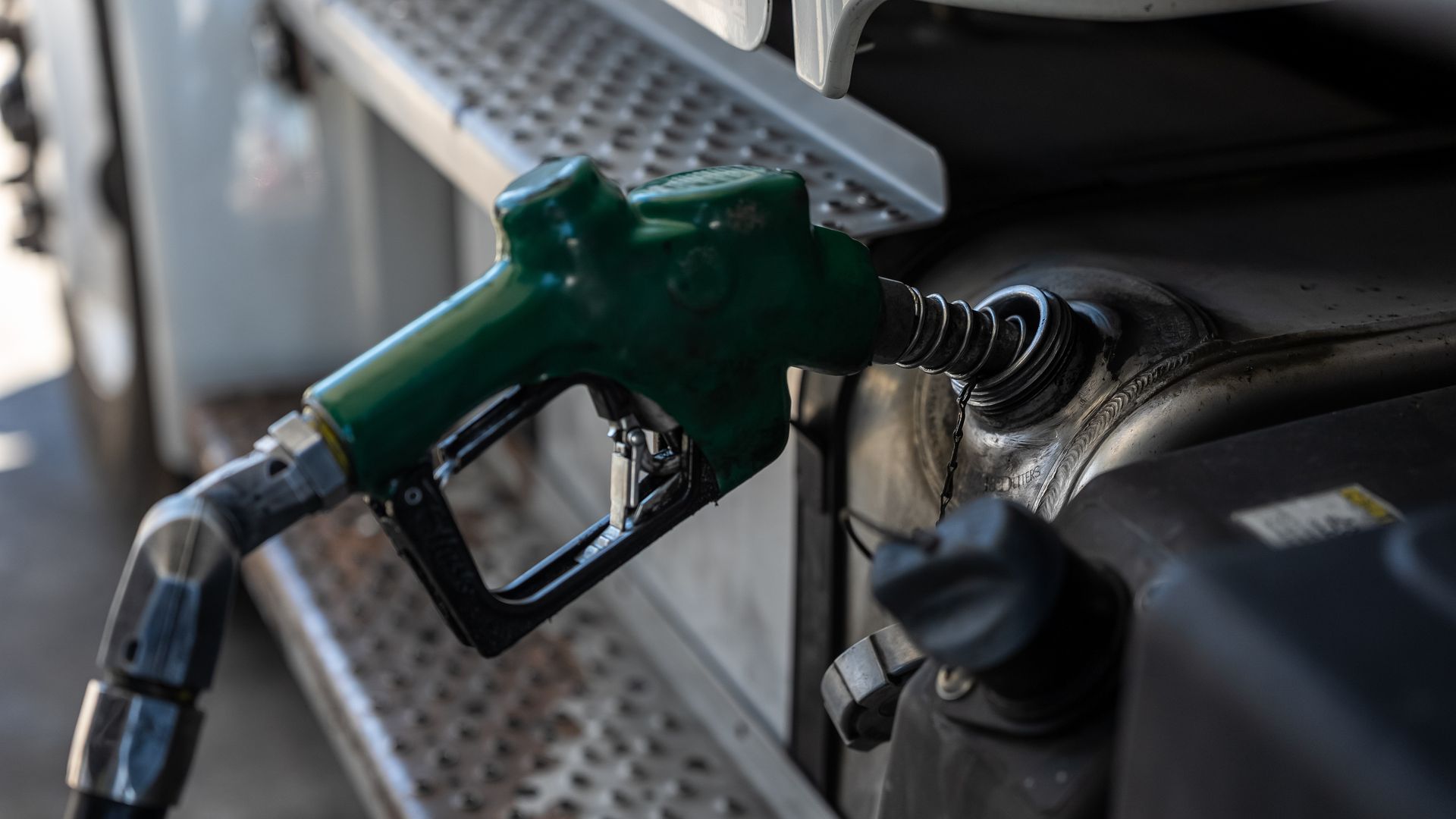
The amount of diesel that Americans buy in a single day costs roughly $321 million more than it did a year ago — driving a new round of chatter about an export ban to preserve domestic supplies.
Why it matters: Investors and economists warn that it could backfire spectacularly, driving up prices globally and potentially putting further upward pressure on domestic interest rates.
The Food and Drug Administrationis launching a pilot program intended to speed up the process of bringing new drug candidates from discovery into human clinical trials.
Why it matters: Early-stage drug development in China is cheaper and faster than in the U.S., and that's one reason China has quickly become such a formidable competitor within the biotech sector.
There's widespread agreement among experts that for the U.S. to maintain its competitive edge, it needs to streamline its drug development process.
The pilot is part of Operation TrialBlazer, the Trump administration's initiative to restore American leadership in clinical trials.
Driving the news: The pilot envisions partnering drug companies with qualified research institutions that will help them submit new drug applications to the agency.
The FDA would review components of the application on a rolling basis, rather than waiting for a full submission to begin a review.
This rolling review will "creat[e] certainty and reduc[e] unnecessary delays," Karim Mikhail, director of the FDA Center for Biologics Evaluation and Research, told reporters.
The agency will select up to 10 pairings of drug sponsors and research institutions for the pilot.
What we're watching: The agency said the pilot could potentially inform efforts to establish a formal accreditation model in the future, which would recognize research institutions capable of supporting drug development.
Our thought bubble: A pilot program is, at the end of the day, limited and experimental. But lessons learned will drive future policy, and early-stage development has emerged as a clear area in need of improvement if the U.S. wants to keep up with China.
U.S. household income hit a record in 2025, but the lowest earners barely shared in the gains, new Census data show.
Why it matters: On paper, Americans look richer than ever. But broader measures of financial security show millions still getting squeezed by medical costs, uneven income gains and a thinning public safety net.
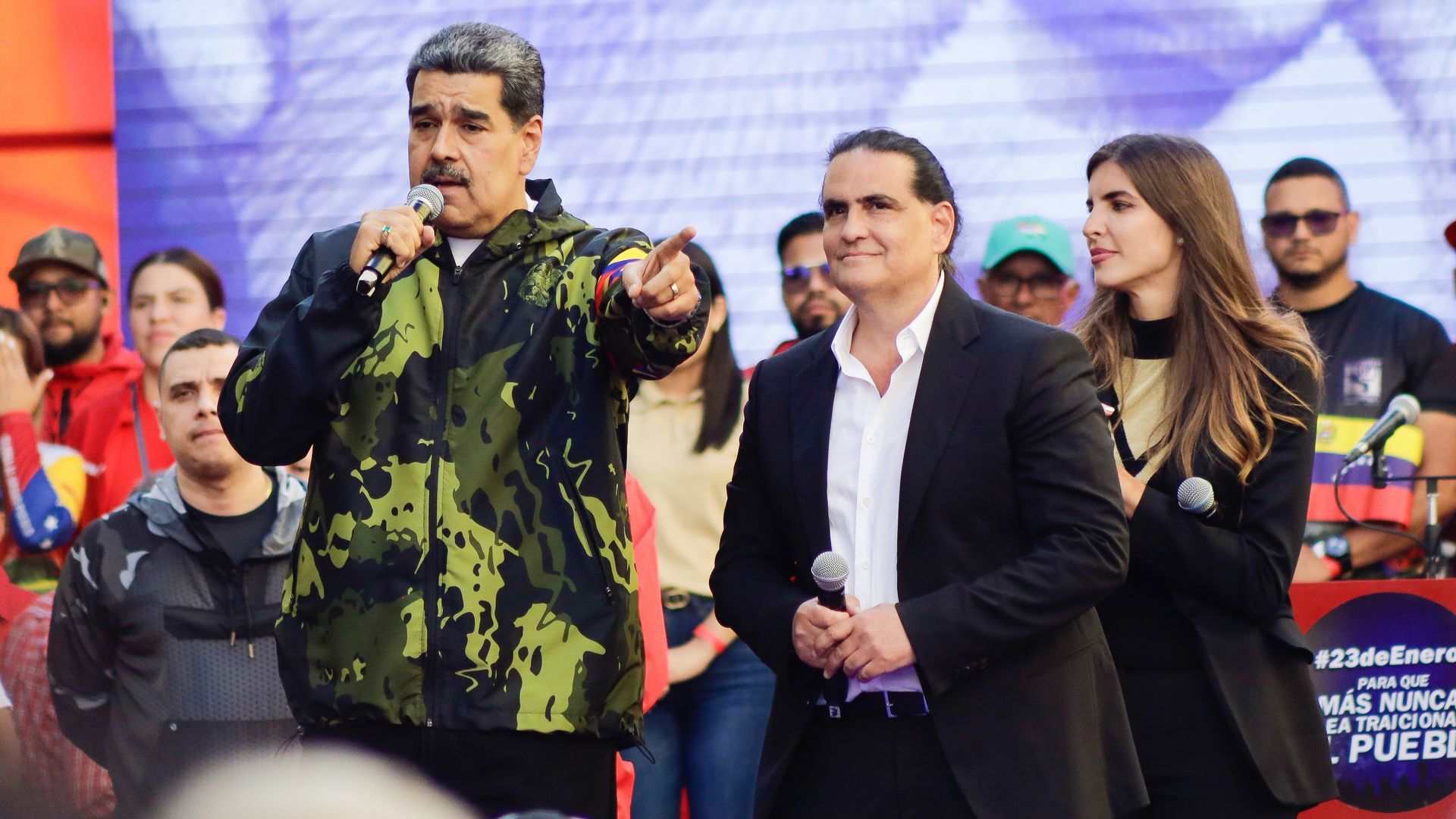
Alex Saab, an ally and former minister of Venezuela's ex-President Nicolás Maduro, pleaded guilty Tuesday to conspiring to launder proceeds from a bribery and fraud scheme in Venezuela and the U.S., prosecutors said.
Why it matters: Federal prosecutors allege that Saab previously oversaw funding for Maduro, and his plea deal could bolster U.S. prosecutors' separate case against the former Venezuelan leader, who is awaiting trial in New York.
Ed Sheeran's world tour spiraled into chaos this week after one opener was removed, every remaining opening act quit and stadiums threatened to pull the plug on the tour.
Why it matters: The turmoil reveals the power dynamics behind major concert tours, showing how even a global star like Sheeran can be forced to take a back seat on decisions about his own shows.
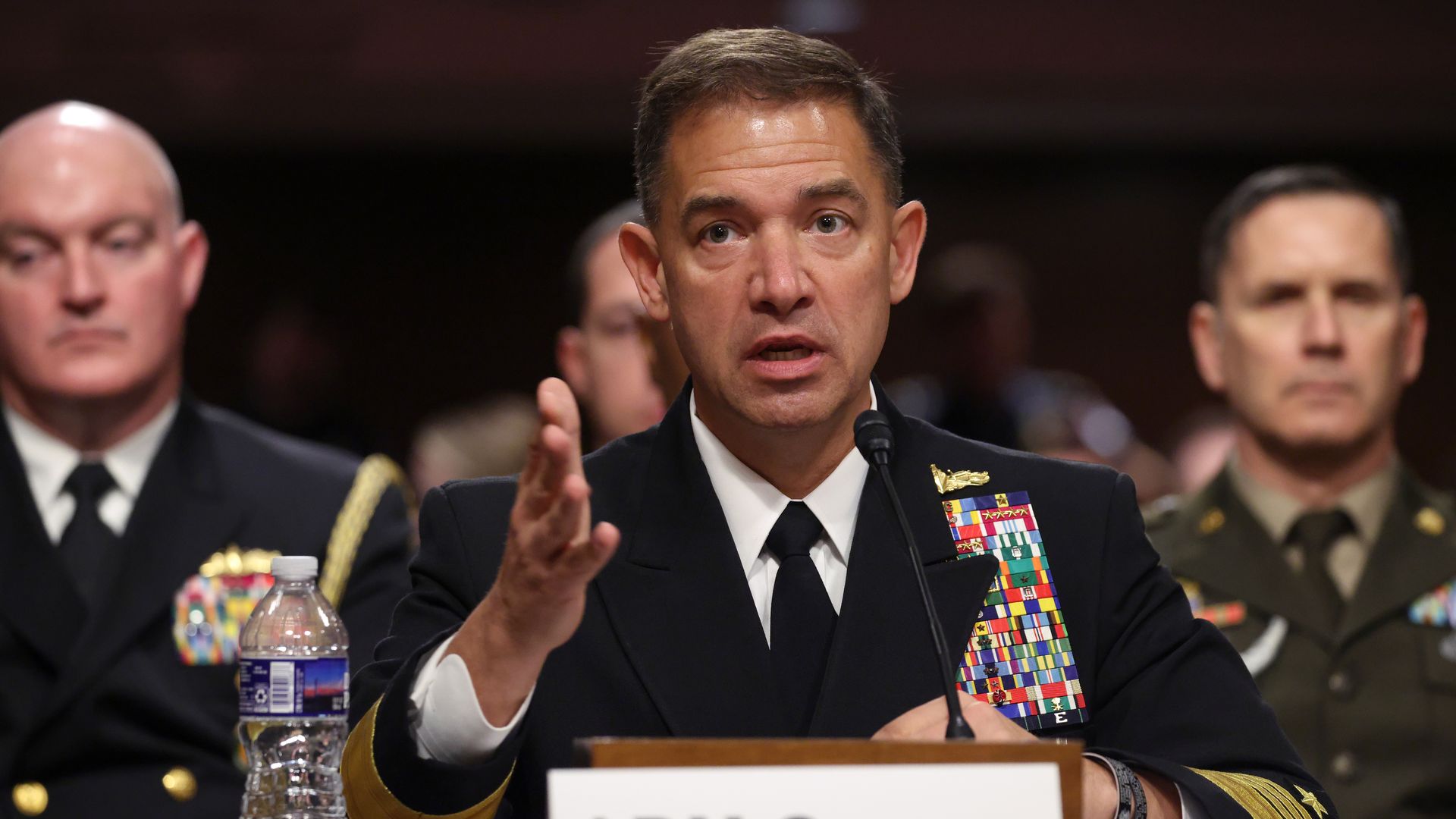
Top military commanders from the U.S., Israel and several Arab countries met last week in Germany to discuss the war with Iran and broader tensions in the region, two Israeli officials told Axios.
Why it matters: The private retreat, organized by Commander of U.S. Central Command (CENTCOM) Adm. Brad Cooper, was not officially announced by any of the participating countries.
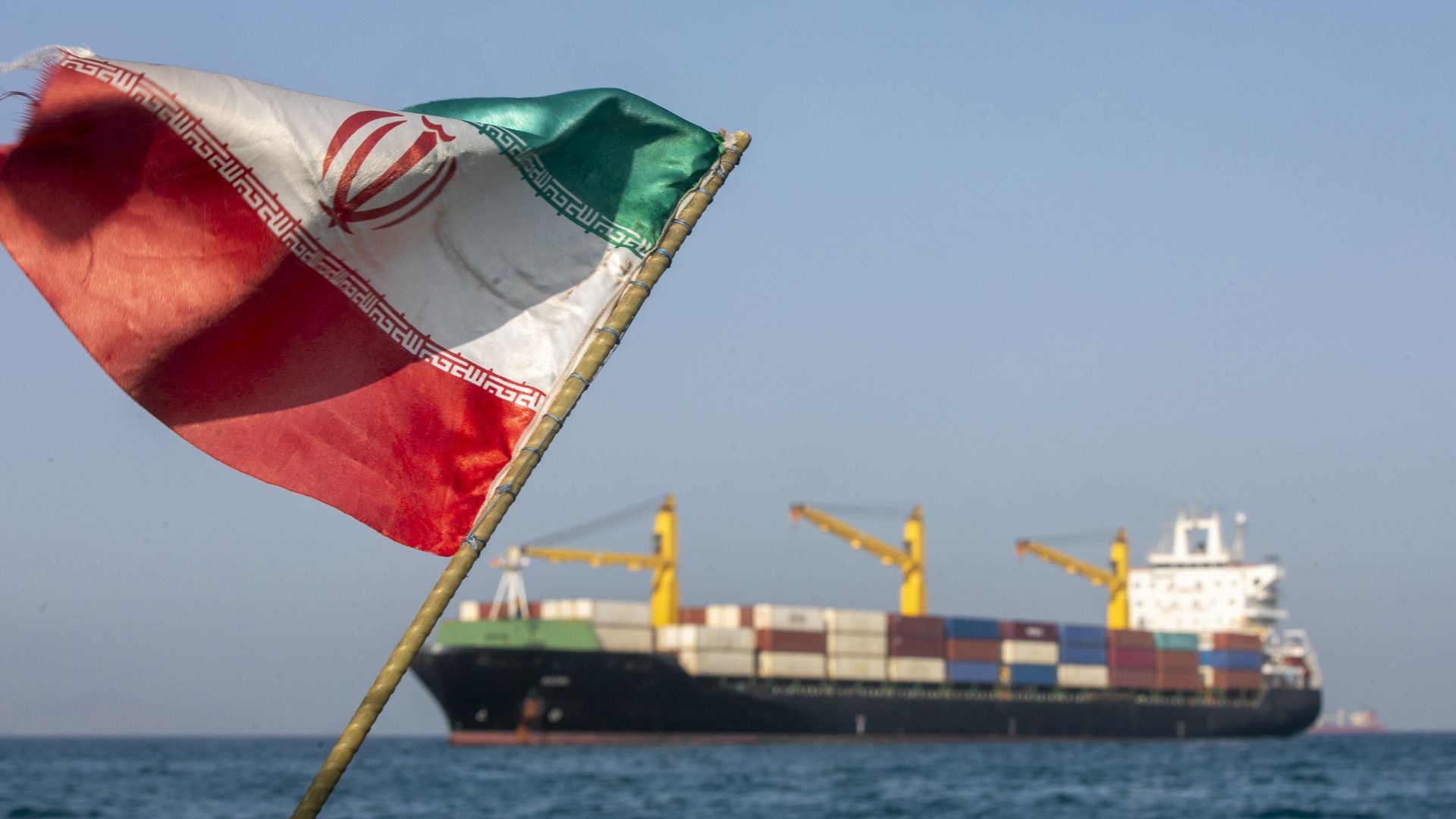
The U.S. military destroyed two Iranian small boats Monday after the Islamic Revolutionary Guard Corps tried to steal a Navy drone patrolling the Strait of Hormuz, U.S. officials told Axios.
Why it matters: The unusual incident shows how efforts to restore normal shipping through the Strait of Hormuz continues direct confrontation with Iran.
The U.S. military initially didn't disclose the strike, and Iranian media presented it as a drone strike on "fishing boats."
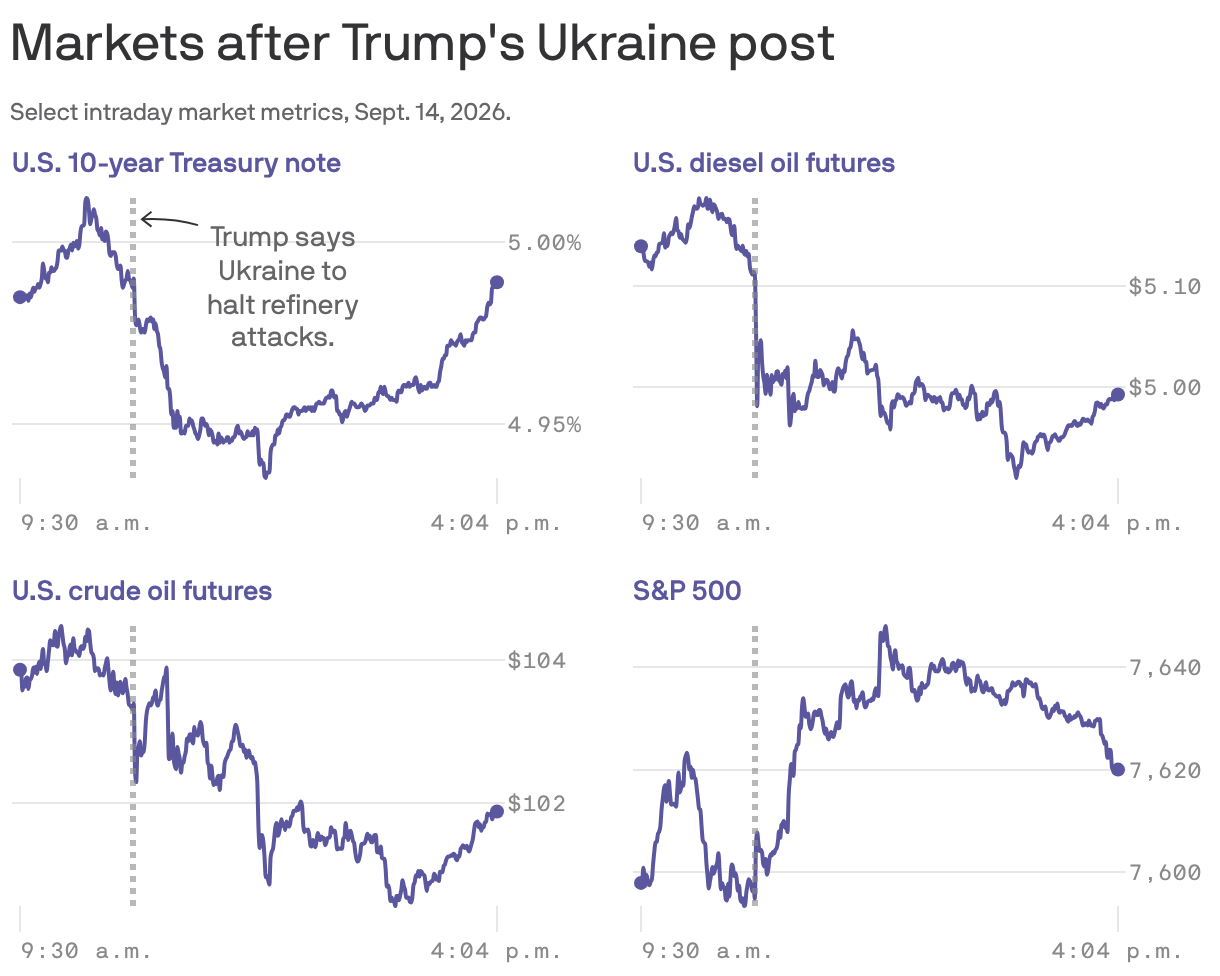
President Trump's claim that Ukraine agreed to halt strikes on Russian energy targets coincided with a pullback in oil prices and Treasury yields Monday.
Why it matters: Ukrainian drone strikes on Russia have crippled large swaths of the country's refining capacity, creating embarrassing shortages and prompting Russian officials to curtail exports to shore up domestic supplies.
Russia has long been one of the world's largest exporters of diesel, and its export ban contributed to a worldwide ripple of diesel fuel shortages and price spikes, including in the U.S., where the national average price for diesel jumped to $6 per gallon in recent days.
What they're saying: "Ukraine has agreed not to hit Russian Energy targets. Russia has agreed to do, likewise! The World's Diesel price rise is mostly caused by the Russia/Ukraine War, not Iran. President DJT," Trump posted.
The other side: The Ukrainians sounded somewhat skeptical, with President Volodymyr Zelensky stating that "Ukraine is not convinced that Russia is willing to abide by any agreement."
"If our partners are ready to ensure that Russia genuinely refrains from striking our electricity system, other energy facilities, critical infrastructure, and food supply routes, then, of course, we are ready to ensure a corresponding halt to our strikes."
The bottom line: In any case, diesel prices, crude oil and Treasury bond yields declined after Trump's message.
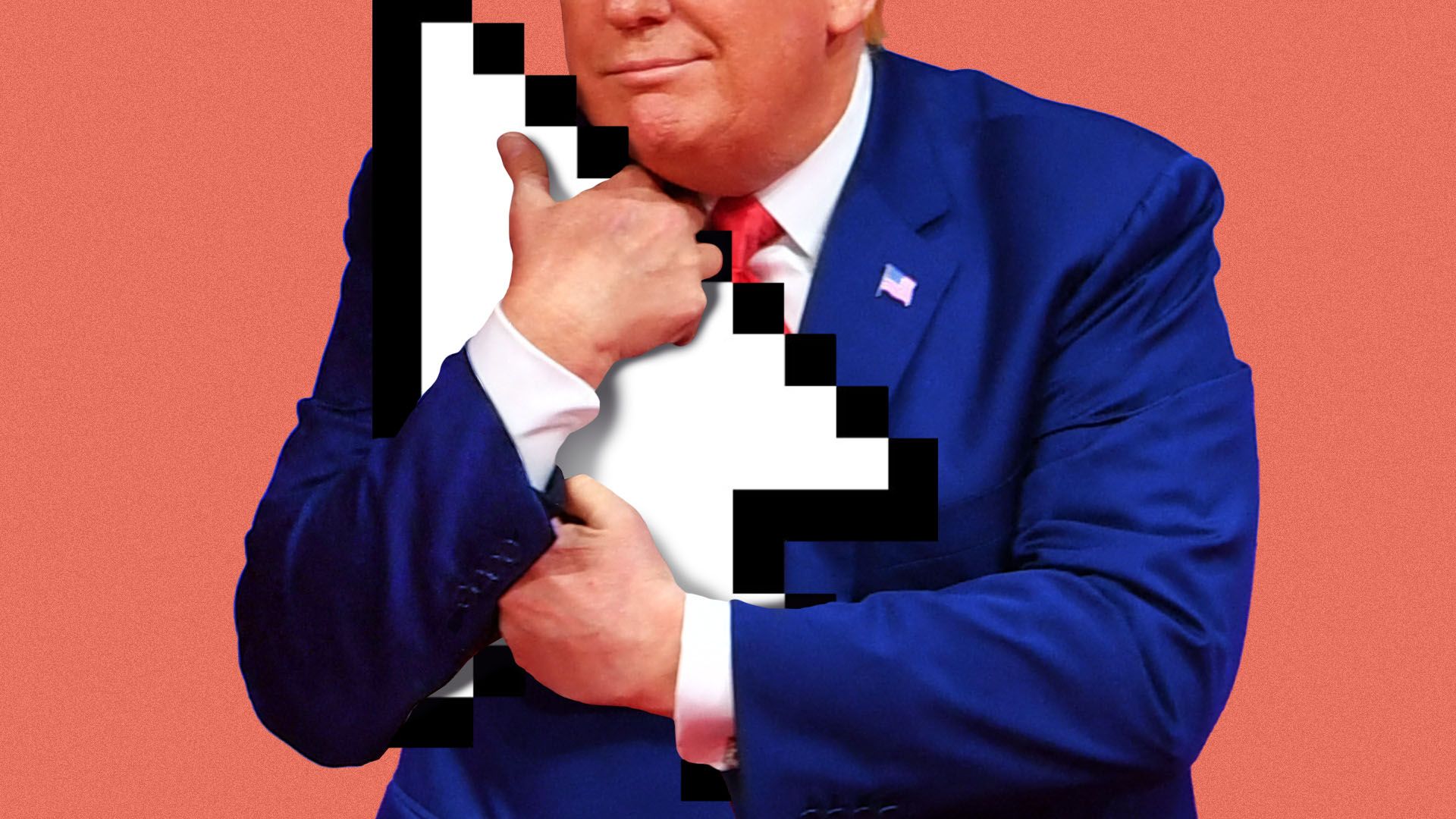
Zoom out: The market moves were a potent reminder that Trump's online pronouncements can still matter for investors.
The product offers access — the cost is between $60,000 and $100,000 per month — to a data feed of "published and publicly available posts fractionally faster," according to Trump Media CEO Kevin McGurn, including those of the president and other top accounts on Truth Social.
Trump owns roughly 41% of the outstanding shares in Trump Media.
Friction point: The product is the focus of a lawsuit filed last month by the Freedom of the Press Foundation and nonprofit news organization The Intercept, which accuses the president and the administration of violating the First Amendment and profiting from selling government information.
"This scheme is profoundly corrupt. The President stands to gain financially by giving 'market-moving' government information to those who are willing and able to pay his personal company," the plaintiffs wrote in their complaint.
A Trump Media spokesperson said: "Information from President Trump is disseminated by countless platforms and news outlets, many of which offer subscription APIs. One of those channels is Truth Social, which was founded as an uncancellable haven for free speech after the President was deplatformed. Now, left-wing activists are trying to wrongfully weaponize the courts to censor him again and harm our shareholders."
The White House did not respond to a request for comment.
Disclosure: In 2023, TMTG sued 20 media organizations, including Axios, for defamation. Litigation is ongoing.
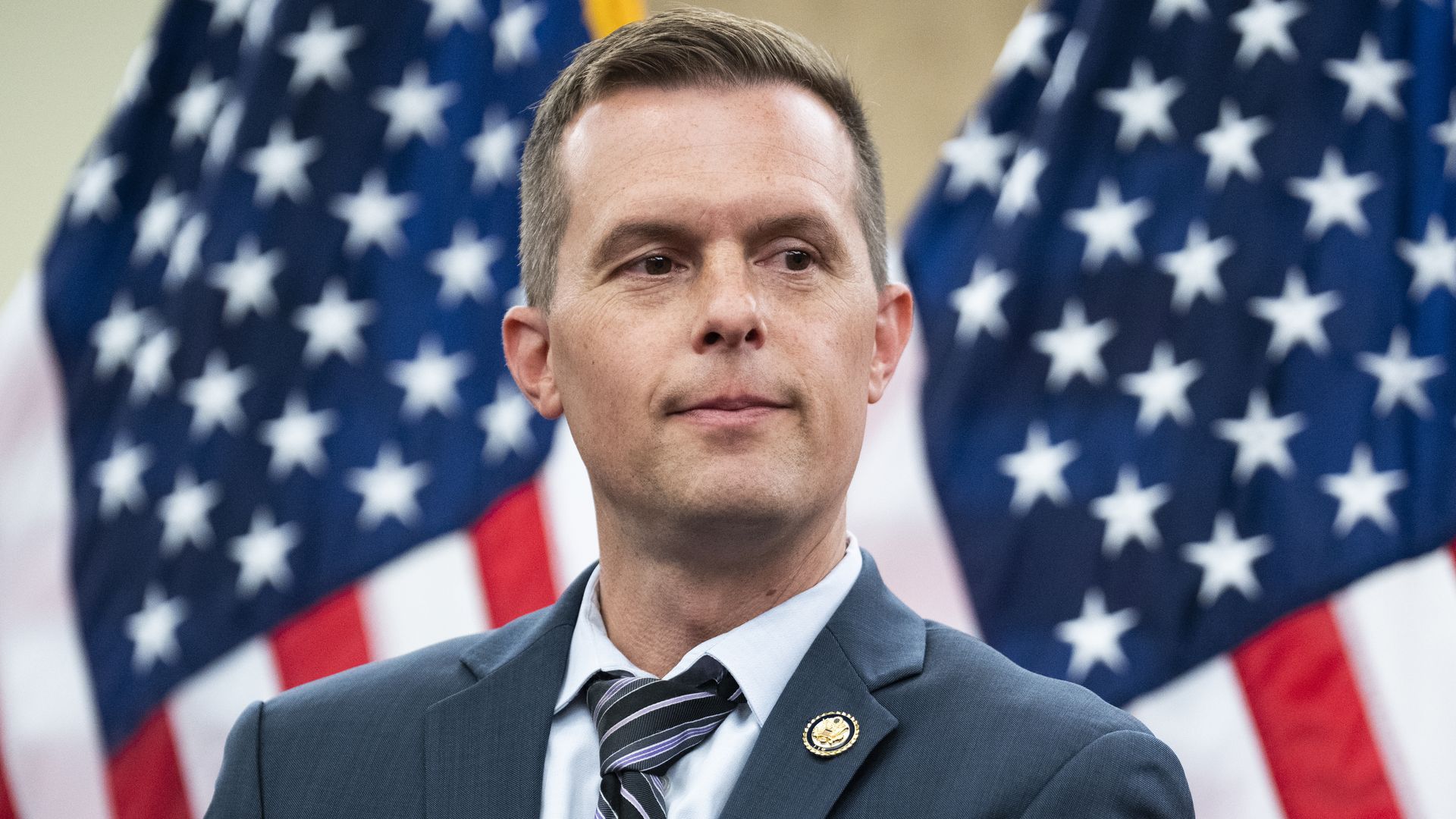
House Democratic leadership is vocally opposing a Russia sanctions bill set to come to a vote this week, but not all of their members are comfortable taking that stance just yet.
The second-most powerful man at the State Department put the brakes on a U.S. international exhibit featuring a bull statue because he worried it might look like Baal, a pagan god some associate with Satanic child sacrifice.
Why it matters: The anecdote illustrates the quirky interests of Deputy Secretary of State Chris Landau, according to department critics, who say he spends too much time on social media focusing on the unimportant.
President Trump declared war on the AI safety panic Monday, dismissing the industry's apocalyptic warnings as part of a "sick conspiracy" to sabotage America and his legacy.
Why it matters: Trump is rewriting a complex, years-long debate over AI's dangers in the partisan grammar that has defined MAGA for a decade — hoaxes, conspiracies, traitors and, at the center of it all, one man.