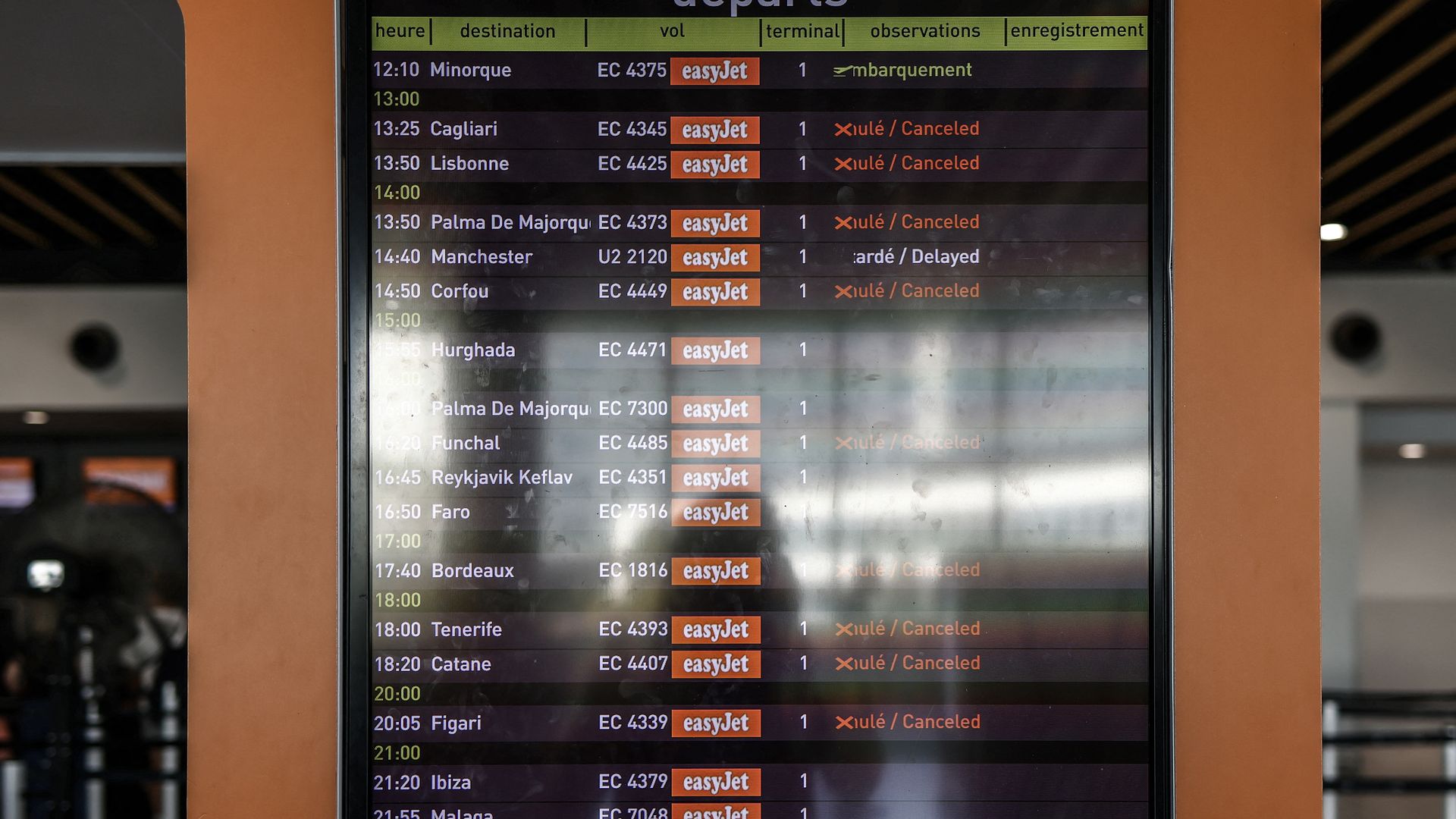
Air travel is being squeezed from multiple directions this summer as extreme weather, capacity constraints and geopolitical conflict strain the global aviation system.
Why it matters: Overlapping pressures across the aviation network are leaving travelers more vulnerable to delays, cancellations and higher fares, with no immediate end in sight.
Israel told the Trump administration its recent attack on a Syrian airbase was aimed at preventing a Turkish military buildup in the area, U.S. and Israeli officials said.
Why it matters: The unusual strike has exacerbated tensions in the region between three close U.S. partners, just as the Trump administration is trying to prevent further escalation.
The Trump administration has moved to end Temporary Protected Status for an estimated million-plus people —with expiration dates looming for thousands of others.
The big picture: Tens of thousandswho have lost their status or are bracing to lose it have lived in the country legally for upward of a decade, meaning communities could lose longtime members and employers could lose skilled workers.
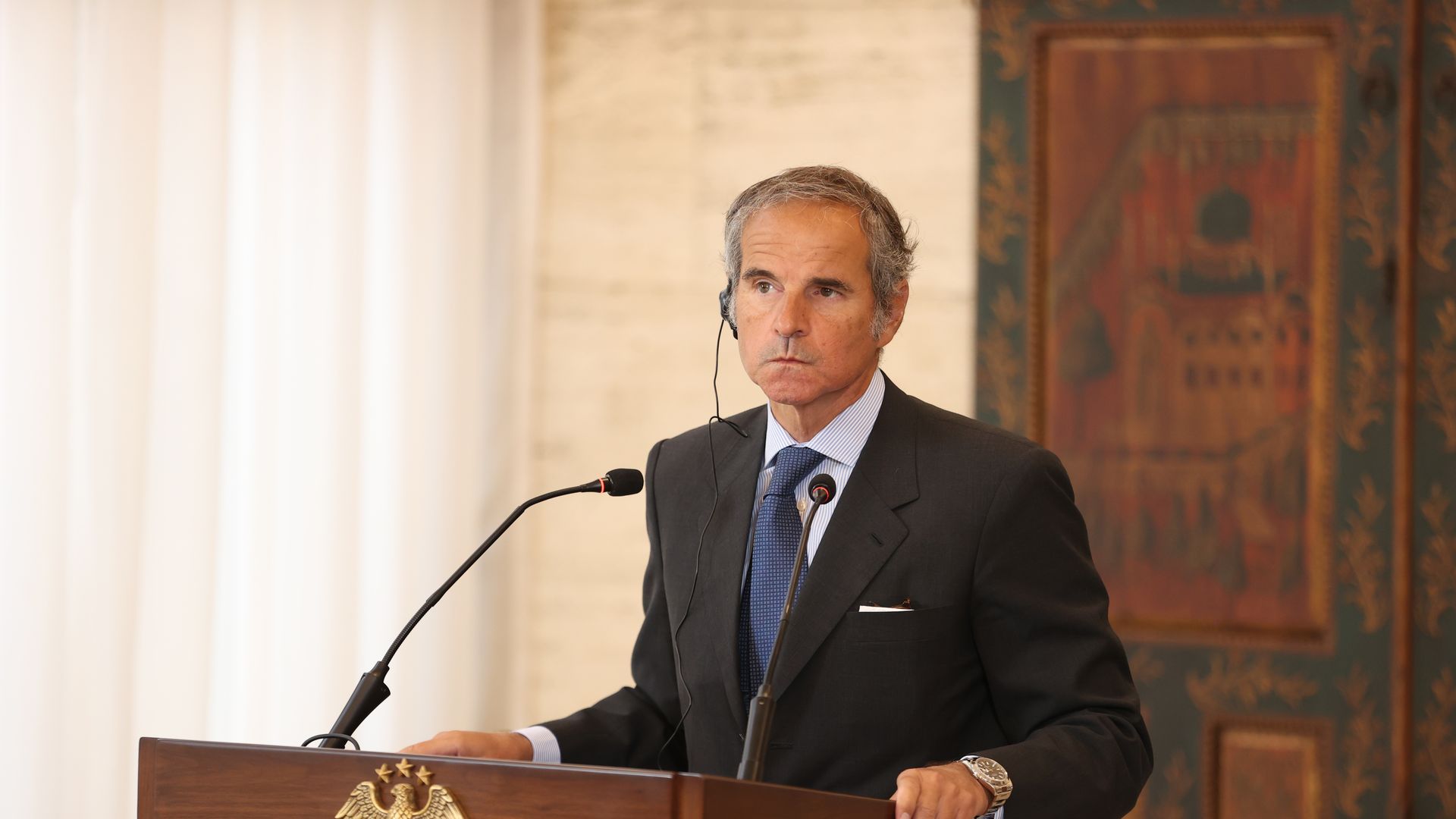
UN inspectors this week visited several undeclared Assad-era Syrian nuclear sites for the first time — including some used to store nuclear material.
Why it matters: The inspections by International Atomic Energy Agency (IAEA) Director General Rafael Grossi and his team came after diplomatic efforts by the Trump administration, first reported by Axios, that produced understandings with both Syria and Israel.
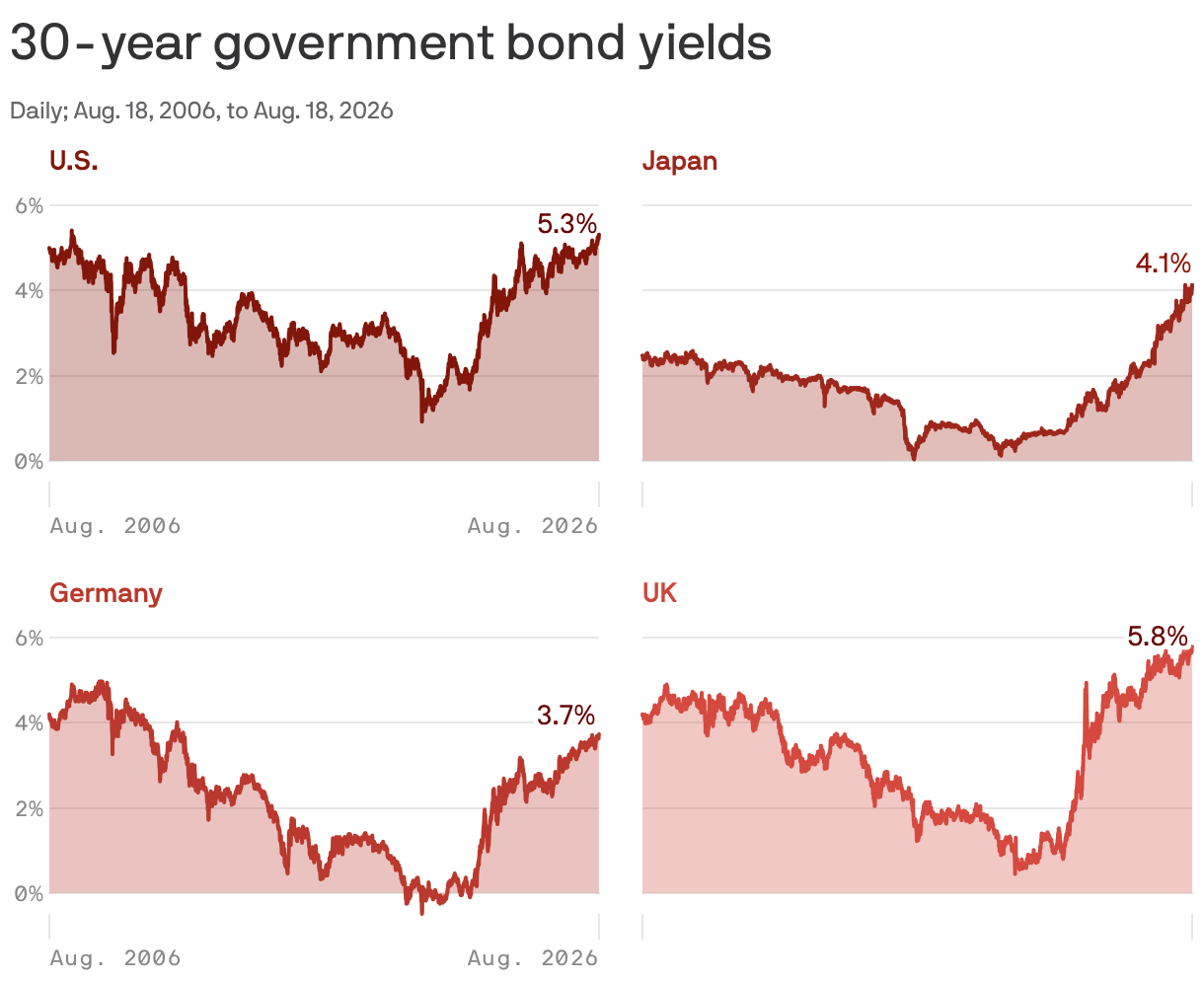
The world has anew, expensive problem: The cost of borrowing money for decades keeps going up, making it getting harder to dismiss as a temporary market tantrum.
Why it matters: The relentless rise in borrowing costs in recent months makes a long-feared scenario harder to dismiss: that investors demand higher and higher returns in ways that make it prohibitively expensive to finance investments meant to power the next era of economic growth.
The consequences extend far beyond financial markets.
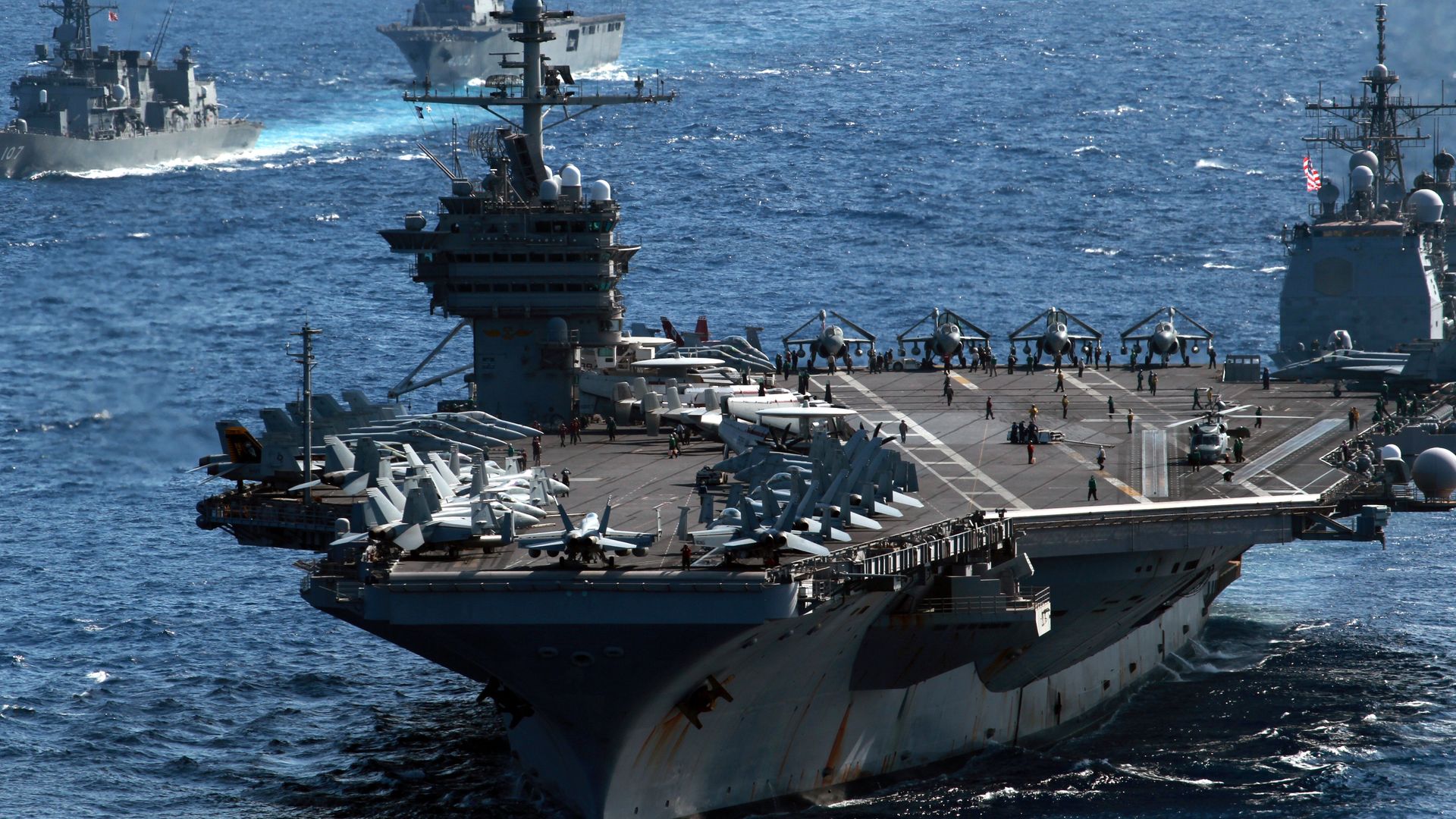
The USS George Washington's deployment from Japan to the Middle East to relieve the USS Abraham Lincoln will leave the U.S. without an aircraft carrier in the western Pacific — just as adversaries in the area are flexing their military power.
Why it matters:Temporary carrier gaps are not uncommon, but the absence of a striker ship in the Pacific highlights how the Middle East is once again dictating American military policy. It also has raised questions about how the U.S. can sustain a formidable presence in both regions.
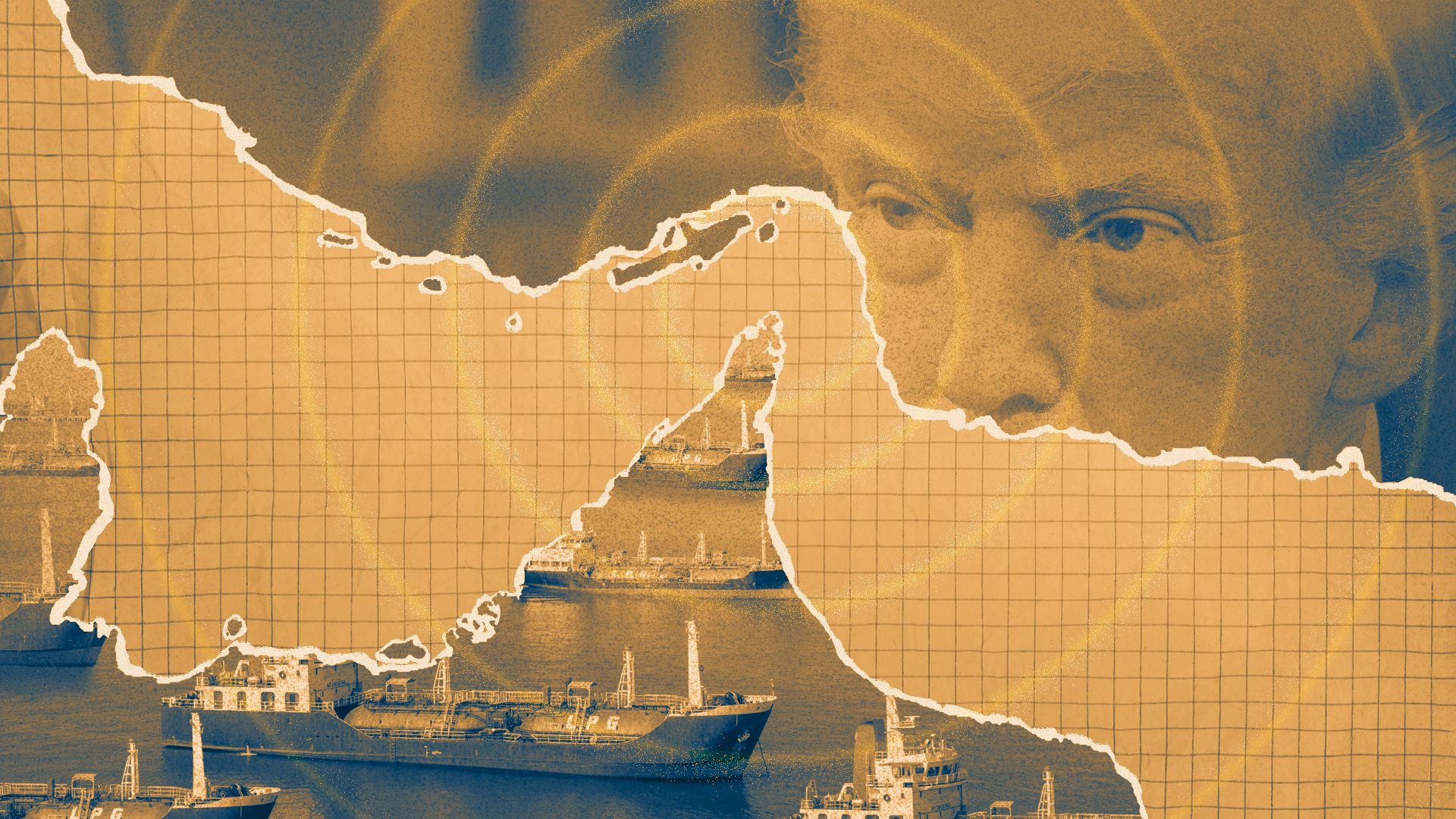
President Trump again floated taking over the Strait of Hormuz as a U.S. "territory" on Monday, as the critical waterway remains a main pain point of the protracted Iran war.
The big picture: Trump's comments come at a difficult time for the ongoing conflict, with stalled negotiations for a ceasefire and a memorandum of understanding between the U.S. and Iran expiring on Monday.
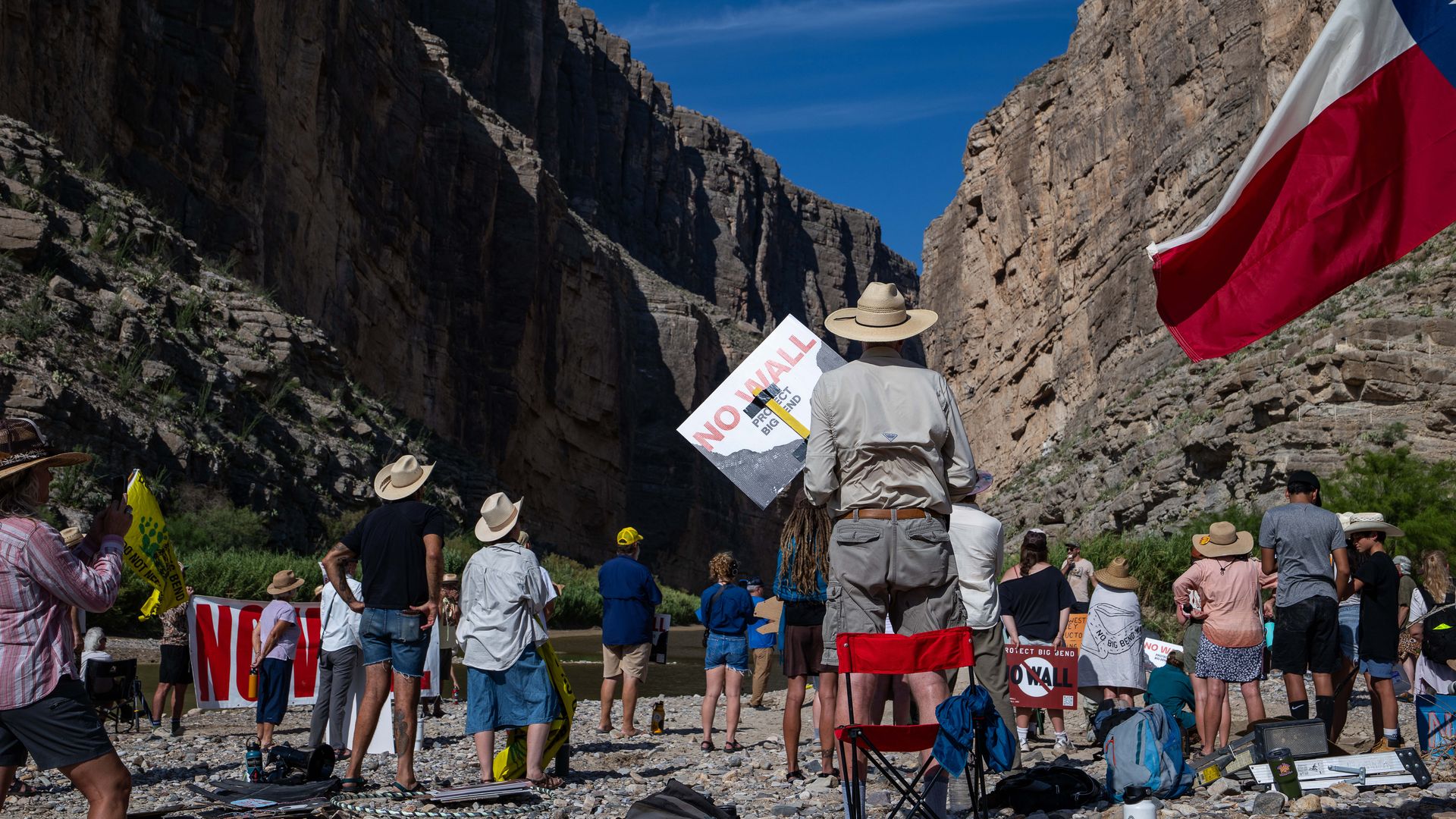
The Trump administration paused border wall construction at Big Bend National Park in Texas while U.S. Customs and Border Protection Commissioner Rodney Scott visits the site, Scott announced Monday.
Why it matters: The wall's construction inside the national park has been the subject of bipartisan pushback and criticism that the job has been rushed, and is damaging to the environment.
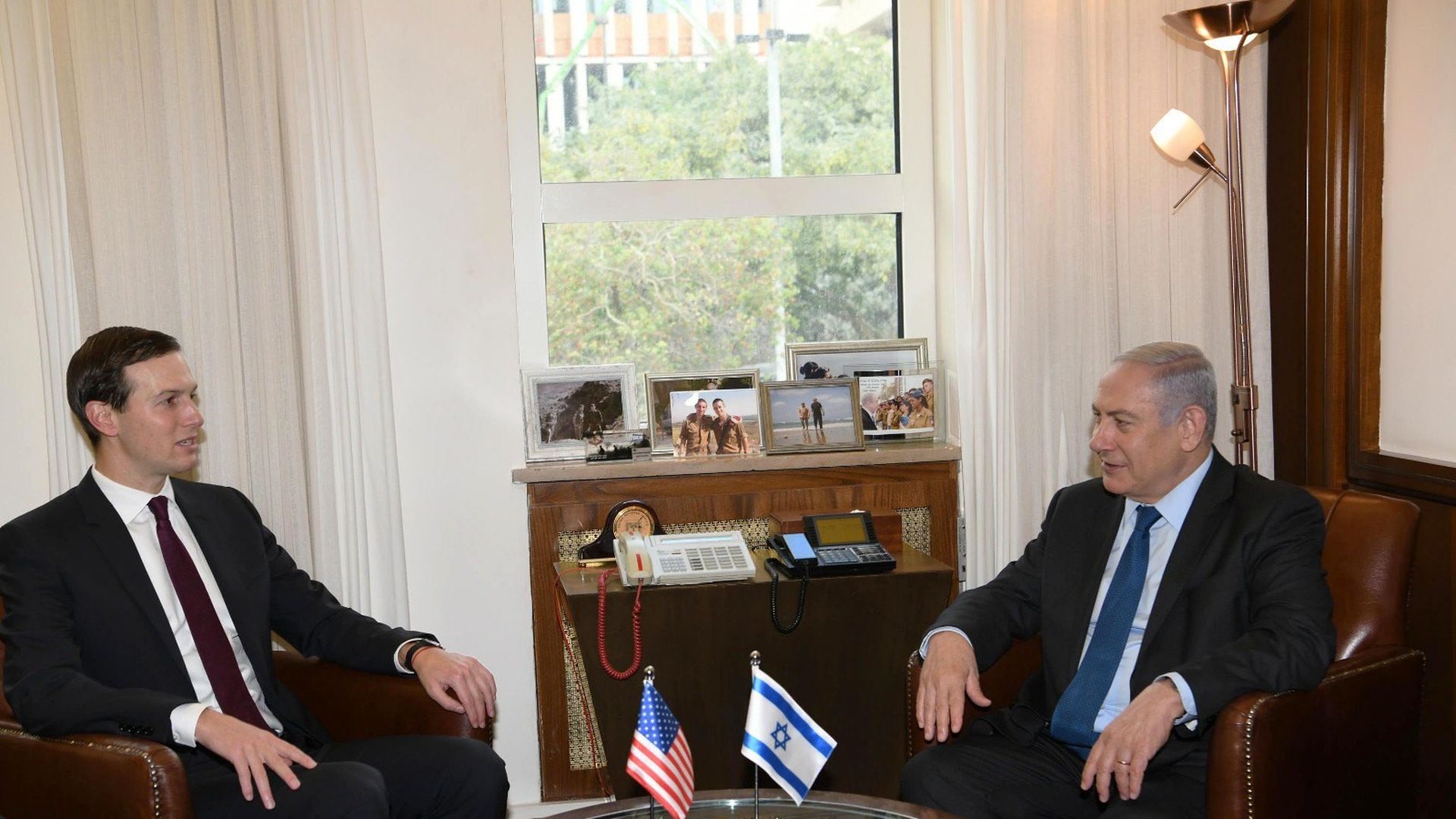
President Trump adviser Jared Kushner told Israeli Prime Minister Benjamin Netanyahu on Monday that the U.S. wants Israel to take "small steps" in Gaza to test whether Hamas' commitment to start disarming is genuine, a U.S. official said.
Why it matters: The four-hour meeting took place amid deep skepticism from Netanyahu about the U.S. plan for Gaza — and ahead of an October election that makes the Israeli leader reluctant to offer significant concessions on the politically sensitive issue.
China's economic weakness and its AI ambitions are putting competing demands on policymakers.
Reviving the economy means getting households to spend more, but competing with the U.S. in AI means turbocharging an already production-heavy economic model.
Why it matters: China's push to supercharge production even as domestic demand weakens leaves China's producers more reliant on foreign buyers and pressures industries abroad.