Air travel's summer of disruption

Add Axios as your preferred source to
see more of our stories on Google.
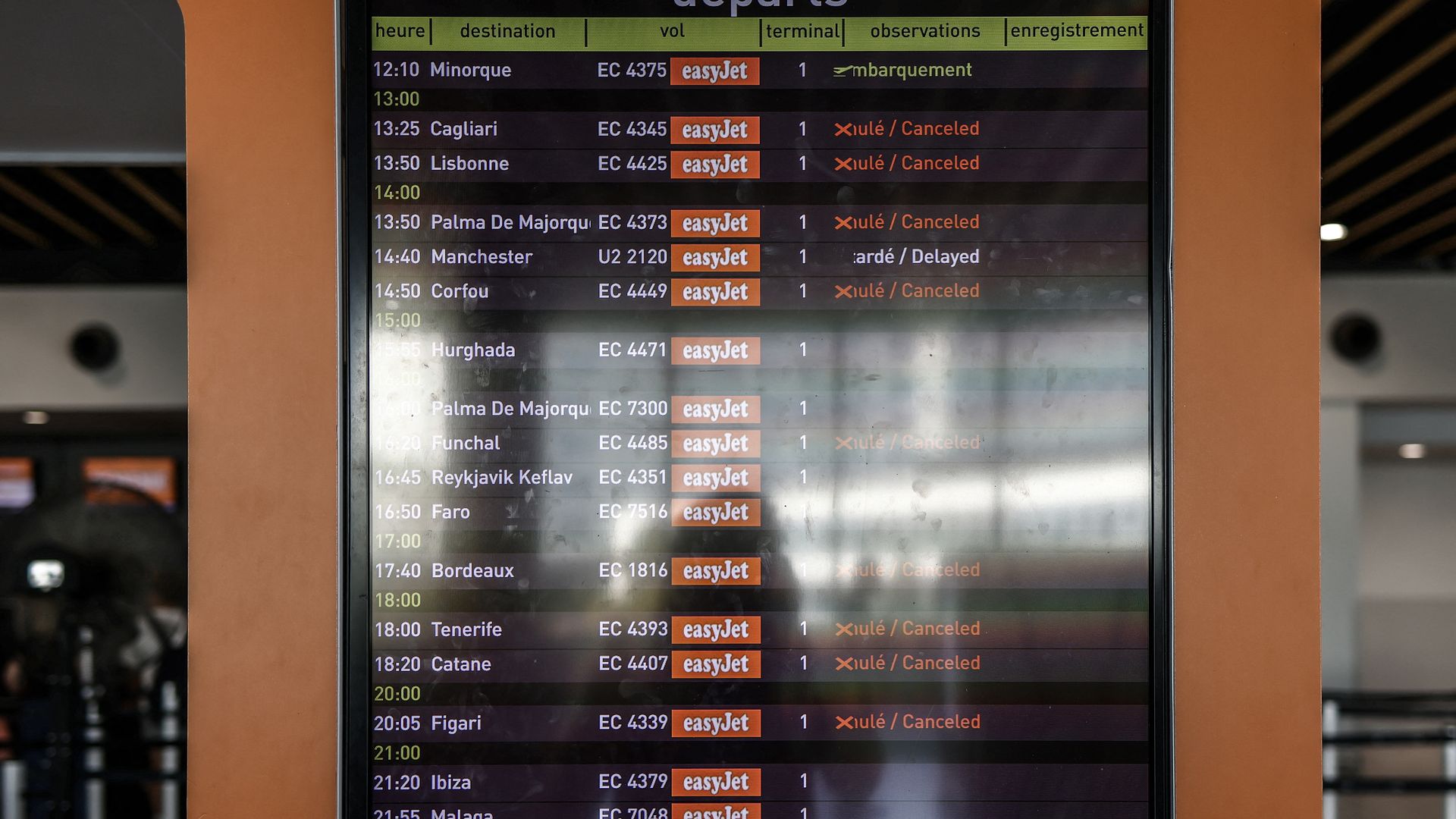
A flight departure information board near Lyon, France, displaying canceled and delayed easyJet flights due to a cabin crew strike over the weekend. Photo: Alex Martin/AFP via Getty Images
Air travel is being squeezed from multiple directions this summer as extreme weather, capacity constraints and geopolitical conflict strain the global aviation system.
Why it matters: Overlapping pressures across the aviation network are leaving travelers more vulnerable to delays, cancellations and higher fares, with no immediate end in sight.
State of play: The frequency of U.S. aviation disruptions has increased since 2010, particularly since the pandemic, according to a study published in July in the Journal of Air Transportation by researchers at UC Berkeley, the University of Maryland and Penn State.
- Mark Hansen, a professor of civil and environmental engineering at UC Berkeley, tells Axios that IT failures — such as outages involving an FAA warning system and CrowdStrike — are an increasing source of systemwide problems.
- Airlines have built bigger buffers into their schedules to absorb delays, Hansen says.
Zoom out: Airlines have also cut capacity as rising fuel costs squeeze operations, leaving fewer spare seats when cancellations force travelers onto new flights.
- That means travelers might be forced to wait longer for a new flight, or pay out of pocket to travel with a different airline on short notice.
- U.S. travelers are also feeling the pinch of rising jet fuel costs, as U.S. airline fares were 26.5% higher in June than a year earlier, according to Labor Department data.
- That's on top of air traffic controller staffing shortages, as seen in the U.S., Australia, and parts of Europe, which can delay travel or put airplanes in dangerous situations.
Geopolitical conflicts are also reshaping global aviation. The Iran war has driven up jet fuel prices and forced carriers to reroute around Iranian airspace, while Western airlines have largely avoided Russian airspace since the Ukraine war began.
Zoom in: Extreme heat can strain aviation even without storms. Hotter air reduces aircraft performance, potentially forcing airlines to reduce weight, delay departures or wait for cooler temperatures, particularly at airports with shorter runways.
- Heat also poses a "growing threat" to aviation because ramp workers need more breaks to cool down, increasing staffing needs and potentially reducing how quickly airports can turn aircraft around, Hansen says.
- Las Vegas' airport has replaced asphalt runway surfaces with concrete to better withstand long-term heat exposure.
- FAA operational advisories increasingly cite controller staffing shortages alongside weather as reasons for limiting the number of flights the system can handle.
What's next: Hansen says airlines could make the system more resilient by getting creative about how they move stranded passengers during major disruptions.
- One option is operating replacement flights to airports outside an affected area and using ground transportation for the final leg. "There are many situations where passengers could get to their destination sooner if we just put them on a bus," Hansen says.
- Greater cooperation between airlines could also make it easier to rebook stranded passengers. But such inter-airline rebooking has become less common as the industry has grown more competitive, Hansen says.
- In severe disruptions, he says governments could require airlines to accommodate one another's stranded passengers.
