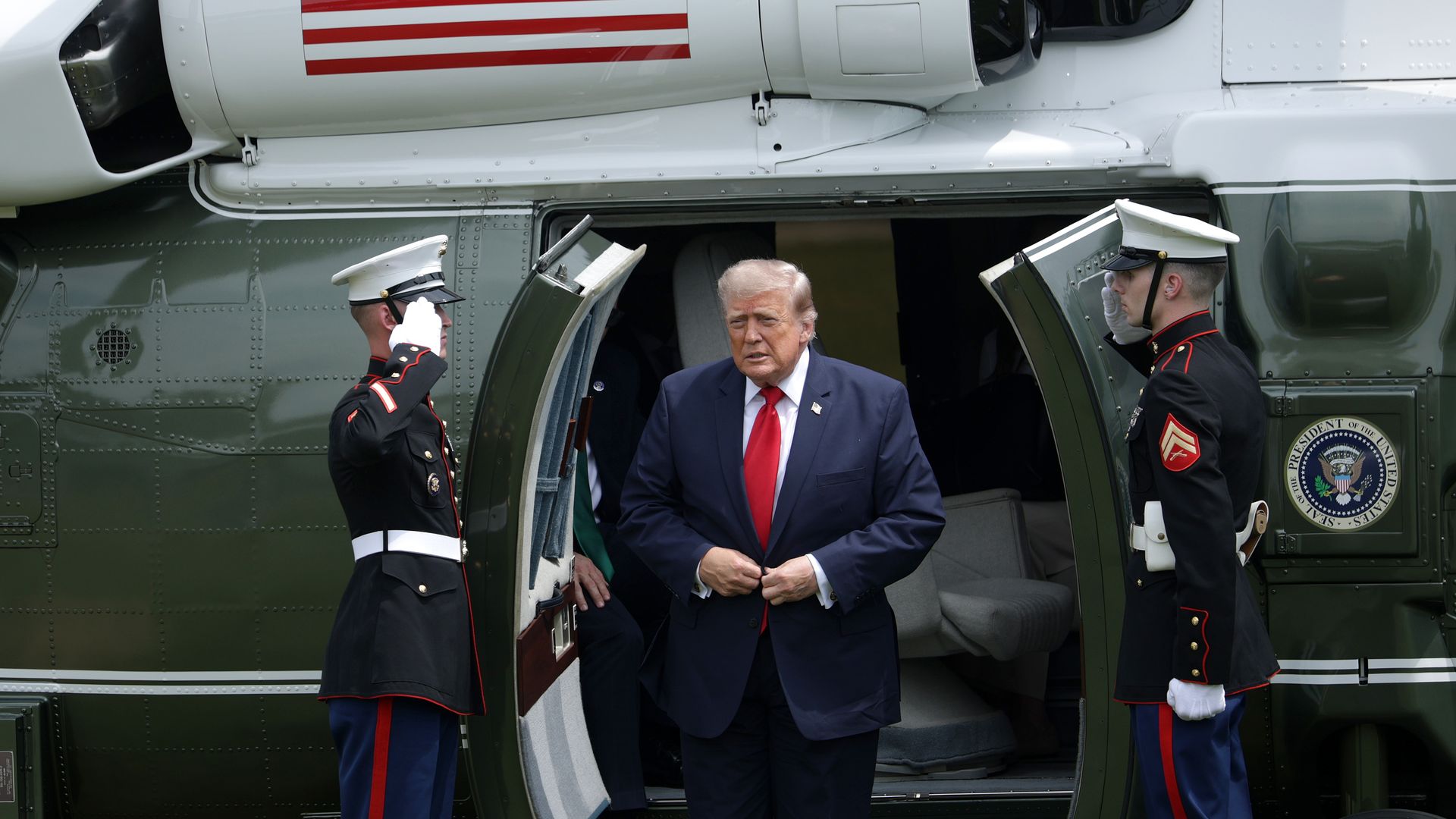
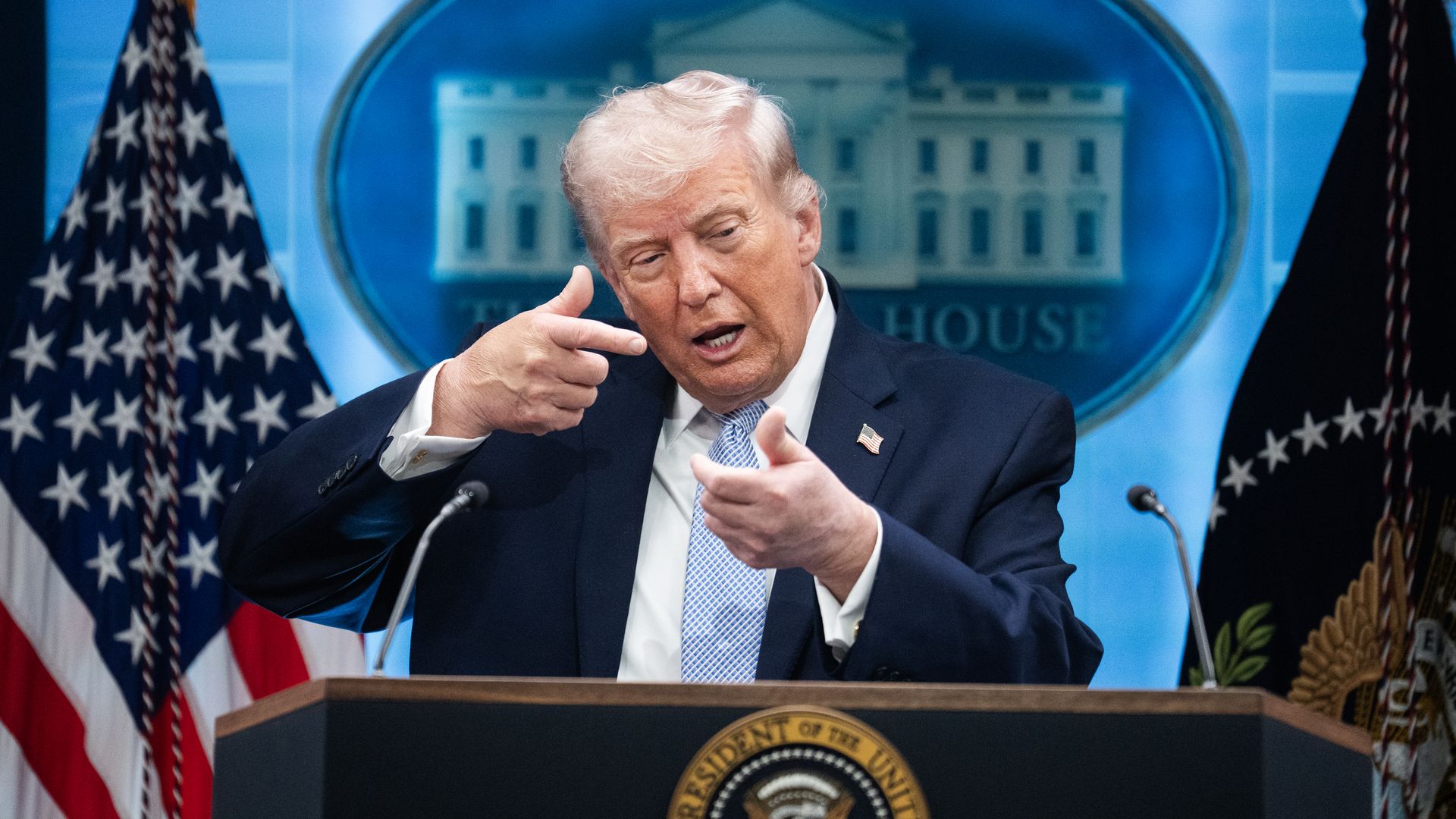
President Trump said Wednesday that Iran released an American woman who had been wrongfully detained since December 2024.
Why it matters: The release comes as Trump weighs expanding U.S. military strikes on Iran. Tehran has taken similar steps in the past as a way to de-escalate tensions with the U.S.
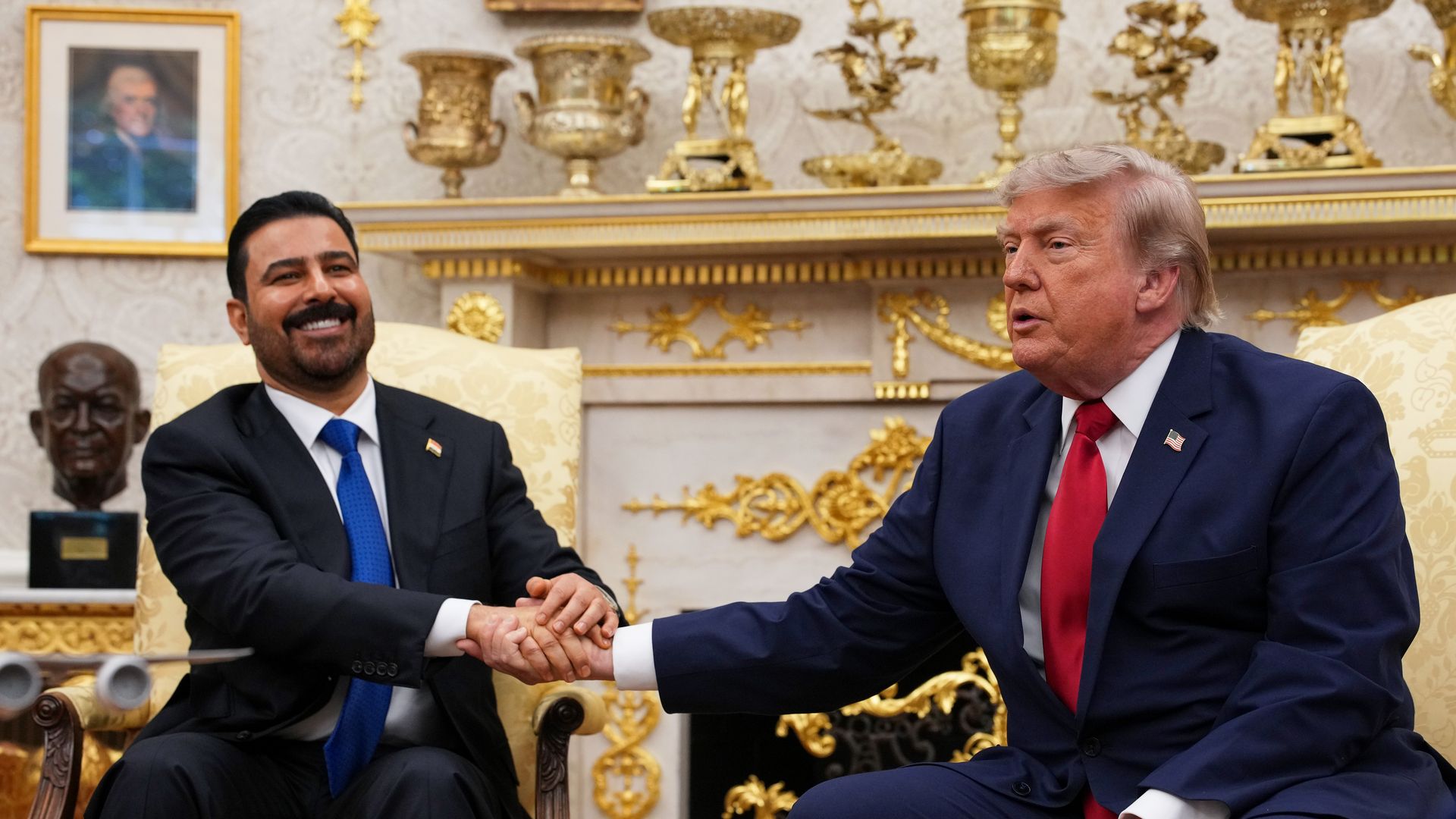
Last week, Iraqi Prime Minister Ali al-Zaidi attended the funeral procession of Iran's supreme leader. This week, he shook hands in the Oval Office with the man who had him killed.
Why it matters: Like every Iraqi prime minister in the last two decades, Zaidi has to conduct a delicate balancing act between strategic relations with Washington and Tehran. When both sides are shooting at each other, it's much harder.
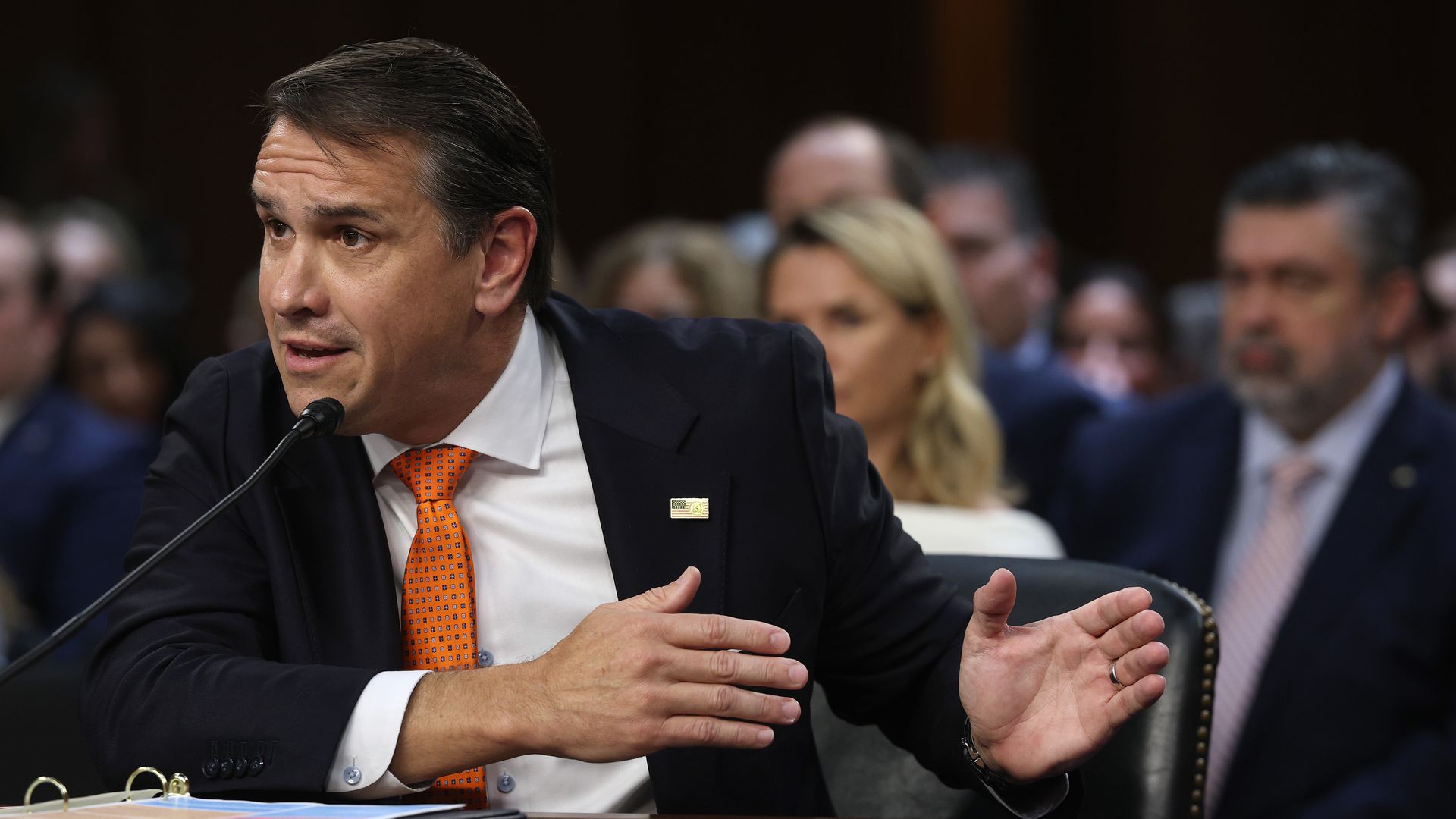
Acting Attorney General Todd Blanche declined Wednesday to explicitly rule out deploying federal agents to polling places, saying only that he would "follow the law."
Why it matters: Lawsuits challenging the Trump administration's use of federal agents near polling places are setting up a legal fight over whether those deployments violate federal protections against voter intimidation.
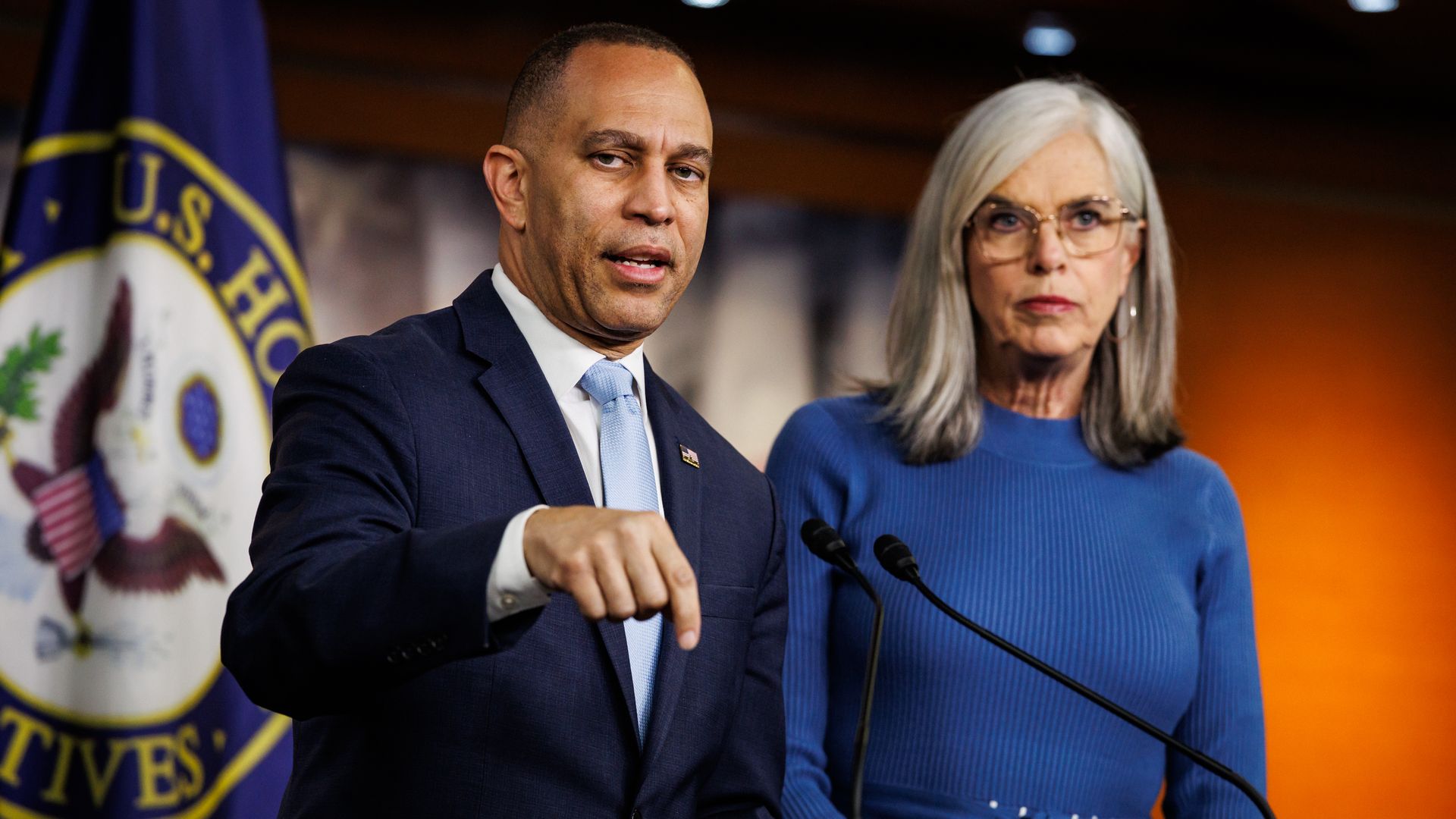
House Democrats' internal split over a vote to cut off U.S. aid to Israel has extended to leadership, with Minority Leader Hakeem Jeffries (D-N.Y.) and Minority Whip Katherine Clark (D-Mass.) planning to vote differently.
Why it matters: Such a divergence between the caucus' top two leaders is exceedingly rare and underscores just how much anxiety this vote is giving some in the party.
The cost of living in Japan has gotten exceptionally cheap in dollar terms compared with other developed countries, while major U.S. cities have grown ever more pricey, a new report finds.
Why it matters: Inflation, a stronger dollar and a weaker yen, plus larger structural economic shifts, have scrambled the cost-of-living map around the world.
"The old assumptions about which places are expensive, which are cheap and where wages compensate for living costs no longer always hold," wrote the authors of the new paper from the Deutsche Bank Research Institute.
The latest: Coming into Tuesday's inflation report, the U.S. had the highest rate of inflation among G7 countries, as economist Justin Wolfers noted, citing the latest available readings from the OECD.
Consumer prices in the U.S. fell 0.4% in June from May, thanks mostly to a big drop in energy prices after the U.S. and Iran signed a ceasefire deal.
But that deal has since unraveled, and oil prices have since soared — a sign that the inflation reprieve may be short lived.
Catch up quick: Back in 2012, when Deutsche Bank started doing this global cost-of-living report, Tokyo was typically ranked one of the most expensive cities in the world.
Where it stands: Now, Japan is among the cheapest developed economies in the world, and cities in the U.S. like New York and San Francisco are among the priciest.
Since 2012, the yen has fallen 51% in value against the dollar, but prices in the country are up only about 20% — a bargain for anyone spending greenbacks.
Between the lines: In 2012, as the U.S. was still recovering from a bruising recession and the dollar was weak — there were doubts about the country's economic health. In hindsight, it was a good time for investors to increase their exposure to U.S. assets.
This year's report arguably makes a similar case for Japan.
"Today I look at how cheap Japan is, and it's not hard to argue that people should increase their exposure," Jim Reid, head of the Deutsche Bank Research Institute, tells Axios.
How it works: The bank looked at 69 cities across six continents and converted prices into dollars — it compared the costs of housing and dining out, as well as things like the price of a "cheap date" and an iPhone, using data from Numbeo, which maintains a global database of prices.
Tokyo ranks near the middle or bottom of the bank's tables for many expenses — 57th most expensive for a meal for two, 40th most expensive for renting a three-bedroom apartment.
A meal for two in New York, Zurich or Geneva now costs around three times as much as it would in Tokyo, in dollar terms, per the report.
Japan is now the cheapest place in the world to buy an iPhone, after accounting for taxes. A cappuccino in Tokyo is cheaper than in 44 of the 69 cities examined, including many emerging-market locales.
Stunning stat: The average monthly cost of renting a three-bedroom apartment in New York is $8,900 — more than $2,000 more than the next priciest city, Zurich.
In Tokyo, it's $2,400.
Yes, but: Averages can skew the numbers a bit, as super pricey rentals get thrown into the mix.
Reality check: More expensive doesn't reflexively mean "bad."
"Being expensive isn't necessarily an outright negative. It can be just because the economy runs well and attracts a lot of inflows," Reid says.
Armenia is pursuing "diversification," seeking to shake up its sources of energy, its future artificial intelligence clientele, its supply chain components and the countries it relies on for weapons, ambassador Narek Mkrtchyan told Axios.
Why it matters: Armenia is wedged between Iran and Russia, two of the most pressing national security hazards juggled by the U.S.
It's also party to a peace agreement, brokered and touted by the Trump administration, that could reshape the Southern Caucasus.
"A lot of potential was blocked because of the absence of peace," Mkrtchyan said. "Once we bring the peace agenda, prosperity will come."
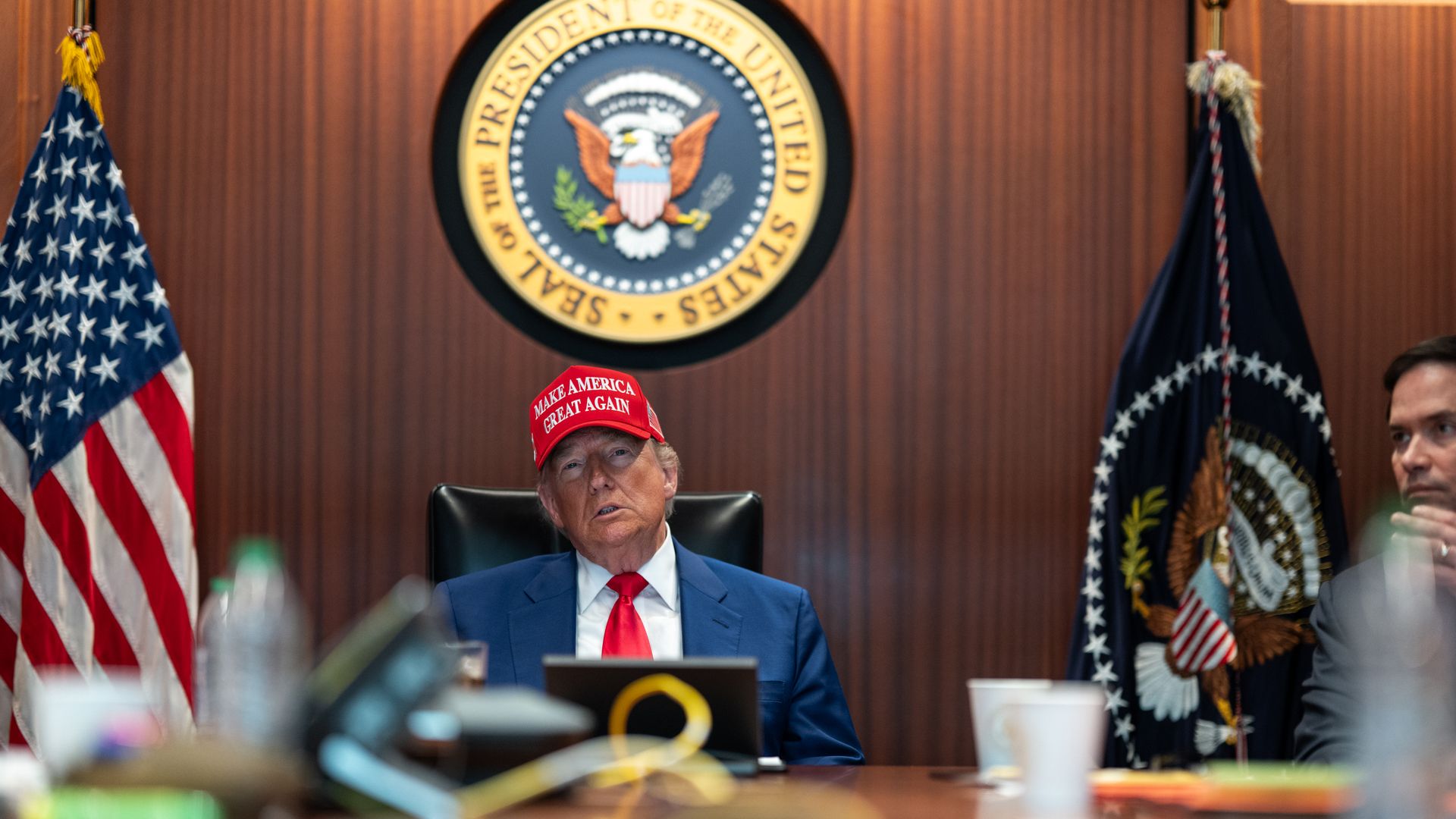
President Trump held a Situation Room meeting Tuesday to discuss a massive offensive in Iran that will be wider in scope than the current strikes around the Strait of Hormuz, three sources with knowledge said.
Why it matters: Trump appears willing to escalate the war to cause enough damage that the Iranian regime will open the Strait of Hormuz and accept Trump's nuclear demands.
In Abu Dhabi, the largest emirate in the United Arab Emirates, AI is as much a part of daily life as reporting a pothole or making a doctor's appointment or paying a parking ticket — because AI does all that for you.
Abu Dhabi, the capital of one of the world's wealthiest and most globalized business hubs, has near-universal adoption of an app that knows when you need to renew your national ID or health insurance or vehicle registration.
The app's "AutoGov" feature goes a step further: It handles the paperwork and pays what's owed without being asked.
Why it matters: The UAE made a massive bet on AI, spending billions on infrastructure and research, backed by long-term thinking and alignment from top leaders. Before the war with Iran, the bet was paying off massively. "People make money here and bring money here," a UAE resident told Jim VandeHei and me when we visited just before the war.
The war rattled the UAE's AI ambitions and stirred fears about visiting, given the constant threat of Iranian attack. UAE leaders tell us they remain all-in on AI: They're willing to work with both the U.S. and China, and see the technology as the key to their future beyond oil.
House Speaker Mike Johnson is in an uncomfortably familiar spot: under pressure from President Trump, under fire from members and under the gun to advance a reconciliation bill in just a few days.
Why it matters: Johnson (R-La.) is trying to tee up a final party-line legislative package before the midterms, but Republicans remain divided over the contents of the bill and the strategy behind it.
Shares of Lucid Group plummeted Tuesday after a report that the Saudi-backed electric vehicle maker is weighing a bankruptcy filing as part of a possible restructuring.
The company quickly denied the report, saying that "the rumors are completely false," after which its stock recovered some ground.
Why it matters: Lucid has earned rave reviews for its EVs and recently won a self-driving car deal with investor Uber — but the company has never recorded a quarterly profit.
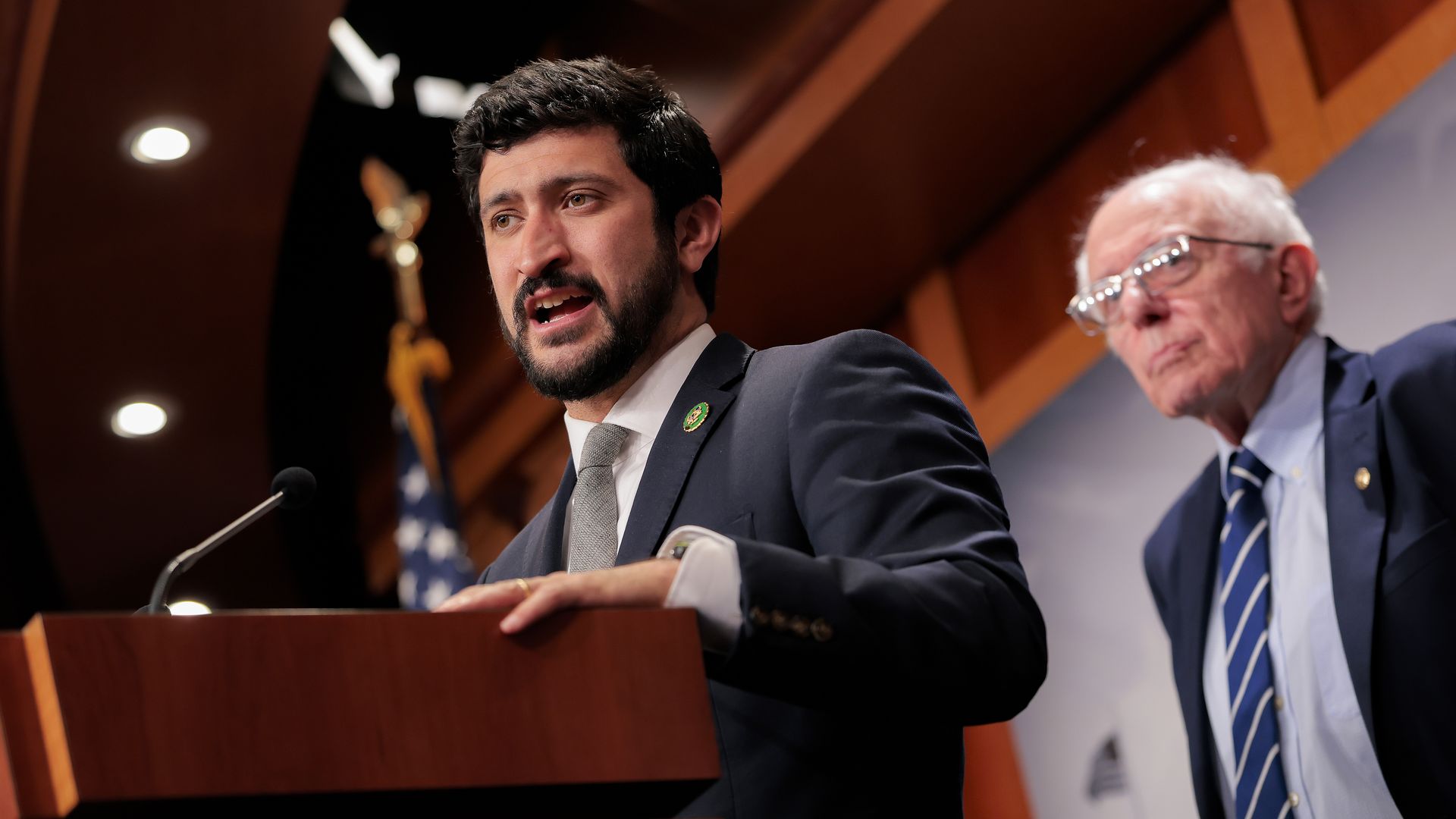
An upcoming House vote on a measure blocking U.S. aid to Israel has Democrats divided over how far they should go to signal displeasure with the Netanyahu government.
Why it matters: The vote is revealing just how much anxiety Democratic lawmakers have about the growing anti-Israel sentiments coming from their grassroots base.
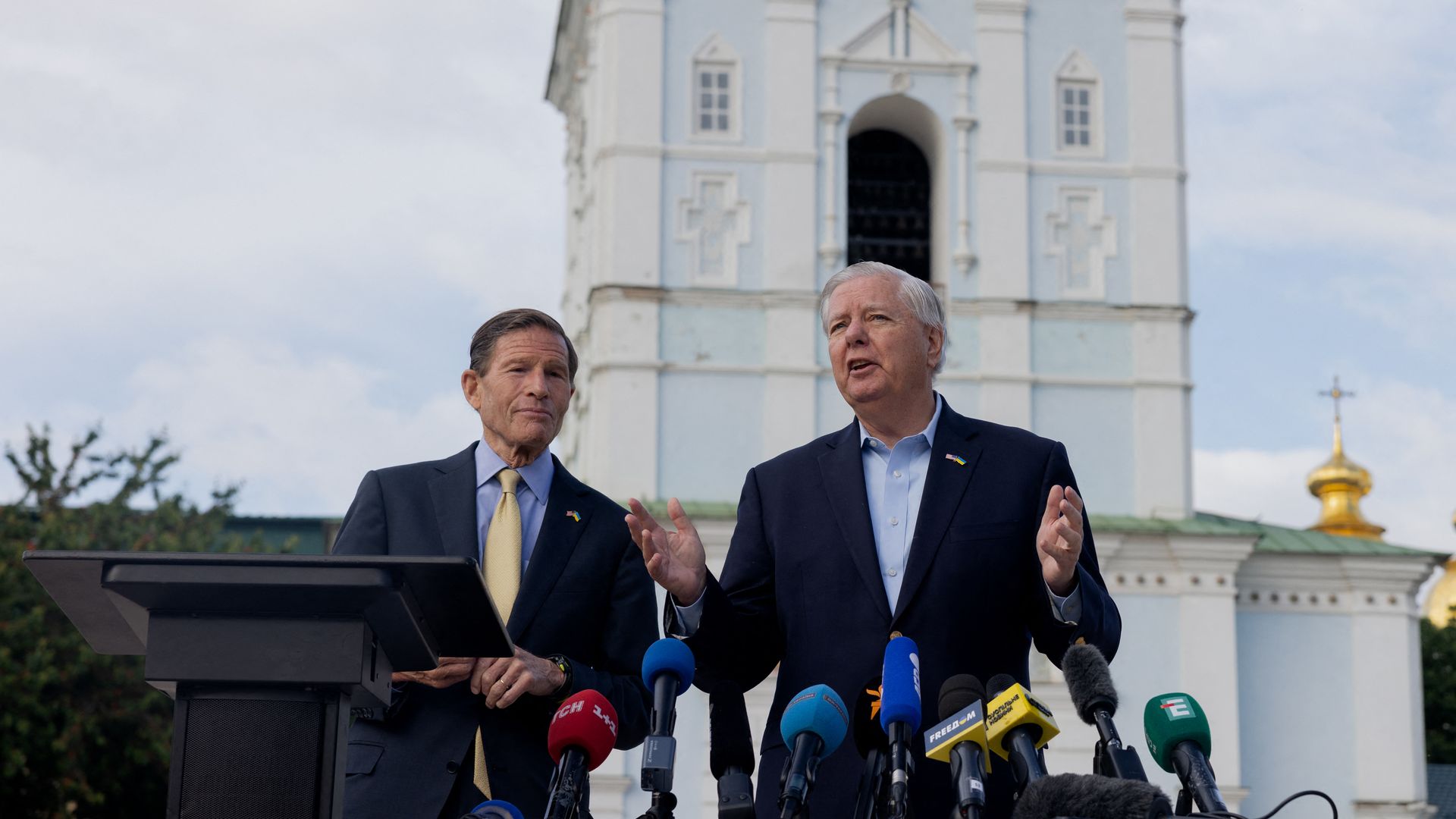
A bipartisan group of senators is unveiling a revised Russia sanctions bill that the late Sen. Lindsey Graham (R-S.C.) helped finalize in one of his last efforts to broker a compromise and end the war in Ukraine.
Why it matters: If enacted, the bill would ratchet up pressure on Vladimir Putin by imposing 100% tariffs on the five largest importers of Russian oil and gas — likely including China and India.
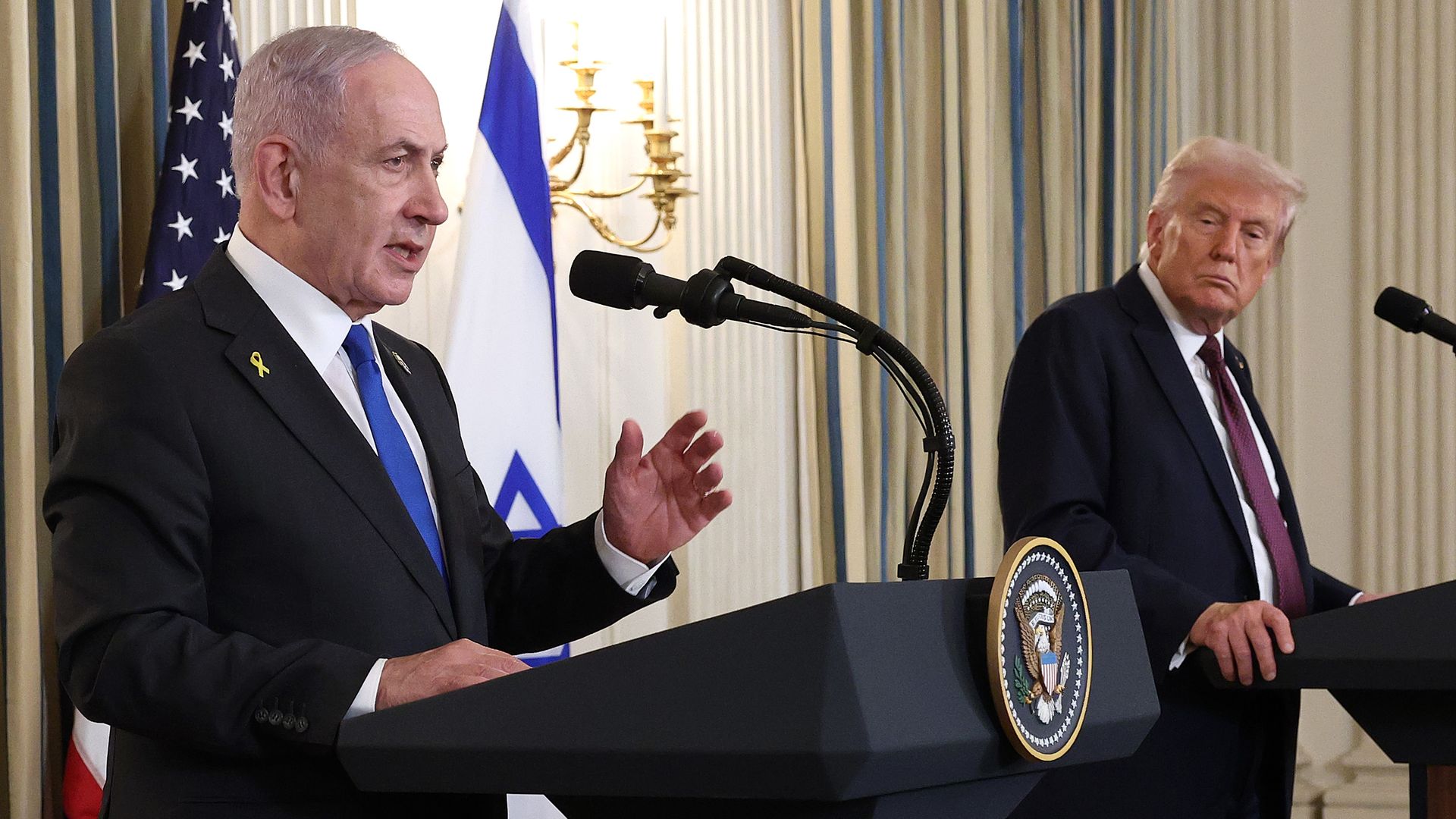
President Trump told Israeli Prime Minister Benjamin Netanyahu during a phone call Thursday that Israel should start redeploying its forces out of Syria and urged him to do the same in Lebanon, according to U.S. and Israeli officials.
Why it matters: Three months ahead of an election that is existential for his political survival and personal freedom, Netanyahu is unlikely to take any significant steps to withdraw Israeli forces from territory it occupies in Syria — or to allow further redeployments in Lebanon beyond the one he's already agreed to.
President Trump on Tuesday walked back his demand for collecting a 20% toll from ships that transit through the Strait of Hormuz — and instead said Gulf states would make major investments in the U.S.
Why it matters: Trump's Hormuz fee announcement on Monday was deemed illegal by the UN maritime agency and shocked many U.S. allies in the Gulf. It also validated the Iranian demand to collect service fees in the strait — something Trump himself rejected until several days ago.
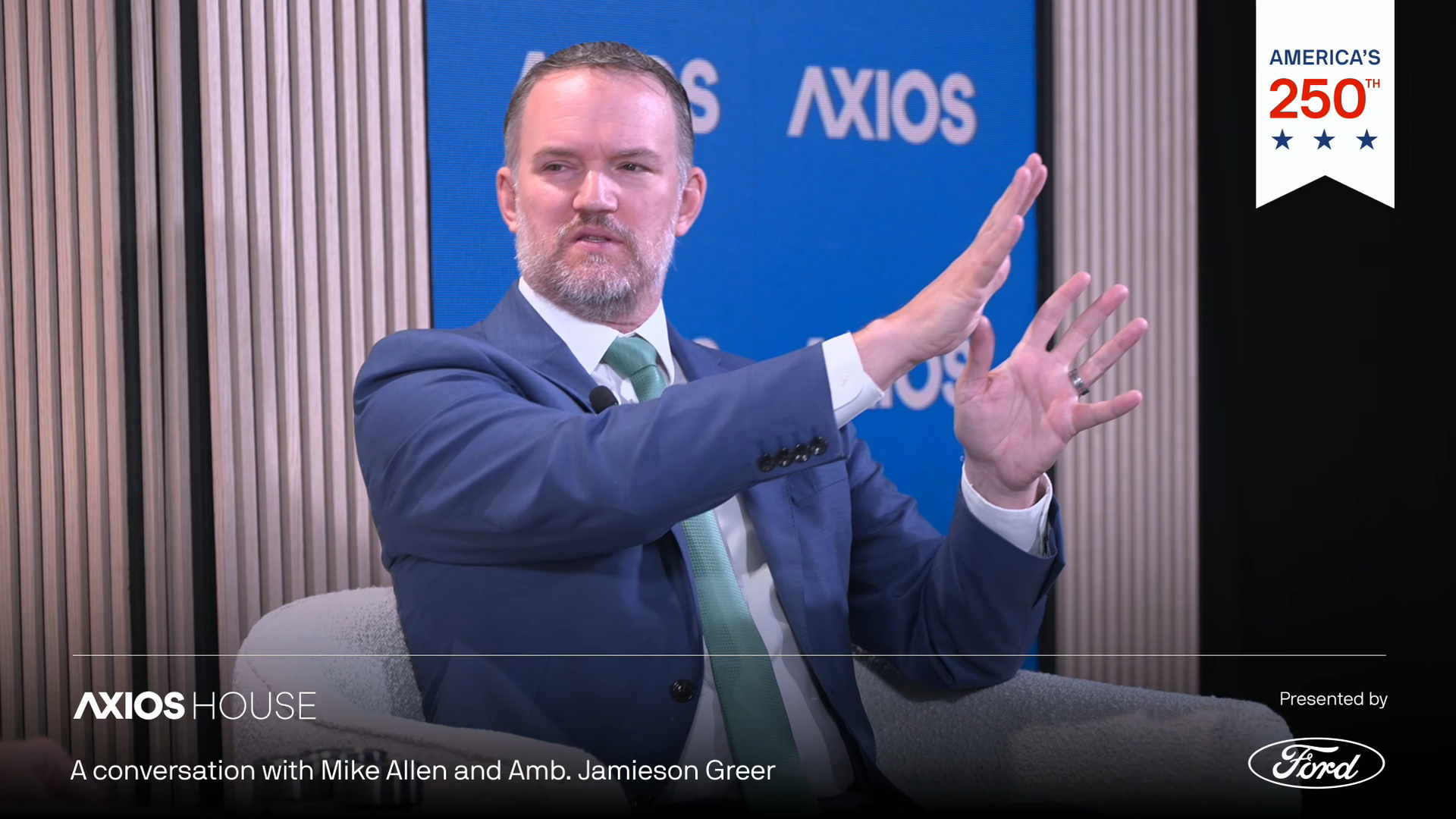
Europe must take "concrete actions" to rein in its enforcement of laws that disproportionately hit American tech companies, U.S. Trade Representative Jamieson Greer said at Axios House D.C. on Tuesday.
Why it matters: At stake is who gets to write the rules for the world's dominant tech companies — Washington or Brussels — and Greer wants America to lead the way on how its companies operate.
Inflation fell in June, on the back of lower energy prices, the government said Tuesday.
Why it matters: It's the largest one-month decrease since April 2020, but it may be a short-lived reprieve — the report doesn't account for the sharp increase in oil prices this month as the Iran war re-ignites.
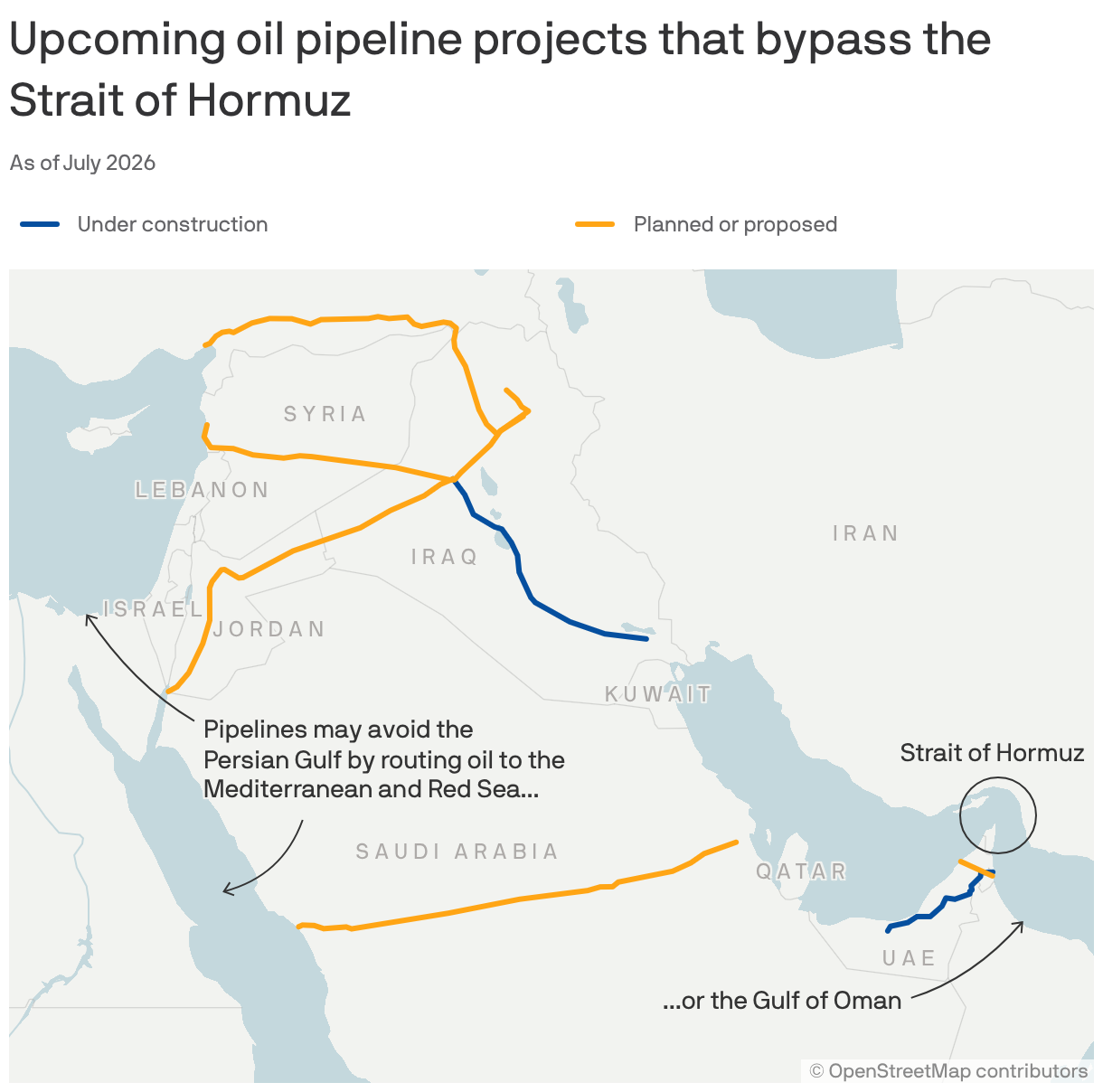
Data: Global Energy Monitor, Axios research; Map: Danielle Alberti/Axios
The oil market's top players aren't waiting around to see who winds up with control over the Strait of Hormuz — countries and companies are scrambling to bypass the waterway.
Why it matters: The Iran war threw a spotlight on the strait as the longtime center of the global energy trade, and the industry now has a huge incentive to reduce its dependence, regardless of the war's outcome.
"The 2026 U.S.-Iran war and Strait of Hormuz disruption may ultimately be remembered less for triggering an immediate oil crisis than for accelerating global efforts to reduce dependence on the world's most important energy chokepoint," Bloomberg Intelligence analysts wrote in a report.