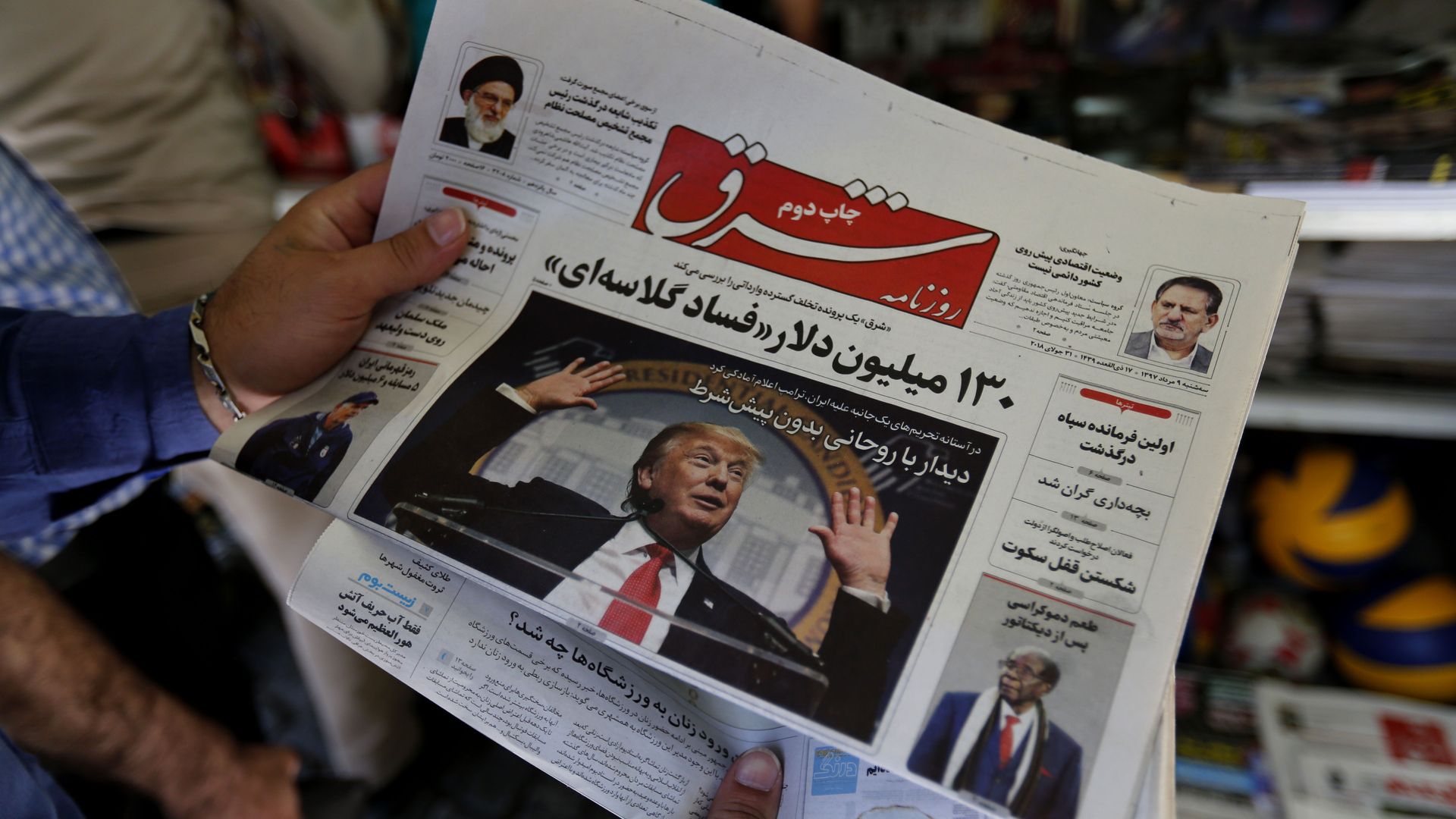
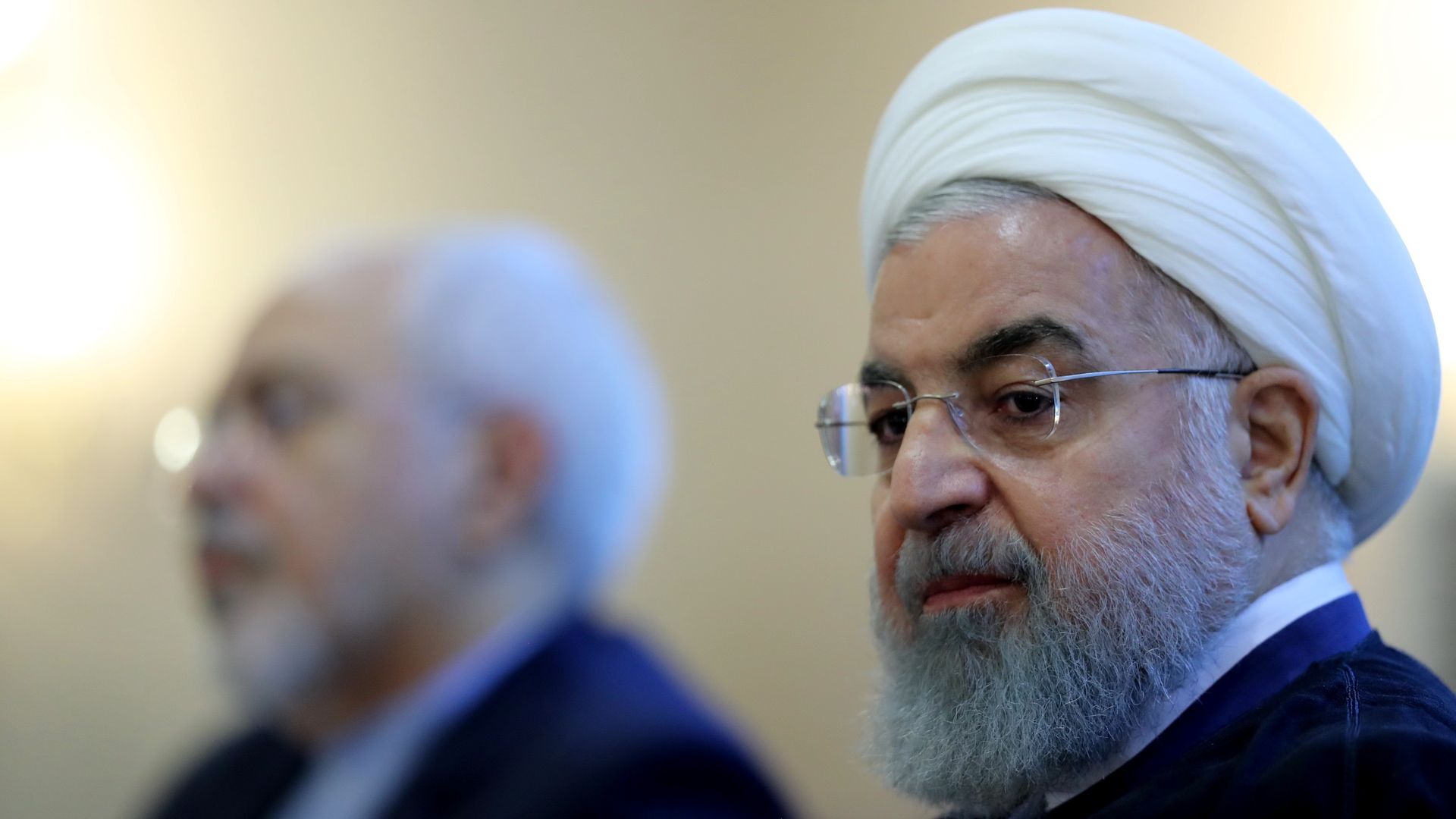
On Tuesday, the first tranche of U.S. sanctions against Iran lifted by the 2015 nuclear deal will snap back into place — a result of President Trump's withdrawal from the deal that comes in spite of Iran’s continued compliance. The re-imposed penalties will restrict foreign investment in Iran’s automotive sector and Iran’s purchases of dollars and precious metals.
The big picture: The Trump administration hopes the sanctions will curb Iran’s "malign" activities in the Middle East, but there's little likelihood of that result, especially since Assad has “won” in Syria, and Iran’s regional rival, Saudi Arabia, remains bogged down in Yemen. Although widespread protests have erupted in Iran since late last year, there are no assurances that Iranians will overthrow their government and replace it with one more attractive to Washington and its allies.
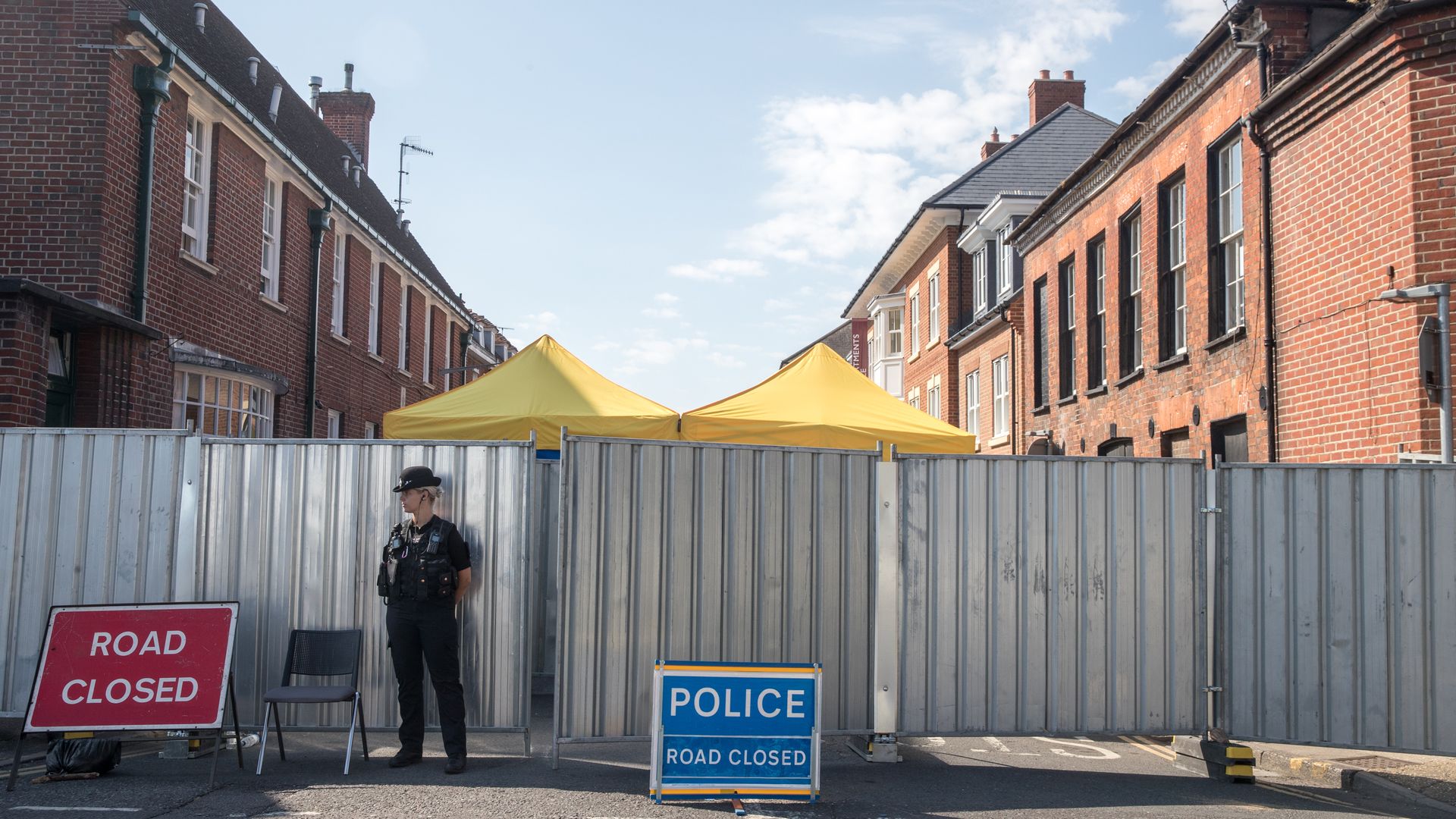
The United Kingdom is expected to request that Russia extradite the two people they believe to be behind the Salisbury Novichokattack that left one person dead and three injured, The Guardian reports.
The big picture: The request is likely to provoke tensions still simmering from the poisoning several months ago — and could result in another round of diplomatic expulsions from either side, as Russia, which has denied any responsibility for the attacks, is likely to reject the extradition requests. A provision in Russia’s constitution, article 61, prevents Russian citizens from being extradited.
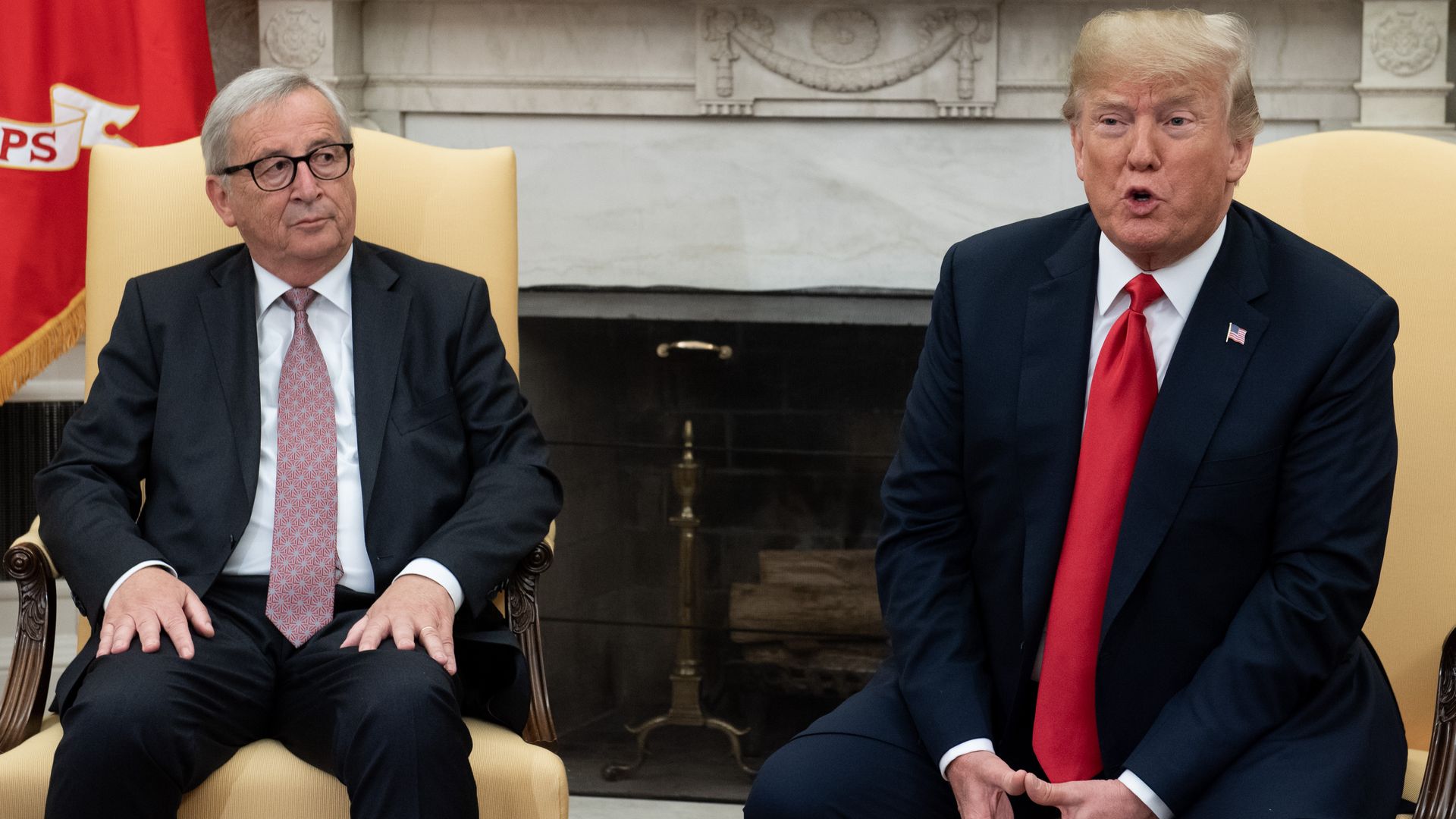
With the first round of U.S. sanctions on Iran set to resume tonight at midnight, the European Union is taking steps to protect its companies that do "legitimate business" with Iran from being harmed.
The big picture: Secretary of State Mike Pompeo has refused to grant broad exemptions to European companies doing business with Iran, citing a need to apply "unprecedented financial pressure on the Iranian regime.” But the EU, frustrated by President Trump's unilateral withdrawal from the Iran nuclear deal in May, will exercise a 1996 law to prohibit European companies from complying with sanctions.
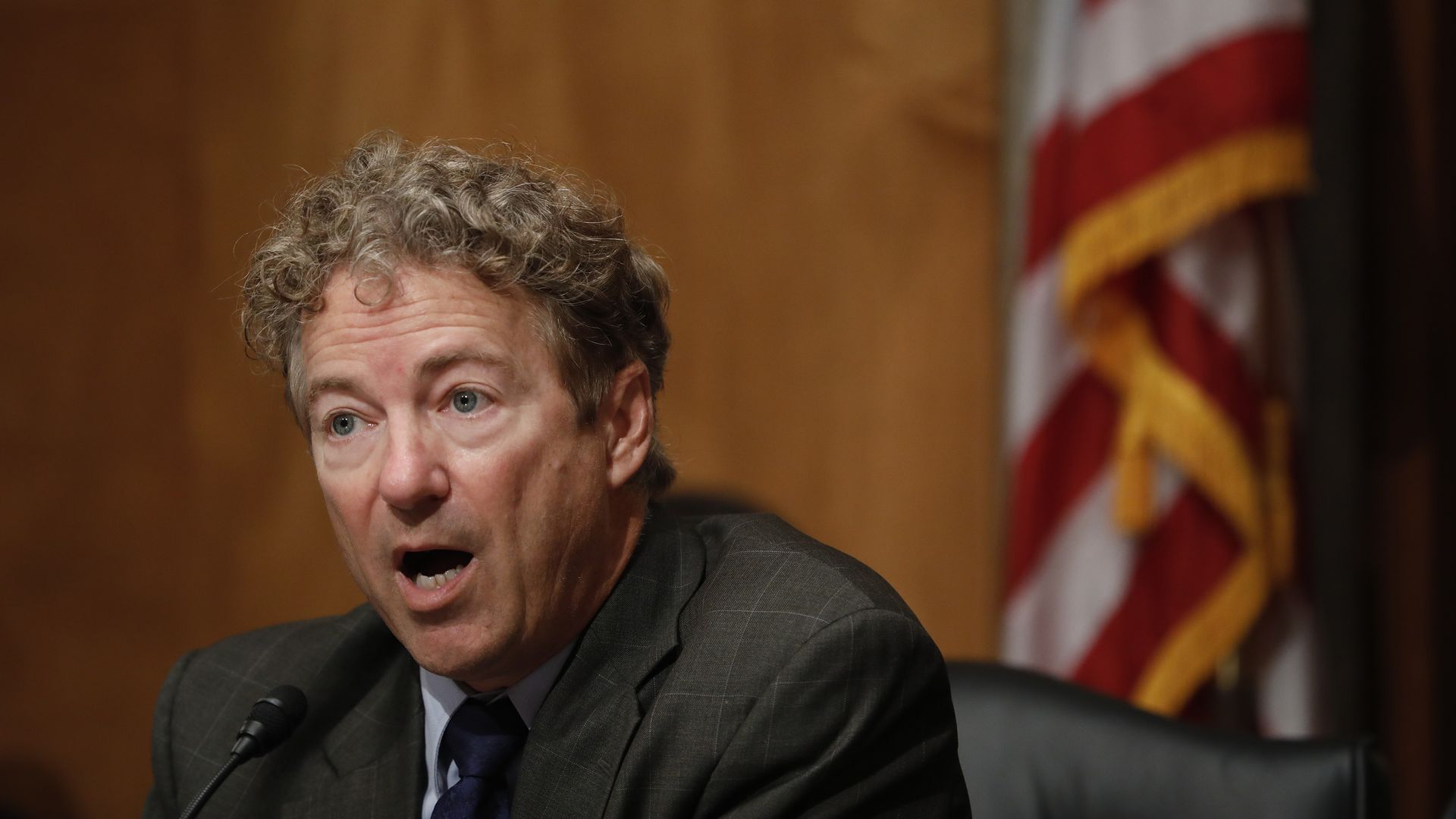
Sen. Rand Paul, currently on a visit to Moscow, told reporters Monday that he has invited Russian lawmakers to Washington for talks, per Bloomberg.
The details: Konstantin Kosachyov, chairman of Russia's upper house of parliament, said Paul "has access" to Trump "and we expect that we will be able to convey through him" a desire to establish a dialogue between the U.S. and Russia, according to Russian state media. Notably, Paul's invitation comes just days after Director of National Intelligence Dan Coats said that Russian efforts to meddle in U.S. elections remain an ongoing threat.
The Chinese government certainly has the ability to pursue an online political disinformation campaign directed at foreign elections — but hasn’t yet because it favors long-term thinking over Russia’s scorched-earth foreign policy, experts said.
Why it matters: While China has been less aggressive than Russia in the online sphere, it has allegedly pursued other equally potent strategies for meddling in the political affairs of other countries.
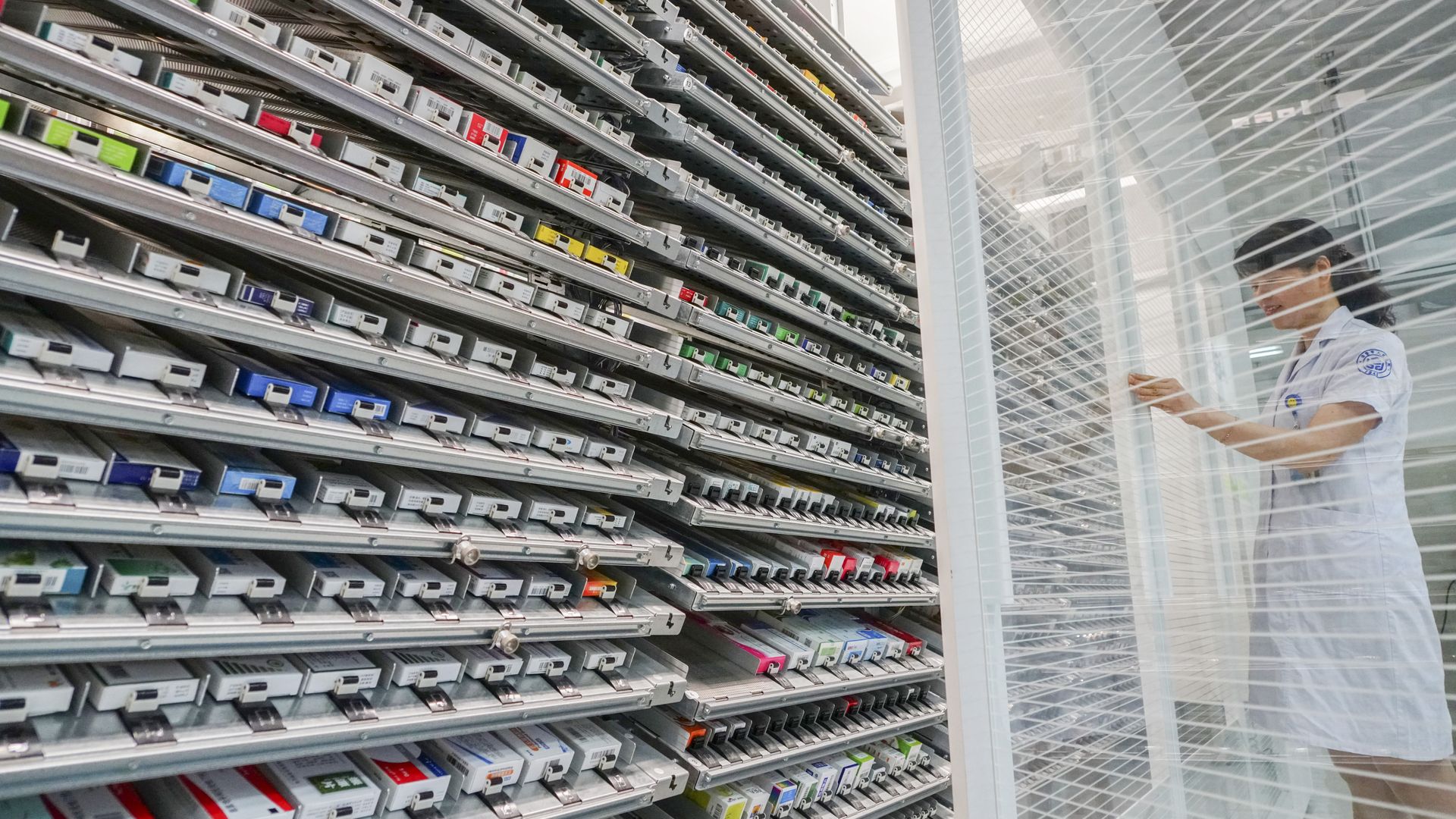
American drug companies are rushing into the Chinese market, which is growing rapidly after the government beefed up its version of the FDA as well as its public insurance programs.
Why it matters: The Chinese pharmaceutical market could be worth $170 billion in just three years, according to Bloomberg. And because its health care system has been so closed off for so long, these changes will likely make the Chinese population much healthier.
The first half of the Trump administration's new Iran sanctions strategy will kick in on Monday, restoring sanctions on any entity trading with Iran in gold, steel, aluminum, coal and other minerals and metals. The Trump administration will also restore sanctions on the Iranian automotive industry and on the issuing of Iranian debt or "significant" trade in Iranian currency.
Why this matters: Trump is moving ahead with his Iranian version of "maximum pressure" — though the end game, beyond a hope of unprecedented behavior change or regime collapse, remains unclear. These sanctions represent the first substantive move by the Trump administration after its May 8 withdrawal from the Iran nuclear deal.
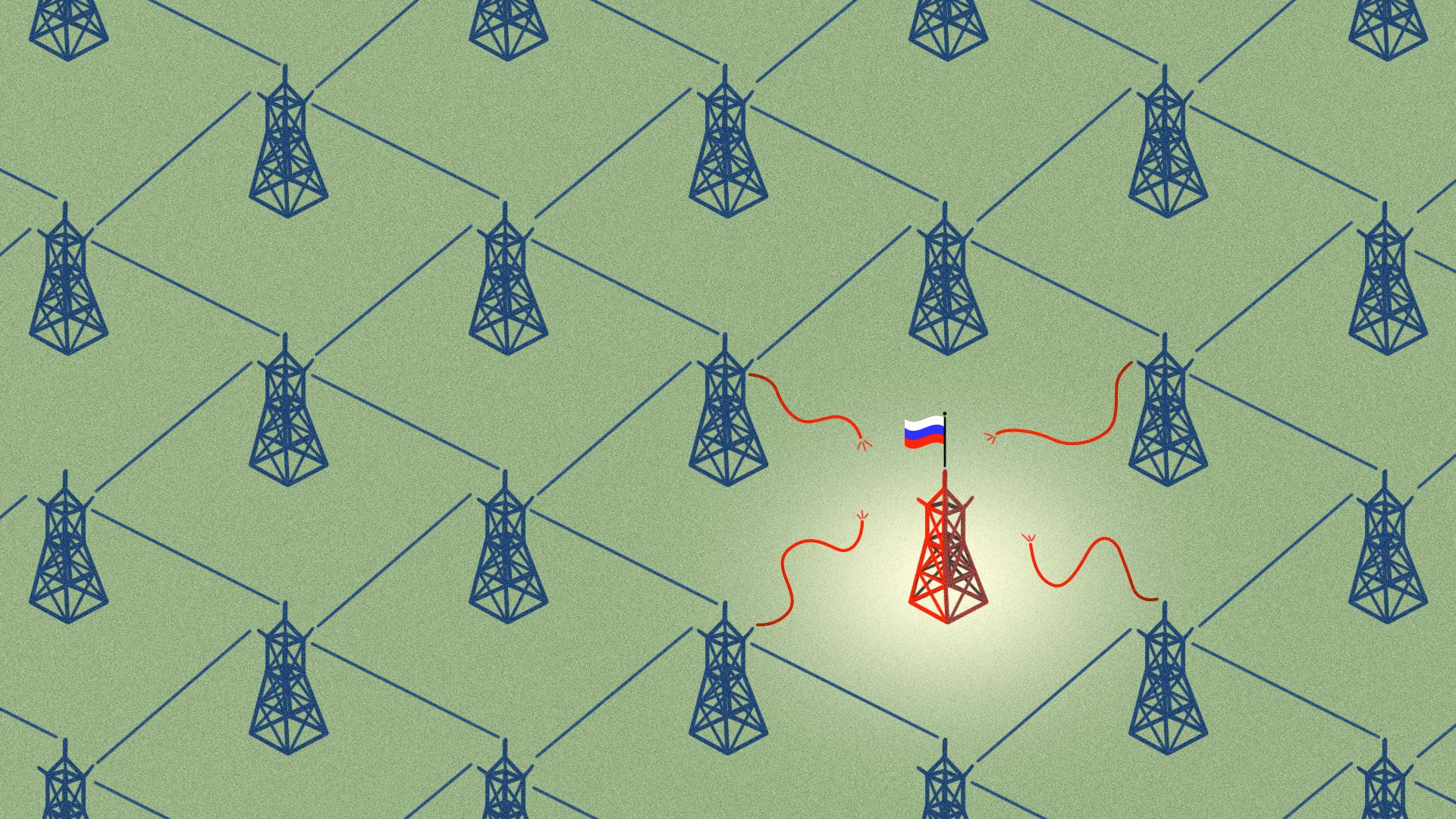
In the Cold War, the U.S. and Russia deterred any major attack by the other with existentially dangerous arsenals of nuclear-tipped missiles. Now, Russia has what it views as a potent new deterrent, experts say — cyber implants in the U.S. electric grid.
What's going on: Over the last year, Russian hackers have infiltrated power stations and other points on the U.S. grid — and now are inside hundreds, empowering them to create chaos with massive blackouts, U.S. officials say.
Few have successfully challenged Starbucks anywhere in the world. But now there is Luckin Coffee, a brazenly cool, VC-funded startup in China that, in an astonishing nine months, has swollen to more than 650 locations, a $1 billion valuation, and lots of buzz.
The quick take: We are talking a breakneck coffee war. Chic is Starbucks' greatest asset everywhere, but it is facing a determined rival in the homegrown Luckin, which wants to transform the uppity $5 latte into a more chill, mass-market product.
Iran received five airplanes from French-Italian manufacturer ATR on Sunday — one day before some of the sanctions stemming from the United States' withdrawal from the Iran nuclear deal are set to resume, reports CNBC.
The big picture: Secretary of State Mike Pompeo recently rejected a European appeal for sanctions exemptions for firms doing business with Iran, including ATR, meaning this shipment could be one of the last benefits that Iran sees under the nuclear deal. Sanctions on automobiles and precious metals will begin tomorrow, while sanctions on the energy, shipping and financial sectors are due to be restored on November 4.
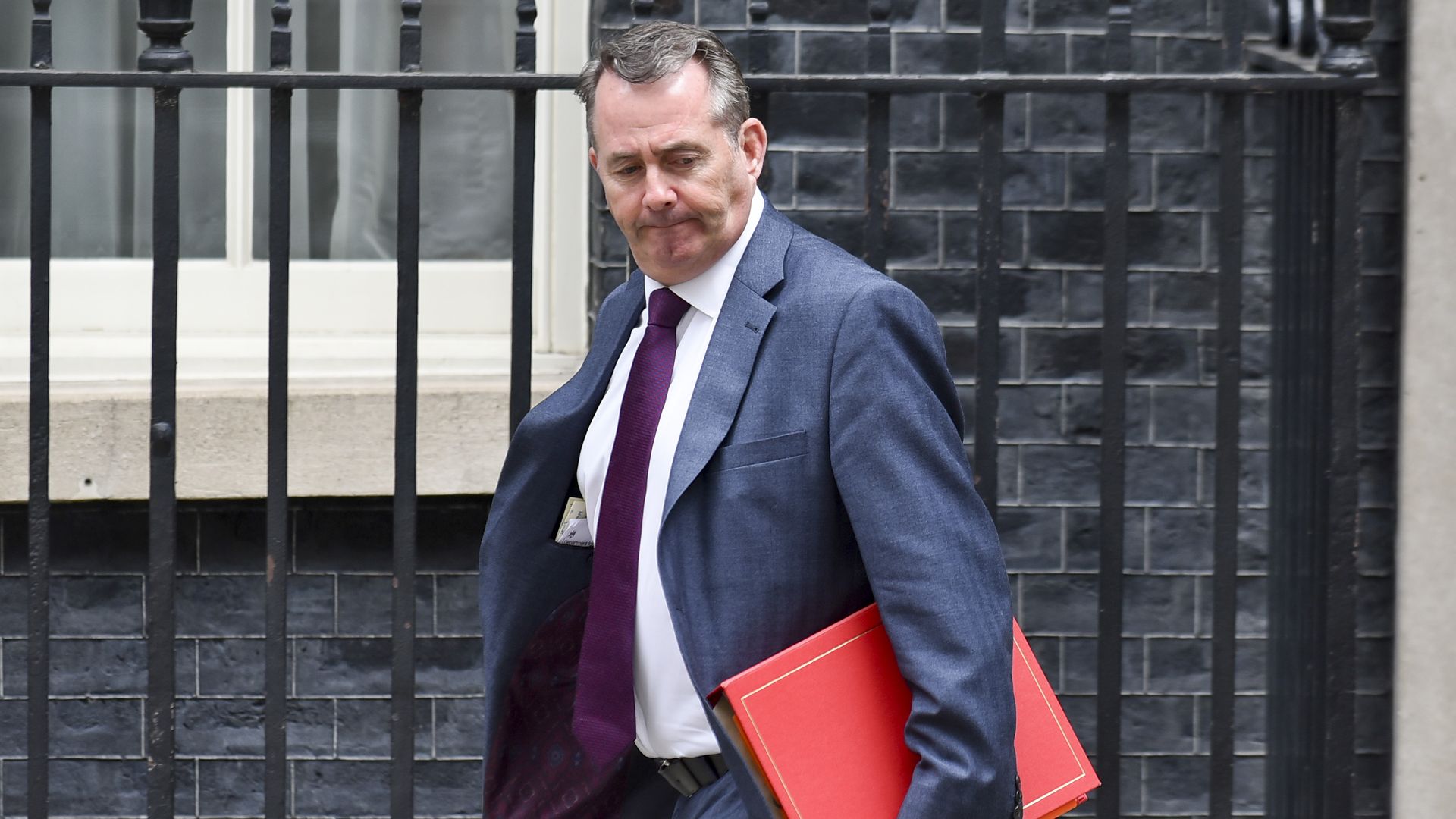
Liam Fox, the U.K.'s international trade secretary, warned in an interview Sunday that there was a 60% chance that the U.K. would fail to reach an agreement with the European Union before it departs from the bloc in March, reports the AP.
Why it matters: It puts Prime Minister Theresa May in an unenviable position, as she's torn between a Europe unwilling to compromise on the U.K.'s position in its single market and her Conservative Party, which is increasingly pushing for a "hard," more complete version of Brexit from its right flank. Whatever compromise she ultimately reaches — or doesn't — could mean fresh elections or even a second referendum.