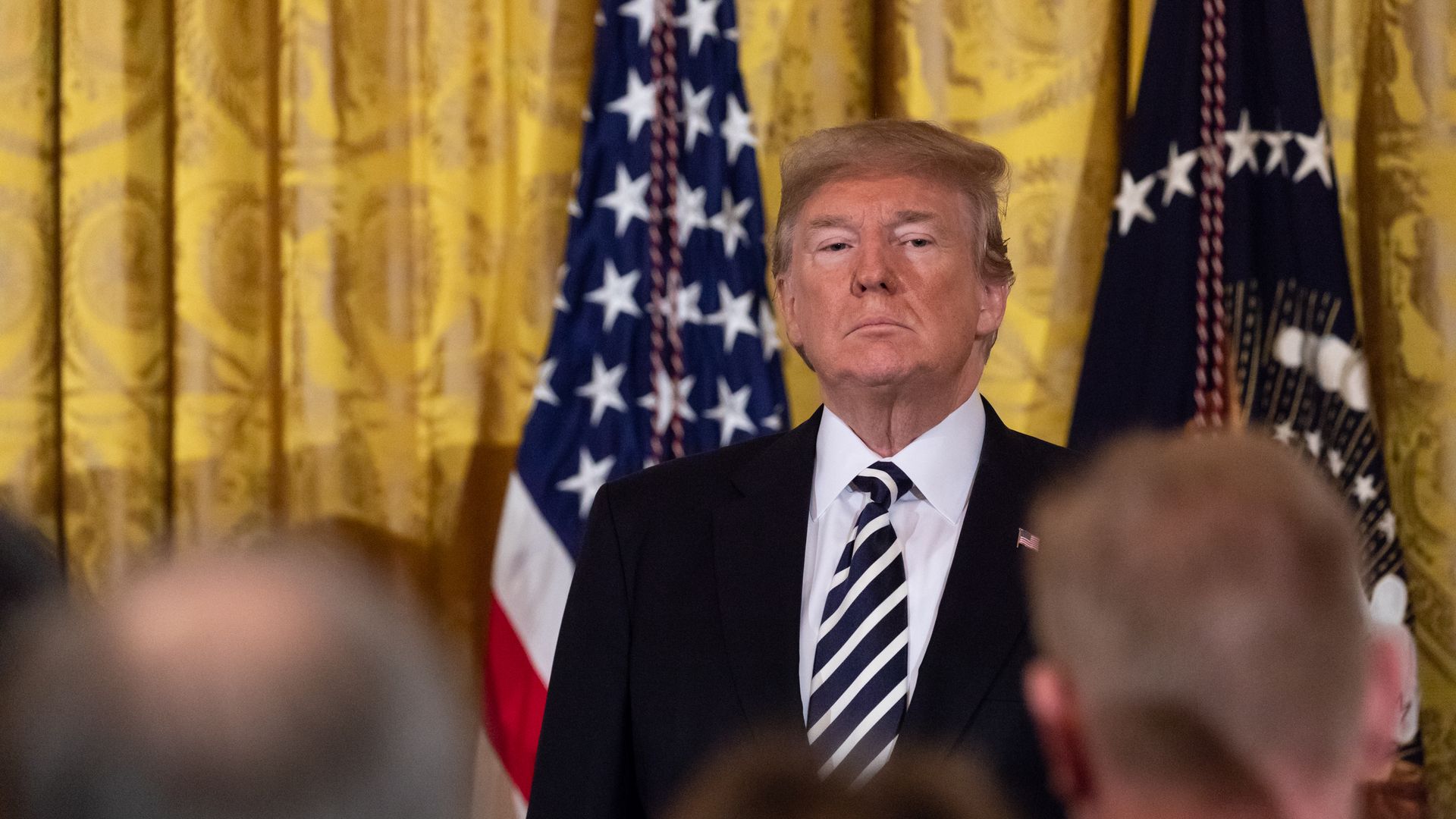
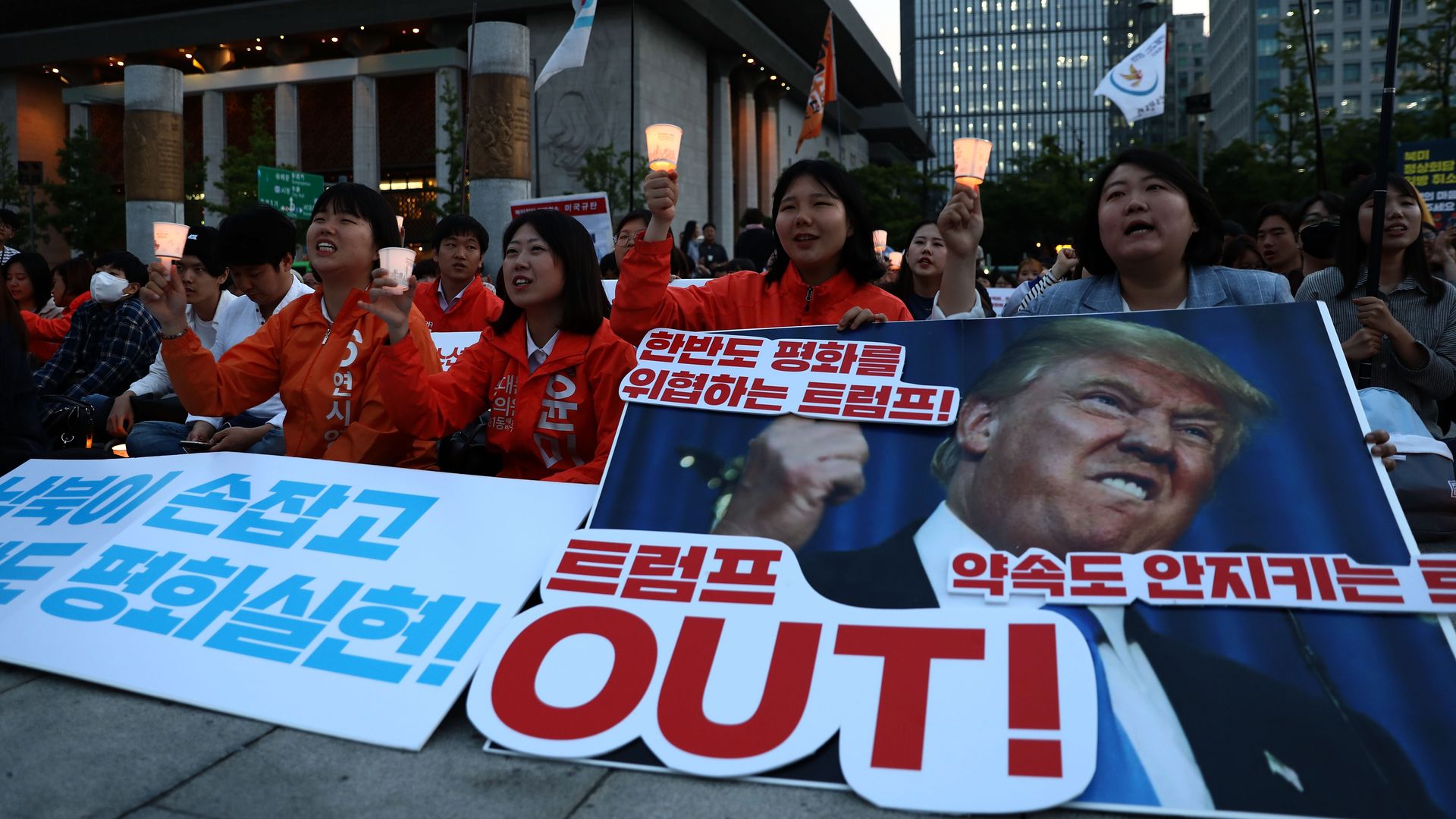
Press Secretary Sarah Sanders said the White House's pre-advance team for the North Korea summit will be leaving for Singapore as scheduled — despite President Trump cancelling the meeting this week — to prepare "should the summit take place."
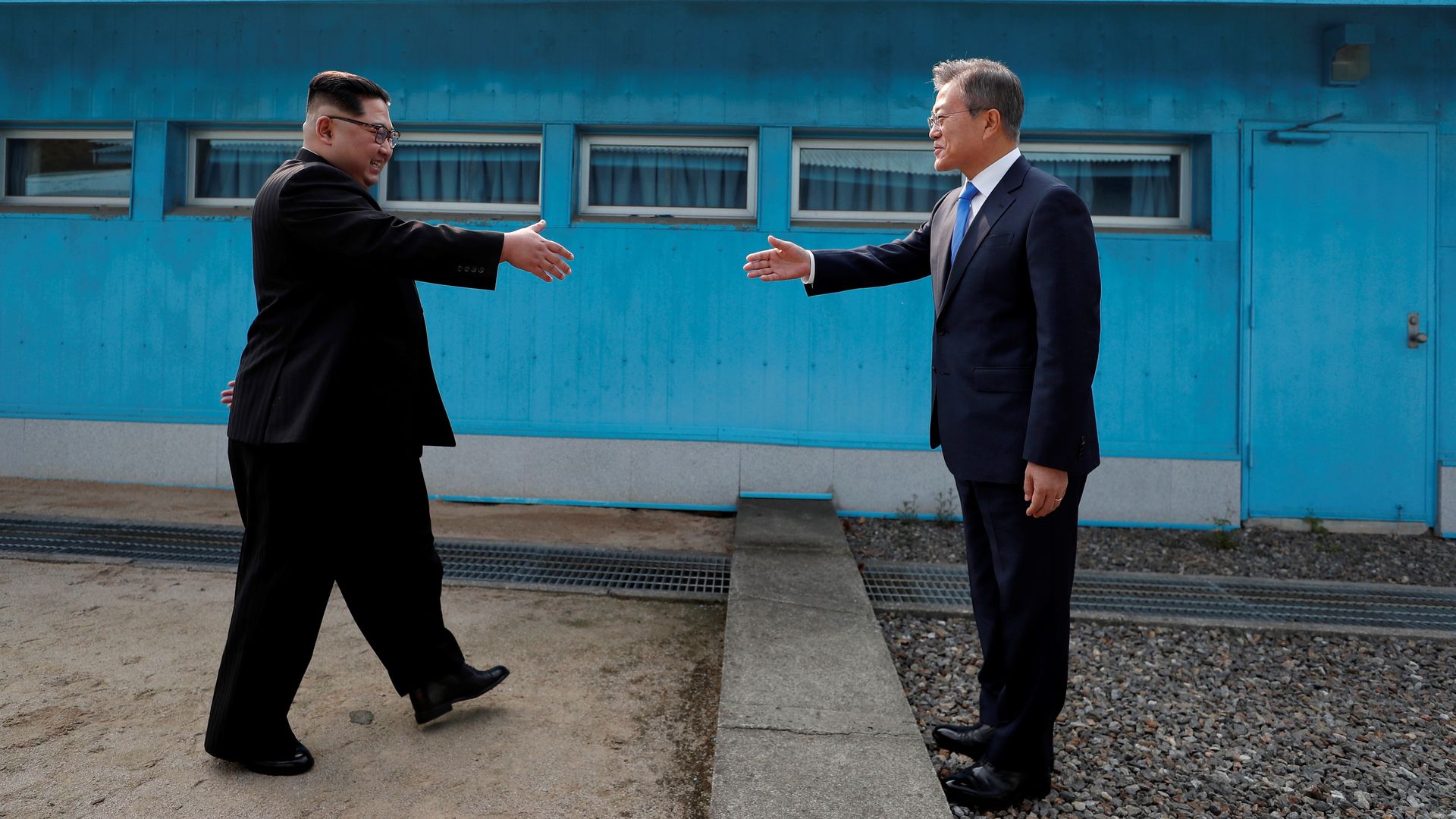
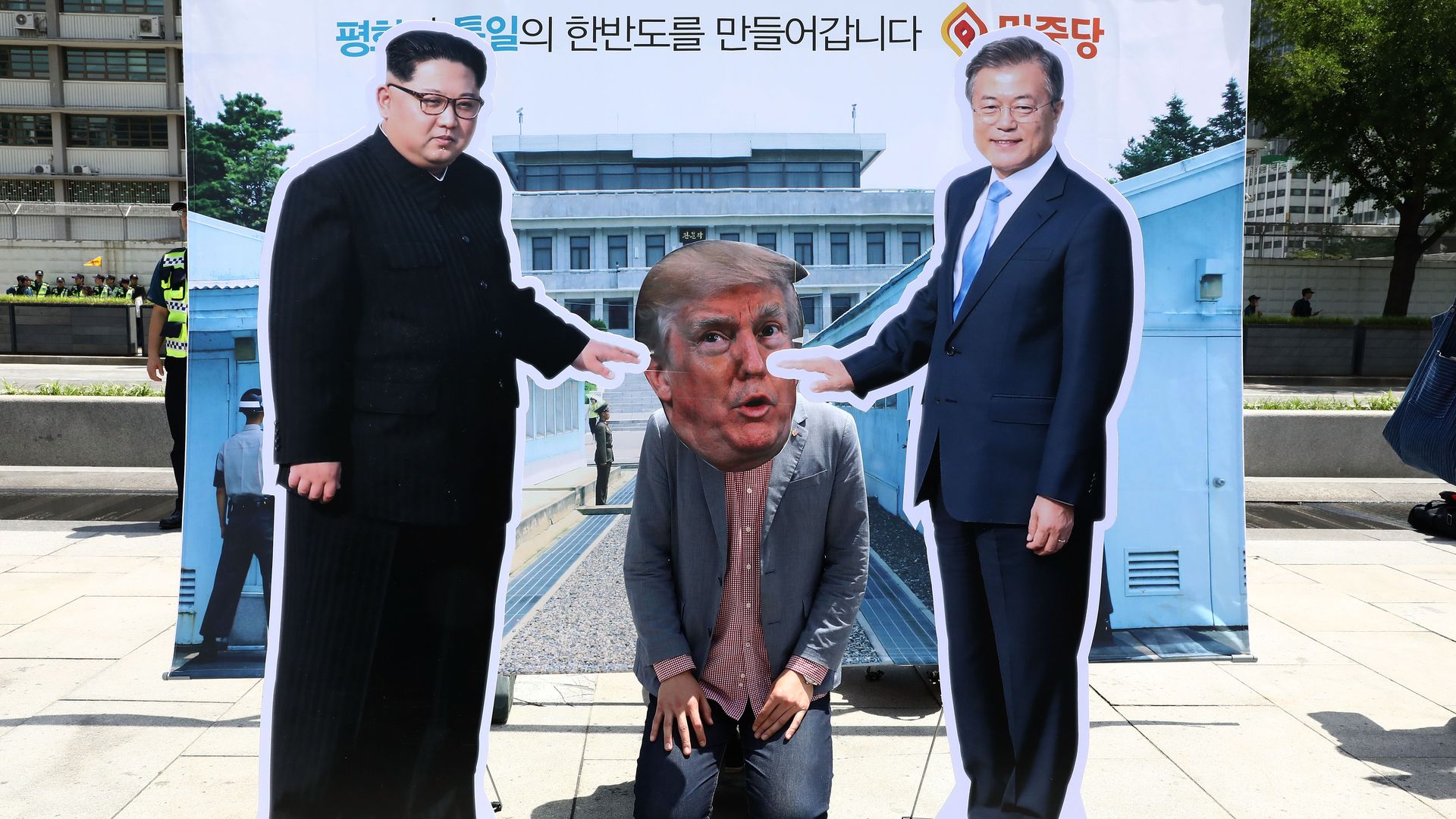
South Korean President Moon Jae-in and North Korean leader Kim Jong-un held a surprise meeting at the demilitarized zone between the two nations following President Trump's cancelation of the U.S.-North Korea summit on Thursday, South Korea's Ministry of Foreign Affairs announced Saturday.
Why it matters: The meeting shows the two countries are set on remedying tensions between each other, and between the North and the U.S. following Trump's surprise announcement. Per the BBC, if the U.S.-North Korea talks were to be rescheduled, they would be "focused on ways of denuclearizing the Korean peninsula and reducing tensions."
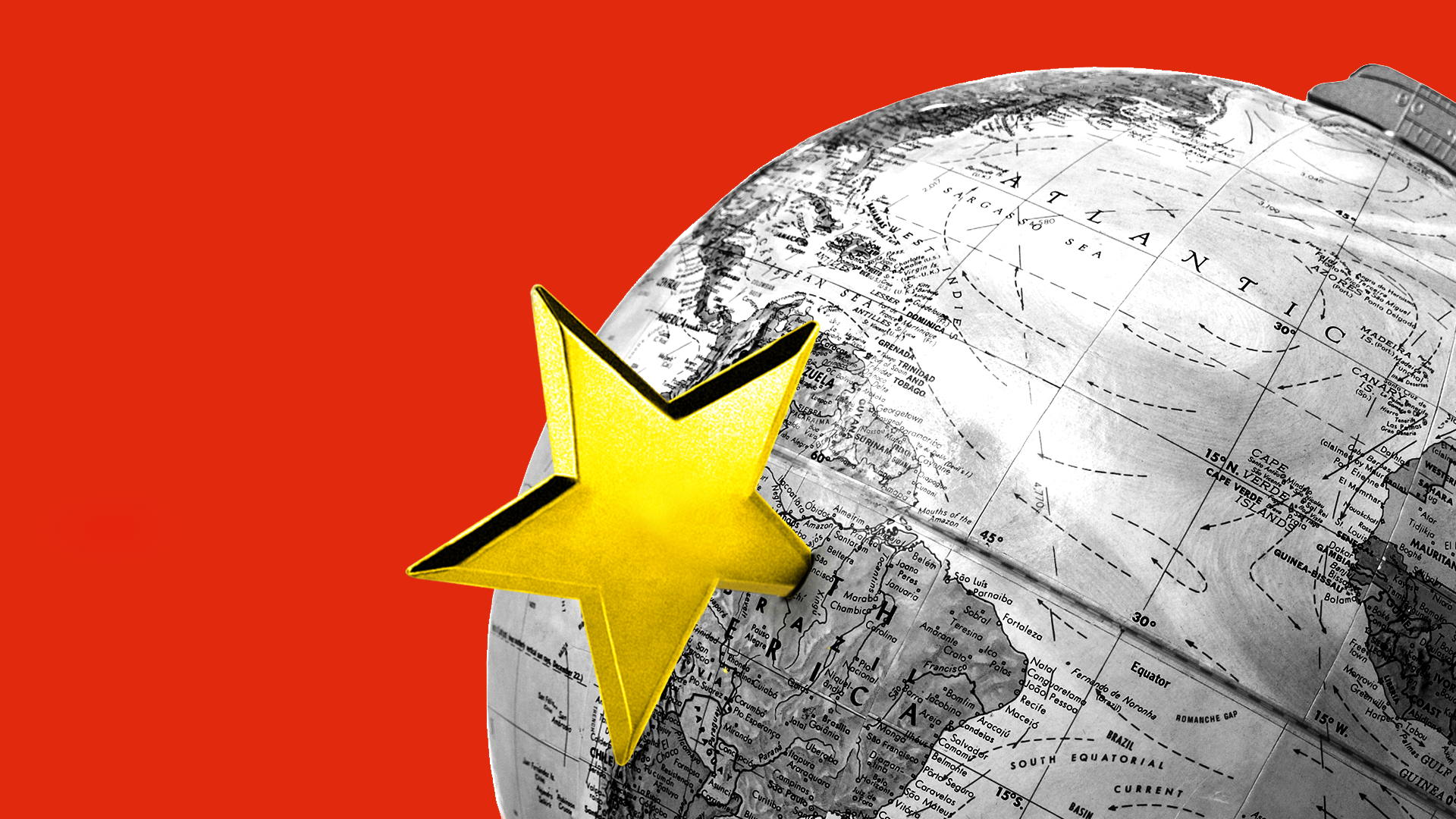
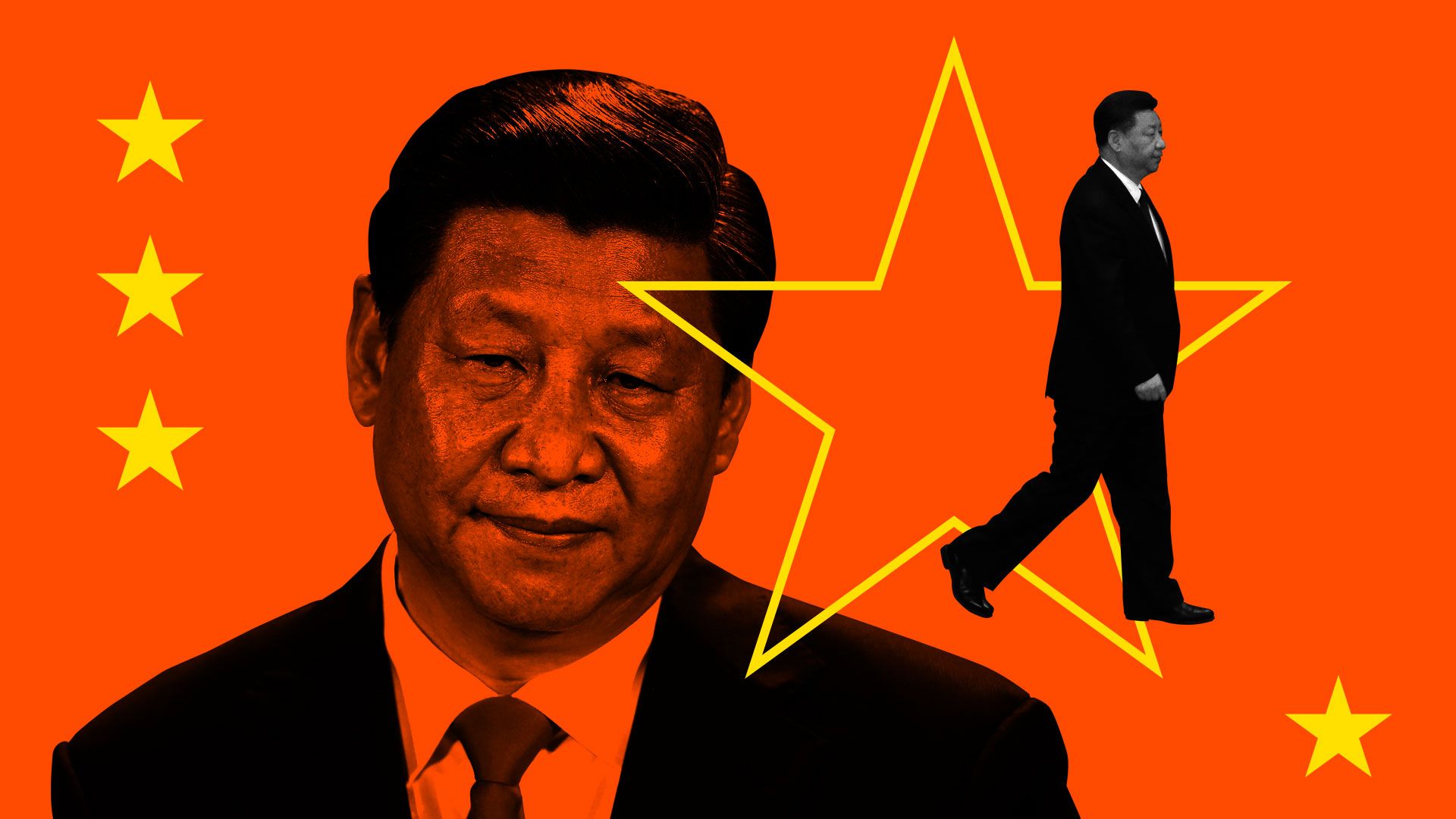
China, with a series of short and long-term moves on the global stage, is doing something few others can: eliciting similar warnings and worries from Democratic Rep. Tim Ryan, Republican Sen. Marco Rubio and nationalist Steve Bannon.
All three say China is a growing threat to America’s workers, economy, technology and national security.
All three weighed in after Jim VandeHei and I posted our piece Monday calling China the single greatest threat to the United States.
In challenging China's aim to dominate the future economy and set the global rules for how commerce is done, the U.S. and Europe are going up against history.
Quick take: For centuries, rising great powers have sought to thrive and exert influence by establishing a new global framework for trade. Now, Beijing wants to control the greatest businesses, and is building the biggest infrastructure project since at least the Marshall Plan — the Belt and Road Initiative (BRI).
Two decades ago, China's gross exports were on par with the Netherlands, and only North Korea relied on the world's most populous country as its primary source of imports. Now, China exports far more than any country on earth, and is the top supplier of countries in every corner of the world.
Here's a snapshot of China's transformation into a manufacturing powerhouse.
In January 2015, Chinese President Xi Jinping made a lofty declaration: China would trade $500 billion in goods with Latin America over the next five years, and provide $250 billion in direct investment. Not long ago those targets would have seemed ludicrous, but based on the current trends they're not out of the question.
The big picture: The Monroe Doctrine is running up against the Xi Reality in Latin America as China has now surpassed the U.S. as the leading trading partner of several South American countries, including Brazil, and stepped up investments in the region dramatically at a time when U.S. engagement is on the wane.
China is in the midst of an artificial intelligence frenzy, spurred in part by the "Next Generation Artificial Intelligence Development Plan" Beijing released in July that promises huge policy and financial support in pursuit of expansive goals between now and 2030.
The big question: Will AI sharpen competition between the US and China? Right now, the most likely outcome is that it will.
President Trump confirmed on Twitter Friday night that the administration reached a deal with Chinese telecom company ZTE, while criticizing Senator Chuck Schumer and former President Obama for past choices with the company.
Why it matters: The deal, per the New York Times, "could clear the way for further trade talks with China." It's contingent on ZTE hiring American compliance officers, paying a fine, and shaking up its management team. In return, the Times reports, ZTE will "once again begin doing business with American companies."
While high hopes and expectations for the planned Kim–Trump summit in Singapore seemed to vanish yesterday, Trump's letter to Kim left open the possibility to reschedule, and North Korea's reaction was surprisingly humble and flexible, affirming a willingness to meet.
Yes, but: Even if Trump’s North Korea diplomacy ends here, the mere prospect of the June summit has already enhanced Kim’s status on the international stage and conferred legitimacy on his authoritarian regime. Under diplomatic pretenses, North Korea drew China closer to its side after an extended period of tensions, and its relations with South Korea have also significantly improved. Going forward, it will be much more difficult for the U.S. maximum pressure campaign —not to mention U.S. military action — to garner support from these countries.
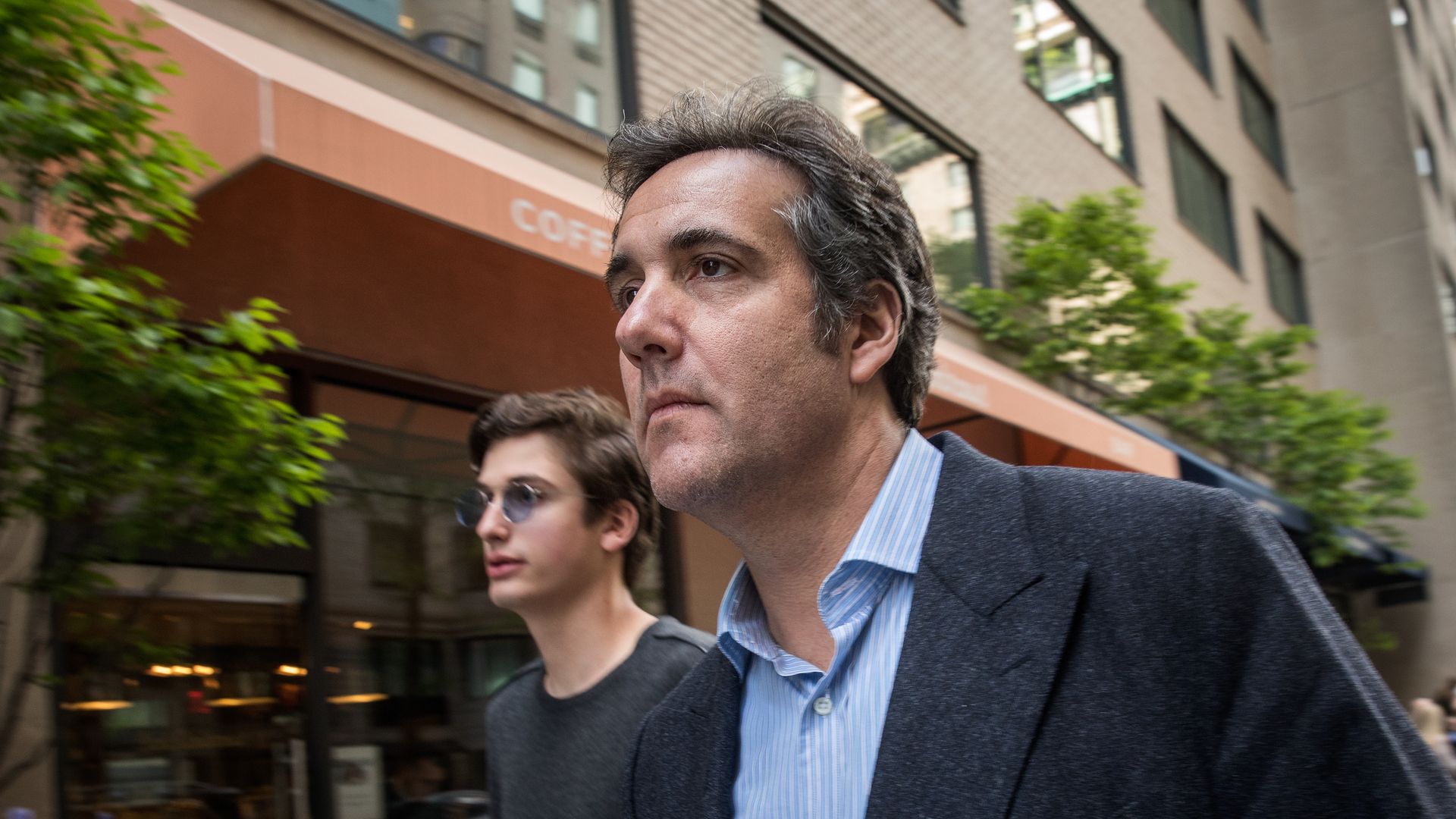
Eleven days before President Trump's inauguration, his personal lawyer Michael Cohen took part in a meeting at Trump Tower with billionaire Russian oligarch Viktor Vekselberg, reports the New York Times.
The big picture: After President Trump was inaugurated, Cohen received a $1 million consulting contract from private equity firm Columbus Nova — headed by Andrew Intrater, who also attended the Vekselberg meeting. Though Vekselberg is Intrater's family member and biggest client, Intrater denied to the Times that the businessman had anything to do with Columbus Nova's contract.
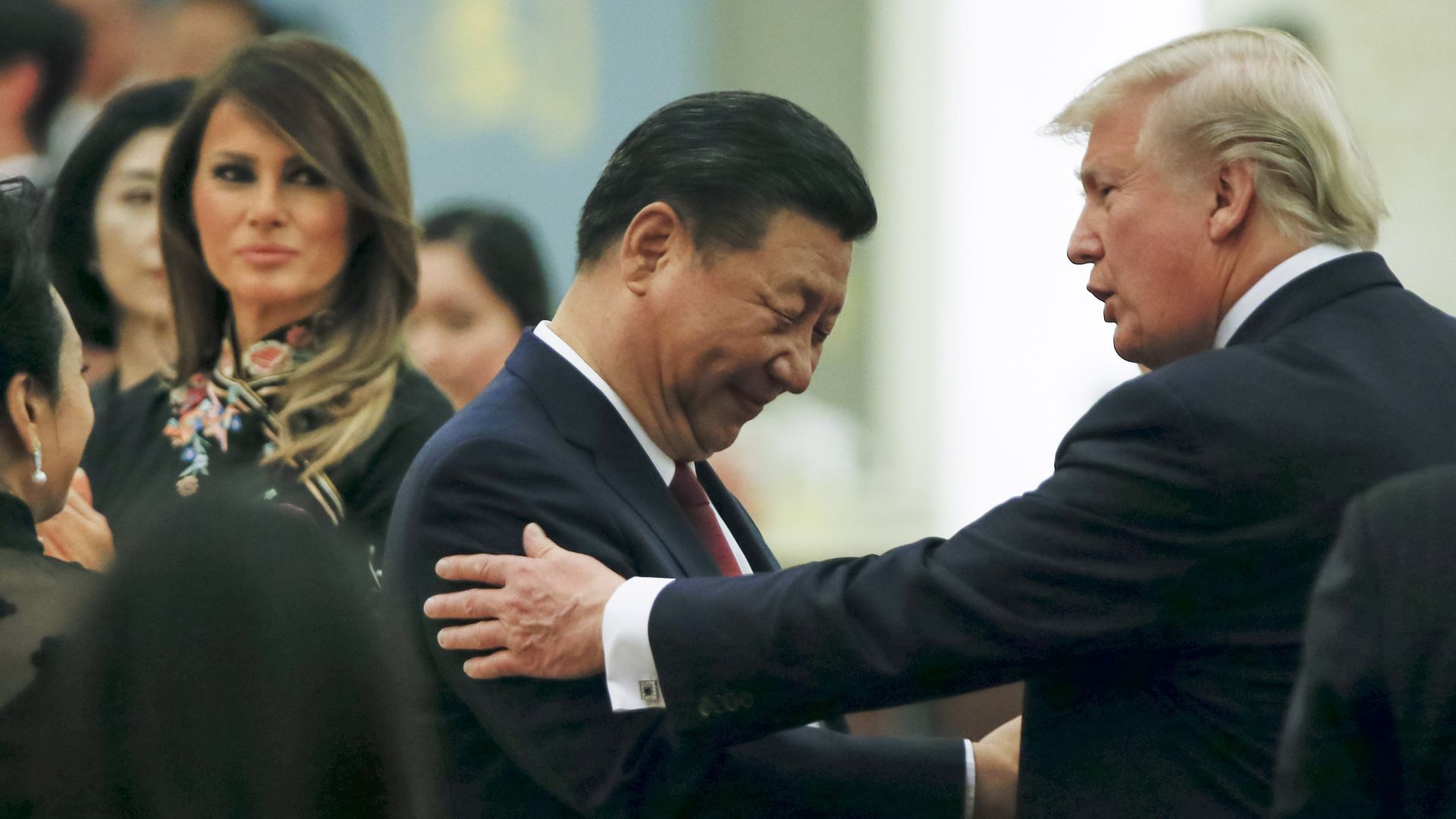
President Trump's decision to cancel the North Korea summit is bad news for China — because it's in China's interest for Trump and Kim Jong-un to talk.
What's next: If the summit is truly off, the U.S. will likely double down on pushing for strict implementation of all UN sanctions and continue the "maximum pressure" campaign to squeeze North Korea into submission. China has only joined those efforts reluctantly, and has been hoping they would ease off with the Trump-Kim dialogue.
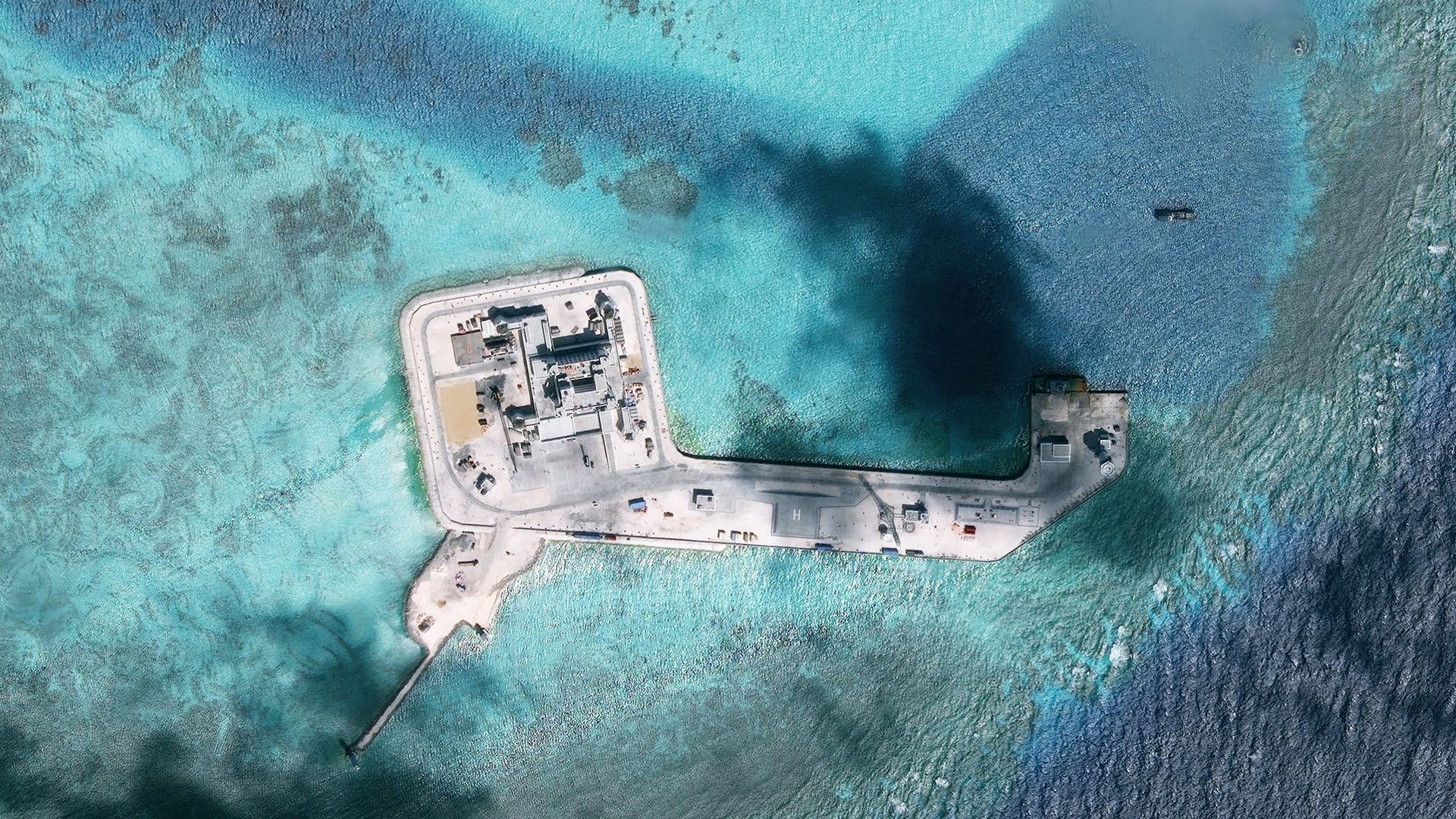
The Pentagon has withdrawn China's invitation to the Rim of the Pacific (RIMPAC) exercise in Hawaii due to China's expansion and militarization in the South China Sea.
Why it matters: China's participation in RIMPAC was seen as a confidence-building measure to improve communications between the U.S. and Chinese militaries. The goal was to lower the risk of misunderstandings and accidents between the two navies, since they're both operating on the high seas.
A 30-strong White House advance team is still planning to fly to Singapore on Sunday to prepare for a summit between President Trump and North Korean leader Kim Jong-un, despite President Trump’s abrupt cancellation of the event yesterday, Politico reports.
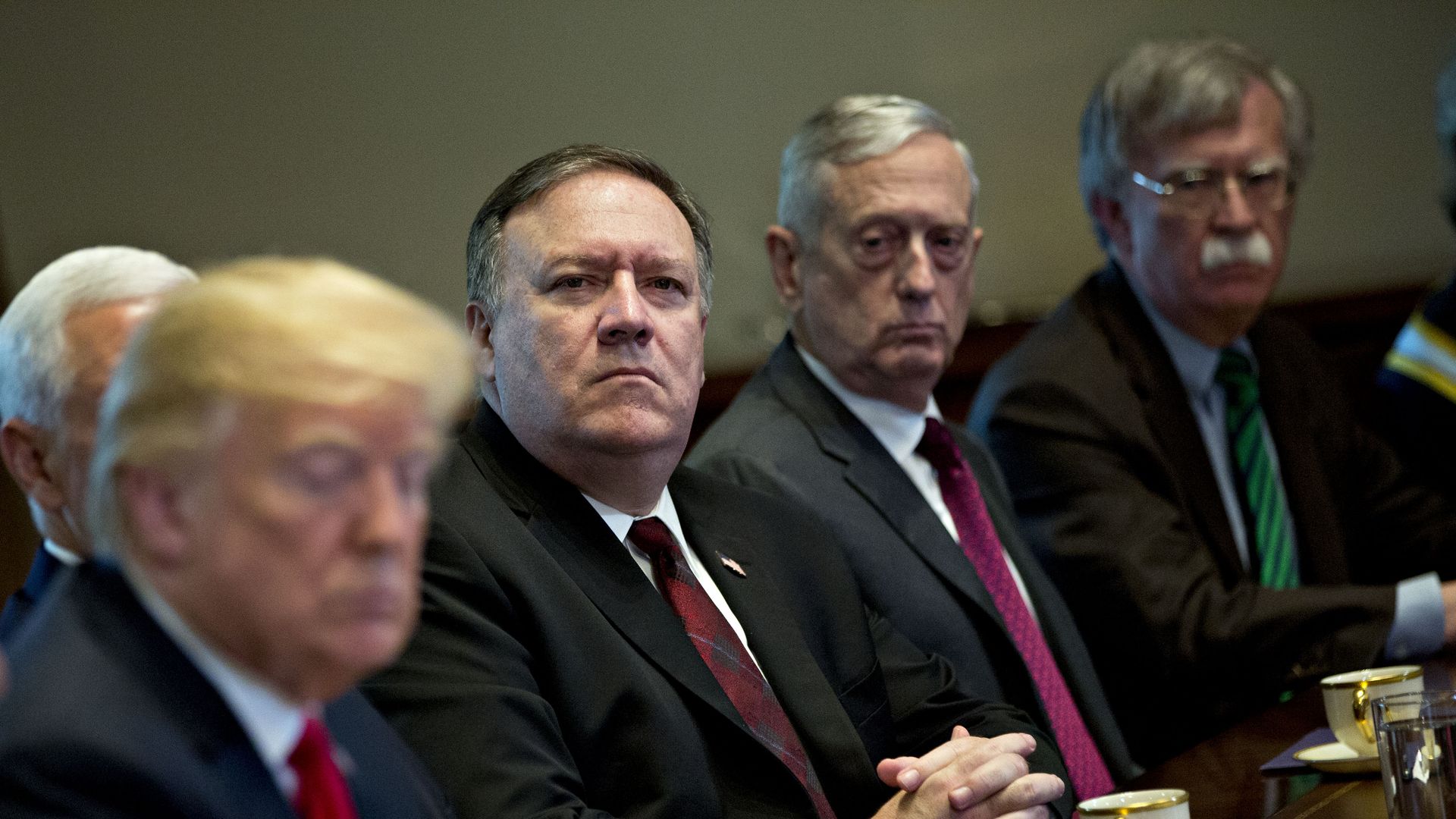
Why it matters: Per the Politico report, the staffers have been asked to “keep the door open” for a potential summit — which President Trump said today could ultimately still take place. Defense Secretary Jim Mattis said today, “we have got some, possibly some good news on the Korea summit, where it may, if our diplomats can pull it off, may have it back on even.” That followed a statement from North Korea that the summit was still necessary, and they are prepared to talk.
In the span of a month, President Trump has managed to create two nuclear crises. First, he walked away from the Iran nuclear deal, and then he scrapped the North Korea summit. Now, the world faces both the prospect of Iran restarting its nuclear program and the far-more menacing threat of a full-blown nuclear-capable North Korea.
The big picture: Gone is American credibility to manage complex global issues. In fact, rather than acting as the bulwark against dangers to world order, the U.S. is now seen as the country inflaming them.
President Trump responded to North Korea's assertion that it is willing to sit down "at any time in any form" with a Friday morning tweet, calling it "very good news."
The United States was closer to war with North Korea last summer than is widely known, sources close to the White House tell us. And now that same dangerous uncertainty is back.
The big picture: The White House is now sufficiently suspicious of the intentions of Kim Jong-un — "Little Rocket Man" to Trump only eight months ago — that Pyongyang would likely have to grovel to get the president to personally re-engage.
China’s debt-trap diplomacy is giving the country greater control over developing nations across Asia and Africa, like Angola, Sri Lanka and Djibouti. This is all part of Xi Jinping’s grand strategy to make China the global superpower by 2050.