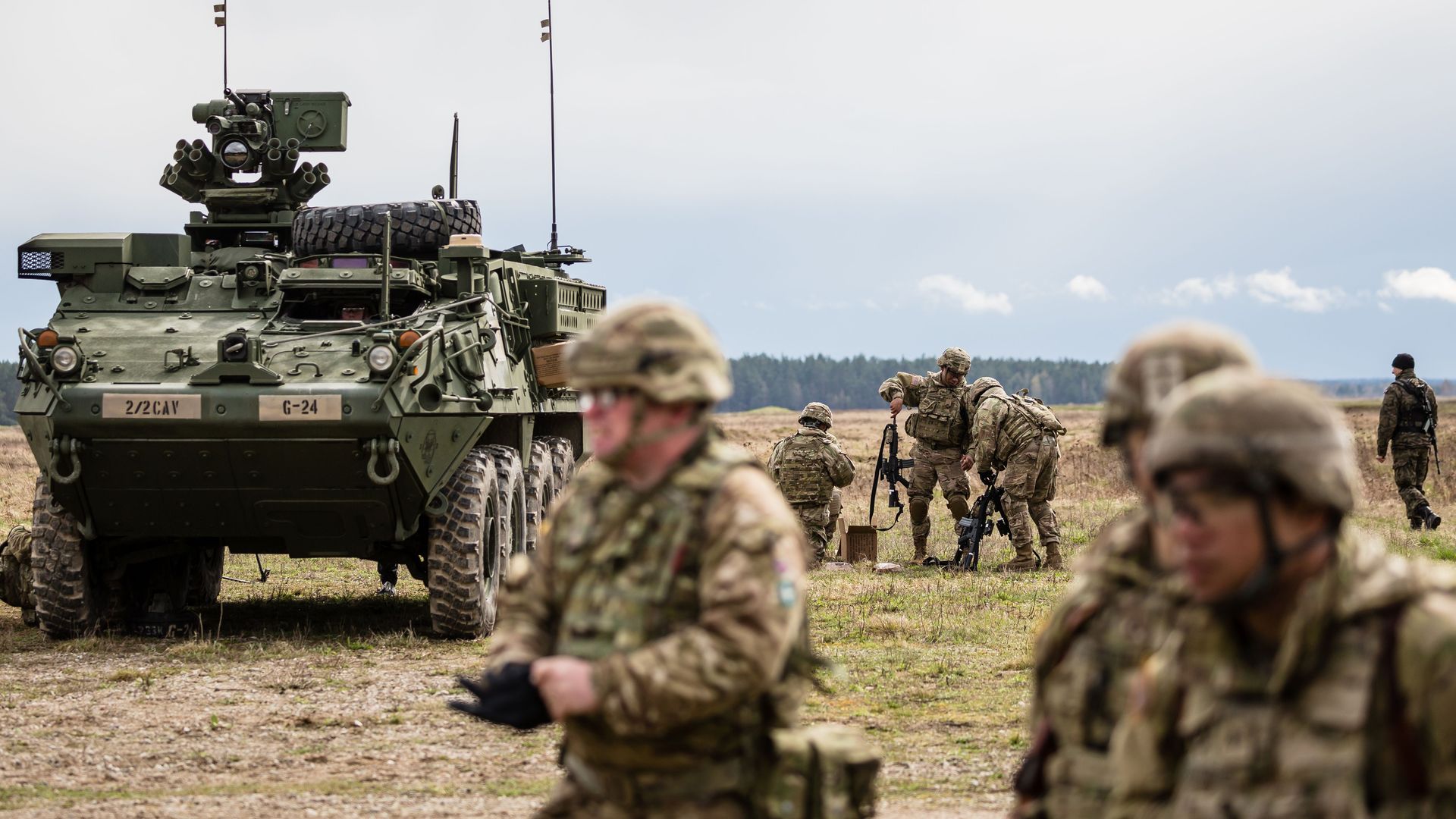
The Polish government has offered to pay the United States up to $2 billion to build a permanent military base in the country, reports Politico Europe, citing a defense ministry proposal obtained by Polish news portal Onet.
Why it matters: The move would be seen in Europe as an attempted Polish check against Russia, which could exacerbate tensions on the continent. And it's worth noting that President Trump gave a well-received speech in Warsaw last year, where he said that he would hold up Poland "as an example for others who seek freedom and who wish to summon the courage and the will to defend our civilization."
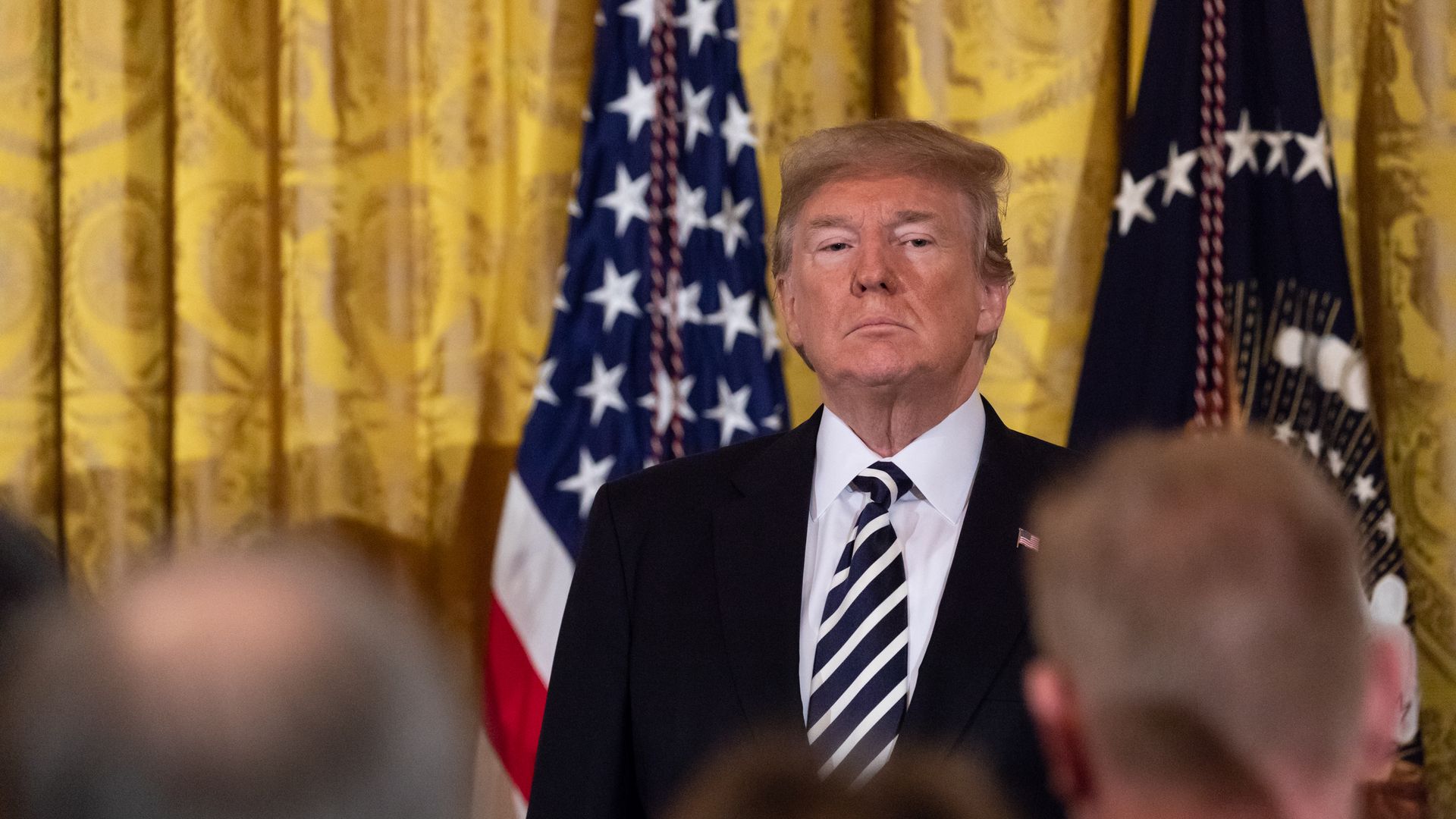
President Trump confirmed in a Sunday afternoon tweet that an American team had arrived in North Korea to begin preparations for a summit with North Korea — seemingly expressing optimism that the summit with North Korean leader Kim Jong-un would indeed occur.
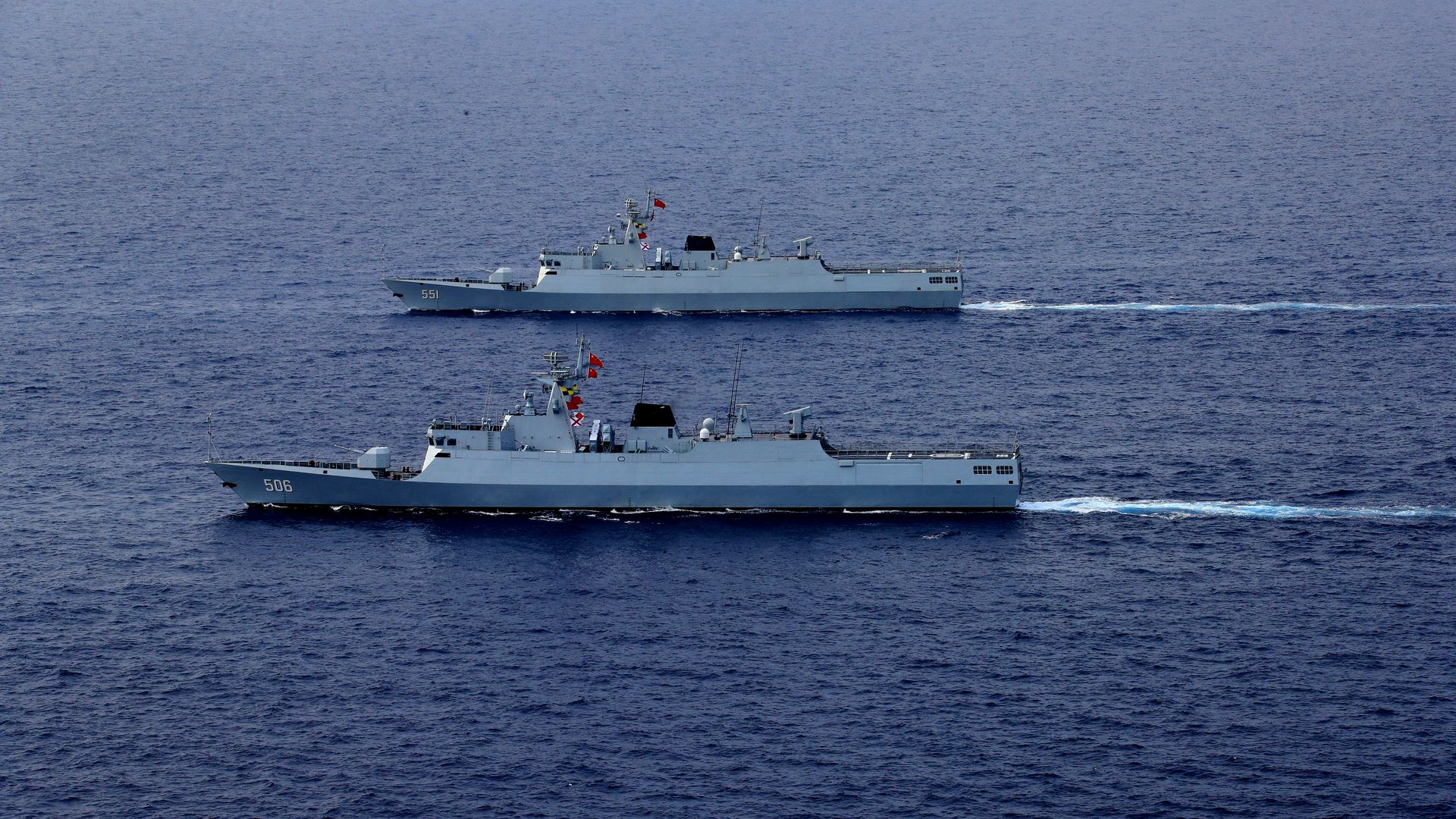
China blasted the U.S. on Sunday for sailing two Navy warships into an area of the South China Sea claimed by Beijing — a move that comes amid strained U.S.-China relations over trade as President Trump seeks cooperation on North Korea, reports the Wall Street Journal.
What they’re saying: The U.S. move was a "freedom of navigation operation," designed to purposefully test China's claims in the sea, per the WSJ, prompting Chinese foreign and defense officials to express “firm opposition” to what they characterized as a violation of sovereignty. The long-disputed area has become a recent hotspot between the U.S. and China with the Trump administration also threatening consequences for increased Chinese activity in the area.
A team of U.S. officials entered North Korea on Sunday in preparation for a planned summit between President Trump and North Korean leader Kim Jong-un, the Washington Post reports — despite continued uncertainties surrounding the summit taking place.
The details: Per the Post, the team — which includes former U.S. ambassador to South Korea Sung Kim, the National Security Council's Korea specialist Allison Hooker, and Assistant Secretary of Defense for East Asia Randall Schriver — is focused on discussing North Korea's nuclear weapons. South Korean President Moon Jae-in said on Saturday that the North is committed to denuclearization.
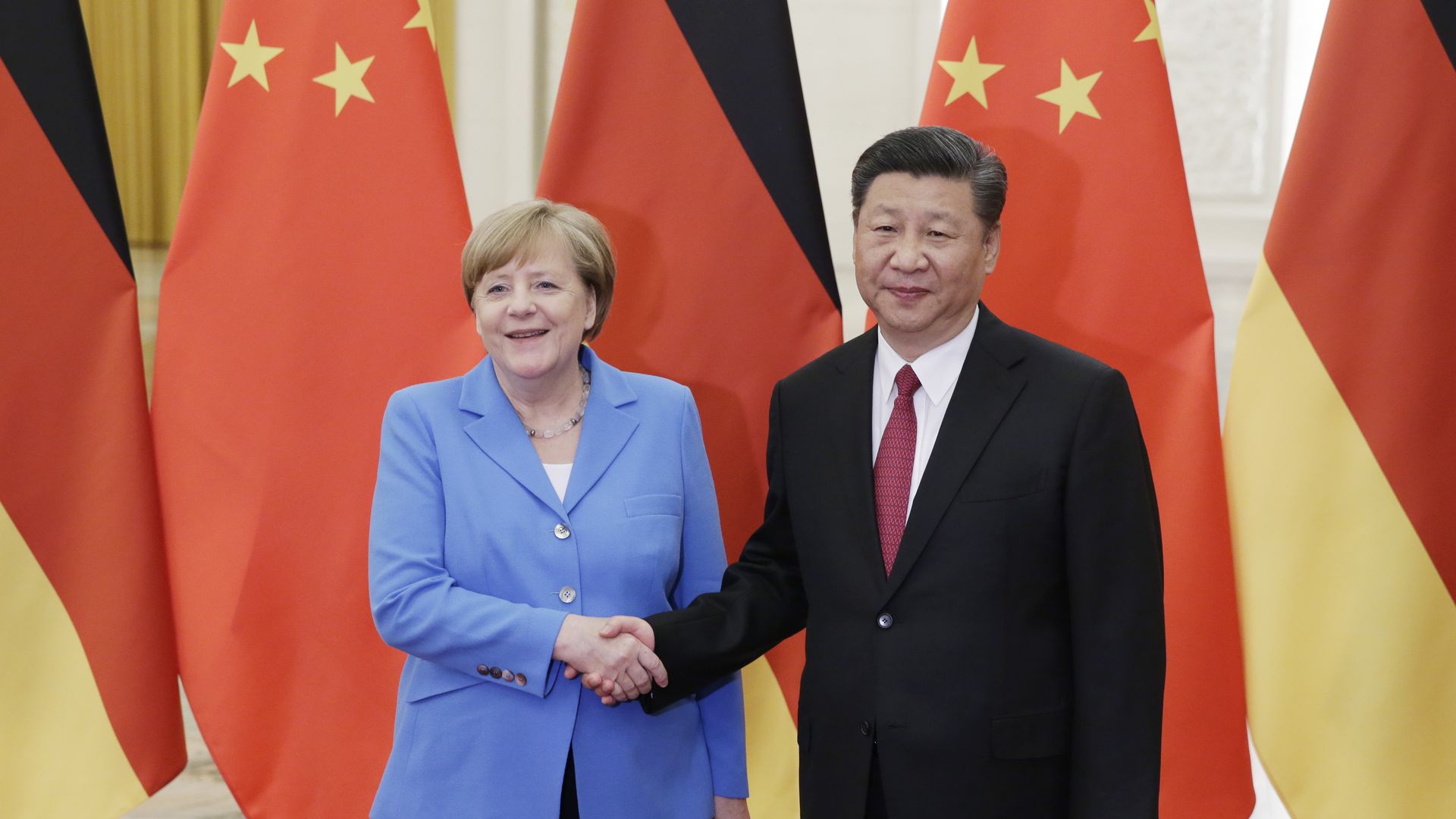
The world’s most powerful woman, German Chancellor Angela Merkel, went to meet the world’s most powerful man, Chinese President Xi Jinping, on Thursday.
Why it matters: The trip comes as a deepening estrangement between Europe and the U.S. is reshaping Germany’s choices and challenges on the world stage. Only 14% of Germans think the U.S. is a reliable partner these days, according to a recent poll. More than 40%, meanwhile, now see China in a positive light.
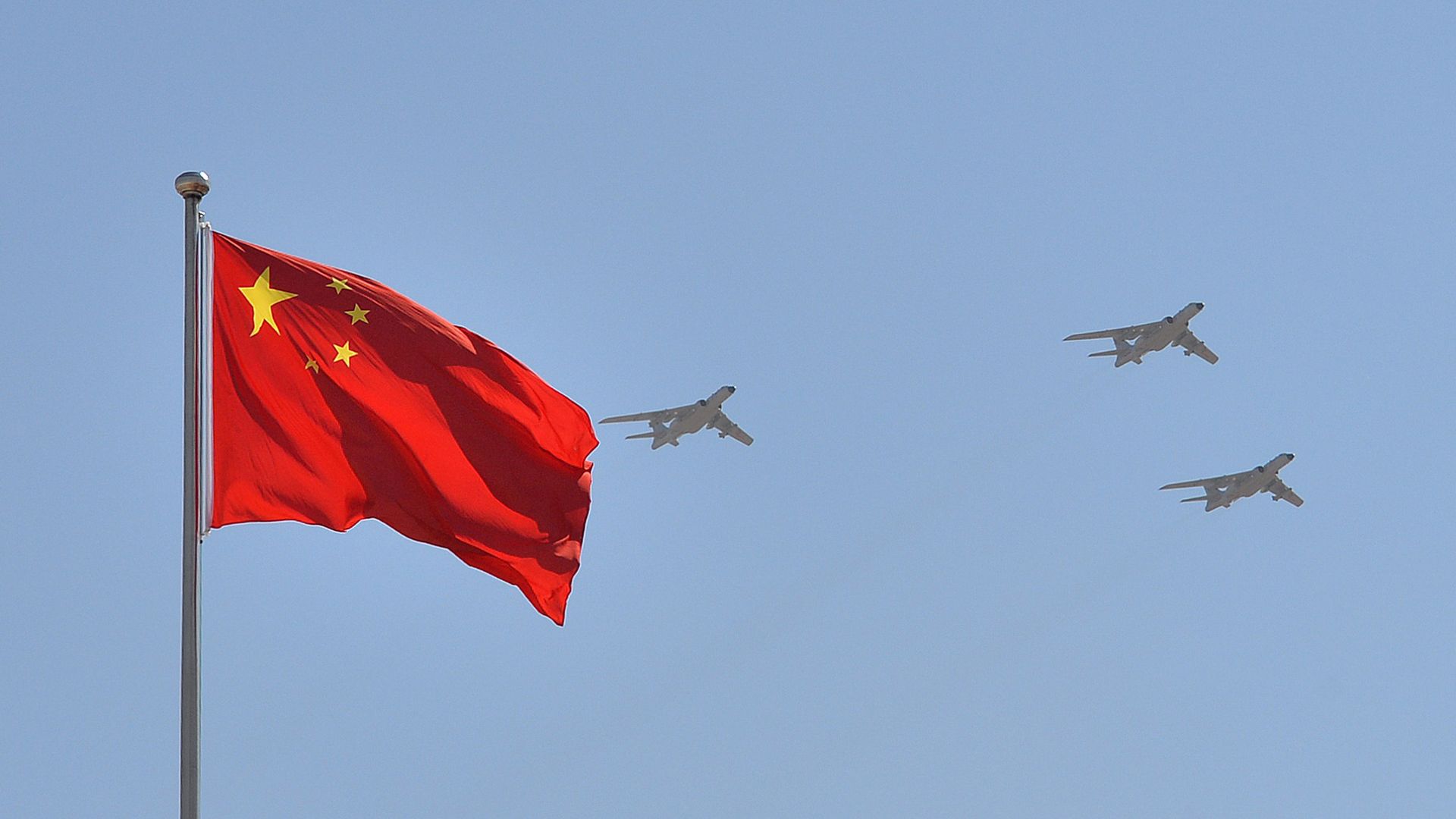
A Chinese H-6K bomber landed on Woody Island in the Parcels last week — the first time a Chinese military aircraft has touched down on one of the disputed islands in the South China Sea, and a strong assertion of sovereignty by Beijing.
Why it matters: China is not only restoring its place as the dominant power in Asia, but also extending its presence and influence far beyond. Along the way, it has become the most significant global competitor the U.S. has ever faced.
North Korean leader Kim Jong-un is still committed to denuclearization, South Korean President Moon Jae-in said, per CNN, adding that both he and Kim believe the planned summit between Kim and President Trump must take place.
The details: The two leaders met secretly on Saturday morning, after Trump's surprise announcement on Thursday. Moon said Kim "expressed his intent to settle the history of war and confrontation, and to cooperate for peace and prosperity through the success of the North Korea-U.S. summit," per CNN.
Press Secretary Sarah Sanders said the White House's pre-advance team for the North Korea summit will be leaving for Singapore as scheduled — despite President Trump cancelling the meeting this week — to prepare "should the summit take place."
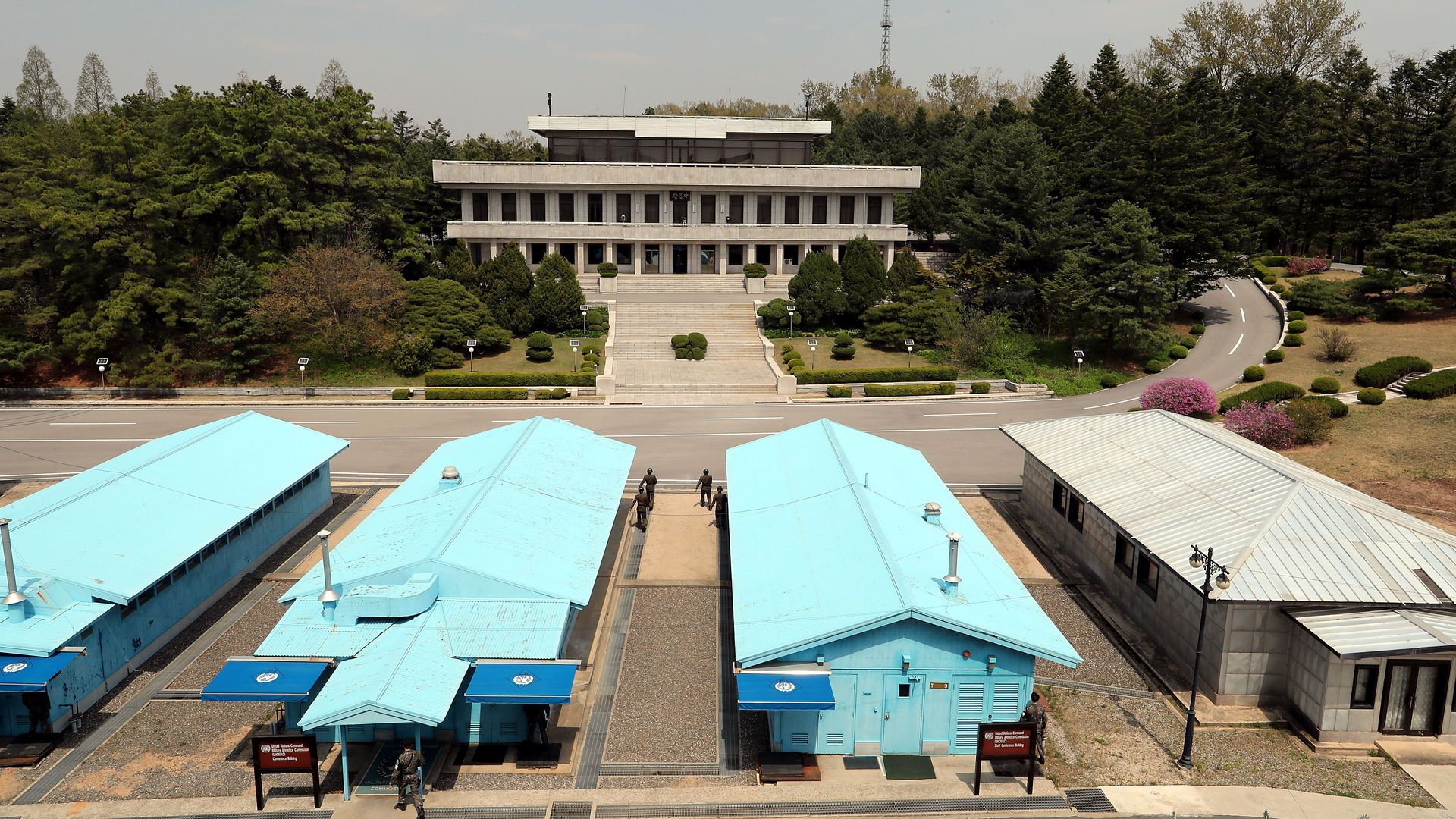
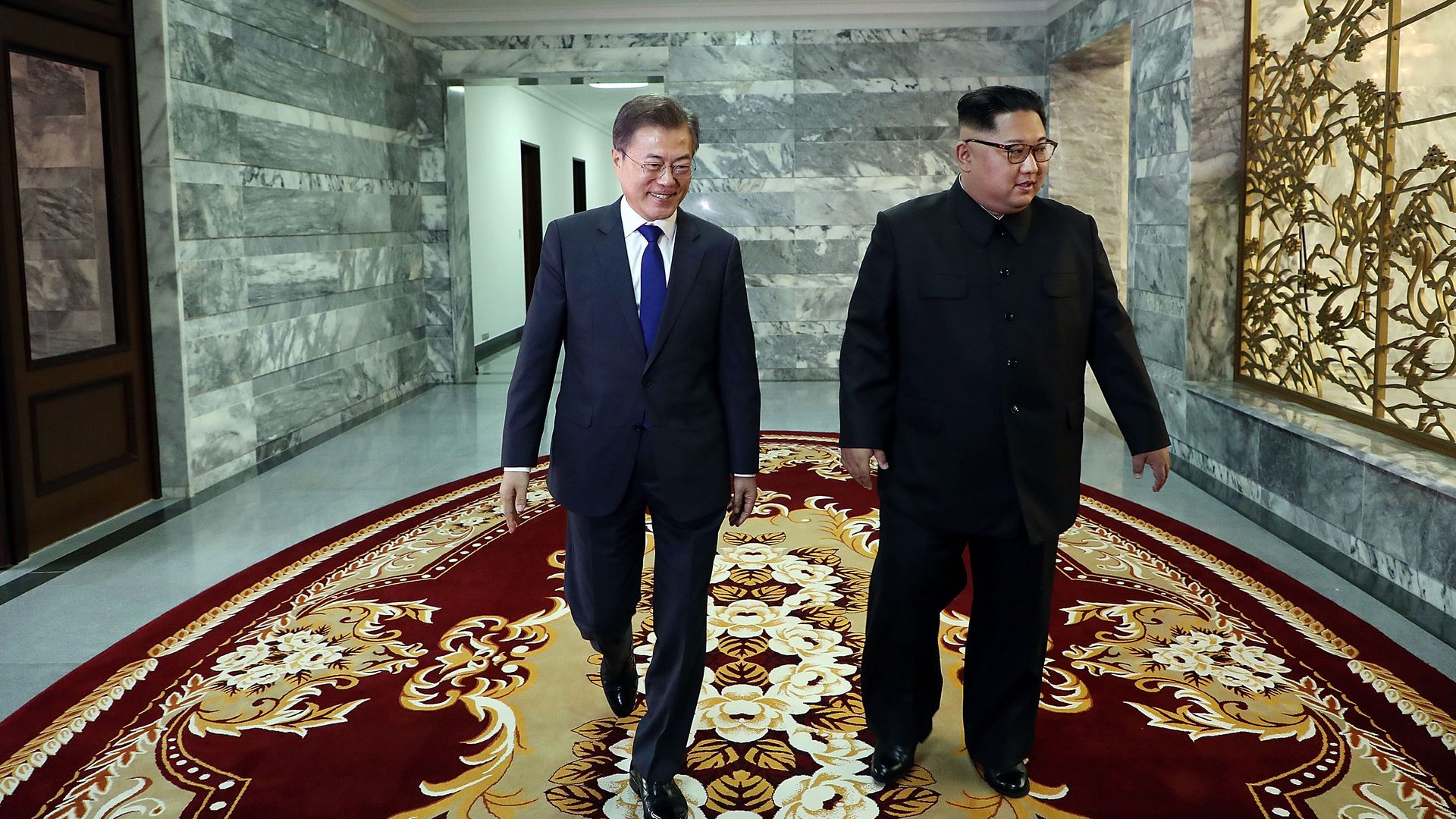
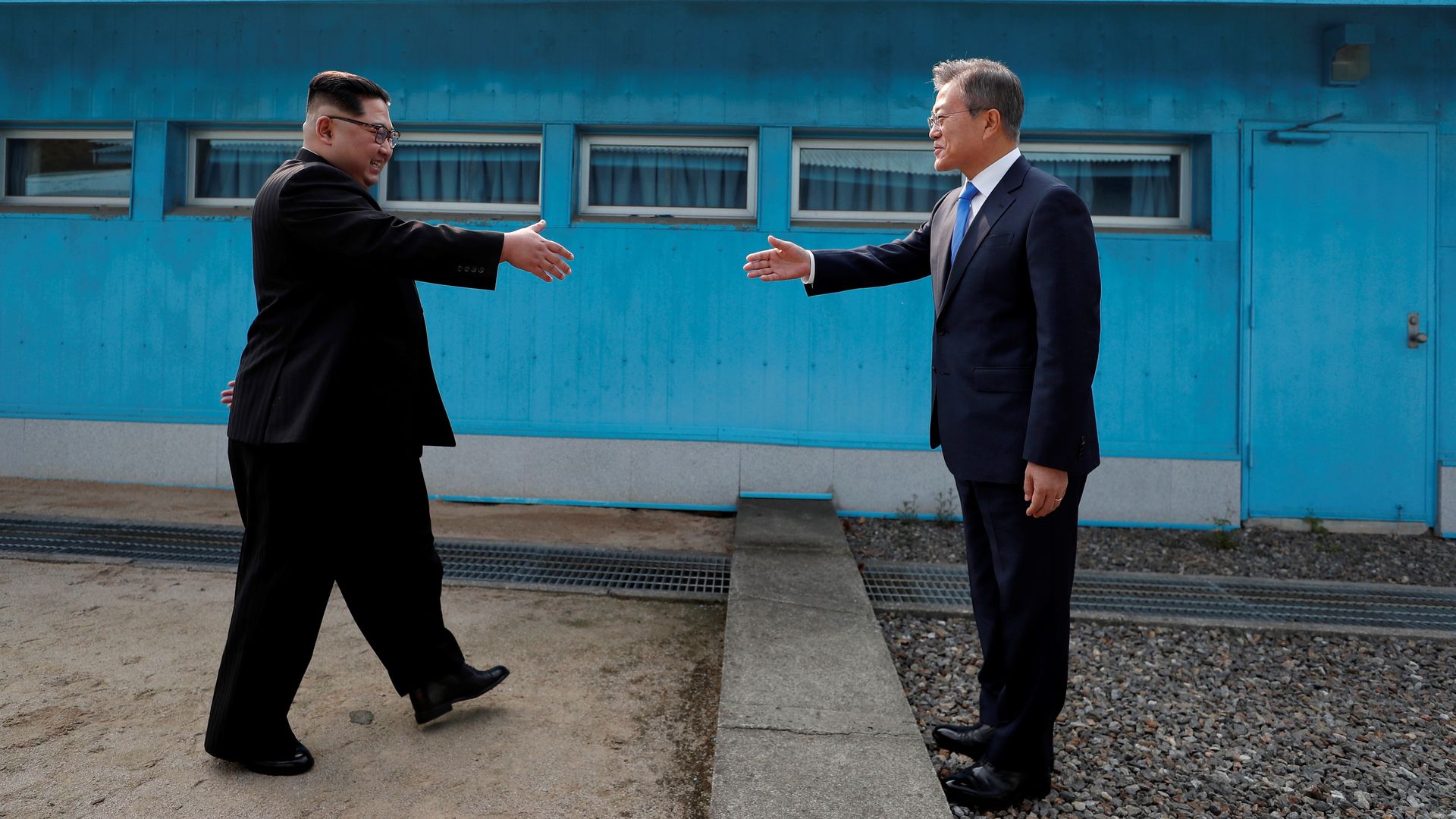
South Korean President Moon Jae-in and North Korean leader Kim Jong-un held a surprise meeting at the demilitarized zone between the two nations following President Trump's cancelation of the U.S.-North Korea summit on Thursday, South Korea's Ministry of Foreign Affairs announced Saturday.
Why it matters: The meeting shows the two countries are set on remedying tensions between each other, and between the North and the U.S. following Trump's surprise announcement. Per the BBC, if the U.S.-North Korea talks were to be rescheduled, they would be "focused on ways of denuclearizing the Korean peninsula and reducing tensions."
China, with a series of short and long-term moves on the global stage, is doing something few others can: eliciting similar warnings and worries from Democratic Rep. Tim Ryan, Republican Sen. Marco Rubio and nationalist Steve Bannon.
All three say China is a growing threat to America’s workers, economy, technology and national security.
All three weighed in after Jim VandeHei and I posted our piece Monday calling China the single greatest threat to the United States.
In challenging China's aim to dominate the future economy and set the global rules for how commerce is done, the U.S. and Europe are going up against history.
Quick take: For centuries, rising great powers have sought to thrive and exert influence by establishing a new global framework for trade. Now, Beijing wants to control the greatest businesses, and is building the biggest infrastructure project since at least the Marshall Plan — the Belt and Road Initiative (BRI).
Two decades ago, China's gross exports were on par with the Netherlands, and only North Korea relied on the world's most populous country as its primary source of imports. Now, China exports far more than any country on earth, and is the top supplier of countries in every corner of the world.
Here's a snapshot of China's transformation into a manufacturing powerhouse.
In January 2015, Chinese President Xi Jinping made a lofty declaration: China would trade $500 billion in goods with Latin America over the next five years, and provide $250 billion in direct investment. Not long ago those targets would have seemed ludicrous, but based on the current trends they're not out of the question.
The big picture: The Monroe Doctrine is running up against the Xi Reality in Latin America as China has now surpassed the U.S. as the leading trading partner of several South American countries, including Brazil, and stepped up investments in the region dramatically at a time when U.S. engagement is on the wane.
China is in the midst of an artificial intelligence frenzy, spurred in part by the "Next Generation Artificial Intelligence Development Plan" Beijing released in July that promises huge policy and financial support in pursuit of expansive goals between now and 2030.
The big question: Will AI sharpen competition between the US and China? Right now, the most likely outcome is that it will.
President Trump confirmed on Twitter Friday night that the administration reached a deal with Chinese telecom company ZTE, while criticizing Senator Chuck Schumer and former President Obama for past choices with the company.
Why it matters: The deal, per the New York Times, "could clear the way for further trade talks with China." It's contingent on ZTE hiring American compliance officers, paying a fine, and shaking up its management team. In return, the Times reports, ZTE will "once again begin doing business with American companies."