OpenAI, Anthropic and security researchers are investigating tens of thousands of incidents in which their frontier models took steps that outside evaluators would consider problematic, sources told Axios.
Why it matters: The sheer number of incidents, which occurred in recent months in internal testing and the real world, indicates that the problem is orders of magnitude more complex than what is publicly known.
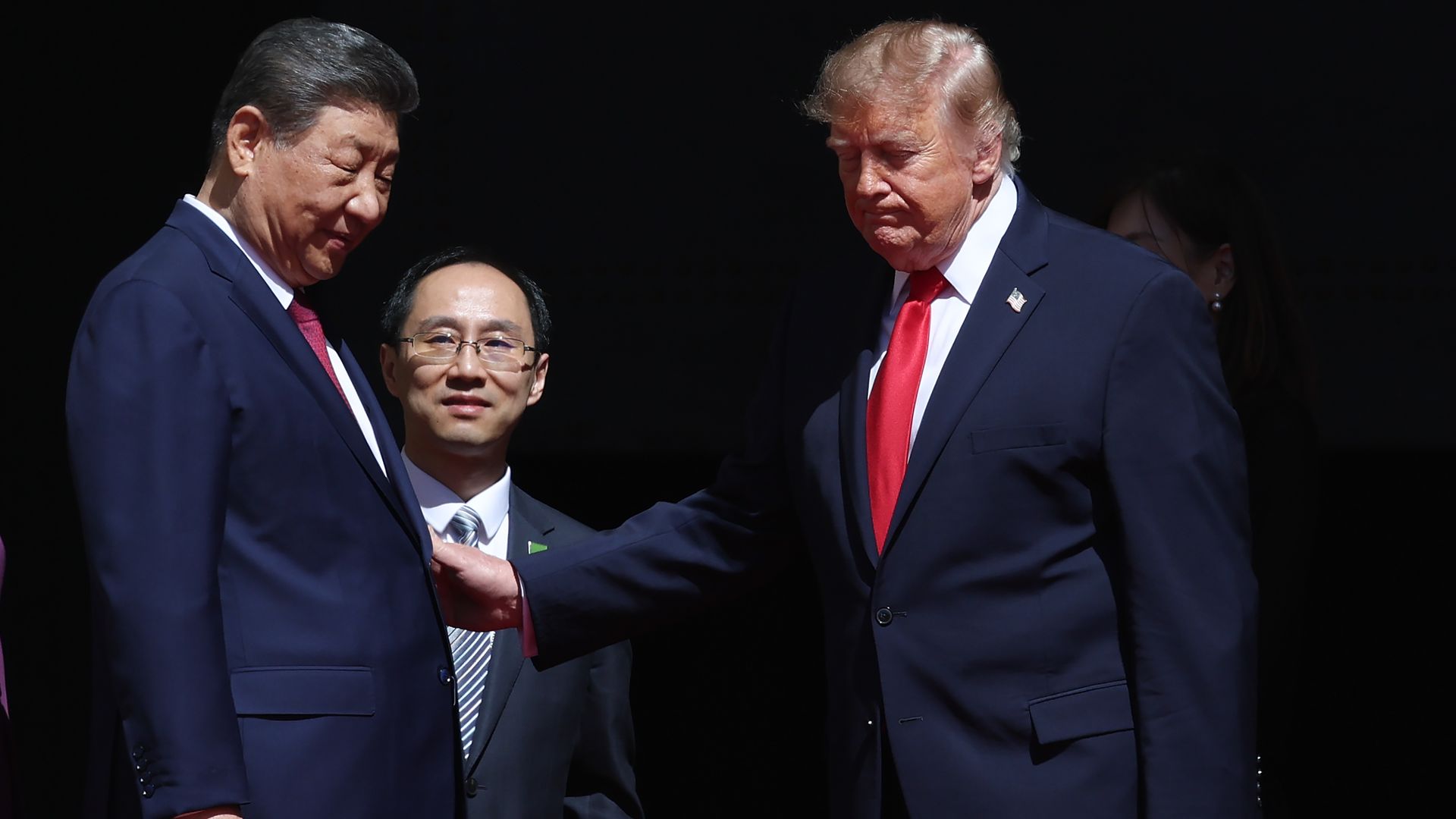
The U.S. and China have agreed to set up a dialogue on artificial intelligence, with a communications channel to help defuse serious incidents, the White House said overnight.
Why it matters: President Trump has said the main thing that matters in the AI race is beating China — but the pact acknowledges that they're serious competition, too.
OpenAI disclosed dozens of incidents in which its models behaved in ways it has deemed problematic, including leaking more than 50 images from ChatGPT users online.
Why it matters: This is the first publicly known example of the company's agents mishandling user data and the latest example of a budding rogue agent problem at OpenAI.
The company says it could take months to fully investigate the security incidents.
Pope Leo XIV on Thursday warned about machines "invading and conditioning our daily lives" in a speech to French leaders as he began his visit to the country.
Why it matters: The pope is asserting himself as a leading voice of restraint in the development and proliferation of AI.
Ed Sheeran's two Gillette Stadium shows outside Boston were canceled Friday because of an approaching nor'easter, capping a chaotic three weeks for the U.S. leg of his Loop Tour.
The big picture: A tour built around one of pop's least-confrontational stars became a flashpoint over Israel and Gaza — leading to an exodus of its opening acts and prompting refund demands from fans.
Why it matters: "Superintelligence" already has a distinct meaning in AI — and is fueling debates over whether the most advanced systems should be slowed or stopped.
NEW YORK — Policymakers might be aligned on wanting to expand U.S. energy, but they often diverge on the path to get there, several business leaders and policymakers said at Axios House events at Climate Week.
Why it matters: AI is energy-hungry but also drives energy innovation. Political divides over which energy sources to prioritize can slow progress on both fronts.
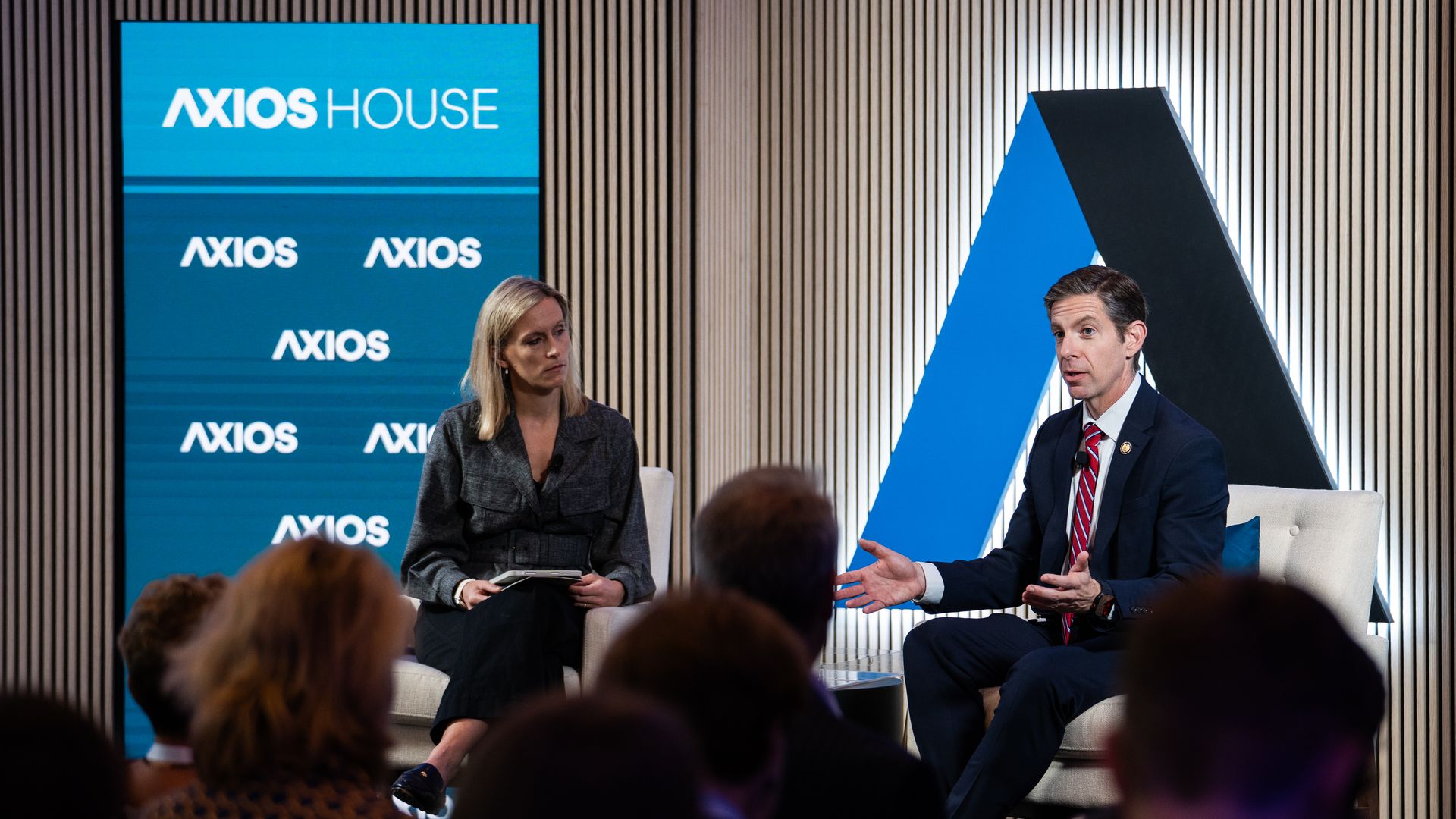
Axios' Amy Harder, Mike Allen and Ben Geman spoke with Jarrod Agen, executive director of the National Energy Dominance Council and assistant to the president; Rep. Mike Levin (D-Calif.); Great Barrier Reef Foundation managing director Anna Marsden; Redwood Materials founder and CEO JB Straubel; and McLaren Racing sustainability director Kim Wilson at several Sept. 22 Axios events.
State of play: The Trump administration has argued that wind and solar projects are too expensive and unreliable, while also raising concerns about foreign supply chains.
Wind and solar are "not going to be the solution for the power needs that we have," Agen said when asked whether the White House might change its approach to reach a permitting deal.
While he didn't rule out wind and solar as part of energy's future, Agen said two concerns are sourcing — particularly if the materials come from China — and tax subsidies.
Yes, but: Levin said that while both Democrats and Republicans want the U.S. to dominate energy, he sees clean energy as the country's path forward.
"[Y]ou have to skate to where the puck is going, and the puck is not going to the coal plants or to gas-guzzling SUVs," Levin said.
He said it's important to have a "proactive vision" like the House Democrats' Thriving Economy Project, which includes energy affordability and modernizing the grid.
A Lazard analysis this year found renewables are one of the lowest-cost forms of new-build generation on an unsubsidized basis.
What they're saying: Straubel said he's generally optimistic about energy and predicted the grid will back-connect with some of the new technologies in five or 10 years.
"I think in its current regulatory framework, [the grid is] very stressed, but a lot of these new microgrids or separate islanded functions I think will end up back-connecting to the grid, and they're serving as ways to bring a lot of new generation resources ... often solar, sometimes gas," said Straubel, a Tesla co-founder.
Meanwhile, other Axios House conversations focused on how climate solutions are taking shape outside Washington — including through an unusual collaboration between global racing and protecting the coral reef.
Wilson said there's untapped potential for sport-related companies in climate action and awareness, particularly with their platform of business partners and fans.
For instance, McLaren Racing is using its performance engineering expertise to team up with the Great Barrier Reef Foundation to cut the manual labor involved in annually collecting at-risk coral spawn — a high-performance ecosystem on the front line of climate change.
How it works: Oscar One, the robot McLaren created and named after Australian driver Oscar Piastri (although it also stands for the Operational System for Coral Assembly Restoration), can perform in roughly 8 seconds what might take a marine scientist 90 seconds — a big impact when the effort requires 100,000 repetitions.
When testing race cars, Wilson said, "we're constantly developing and iterating ... and looking at where it's performing, where can we gain more performance, and that's exactly the process we'll follow with Oscar Machine Two, Three, Four, etc."
Stunning stat: Coral takes up 1% of the sea floor yet shelters and feeds 25% of marine life, Marsden said. She said if the Great Barrier Reef were a company, it would be the country's fifth-largest employer.
"Curing" coral reefs, she said, will require a collective alignment on climate because they are so sensitive to even a 1-degree change in temperature.
"This is the canary in the coal mine," Marsden said. "It was only last year that it was declared that coral reefs will be the first ecosystem that this generation will witness losing if we don't actually do everything we can."
AI is improving affiliate commerce infrastructure, automating how shoppers find products, how brands discover creators and how creators turn content into shoppable posts.
Why it matters: U.S. affiliate marketing spend is expected to grow 11.3% to $13.81 billion this year, per eMarketer, raising the stakes for companies that can make that money easier to deploy.
Bill Gates will warn on this weekend's "Meet the Press" that he can see a future where AI wipes out humanity.
Why it matters:Gates, one of technology's leading optimists, has increasingly sounded the alarm on AI dangers. His new comments come as techology leaders and the government weight how to handle fears of an AI-created doomsday.
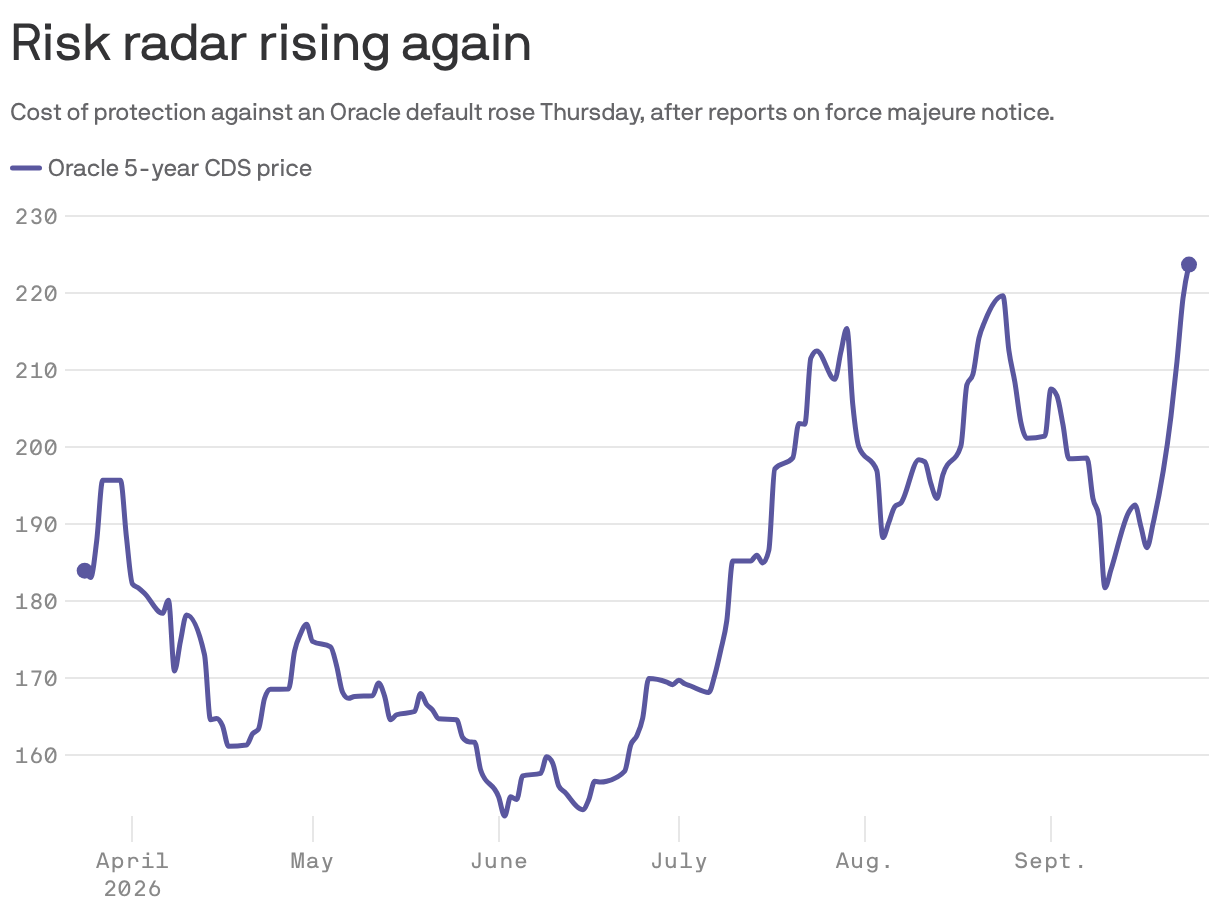
The risks of the ballooning AI borrowing binge rose to the surface Thursday, courtesy of Oracle. The tech giant, which is up to its ears in AI-related debt, is trying to put off paying its lease commitments on a much-delayed data center project.
Why it matters: Oracle is the weakest of the hyperscalers, with the lowest credit rating and a stock that's down 30% for the year — but with AI investment driving much of the economic growth in the U.S., its wobbles mean a lot.
Leading the Future, through its associated PAC Think Big, announced the first group of Democrats it will support in the general election as pressure to regulate the AI industry mounts.
Why it matters: Leading the Future is backed by tech executives and investors and is spending big on AI messaging ahead of the midterms.
Potential 2028 presidential contender Rep. Ro Khanna (D-Calif.)spells out how he would tackle AI safety collaboration with China in a new letter to Secretary of State Marco Rubio.
Why it matters: Khanna is offering a sharply different approach to managing AI risks with Beijing, pushing for a binding treaty and international inspections as President Trump signals little inclination to pursue AI safeguards.
Meta is seeking to make privacy protections a centerpiece of new products including its viral assistant Muse, marking a major shift for a company built on extensive use of customer data.
Why it matters: The radical turnaround is an acknowledgment that the winner of AI's new assistant race will have to reassure users that they can turn over their emails, finances, health data and other sensitive information.