Axios House: Politics complicates U.S. ambitions in energy race

Add Axios as your preferred source to
see more of our stories on Google.
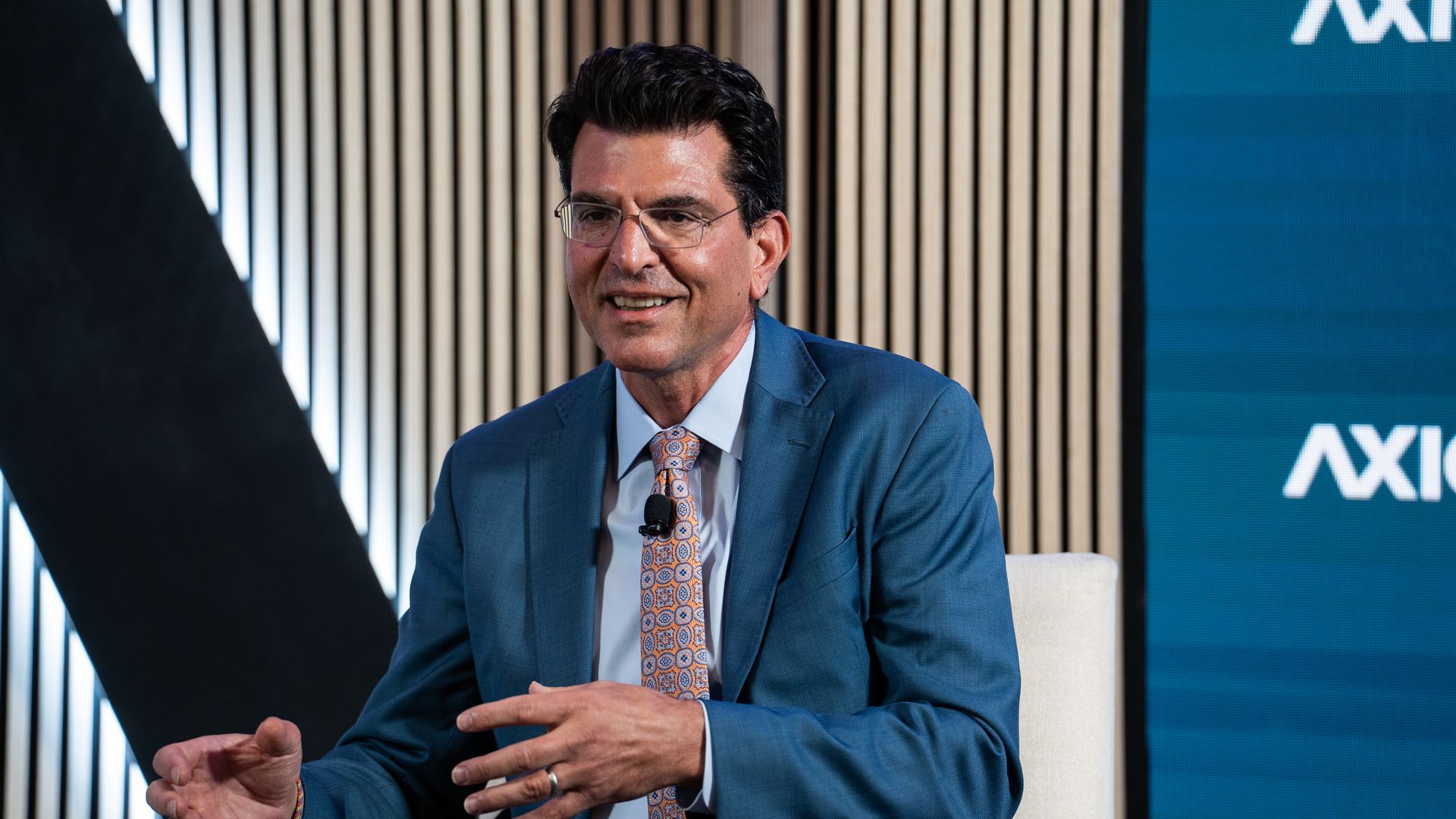
Jason Grumet, CEO of the American Clean Power Association. Photo: Sam Popp for Axios
NEW YORK — Politics is an obstacle to the country's competitive energy and climate efforts at a critical time, industry leaders say.
Why it matters: The Trump administration's position that renewables are too expensive has stuck a bipartisan wedge between innovation and progress.
Axios' Amy Harder and Ben Geman spoke with American Clean Power Association CEO Jason Grumet and Commonwealth Fusion Systems CEO Bob Mumgaard at Axios House at Climate Week. Siemens sponsored the Sept. 22 event.
Between the lines: Grumet said that while the clean energy industry has been heavily subsidized, the 2025 GOP federal budget bill that became law phased out Biden-era wind, solar and electric vehicle incentives.
- He said the idea that wind and solar aren't valuable because they don't run around the clock is inaccurate. "The strongest grids are grids that have a significant amount of natural gas, nuclear and renewables."
- Batteries, solar and wind, specifically onshore, are typically the cheapest solutions in most of the country, Grumet said.
State of play: There's an energy boom for electricity because of the AI race, which Grumet called "the best of times and the worst of times."
- "We have the best market fundamentals you could ever have for building clean energy. 90% of the electrons that came on the grid last year were coming from clean sources," he said.
- "It's the worst kind of obstructionist politics that you can imagine in an administration that used to be about not picking winners and losers and letting the marketplace go forward."
Yes, but: Mumgaard said that even if all the tools are in place to fight climate change, innovation would still be critical.
- He compared views of today's fusion energy work to the Wright brothers pushing forward their aviation ideas and designs in spite of naysayers convinced it would never happen.
- "So [CFS' Massachusetts campus] is a full-on facility that you can go and you can push a button and you literally have a star in a bottle, and there is no longer a debate of 'Can you do it?'"
- Knowing that humans can create fusion opens up more options, and "we're talking a year, maybe a little longer, but like that type of time frame" for a Kitty Hawk moment in fusion, he said.
What's next: To be globally competitive, the U.S. has to treat fusion as an energy project with supportive funding, not a science project, said Mumgaard.
- He said China, specifically, has moved beyond academically studying the details of plasma and on to how to make it, build a supply chain for it, construct industrial policy and deployment.
- The U.S. is "the place where the science is, you know, frankly the best," Mumgaard said. "But it's lacking at the policy level."
Content from the sponsor's segment:

In a View from the Top conversation, Siemens global head of sustainability Eva Riesenhuber said the biggest obstacle when organizations have environmental sustainability goals is calculating the return on investment and bridging the time gap between that investment and the gains.
- "We don't have the time anymore to afford to just optimize for the past," Riesenhuber said. "We need to anticipate the future, and that only goes through software and AI."
Go deeper: Watch the full conversations here.
