The U.S. military destroyed 16 Iranian mine-laying naval vessels on Tuesday amid concerns that Iran is preparing to deploy mines in the Strait of Hormuz.
Why it matters: A senior U.S. official told Axios the strike on the inactive ships was a preemptive measure that was a result of intelligence about Iran's operational plans.
Oracle shares jumped Tuesday after the cloud computing giant said it expects to "comfortably meet and likely exceed" its previous revenue growth outlook for the next fiscal year "and beyond."
Why it matters: Oracle had been on the hot seat as investors questioned whether it could handle a deluge of business from AI tech giants.
Gracenote, a metadata and identification services company owned by media measurement giant Nielsen, has sued OpenAI for copyright infringement, Axios has learned.
Why it matters:Gracenote is suing OpenAI not just for using its metadata without authorization or compensation, but also for copying the relational framework it uses to connect its metadata, which is in part what makes the data valuable to its enterprise clients and useful for consumers.
The people who keep open-source software running and secure are being flooded with reports from an unlikely source: autonomous AI agents.
Why it matters: Open-source software is the foundation of the modern internet. The vast majority of this software is maintained by volunteers who were already struggling to keep up with the deluge of reports about security flaws.
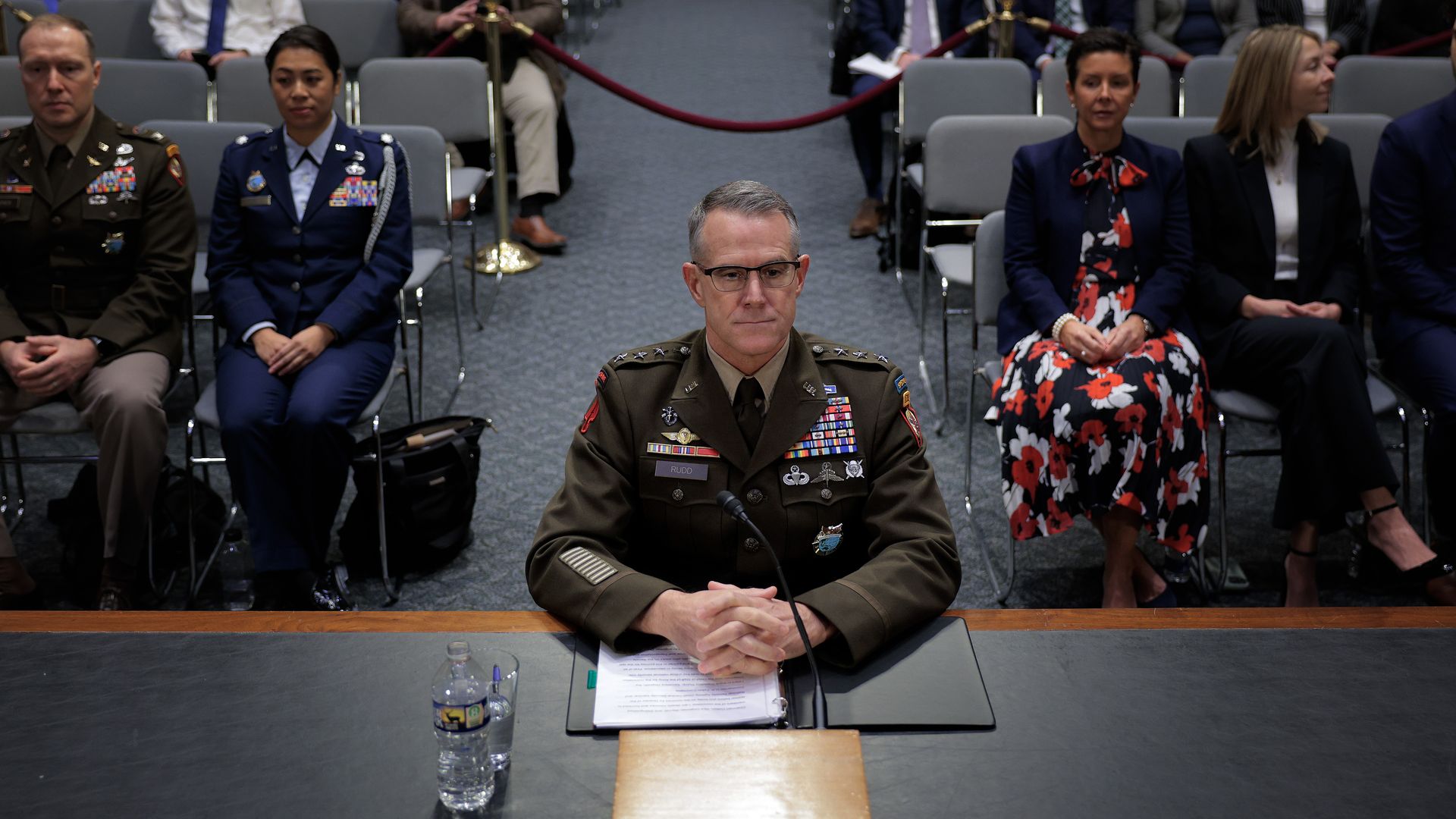
The Senate overwhelmingly confirmed Army Lt. Gen. Joshua Rudd, the deputy chief of the U.S. Indo-Pacific Command, as the director of the National Security Agency and U.S. Cyber Command.
Why it matters: Rudd — who some lawmakers have criticized for a lack of military cyber experience — is the first permanent director of the dual-hat role since President Trump fired Air Force Gen. Timothy Haugh nearly a year ago.
YouTube is expanding a tool that detects impersonations to a select group of government officials, political candidates and journalists.
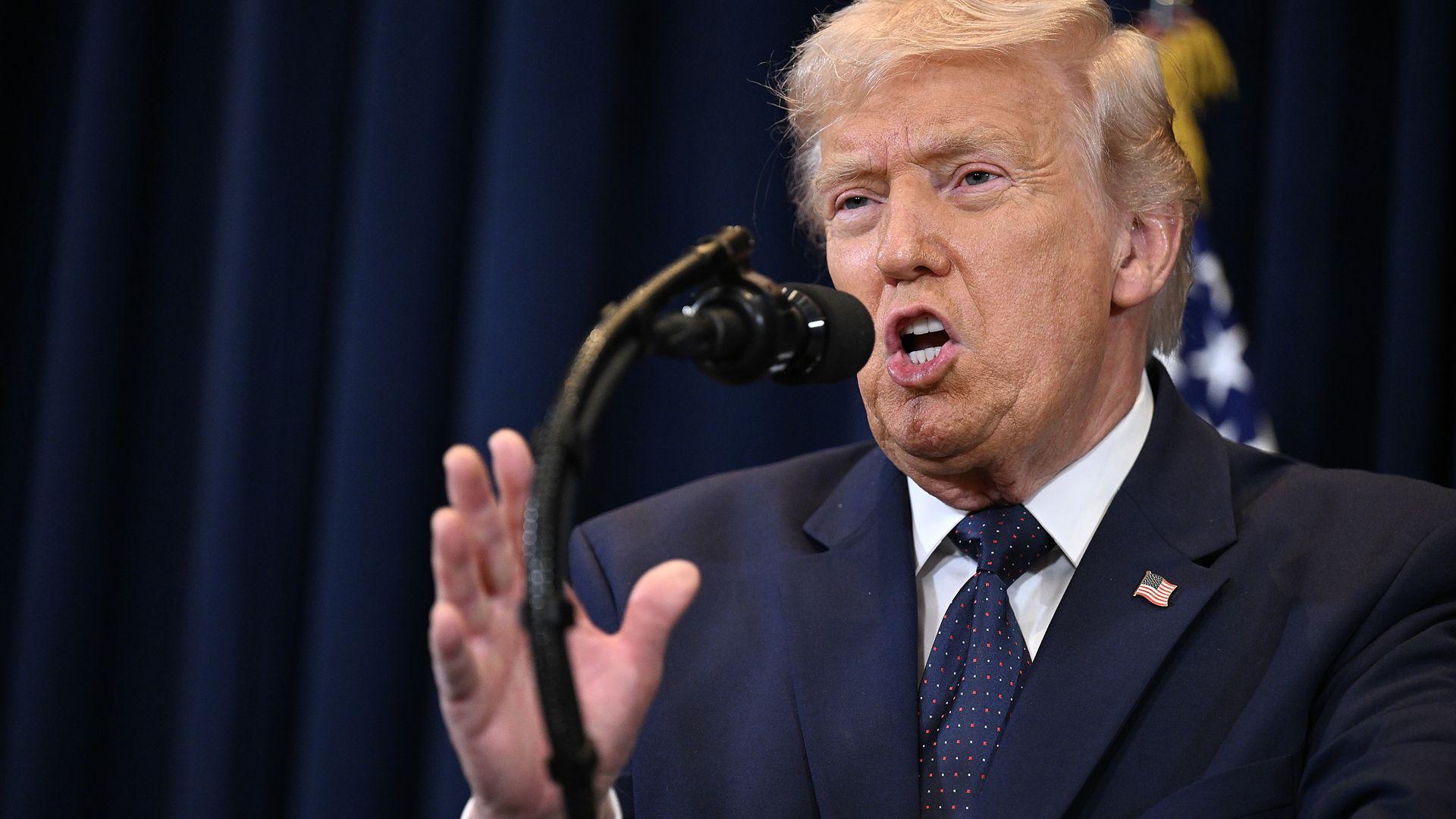
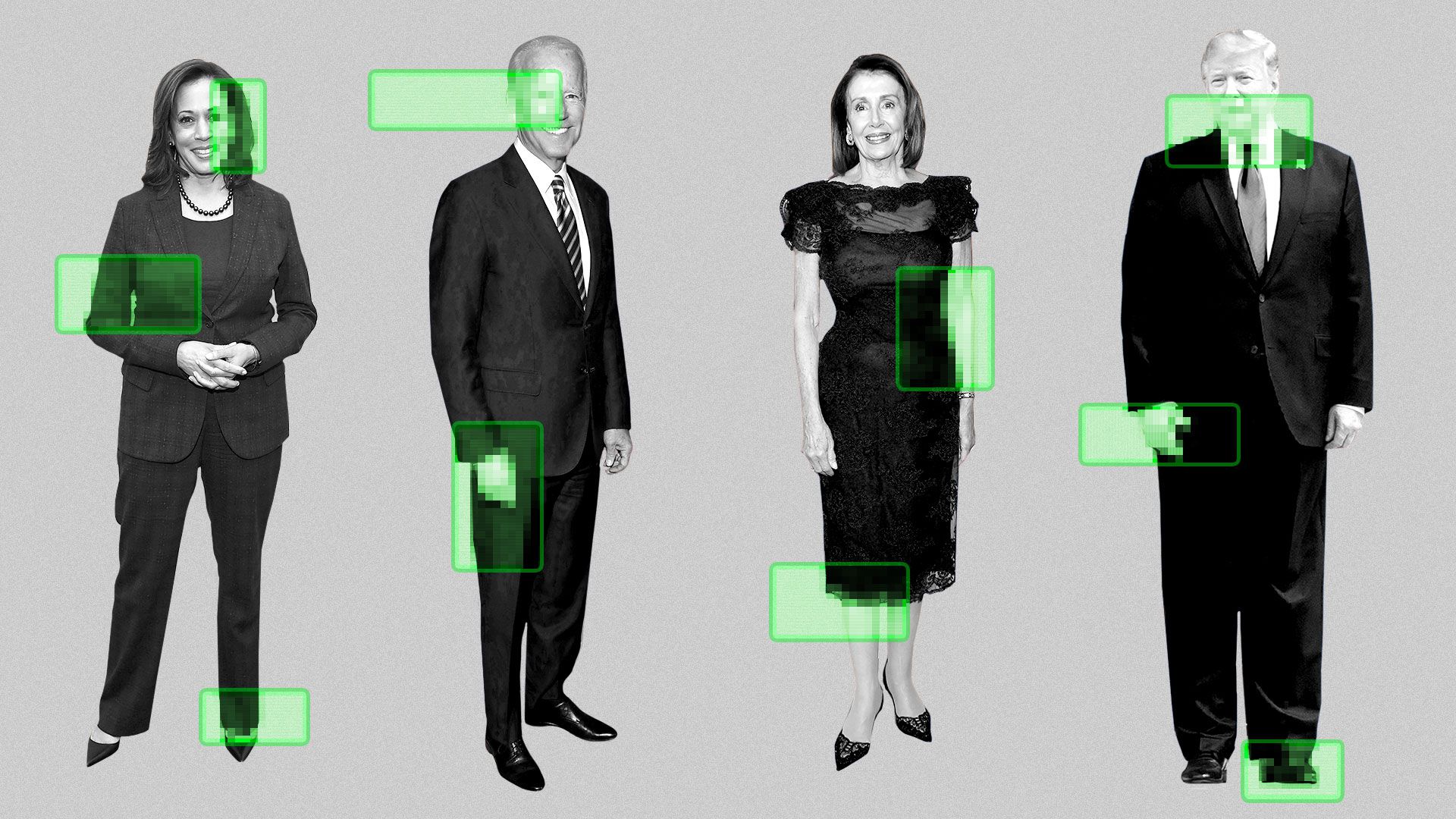
Why it matters: New AI systems are exacerbating the problem of deepfakes, making it easier to create convincing videos of real people, including President Trump.
Meta has acquired Moltbook, a viral social network designed for AI agents, Axios has learned.
Why it matters: The deal brings Moltbook's creators — Matt Schlicht and Ben Parr — into Meta Superintelligence Labs (MSL), the unit run by former Scale AI CEO Alexandr Wang.
Mira Murati's Thinking Machines Lab has committed to use a gigawatt of Nvidia-powered compute beginning early next year.
Why it matters: A gigawatt of compute — a threshold only the largest AI labs have approached — signals the former OpenAI exec intends to compete at frontier scale, not just build tools on top of others' models.
Health questions people ask Microsoft Copilot on phones are more urgent and emotionally sensitive than those asked on computers, according to data shared first with Axios.
Why it matters: Health is a top use case for Copilot. The new data shows what people are asking — and how device choice shapes those questions.
A new coalition of companies that includes Google and Tesla will address energy affordability by tapping into underused electricity grid capacity, coalition officials told Axios exclusively.
Why it matters: It's the latest example of how soaring electricity rates — from AI data centers and other demands — have moved affordability to the front burner.
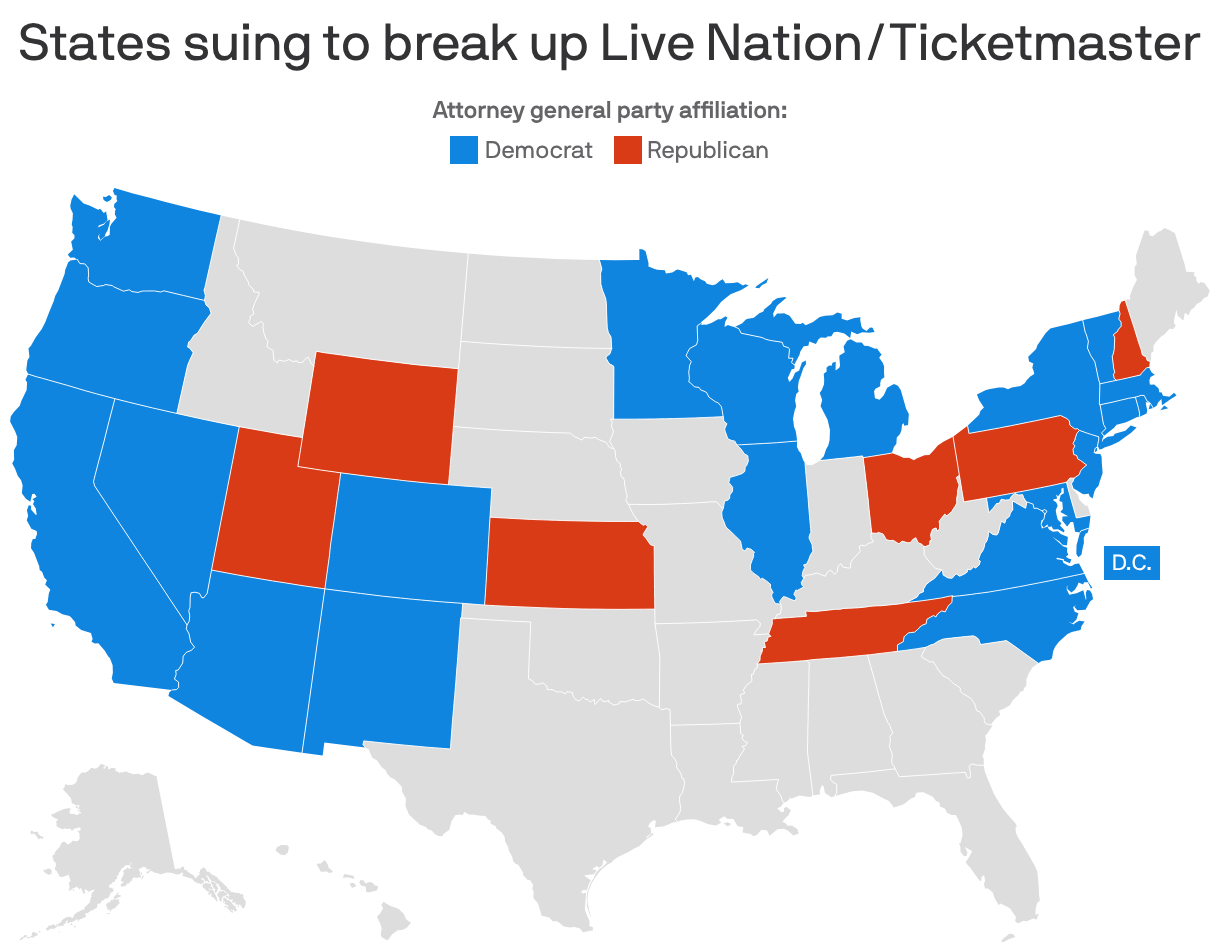
State attorneys general are moving aggressively to sue corporate giants in an attempt to fill a void they argue is being left by federal antitrust regulators.
Why it matters: Recent examples show states can be effective in blocking big mergers, especially when they band together.
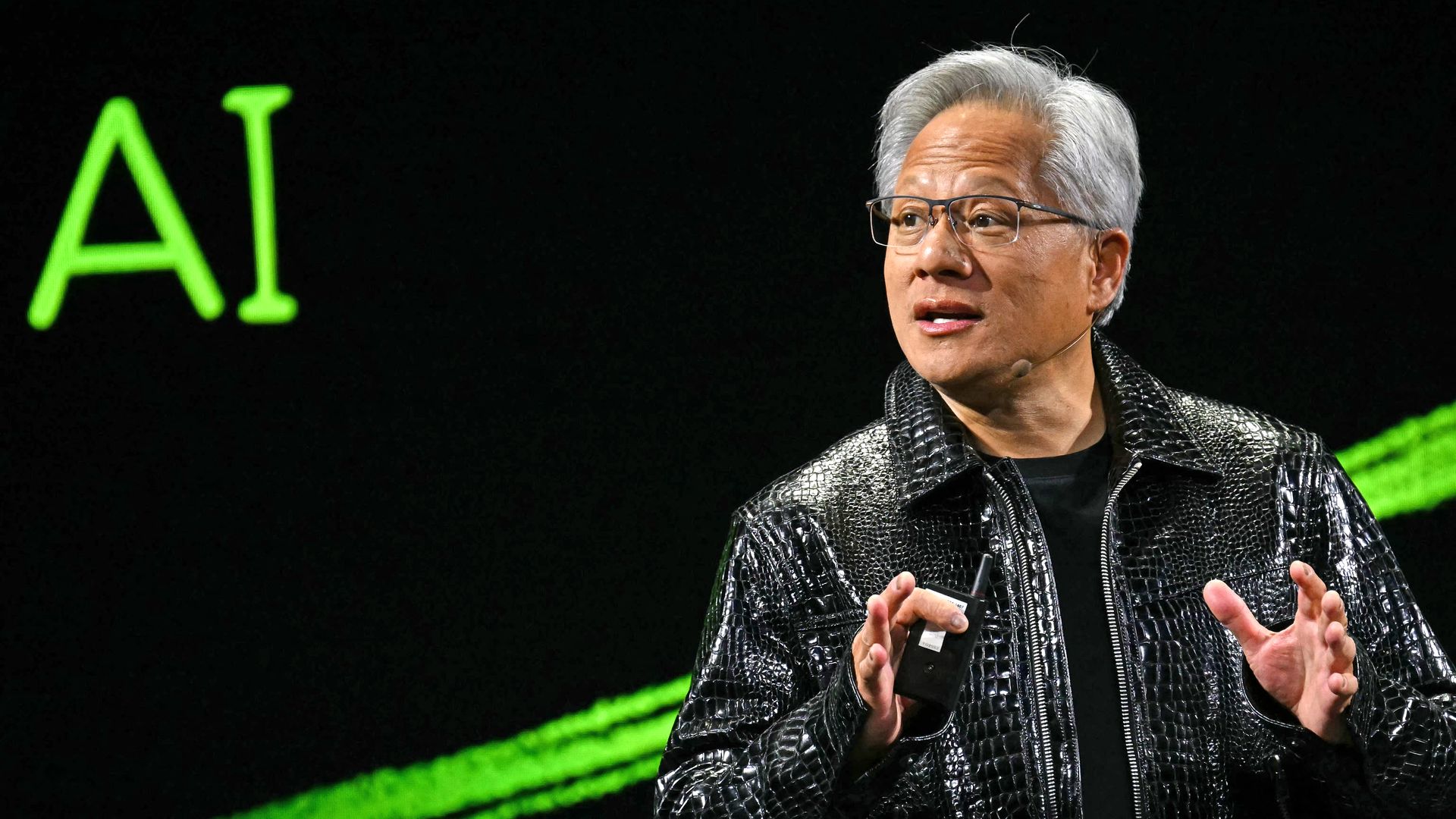
Nvidia CEO Jensen Huang wrote in a blog post Tuesday that decisions about how fast to build AI, who gets access and how to govern it will determine the technology's legacy.
Why it matters: Huang — whose company underpins the AI boom — rarely publishes long essays about the tech's broader impact, offering other industry players and investors a rare window into his thinking.
Ten days into President Trump's Iran campaign, the war has gone global.
At least 20 countries are now militarily involved — shooting, shielding or quietly supplying — while a widening energy shock punishes nations far from the front lines.
Why it matters: This isn't World War III. But it may be the closest we've come in decades — drawing in more countries, more great powers and more overlapping conflicts than any crisis since the Cold War.