Mira Murati locks in massive Nvidia compute deal

Add Axios as your preferred source to
see more of our stories on Google.
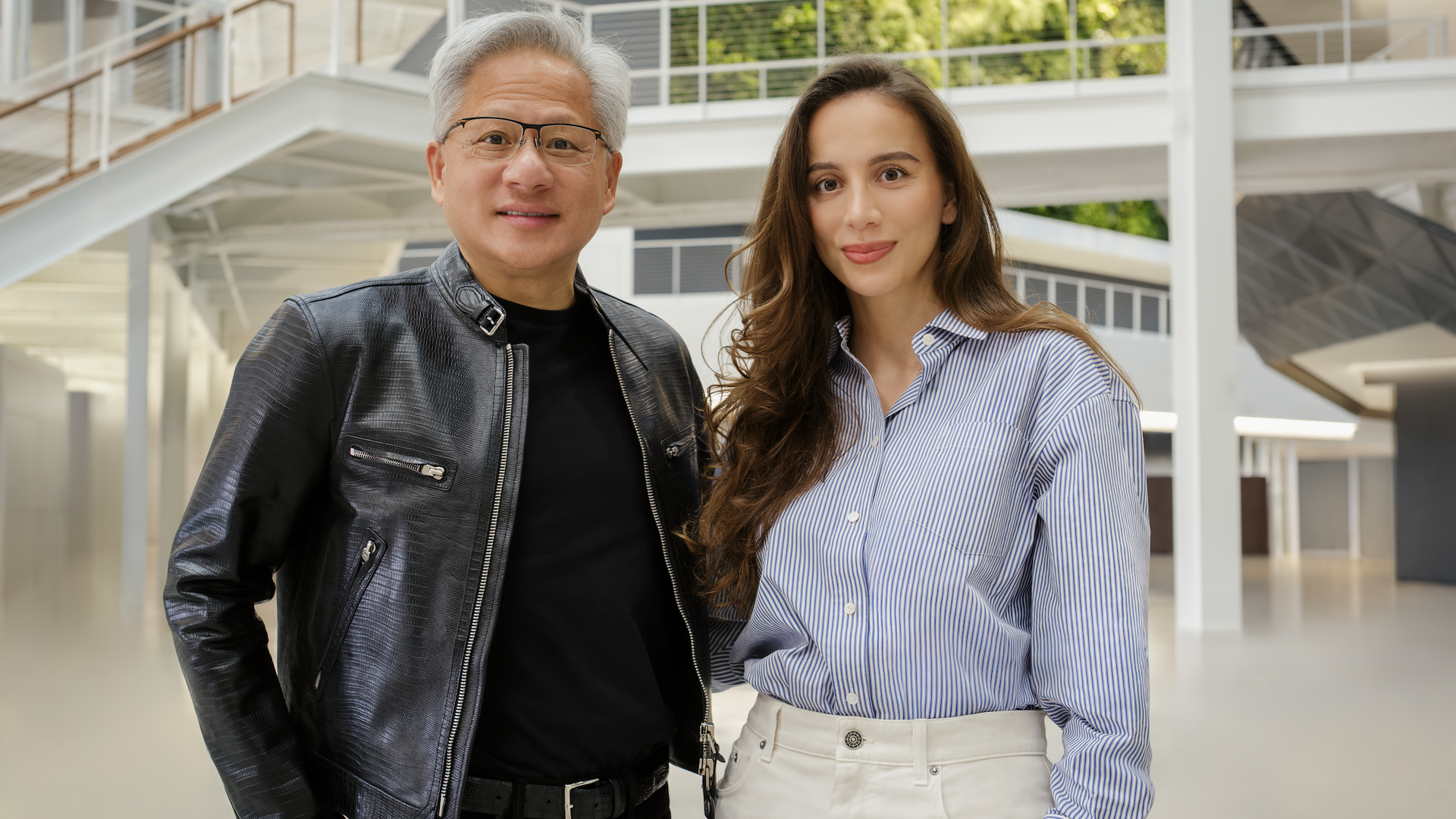
Nvidia CEO Jensen Huang and Thinking Machines Lab CEO Mira Murati. Image: Nvidia
Mira Murati's Thinking Machines Lab has committed to use a gigawatt of Nvidia-powered compute beginning early next year.
Why it matters: A gigawatt of compute — a threshold only the largest AI labs have approached — signals the former OpenAI exec intends to compete at frontier scale, not just build tools on top of others' models.
Driving the news: The companies announced a multiyear partnership under which Thinking Machines will deploy at least a gigawatt of Nvidia's Vera Rubin systems to train its models and run products it says users can adapt to their own needs.
- Nvidia made what the two companies called a "significant investment," though they declined to disclose the size of the stake.
- The deal also includes some technical collaboration, including optimizing Thinking Machine Lab's products for Nvidia's chips.
What they're saying: "Nvidia's technology is the foundation on which the entire field is built," Murati, Thinking Machines' CEO, said in a statement.
- "This partnership accelerates our capacity to build AI that people can shape and make their own, as it shapes human potential in turn."
- "AI is the most powerful knowledge discovery instrument in human history," Nvidia CEO Jensen Huang said in a statement.
- "Thinking Machines has brought together a world-class team to advance the frontier of AI."
Between the lines: Thinking Machines has released one product, Tinker, but has said little about its broader plans, including when it might launch its expected frontier models.
- The Nvidia announcement contains a few hints, including both the compute commitment and timing, as well as words that reaffirm the company is focused on creating tools that work directly with humans, rather than on full automation.
The big picture: The Nvidia deal follows a series of high-profile departures since the company was announced roughly a year ago.
- Co-founder Andrew Tulloch left for a job at Meta last year.
- In January, Murati said the company had parted ways with CTO Barret Zopf. Less than an hour later, OpenAI's CEO of Applications, Fidji Simo, said that Zopf and Luke Metz, another Thinking Machines co-founder, were re-joining OpenAI.
Zoom in: The company has grown from about 30 employees a year ago to roughly 120 today, with more hires coming from top AI labs than leaving for rivals, according to a source close to the company.
The bottom line: The deal is the clearest signal yet of how big — and how soon — the former OpenAI exec plans to scale.
