Fortnite maker Epic Games announced deep cuts today, citing a slowdown in the popularity of its marquee game, as layoffs continue in the games industry despite market growth.
Driving the news: Epic will lay off around 870 employees and part ways with 250 others as it divests from music site Bandcamp and spins off "most of" kidstech marketing platform SuperAwesome, CEO Tim Sweeney told employees today in a note Epic published to its website and first reported by Bloomberg.
Why it matters: The numbers indicate states are beating DC in the AI regulation race, with BSA expecting to see a wave of proposed legislation become law in 2024.
California state legislators are among the most prolific drafters, and their legislation often serves as a basis for legislation in other states.
The intrigue: Many state legislators take inspiration from Europe or California when it comes to proposing tech regulation — most famously on digital privacy — and the pattern appears to hold for AI.
There is a strong overlap between legislators focused on privacy and AI.
What's happening: Much of the action is concentrated in a few Democrat-controlled states.
Deepfakes bills are the most popular theme, and the most likely to be passed: Of 37 bills, 6 were passed.
Municipal and county level administrations are also active — usually focused on workplace use of AI — including in Boston, Miami, New York City,San Jose, and Seattle.
Legislators in California, Massachusetts, New York, New Jersey, and Washington, are now considering impact assessments to mitigate the risks of certain types of AI.
What's next: Draft legislation often spurs non-elected officials into action.
BSA expects Connecticut to be a center of 2024 activity. Connecticut State Senator James Maroney has created an AI-focused national network of around 60 state legislators,
What they're saying: More draft AI legislation means more state-level AI lobbying.
Chandler Morse, Workday's public policy vice president, told Axios, "We're focused on helping legislators get it right, rather than worrying about a patchwork of legislation."
"There isn't a bill we don't red line," said Morse, who supports adoption of guardrails.
"States are not going to wait for D.C.," Craig Albright, BSA vice president for government relations told reporters.
"There's a real hunger to learn how AI works," among legislators Albright said, contrasting their enthusiasm with more lackluster to privacy debates.
A year ago, the last time the Code Conference gathered a crowd of Silicon Valley luminaries in Southern California, AI was just one item on a long agenda of tech issues, and TikTok dominated the discussions.
Yes, but: The year since brought ChatGPT, an AI boom, and a slew of controversies that the industry is only beginning to address.
Former Twitter trust and safety head Yoel Roth accused Elon Musk at a conference Wednesday of ruling by dictate, rather than policy, and decimating the reputation of the platform known as X.
Driving the news: Roth made the comments at the Code Conference in Laguna Niguel, Calif., where X CEO Linda Yaccarino described an ambitious, growing company that will be profitable by next year.
Jim Ryan, who has run Sony's successful PlayStation division since 2019 and been part of its video game operation since 1994, is retiring early next year, Sony announced Wednesday.
Why it matters: Ryan's exit caps off a successful run, but comes at a pivotal time for Sony's powerful gaming brand.
Why it matters: To this point, the company's overall path to growth has been strikingly straightforward. But its next 25 years are likely to look very different.
Maybe it's not a surprise that the company blamed for the Hollywood writer's strike was the same one whose stock price emerged higher coming out of it.
Context: Netflix in recent years has upended traditional norms of television and film production, their distribution and worker pay models.
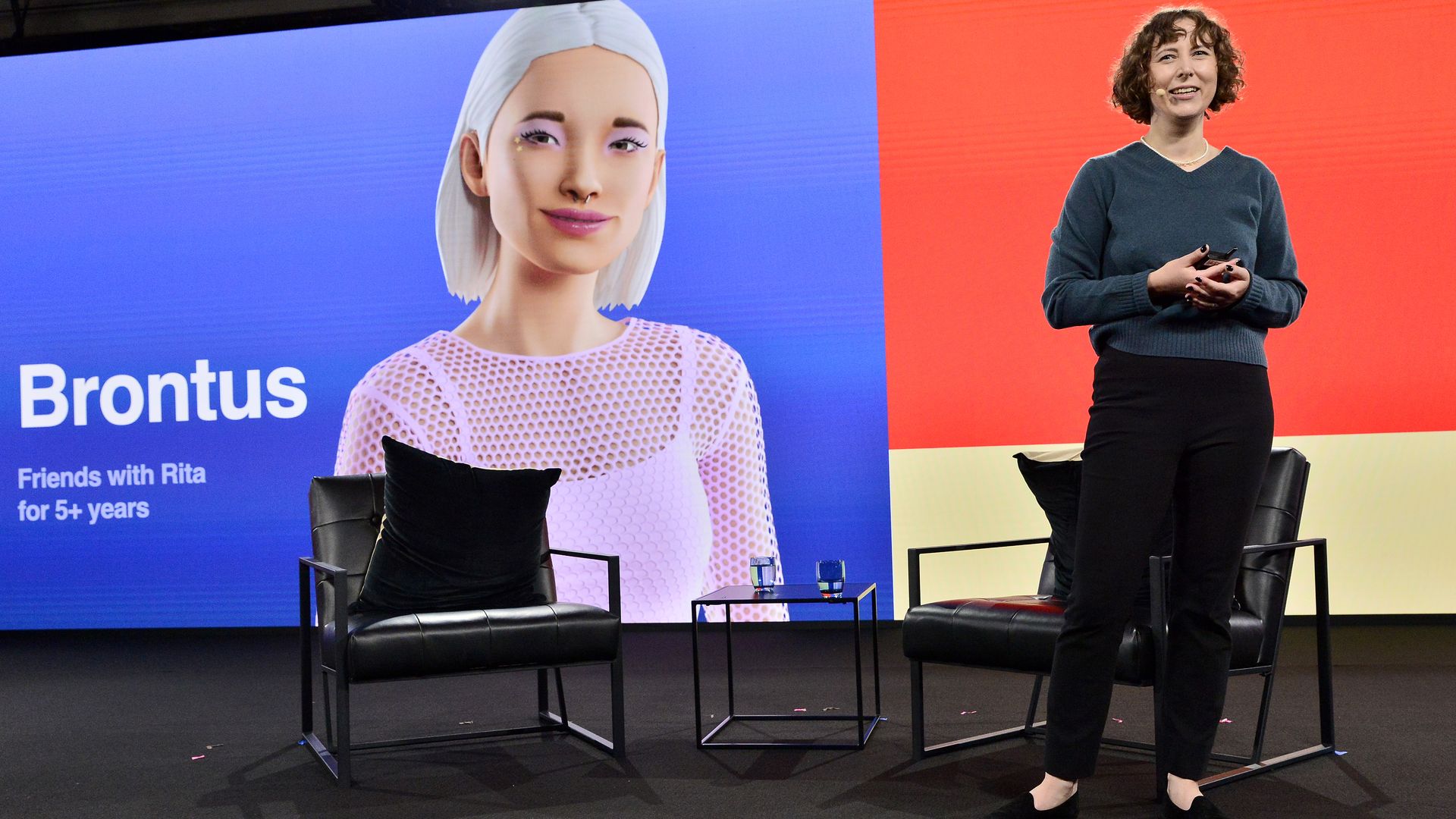
Meta on Wednesday debuted a slew of new AI-focused products, including a new "Meta AI" chatbot assistant and more than two dozen AI characters that will live across its social media and messaging apps.
The big picture: Meta enters a growing field of AI-powered chatbots launched by rival tech firms.
A group of venture capital firms is working with the U.S. Commerce Department to develop "responsible AI" guidelines for themselves and their portfolio companies, Axios has learned.
Why it matters: This effort is designed to cover thousands of current and future startups, whereas most other AI self-regulation talks have been limited to Big Tech companies and major AI model vendors.
The Federal Trade Commission's new lawsuit against Amazon — like similar recent and historic antitrust litigation against other tech giants — faces a tough uphill climb because it takes a lot of certainty before the U.S. government will hogtie a U.S. corporation.
Why it matters: Much of the public, along with the media, shares a visceral sense that tech giants like Amazon, Google, Apple, Facebook and Microsoft are way too powerful and ought to be knocked down a few pegs — but, for better or worse, you don't win an antitrust lawsuit based on gut feelings.















/2023/09/27/1695780739417.gif?w=3840)