Friday's technology stories

Supreme Court to rule on Texas, Florida social media laws
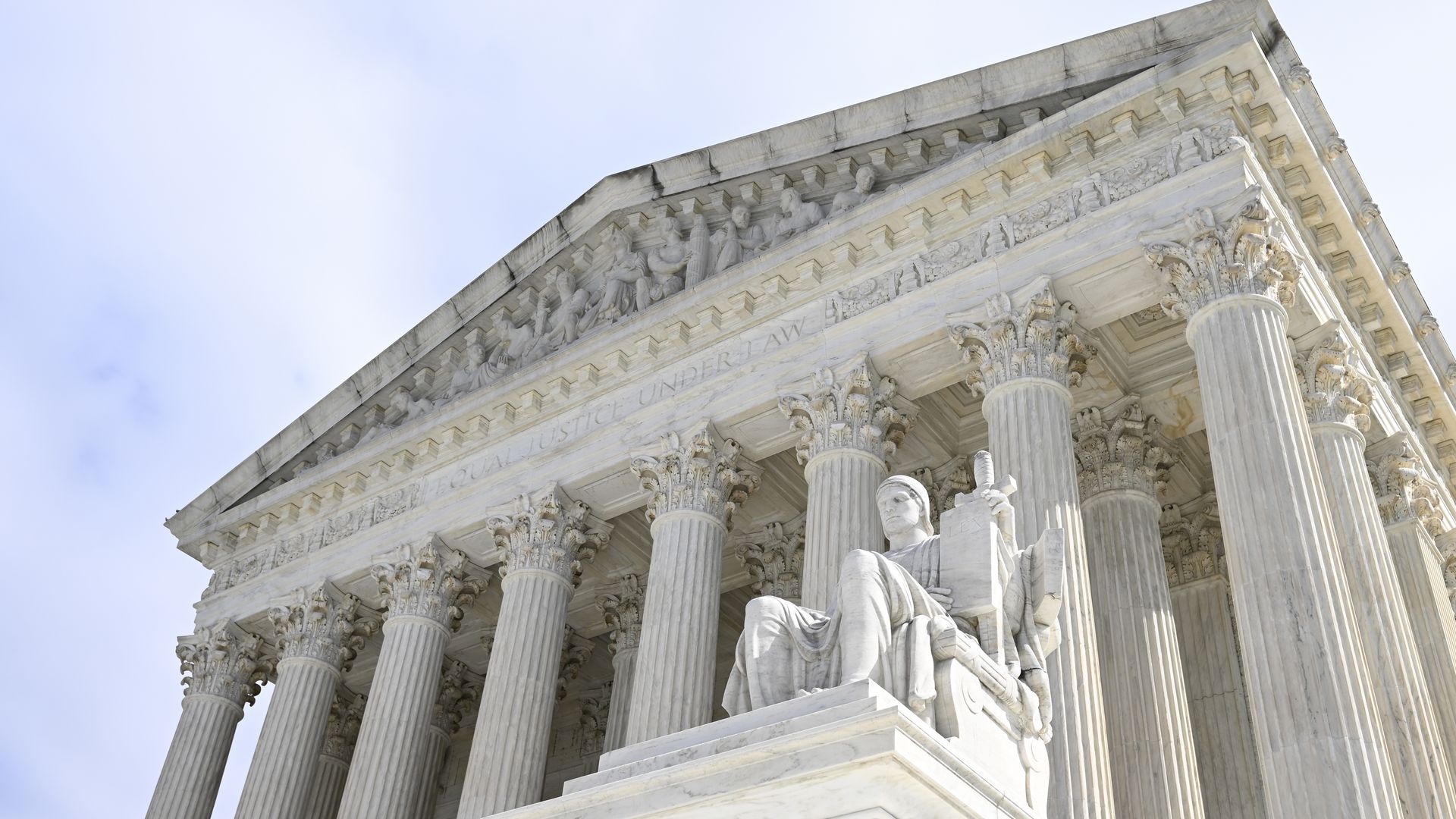
The Supreme Court said Friday it will decide the fate of controversial Texas and Florida laws restricting social media platforms' freedom to moderate content.
Why it matters: The case is likely to shape the future of online speech — and determine whether Republican-led states' efforts to fight what they view as "censorship" by Big Tech will expand or fail.

How AI can put mistakes into overdrive

Researchers have demonstrated that knowledge workers significantly degrade the quality of their work by asking OpenAI's GPT-4 technology to perform tasks it didn't train for, and then failing to spot "hallucinations" in its answers.
- A new study of more than 750 strategy consultants showed that AI helped them produce better content, more quickly in many tasks — but the consultants were "less likely to produce correct solutions" by attempting tasks of similar difficulty which fell outside the AI model's capabilities.

Walmart experiments with generative AI to help people shop

Last month Walmart announced a generative AI tool for office workers and now the company is showing off how the tech can help its shoppers.
Why it matters: With its size and resources, Walmart could use generative AI in whichever ways it wants. Its choices indicate where it sees the most benefit today.

Fortnite maker Epic Games to cut nearly 900 jobs, 16% of workforce

Fortnite maker Epic Games announced deep cuts today, citing a slowdown in the popularity of its marquee game, as layoffs continue in the games industry despite market growth.
Driving the news: Epic will lay off around 870 employees and part ways with 250 others as it divests from music site Bandcamp and spins off "most of" kidstech marketing platform SuperAwesome, CEO Tim Sweeney told employees today in a note Epic published to its website and first reported by Bloomberg.
States fill the AI legislation void left by Congress
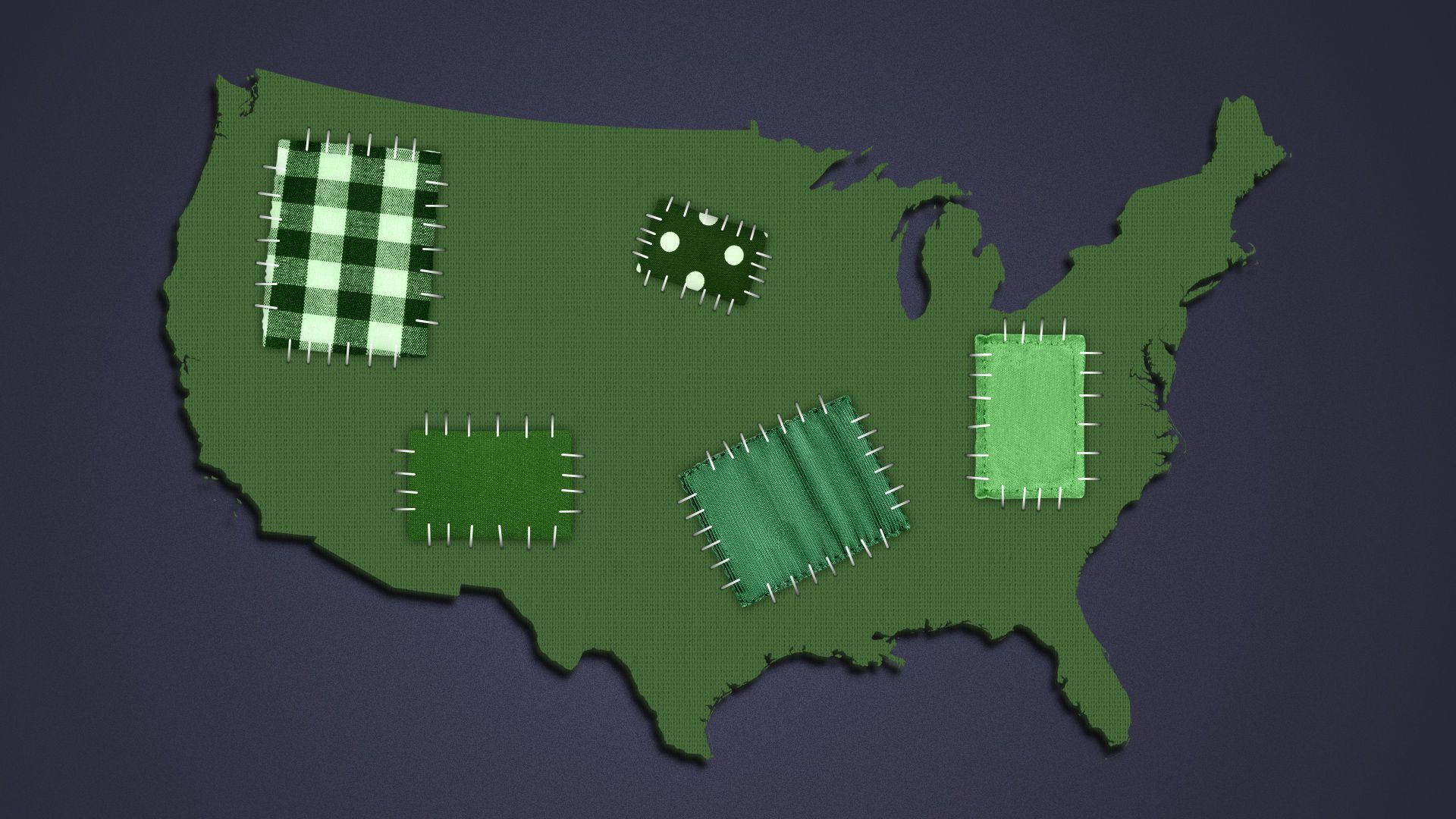
Nearly 200 AI-related bills have been introduced nationwide in state legislatures so far in 2023 — a more than four-fold increase compared to 2022.
Legislators in 31 states have introduced at least 191 bills focused on artificial intelligence, per analysis from software industry alliance BSA — but only 14 became law.
Why it matters: The numbers indicate states are beating DC in the AI regulation race, with BSA expecting to see a wave of proposed legislation become law in 2024.
- California state legislators are among the most prolific drafters, and their legislation often serves as a basis for legislation in other states.
The intrigue: Many state legislators take inspiration from Europe or California when it comes to proposing tech regulation — most famously on digital privacy — and the pattern appears to hold for AI.
- There is a strong overlap between legislators focused on privacy and AI.
What's happening: Much of the action is concentrated in a few Democrat-controlled states.
- Deepfakes bills are the most popular theme, and the most likely to be passed: Of 37 bills, 6 were passed.
- Many of the bills focus on how state governments will use AI.
- Municipal and county level administrations are also active — usually focused on workplace use of AI — including in Boston, Miami, New York City, San Jose, and Seattle.
- Legislators in California, Massachusetts, New York, New Jersey, and Washington, are now considering impact assessments to mitigate the risks of certain types of AI.
What's next: Draft legislation often spurs non-elected officials into action.
- In California, Gov. Gavin Newsom issued an AI executive order earlier this month, and the state's Privacy Protection Agency and Civil Rights Agency plan to issue rules for automated decision-making systems.
- BSA expects Connecticut to be a center of 2024 activity. Connecticut State Senator James Maroney has created an AI-focused national network of around 60 state legislators,
What they're saying: More draft AI legislation means more state-level AI lobbying.
- Chandler Morse, Workday's public policy vice president, told Axios, "We're focused on helping legislators get it right, rather than worrying about a patchwork of legislation."
- "There isn't a bill we don't red line," said Morse, who supports adoption of guardrails.
- "States are not going to wait for D.C.," Craig Albright, BSA vice president for government relations told reporters.
- "There's a real hunger to learn how AI works," among legislators Albright said, contrasting their enthusiasm with more lackluster to privacy debates.
Lessons from the AI whirlwind
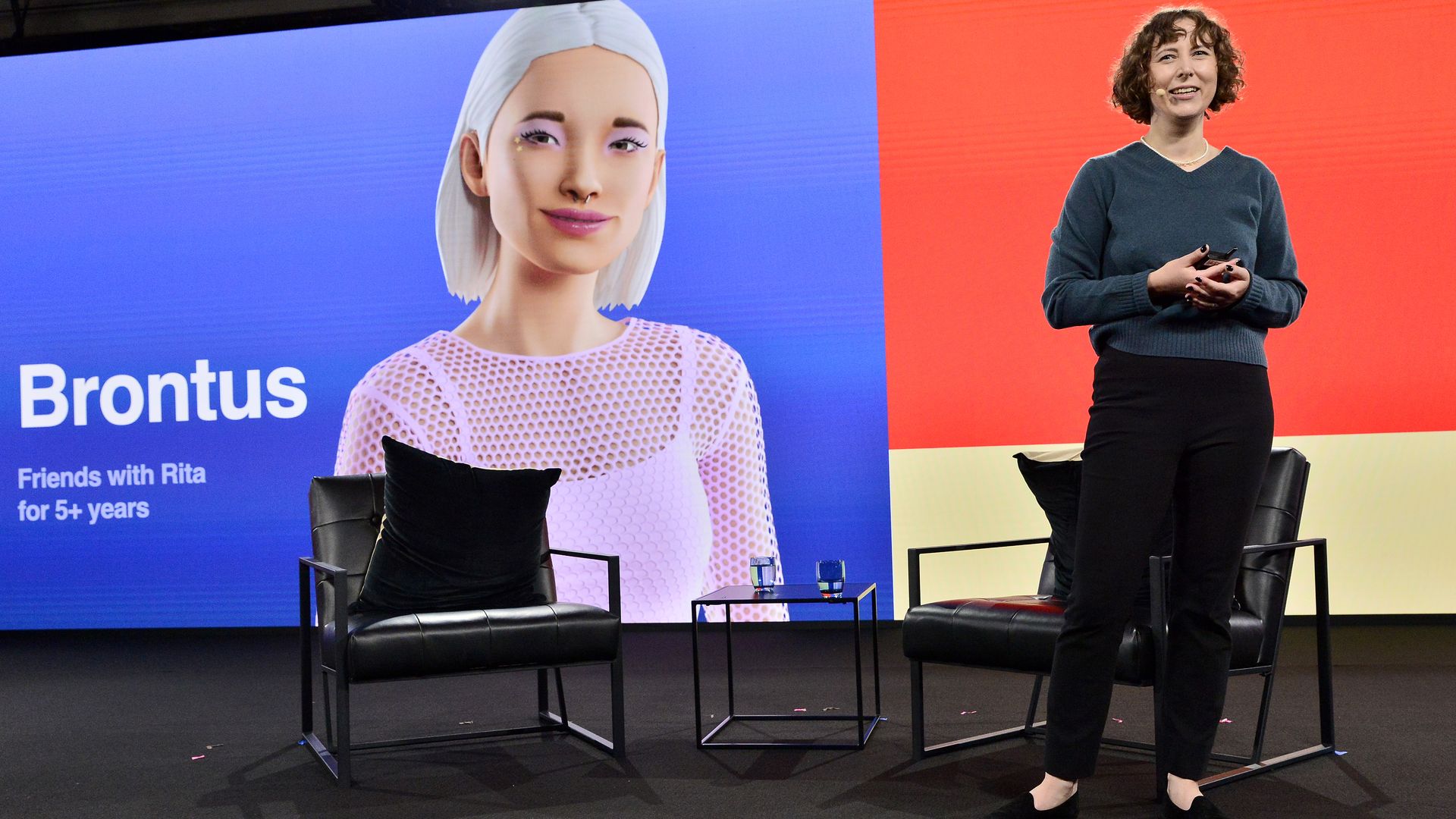
A year ago, the last time the Code Conference gathered a crowd of Silicon Valley luminaries in Southern California, AI was just one item on a long agenda of tech issues, and TikTok dominated the discussions.
Yes, but: The year since brought ChatGPT, an AI boom, and a slew of controversies that the industry is only beginning to address.
Yaccarino defends X over hate speech rise accusations

Former Twitter trust and safety head Yoel Roth accused Elon Musk at a conference Wednesday of ruling by dictate, rather than policy, and decimating the reputation of the platform known as X.
Driving the news: Roth made the comments at the Code Conference in Laguna Niguel, Calif., where X CEO Linda Yaccarino described an ambitious, growing company that will be profitable by next year.
Sony PlayStation chief Jim Ryan to step down in March

Jim Ryan, who has run Sony's successful PlayStation division since 2019 and been part of its video game operation since 1994, is retiring early next year, Sony announced Wednesday.
Why it matters: Ryan's exit caps off a successful run, but comes at a pivotal time for Sony's powerful gaming brand.