User protests against Reddit’s plan to charge new fees to access its content are about to enter their third week.
Why it matters: Their actions — which range from turning thousands of large scale message boards private, to flooding some with only John Oliver content — have gone well beyond initial plans for a 48-hour "strike."
Rapidly advancing AI technologies are making it easier for scammers to extort victims, including children, by doctoring innocent photos into fake pornographic content, experts and police say.
Why it matters: The warnings coincide with a general "explosion" of "sextortion" schemes targeting children and teens that have been linked more than a dozen suicides, according to the FBI.
Google is investing $20 million to stand up and expand 20 cybersecurity clinics at universities across the U.S., the company announced Thursday.
Why it matters: Cybersecurity clinics — akin to clinics at law schools where students provide discounted legal aid to specific groups — help local, under-resourced organizations get the cyber assistance they need, while also training a new crop of cyber workers to ease the ongoing worker shortage.
The number of people whose personal information has been exposed or stolen during a series of breaches related to the MOVEit file-transfer tool is continuing to grow — but security experts say there are still some practical steps individuals can take to protect their identities.
Why it matters: Once a malicious actor steals someone's identity, it's challenging and time-consuming for the individual to get it back and clean up the mess.
A pair of recent high-profile cyberattacks are putting a spotlight back on a hacking tactic that's growing in popularity.
The big picture: A number of supply chain attacks have already impacted organizations this year — and despite the name, the attacks have nothing to do with better-known trade supply chains.
The auto industry's quick adoption of Tesla's electric vehicle (EV) charging standard has triggered speculation that Tesla could one day control other parts of the EV ecosystem too, such as batteries and even self-driving technology.
What's happening: As EV adoption grows, products and platforms like batteries and computer operating systems are likely to become commodities.
Whether you're a livestock producer in Brisbane, Australia, or Shiloh, Ill., there's a brand-new app to help shield your hogs from heat.
Why it matters: As farmers worldwide deal with the impact of climate change on livestock, researchers are increasingly turning to easy-to-use tech to lessen the burden.
AWS is stepping up its AI accelerator efforts via a $100 million Generative AI Innovation Center.
Why it matters: This isa two-fold play by Amazon — to diversify generative AI interest away from this year's obsession with ChatGPT, and to grow AWS's share of the cloud computing market for running generative AI services.
A top EU official was in San Francisco this week to deliver two messages to U.S. tech companies: They need to understand what's expected of them under strict new EU laws governing digital businesses, and if they want to keep doing business in Europe, they need to comply with those laws — soon.
Why it matters: Europe's Digital Services Act, which imposes a number of requirements on social media companies, is set to go into effect in late August — and EU Commissioner Thierry Breton said Europe will bar firms that don't follow its rules.
Sony PlayStation boss Jim Ryan privately didn’t think Microsoft was trying to take Call of Duty exclusive when it bid for Activision Blizzard, a Microsoft lawyer said in federal court Thursday.
Driving the news: The private email to former Sony Computer Entertainment Europe president Chris Deering was quoted during Microsoft’s opening statement as part of hearings over the Federal Trade Commission’s attempt to secure a preliminary injunction against the deal and ultimately block it.
TikTok chief operating officer V Pappas is stepping down from the company, they announced on Twitter.
Why it matters: TikTok remains under intense pressure from the U.S. government to sell its U.S. operations, as the firm's Chinese ownership raises security and privacy concerns and efforts to ban the app have gained bipartisan steam.
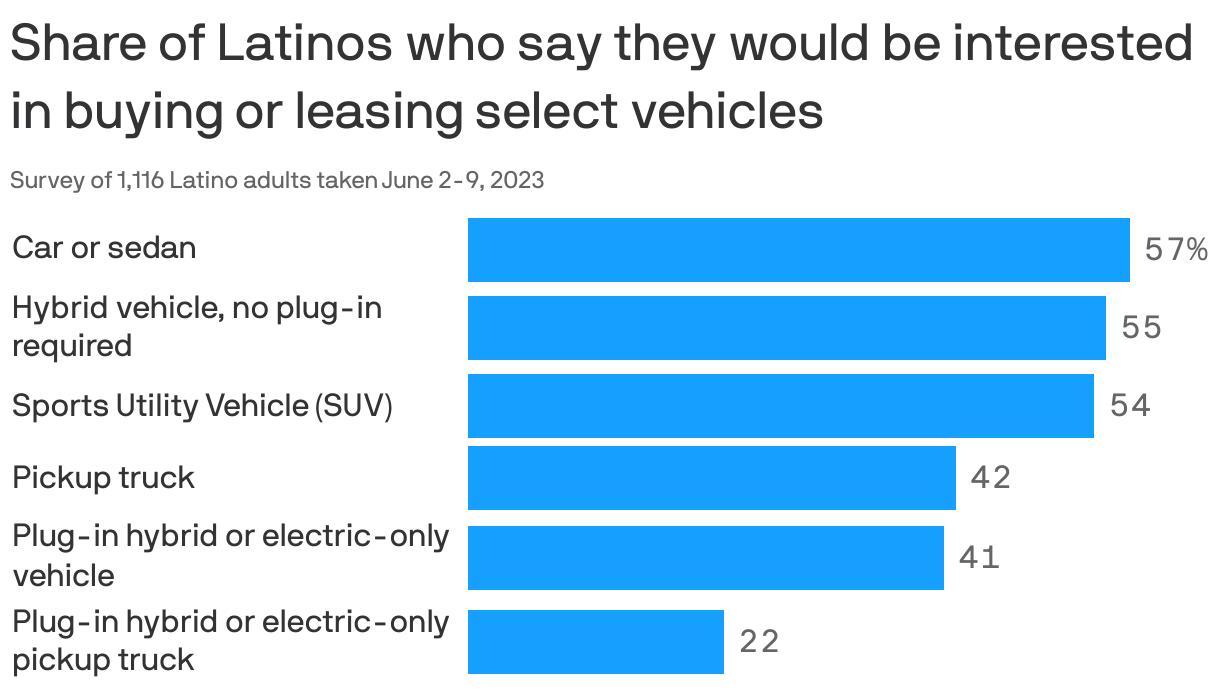
Data: Axios/Ipsos in partnership with Noticias Telemundo; OSPB; Chart: Tory Lysik/Axios Visuals
A majority of Latinos in a new survey say it's important to shift to electric vehicles to minimize climate change damage, but they expressed more interest in buying gas-powered cars over EVs.
Why it matters: Experts say that illustrates a lack of access to electric vehicles, which can be more expensive, as U.S. leaders push toward widespread adoption.
Big Money is still being wooed into crypto, only this time it's the Wall Street firms — not the crypto natives — doing the beckoning.
Why it matters: There is an inner battle emerging in the crypto market, pitting the benefits that come with an influx of institutional money against the ideological soul of the crypto OGs.
A team of Stanford researchers is warning that leading AI models are woefully non-compliant with responsible AI standards, represented by the EU's Artificial Intelligence Act.
Driving the news: The House Science Committee meets Thursday to probe AI executives on how to develop AI "towards the national interest."
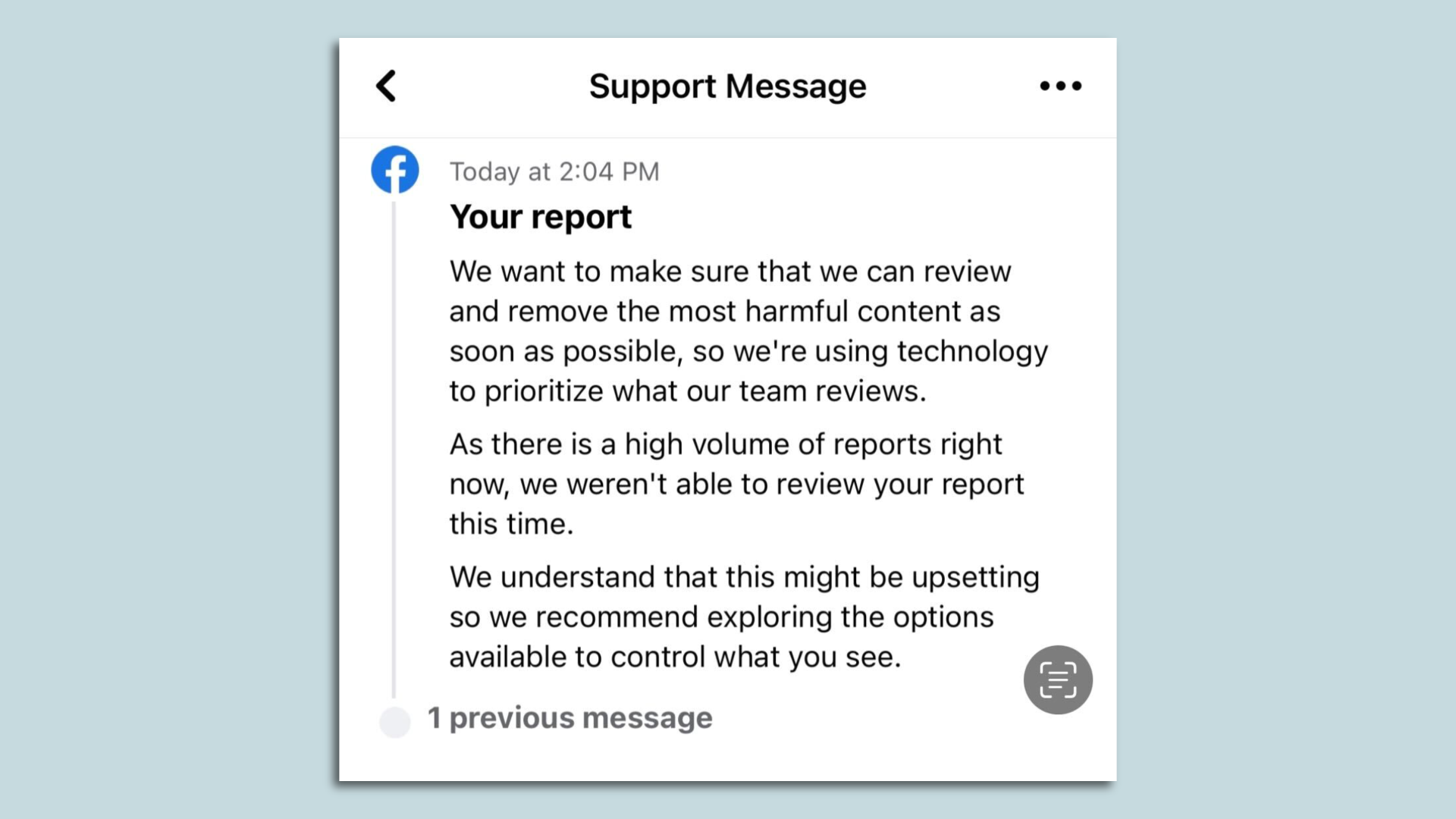
Facebook still isn’t fully reviewing all the content users flag as potentially violating its rules, three years after a pandemic-related shift to rely more heavily — and in some cases exclusively — on automated systems for content moderation.
Why it matters: Civil rights groups and regulators say the practice is dangerous and adding to an already toxic environment for marginalized groups.