Beat 'em up "Aeon Must Die!"'s release on Thursday stirred up controversy around accusations from former employees that the game was created under toxic work conditions and ultimately stolen from its creators.
Driving the news: Former Limestone Games developers, now working under a new studio called Mishura Games, published a lengthy statement calling on Limestone and publisher Focus Entertainment to "complete their legal responsibilities."
Sony is offering customers the chance to buy a PlayStation 5 directly from them for the holidays.
The details: The offer is invite-only, with selections being made based on “previous interests and PlayStation activities." You'll need to register with Sony first.
"Squid Game" is Netflix's biggest series launch ever with more than 111 million views, but the show has taken root beyond the streaming platform in spaces like TikTok and the gaming industry.
Why it matters: The battle royale-style show's influence in video games seems to spread more every week.
LinkedIn on Thursday said it will sunset the localized version of its app in China and will instead launch a new job boards app called "InJobs" later this year.
Why it matters: In a statement, the company said it's making these changes because it's facing "a significantly more challenging operating environment and greater compliance requirements in China."
The leader of a powerful House committee is taking aim at websites' liability shield in a new bill that would remove protections if recommended content leads to real-world harm.
The big picture: The bill is the latest attempt to tweak tech's shield after mounting frustrations from both Democrats and Republicans about Facebook, YouTube and Twitter's content moderation practices.
Facebook is announcing a new machine learning project that aims to teach AI how to understand and interact with the world through a first-person perspective.
Why it matters: Most computer vision is trained on images and videos taken from a third-person perspective, but to build AI assistants and robots that can work with us in the real world, researchers will need to compile data sets built on what is known as egocentric perception.
Technology can be a big seller in new cars, but it turns out that many digital features go unused — assuming owners even know their car has them.
Why it matters: High-tech features are driving up vehicle prices. But if consumers don't use them — or are frustrated because the stuff doesn't work properly — then both automakers and car buyers are wasting their money.
Driving the news: For more than 1 in 3 advanced technologies, most owners didn't even use the feature during the first three months of ownership, a J.D. Power tech study found.
Usually, owners say it's because they don't need the feature, but sometimes it's because they don't know about it or find it difficult to use.
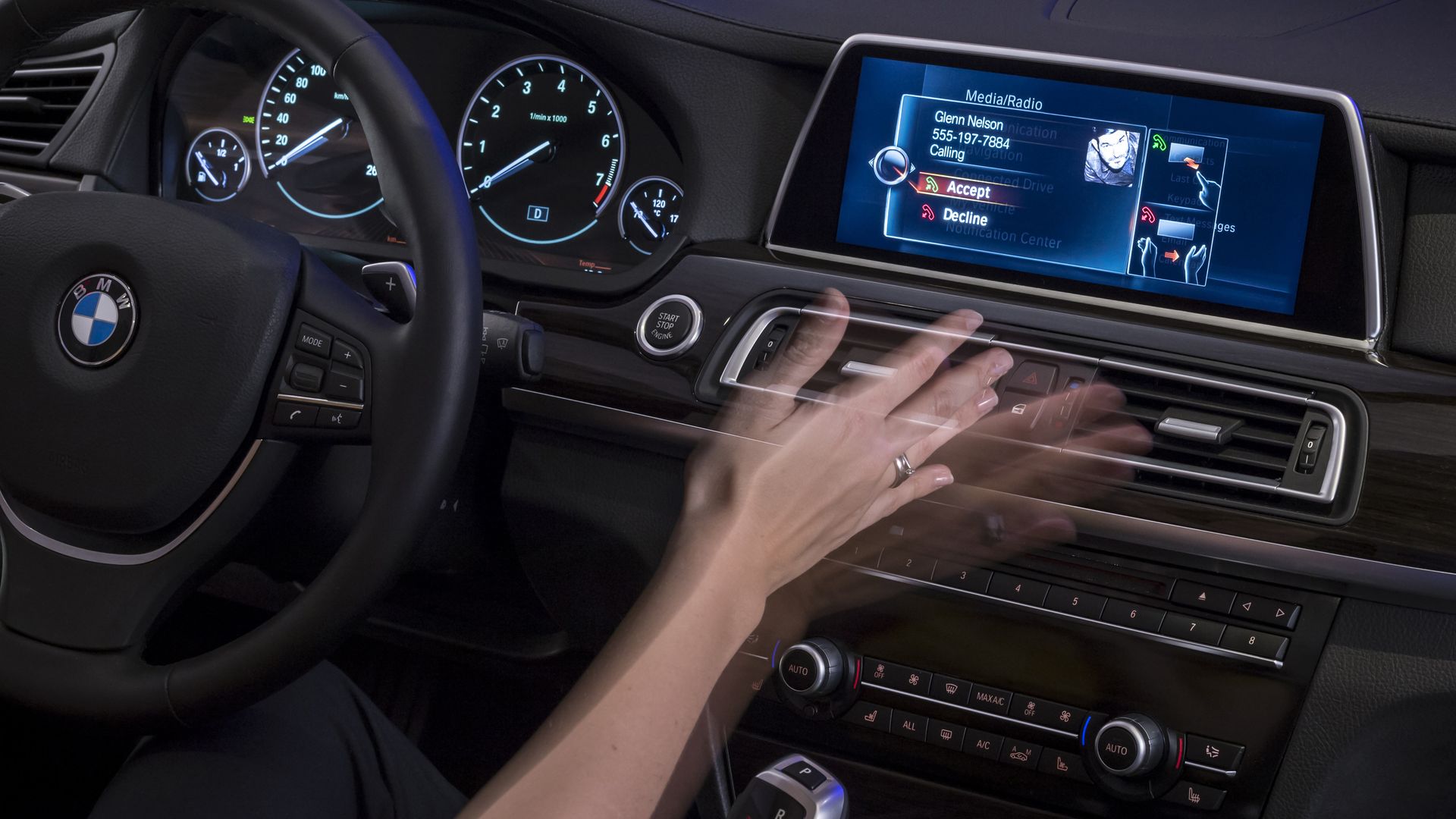
BMW's gesture control technology is a great example. It's supposed to let you wiggle a finger or wave your hand to perform tasks like adjusting the radio volume or answering a call — as opposed to touching a screen or button.
But the tech had the lowest overall satisfaction score in J.D. Power's annual U.S. Tech Experience Index for the second year in a row, with owners reporting 41 problems — meaning complaints — per 100 vehicles.
My thought bubble:I drove a BMW X6 last year that had gesture control as part of a $2,300 Premium package. I concur with BMW owners. It was easier to just use the buttons.
Other built-in technologies often go unused, despite big investments by automakers to add them. Some examples:
Digital marketplace: General Motors was the first to equip millions of cars with an in-car commerce platform called Marketplace that lets you order food, make restaurant and hotel reservations, and find gas stations from your dashboard.
But 61% of owners say they've never used their car's digital marketplace, and 51% said they don't need it.
Driver/passenger communications: Honda, Hyundai and Toyota are among carmakers that let drivers talk more easily with rear-seat occupants via a microphone or camera.
52% say they've never used the system, and 40% say they don't need it. (Who needs a mic when you can just turn around and yell at your kids?)
Between the lines: Consumers are more likely to use emerging technology if the car dealer does a good job of demonstrating how it works, J.D. Power found.
But a lot of car salespeople aren't fully trained to explain all the features of the cars they sell — and often buyers don't ask, aren't interested, or can't take it all in.
Some dealers encourage buyers to schedule a follow-up visit to the dealership for a refresher.
When a buyer does get a lesson from their dealer about how to use an advanced feature, they use it more, the study found.
Examples of these features include "safe exit assist technology" — which warns parked drivers to wait for traffic before opening the door — and trailer assistance technology, which helps drivers maneuver a boat or RV, for example.
Yes, but: Owners are more than twice as likely to learn about such technology from an outside source (71%) than from a dealer (30%), the study found.
What car owners love: cameras, cameras and more cameras.
The top-rated technologies all provide an extra set of eyes: backup cameras with trajectory guidance, rear-view mirror cameras that enhance visibility, and 360-degree ground view cameras.
Electric vehicle owners also love one-pedal driving technology — which allows a driver to lift their foot off the accelerator to slow or stop without having to brake.
The bottom line: In-car technology has to be simple to use — and well-explained to the driver ahead of time — or it's not worth the money.
A whopping 87% of U.S. teenagers have iPhones,per a new survey of 10,000 young people from investment bank Piper Sandler.
Why it matters: The economy is going mobile as the next generation of consumers shops for clothes, watches TV and meets romantic partners almost exclusively on their phones.
Amazon must decide whether to go it alone in the fight against a bill meant to deter online sales of counterfeit and stolen goods, after its e-commerce peers Etsy and eBay threw their support behind updated House legislation set for a Thursday hearing.
Between the lines: The fierce and unanimous opposition from online marketplaces has splintered, potentially easing the path forward for the latest legislation.
Code hosting company GitLab will begin trading Thursday morning on the Nasdaq after raising about $800 million at a valuation of about $11 billion in an initial public offering.
Why it matters: This is a milestone that GitLab's older and arguably better known rival, GitHub, didn’t get to experience. GitHub, instead, sold to Microsoft in 2018 for $7.5 billion.
A bipartisan group of lawmakers led by Sen. Amy Klobuchar (D-Minn.) unveiled a bill Thursday banning companies like Amazon and Google from favoring their own services.
Why it matters: The Senate legislation, which is similar to a bipartisan House bill, shows Republicans and Democrats in both chambers are eager to pass new regulations on the country's biggest technology companies.
Netflix co-CEO Ted Sarandos on Monday responded to growing frustrations among employees about the company's handling of anti-transgender comments made by comedian Dave Chappelle in his most recent Netflix special "The Closer."
Yes, but: His justification has only intensified frustrations, sources told Axios on Wednesday.