In the wake of COVID, the gaming industry is struggling to adapt its established in-person events to match the current needs — and technology — of the world.
Driving the news: E3 is gaming's biggest event, but its venture into the digital space has been rough.
Telecom powerhouses won a victory in New York on Friday when a federal court barred the state from enforcing a new affordable broadband program that would require them to provide $15 internet service.
Why it matters: The court order sends a signal to other states that they will face an uphill legal battle if they copy New York's first-in-the nation law.
Jim Ryan, Sony's head of PlayStation, wants people to know that he doesn't hate old video games.
Why it matters: A dismissive quote about older PlayStation games has dogged Ryan for years and been used to boost theories as to why Sony has not supported its back catalog of games as well as rivals Microsoft and Nintendo.
Lawmakers on Friday debuted bipartisan bills that could fundamentally change how Big Tech does business in the U.S.
Driving the news: If passed, the bills could force Apple to change how it runs its app store, break apart Amazon's control of its marketplace and halt Facebook and Google from buying smaller rivals in an effort to remake the online ecosystem.
PlayStation’s competition goes far beyond its gaming rivals, Sony’s head of PlayStation Jim Ryan told Axios.
Why it matters: With entertainment converging on every screen imaginable, old distinctions between the business of games, movies, streaming and even social media are becoming less relevant.
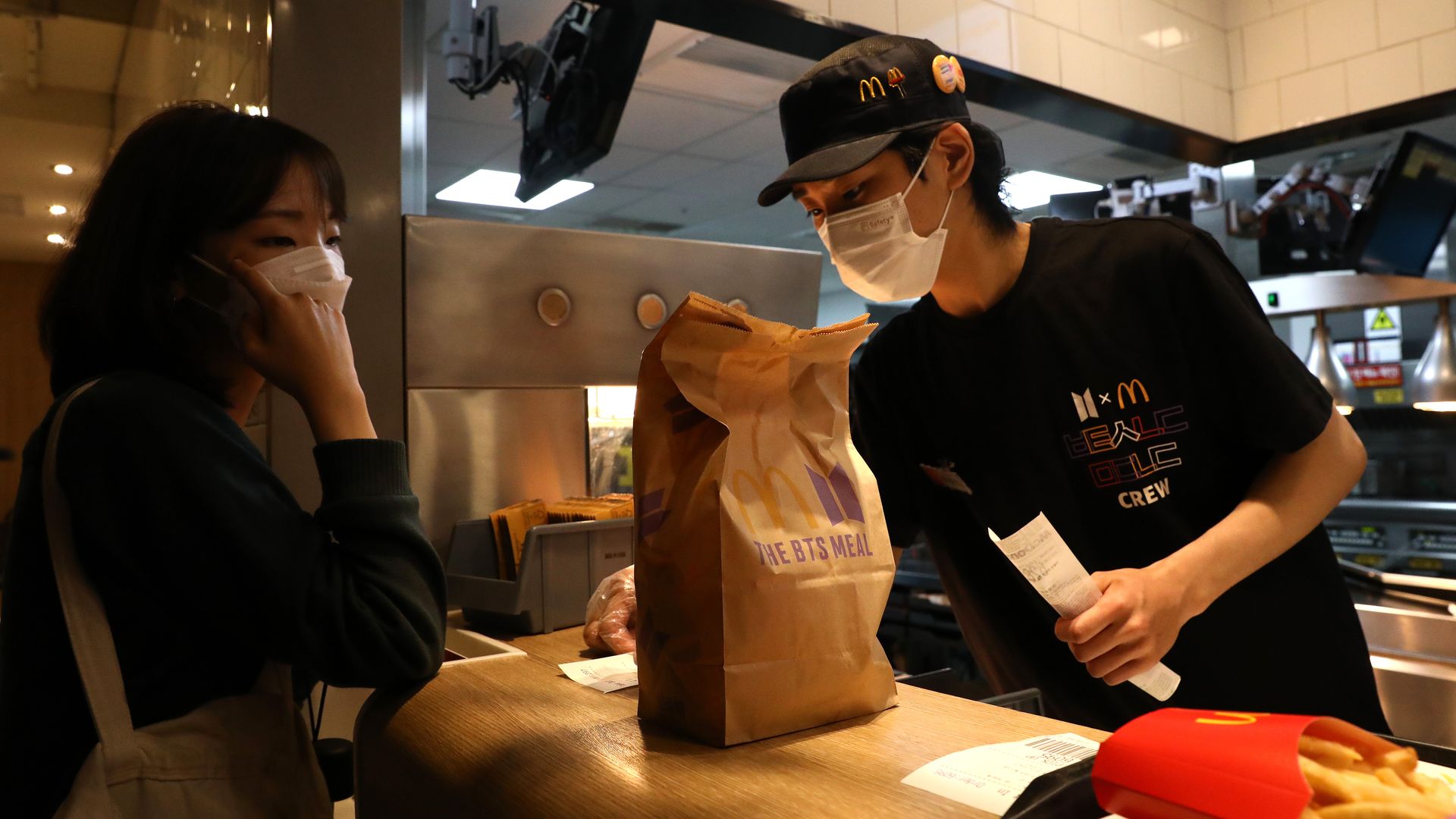
Hackers stole data, including customer emails, phone numbers and addresses, from McDonald’s computer systems in the U.S., South Korea and Taiwan, according to the Wall Street Journal.
Why it matters: It's the latest cyber attack against a major U.S.-based corporation, with the news breaking a day after FBI Director Christopher Wray warned Congress that "the cyber threat is increasing almost exponentially."
Profit-driven cyberattacks are becoming frighteningly routine, with more and more industries facing the threat of having their vital information stolen and little recourse beyond paying a ransom.
Why it matters: Such attacks may be motivated by profit, but as recent events have shown, can cause significant disruption to vital industries.
Amazon on Thursday said it was adjusting its policy on remote work, after earlier indicating it planned to return to an office-first culture as the pandemic eases. Under the new guidance, Amazon says most office workers will need to come in just three days per week, with further leniency possible.
The big picture: Some tech companies, including Twitter and Square, are offering workers the ability to remain fully remote, while even office-centric companies like Apple and Amazon, are recognizing the need for flexibility.
Amazon and peers eBay and Etsy are waging a lobbying war to scuttle bills pushed by brick-and-mortar retailers who want to require their online rivals to disclose more information about third-party sellers.
Why it matters: Online shopping became a lifeline for consumers and businesses during the pandemic, and lawmakers say that makes fighting online fraud and theft even more important.
Lobbyists for Rupert Murdoch's media companies are appealing to House Republicans to support antitrust bills meant to restrain Big Tech companies, sources tell Axios.
The big picture: Murdoch's media businesses have aggressively positioned themselves in opposition to the power of tech companies like Facebook and Google.
Gaming auteur Hideo Kojima says he is reconsidering his creative process in the wake of the coronavirus pandemic.
Why it matters: Kojima is hailed as a major (albeit often strange) creative force in games. His latest game, "Death Stranding," was an eccentric sci-fi tale about human connection in a ruined world.
A gameplay trailer for "Elden Ring,"the hugely hyped dark fantasy game made in collaboration with "A Game of Thrones" author George R.R. Martin, closed today's first big showcase of this year's E3 gaming hype season.
Why it matters: It's the latest high-profile game in a long tradition of titles that are announced and vanish for years with no updates.
Federal authorities this week announced they successfully traced and recovered most of the bitcoin that had been paid by Colonial Pipeline to a ransomware gang called DarkSide, following the May hack that shut off gas supplies to much of the East Coast.
Axios Re:Cap digs into the battle between law enforcement and crypto hackers, including how ransomware has become a global industry of its own, with Gurvais Grigg, a 23-year FBI veteran who now serves as public sector CTO at crypto firm Chainalysis.
Microsoft will offer access to Xbox games across an increasingly broad range of devices, including smart TVs and iPhones, company executives said this week during press briefings about its gaming business.
The big picture: Long a major player in the console market with Xbox, Microsoft is drifting away from a dependency on physical hardware, arguing that its path to success is about streaming.
Besting China is one of the very few goals that Democrats and Republicans in Washington can agree on — as a new White House executive order and Senate passage of a new $200 billion bill, both targeting China's tech industry, show.
Yes, but: Where the Trump administration took an impulsive and haphazard approach to banning Chinese companies and products, President Biden is approaching the China rivalry in a more systematic and process-oriented way.
During the pandemic, ridership of mass transit pretty much collapsed. Now, as the country reopens, transportation experts are hoping that commuters will come back. But what if they don’t?
Plus, the uptick in trans murders in the U.S.
And, President Biden reverses the Trump administration's attempted ban on TikTok.
JBS USA on Thursday announced it had paid hackers "the equivalent of $11 million in ransom" to resolve a cyberattack that forced the meat company to shut down.
State of play: The payment was made in bitcoin, per the Wall Street Journal. The company said it made the decision to pay the ransom after consulting with "internal IT professionals and third-party cybersecurity experts."