Ride-hailing giant Uber plans to list its shares on the New York Stock Exchange, according to Bloomberg.
The bottom line: Uber is getting closer to publicly filing papers for its IPO, which is expected to occur next month. Smaller rival Lyft is expected to IPO next week on the Nasdaq.
One of the oddest ways that an AI system can fail is by falling prey to an adversarial attack — a cleverly manipulated input that makes the system behave in an unexpected way.
Why it matters: Autonomous car experts worry that their cameras are susceptible to these tricks: It's been shown that a few plain stickers can make a stop sign look like a "Speed Limit 100" marker to a driverless vehicle. But other high-stakes fields — like medicine — are paying too little attention to this risk.
Americans are expecting the worst of the future, with the country rapidly changing. They also agree that politicians likely won't know how to handle the new world, according to a new survey by Pew Research Center.
Data: Pew Research Center; Chart: Lazaro Gamio/Axios
For years, Facebook has been storing hundreds of millions of users’ passwords exposed in plain text in an internal database that is searchable by tens of thousands employees, Brian Krebs of KrebsOnSecurity reports.
Why it matters: Although Facebook says it has no evidence that the database was abused by employees, this is just the latest example in a string of controversies over the company's handling of users’ information and privacy. In the last few months alone, Facebook has come under fire for sharing user data — including private messages — with other businesses and allowing users to be looked up by their phone numbers.
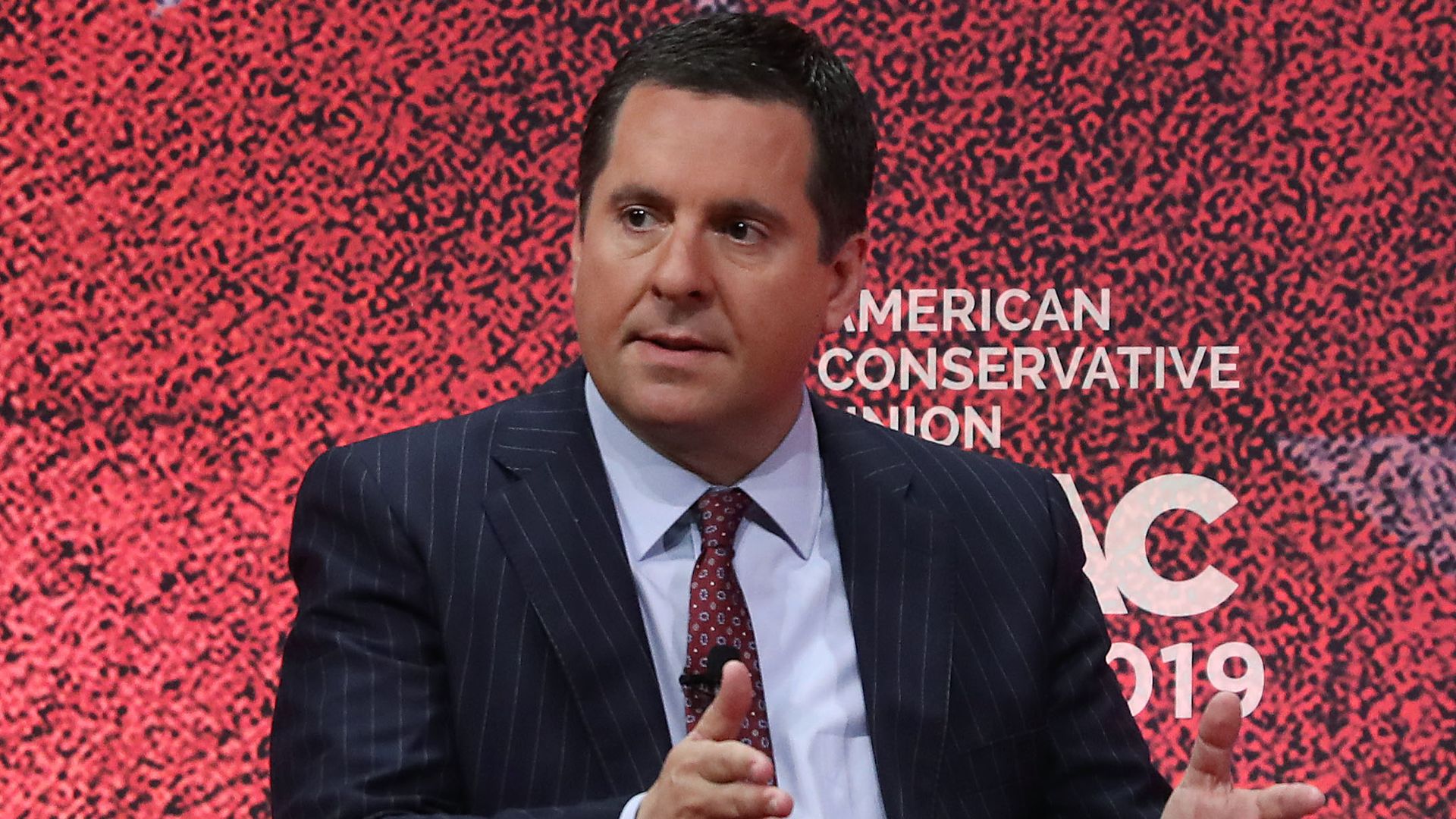
Rep. Devin Nunes' defamation suit — the one pitting him against Twitter, a conservative pundit and a fake cow — is not an easy case for the California Republican to win on any count. But it will be particularly difficult to win against Twitter.
The big picture: Legal experts Axios spoke to do not think Nunes will be able to show that any of the insults on Twitter were defamation; hyperbolic trash-talking is already exempt from defamation. But there's a second level of difficulty with suing Twitter: the federal code known as Section 230.
Google has so far refused to take down an app, already barred by Apple, Amazon and Microsoft, that aims to convince people that their same-sex sexual attractions are both sinful and changeable.
Why it matters: The app, from Living Hope Ministries, amounts to a form of conversion therapy, say LGBTQ rights groups that have urged Google to change its stance.
As real world harms triggered by digital activity multiply, technology companies are scrambling to avoid being a conduit for deceit.
Why it matters: As the digital realm becomes more intertwined with our lives, big companies are under increasing pressure to help mitigate offline harm caused by technologies like automated advertising, social algorithms, artificial intelligence and digital editing tools.
Researchers at Florida State University and Stanford are developing an "online polygraph" that detects lies in text — without the contextual clues that can hint at deception in a face-to-face conversation.
Details: In experiments, the researchers found that liars used more florid prose and often expressed certainty, while truth-tellers responded more slowly and with words like "perhaps," "guess" and "could." They designed a machine learning system that can pick up on these subtle cues to correctly separate out liars from truth-tellers about three-quarters of the time. The results were published in the journal Computers in Human Behavior.
Nobody wants to ride in a dirty, smelly car — especially a shared robotaxi where there is no human driver to clean it up. Luckily, autonomous vehicles might be outfitted with olfaction sensors to help sniff out problems quickly.
What's happening: Denso, one of the world's largest auto suppliers, is teaming up with France's Aryballe Technologies, which develops bio-inspired "digital nose" sensors for multiple industries, as founding members of a new Digital Olfaction Automotive Consortium.
Drivers are encountering more automation in their cars, but experts say they need more training to better understand and safely use the technologies.
The big picture: Assisted driving features are turning cars into next-generation automated machines — the first ones that many people will be exposed to. How humans and machines learn to interact when driving could indicate how people might work with robots in the future.
If you aren’t a gamer it's easy to miss why Google’s new Stadia streaming game service is such a big deal.
Why it matters: For gamers, Stadia offers the potential to make several long-held dreams a reality, but Stadia's innovations are about more than just the future of gaming. If Google can stream the most demanding applications to a TV with a Chromecast streaming media stick, it really can turn any screen into a powerful computer.
Safety and cybersecurity are generally pursued by separate teams within AV companies — leaving them in silos that exacerbate the significant challenges of each, and ignore the fact that they both fundamentally protect drivers and passengers from harm.
Why it matters: As cars become increasingly complex, modifying one aspect of the technology could create an unexpected vulnerability in another feature, making it crucial to develop safety and cybersecurity as integrated systems.
Cities are adopting tolling and closed-loop shuttle buses to mitigate traffic, to integrate AVs into public transit, and to prepare for the possibility that AVs used in ride-hailing could exacerbate urban congestion.
The big picture: Reducing congestion in densely populated, trafficked metro areas will require distributing people more strategically across transit options and routes.
China is criticized for its use of deeply controversial surveillance systems to control untrusted elements of its population. But the U.S., too, is developing such know-how as artificial intelligence fast becomes a leading factor in the race for power in the new world order.
What's happening: Since humans began resorting to war, technology has been decisive in who prevails. Today, as the U.S.-led, post-World War II system of global power unravels, next-generation influence will hinge on mastery of AI-infused technology that, while perhaps having innocent origins, has often been weaponized.
Apple will collaborate with 3 nonprofit organizations around the globe with media literacy programs in an effort to combat fake news and encourage reliable public news consumption, the company announced on Tuesday.
Details: The partnership will advance the organizations' — the News Literacy Project and Common Sense in the U.S. and Osservatorio Permanente Giovani-Editori in Italy — existing programs as they strive to teach young people to be critical consumers of information in the digital age. The partnership comes as Apple is set to unveil a news subscription service starting March 25th.


/2019/03/21/1553205725025.gif?w=3840)






/2019/03/21/1553133036053.gif?w=3840)