Huawei CFO Meng Wanzhou, who has been arrested in Canada on suspicion of violating U.S. sanctions on Iran, told employees during an internal staff meeting in October that strictly complying with certain types of regulations is not always possible, and that in some cases "one may accept the risk of temporary non-compliance," the South China Morning Post reports.
Why it matters: Wanzhou is currently facing extradition to the U.S., a move that could have quick, dramatic impacts in international politics and global technology sales — especially with the Trump administration engaged in high-stakes trade talks with China for the next 85 days. Few details about her arrest have been revealed by Canadian authorities, but a bail hearing has been set for Friday.
Dan and Bloomberg tech reporter Sarah Frier discuss the recently-released trove of internal Facebook emails. What they say about Facebook, its commitment to privacy and the regulatory upshot.
More than a third of tech workers think of themselves as depressed, according to a new survey. When asked "I believe I am depressed," nearly 39% of workers answered "true" in a poll from Blind, which bills itself as an anonymous social network for workers.
The big picture: Although far from a clinical study, the numbers show a need for greater discussion of mental health issues within the industry. At 43.4%, Amazon had the highest share of people saying they believed themselves to be depressed, followed by Microsoft (41.5%) and Intel (38.9%). Apple had the fewest number of workers saying they thought of themselves as depressed, at 30.6%.
Lyft has submitted a draft registration to the Securities and Exchange Commission to go public, it announced in a statement on Thursday.
The bottom line: This means Lyft could be on track to go public in the first quarter of 2019, although there is no required timetable after a confidential filing. The company has still not determined how large the offering will be.
China is demanding the release of Huawei CFO Meng Wanzhou from Canada after she was arrested there for violating Iran sanctions and faces extradition to the U.S., calling it a violation of her human rights. the AP reports.
Why it matters: Meng's arrest could have quick, dramatic impacts in international politics and global technology sales, as Axios' Joe Uchill reported. Huawei is one of the Chinese government's "pet companies" — and Meng is the daughter of its founder. Markets have already dippedaround the world today after the incident, amid fears it could ignite a new round in the U.S.-China trade dispute.
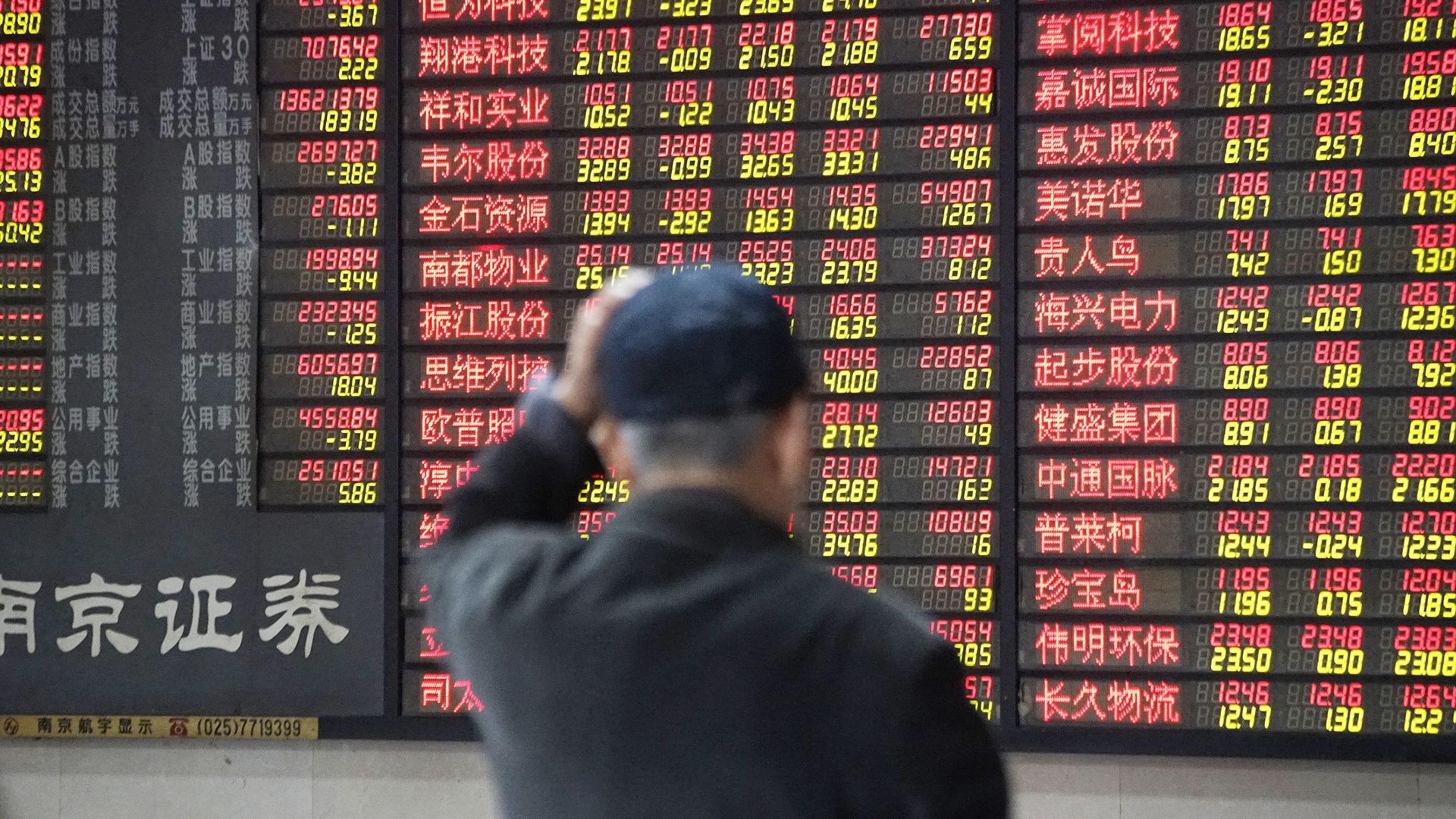
Asian stock markets dropped sharply on Wednesday, led by Chinese tech stock declines, following the arrest of Huawei CFO Meng Wanzhou.
Between the lines: The arrest creates big unknowns for Huawei suppliers and partners, and also adds additional tensions to U.S.-China trade negotiations.
Mark Zuckerberg this year reportedly told Facebook officials that the company is at war. He's right. Facebook is facing a new kind of existential threat, not from competitors, but rather from an adversary who can neither be acquired nor competed against: governments, particularly in Europe.
Driving the news: The decision by Damian Collins, a British lawmaker, to publish highly sensitive, unredacted internal Facebook emails is aggressive, uncompromising, and further intensifies the European battleground — an arena where Facebook has little to no political support.
A British lawmaker released internal Facebook documents Wednesday that portray it as a ruthless corporate giant that will do whatever it takes to squeeze out competitors and increase user engagement with its products.
Why it matters: Some U.S. lawmakers say the documents show that Facebook may have violated a 2011 Federal Trade Commission settlement promising to be better about protecting user data. Some analysts began downgrading Facebook stock in wake of the drama Wednesday.
The arrest and pending extradition of Huawei chief financial officer Wanzhou Meng for violating Iran sanctions may have quick, dramatic impacts in international politics and global technology sales.
Why it matters: The beleaguered Chinese electronics and telecommunications equipment firm is now facing geopolitical crises on two fronts: British BT just barred use of Huawei products in its 5G network. The arrest of Meng, the CFO and daughter of the company's founder, is a calamity on top of an already bad situation.
Early in the high-stakes race to dominate artificial intelligence, Big Tech — flush with cash, data, and name recognition — has seemed to have already captured AI's commanding heights and created an insurmountable, monopolistic advantage.
But new data suggests that the contest is not quite over, and that the field is much more crowded than was thought.
Huawei chief financial officer Wanzhou Meng is facing extradition to the United States after being arrested in Canada on suspicion of violating U.S. sanctions on Iran, the Globe and Mail reports.
Why it matters: A court hearing has been set for Friday. If Meng is extradited, it will mark the first time a Huawei official will face U.S. authorities.
Boeing is facing intense scrutiny for failing to provide instructions on how to operate a new automated flight-control system in the operations’ manual for its 737 MAX aircraft, a decision investigators say might have led to October's Lion Air crash that killed all 189 people on board off the coast of Indonesia.
Why it matters: As the Wall Street Journal notes in a detailed report published Wednesday, the move to “omit the control system from manuals has put a Boeing design principle at the center of a probe into a fatal airliner crash for the first time in more than two decades.” Questions about the crash have also threatened “to tarnish Boeing’s reputation for safety and its tradition of prioritizing pilot authority over automation.”
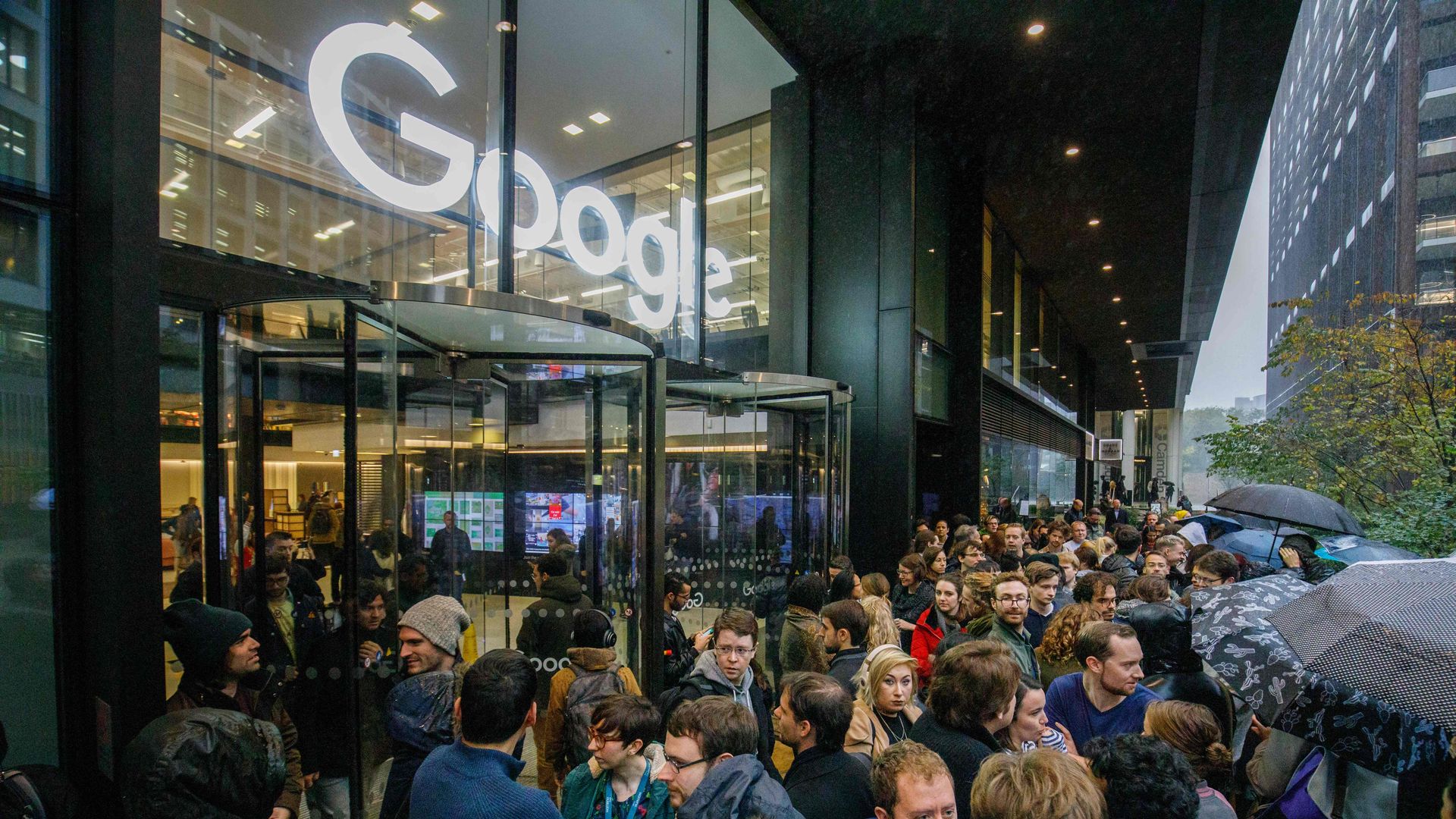
Google's contract workers are demanding they receive the same benefits enjoyed by full-time workers — including access to companywide town halls on topics such as sexual harassment — in a letter they sent to CEO Sundar Pichai on Wednesday.
The big picture from Axios' Ina Fried: Google, like many other Big Tech firms, essentially has two classes of workers: full-time employees and then a large number of others who work within its walls, including temporary workers, vendors and contractors."
Facebook documents released Wednesday portray the social giant as considering aggressive routes to squeeze more revenue out of user data, giving major companies extra access to data and undermining competitors.
Why it matters: While much of what's in the documents was already reported, together they provide a rare window into one of the world's most influential companies and reveal how Facebook's executives were ruthlessly focused on growing their service — while downplaying risks to user privacy.
Starting today, somePhoenix-area residents can use an app on their phone to summon a driverless taxi from Waymo. But even Waymo is playing down the historic milestone, acknowledging the world won't change overnight.
The big picture: After years of hype, it's the first real test of consumer demand for robocars. But the low-key launch speaks volumes about where AV technology is today — and how long it will take before people feel comfortable with cars that drive themselves.
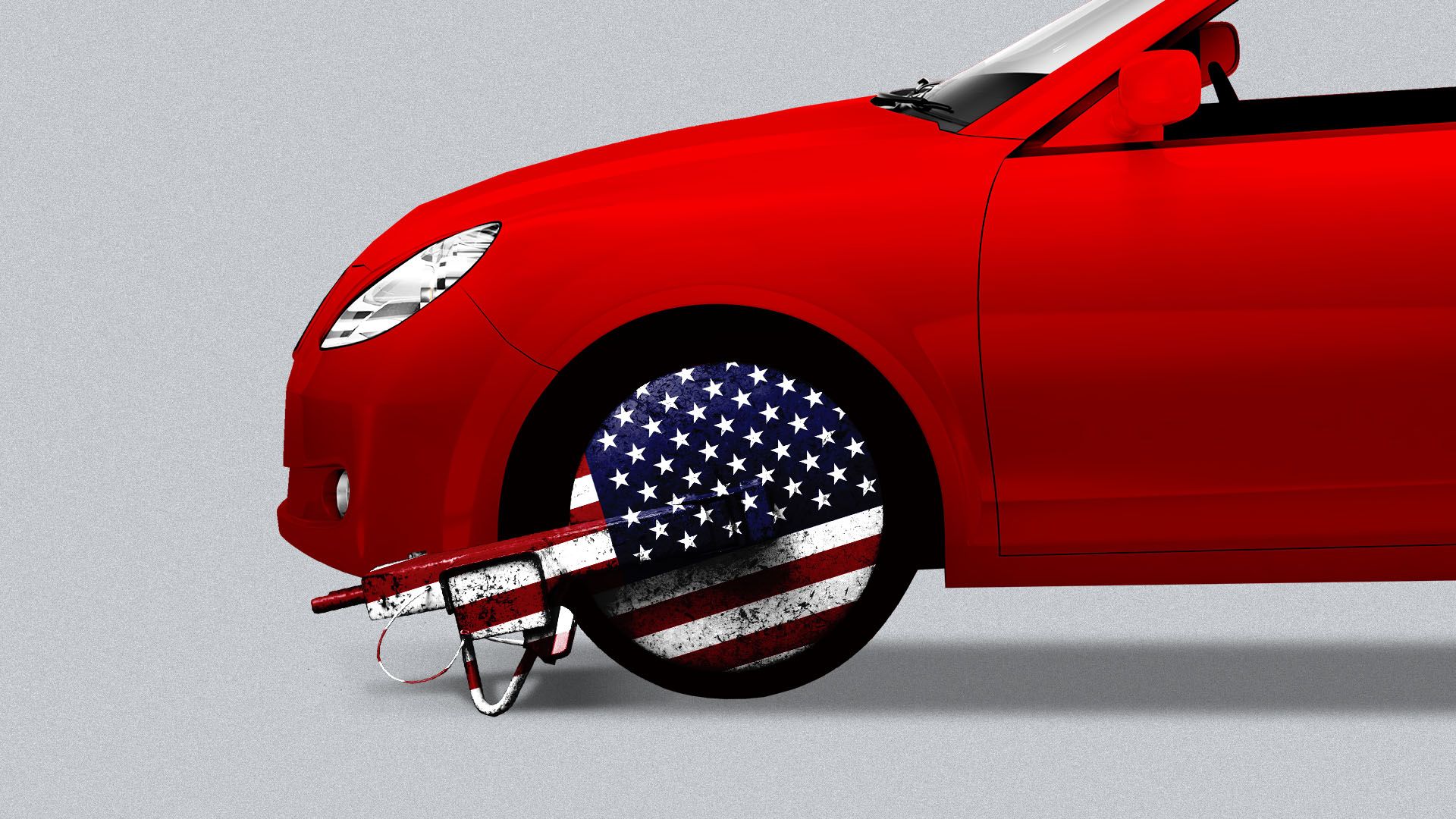
As part of the Trump administration’s efforts to hold China accountable for unfair treatment of American companies, the Commerce Department on Nov. 19 proposed new export controls, traditionally limited to sensitive weapons technologies, that could bring China’s ambitious autonomous vehicle push to a screeching halt.
Why it matters: The move to block exports of these “emerging” and “foundational” technologies from the U.S., even by non-American companies, would limit partnerships with Chinese firms and possibly the employment of Chinese nationals in the U.S. AV industry, since technical information could qualify as an export.
A task force created by President Trump said Tuesday the U.S. Postal Service should consider increases to the cost of shipping some packages, a move that could hurt Amazon along with other e-commerce companies.
Why it matters: Amazon faces a politically perilous moment. At home, it has become a symbol of the outsized wealth the tech boom put in the hands of the few, and it fields regular attacks from Trump. Across the Atlantic, it is under antitrust investigation.
After a year of scandals, Facebook lost its place as the best company to work at, according to Glassdoor. Facebook fell from first to seventh in the survey.
Why it matters: While customer defections or new regulations could both be longer-term consequences of the company's many trials, employee retention could be the most immediate challenge.
One of the latest restaurants to replace waiters with machines has three robots, all named Ginger, who glide from the kitchen to the tables, cracking jokes for diners.
But it's not in China, Japan or the U.S. — the main venues for robot experimentation. It's in Nepal.



/2018/12/06/1544114226639.gif?w=3840)