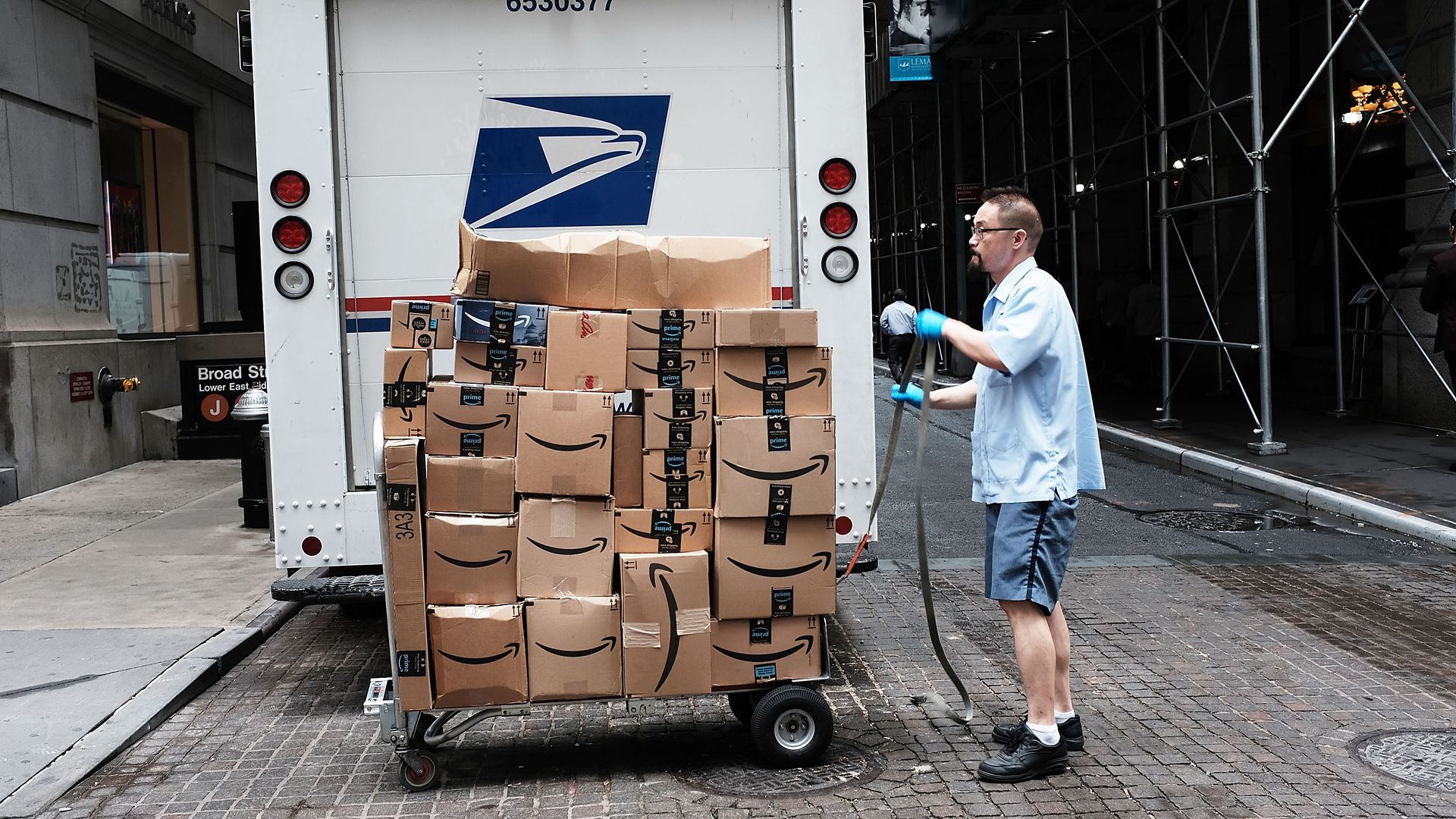
The financially struggling U.S. Postal Service should raise prices for shipping nonessential packages, recommends a newly released report from a Treasury Department task force.
Why it matters: President Trump created the commission after criticizing Amazon for allegedly underpaying the USPS for package shipments and referring to the USPS as Amazon's "Delivery Boy." Stocks from Amazon, UPS, USPS and stamps.com all dropped after the report was released.
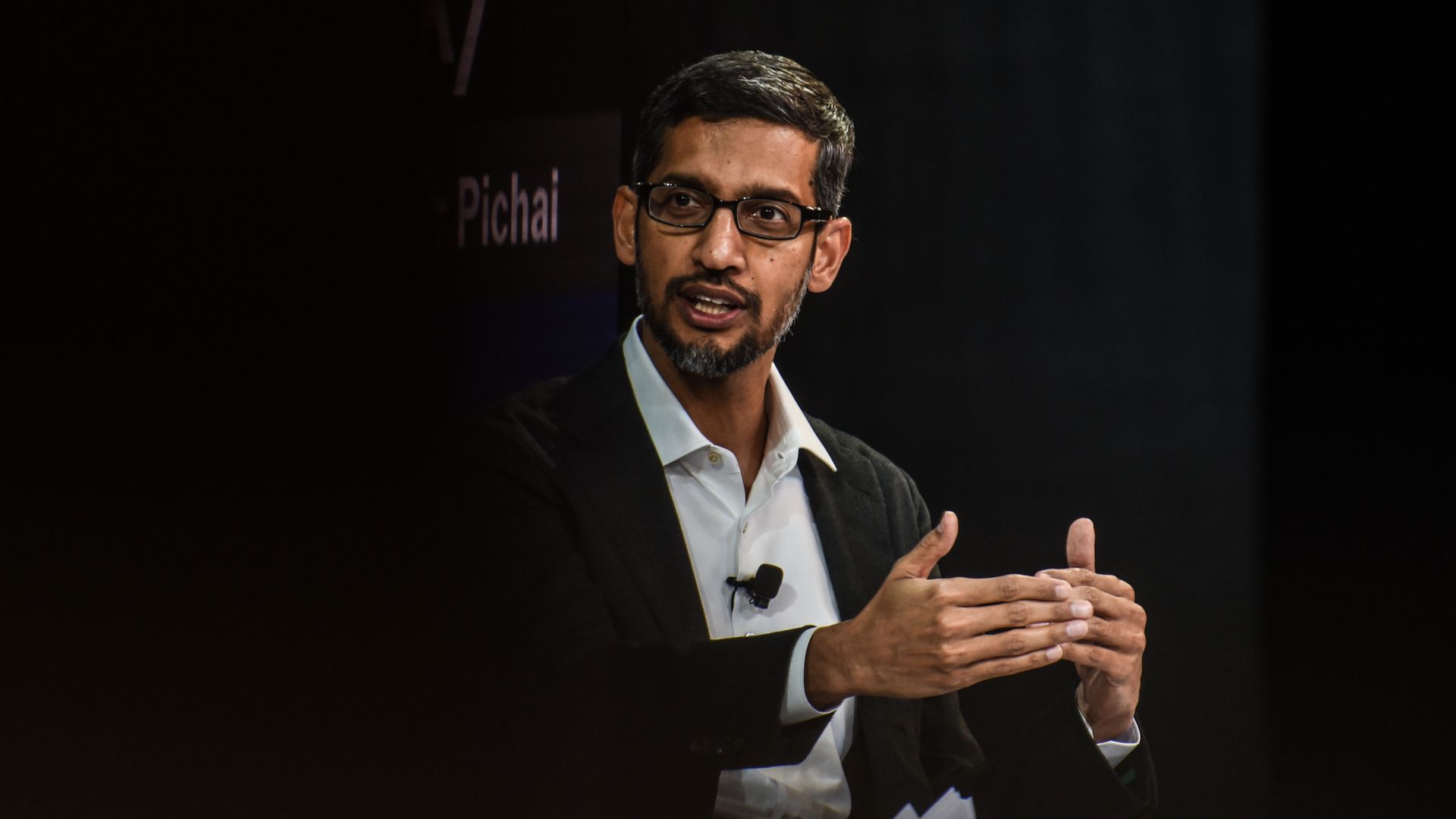
Google CEO Sundar Pichai will testify before the House Judiciary Committee on Tuesday, Dec. 11, after the hearing was rescheduled from Wednesday to accommodate the funeral of former President George H.W. Bush. Pichai is still slated to attend a meeting at the White House with other tech executives this Thursday.
The big picture: After Google kept its head down while others in Silicon Valley took the heat in D.C., it is now Pichai's moment to be questioned about privacy, accusations of political bias, and all the other controversies that have dogged the technology business.
Microsoft last summer promised to partner with small, rural ISPs to make broadband available to 2 million people who don’t have access.
Background: The program, known as Airband, would use a mix of technologies, including vacant broadcast airwaves called TV White Spaces, to cobble together connectivity.
Google and Facebook, often referred to as “The Duopoly,” were responsible for roughly 75% of all digital advertising growth last quarter in the United States, according to Brian Wieser, Senior Advertising Analyst at Pivotal Research.
Reproduced from eMarketer; Chart: Axios Visuals
While this seems high, the percentage share of growth of new ad dollars coming from these two firms has actually dropped, mostly due to declines in growth projections at Facebook and increases in projections at Amazon. eMarketer estimates that Google and Facebook will capture 56.8% of the U.S. digital ad market this year. That's down from 58.5% last year.

Oath, the Verizon media unit that houses digital brands like Yahoo, AOL and HuffPost, has agreed to pay $5 million to settle charges from the New York attorney general that alleged the media company’s online advertising business was violating a federal children’s privacy law, per The New York Times.
Why it matters: This is an example of how major internet companies are grappling with an online world that needs to be safeguarded for children.
Google search results for the same term vary widely from user to user, a new study from a competitor finds.
Why it matters: There’s growing interest in how Google and other large web platforms filter content. Conservatives have offered unproven allegations of bias against the right, but observers of all stripes worry that platforms can narrow users’ view of the world, rather than expand them.
A potential recession, combined with increasing regulatory threats for some of the biggest tech companies, foreshadows a difficult 2019 for Silicon Valley.
Why it matters: The biggest tech companies have already raked in billions of dollars in profits and benefited from major tax cuts that aren't going to be repeated, so next year isn't likely to be better for them financially. They've also been dogged by scandals that have left many questioning their positive role in society, and if on top of that the economy starts to slip, 2019 could be worse.
The success of mobile technologies across Africa is prompting speculation among tech investors about whether AI will likewise take off on the continent. But most African countries aren’t yet ready to benefit from the technology, a new Atlantic Council report suggests.
Reality check: AI depends on large volumes of high-quality data from which to learn and make decisions. While deepening mobile phone use means Africans today generate more data than ever before, the quality of that data is still poor and data-privacy regulations are mostly nonexistent.
We tend to think of a single "digital divide" separating the haves and have-nots in the online world, but inequality in the internet era takes on a vast number of forms.
Data: SurveyMonkey online poll conducted Nov. 27–29 among 3,308 U.S. adults. Total margin of error is ±2.5 percentage points; Poll methodology; Chart: Chris Canipe/Axios
Economics and geography play the biggest role, with those in cities enjoying far greater connectivity than those in rural areas. Similarly, people with more wealth tend to have more and faster connections. While those are the two biggest factors, there are also differences across race, education and age.
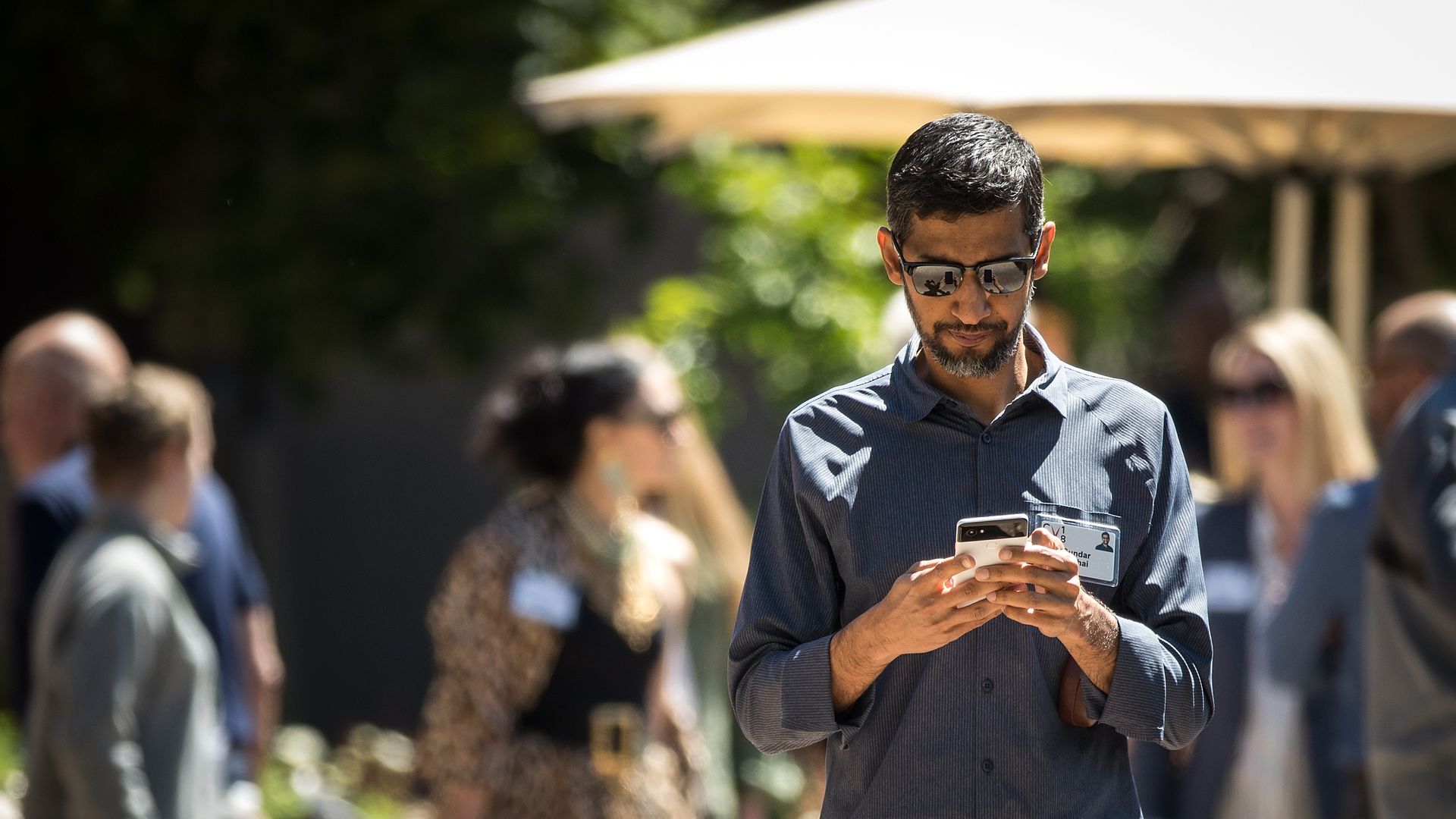
The House Judiciary Committee’s hearing with Google CEO Sundar Pichai has been postponed due to the D.C. funeral for George H.W. Bush, a spokesperson for the panel confirmed. A new date has not been selected.
Why it matters: Republican lawmakers are eager to hammer Pichai over perceived conservative bias on his platform, even though those allegations are unproven. Lawmakers will also have questions for the executive about the company’s potential re-entry into China and its dominance over parts of the internet industry.
Why it matters: China and Silicon Valley are competing for proprietary access to the genetic data of entire populations, which can be analyzed using machine learning to drastically advance genomic and medical research. Breakthroughs and overall leadership in these fields will have repercussions for the global economy.
"Jeff Bezos boldly predicted five years ago that drones would be carrying Amazon packages to people's doorsteps by now. Amazon customers are still waiting," AP's David Koenig and Joseph Pisani report.
The big picture: "[O]vercomingthe regulatory hurdles and safety issues posed by drones" has been a bigger challenge than expected. "The day may not be far offwhen drones will carry medicine to people in rural or remote areas, but the marketing hype around instant delivery of consumer goods looks more and more like ... hype. Drones have a short battery life, and privacy concerns can be a hindrance, too."