The freshest battleground in the U.S.-China trade war is currently playing out in Canada, where the CFO of Huawei faces extradition for allegedly violating U.S. sanctions on Iran.
Why it matters: This is both deeply personal (CFO Wanzhou Meng is the daughter of Huawei's founder) and precarious, given the accusations. The U.S. nearly gave ZTE a death sentence for similar allegations earlier this year, before President Trump backed off.
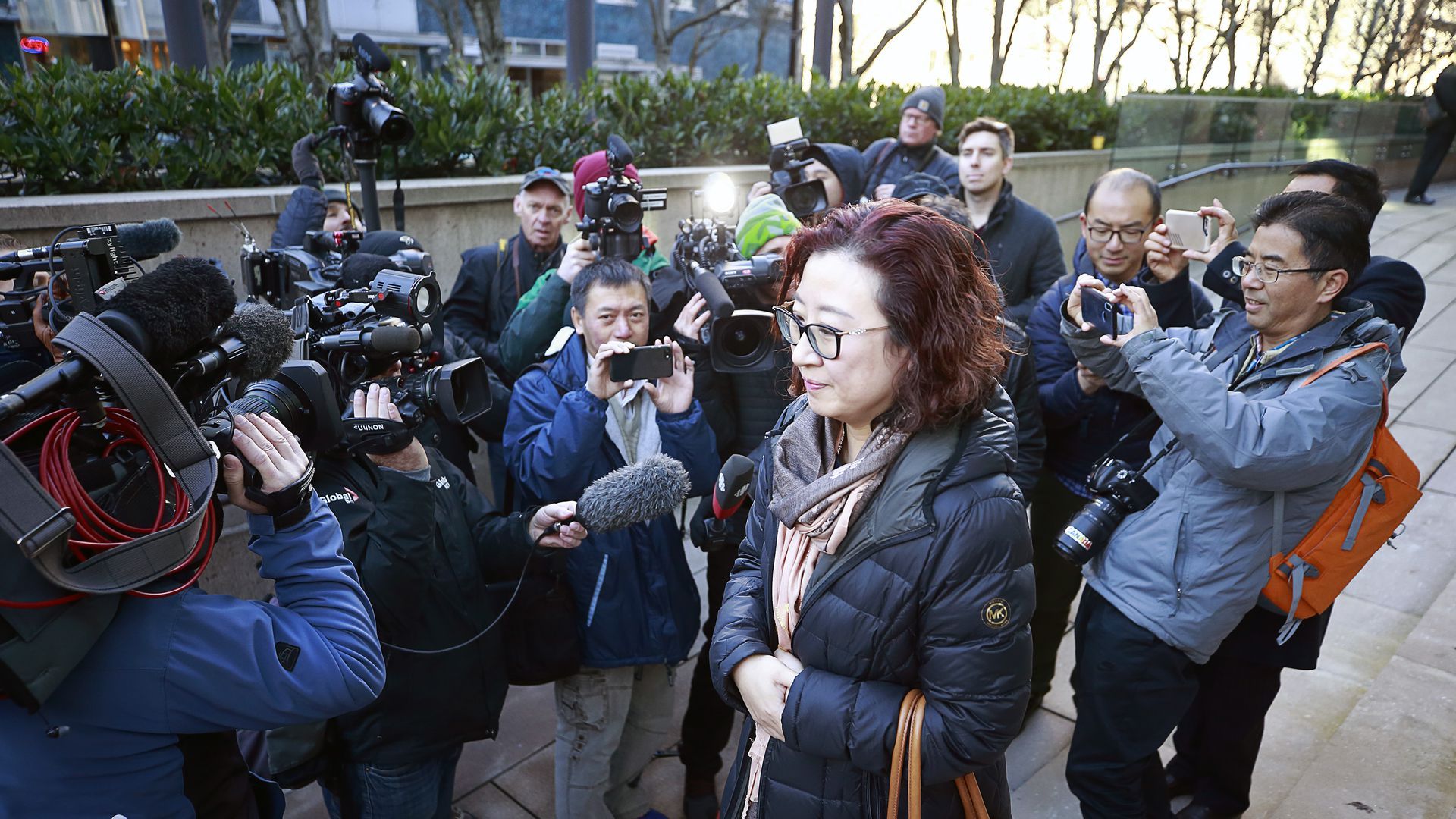
Canadian prosecutors on Friday laid out a series of fraud charges that led to the recent arrest of Huawei chief financial officer Wanzhou Meng, possibly setting the stage for her extradition to the United States.
Why it matters: Meng's arrest and possible extradition has become a flash point in trade tensions between the U.S. and Canada, as Huawei is one of China's most highly-valued technology companies.
Early rollouts of autonomous vehicles are showing how divided AV companies are on the best way to win over consumers.
Why it matters: Companies are pouring billions of dollars into autonomous vehicle technology, but almost three-quarters of American drivers say they would be too afraid to ride in one. Consumer trust — as much as the technology's readiness — is shaping the way AVs come to market.
Huawei CFO Meng Wanzhou, who has been arrested in Canada on suspicion of violating U.S. sanctions on Iran, told employees during an internal staff meeting in October that strictly complying with certain types of regulations is not always possible, and that in some cases "one may accept the risk of temporary non-compliance," the South China Morning Post reports.
Why it matters: Wanzhou is currently facing extradition to the U.S., a move that could have quick, dramatic impacts in international politics and global technology sales — especially with the Trump administration engaged in high-stakes trade talks with China for the next 85 days. Few details about her arrest have been revealed by Canadian authorities, but a bail hearing has been set for Friday.
Dan and Bloomberg tech reporter Sarah Frier discuss the recently-released trove of internal Facebook emails. What they say about Facebook, its commitment to privacy and the regulatory upshot.
More than a third of tech workers think of themselves as depressed, according to a new survey. When asked "I believe I am depressed," nearly 39% of workers answered "true" in a poll from Blind, which bills itself as an anonymous social network for workers.
The big picture: Although far from a clinical study, the numbers show a need for greater discussion of mental health issues within the industry. At 43.4%, Amazon had the highest share of people saying they believed themselves to be depressed, followed by Microsoft (41.5%) and Intel (38.9%). Apple had the fewest number of workers saying they thought of themselves as depressed, at 30.6%.
Lyft has submitted a draft registration to the Securities and Exchange Commission to go public, it announced in a statement on Thursday.
The bottom line: This means Lyft could be on track to go public in the first quarter of 2019, although there is no required timetable after a confidential filing. The company has still not determined how large the offering will be.
China is demanding the release of Huawei CFO Meng Wanzhou from Canada after she was arrested there for violating Iran sanctions and faces extradition to the U.S., calling it a violation of her human rights. the AP reports.
Why it matters: Meng's arrest could have quick, dramatic impacts in international politics and global technology sales, as Axios' Joe Uchill reported. Huawei is one of the Chinese government's "pet companies" — and Meng is the daughter of its founder. Markets have already dippedaround the world today after the incident, amid fears it could ignite a new round in the U.S.-China trade dispute.
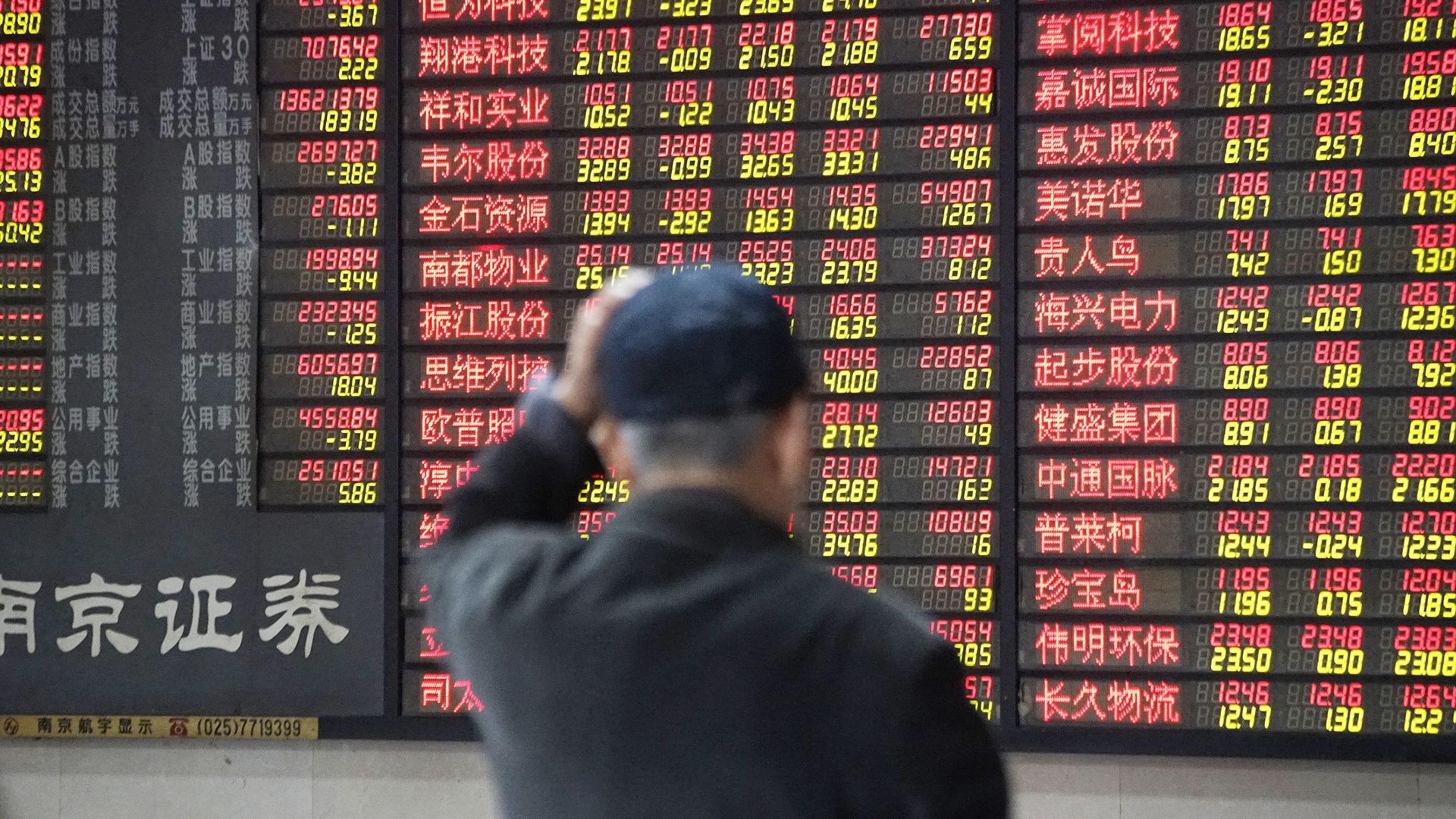
Asian stock markets dropped sharply on Wednesday, led by Chinese tech stock declines, following the arrest of Huawei CFO Meng Wanzhou.
Between the lines: The arrest creates big unknowns for Huawei suppliers and partners, and also adds additional tensions to U.S.-China trade negotiations.
Mark Zuckerberg this year reportedly told Facebook officials that the company is at war. He's right. Facebook is facing a new kind of existential threat, not from competitors, but rather from an adversary who can neither be acquired nor competed against: governments, particularly in Europe.
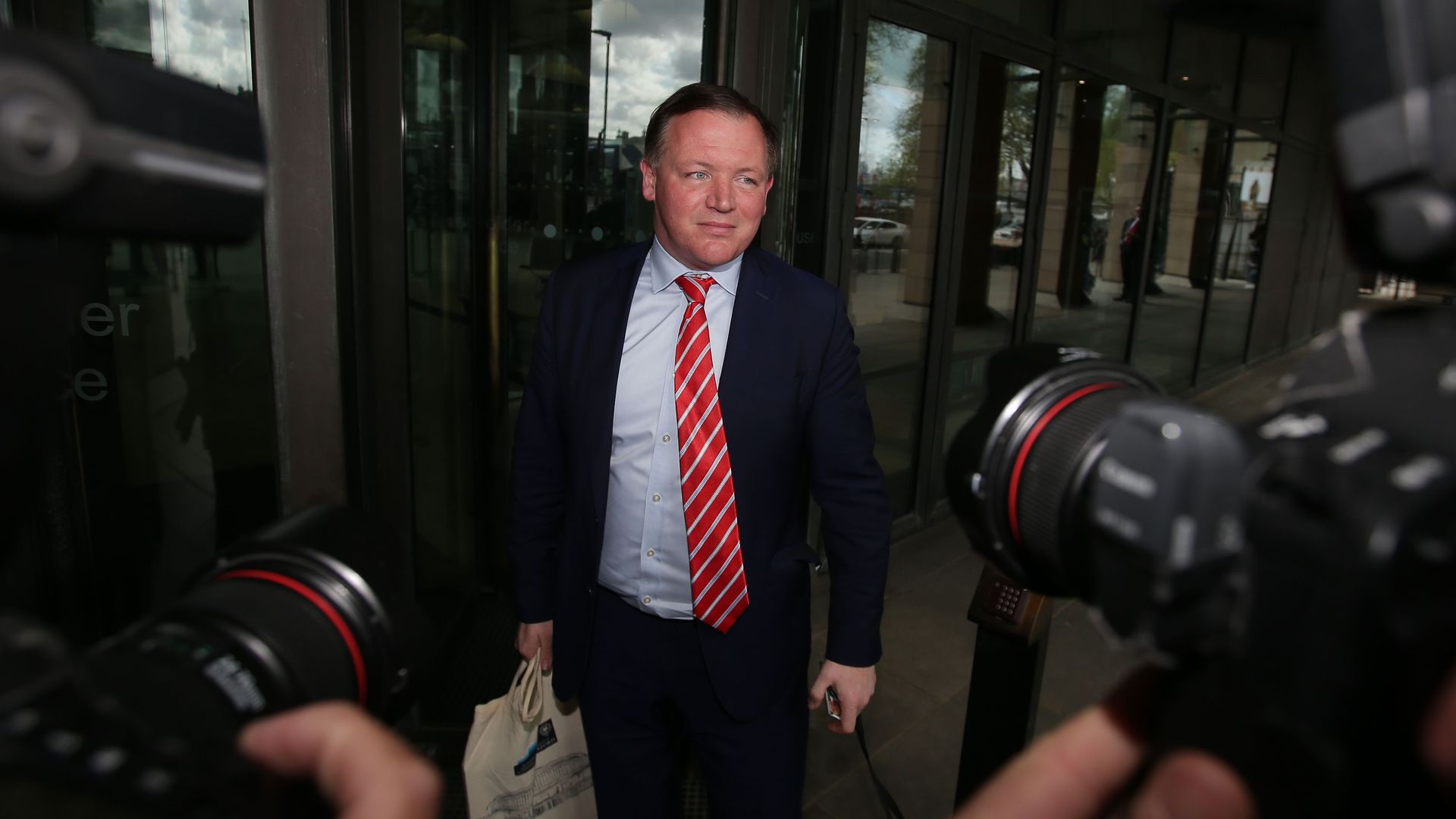
Driving the news: The decision by Damian Collins, a British lawmaker, to publish highly sensitive, unredacted internal Facebook emails is aggressive, uncompromising, and further intensifies the European battleground — an arena where Facebook has little to no political support.
A British lawmaker released internal Facebook documents Wednesday that portray it as a ruthless corporate giant that will do whatever it takes to squeeze out competitors and increase user engagement with its products.
Why it matters: Some U.S. lawmakers say the documents show that Facebook may have violated a 2011 Federal Trade Commission settlement promising to be better about protecting user data. Some analysts began downgrading Facebook stock in wake of the drama Wednesday.
The arrest and pending extradition of Huawei chief financial officer Wanzhou Meng for violating Iran sanctions may have quick, dramatic impacts in international politics and global technology sales.
Why it matters: The beleaguered Chinese electronics and telecommunications equipment firm is now facing geopolitical crises on two fronts: British BT just barred use of Huawei products in its 5G network. The arrest of Meng, the CFO and daughter of the company's founder, is a calamity on top of an already bad situation.



/2018/12/07/1544202867120.gif?w=3840)


/2018/12/06/1544114226639.gif?w=3840)