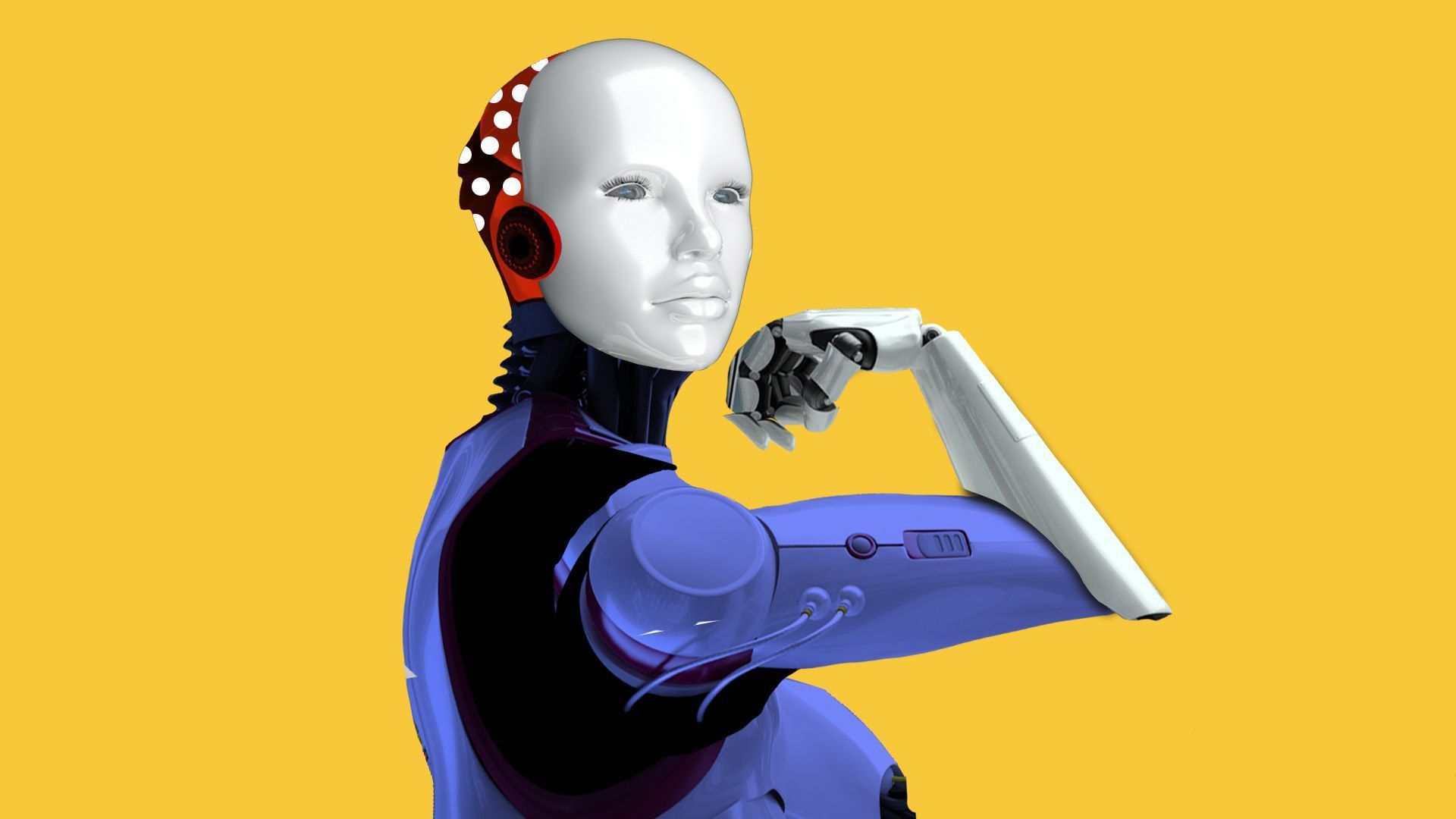
Over the coming years, the workplace in the U.S. and other advanced economies will see increased automation, and corporate leaders will face a stark choice: whether to keep humans in the mix or let them go. And if it's the former, to what degree?
What’s happening: A wave of studies and corporate PR campaigns argue that there is nothing to fear from artificial intelligence and robots — they will operate to enhance human labor, not to replace it. But Ravin Jesuthasan, author of "Reinventing Jobs," says that will only be the case if the bulk of companies decide to use AI and robots that way — a decision that hasn't been made yet.
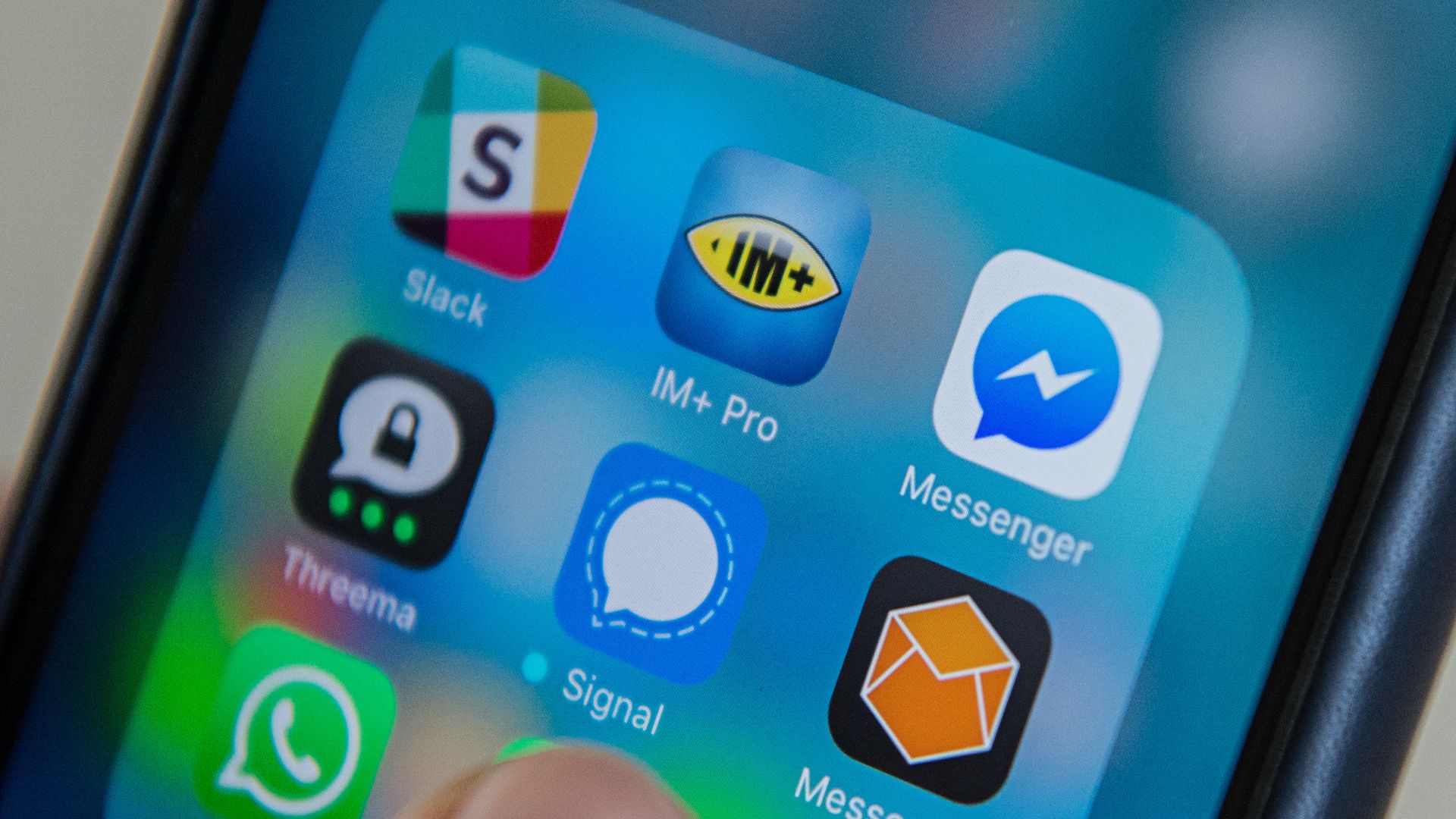
Workplace messaging application Slack has taped Goldman Sachs to spearhead its IPO next year, Reuters reports.
The big picture:Slack has been a part of a slew of Silicon Valley companies, including Uber, Airbnb and Lyft, that are planning to debut in the stock market in 2019. Reuters reports that Slack anticipates a valuation over $10 billion in its IPO.
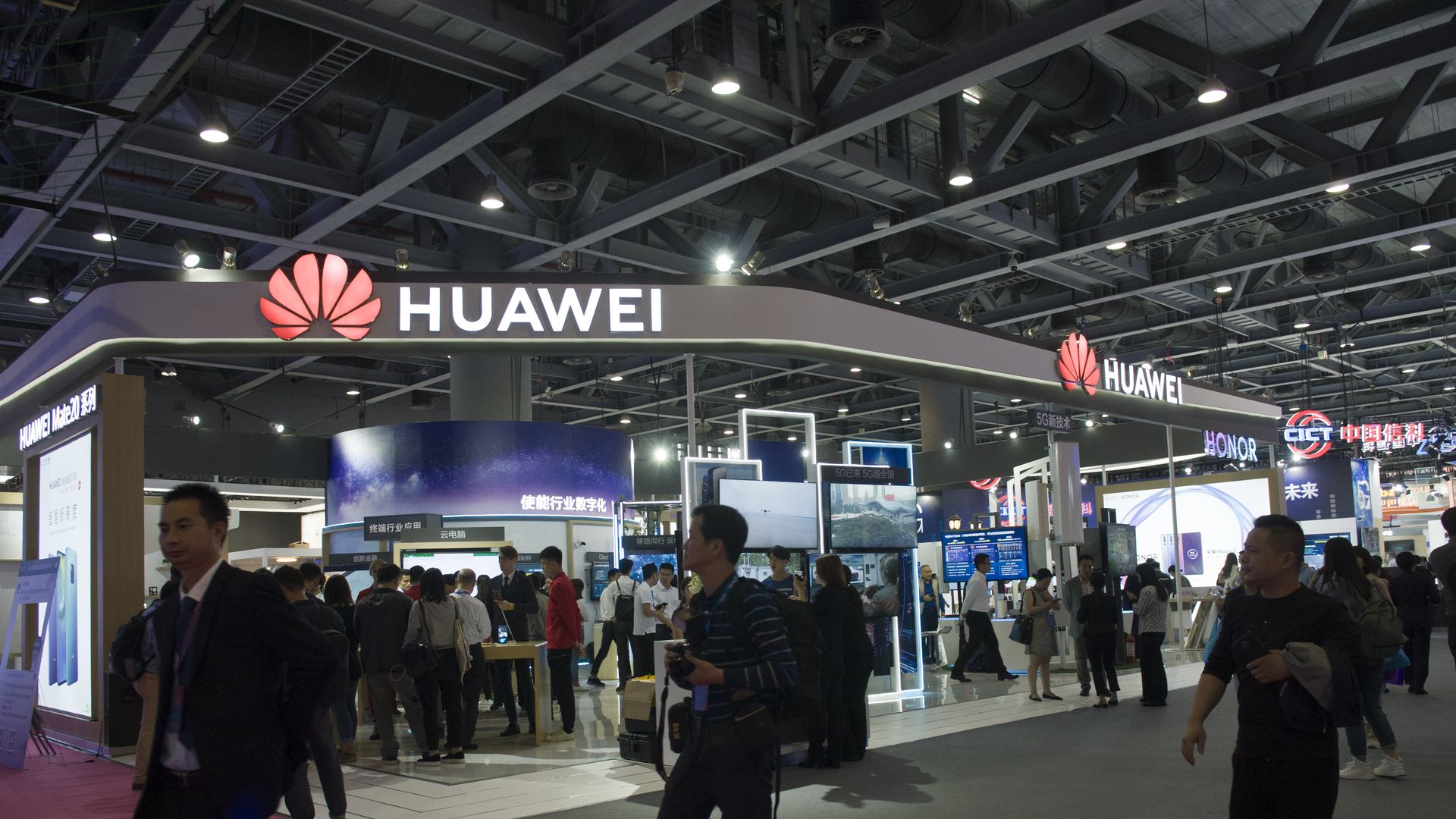
The freshest battleground in the U.S.-China trade war is currently playing out in Canada, where the CFO of Huawei faces extradition for allegedly violating U.S. sanctions on Iran.
Why it matters: This is both deeply personal (CFO Wanzhou Meng is the daughter of Huawei's founder) and precarious, given the accusations. The U.S. nearly gave ZTE a death sentence for similar allegations earlier this year, before President Trump backed off.
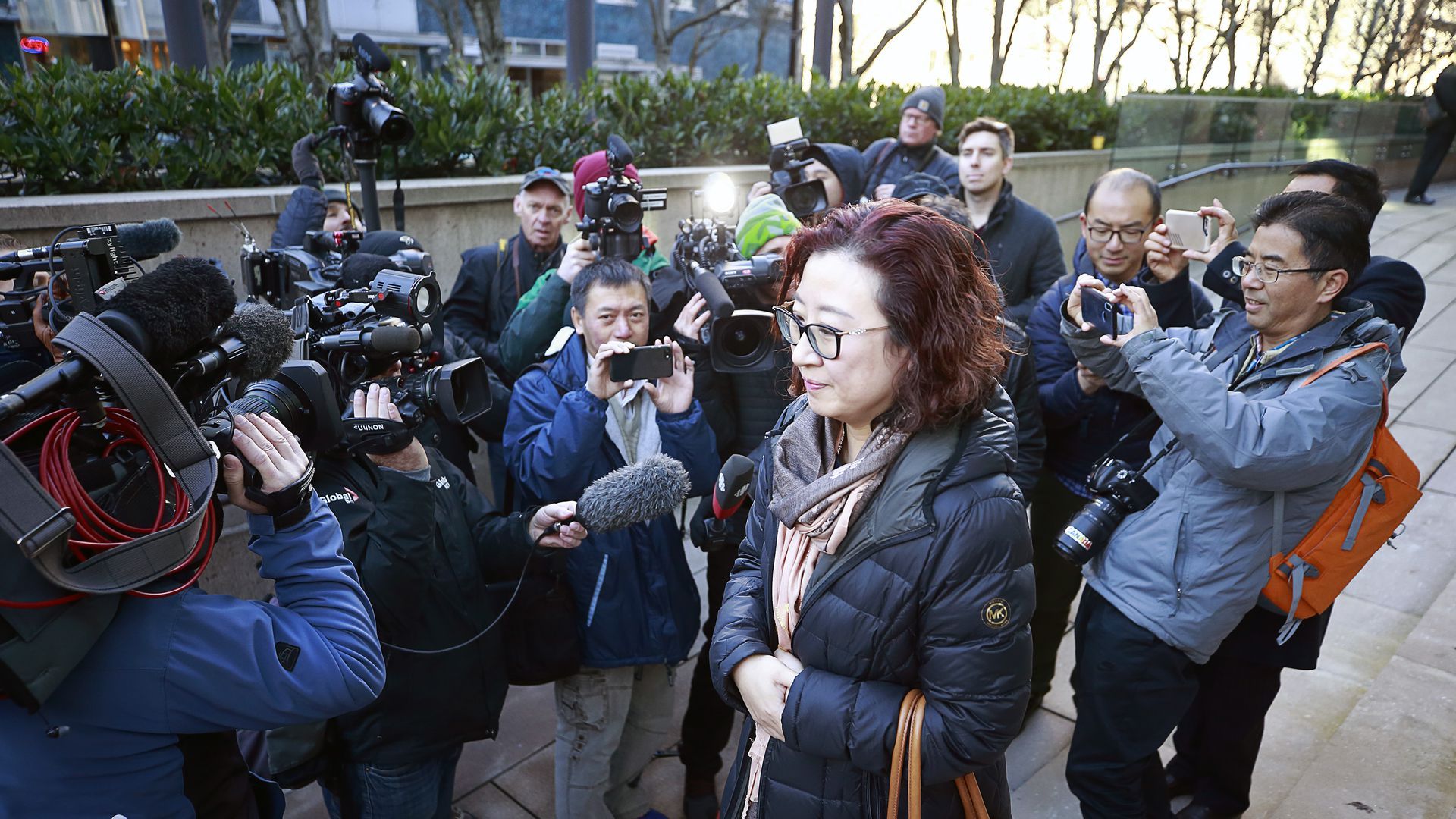
Canadian prosecutors on Friday laid out a series of fraud charges that led to the recent arrest of Huawei chief financial officer Wanzhou Meng, possibly setting the stage for her extradition to the United States.
Why it matters: Meng's arrest and possible extradition has become a flash point in trade tensions between the U.S. and Canada, as Huawei is one of China's most highly-valued technology companies.
Early rollouts of autonomous vehicles are showing how divided AV companies are on the best way to win over consumers.
Why it matters: Companies are pouring billions of dollars into autonomous vehicle technology, but almost three-quarters of American drivers say they would be too afraid to ride in one. Consumer trust — as much as the technology's readiness — is shaping the way AVs come to market.





/2018/12/07/1544202867120.gif?w=3840)