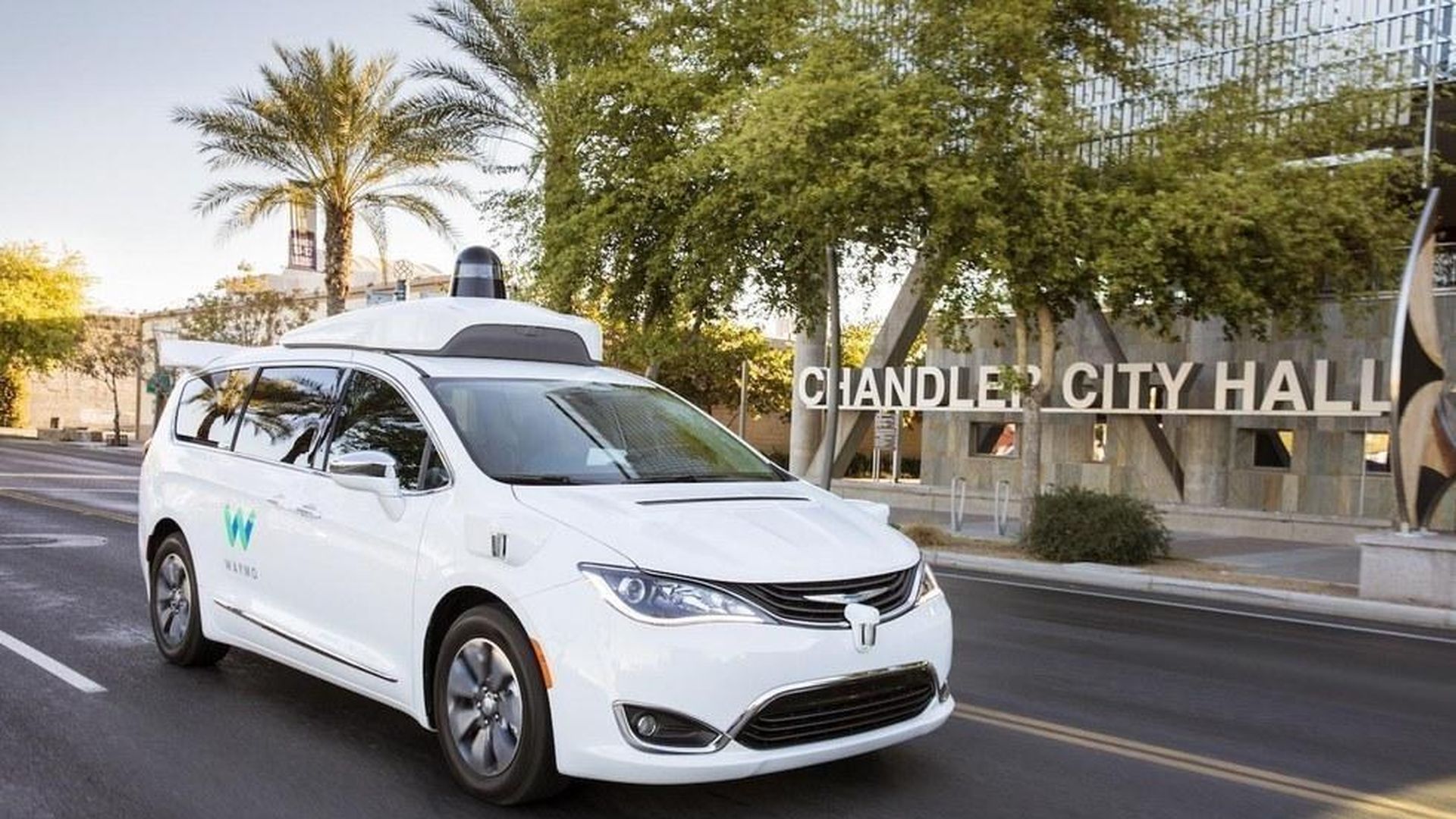
Ford's abrupt naming of a new CEO—James Hackett, the head of its Smart Mobility division—makes it clear that the company wants to catch up in the self-driving race. In explaining the Ford board's move, NBC aptly pointed out that Waymo is ahead of the automaker (and all other self-driving car companies, for that matter) when it comes to miles driven autonomously and a good track record of safety drivers not having to intervene in cars' operations.
Apple and oranges: But these metrics aren't the only assessment of a company's potential. What's more, the two companies are more likely to work together than to compete with each other given their respective business models and core competencies.
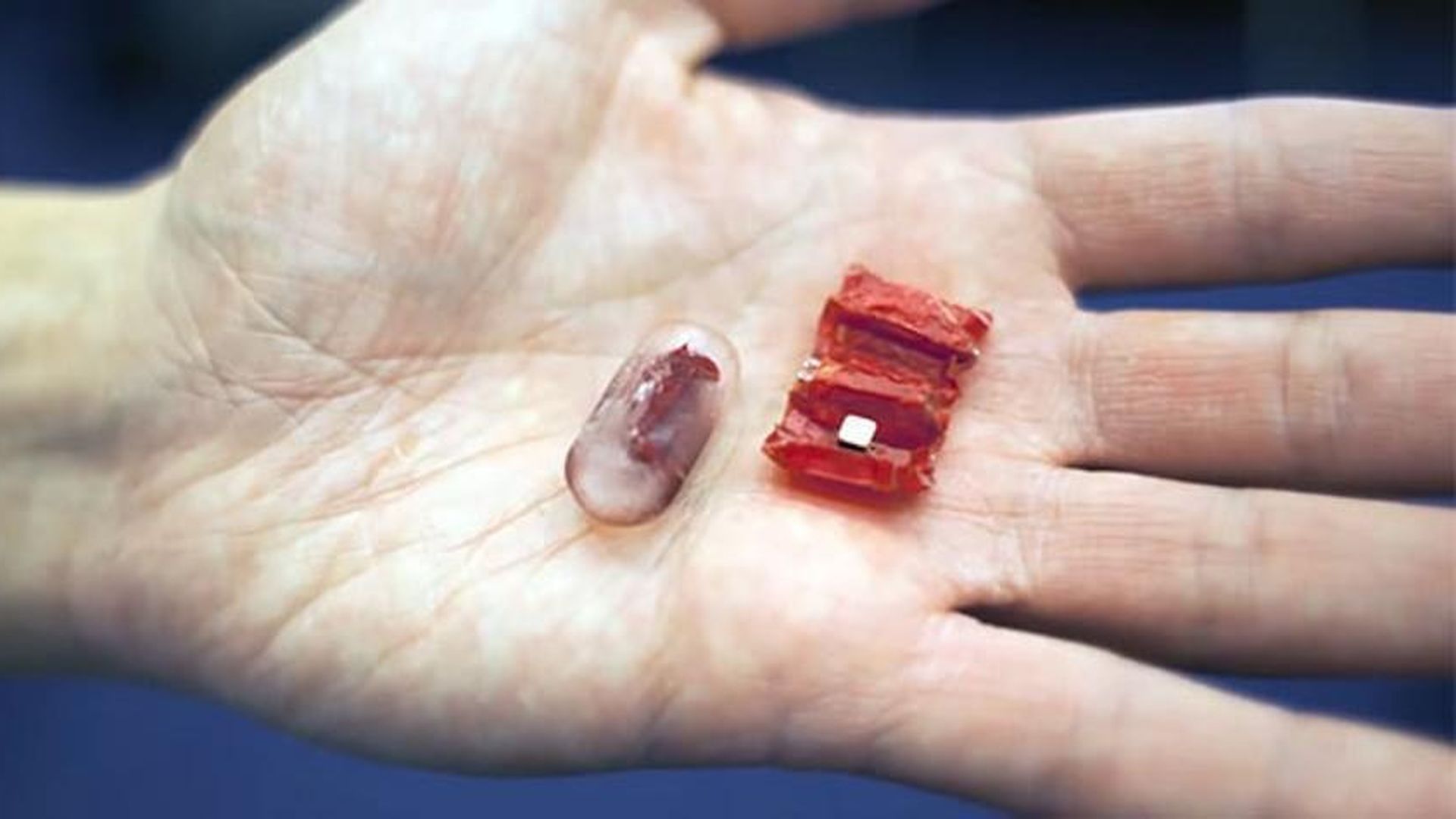
The Computer Science and Artificial Intelligence Laboratory at MIT has been working on a tiny, swallowable robot made with magnets and dried pig intestines, which could be controlled magnetically from outside the body to perform medical operations inside the body, Forbes reports. The device is folded up inside an ice capsule, which melts once it's in the stomach.
What it could do: Remove unwanted items from the stomach, patch wounds and administer medicine.
So far there have been no human tests. "There could be a minimum of six years to have a successful treatment for humans," MIT professor Daniela Rus told Forbes.
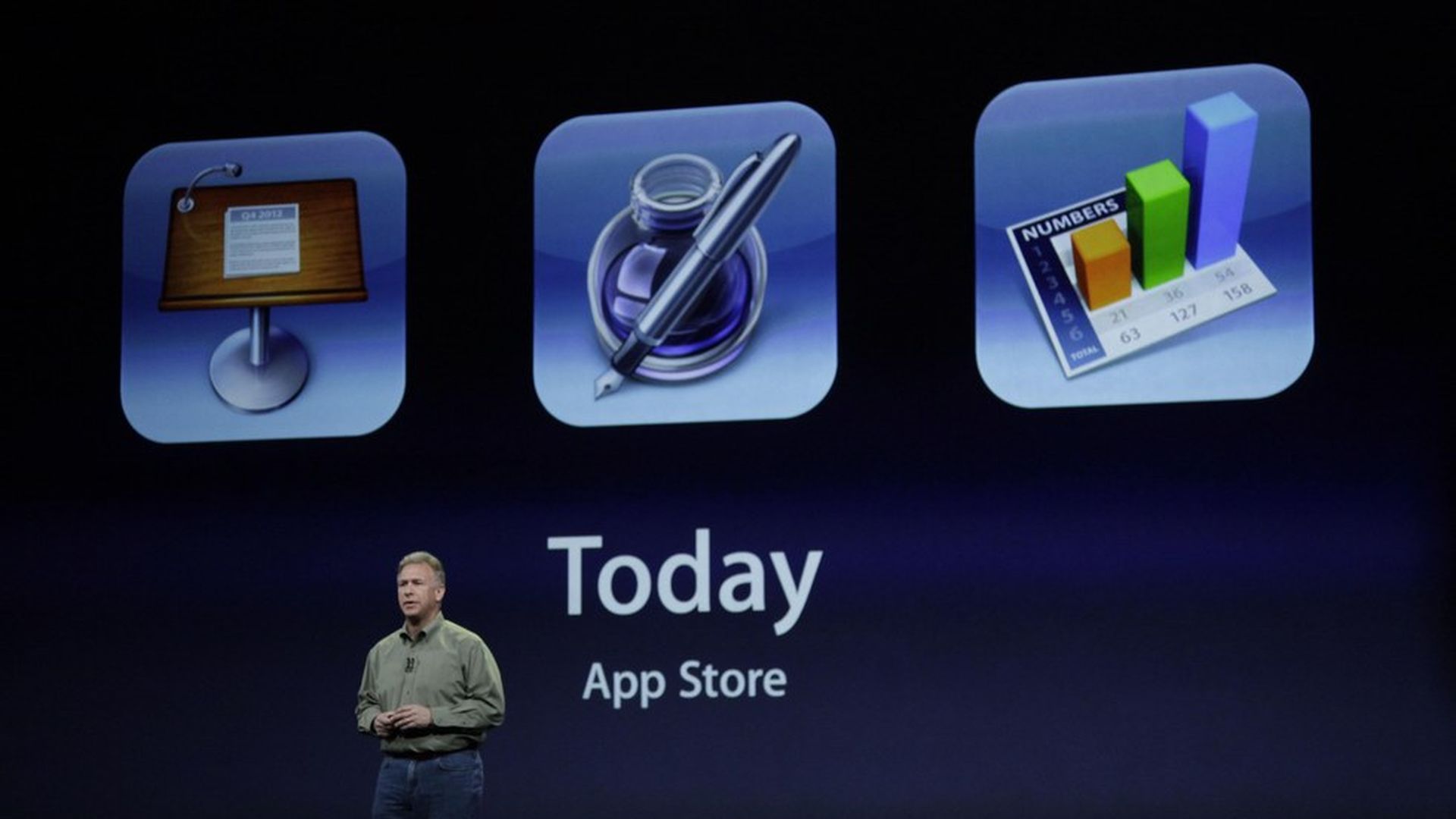
Apple already offers a variety of tools to help school kids learn the basics of coding. Now, it aims to give older students what they need to become full-fledged app developers. On Wednesday the company is releasing, for free, the curriculum for a year-long course on how to write apps for the iPhone.
The effort, though available to all, is aimed at community college students and Apple is working with six districts around the country, with the first classes to start this summer and fall. The courseware teaches students how to create apps using Apple's Swift programming language.
Google announced sweeping changes to its advertising and marketing platforms yesterday to better use — and sell — the information it has on its vast user base.
Why it matters: The digital advertising ecosystem is getting saturated, and growth in consumption is slowing. That's putting enormous pressure on data-driven advertising companies, primarily Google and its rival Facebook, to better use the data they're already collecting. What's being collected isn't changing (what you buy, what you click, what you read) but the applications are getting smarter at linking all those actions together — especially on mobile.
Apple confirmed on Tuesday that HR chief Denise Young Smith is moving to a new role as VP of diversity and inclusion. In the newly created post she will continue to report to CEO Tim Cook. The company's HR efforts, for now, will report to CFO Luca Maestri though it is widely understood that is temporary and that the company will hire a new HR chief.
What it means: The move gives more prominence to Apple's diversity effort, which Cook has already made a priority. Like other tech firms, Apple's workforce remains largely male and white, even with concerted efforts to boost inclusion.
"Denise's years of experience, expertise and passion will help us make an even greater impact in this area," Apple said in a statement to Axios.
The world's best player of Go (the world's most complicated board game) was roundly defeated by a Google program called AlphaGo in the first game of their three-game match this week, per the NYT.
Why it's so complicated: Go has an incalculable number of possible moves, meaning that a supercomputer can't simply crunch the numbers. Instead, AlphaGo uses artificial intelligence to learn new techniques each time it plays — even learning more by playing against itself. Because Go has been played for thousands of years, AlphaGo's unorthodox moves can ruffle grandmasters like Ke Jie, the world's best player.
What's next: Ke defeated AlphaGo last year, but said now that it's "improving too fast," calling it "a different player this year compared to last year." Google hopes to transfer AlphaGo's exponential learning success to other applications, like scientific research and medical diagnoses.
A group of scientists has created an artificial Venus flytrap using optical fiber and molecular switches that can hang onto objects hundreds of times heavier than itself, per New Scientist, — but it might look a little different than you're expecting.
The design: The artificial flytrap is just a few millimeters wide and less than a centimeter tall. It uses light from its optical fiber "stem" to reflect back from an object onto its molecular switch "leaves" to know when to snap shut.
A future use: These flytraps might be used in nano-production lines to pull out items with defects.
Nature still wins: The artificial flytrap takes 200 milliseconds to shut — double the reaction time of a real Venus flytrap.
Twitter's new Direct Message Card lets advertisers customize an ad that can pull users into private conversations with their chat bot.
For example, Patrón Tequila's "Bot-Tender" card suggests cocktails. Users can tap on one of the settings ("pool," "party," "cookout," "mountain), and open a Direct Message convo with Patrón's chat bot.
Bots everywhere: Twitter is far from the first social media company to experiment with bots and advertisers—last year, Facebook opened the doors of its Messenger app to chat bots. Twitter seems to still be figuring out how advertisers can best use the features.
A pair of Morgan Stanley analysts believe Waymo, Alphabet's self-driving car unit, would be worth $70 billion (roughly the same at Uber's current private valuation) if it were to spin out of its parent company, according to an analyst note first spotted by Business Insider.
The reasoning:Waymo's recent partnership with ride-hailing company Lyft will likely help the company rack up more miles driven by its self-driving cars, according to analysts Brian Nowak and Adam Jonas, providing Waymo with more data to improve its technology. Spinning it out could also isolate Alphabet from regulatory challenges (including liability and ethics) faced by the self-driving car industry, leaving it all to Waymo to navigate.
Google is announcing today it will offer store sales measurement at the device and campaign levels, allowing advertisers to measure how search, shopping and video ads drives in-store revenue. Google's Jerry Dischler, VP of product management for AdWords says Google measured over 5 billion store visits globally in 17 countries to map out the data.
Why it matters: Dischler calls this latest update "the holy grail" for a lot of online marketers. The ability for anyone to be able to automatically tie ad clicks to store data will have significant impact on sales, particularly for small and medium-sized businesses, a market where Facebook's and Instagram's massive audience has been dominant. Per Google, consumers that click Google ads are 25% more likely buy a product and spend 15% more when they do.
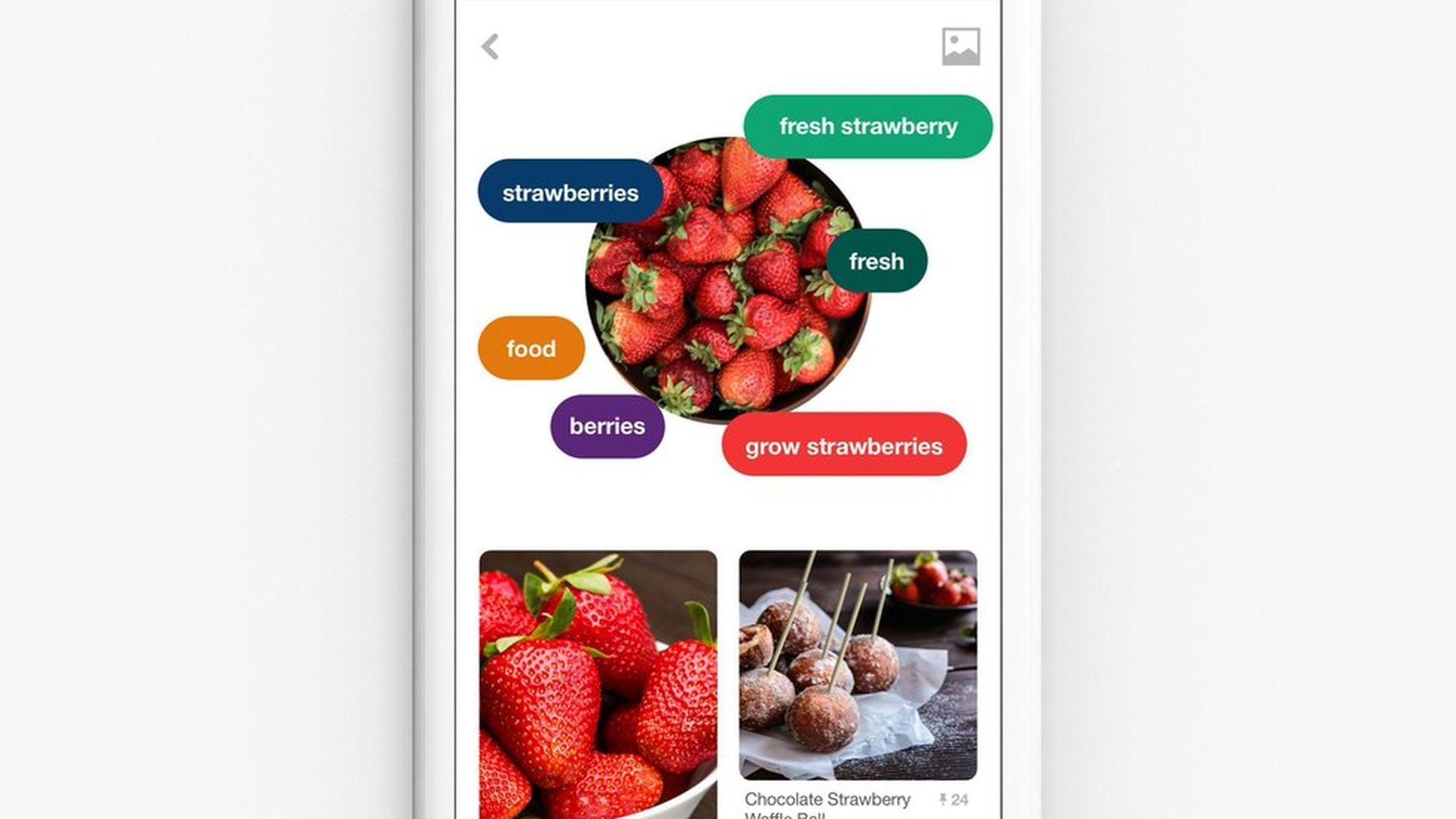
Less than a week after Google unveiled its own image recognition tool by the same name, Pinterest is rolling out a new capability for its new-ish Lens feature that will serve up recipe suggestions. When aimed at a dish, Pinterest's mobile app will recognize the food and pull up recipes for it. It's also rolling out search filters, including dietary preferences.
The image recognition race: Pinterest has been heavily investing in technology to become the "Google of image search." However, Google itself has been releasing its own competing features. Others like Microsoft and Facebook have also been developing sophisticated image recognition tech. Still, Pinterest has been able to snag a promising deal for its Lens feature already: powering the image search of Bixby, Samsung's digital assistant.
But the real question remains: whether Pinterest's Lens can tell whether a food item is not a hotdog.
Apple and Nokia announced late Monday that they have settled their patent dispute. While the terms of the deal were not fully disclosed, the companies said that Apple will make both an up-front and ongoing payments to Nokia and will cooperate in some areas.
Under a business collaboration agreement, Nokia will be providing certain network infrastructure product and services to Apple. Apple will resume carrying Nokia digital health products (formerly under the Withings brand) in Apple retail and online stores, and Apple and Nokia are exploring future collaboration in digital health initiatives. Regular summits between top Nokia and Apple executives will ensure that the relationship works effectively and to the benefit of both parties and their customers.
What it means: The deal gives cash to Nokia and removes one of Apple's legal headaches. It still has a major and escalating legal battle with Qualcomm. That dispute is thornier because Qualcomm is a significant chip supplier to Apple, in addition to a key patent holder.
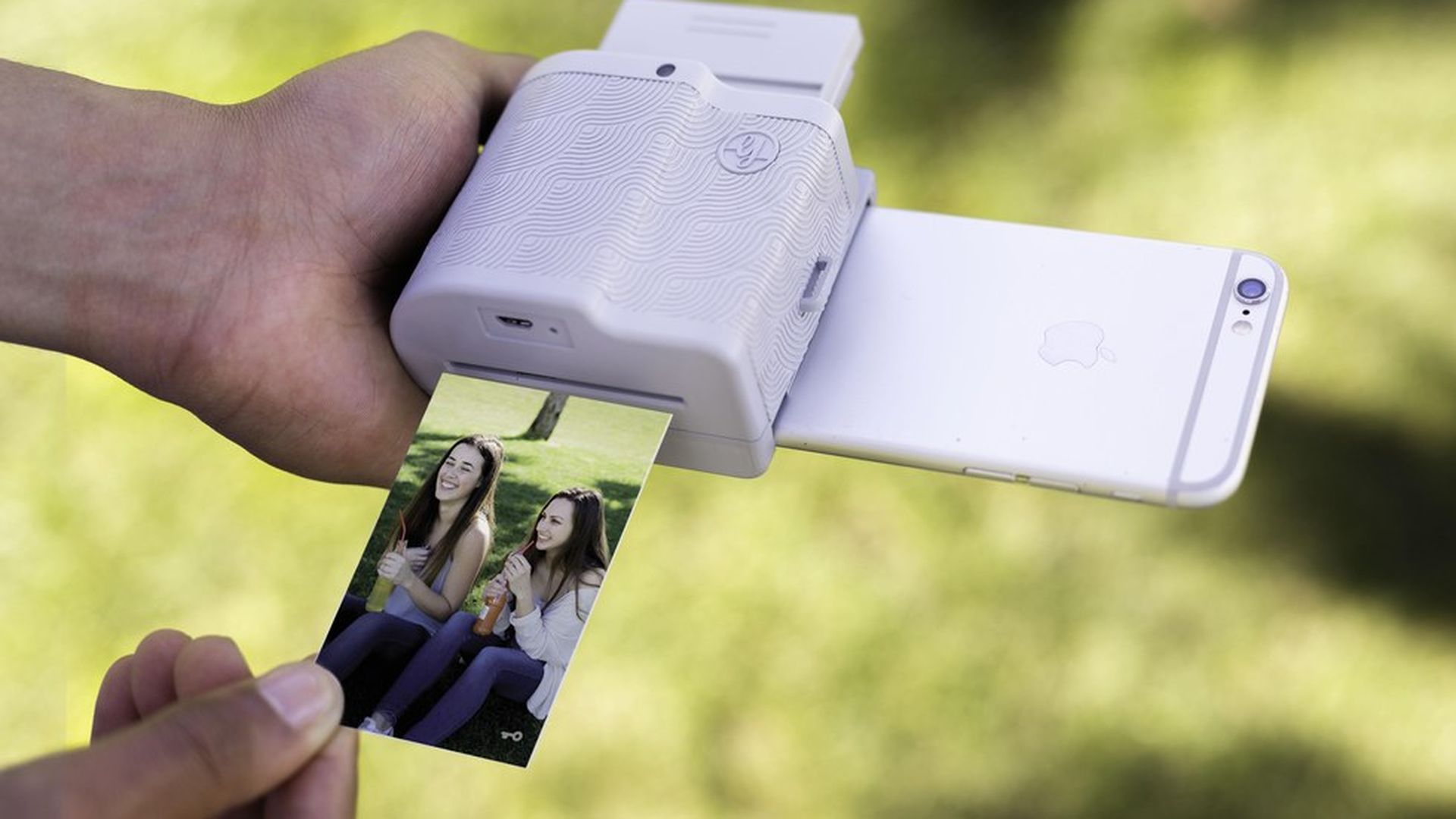
As a growingnumber of companies jump on the augmented reality bandwagon, San Francisco-based startup Prynt has found an unusual tactic: instant photos. The three-year-old company's instant cameras let users print photos from their smartphones and see them come alive when scanned with Prynt's mobile app.
Nearly a year after it started shipping its first camera, Prynt is debuting a new version, still priced at $150, that will be available for only for iPhone users at first, with an Android version planned for September.
AR craze: Prynt's instant cameras, which it sells through its website as well as retailers like Urban Outfitters and Best Buy, are the company's Trojan Horses, co-founder and CEO Clement Perrot told Axios. What it's really selling is the ability to connect video and photo content from smartphones to printed photos—something consumers are still willing to pay for even as it's becoming increasingly difficult to get them to pay for digital content, according to Perrot.
Facebook and Google, which together drive the majority of web traffic on the internet, send traffic to different topics, research from digital analytics company Parse.ly shows. Facebook overwhelmingly drives lifestyle and entertainment news traffic, while Google largely drives business, tech and sports news traffic. When it comes to politics, Facebook is more likely to refer readers to presidential political stories, while Google is more likely to refer to stories about state and local politics.
Data: Parse.ly; Chart: Lazaro Gamio / Axios
Why it matters: The combined size of Google and Facebook make it nearly impossible for web publishers to reach an audience without their help. But even though they rely on them for traffic, publishers research from Digital Content Next, the trade association that represents premium publishers, finds that platforms drive just 14% of revenue.