Monday's technology stories

Facebook's alternative to networking gear makes headway
Business Insider's Julie Bort has an interesting look at the early traction on Facebook's effort to create an open-source alternative to traditional (aka proprietary and expensive) networking gear. Facebook is partnering with major telecom companies around the world who are also keenly interested in developing cheaper alternatives to products from Cisco, Ericsson and others.
But: The piece mentions concerns about Facebook's growing power in the space, which an executive brushed off — saying that Facebook is "trying to help the telcos solve this."
Why it matters: Facebook has a huge stake in the physical infrastructure that supports its services. It isn't alone in trying to box out the traditional networking guys. AT&T recently announced it is testing homegrown networking gear built with a variety of chip and hardware partners.

Leaked documents show how Facebook handles sensitive content
The Guardian reports that it has seen 100 internal "training manuals, spreadsheets and flowcharts" that show how Facebook's content moderators tackle content with violence, hate speech, terrorism, pornography, self-harm and racism in accordance to Facebook's community standards. Some of the documents showcase how sensitive and nuanced censoring content on Facebook's platform can be.
Why it matters: Facebook is in a lose-lose situation. If it doesn't filter its content, advertisers may not feel that their environments are brand-safe enough to run ads and users may feel that the platform is no longer a safe, inclusive or pleasant environment. If it does filter their content, they risk being blamed for judgement bias. For example, last Friday Facebook was criticized by pro-choice activists for removing the page of an organization that helps women obtain abortion pills. Facebook says it violated its policy against the "promotion or encouragement of drug use."

Pittsburgh sours on Uber's driverless car experiment
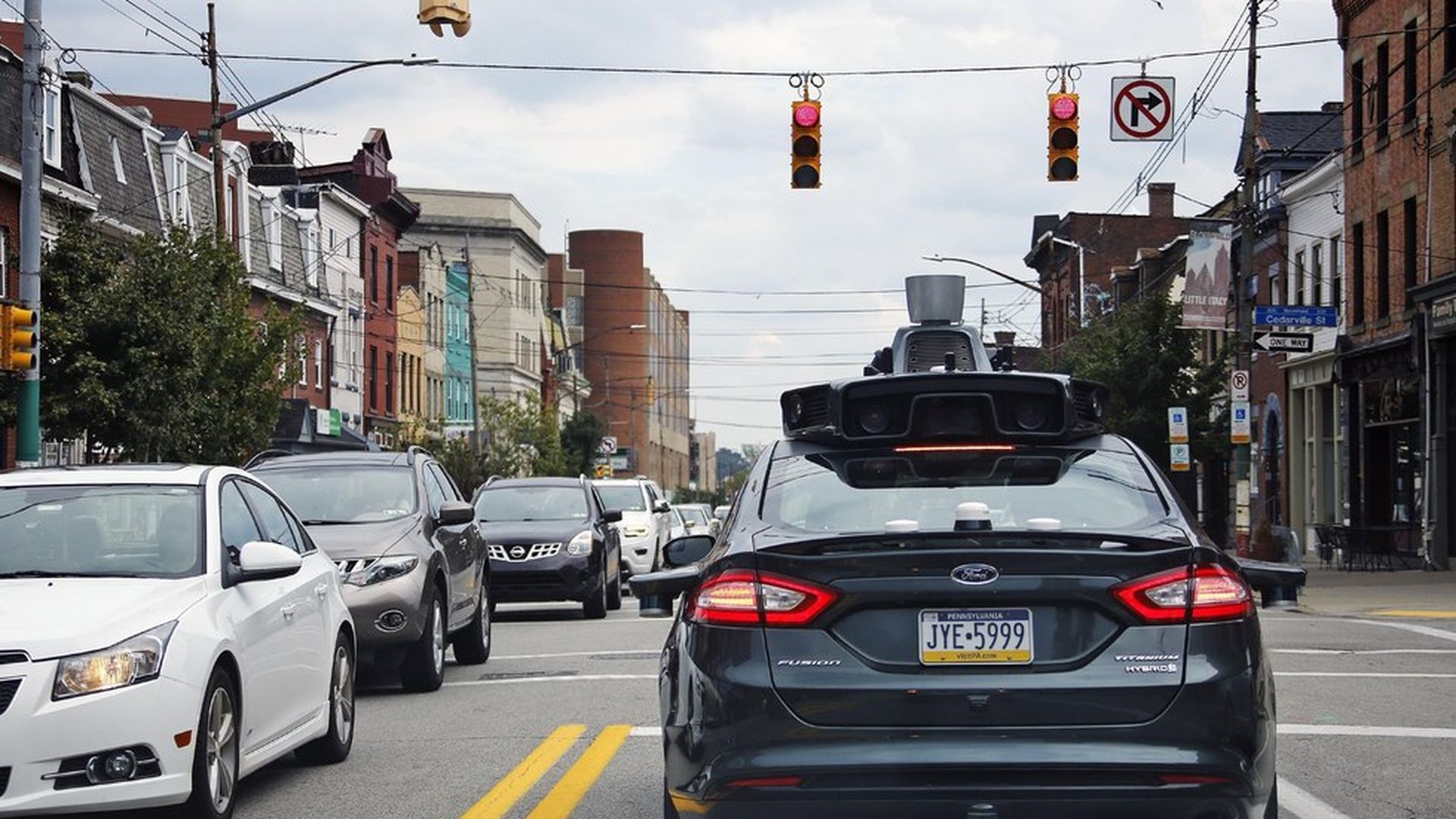
Nine months after Uber rolled out its self-driving car trials in Pittsburgh, the relationship is deteriorating, the New York Times reports.
Why it matters: Self-driving car companies are forming partnerships with cities that will allow them to test their vehicles on their streets. It's a high-risk, high-reward proposition for city leaders.
Pittsburgh Mayor Bill Peduto told The Washington Post this fall, "Is there going to be an accident in a robot car? Yes there is. But the greater goal is to make our streets safer in the long term. We have to start at some point and we can't wait for regulation to catch up with innovation."

Ford replaces CEO Mark Fields with autonomous driving exec
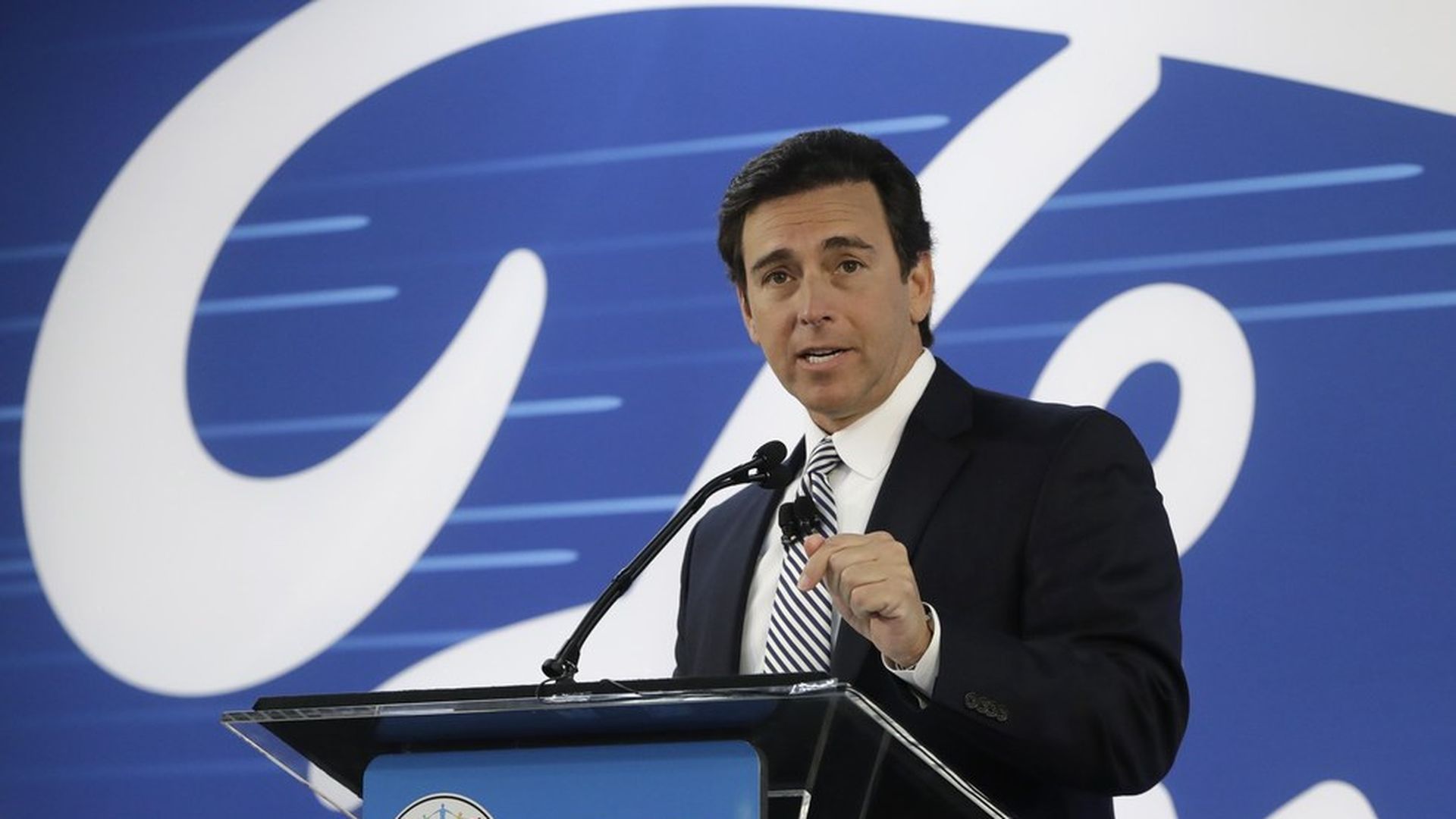
Ford will announce Monday morning that it is replacing CEO Mark Fields with Jim Hackett, who ran Steelcase furniture for 20 years before joining the car company, reports The New York Times. Hackett most recently headed Ford's autonomous vehicle subsidy, known as Ford Smart Mobility.
Under Fields, who served as CEO for three years, Ford shares dropped 40 percent. He also was criticized by investors and the board for failing to make Ford a competitive player in the development of high-tech vehicles for the future.
Between the lines: The shake-up shows that Ford is shifting its focus to accelerate its self-driving technology. As the NYT points out, Ford has lagged behind other large automakers like General Motors and tech companies like Google, both of which have already begun testing their own autonomous vehicles. Ford is promising it will have a fully operating driverless car on the road by 2021.