Thursday's technology stories

Ford veteran returns after brief stint at Uber
Sherif Marakby, an automotive executive who left Uber in April after one year, has re-joined Ford, where he previously spent 25 years, according to the Wall Street Journal. Marakby will be a vice president overseeing the company's self-driving and electric-car businesses.
The news comes a few days after Ford abruptly named James Hackett as its new CEO, replacing Mark Fields. Hackett was previously heading the company's Smart Mobility division.
Between the lines: Marakby's departure from Uber was only the latest amid a slew of controversies around the company, including an ongoing lawsuit from Alphabet's self-driving car unit, Waymo. And with Detroit's increasing focus on keeping up in the autonomous driving race and rethinking car ownership models, it's no surprise to see Marakby being wooed back by Ford, which has been heavily investing in those areas over the past year.
Judge orders Uber to hand over Otto acquisition term sheet
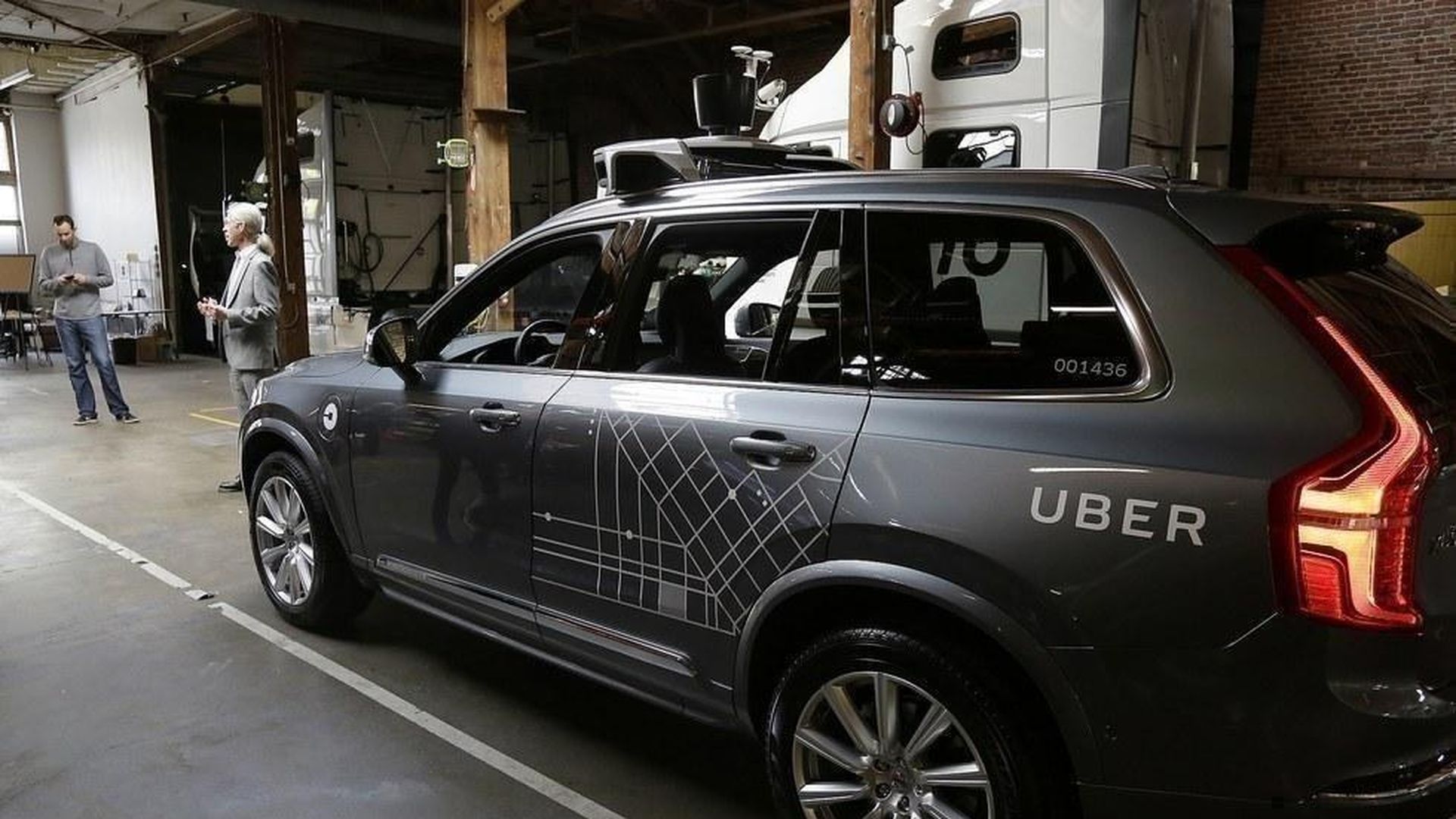
Uber has been ordered magistrate judge to give Waymo an unredacted version of the term sheet agreement for its 2016 acquisition of Otto, a self-driving truck company, by the end of the day. During a Thursday hearing the judge concluded there was no legal reason for Uber to censor parts of the document.
There's no decision yet regarding a due diligence report compiled by forensics firm Stroz Friedberg as part of Uber and Otto's acquisition talks. The report is believed to contain incriminating evidence.
Why this matters: Both sides have attempted to keep confidential as much as possible about their technology and businesses. Anthony Levandowski, a former Waymo employee who founded Otto and subsequently joined Uber, has further complicated the situation by asserting his Fifth Amendment right not to testify and attempted to keep certain documents private. Uber has ordered Levandowski to hand over any Waymo documents he has, or risk being fired.
Here's a full timeline of Waymo and Uber's lawsuit.
Uber's fare pricing headaches continue
A new lawsuit filed in Brooklyn federal court accuses Uber of not disclosing that it calculates riders' fares differently than for drivers, according to Fast Company. A similar one has been filed in San Francisco.
Why it matters: Uber's revenue mostly comes from the cut it takes from each ride's fare, so unsurprisingly, it's constantly tweaking its pricing strategies. Unfortunately, it's already amassed a lot of distrust from its drivers, who often feel cheated by the company, and Uber's new "upfront pricing" is increasingly frustrating both drivers and riders.

Qualcomm seeks an injunction to force Apple suppliers to pay up
Qualcomm on Wednesday asked a court to force iPhone suppliers to keep making royalty payments amid a legal dispute between Apple and Qualcomm. Qualcomm also updated one of its lawsuist to include what it says is more evidence that Apple is interfering with Qualcomm's existing arrangements with the contract manufacturing firms.
"We are confident that our contracts will be found valid and enforceable but in the interim it is only fair and equitable that our licensees pay for the property they are using," Qualcomm general counsel Don Rosenberg said in a statement to Axios.
In its amended suit, Qualcomm says that Apple has been withholding payments to suppliers and encouraging them to similarly withhold those amounts from Apple, all while promising to indemnify the suppliers if Qualcomm takes legal action.
By withholding billions of dollars in royalties so long as Qualcomm defends itself against Apple's claims, Apple is hoping to make litigation unbearable for Qualcomm and, thereby, to extract through a forced settlement what it knows it cannot obtain through judicial process—a below-market direct license. Apple's tactics are egregious.
What's at stake: Apple hopes to reduce the amount it has to pay Qualcomm, but in the mean time it is now in a dispute with a company it relies on for modem chips. Qualcomm, meanwhile, finds itself battling one of its two largest customers.
SoftBank pours $100 million into Uber's main Latin American rival
Just a few months after raising $100 million from China's Didi Chuxing, 99, a Brazil-based ride-hailing company in Latin America, has added $100 million in new funding from SoftBank.
Ford's worried about making cars, not competing with Waymo
Ford's abrupt naming of a new CEO—James Hackett, the head of its Smart Mobility division—makes it clear that the company wants to catch up in the self-driving race. In explaining the Ford board's move, NBC aptly pointed out that Waymo is ahead of the automaker (and all other self-driving car companies, for that matter) when it comes to miles driven autonomously and a good track record of safety drivers not having to intervene in cars' operations.
Apple and oranges: But these metrics aren't the only assessment of a company's potential. What's more, the two companies are more likely to work together than to compete with each other given their respective business models and core competencies.

Tiny, swallowable robots are the future of surgery

The Computer Science and Artificial Intelligence Laboratory at MIT has been working on a tiny, swallowable robot made with magnets and dried pig intestines, which could be controlled magnetically from outside the body to perform medical operations inside the body, Forbes reports. The device is folded up inside an ice capsule, which melts once it's in the stomach.
What it could do: Remove unwanted items from the stomach, patch wounds and administer medicine.
So far there have been no human tests. "There could be a minimum of six years to have a successful treatment for humans," MIT professor Daniela Rus told Forbes.
Apple wants to turn community college students into app developers
Apple already offers a variety of tools to help school kids learn the basics of coding. Now, it aims to give older students what they need to become full-fledged app developers. On Wednesday the company is releasing, for free, the curriculum for a year-long course on how to write apps for the iPhone.
The effort, though available to all, is aimed at community college students and Apple is working with six districts around the country, with the first classes to start this summer and fall. The courseware teaches students how to create apps using Apple's Swift programming language.
Why it matters: Of the two million jobs Apple takes credit for creating, the vast majority, 1.5 million, are from the "app economy."

Google knows a lot about you and wants to use it better
Google announced sweeping changes to its advertising and marketing platforms yesterday to better use — and sell — the information it has on its vast user base.
Why it matters: The digital advertising ecosystem is getting saturated, and growth in consumption is slowing. That's putting enormous pressure on data-driven advertising companies, primarily Google and its rival Facebook, to better use the data they're already collecting. What's being collected isn't changing (what you buy, what you click, what you read) but the applications are getting smarter at linking all those actions together — especially on mobile.