Friday's technology stories

Uber's latest economics trick: Willingness to pay
A year after Uber introduced "upfront pricing"—setting the price of a ride on the outset—it's now beginning to charge more for certain routes in an effort to juice up its earnings, as Bloomberg reported. The company says it uses the extra money to subsidize other rides, and will begin to show drivers the difference between what they're earning and what the rider paid.
It's officially rolling out the changes in the 14 markets where it offers UberPool, its carpooling option.

Uber orders self-driving car exec to return Waymo files
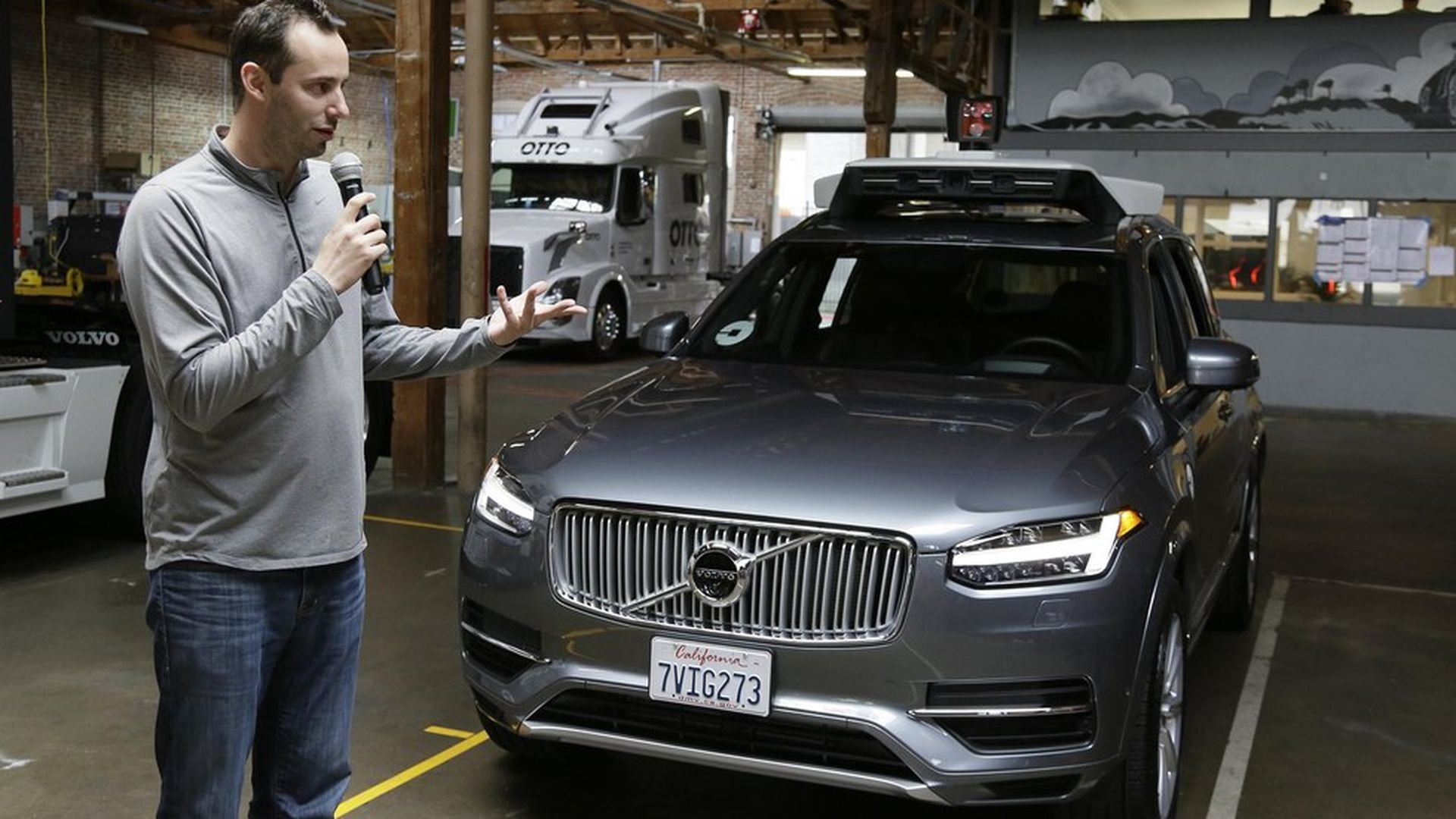
Uber has asked Anthony Levandowski, the executive at the center of a major lawsuit with Waymo, to cooperate with a court's order to return any files he has back to Waymo — or risk losing his job, Recode reports. Uber has also asked him to waive his Fifth Amendment rights he asserted earlier in the case.
Why this is a big deal: Uber general counsel Salle Yoo's letter to Levandowski is a major shift toward the executive as Uber works to comply with the judge's order to compel him to turn over any documents he has. Levandowski, who is close with Uber CEO Travis Kalanick, has already stepped down as head of its self-driving car unit. Uber is aggressively trying to take the steps needed to resolve the court case that threatens to undermine its driverless plans

3 key takeaways from Google's I/O developer conference
There were dozens of individual announcements at Google I/O, but as the event wraps up, here are three broad themes that stood out:
1. No sexy new hardware doesn't mean there wasn't anything important.
It's easy to dismiss any big tech event that doesn't produce a really cool new gadget. And, certainly it's more fun when there is something new like Google Home and Daydream, both of which were introduced at Google I/O last year. But Google's main business isn't from selling individual products, but creating whole ecosystems. This year was about strengthening the fundamentals of Android and expanding its footprint in new markets, like artificial intelligence and virtual reality. Not sexy, but important.
Uber appeals ruling keeping self-driving car lawsuit in court
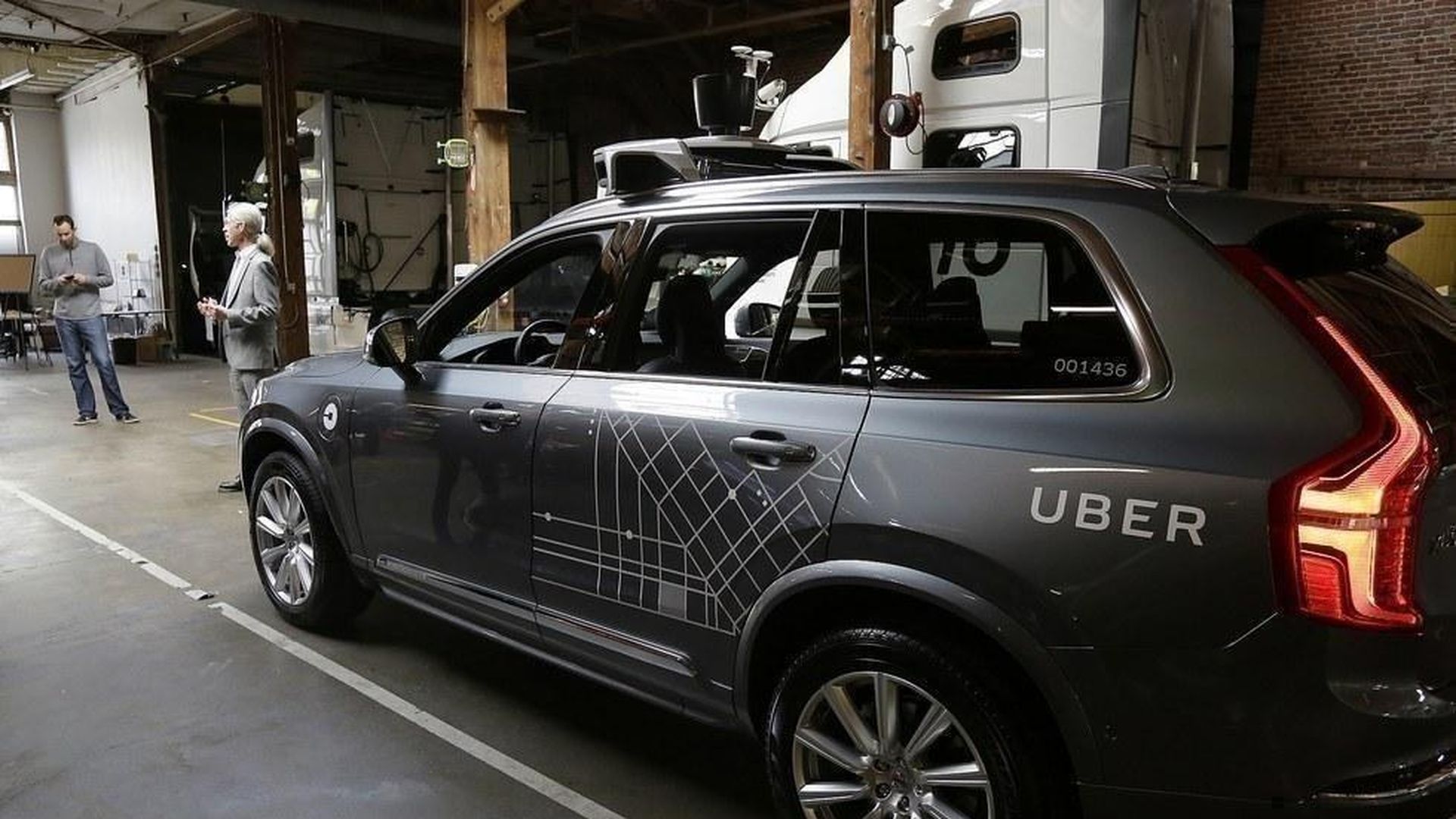
Uber is appealing a federal judge's denial of its request to move a high-profile lawsuit to arbitration, according to new court documents. Waymo filed the lawsuit in late February, claiming Uber had stolen some of its self-driving car secrets
Uber's argument: The case centers around the actions of a former Waymo employee, now working for Uber, whose employment contract included an arbitration clause. The biggest upside to arbitration (for both companies) would be that much of the inner-workings of their self-driving car efforts would remain private.

Facebook hit with another EU sanction
The EU's competition chief Margrethe Vestager announced Thursday the EU is fining Facebook 110 million euros (roughly $122 million) for giving "incorrect or misleading" information during the Commission's 2014 review of Facebook's acquisition of WhatsApp.
Why it matters: Experts have pointed out that Facebook's ability to identify WhatsApp as a lucrative acquisition in 2014 poses an antitrust issue. Facebook's ability to analyze the enormous amounts of data it collects about users online and offline habits helps it make strategic investments that other companies would be unable to assess.
Double whammy: The penalty comes one day after French and Dutch courts ruled that Facebook had violated European data privacy standards. Facebook was sanctioned 150,000 euros as a result.

Russian hackers targeted Pentagon on Twitter
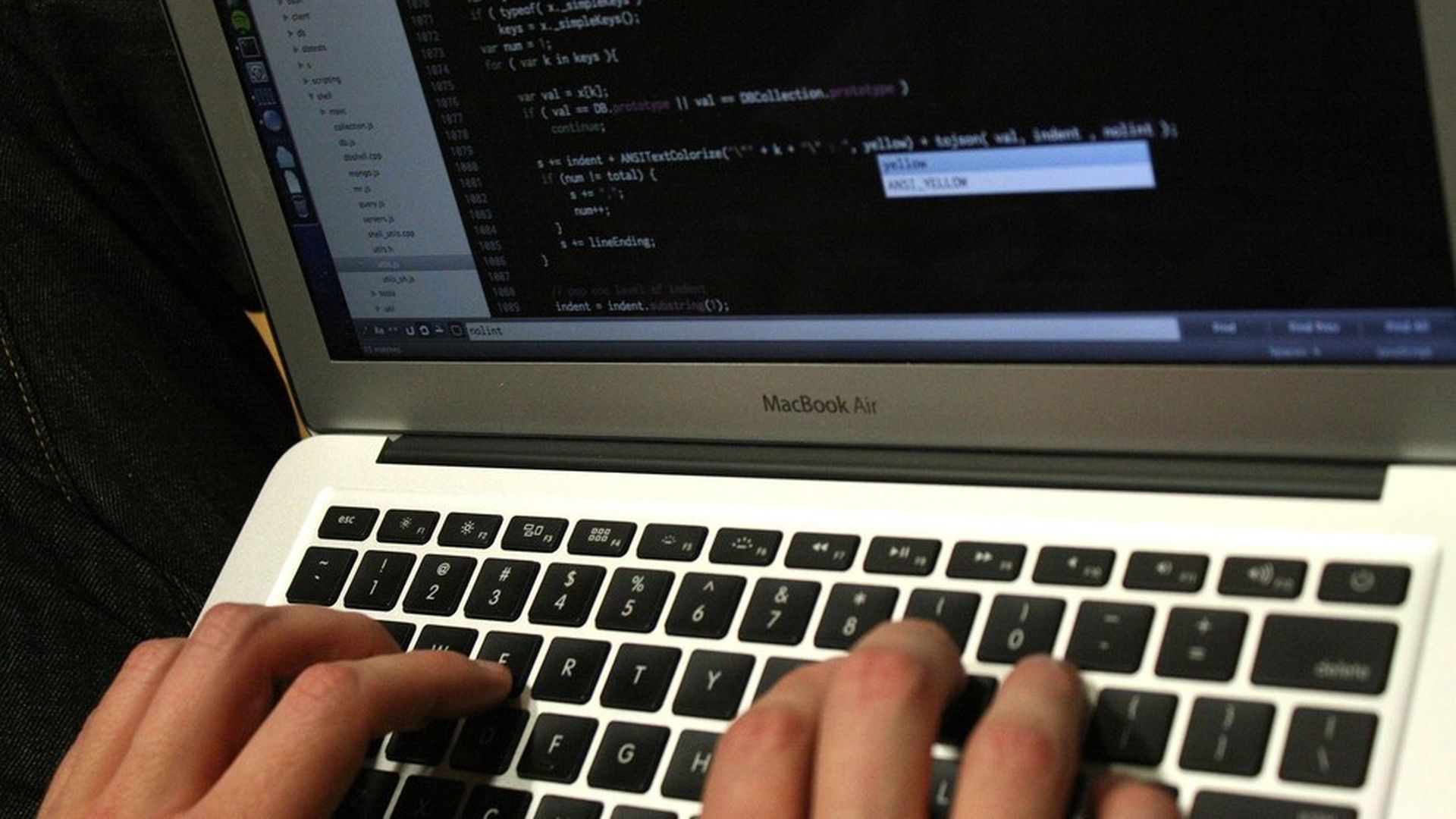
An official report that circulated through the intelligence community alleges that agents of the Russian government sent Twitter messages carrying malware to more than 10,000 Defense Dept. employees, reports TIME's Massimo Calabresi.
How they did it: The messages pinpointed specific interests of the targets to entice users to click on the forwarded link. The link would then take them to a Russian-run server that would download software enabling hackers to gain control of the user's phone or computer and Twitter account.
The threat: As Calabresi points out, the hack represents a new kind of cyber threat, beyond what took place in the 2016 campaign. Now that Russia has found a way to take over Twitter accounts, they could cause serious damage by tweeting in real-time from the handle of, say, a Pentagon employee.
Uber debuts its service for the trucking industry

Uber's bringing its business model to yet another industry: long-haul trucking. The company's service for matching trucking companies and loads is now publicly available via a new mobile app. Once prospective users have signed up and received approval, they can use the app to book services and coordinate payments.
The idea is far from new: startups like Convoy, for example, have already been providing a similar service.
Why it matters: Trucking has long been a target of technology efforts to make it more efficient, ranging from providing better tools for drivers to communicate with the companies, to the development of self-driving trucks, which someday will likely eliminate drivers altogether. Last year Uber acquired Otto, a self-driving truck company, that's now at the center of an ongoing lawsuit from Alphabet. Unfortunately, truck driving is predicted to be one of the first jobs that will be affected by automation.
Google's plan to make VR a less solitary experience
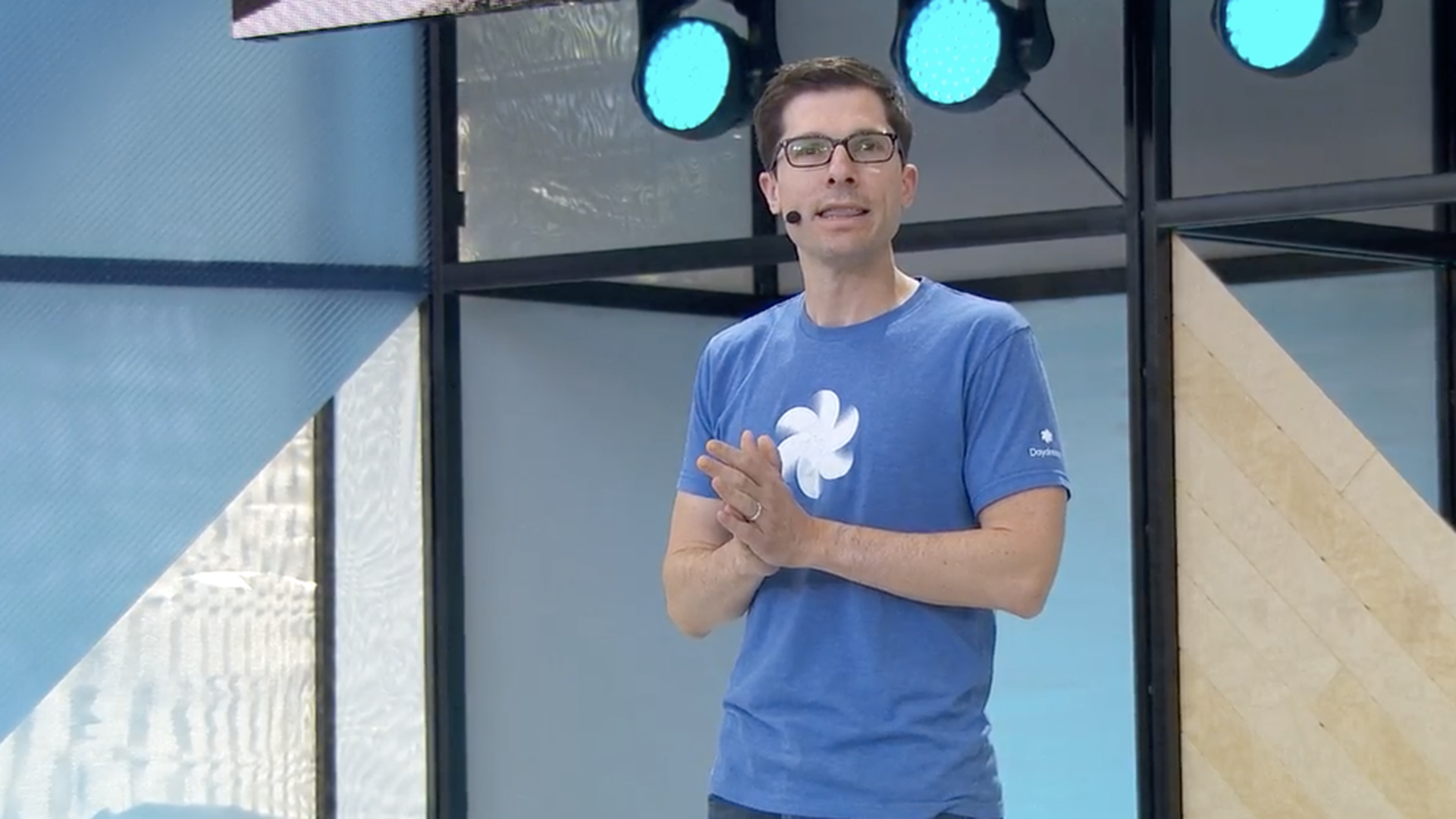
While virtual reality lets you go to Mars, attend a sporting event or concert or tour a refugee camp, it is often a pretty lonely journey limited to the one person wearing a headset. Google hopes to change this.
At its I/O conference on Thursday the company announced a few new ways it is making virtual and augmented reality efforts a more social experience.
Among its announcements:
- The ability to use Google Cast to simultaneously share what you are seeing on VR headset with others on a nearby TV.
- An option to share screenshots or short videos from a VR experience on social media or via messaging.
- An update to YouTube VR that will let people gather together in a virtual room to watch a YouTube video together and chat.
An 18-wheeler is the fastest way to ship data to the cloud
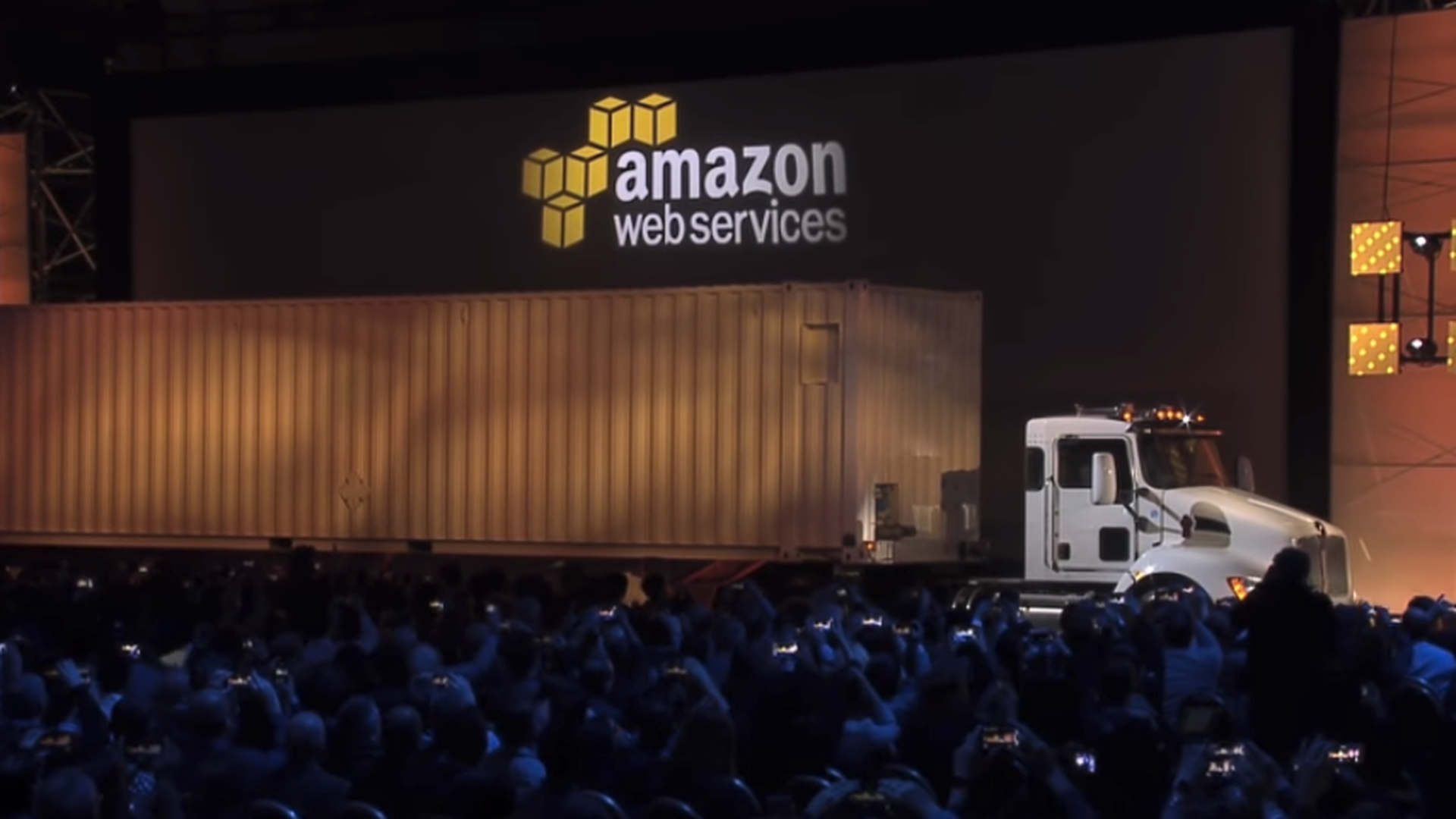
The fastest way to send ever-increasing quantities of data to the cloud isn't via an internet connection — it's actually much faster to transmit it by an 18-wheel truck, WIRED reports.
Why it matters: The next computing frontiers, including artificial intelligence and machine learning, not only require a ton of data to work, their processes also create hoards of new data that have to be stored somewhere. While broadband connections are getting faster, they still don't have the capacity (in most cases) to efficiently beam terabytes of data to the cloud.
The VR battle looks a lot like PC guys vs. mobile
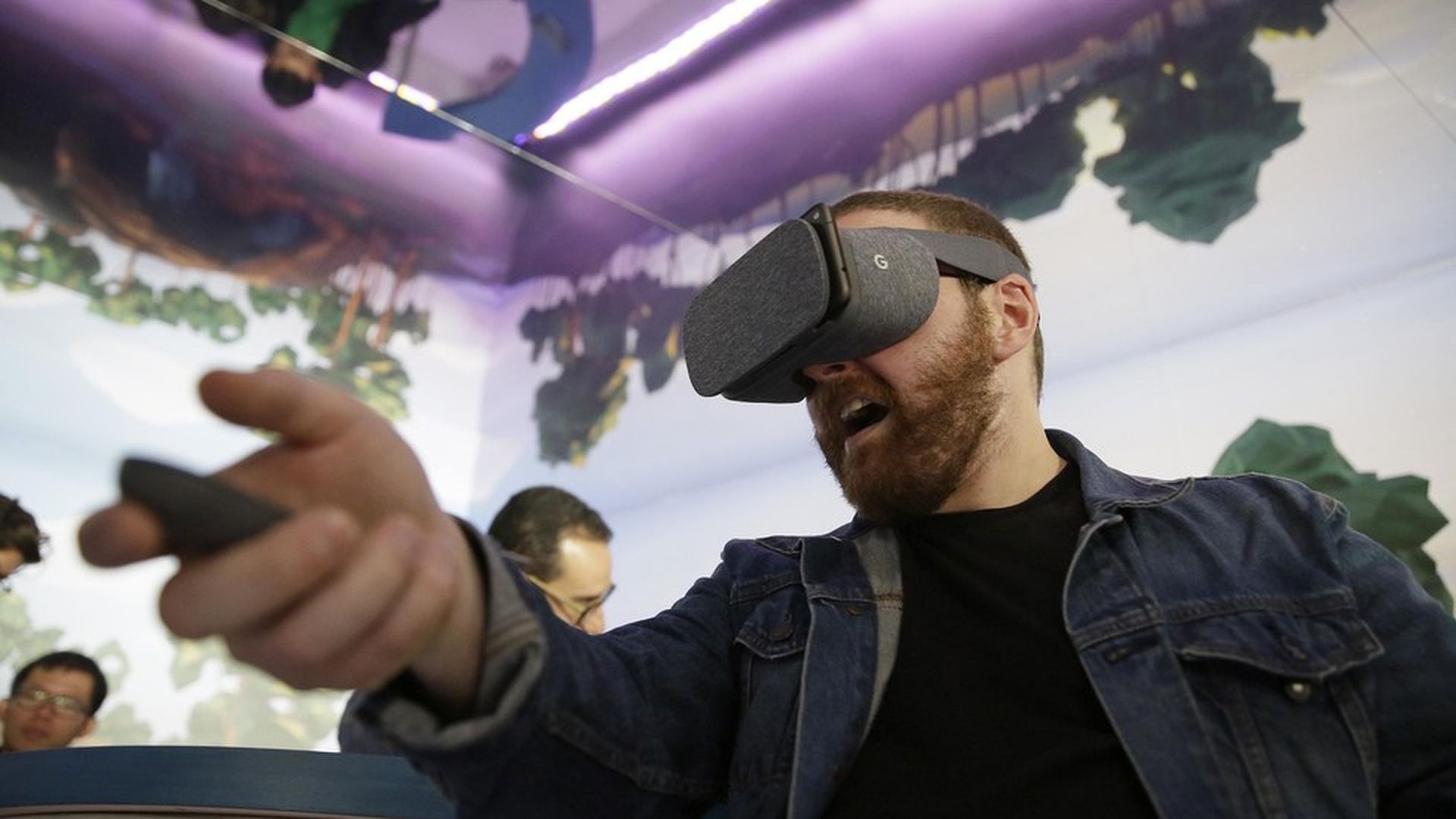
The battle to control the virtual reality market is shaping up to be a struggle between familiar foes and allies. On the one hand, you have Intel and Microsoft pushing to get the PC makers to build machines based on Windows Mixed Reality while on the other hand, Google and Qualcomm are wooing the smartphone makers to build mobile VR units based on Android.
Facebook cuts down on clickbait
Facebook announced last week it will begin burying junk websites with bad ads in the Newsfeed and threatened spammy publishers with "a decline in traffic." For publishers that don't publish crap, Facebook says they will likely see their audiences increase, which makes sense given that the Newsfeed has reached peak saturation and there will now be less clutter.
Why it matters: It's another step Facebook is taking to curry favor with premium publishers and cut back on fake news.
An "operating system for the brain" gets FDA approval
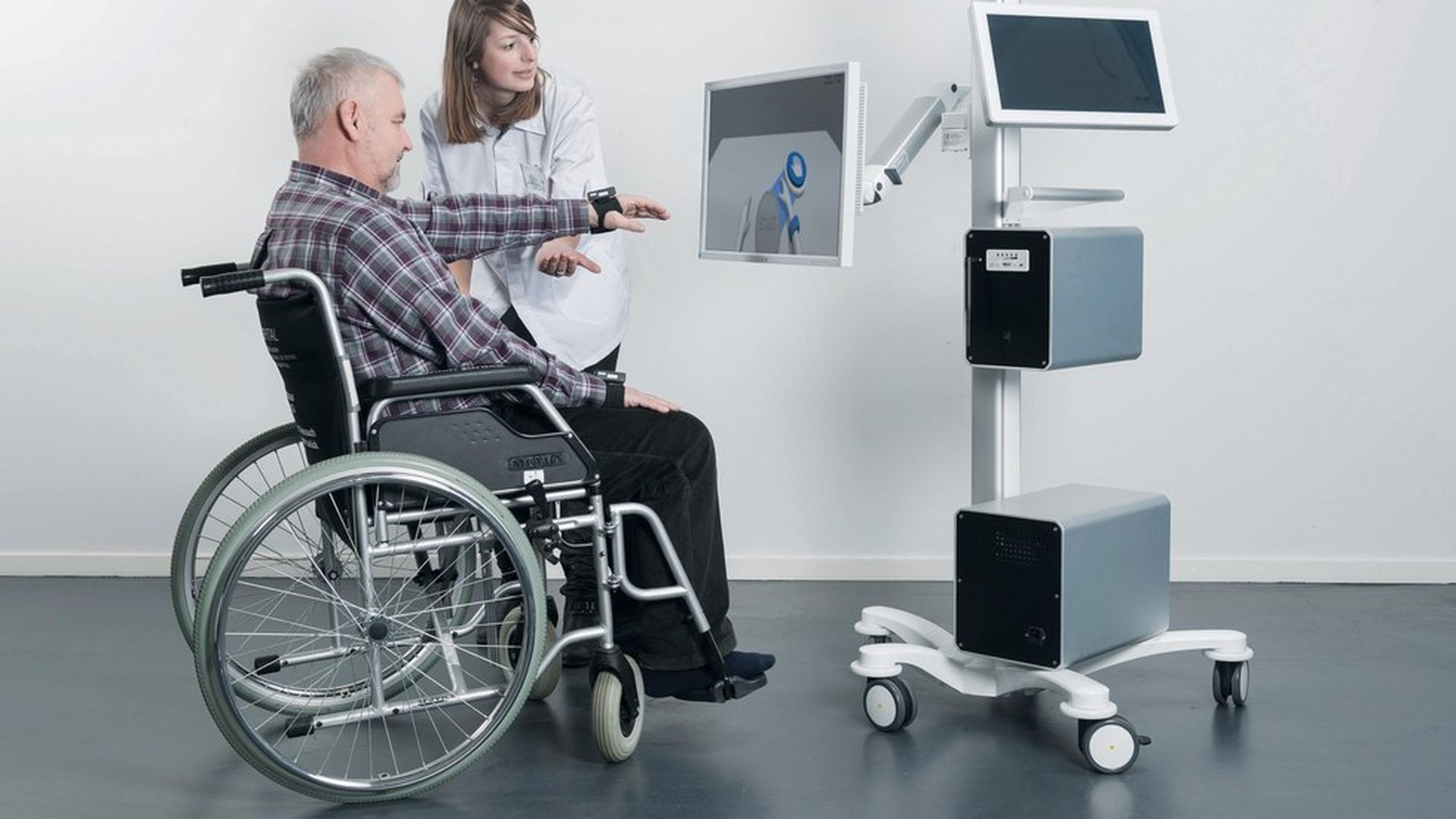
Combining virtual reality and neuroscience may help a stroke patient's brain recover more quickly.
That's according to MindMaze, a Swiss company (with U.S. headquarters in San Francisco) that just received FDA approval to bring its virtual reality platform to the U.S. market, after already selling it in Europe. The "neurorehabilitation" platform, called MindMotion Pro, uses 3D motion tracking cameras to coordinate movement and brain function and then analyzes that data to tailor therapy, CEO and co-founder Tej Tadi told Axios.
Why it matters: A growing number of virtual reality use cases are in healthcare settings, for both medical training and assisting with therapy. Now that it is FDA-approved — a big win for any startup— MindMaze's virtual reality device will be among the first to be used in U.S. hospitals to assist with therapy after brain injury.
Uber and Lyft could soon be headed back to Austin
The Texas Senate has passed a bill that would override the ride-hailing regulations passed by the city of Austin last year. Austin's laws include a fingerprinting requirement for all ride-hailing drivers.
Next steps: If Gov. Abbott signs the bill into law (as he hinted on Twitter he will), Austin will likely see the return of Uber and Lyft, which left the city in protest over the fingerprinting requirement. A Lyft spokesperson confirmed to Axios that it plans to resume operations pending the governor's signature, and Uber has said the same to local news outlets.
SxSW challenge: During the annual South by Southwest tech festival in March, many attendees expressed frustration when it was difficult to get a ride due to a combination of bad weather and technical issues experienced by some of the new alternative services that cropped up in Austin. The return of Lyft and Uber would likely adversely impact these startups' business.