Wednesday's technology stories

Uber is now displaying public transportation wait times
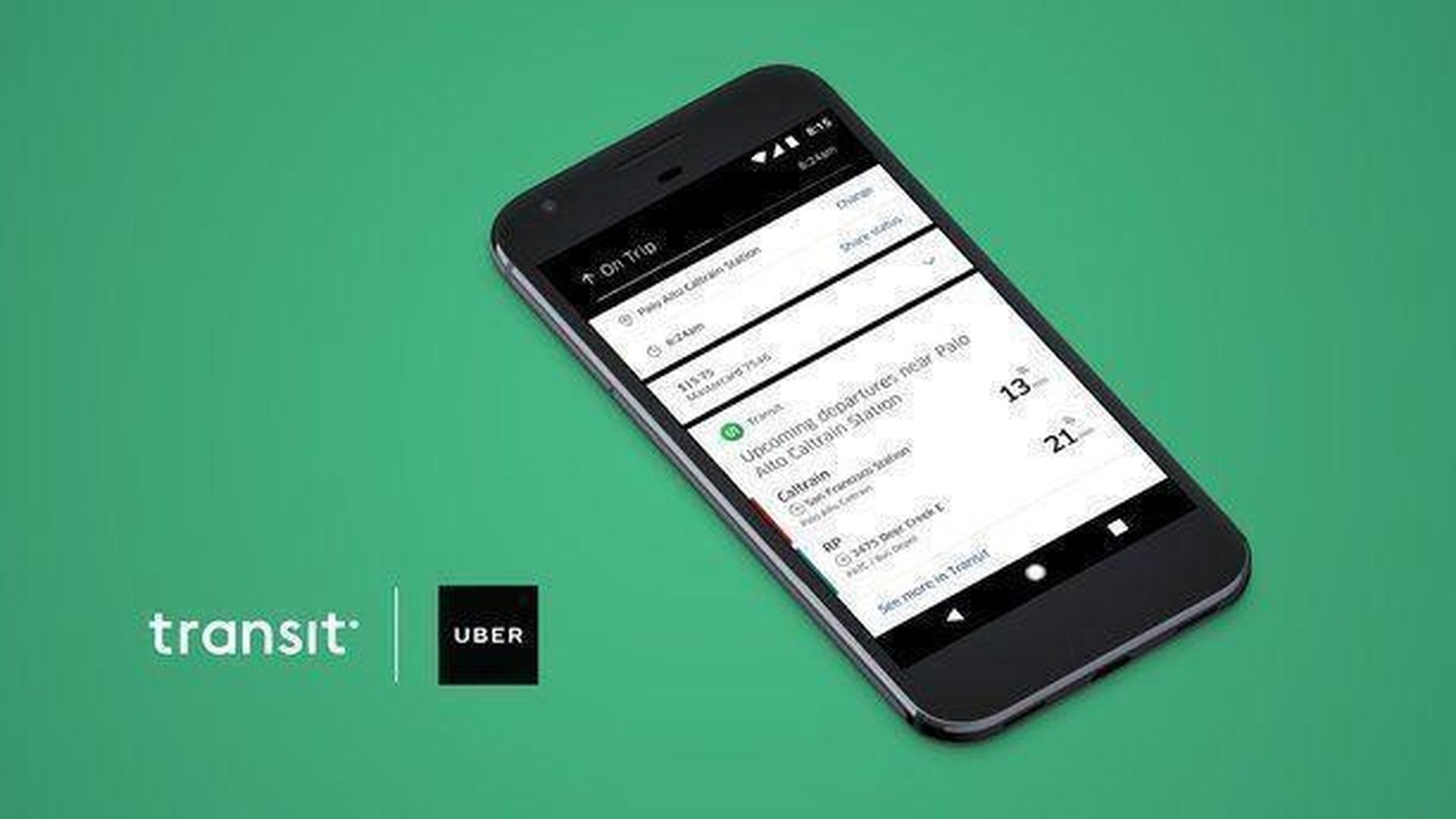
Uber has partnered with Transit — an app that displays wait times for public transportation — so that riders can see how much time they have before the next commuter train or bus arrives. The update launched Tuesday on Uber's Android app (and is coming to iOS soon) in 47 U.S. cities.
Uber's goal: Become the one-stop transit app. Uber hopes the update will make it easier for people to get from point A to point B without switching between different apps.
The caveat: For now, users will only see the public transit wait times when their destination is within a block of a public transportation stop.
Uber and Transit have worked together before: Transit integrated Uber into their app back in 2014, so that users could see how long it would take, and how much it would cost, for an Uber to get them to their destination.

How Google is leveraging Android in the virtual reality race
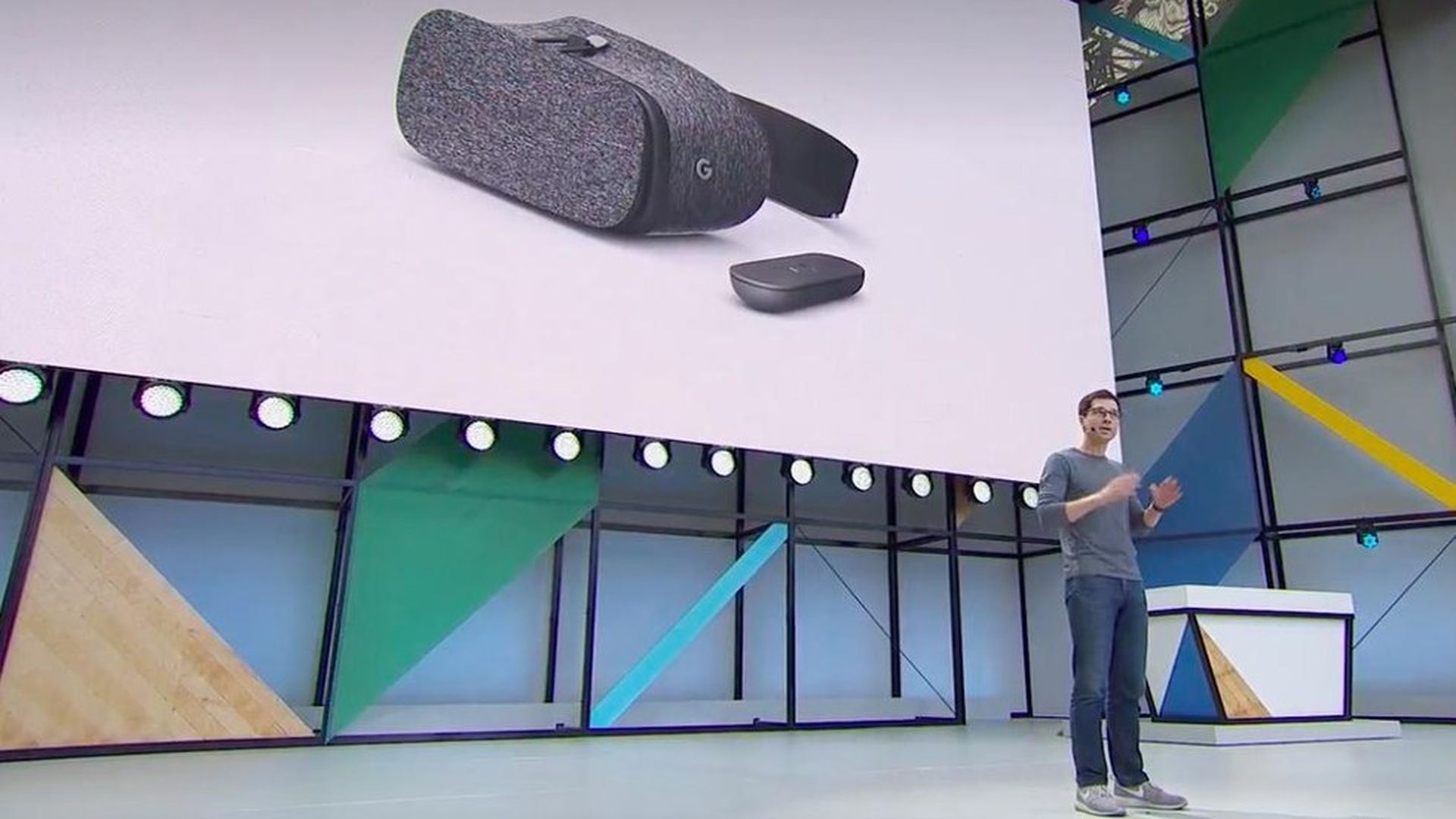
Google wants to make its Android mobile operating system the platform of choice for virtual and augmented reality.
Takeaway: Google is clearly playing to its mobile strengths. Its mobile OS is widely used, making it well positioned to approach the race via smartphones and their makers. Rivals Microsoft and Intel, on the other hand, are working to apply their PC strengths to VR by building powerful hardware platforms.

What Google announced on Day 1 of its I/O conference

Google is using its annual developer conference to highlight its work on Android, Chrome, Google Assistant and other key areas.
Many of Google's announcements centered around bringing new capabilities to its AI-powered Google Assistant and bringing that assistant to new devices, including the iPhone and appliances.
Here is a recap of Day 1, with more to come on Thursday.
Apple confirms it has started iPhone production in India

Apple confirmed Monday that it has begun production of iPhones in India and plans to start shipping locally made iPhone SE devices to customers in the country later this month.
"We are beginning initial production of a small number of iPhone SE in Bengaluru," an Apple representative told Axios. "We'll begin shipping to domestic customers this month."
The Wall Street Journal reported earlier Wednesday that Apple had started its India production effort.
Why this matters: Apple has seen its growth in China level off and is looking to places like India to keep the market growing. Some 27 million smartphones were sold there last quarter, up 14.8% from the prior year, according to IDC. The challenge is that customers in India spend far less on phones than in developed markets. Hence, Apple is focused on its lowest cost model, the iPhone SE.

Trump signs ride-hail reimbursement bill
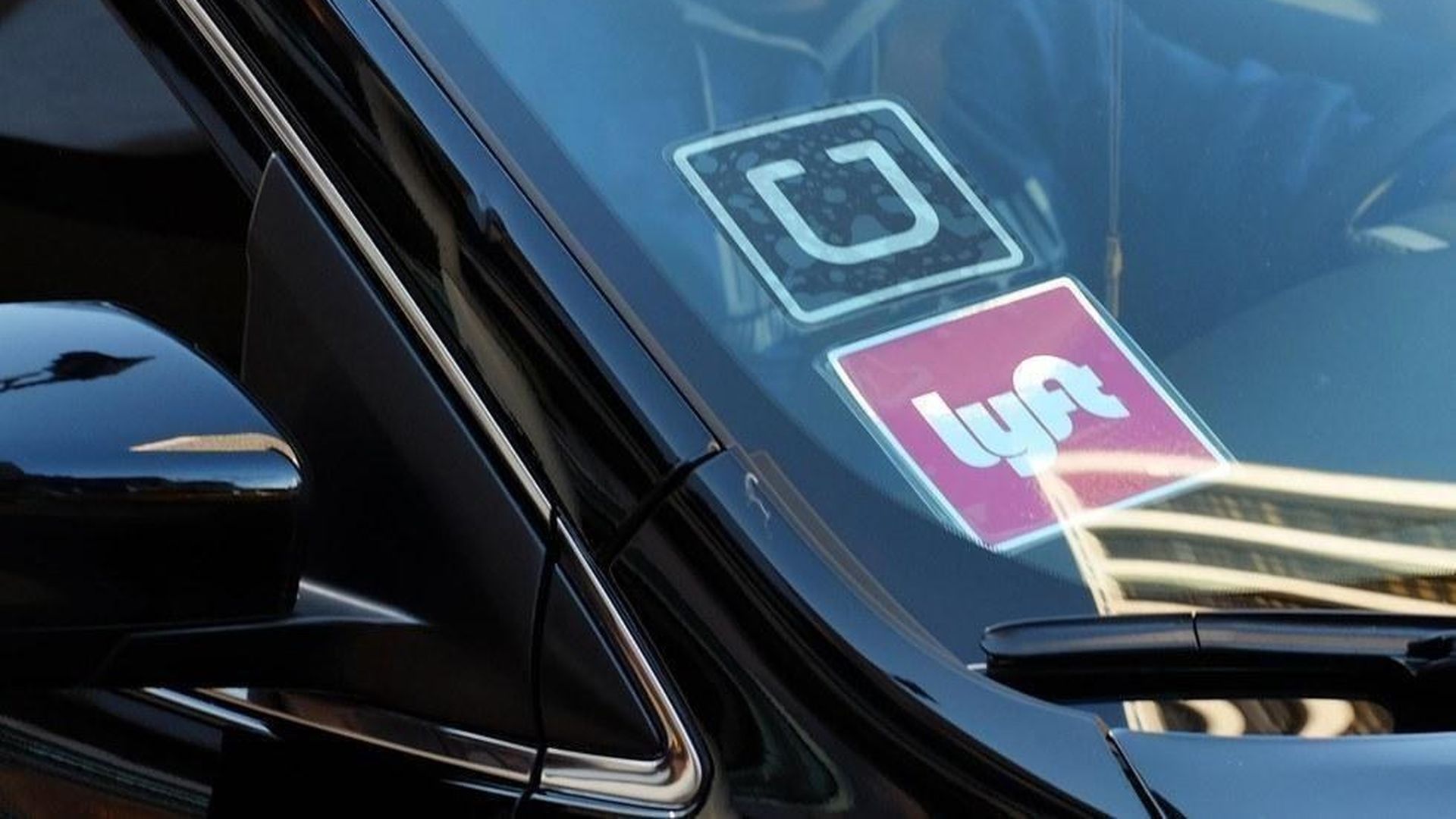
The president signed a bill Tuesday that will open the door for federal employees to be reimbursed for travel via ride-hail services or other "innovative mobility technology."
Why it matters: This is a victory for Uber and Lyft, who will benefit from potential reimbursements.
Qualcomm sues iPhone manufacturers as legal battle with Apple intensifies

Qualcomm on Wednesday announced a fresh lawsuit in its legal squabble with Apple, this time targeting the contract manufacturers who make the iPhone. The suit, filed in federal court in California, accuses Foxconn, Wistron, Pegatron and Compel of breaching their licensing contracts with Qualcomm.
While not disputing their contractual obligations to pay for the use of Qualcomm's inventions, the manufacturers say they must follow Apple's instructions not to pay. The license agreements with the manufacturers in many cases were entered into before Apple sold its first iPhone and Apple is not a party to the agreements. Further, the defendants are continuing to pay Qualcomm royalties for use of Qualcomm's technology in non-Apple products, under the very same agreements that apply to the Apple products.
Qualcomm has already sued Apple for interfering with these contracts, while Apple has sued Qualcomm for withholding licensing payments.
The argument: Apple contends that Qualcomm's royalty fees for its standards-essential patents are unreasonable, in particular because they are based on the total price of the phone. Qualcomm, meanwhile, stands by its royalty structure.
Why it matters: It's a high-stakes legal battle for both companies. Although Apple uses its own processor for the iPhone, it relies on Qualcomm for modem chips in order for its phones to run on Sprint and Verizon's network. Apple, meanwhile, is one of Qualcomm's biggest licensing customers thanks to the high price and strong sales of the iPhone.
Report: Google to preview standalone mobile VR headset
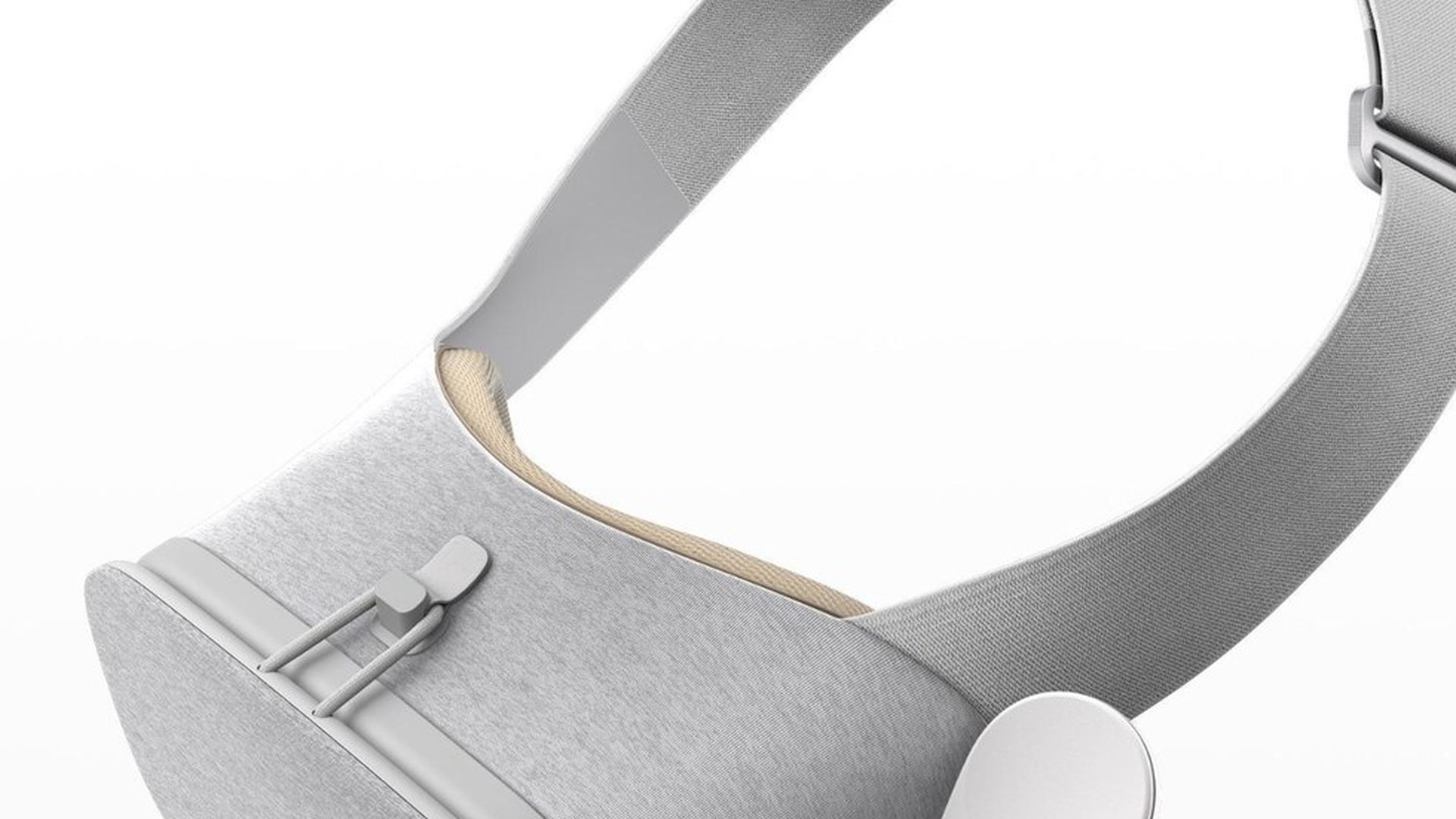
Google is developing a virtual reality headset that doesn't require a separate phone or PC to operate, according to a new report in Variety. It could be shown at this week's I/O conference in Mountain View, according to the report. A Google representative was not immediately available for comment.
The background: Google introduced its Daydream effort at last year's I/O conference, but that headset (above) requires a compatible smartphone, as does Samsung's Gear VR. Other units, like HTC's Vive or Oculus' Rift require a tethered PC. There have been reports that Google was working on a standalone system for more than a year.
The pros: A standalone unit is more mobile and, in theory could be better tailored toward just the VR experience than a phone-based system. Google's system could also tap the company's Project Tango effort to help map the world around the user and detect when someone has, for example, leaned forward or taken a step. Known in industry jargon as positional tracking, this typically has required external cameras or sensors.
The cons: By not tapping the phone for display and processing, a standalone mobile VR headset is likely to be far costlier than Gear VR or Daydream while probably not offering as much performance as the Rift or Vive.
Google, Facebook's AI group adds new members

A group trying to demystify artificial intelligence with backing from companies like Google, Facebook, Apple and Microsoft is bolstering its ranks with 22 organizations in total.
New members in the Partnership on AI include:
- Companies like Salesforce, Sony and Intel.
- Non-profit advocacy groups including the Electronic Frontier Foundation, the Center for Democracy and Technology and the Future of Privacy Forum.
- The list also includes Washington-based consultancy Upturn, which has worked on issues related to how big data collides with civil rights. The ACLU was already involved as a partner in the group.
Why it matters: The new corporate members of the partnership show how widespread interest in AI has become. And the high-level advocacy non-profits joining the partnership shows how AI is on a collision course with questions about privacy and discrimination.
Twitter co-founder Biz Stone returning to company full-time

Twitter co-founder Biz Stone is returning full-time to Twitter. The move comes after Stone sold his last company, Jelly, earlier this year.
Stone announced the move in a post Tuesday on Medium. "I'm returning to full time work at Twitter starting in a couple of weeks," he wrote. "How this came about is kind of a crazy story but, it's happening."
Stone described his role in rather vague terms.
My top focus will be to guide the company culture, that energy, that feeling. This is where Jack, and Twitter's inestimable CMO, Leslie Berland, feel I can have the most powerful impact. It's important that everyone understands the whole story of Twitter and each of our roles in that story. I'll shape the experience internally so it's also felt outside the company. More soon.
Drivers' guild files FTC complaint against ride-hailing startup Juno

Juno's post-acquisition saga continues: A guild representing drivers has filed a complaint to the Federal Trade Commission accusing the ride-hailing startup of misleading drivers when it promised to give them company stock. Last month, when Juno sold to another ride-hailing company, Gett, it canceled its stock program for drivers, and instead paid them cash bonuses.
Too good to be true: From the start, Juno advertised itself as the "anti-Uber" in every way, including taking a smaller cut from driver earnings, providing better on-boarding and help, and most notably, by including them in the company's long-term success through its stock program. However, Juno's cancelation of the program prompted the Independent Drivers Guild, which filed the FTC complaint, to call the move a "bait-and-switch."
The small-business digital divide
There's an interesting divide noted in a report, commissioned by Google and put together by Deloitte, about small businesses that use digital tools: a full 50 percent of small businesses have only a limited or moderate digital presence. The report argues that small businesses that adopt digital tools (which could include, of course, Google's many offerings) do better.
The details:
- Of small businesses whose digital presence the report deems "basic" — which accounted for 20 percent of all small businesses surveyed — 90 percent don't have a website.
- Another group with slightly more advanced digital capabilities make up another 30 percent of businesses. Many of those businesses had a website, but far fewer had social media presences.
Why it matters: The findings indicate that use of many of the tools we consider part of daily life haven't totally proliferated to small businesses that make up a large portion of the economy.
Lyft finally built a standalone app for drivers
Last week, Lyft quietly released a standalone app for its drivers. Until now, Lyft's flagship app doubled as an app for both drivers and passengers, with the fomer activating their version once they sign up.
Rival Uber, on the other hand, has had a separate mobile app for drivers for quite some time, which it last overhauled in late 2015 .
The new app: The standalone app seems to provide all the features Lyft drivers need, including maps, a section to track their earnings, and one to track referrals. Since it hit the App Store a week ago its been downloaded at least 100,000 times, and 97% of downloads come from the U.S., according to mobile analytics company Apptopia.
"We are in the process of rolling out a new driver app and will share more details soon," a Lyft spokesperson told Axios.
VR company hit with sex discrimination lawsuit
A former employee of Upload VR has filed a lawsuit against the company alleging gender discrimination, a sexist work culture, and claiming she was wrongfully fired, as first reported by TechCrunch.
In her complaint, filed in San Francisco Superior Court last week, the former employee alleges that male employees, including UploadVR's founders, would frequently discuss their sex lives in the office, engage in sexual activity and drug use in the office, and make inappropriate comments about the company's female employees. UploadVR operates co-working offices as well as an industry publication and other services focused on virtual and augmented reality.
The former employee, who worked in social media for UploadVR from May 2016 until this past March, also claims that female employees were asked to clean the office, and were paid less than male employees. She says she was fired after complaining about the situation to her newly-hired manager in March, according to the suit.
Axios has contacted UploadVR and will update this story if we hear back.