Wednesday's technology stories

Lawmakers have privacy questions about drones

Consumer privacy questions briefly took center stage at a Senate Commerce Committee hearing about drones, as Democratic Sen. Ed Markey hammered away at the idea that the increasingly-common devices could be used by corporations to collect sensitive data:
"And what happens if there's drones that are gathering through facial recognition kind of who's shopping on Main Street and selling that to advertisers. Are there any protections? What if some commercial entities are gathering information about kids playing in the back yard, and then using it for nefarious purposes?"
The backstory: Markey's a privacy hawk who backs a new bill that would have the FAA get information from drone users about their data collection practices before granting them a license. Commerce Committee Chairman John Thune said he hadn't yet had a chance to review the bill but indicated the issue was on his radar.

Family Link: Google's new parental control app

Google is finally opening up its key services to kids under the age of 13. Access is coming via a new Android app called Family Link, which also gives parents some control over the content kids can access on their own Android devices.
Parents can limit the amount of time a child spends on an app, or block it altogether. They can also set the kid's phone or tablet to shut down at a certain time, or after a certain amount of screen time.
A limited beta version of Family Link will be released on March 15 with the full service will be launched in the U.S. later this year.
Mashable has more details here.
Playing catch-up to Amazon: Amazon has been in the lead here with its Kindle Fire which comes with parental features built-in, while Microsoft has a Kid's Corner feature in its Windows phone. But Apple and Google have been late to the party. It will be interesting to see if Apple follows suit.

Google ramps up push into Africa

In a phone interview with Bloomberg Wednesday, the head of Google's South Africa office Luke McKend said the company is laying around 621 miles of fiber optic cable in Uganda, a move similar to what Facebook announced two weeks ago.
Fiber optic cable will help Google expand its existing efforts in the country — like internet training — that have been deterred by slow transmission rates and high data costs for the skyrocketing number of Africans who own smartphones. McKend says Google is already working on laying down a similar amount of cable in Ghana, and that the effort is part of a larger push into Africa that includes providing cheaper access to Android smartphones and training African workers in digital fluency.
Why it matters: Both Google and Facebook, facing saturated advertising markets in most of the word — particularly the U.S. — are looking to expand their reach into the African market and more importantly, get data from the roughly 30% of Africans that have access to the Internet. The first company to capture a sizable amount of digital audience data in Africa will be the first to be able to monetize usage in the continent.
Russian hackers for hire to be indicted in Yahoo data breach
The Department of Justice is planning to announce Wednesday the indictments of two Russian spies and two criminal hackers responsible for the massive Yahoo data breach in 2014, reports the Washington Post, marking the first time U.S. criminal cyber charges were ever brought against Russian government officials.
The charges — which officials said include hacking, wire fraud, trade secret theft and economic espionage — target two members of the Russian intelligence agency FSB, Dmitry Dokuchaev and Igor Sushchin, as well as two hackers hired by the Russians, Alexsey Belan and Karim Baratov.
The San Francisco FBI office has scheduled a news conference for later Wednesday
Reminder: In the 2014 data breach, the FSB dug up information on 500 million Yahoo accounts for intelligence purposes, targeting journalists, dissidents and U.S. government officials.
This story was originally published at 6:35a.m. and updated to specify the details of the charges and that the hackers are Russian.

After labeling tax returns report "FAKE NEWS," Trump turns to Snoop Dogg
President Trump's first tweet today was to accuse David Cay Johnston, the Pulitzer-prize winning reporter who obtained some of the president's 2005 tax returns (which were verified by the White House), of "FAKE NEWS":
Does anybody really believe that a reporter, who nobody ever heard of, "went to his mailbox" and found my tax returns? @NBCNews FAKE NEWS! — Donald J. Trump (@realDonaldTrump) March 15, 2017
His second tweet turned to the rapper Snoop Dogg, who pointed a toy gun at a clown resembling Trump in a recently released video:
Can you imagine what the outcry would be if @SnoopDogg, failing career and all, had aimed and fired the gun at President Obama? Jail time! — Donald J. Trump (@realDonaldTrump) March 15, 2017

Hack leads to Twitter accounts posting pro-Turkey content

Seemingly hundreds of Twitter accounts have been hacked and now display pro-Turkey propaganda.
Affected accounts, including Forbes and Duke University, have posted swastikas and tweets supporting Turkish President Recep Tayyip Erdoğan. The hack appears to be in relation to Erdoğan's recent feud with Germany and the Netherlands.
Twitter Counter, a Netherlands-based analytics tool which was targeted by a similar attack in November, appears to be the entry point for the hack, though it's still unclear. The company is investigating the matter and has already "taken measures to contain such abuse of our users' accounts, assuming it is indeed done using our system — both blocking all ability to post tweets using our system and changing our Twitter app key," a spokesperson told Axios.
On its end, Twitter says it's aware of the issue and has "quickly located the source which was limited to a third party app" and has removed its permissions immediately, seemingly referring to Twitter Counter.

Adobe's plan to reinvent itself for the era of AI and VR
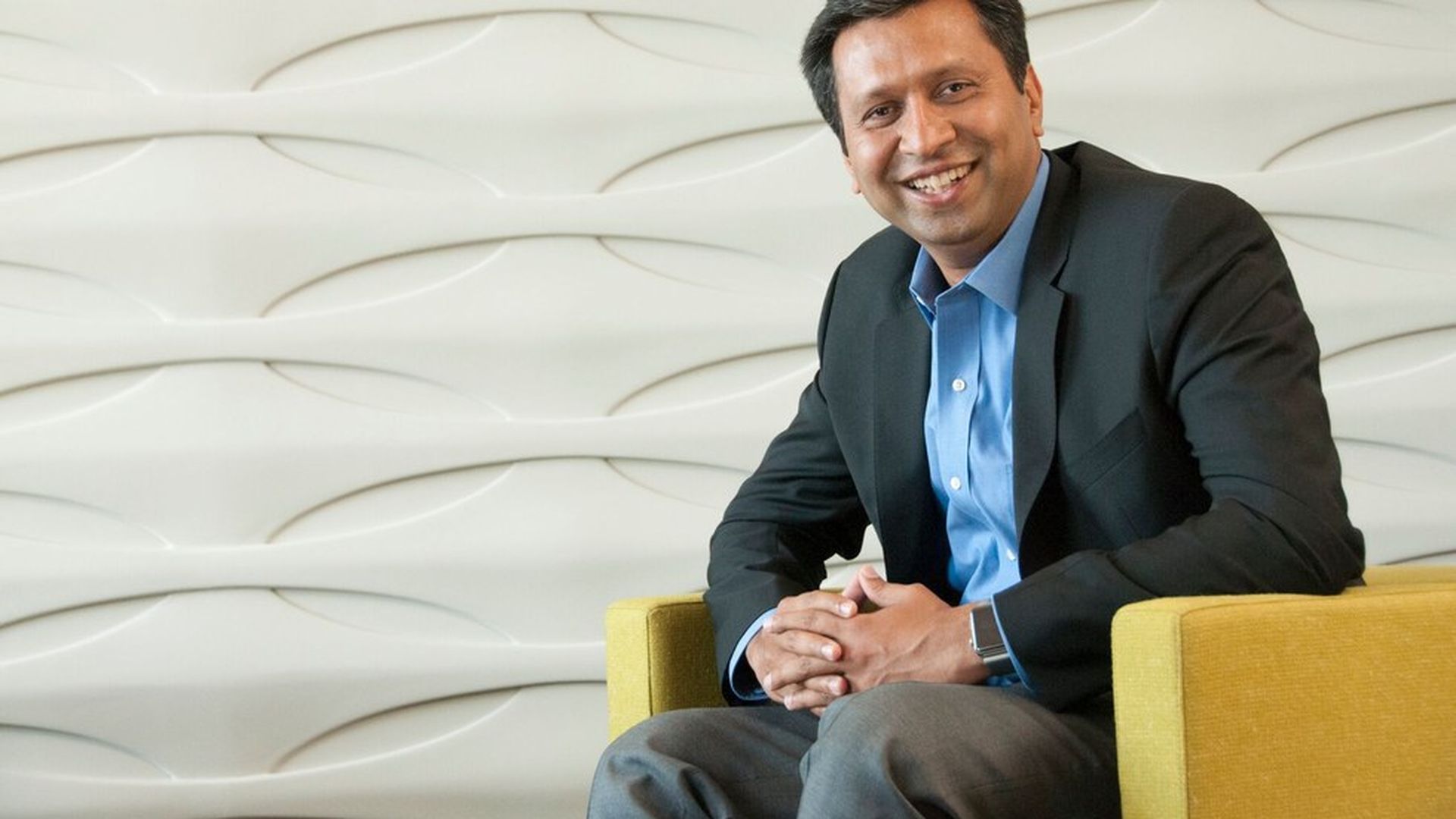
For the last couple of years, Adobe has been focused on shifting its business model so that customers pay monthly for products like Photoshop and Illustrator.
Now it's the products themselves that need to shift to adjust to a world of artificial intelligence and virtual reality.
"This is not a market that is very forgiving of companies that don't continually ask what is around the corner," CTO Abhay Parasnis told Axios.
Here's what Parasnis says is in Adobe's future:
- making tasks like photo and video editing as simple as dictating what you want done
- tapping machine intelligence to make better sense of vast image libraries
- creating programs that bring professional illustration into three dimensions for virtual reality
Ford backs self-driving car startup Autonomic
Ford Motors has made a strategic investment in Autonomic, a stealth Silicon Valley startup founded last summer, Axios has learned. According to an SEC filing (which does not mention Ford), Autonomic has raised nearly $11 million, but may add a bit more.
Team: Autonomic's founders were previously at Pivotal, a software development consulting firm in which Ford invested last year. CEO Sundeep Madra and COO Amar Varma co-founded Xtreme Labs, which built and designed mobile apps for its clients and sold to Pivotal 2013.
The company: Not much is known about what Autonomic is building, except that it's working on software related to self-driving cars. That information came from Chamath Palihapitiya, a partner with VC firm Social Capital, who said on stage at a conference that his firm recently co-invested with Ford on a new company, although he did not identify Autonomic. Palihapitiya added that the deal was structured so that the automaker has been given the right to buy the company down the road. "And we'll see if they'll exercise that right," said Palihapitiya.
Self-driving race: Like other automakers, Ford is highly invested in building self-driving car technology. The Detroit giant is developing its own in-house and has invested in startups like sensor maker Velodyne and Civil Maps, which is working on high-definition 3D maps. It also recently acquired a majority stake in Argo, a company focused on artificial intelligence software self-driving cars.
Neither Ford, Social Capital nor Autonomic have returned requests for comment.
An earlier version of the story incorrectly stated that Ford and Uber have a partnership. It has been updated.

Toyota sees ridesharing as key to self-driving car adoption
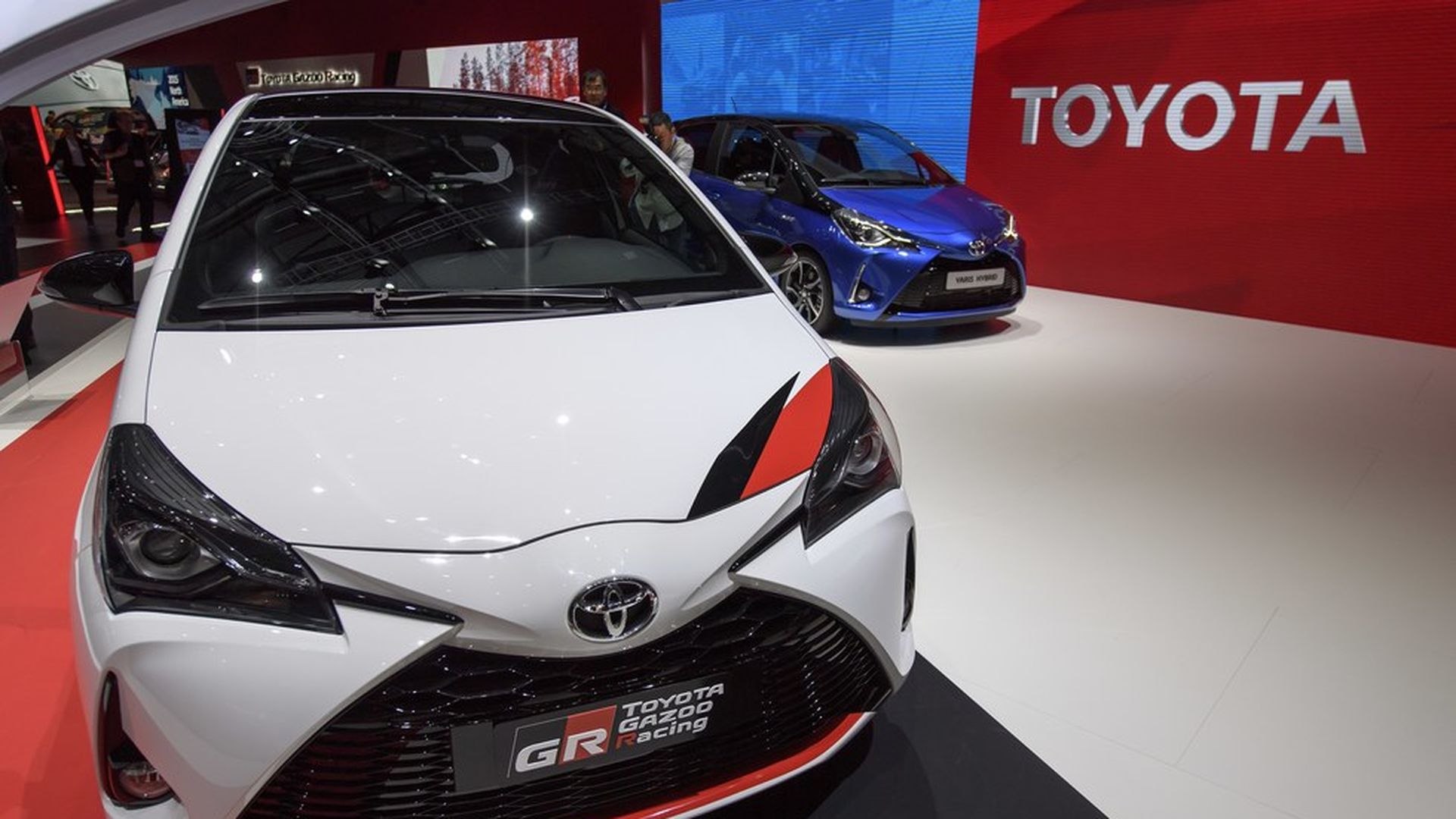
The key to advancing self-driving car technology and getting consumers more comfortable with it is to team up ride-sharing services, said Hilary Cain, Toyota's director of technology and innovation policy, at SXSW Thursday.
Toyota announced last year it was investing in Uber and starting a car-leasing program for Uber drivers. Toyota also said it planned to collaborate with Uber on other technology products and research efforts. It was speculated at the time that the company's interest extended to autonomous cars.
"We need to partner up in the ride-sharing space," she said on a panel in Austin. "There's lots of speculation that ride sharing will be the first place you see this technology come to market."
Teaming up with a ride-sharing service spreads the cost of developing the cars across more users, and it can expose skeptical consumers to the idea of self-driving cars, she said.
Why it matters: There's been a lot of pairing up of car makers and ride-sharing firms over the past year. GM invested $500 million in Lyft and announced plans to build a network of self-driving cars, and Volkswagon made a $300 million investment in Gett. While Toyota's investment was small comparatively— less than $100 million — it appears to be a key part of its self-driving car strategy.
Uber creates chief scientist post to plot its AI future
Uber just notified workers it is naming Zoubin Ghahramani as chief scientist, a new role overseeing the company's artificial intelligence and machine learning efforts.
His appointment follows last week's departure of AI labs head Gary Marcus, a move first reported by Axios. Ghahramani, like Marcus, joined Uber as part of December acquisition of machine learning company Geometric Intelligence.
Until now, Ghahramani had been based in Cambridge but will move to Uber's San Francisco HQ to take up the new post.
Why it matters: Uber needs to retain key talent, especially in its most future-leaning endeavors like driverless cars and machine learning, both areas that have seen recent defections.
Apple hires well-known iOS security researcher
Apple has hired security researcher Jonathan Zdziarski, according to his personal blog.
Zdziarski is best known for opposing claims about Apple by the FBI following the San Bernadino shooting. He's also made headlines in when he claimed Apple had a backdoor into iOS, and for finding security flaws in apps like WhatsApp. Most recently, he published his findings after looking through the encryption tech behind Confide, an app for sending self-destructing messages that became popular among Republicans in Washington, as Axios reported.
Twitter no more: Unfortunately for security fans, Zdziarski has already deleted his Twitter account and is unlikely to continue to publish commentary, as Apple tends to frown upon its employees having a significant social media presence.
LinkedIn founder Reid Hoffman is joining Microsoft's board

Reid Hoffman, the LinkedIn founder and VC at Greylock Partners, announced on Tuesday he is joining Microsoft's board of directors. Microsoft, of course, bought LinkedIn last year in a $26 billion deal.
Uber's tech could make taxes easier for drivers

With tax deadlines fast approaching, Uber is using its technology to partner with providers of tax tools for contractors. Via Uber's application program interface (API), a software tool that lets outside developers plug into Uber's system, Intuit, H&R Block, Stride and Credit Karma can more easily help drivers calculate and file their taxes.
Pain point: In a recent survey of "gig economy" workers, Intuit found that nearly one in five (18%) said their top challenge with on-demand work was "understanding tax and legal obligations," the company told Axios.
Tax help: At the same time, tracking expenses can help independent contractors save a lot of money. Since releasing an app that helps ride-hailing drivers track their mileage and other expenses in late August, the startup says drivers have logged more than $60 million in deductions. What's more, the company says that tracking those deductions has translated into an effective tax rate of 8.7% for drivers—much lower than the 30% that's recommended for contractors to set aside for taxes.