Friday's technology stories


Judge approves warrant to probe Google search in an entire town
A Minnesota judge has approved the use of a warrant to reveal who searched for an alleged financial fraud victim's name in Google. The court order gives police permission to review all searches for the victim's name over a given period of time made by the residents of the 50,000-person Minnesota town. The document was first uncovered by independent journalist Tony Webster.
The setup: Police suspect that the perpetrator in the case may have Googled the victim's name to get an image to use on a false passport used to transfer the funds in question to a new account, according to court documents. They argue that the search "is unique, and even more unique when used in the Google search engine."
Google rejected a previous subpoena for the information. "We always push back when we receive excessively broad requests for data about our users," said a Google spokesperson in a statement issued in response to the new warrant.
Why it matters: The case raises questions regarding online privacy for users over how much information police are entitled to get from Google, or any web company for that matter. Some argue that the scope of the warrant is too broad, potentially entering unconstitutional territory.

Tech alarmed over Trump budget cuts
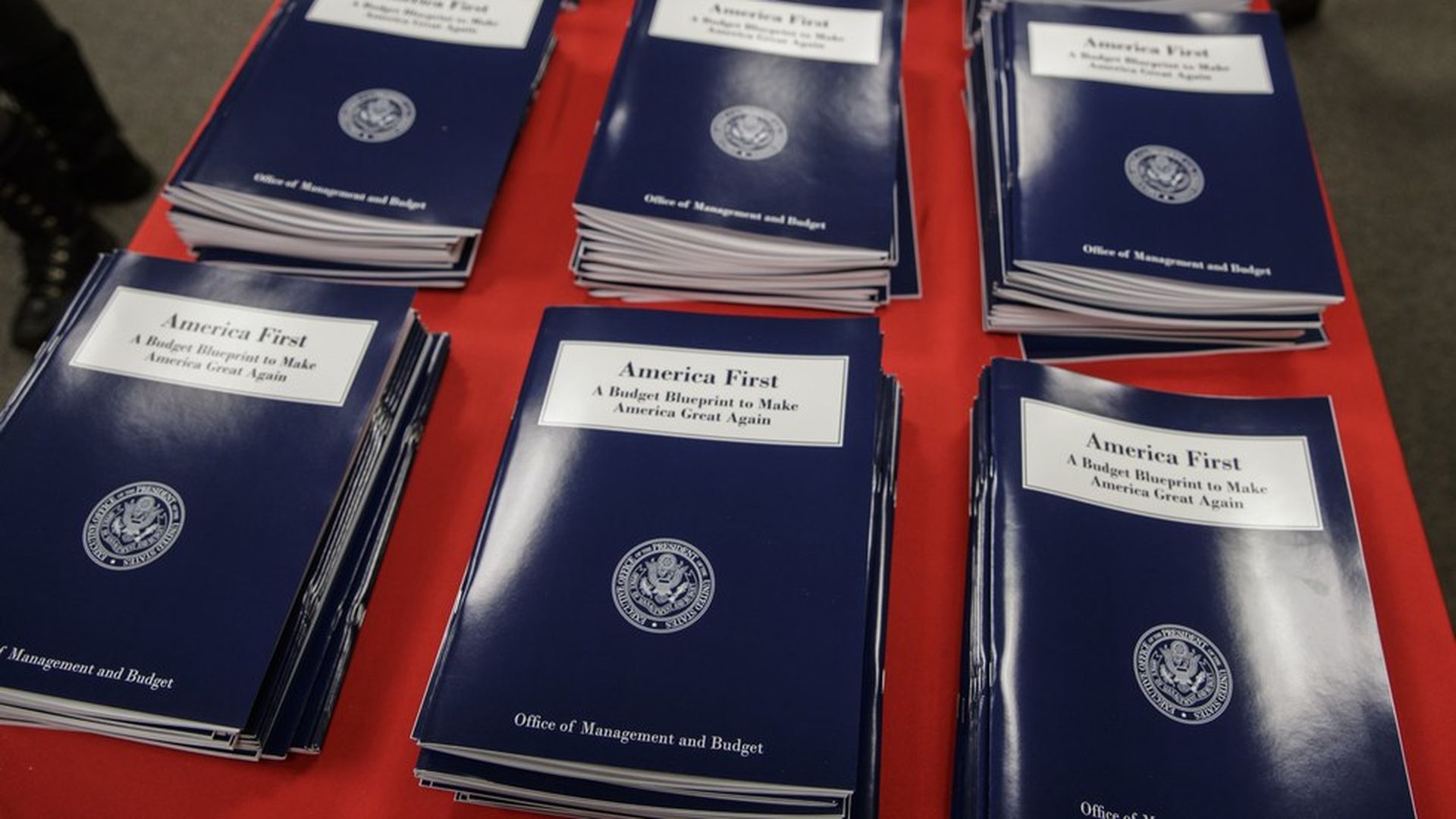
The tech community from Silicon Valley to DC expressed alarm over deep cuts to programs including science, arts, housing and food assistance, transportation funding and public broadcasting.
- One of the sharpest rebukes came from Luta Security CEO Katie Moussouris, who took to Twitter with what she told Axios was her visceral, personal reaction to hearing about Trump's budget cuts, especially for programs geared toward the poor. "My mom was a single mother scientist, paid half what men she trained were paid. She'd go without lunch so I could eat. Poverty isn't a crime," she tweeted, adding "even though I wasn't on them, those school meal programs are important. Invest in the children of the poor, & we will return it 1000-fold."
- Even Silicon Valley's subway system BART spoke out in a tweetstorm, saying "the president's change in policy would drastically shift funding downstream, and likely hit local users the hardest." It would also put a project expanding service to Silicon Valley at risk.
- In D.C., John Holdren, who served as the Director of the White House Office of Science and Technology under Obama, released a scathing statement condemning the budget and the ramifications it would have on U.S. leadership in science and technology and for business, "which depends on government services far more heavily than is generally recognized."
- California Senator Dianne Feinstein called the budget an "absolute travesty for California," and freshman Senator Kamala Harris called it "disgusting" and vowed to "fight it at every step."
- Joe Kennedy, senior fellow at the Information Technology and Innovation Foundation, said in a blog, "If these cuts were to be enacted, they would signal the end of the American century as a global innovation leader. America's lead in science and technology was built on the fact that in the 1960s the U.S. government alone invested more in R&D than the rest of the world combined, business and government."
What's next: Tech is far from the only industry unnerved by the budget, but it may be among the most vocal given its outcry over other Trump policies. It's up to Congress to approve the preliminary budget, so the industry will be developing a lobbying strategy in the coming days.

Hot in Silicon Valley: All about ride-hailing
Thursday was a big day of headlines for the ride-hailing industry, so here are the highlights:
Uber will seek to move Waymo lawsuit to arbitration
Uber told a federal judge on Thursday that it plans to file a motion to move the lawsuit from Google's self-driving car unit, Waymo, into private arbitration. Uber argues that because Waymo's claims center around its former employee's actions, the case should move to arbitration per Google's employment contract.
In late February, Waymo filed a lawsuit against Uber alleging that Anthony Levandowski, a founder of a startup Uber acquired last year, stole intellectual property before he left the company and Uber is now using that technology itself. The company has also asked for an injunction of Uber's self-driving car project. Uber has called the lawsuit "baseless."
What to watch: Uber is expected to respond to Waymo's original lawsuit by March 27.

'Right to be forgotten' online might come to U.S.
A bill in the New York State Assembly would require search engines and online publishers to remove "'inaccurate', 'irrelevant', 'inadequate', or 'excessive'" content on individuals within 30 days of a removal request.
Recall, Europe's highest court ruled in favor of the "right to be forgotten" in 2014. It aimed to alleviate privacy concerns of an individual whose past financial troubles had been represented poorly online. The court ruled that search engines should place rights to privacy above the right of the public to find information.
Why this matters: The loser in the U.S., according to The Washington Post's Eugene Volokh, is freedom of speech under the First Amendment:
...the deeper problem with the bill is simply that it aims to censor what people say, under a broad, vague test based on what the government thinks the public should or shouldn't be discussing.
To put it in context, Volokh writes, "the bill contains no exception even for material of genuine historical interest; after all, such speech would have to be removed if it was 'no longer material to current public debate.'"
Plus, as Google's CEO Larry Page put it, this forces search engines like Google to arbitrarily decide what counts as private information and what doesn't.
Update: Google declined to comment.
Judge rejects Google's email-scanning settlement
A federal judge in San Jose has rejected Google's proposed settlement with non-Gmail users who claim Google illegally scanned their emails to Gmail users to target them with advertising, Reuters reports.
In a decision released Wednesday night, District Judge Lucy Koh said the disclosure requirements were inadequate and the settlement did not include technical changes Google would make to comply with privacy laws.
Background: Google tentatively agreed to change the way it collects data from Gmail in December, agreeing to stop collecting advertising-specific data before an email is accessible in a user's inbox, according the The Verge. The voluntary settlement came after non-Gmail users, who haven't agreed to have their emails scanned under Google's Terms of Service, brought a class-action lawsuit against Google for violating privacy laws.
Yahoo settled a similar lawsuit last year and agreed to delay ad-scanning. Koh noted that Yahoo's settlement required more disclosures than Google's proposed settlement.
What's next: The issue is a growing one for companies who run ad-supported email services. The plaintiffs plan to push on with the litigation against Google.