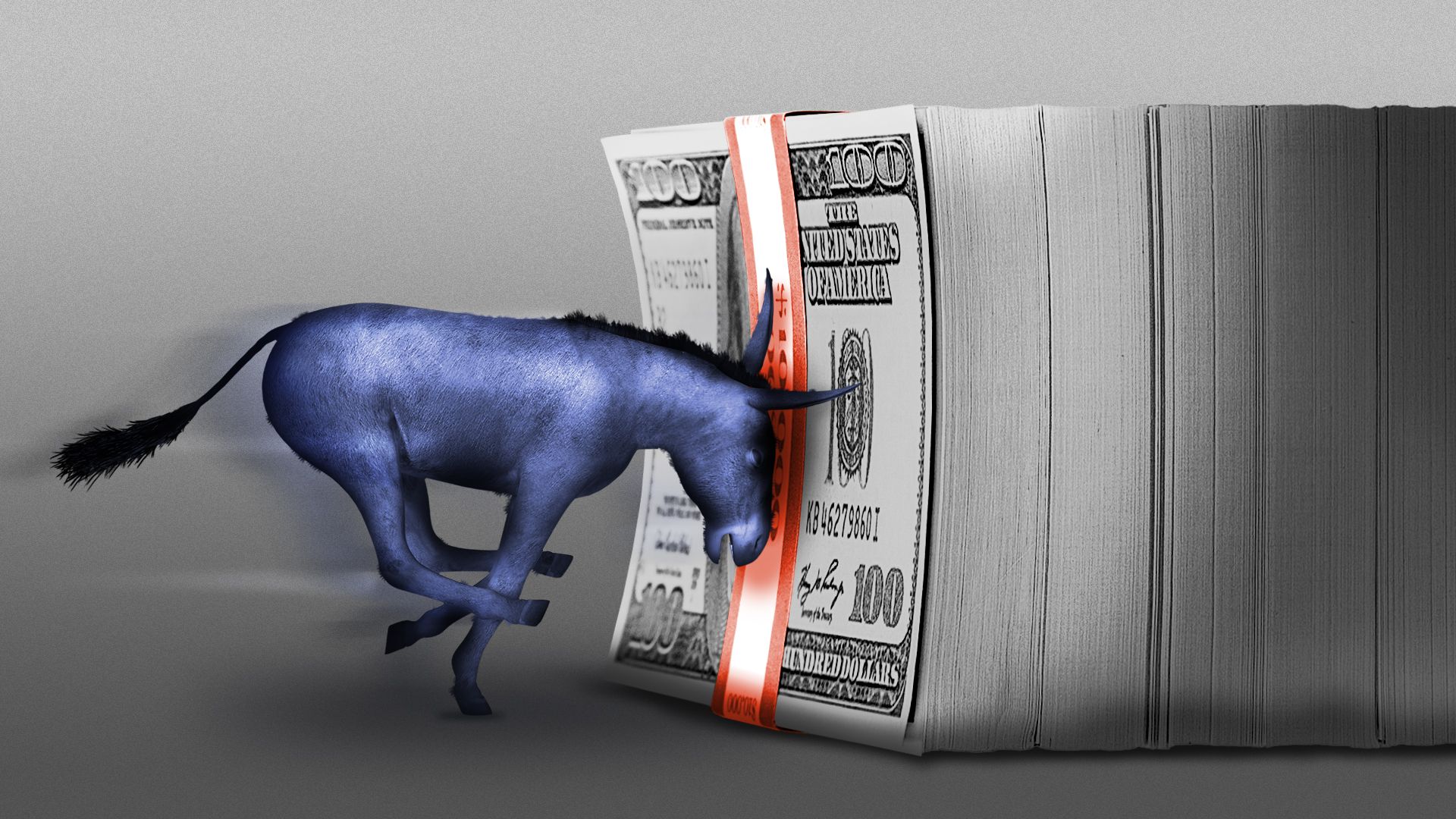
House Democrats' main super PAC is winding down its spending in several races where the party has struggled to make headway despite national trends working in their favor.
Why it matters: Democrats' ambitions of winning heavily Republican districts are running into the reality of finite resources at the end of a long and expensive midterm campaign.
House Republicans are entering the final two weeks of the midterms with a rare but razor-thin fundraising advantage over House Democrats.
Why it matters: Democrats outraised Republicans by $84 million in 2024 and $74 million in 2022. Now, Republicans are holding their own financially even as they face mounting political headwinds.
President Trump is escalating his doomsday warnings about a Democratic takeover of Congress, painting a nightmarish vision of an America consumed by burning cities, economic collapse, mutilated children and the destruction of Western civilization.
Why it matters: Trump has long portrayed Democrats as an existential threat to the country. But in an effort to preserve Republicans' grip on Washington, he's taking that rhetoric to new extremes as he casts the election as a choice between Republican rule and national catastrophe.
Over three dozen congressional lawmakers and election offices in at least 32 states have been targeted with suspicious letters, many containing a white powder.
Why it matters: The letters have forced evacuations and disrupted election offices just weeks before the 2026 midterms, raising concerns about political intimidation.
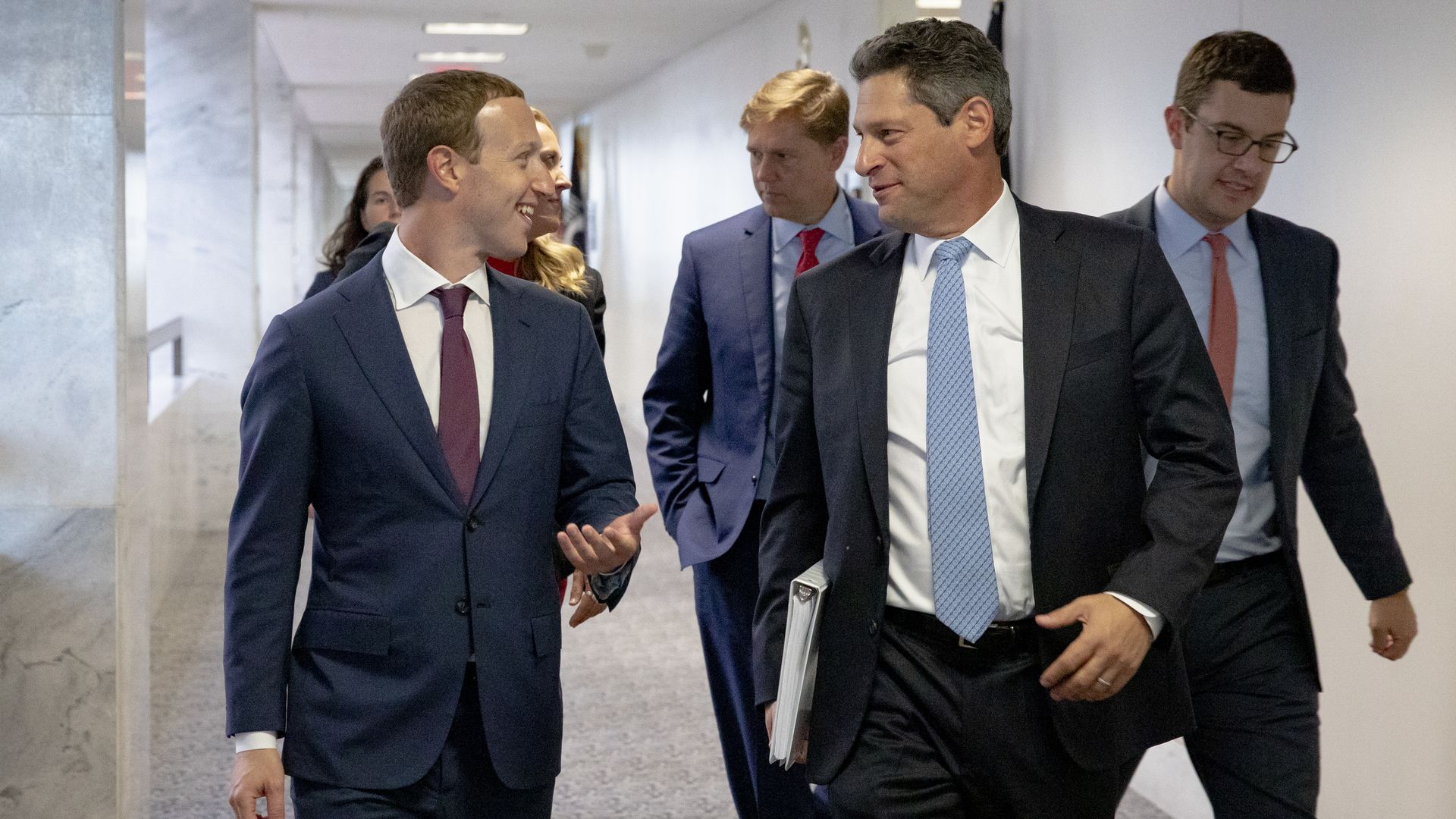
Joel Kaplan, Meta's chief global affairs officer, will leave Meta next year after 15+ years as Mark Zuckerberg's top Washington adviser.
Kaplan — a Harvard Law graduate and former Marine artillery officer who was deputy White House chief of staff for President George W. Bush — built Facebook's U.S. policy team from scratch. Kaplan led the global policy team through years of massive growth and controversy.
Why it matters: Kaplan, who helped Meta build a strong relationship with the incoming Trump administration, was a leading internal advocate for consistency on Zuckerberg's free-expression principles, even when that was unpopular, associates tell Axios.
The AI boom is sucking up all the capital. The Federal Reserve is raising rates to try to cool inflation. And one sector is bearing the brunt of the pain from both: housing.
The big picture: The situation is lose-lose for both homebuilders and homebuyers. Builders are facing more expensive capital and bidding for scarce construction-related resources. Would-be buyers are being quoted some of the highest mortgage rates of this century.
New September housing starts data out Tuesday morning puts an exclamation point on what has been a slow-moving disaster for a sector that plays an outsized role in the economic cycle and in Americans' basic living standards.
As the French right-wing National Rally is seizing on fiery protests in the country for its pre-election pitch, so are President Trump and his Republican allies in the U.S.
The big picture: The Trump administration has used the unrest, which began over education grievances, to bolster its messaging on immigration and the threat of "communists," a group Trump has repeatedly claimed is threatening American civilization.
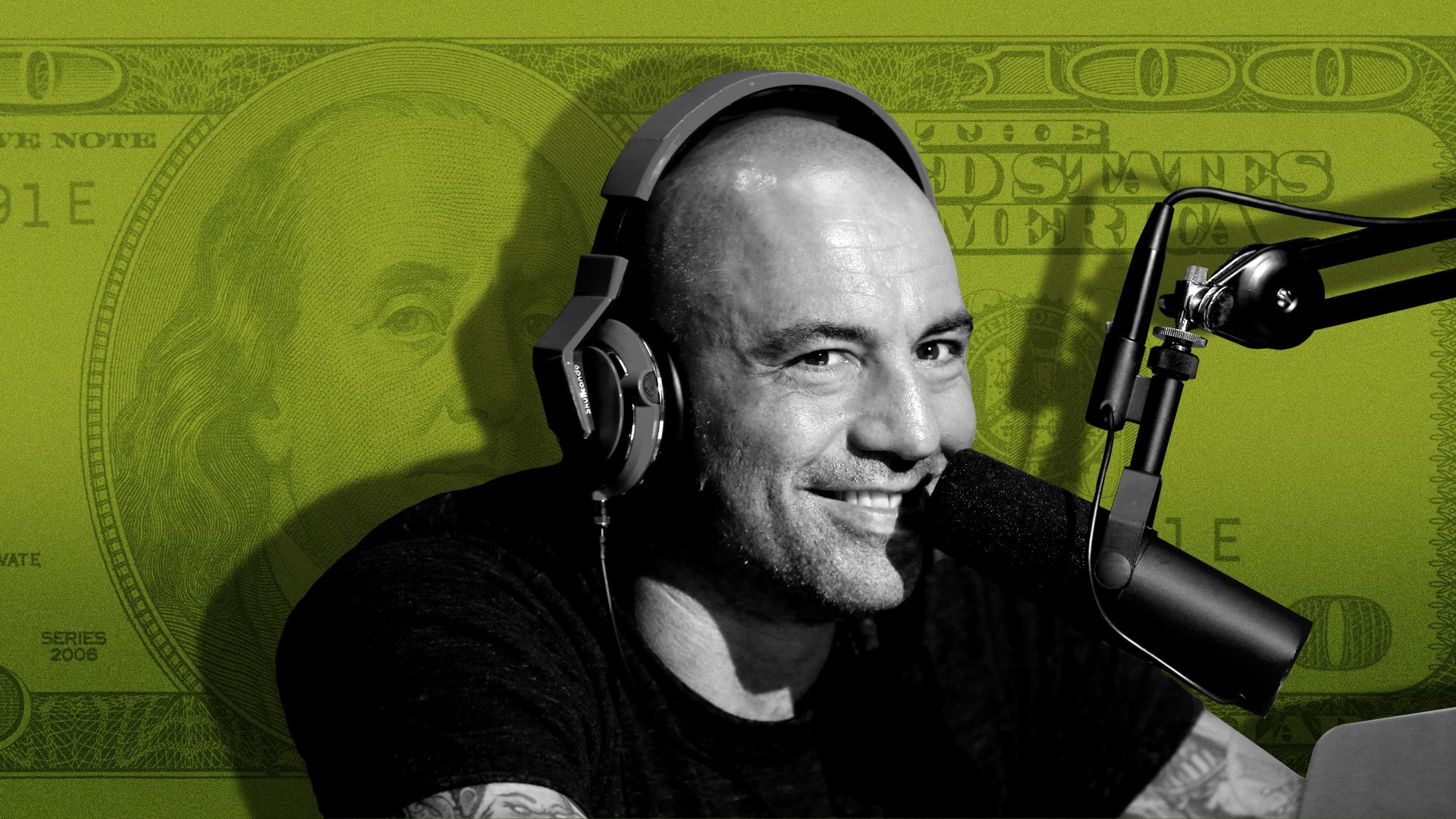
The manosphere stars who helped mobilize young men for Donald Trump in 2024 are losing their shine with that very audience.
Why it matters: Trump and Republicans rode a wave of cultural cachet to reach young male voters. Now, the president and some of his most influential online allies are showing signs of losing their grip on that audience ahead of the 2026 midterms.
Driving the news: New polling from the Democratic project Speaking With American Men suggests some of the most prominent influencers during Trump's 2024 campaign have lost their luster with young male voters, per Puck News,
Joe Rogan's favorable rating among young men dropped from 11 points, while Elon Musk's popularity dropped 14 points and Tucker Carlson lost 12 points.
Andrew Tate, who was arrested on sex trafficking and rape charges, had "a -30 net approval rating," per Puck.
Between the lines: Economic pressures and the Iran war have become major concerns for young men heading into the midterms, Puck reported.
Those issues have caused tension between Trump and the influential voices who bolstered his last campaign.
State of play: Young men are turning on politicians, podcasters and influencers, many of whom may have influenced recent political outcomes. They're becoming more skeptical and turning their backs on politicians, especially Trump.
The 2026 Young American Men Survey from Cygnal similarly found that among 18- to 30-year-old American men, Trump, Vance and the Republican Party all were viewed unfavorably.
Trump's numbers among young voters dropped precipitously. Marquette Law School national polling shows that Trump's approval dropped from 40% in January 2025 to 19% in April 2026, before rebounding to 28% in June. The law school hasn't polled on the question since then.
Yes, but: Young men aren't especially enthusiastic about Democrats, either.
Former President Barack Obama, Sen. Bernie Sanders (I-Vt.), and NYC Mayor Zohran Mamdani were the only Democrats showing upticks in favorability ratings, per Puck.
Context: Several prominent manosphere personalities have been critical of Trump in his second term, particularly on the Iran war and the Epstein files release.
Rogan, like many MAGA influencers, has criticized the war and the Trump administration's handling of the Epstein files.
Tucker Carlson has chastised Trump over many issues, including his partnership with Israel in going to war.
Vice President Vance has even admitted the White House "screwed up" on its communications about the Epstein files.
Reality check: Researchers question how influential podcasters and personalities actually were in 2024.
Researchers, who reviewed 36,659 podcast episodes from 2024 alongside two survey datasets, found podcasts explained only a small portion of the widening youth gender gap.
The other side: Influencers still have enormous reach among young voters.
A survey from Morning Consult published on Oct. 16 found that nearly two-thirds of Gen Z adults say they get news from creators, while 62% trust creator recommendations.
Business Insider reports that one in four U.S. adults feel influencer content has affected their voting decisions.
Separate Marquette polling found that 54% of adults who consumed podcasts for political news approved of Trump's job performance in June, compared with 38% of adults overall.
The bottom line: The manosphere's biggest personalities still have sway, but the direction of the country isn't helping them — or Trump — with young men.
The Federal Trade Commission and a dozen state attorneys general have sued to stop Platinum Equity and portfolio company PlayPower from buying rival playground equipment maker BCI Burke from Bertram Capital.
Why it matters: It's been rare in Trump 2.0 for federal and state antitrust regulators to work in concert.
Rolls-Royce brought its engine for the MV-75 Cheyenne to full power using a new digital controller known as a FADEC, executives told Axios.
Why it matters: It's another milestone for this closely watched, multibillion-dollar tiltrotor project, which is expected to replace many of the U.S. Army's Black Hawk helicopters.
GRAND PRAIRIE, Texas — Hadrian is embedding a factory inside a factory not its own.
And its machinery, capable of running around the clock, is expected to help build some of the world's most complex, in-demand and scrutinized weapons.
Why it matters: This is a major move for the $8 billion startup, and it comes as the U.S. wages war in the Middle East and as the Pentagon strikes deals, in some cases, to triple and quadruple munitions output.
Slowly but surely, the leading AI companies are creating a national self-governing structure to oversee their technology and its societal impact.
With the federal government largely hands-off, Anthropic, OpenAI and others are self-regulating their technology and now setting up their own plans to redistribute their wealth.
Why it matters: Not since the age of the robber barons have America's industrial titans wielded such sweeping power to shape society — and decide how their private fortunes should serve the public good.
White evangelical Protestants are the only major religious group in which a majority says empathy can become dangerous when it leads people away from a society guided by God's truth, according to a new survey.
House Republicans are quietly scaling back hopes for the 10-seat boost they sought from redistricting nationwide, amid a souring political climate and polls showing a collapse in GOP support among Latino voters in Texas and Florida.
Why it matters: On their down days, Republicans privately worry that the great redistricting war of 2026 will net them only one seat nationwide, according to top GOP strategists.
The U.S. budget deficit is ballooning, reaching $2 trillion this fiscal year, according to the latest figures.
Why it matters: That's the largest deficit since 2021, when the U.S. was climbing out of the pandemic recession.
The deficit is being driven in part by the cost of servicing the nation's enormous debt at a time when interest rates are rising due, in part, to the inflationary impact of the Iran war.
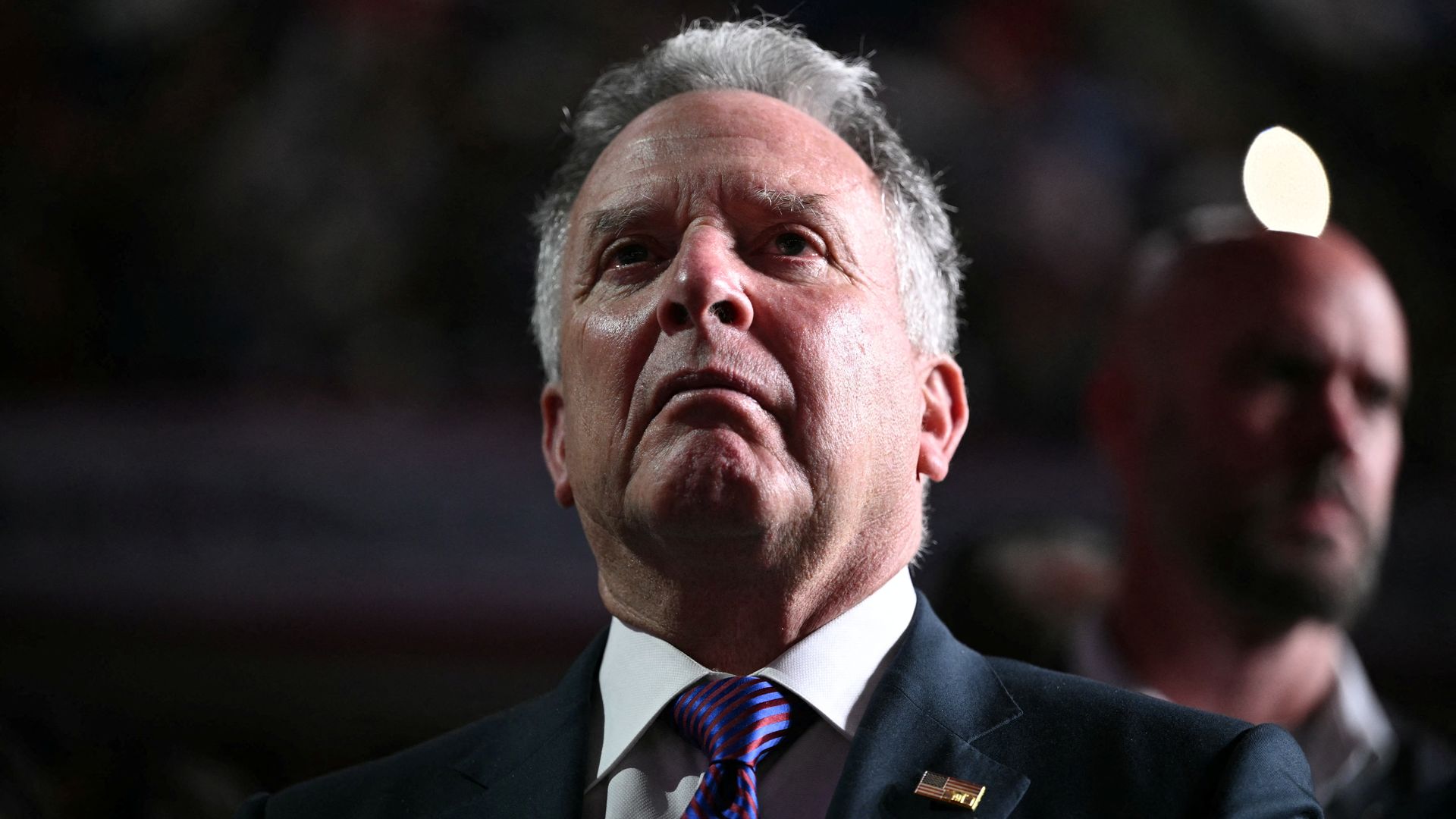
White House envoy Steve Witkoff is traveling to Oslo for talks Tuesday with Ukrainian President Volodymyr Zelensky and European leaders, a U.S. official said.
The big picture: The talks will bring together Ukraine, European allies and the U.S. as they seek to develop a peace proposal to present to Russia.
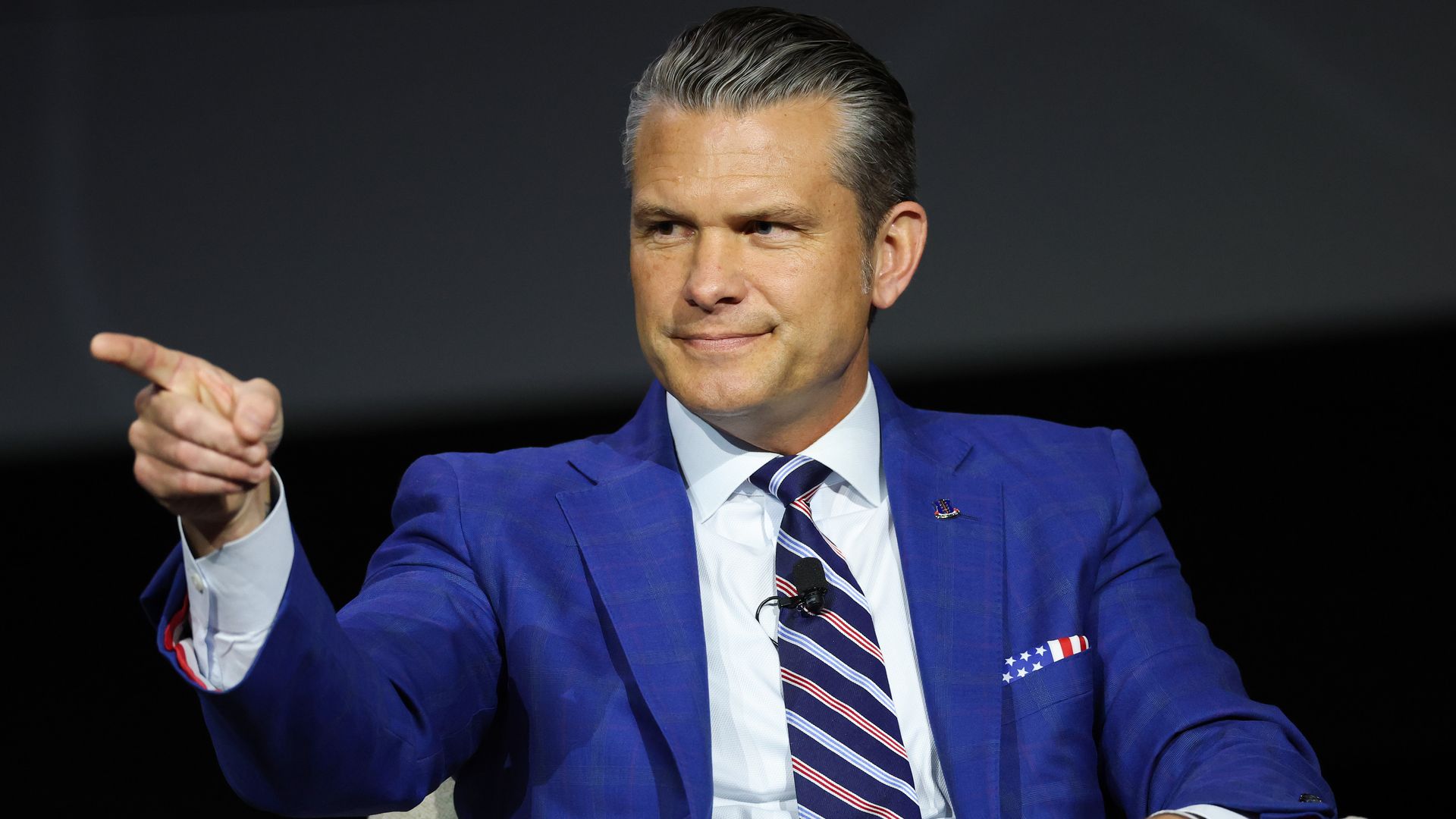
Defense Secretary Pete Hegseth met with Israeli Prime Minister Benjamin Netanyahu in Israel on Monday, two sources with knowledge told Axios.
Why it matters: The unannounced visit comes eight days before Israel's election and amid U.S.-Israeli discussions about potentially resuming major combat operations against Iran.