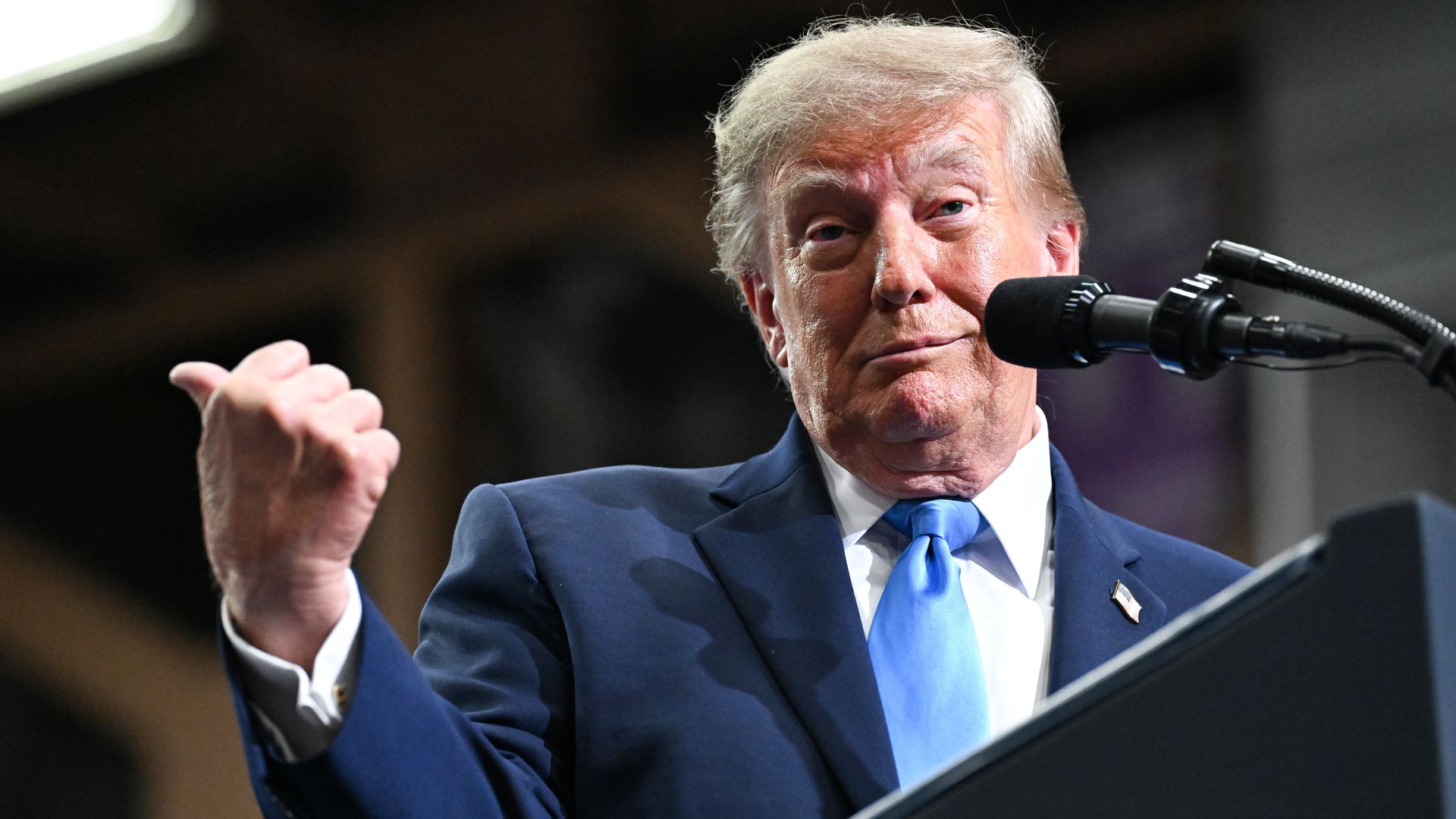
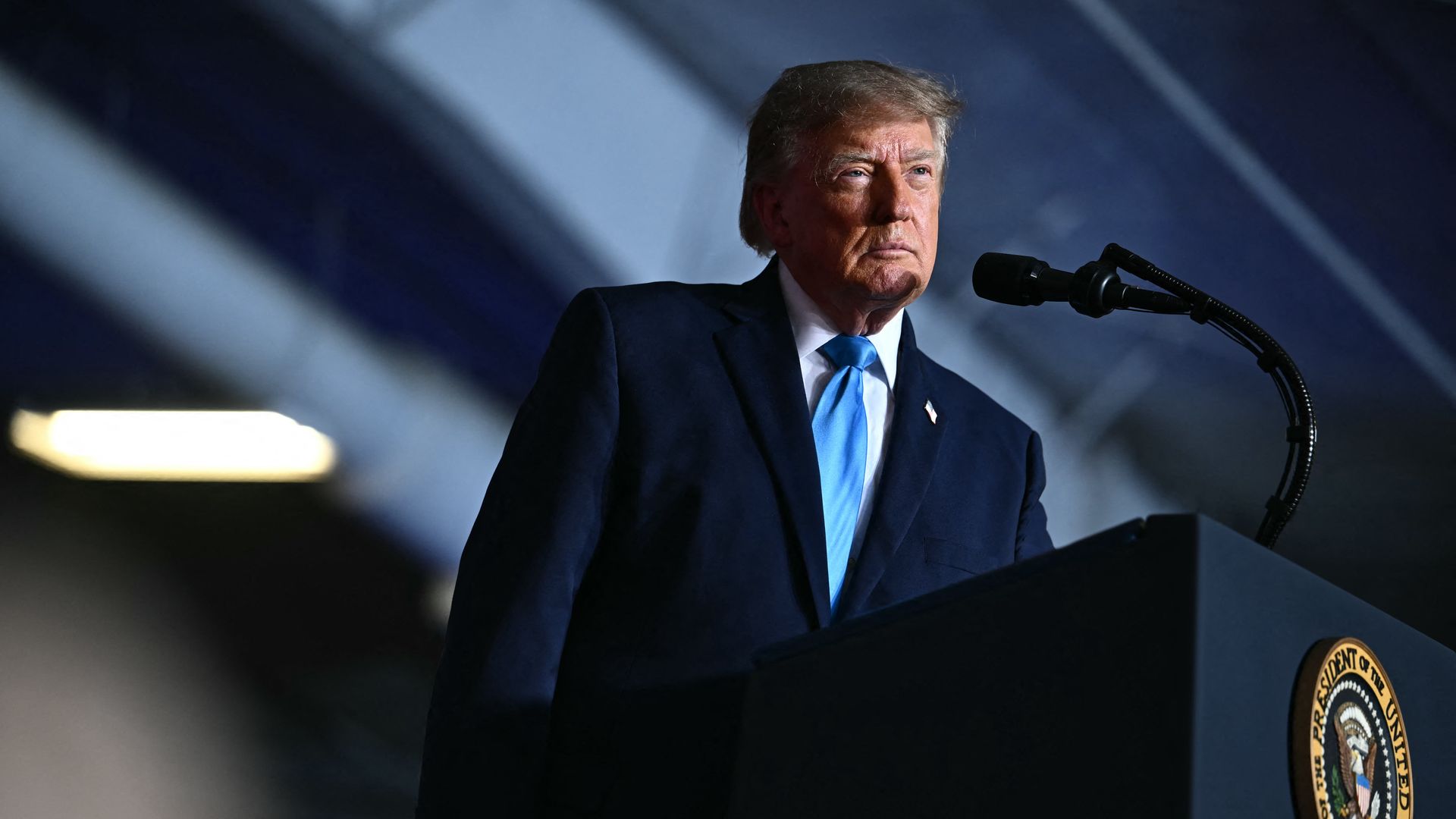
President Trump suggested Tuesday that the financial cost of the Iran war to Americans is a price worth paying to keep the U.S. safe.
Why it matters: Trump's comments ignited backlash, but the federal government has spent years helping high-risk U.S. urban areas detect radiological and nuclear materials that could be used in an attack.
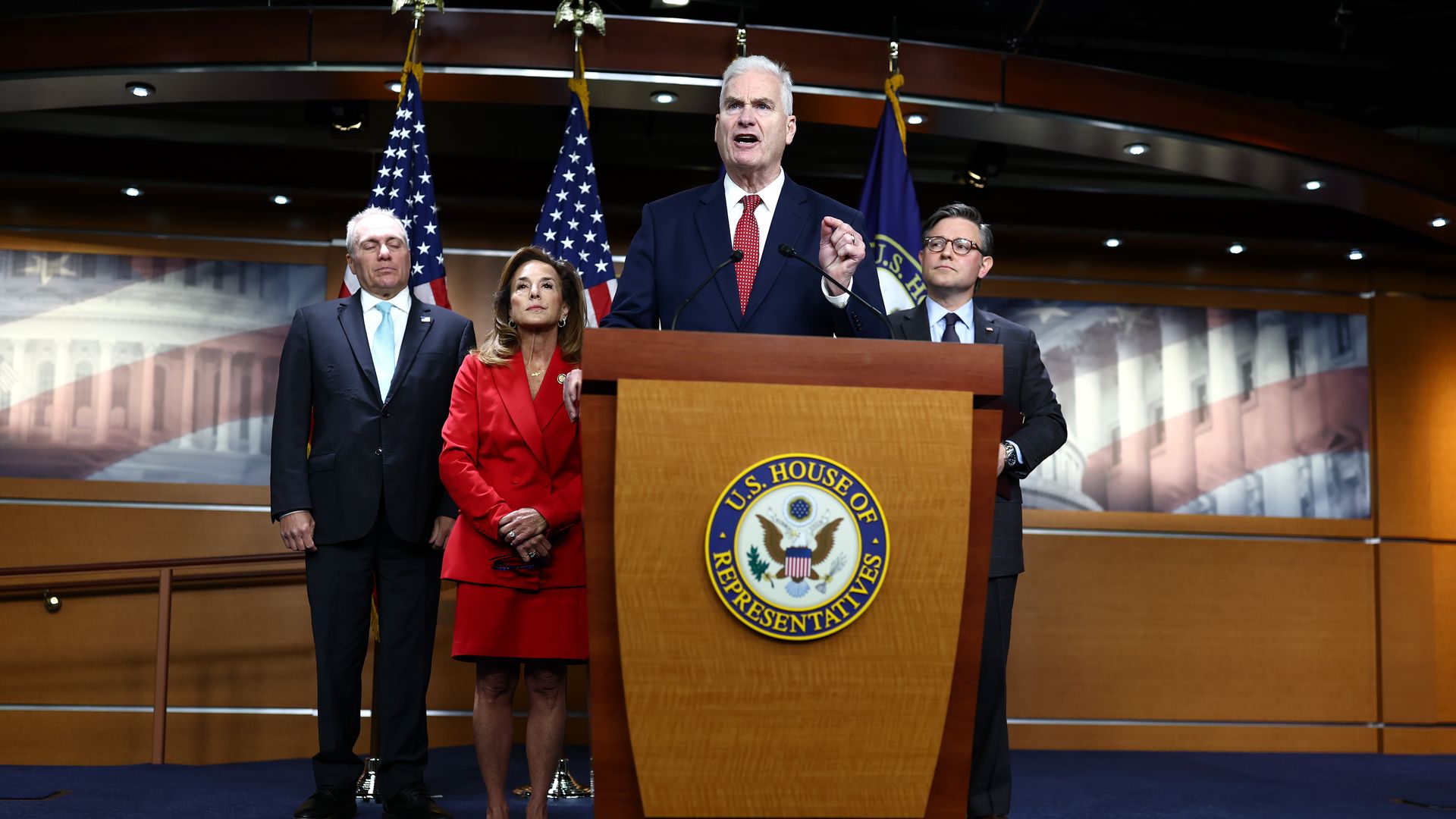
House Majority Whip Tom Emmer (R-Minn.) is saying out loud what House Republicans have been grumbling about for much of the year: They're fed up with the Senate.
Why it matters You won't ever hear Speaker Mike Johnson (R-La.) or Majority Leader Steve Scalise (R-La.) talk about their Senate counterparts like this.
House GOP leaders are now openly acknowledging that their mid-decade redistricting push didn't work out as well as they'd hoped.
Why it matters: Republicans kicked off the redistricting wars hoping new maps would give them a bigger cushion against the historical headwinds facing the president's party.
The Centers for Disease Control and Prevention says it is monitoring reports of a suspected pneumonic plague case in Russia and says it is prepared for any threat that emerges.
Why it matters: Pneumonic plague is the most dangerous form of plague and is almost always fatal unless if left untreated.
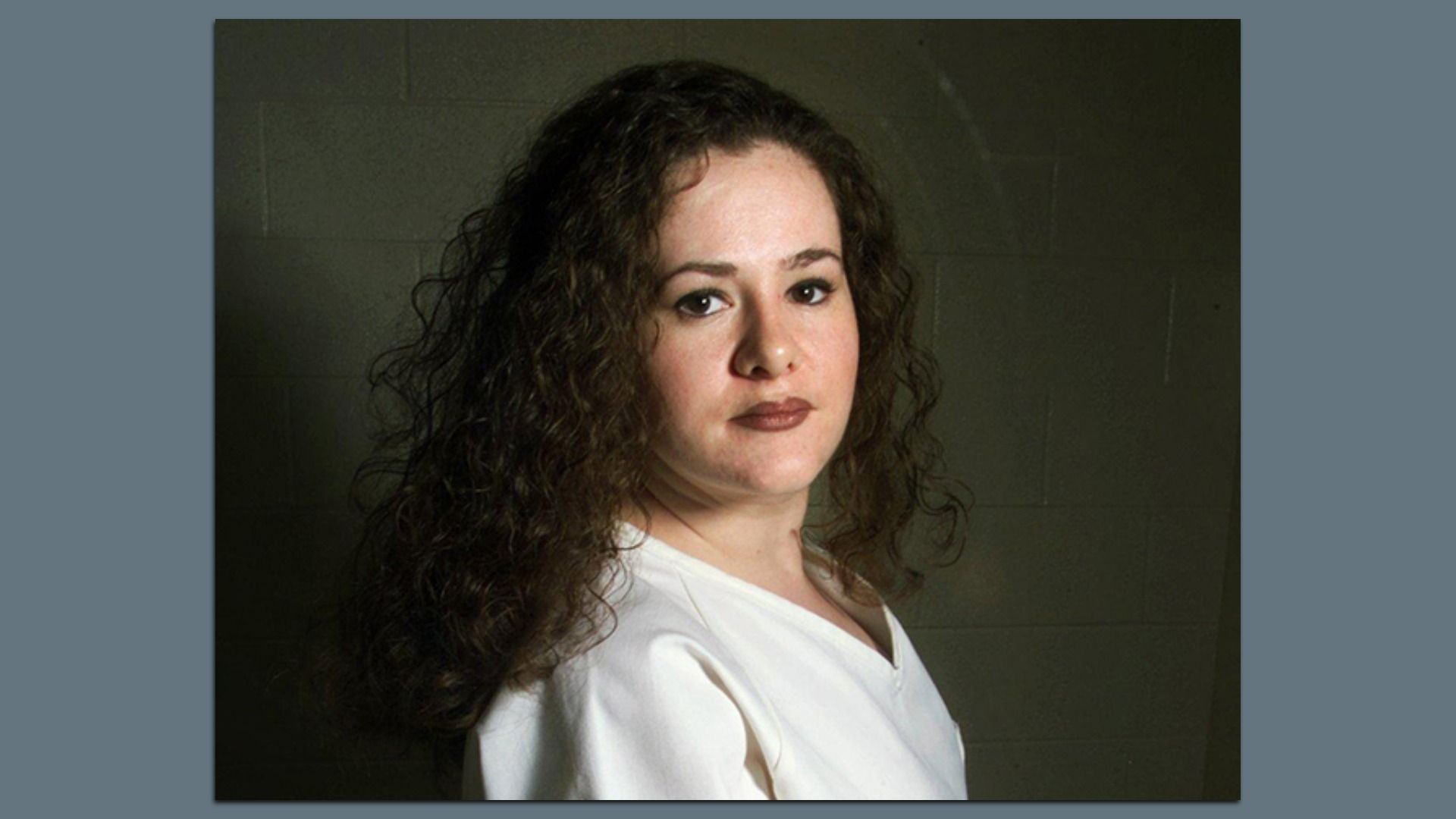
Tennessee death row inmate Christa Pike was conscious and talking Tuesday, her attorneys said, nearly a week after the state gave her two doses of lethal injection drugs that were meant to kill her.
The latest: Pike's attorneys said her prognosis following her "medically unprecedented" recovery is still unknown.
"At a minimum, we expect a long recovery," the legal team said in a statement.
Pike is still receiving critical care, and she is "handcuffed and shackled" to her hospital bed, they said.
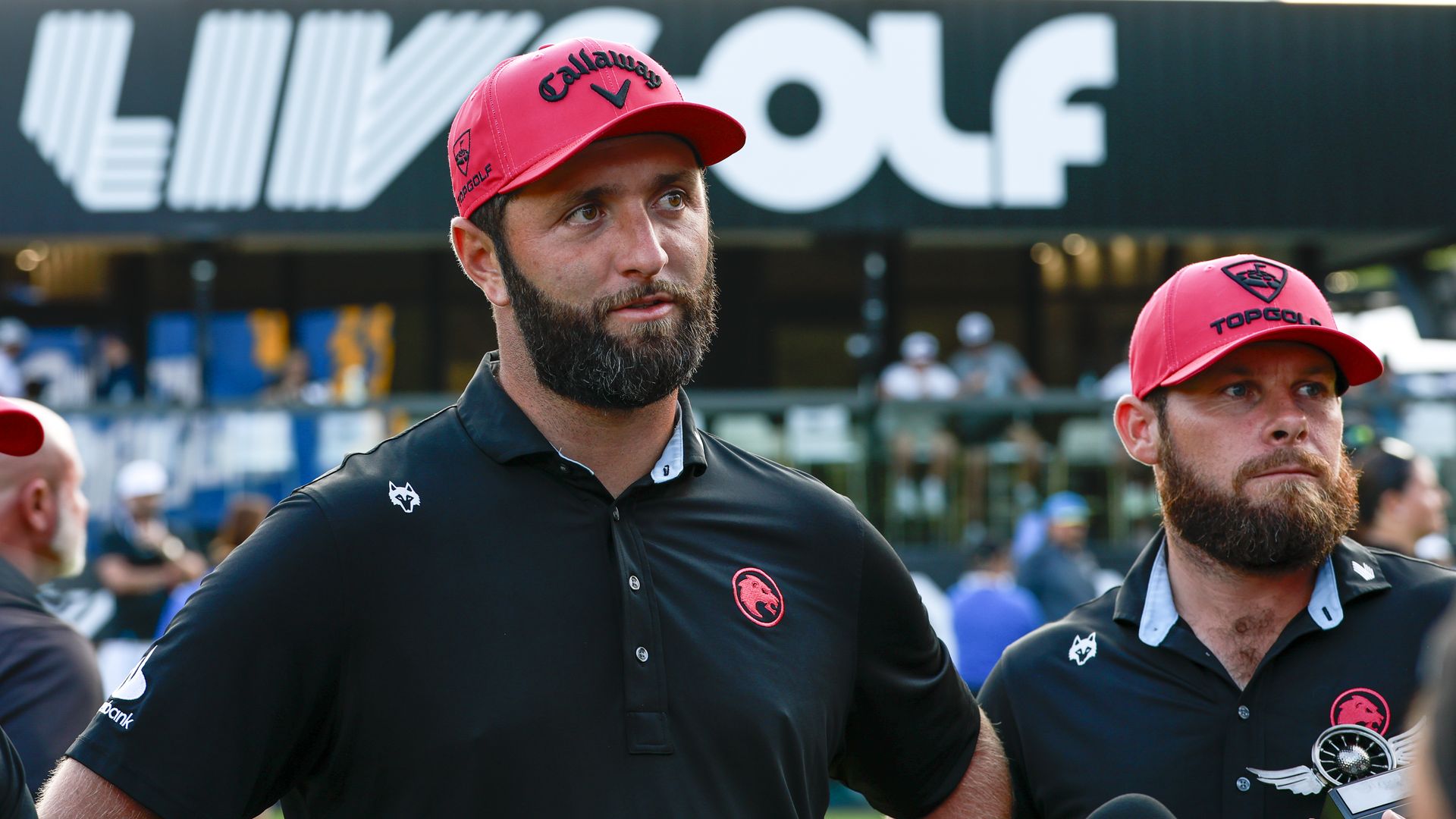
Why it matters: The Saudi-backed league filed for Chapter 11 bankruptcy protection in September after its strategy of paying big money to lure players away from the PGA Tour proved unsustainable.
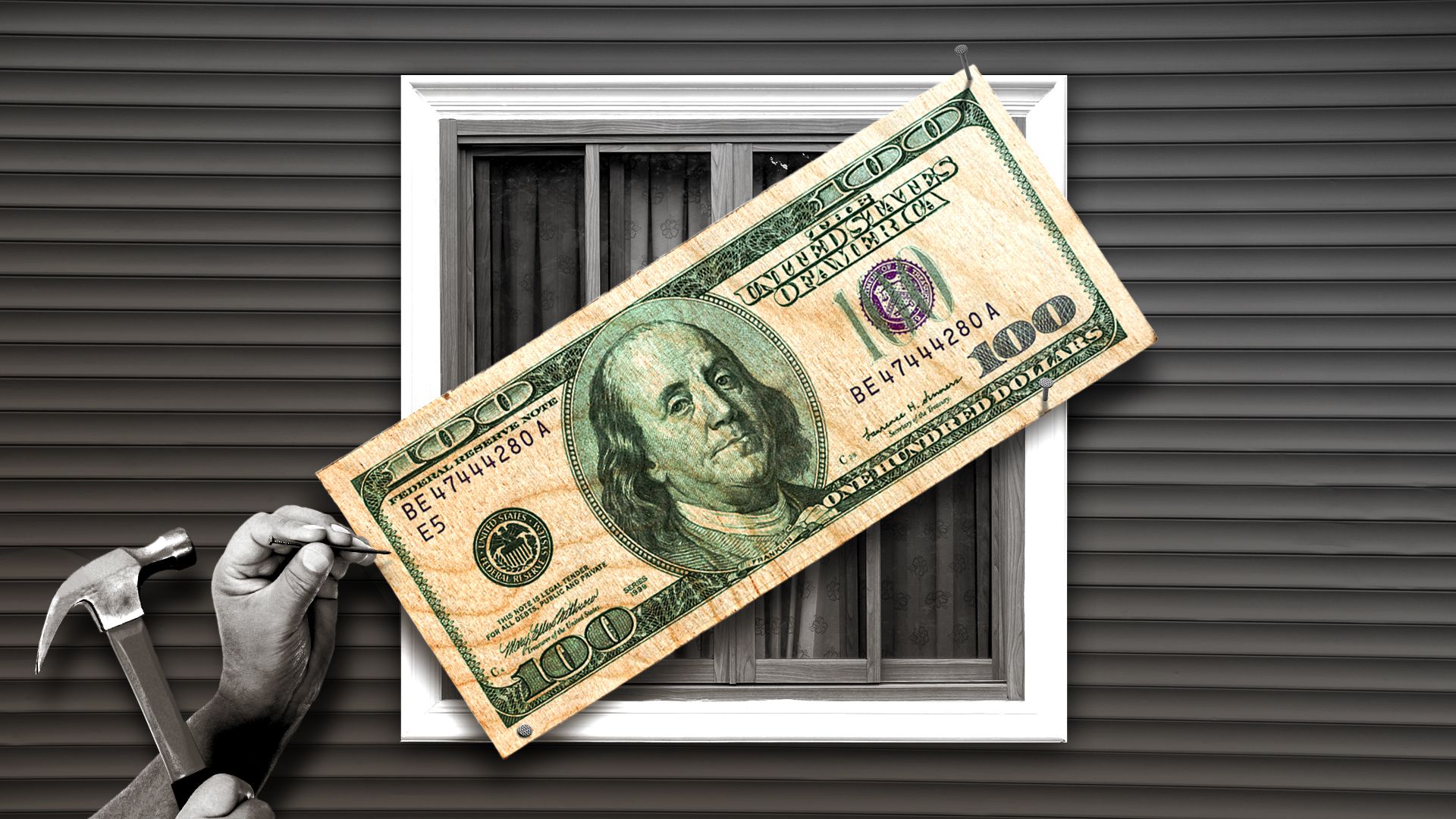
Americans could pay far more to heat their homes with oil this winter than last, a new analysis reviewed by Axios shows, as volatile energy markets and the Iran War deepen the affordability crisis.
Why it matters: Heating bills are eating into household budgets before winter sets in, with stark divides between fuel types.
President Trump's super PAC will not reimburse the government for taxpayer money spent on campaign-style ads promoting the administration.
Why it matters: Taxpayers have footed a multimillion-dollar bill for the advertisements, which some critics of the president have called "government propaganda."
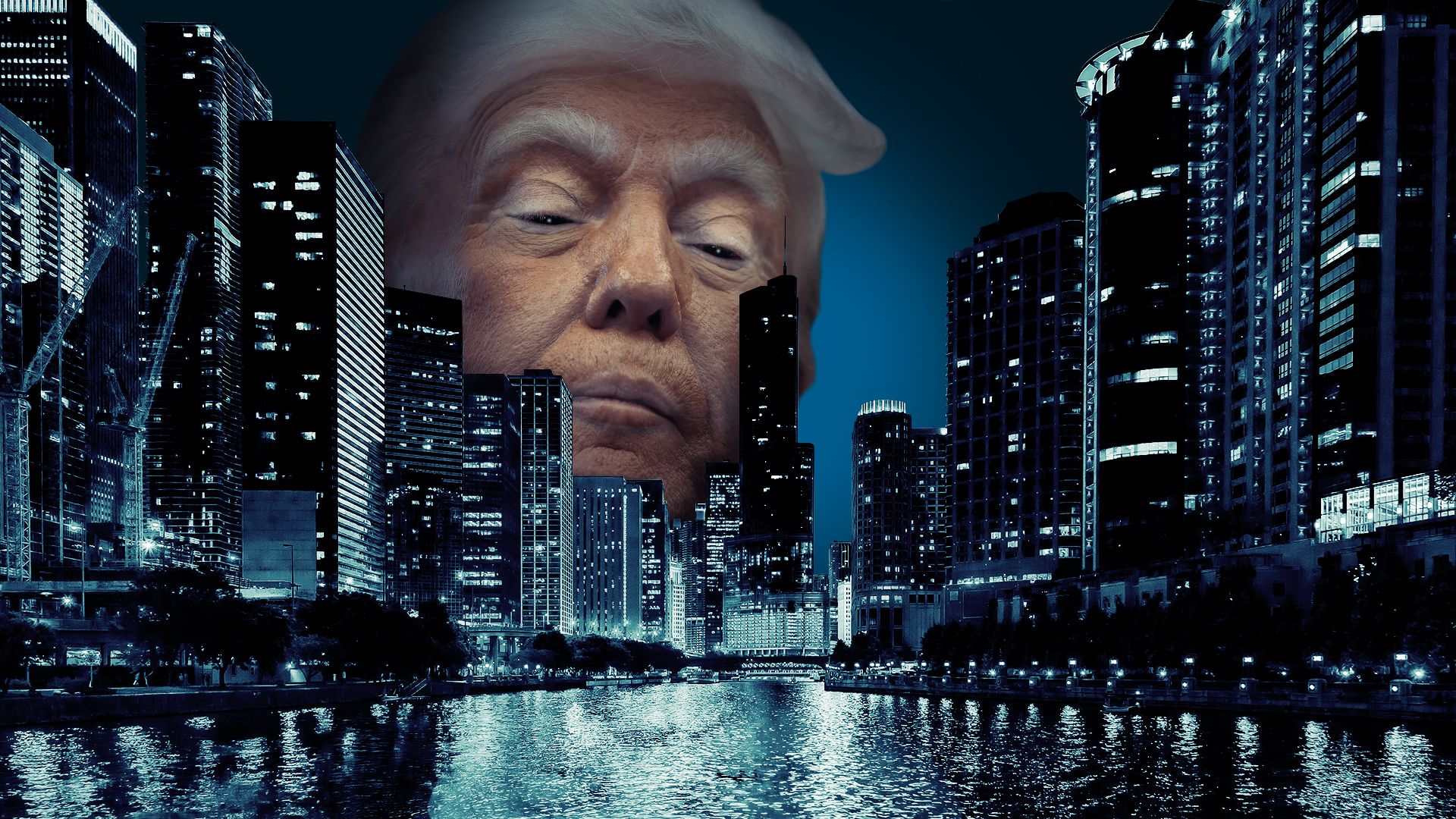
President Trump is again raising the prospect of federal intervention in Chicago, saying the city is suffering an "unprecedented" crime wave that's "getting worse by the day."
Why it matters: Trump's renewed focus on Chicago comes as the city is on pace to record even fewer homicides than last year, when killings fell to their lowest level in 60 years.
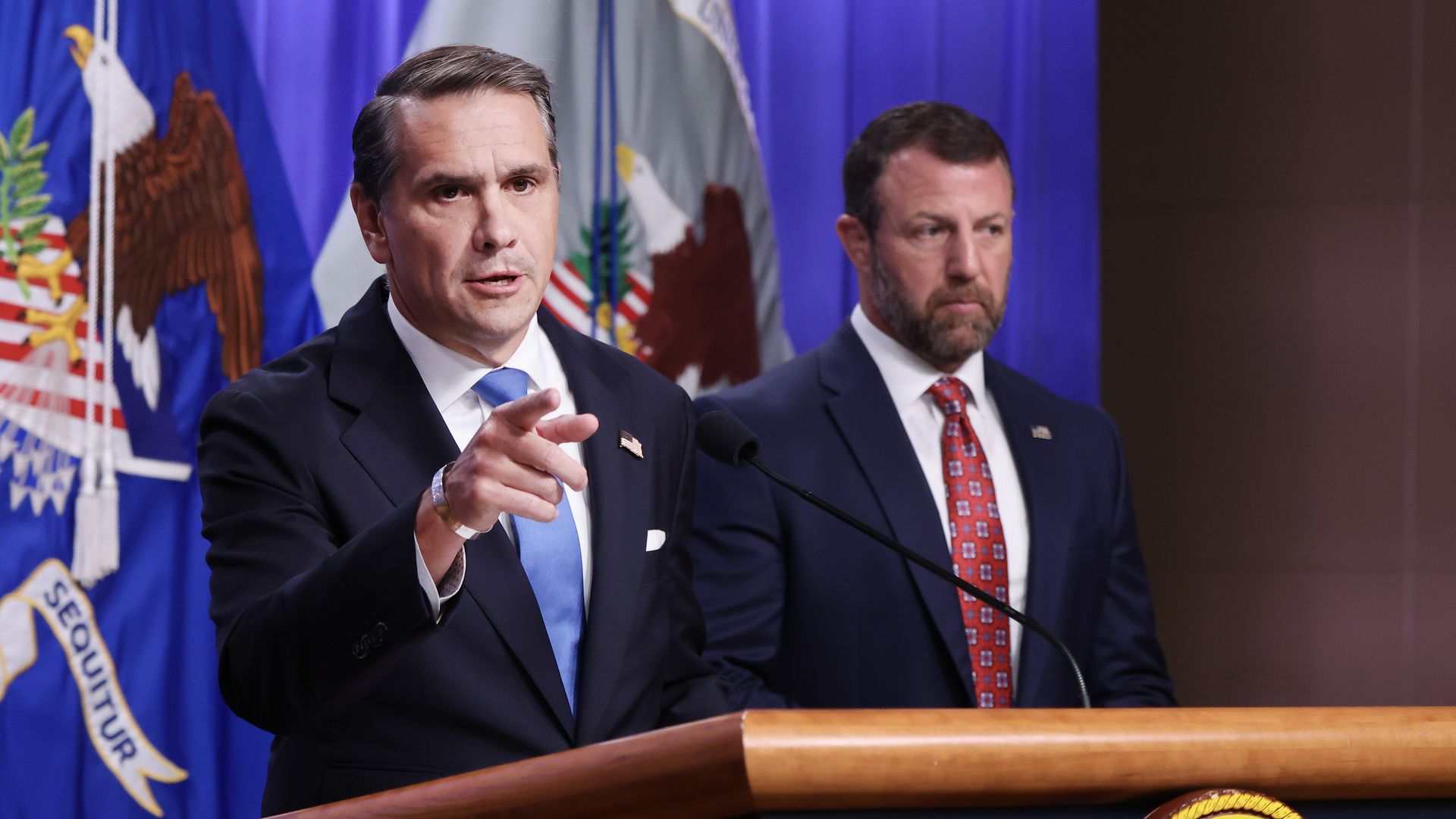
President Trump's Justice Department moved to revoke citizenship from 40 naturalized citizens accused of crimes in recent months, representing what Attorney General Todd Blanche called the "largest denaturalization effort in modern history."
The big picture: The Trump administration has made denaturalization a priority, moving personnel to pursue more cases and setting a goal of 250 cases by this month.
Private equity and venture capital aren't leaning into a Blue Wave, according to an Axios analysis of campaign donations made by political action committees affiliated with the American Investment Council and National Venture Capital Association.
Why it matters: Political alignment could impact issues like expanded retail investor access to alt investments, crypto market structure, qualified investment definitions, and AI regulation.
California leaders blasted President Trump after he said during a Monday rally about Iran, "Let them take out Los Angeles. Let them take out San Diego."
The big picture: The backlash — and the White House's insistence that Trump was misunderstood — underscored the ambiguity of his meandering speech: An argument that the war was worth enduring to protect Americans came out sounding like an invitation to attack two U.S. cities.
An administration account posted on X that Trump meant that the U.S. was fighting Iran to "STOP Iran from having the ability to take out LA and San Diego."
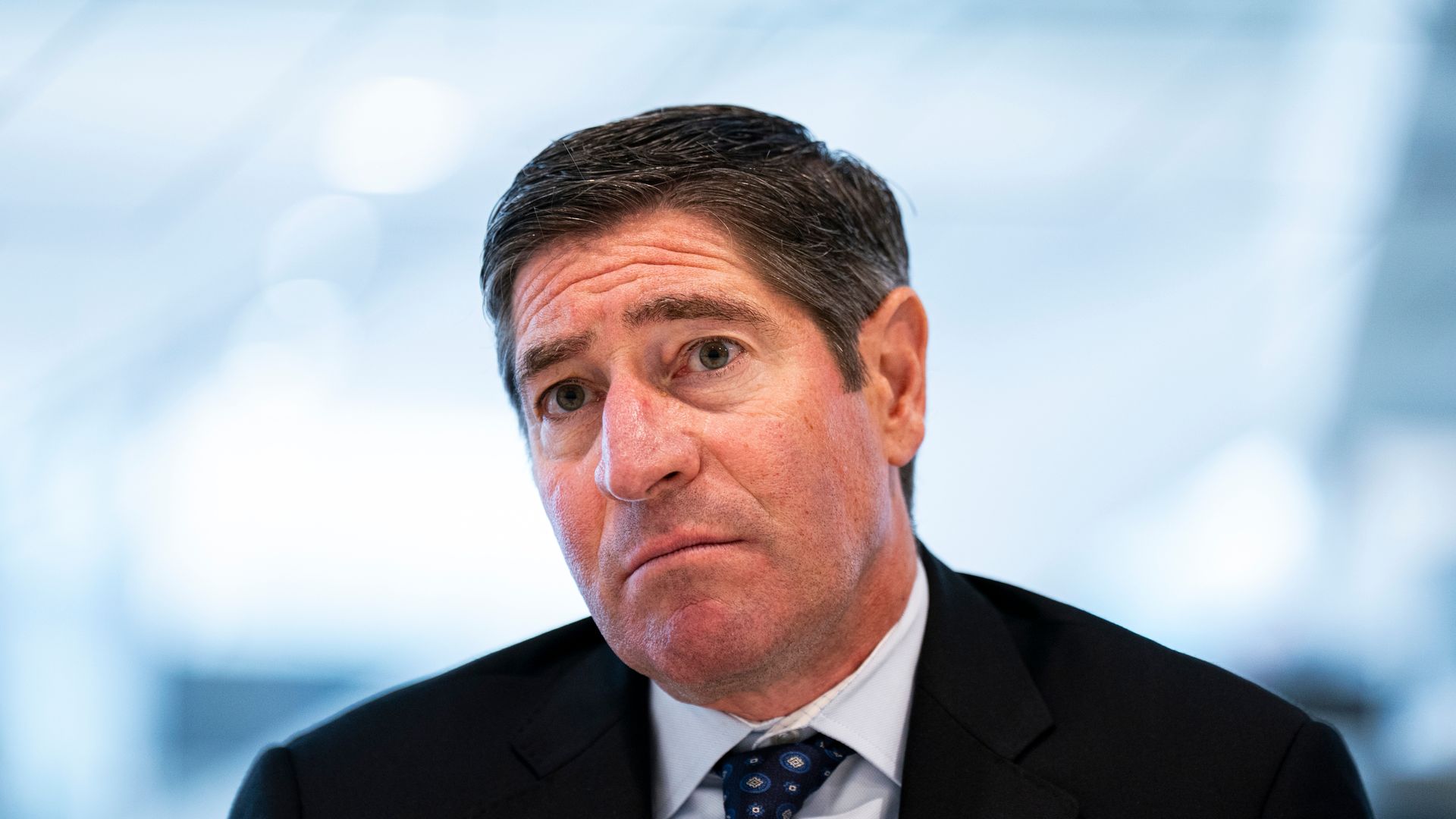
President Trump's new "super intelligence" task force will work to reconcile competing views on AI regulation without rushing into rules that could quickly become outdated, co-chair Scott Kupor tells Axios.
Why it matters: The approach reflects the administration's effort to balance its push to win the AI race with pressure to address the technology's risks, said Kupor, a Silicon Valley veteran and director of the federal government's Office of Personnel Management.
Sometimes the outcome of a Supreme Court case becomes pretty clear during oral argument. The blockbuster climate case the justices heard on Monday was not one of them.
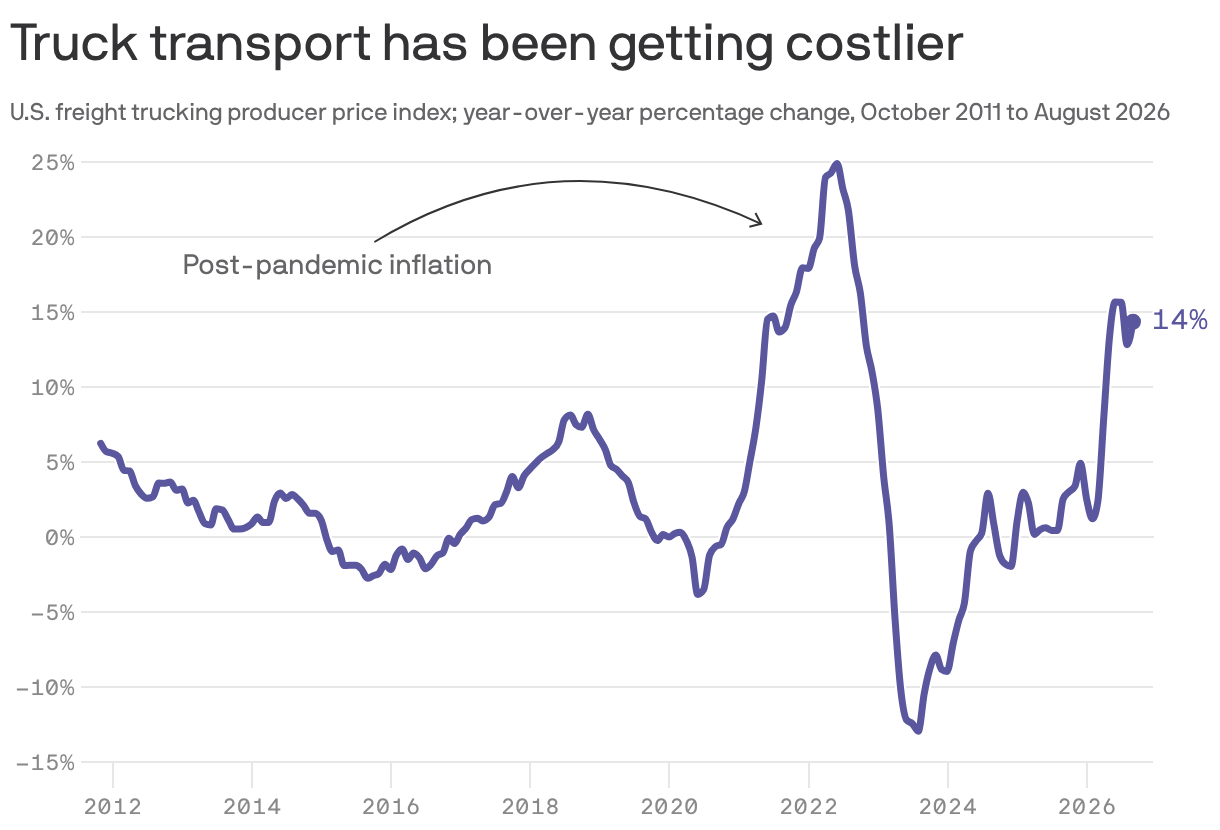
Data: FactSet. U.S. Bureau of Labor Statistics; Chart: Axios/Matt Phillips
It's not just diesel. The Trump administration's regulatory clampdown on truckers is adding to surging transportation costs.
Why it matters: Trucking is a major way that price shocks get transmitted through the economy.
And limits on available drivers could amplify the impact of the spike in fuel costs, with diesel now averaging $6.32 a gallon — up over 70% from last year.
Global investors did not expect Flávio Bolsonaro to convincingly top the first round of Brazil's presidential election, but now their expectations are running high that Latin America's largest economy could soon be transformed.
Why it matters: Should the right-wing candidate win the run-off on Oct. 25, nearly all of South America would become aligned with the Trump administration on trade, national security and other issues.
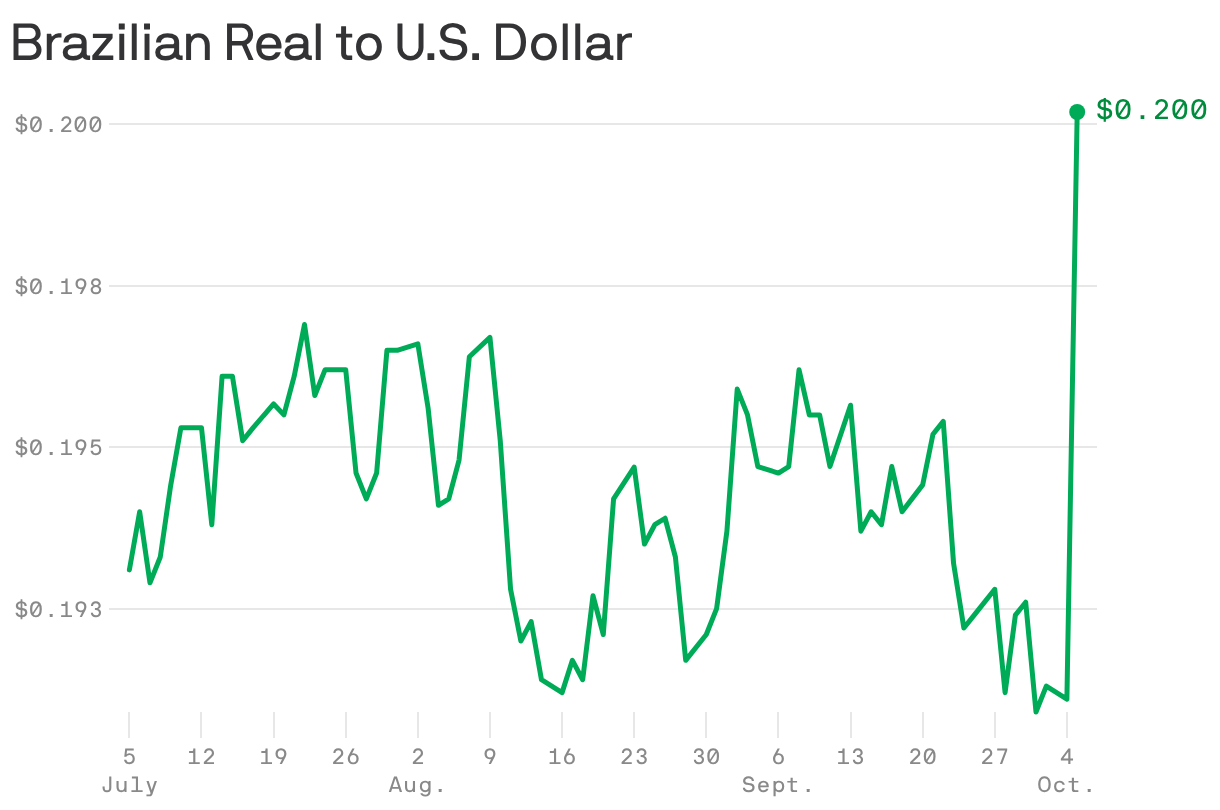
Driving the news: Brazilian markets surged Monday after Bolsonaro captured 47% of the vote Sunday.
The Brazilian currency, the real, surged in value.
After soaring more than 9%, the benchmark Bovespa stock index closed up 7.7%, its best daily gain since March 2020.
Zoom in: Bolsonaro, the eldest son of the former president known as the "Trump of the tropics," has pledged to cut public spending, which has helped push borrowing costs in Brazil higher.
While it's unclear how fiscally prudent Bolsonaro might be, "markets are likely to give him the benefit of the doubt," said Thierry Larose, portfolio manager at Vontobel, per Reuters.
It's not just Bolsonaro's surprising show of strength: Other right-wing candidates made gains as well.
And no presidential candidate who came in second in the first round has gone on to win the run-off since 1989, says the Economist Intelligence Unit.
What they're saying: "An increased likelihood of a change in government, together with the composition of the new congress, raises the probability of a credible fiscal anchor," UBS analysts wrote in a note Monday.
President Trump has long nicknamed his opponents, and now, as November approaches, he's even trying to dictate the vocabulary around key issues.
The big picture: Trump's latest effort to reshape political language follows his longtime political strategy: Define the terms of the debate, and you gain power over the debate itself.
But as polling on those issues continues to haunt the president's party, Trump's new vocabulary may not be enough to change voters' minds.
The main super PAC supporting Republican Senate candidates plans to inject $5 million into the South Carolina campaign as an "insurance policy" to help GOP nominee Darline Graham, a source familiar with the move tells Axios.
Why it matters: The GOP's concern that a Senate seat in blood-red South Carolina could be in play shows just how bad the political environment is for Republicans, who face a rash of troubles in states long considered conservative strongholds.
A national Latino civic engagement group is turning to an AI app to help voters cut through an increasingly complicated election system — in English or Spanish.
Why it matters: Nearly 39 million Hispanics can vote in this year's midterms, and their political loyalties are increasingly up for grabs.
Everytown for Gun Safety, a group that advocates for stricter gun laws, is teaming up with House Democrats on a $10 million ad campaign to boost former gun safety advocates now running for Congress, Axios has learned.
Why it matters: That's a significant sum at a moment when Democrats are raising alarm bells about being outgunned financially in the midterm elections.
President Trump's newly minted "super intelligence" task force faces a daunting mandate: Reconcile fiercely divided Cabinet factions to create a tech policy that keeps pace with the blistering AI race.
Why it matters: The task force brings the administration's scattered AI work under one roof, but it also makes it likely that any new rules will be forged in the crossfire of competing internal camps.
In an interview, task force co-chair Scott Kupor rejected the assertion that the administration is asleep at the wheel on AI policy, arguing that rigid, static legislation would risk becoming instantly obsolete.
The 2026 midterms are shaping up to be the most intensely observed, recorded, dissected and challenged election in American history.
Why it matters: A small army of partisan and nonpartisan observers will show up. So will a surge of Justice Department monitors, organizers looking for signs of ICE and citizen journalists broadcasting their search for illegal voting in real time.