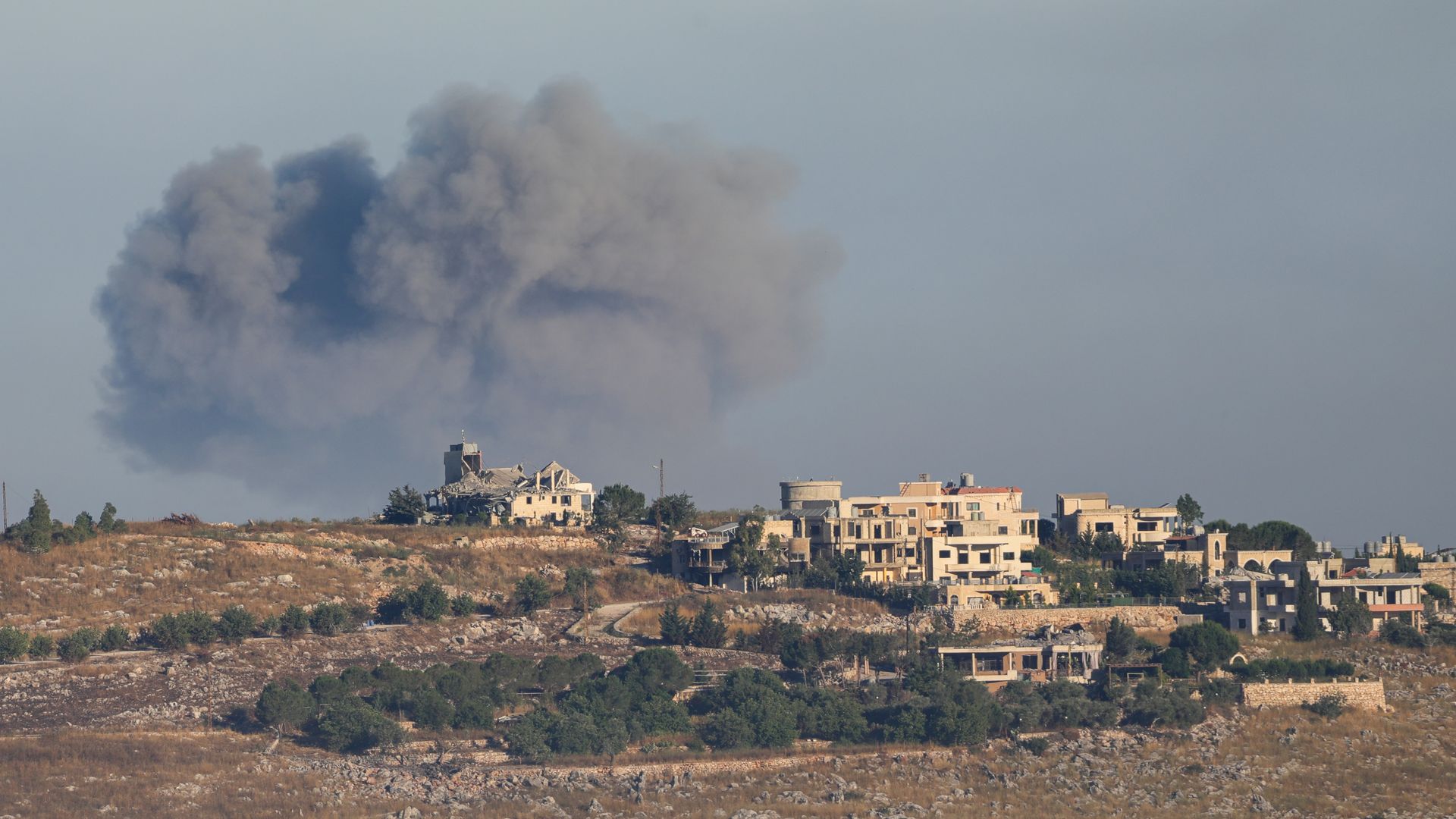
The Iranian armed forces announced Saturday they will close the Strait of Hormuz — just three days after it reopened — alleging America's failure to rein in Israeli attacks on Lebanon violates the new ceasefire deal.
Why it matters: This is the first big crisis between the U.S. and Iran since signing a memorandum of understanding to end the war earlier this week.
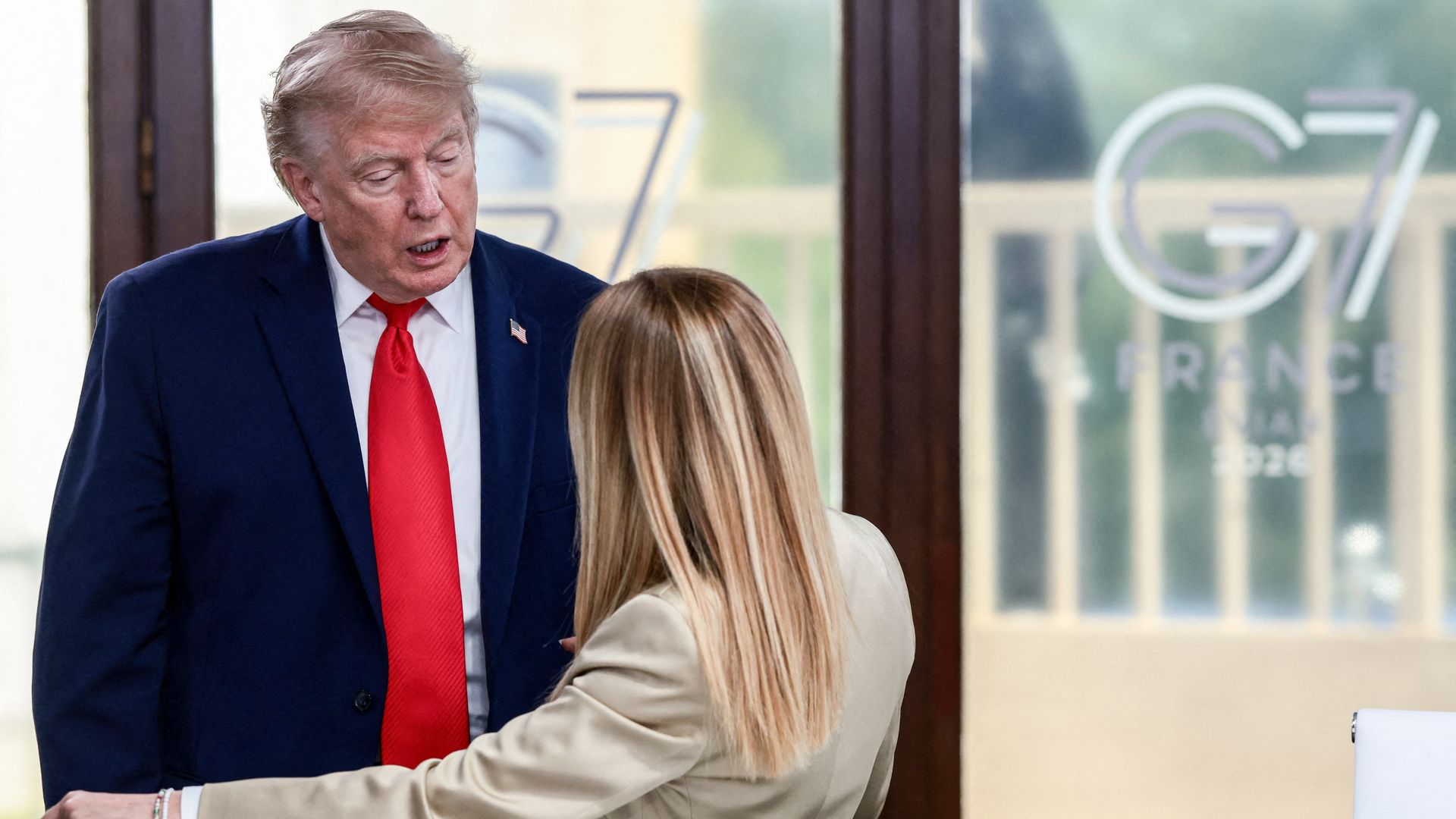
Donald Trump and Giorgia Meloni's war of words over a factually contested photo op request at the G-7 exploded on Saturday, with the one-time friends blasting each other in angry terms on social media.
Why it matters: Even as Trump lavishes praise on American adversaries like China's Xi Jinping, close allies are increasingly willing to split with him.
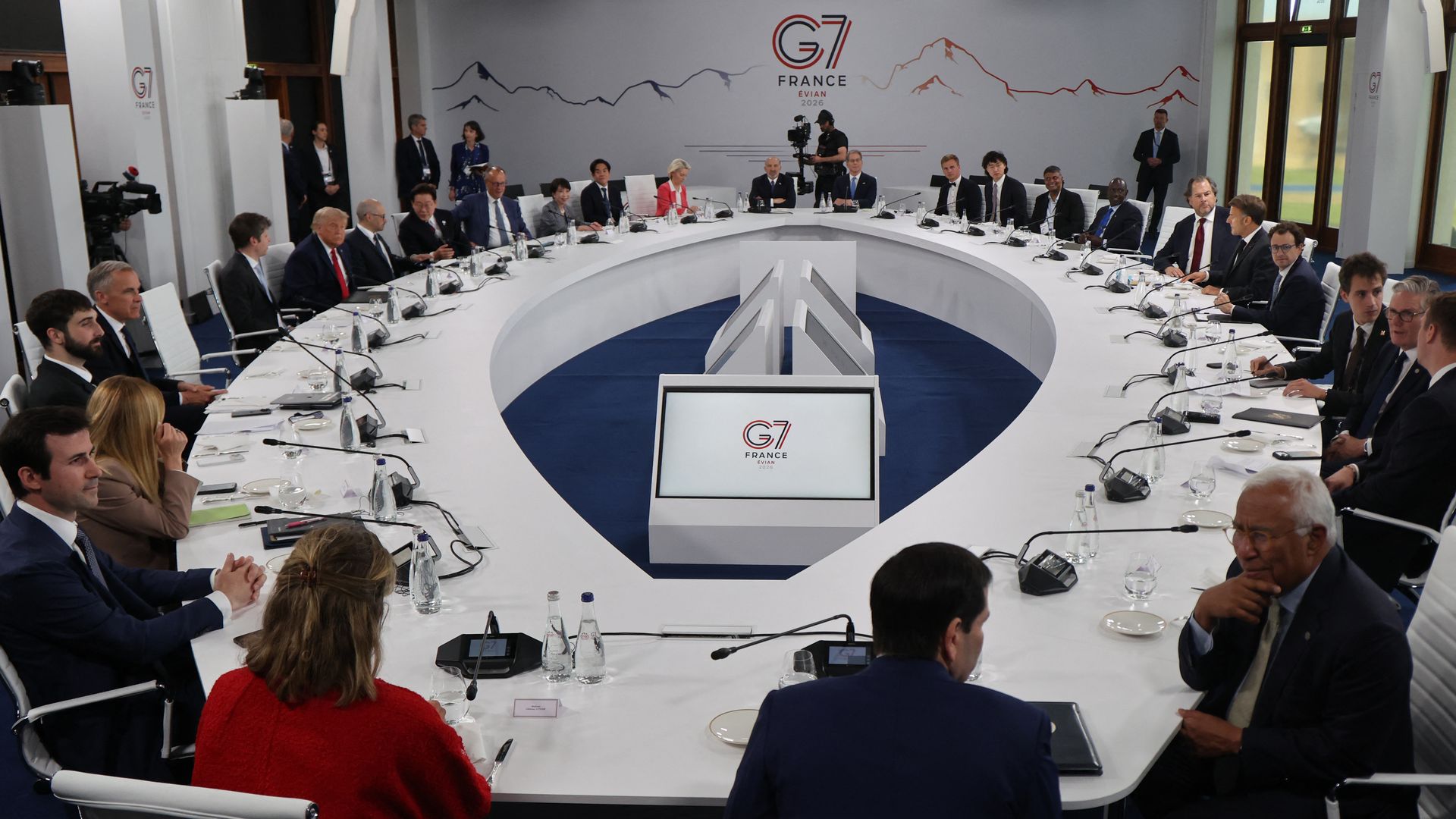
It was a historic, even jarring, scene that captures a once-unimaginable geopolitical ordering. The world's most powerful heads of state gathered in the French Alps this week for the annual G7 summit, with the CEOs of America's dominant AI companies seated and treated like heads of nation-states themselves.
Why it matters: This is the future many leaders and AI CEOs envision — heads of state and the masters of tech in constant discussion, and sometimes conflict, over who controls AI, its rules, and its application to governing and world security.
Some Democratic candidates are learning the hard way that there's a cost to being party leadership's favorite in a hotly contested primary.
Why it matters: This echoes the Tea Party wave that hit Republicans in the 2010s, with party outsiders harnessing primary voters' anger to win upset victories over establishment candidates.
Why it matters: Trump has long admired leaders who wield centralized power and stamp their will on history. He skipped over traditional American allies when asked which world leaders he respects.
LGBTQ Americans aren't just fleeing red states for blue enclaves. They are also building lives in cheaper, fast-growing metros where jobs, housing and politics collide.
Why it matters: The "red-state exodus" narrative misses a quieter reality. Affordability and work are keeping some LGBTQ+ people in — and drawing others to — places that may be politically complicated but economically viable.
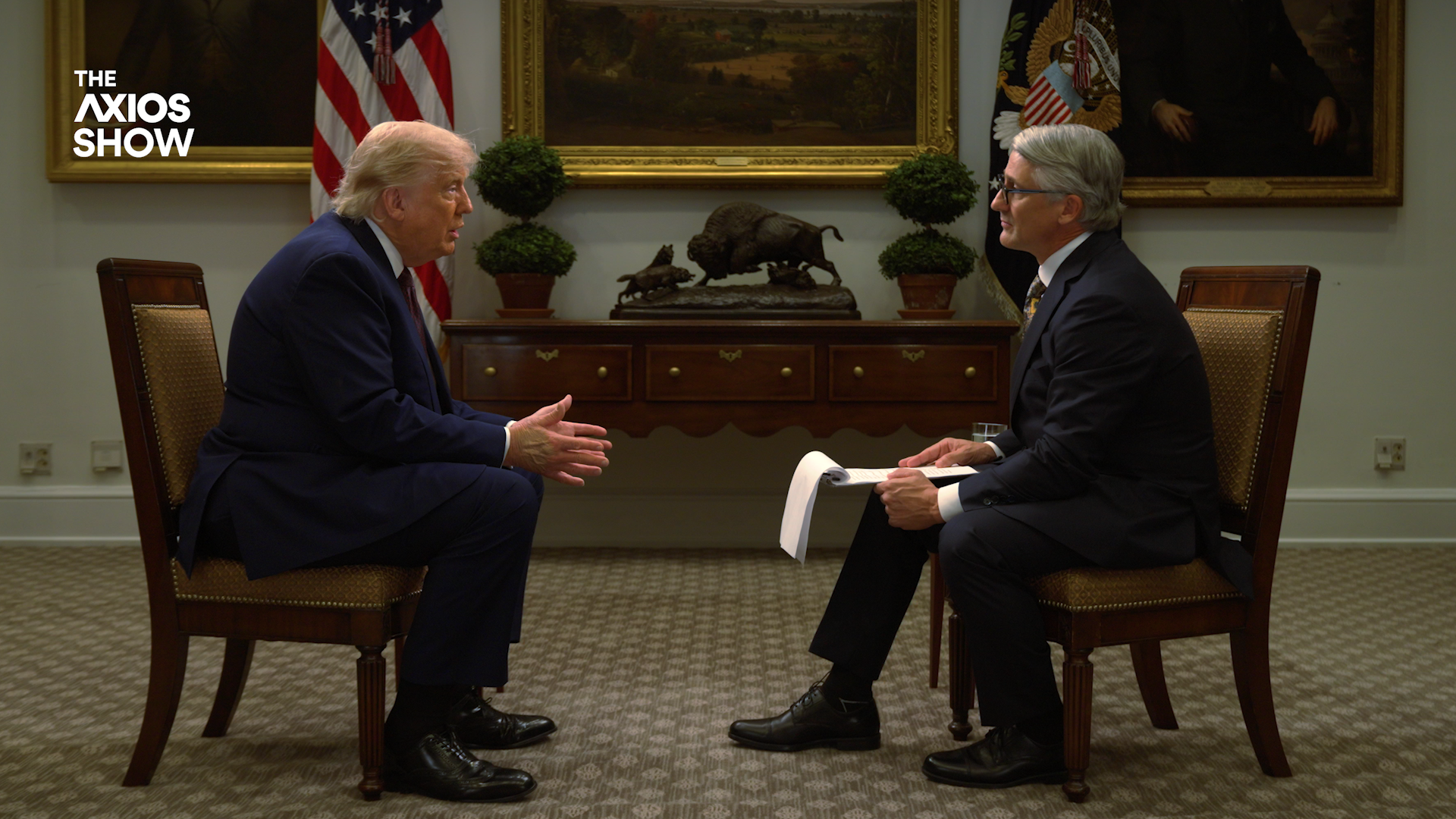
President Trump said Thursday on "The Axios Show" that "it's possible" a potential Cuba invasion would resemble the swift capture of Venezuelan President Nicolás Maduro in January.
Why it matters: Trump wants to project U.S. military power across the Western Hemisphere, fitting a second term defined by blunt force and expansionist ambition.
President Trump reached the point last week of viewing Anthropic as a national security threat, he said in an exclusive interview for "The Axios Show," though he signaled that relations have improved since.
Why it matters: National security concerns and personality clashes landed AI heavyweight Anthropic in the middle of a government crackdown with domestic and international repercussions.
President Trump joins Axios' Marc Caputo on the latest episode of "The Axios Show."
Speaking from the Roosevelt Room of the White House, Trump sounds off on the Iran war, his views of world leaders, his plans for Cuba and what he thinks about AI.
President Trump tells "The Axios Show" that his deal to end the war in Iran averted a global depression, that Cuba could get the same treatment as Venezuela, and that a leading AI lab looked in recent days like a national security threat.
The big picture: In a sweeping 45-minute interview on Thursday with Axios White House correspondent Marc Caputo, Trump made clear his view of the extent of his post-war power: "There are no limits."
President Trump declared on "The Axios Show" on Thursday that he's discovered "no limits" to his power since going to war with Iran.
A forthcoming book reveals he's been entertaining an even grander idea: that he may be the most powerful man in history.
Why it matters: Trump is no longer merely testing the limits of the presidency. He's describing power in world-historical terms — placing himself in the lineage of conquerors, dictators and strongmen who bent nations to their will.
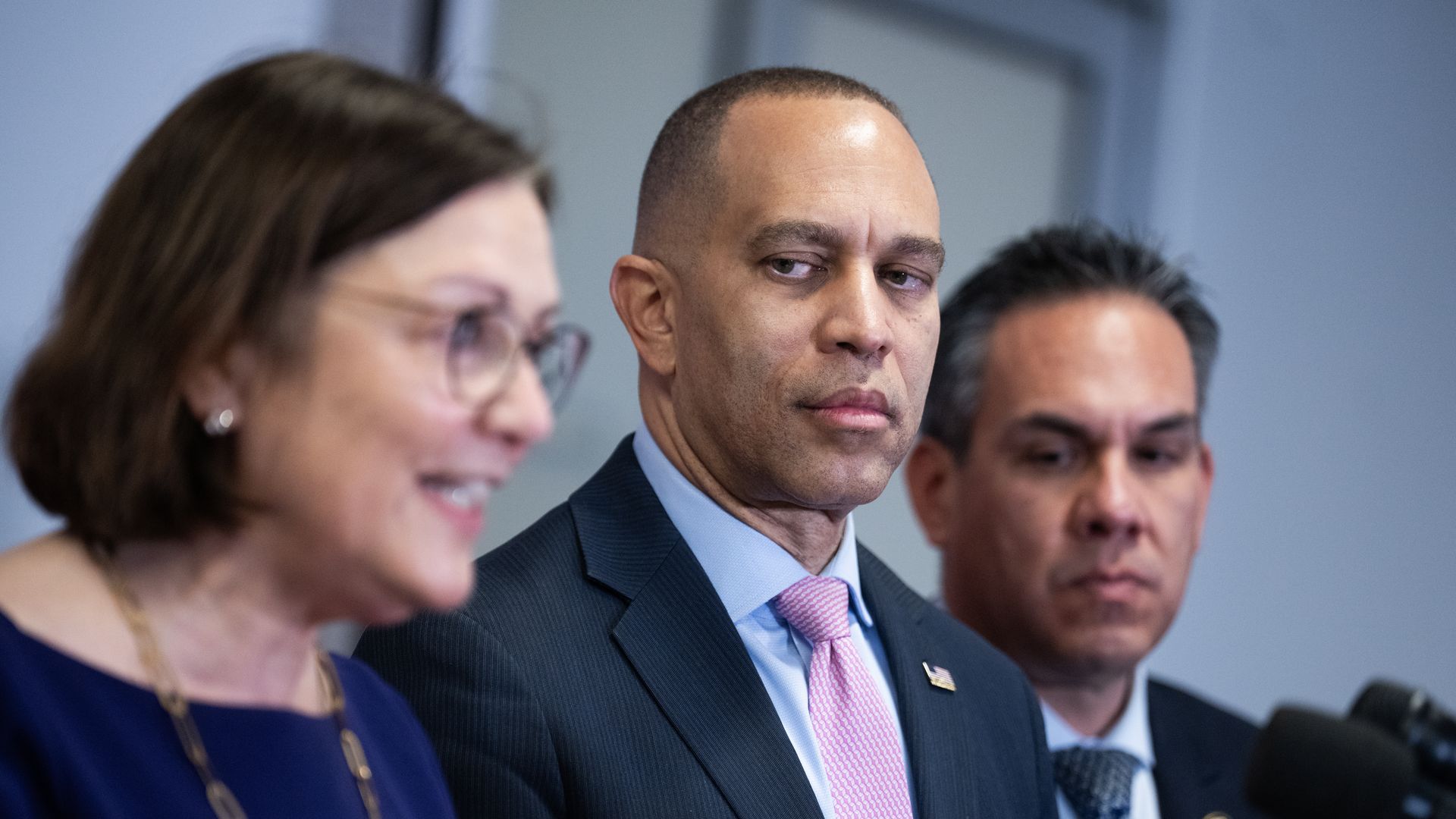
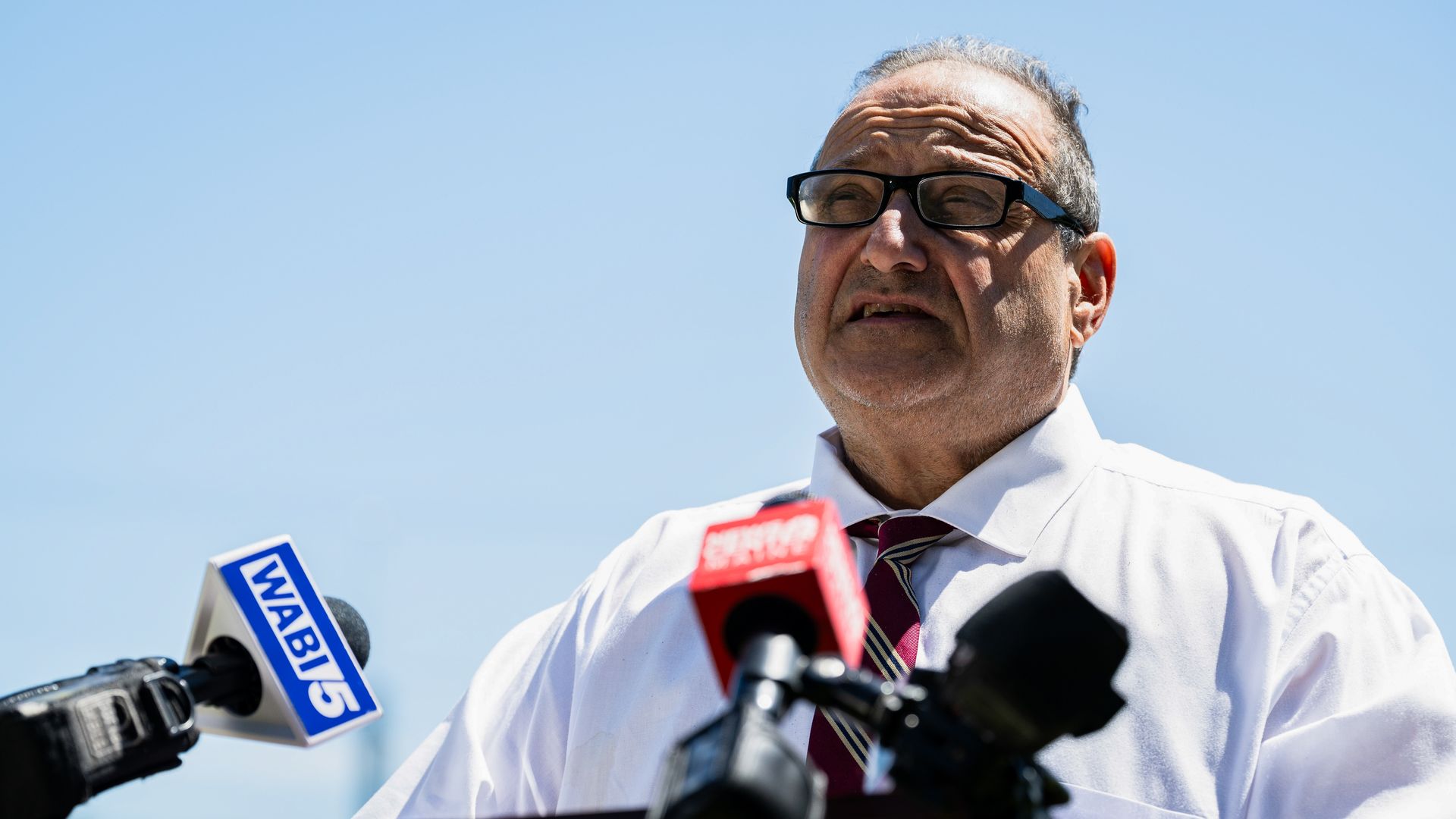
House Democratic leadership's preferred candidate in Maine's 2nd district, state Sen. Joe Baldacci, lost his primary to progressive rival Matt Dunlap, state election officials announced early Friday morning.
Why it matters: This is the second time this month that a candidate backed by the Democratic Congressional Campaign Committee has fallen short in their primary.
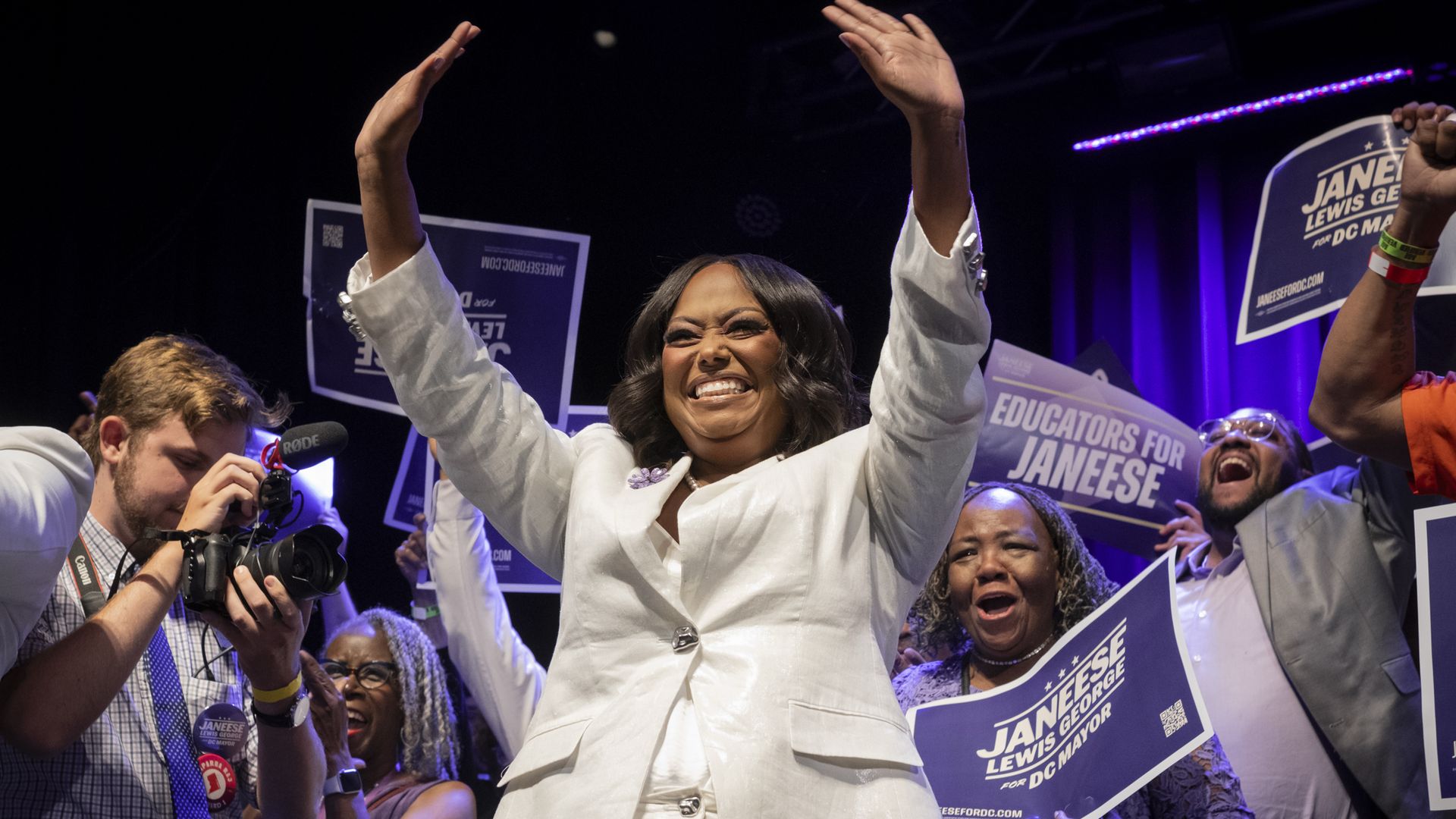
The triumph of a democratic socialist in the D.C. mayoral race is the latest sign that younger urban voters are turbo-charging candidates who promise to go big on affordability and take on President Trump.
Why it matters: While Washington joined New York and Seattle as the latest big city to elect a democratic socialist, Janeese Lewis George's victory was less about her political label than about punishing prices and anger at the president.
Call it a dream deferred: Americans are being thwarted by homeownership costs that are near record highs, a new report finds.
Why it matters: Homeownership is a cornerstone of the American dream and the way many of us build wealth, but it is increasingly out of reach — particularly for young adults.
Juneteenth is surviving the corporate DEI backlash, even as American institutions pull back from the promises that helped elevate it.
Why it matters: The holiday's staying power shows how Black history can be absorbed into calendars, payroll systems and public rituals even as the post-2020 commitments that gave it renewed force are renamed, narrowed or abandoned.
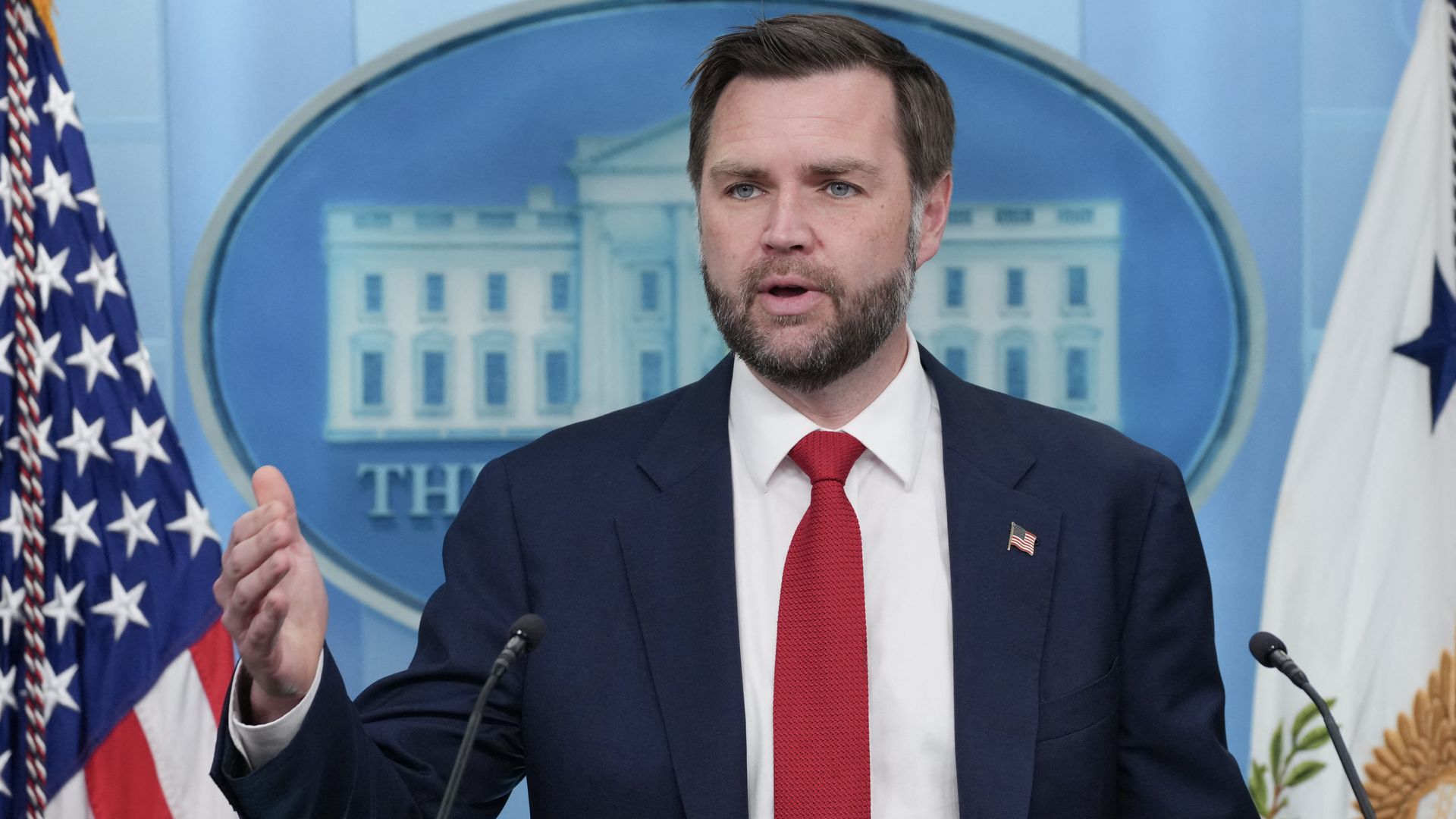
Vice President JD Vance postponed a planned trip to Switzerland for U.S.-Iran talks expected to begin Friday, the White House said.
Why it matters: The White House said the reason for the change of plans was "logistics." But there were some indications that the background for the decision is connected to the shaky ceasefire in Lebanon.