U.S. and Iran reach deal to extend ceasefire and open strait

Add Axios as your preferred source to
see more of our stories on Google.
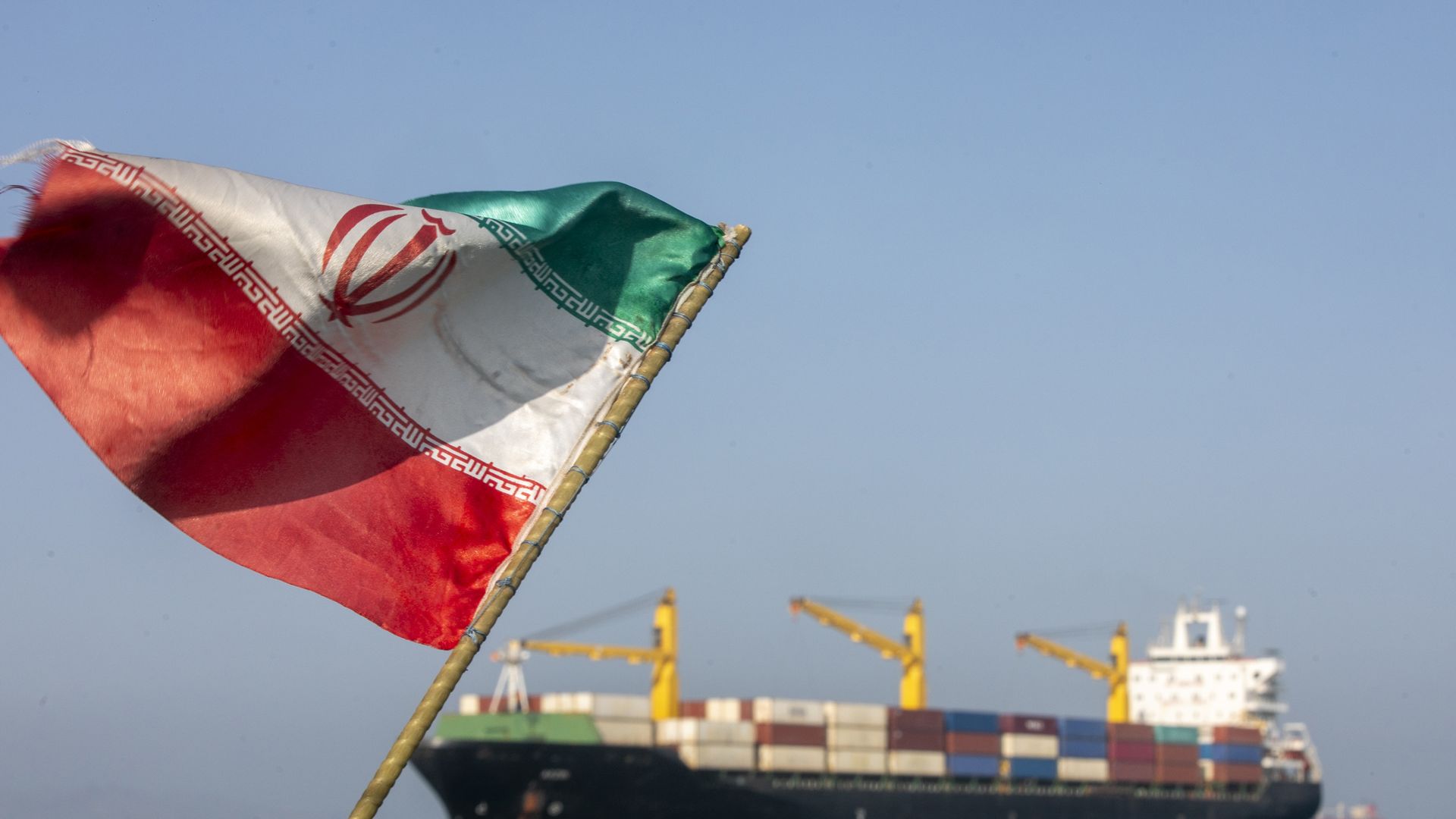
An Iranian flag flies near anchored cargo ships in the Strait of Hormuz off Larak Island, Iran, as tensions over access to the strategic shipping route persist. Photo: Majid Saeedi/Getty Images
The U.S. and Iran agreed to a framework extending their ceasefire for 60 days, with a formal signing ceremony expected Friday and nuclear talks to follow.
Why it matters: The agreement could reopen the Strait of Hormuz, ease pressure on global energy markets and create a window for negotiations over Iran's nuclear program.
- The memorandum of understanding would mark the war's biggest diplomatic breakthrough and buy time for negotiations over unresolved nuclear questions.
The big picture: The agreement is designed to restore shipping through the Strait of Hormuz, which before the war handled about 20% of global oil and liquefied natural gas. But it leaves key nuclear issues to be negotiated over the next two months.
- Fully reopening the strait may not happen immediately. Mine-clearing, repairing infrastructure and guaranteeing security could take time before a full return to pre-war shipping volumes.
Driving the news: Pakistani Prime Minister Shehbaz Sharif announced Sunday the framework agreement to reopen the strait and launch nuclear talks after 107 days of war.
- President Trump said soon after the U.S. would lift its naval blockade, while Iran was expected to reopen the strait, with more detailed nuclear negotiations to follow.
- The agreement was expected to be signed electronically on Sunday after mediation by Pakistan and Qatar, but it was not immediately clear whether that had happened.
What we're watching: Sharif and Iranian officials said the formal signing ceremony would be Friday in Switzerland.
- Trump said on Truth Social that the opening of the strait would take place only "upon the signing of the Deal on Friday, for purposes of mine removal."
Iran's Supreme National Security Council said "the war and military operations on all fronts, including Lebanon, will end immediately and permanently beginning tonight."
- The statement added: "Negotiations on a final agreement will take place only after the other side has implemented its commitments under the memorandum of understanding."
Breaking it down: The agreement calls for the U.S. and Iran to negotiate over Iran's nuclear enrichment and the disposal of its highly enriched uranium during the 60-day window.
- The U.S. will discuss sanctions relief and the release of frozen Iranian funds, with relief expected to be tied to Tehran's compliance.
- The ceasefire covers fighting between Israel and Hezbollah in Lebanon, which flared up again Sunday.
State of play: The agreement comes after a volatile final stretch. Israel struck Hezbollah targets in Beirut hours before the expected signing, prompting Iranian threats to walk away from the deal.
- Iran made operational preparations for an attack on Israel, according to U.S. and Israeli officials.
- U.S. negotiators, together with Qatari and Pakistani mediators, scrambled to avoid an Iranian attack on Israel that would likely have generated a harsh Israeli response and potentially derailed the deal, but Tehran's officials ended up holding off.
What they're saying: "The Deal with the Islamic Republic of Iran is now complete. Congratulations to all! I hereby fully authorize the toll free opening of the Strait of Hormuz, and, simultaneously herewith, authorize the immediate removal of the United States Naval blockade. Ships of the World, start your engines," Trump wrote on Truth Social.
- Minutes earlier, Sharif posted on X that a peace deal between the U.S. and Iran "has been REACHED," adding: "Both sides have declared the immediate and permanent termination of military operations on all fronts, including in Lebanon."
- Sharif said the deal was "now in place."
Iran's deputy foreign minister Kazem Gharibabadi told Iranian media that the text of the memorandum of understanding had been finalized.
- Some of the revisions Tehran asked to make in the text of the MOU were accepted after Sunday's escalation in Lebanon, he said.
- Gharibabadi said threats from Iran's armed forces "helped facilitate progress in the negotiations" and "contributed to finalizing the text."
- He said this advanced several issues that remained unresolved during negotiations. "The armed forces were prepared to deliver a decisive response," Gharibabadi said.
- Gharibabadi said the negotiations over the text continued until around 5pm ET. Fifteen minutes later, Sharif announced the deal.
What's next: Sharif said Pakistan and the other mediators would "facilitate a series of meetings this week," followed by technical talks.
- The sides have given themselves 60 days to reach a technical agreement on how to down-blend Iran's highly enriched uranium and both freeze and monitor its nuclear program going forward.
- That's a tall order given how difficult it was to reach the much less detailed memorandum of understanding.
- The U.S. side insists Iran is incentivized to reach a final agreement because sanctions relief and access to frozen funds depend on progress on the nuclear front. Some hawks in the U.S. and Israel worry there will never be a final deal and the war will end with the nuclear questions unresolved.
Editor's note: This story has been updated with additional details throughout.
