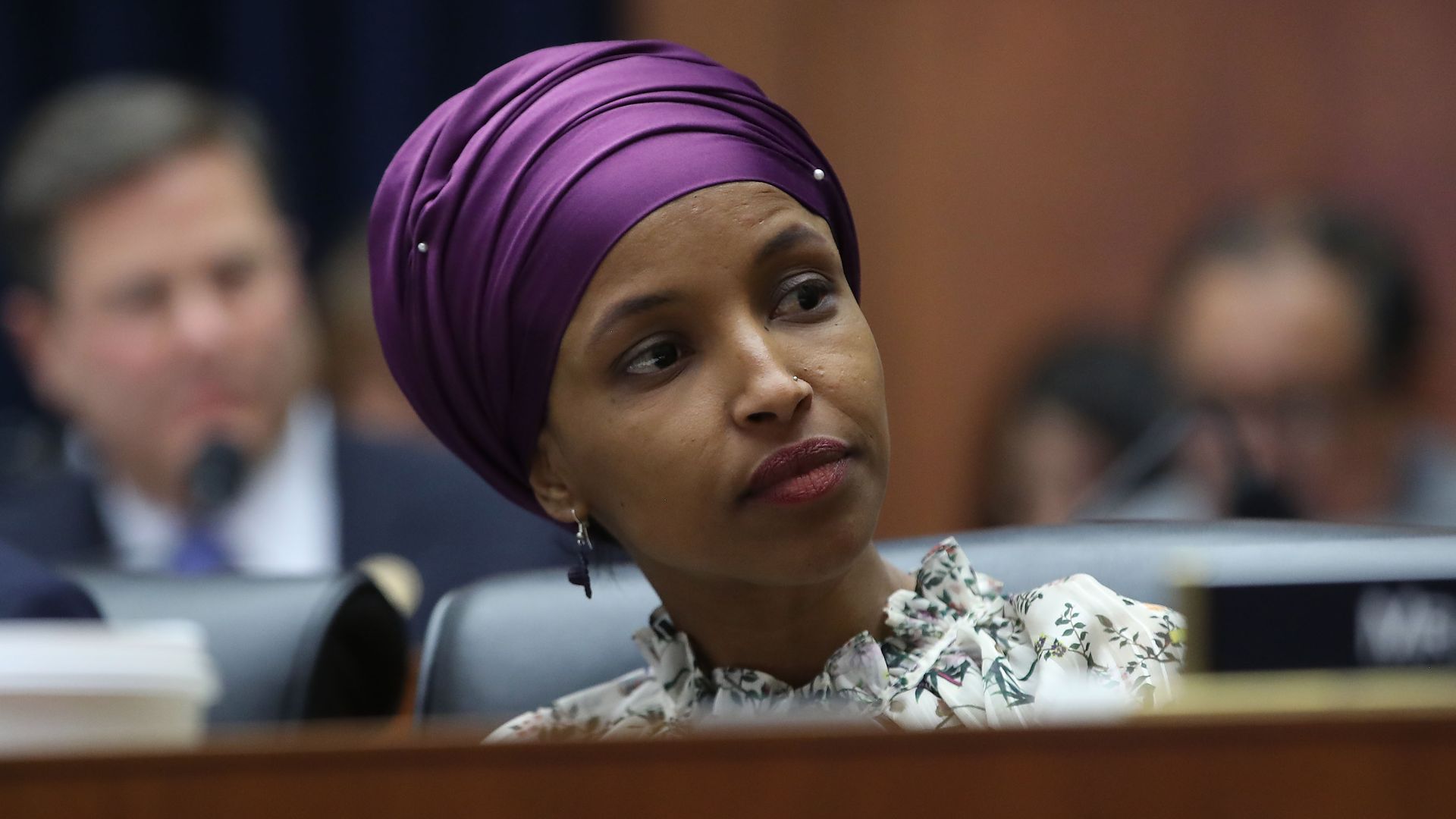
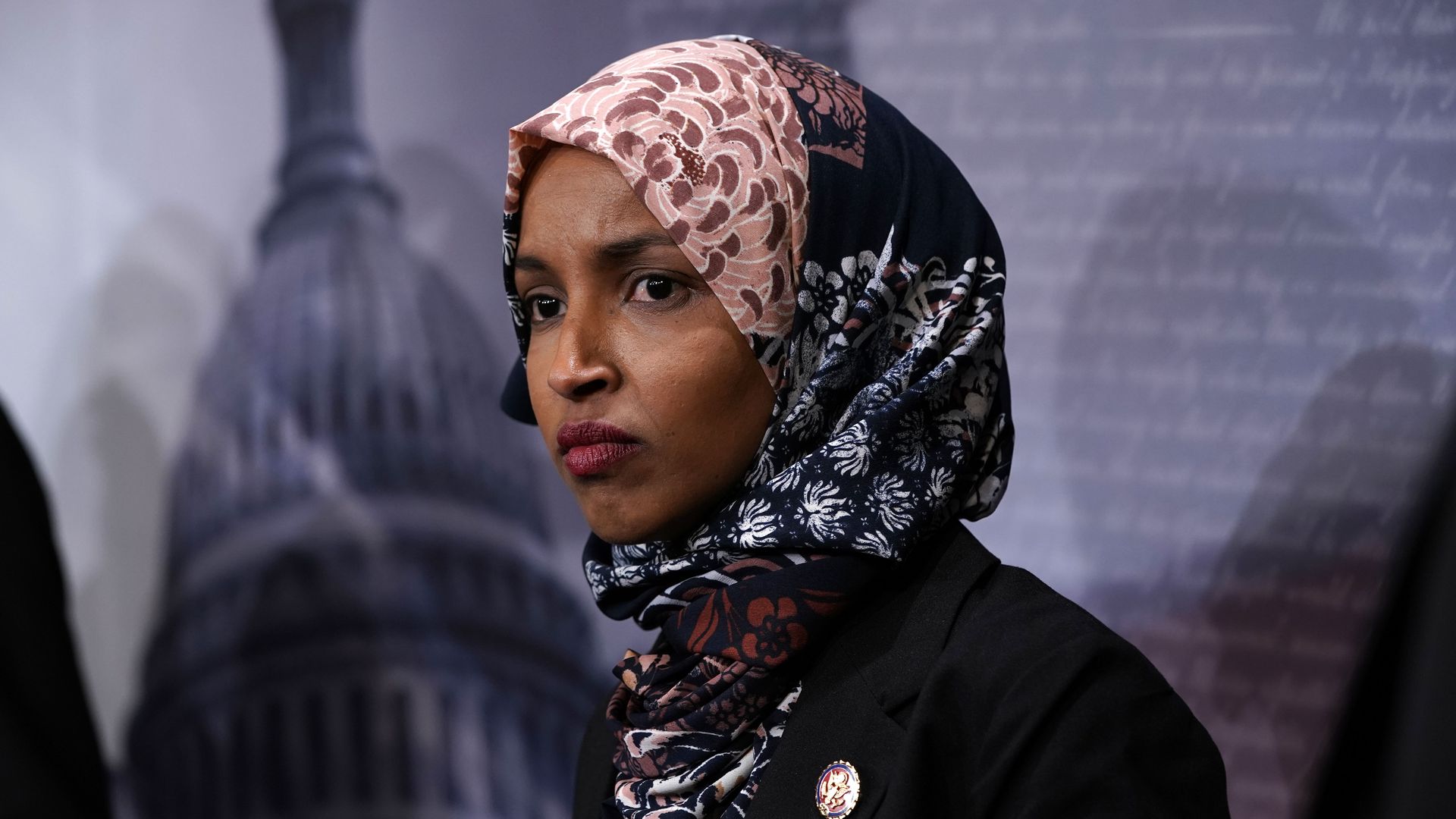
The House passed a resolution Thursday 407-23 condemning anti-Semitism and other bigotry, following a week in which questions about how to respond to Rep. Ilhan Omar's (D-Minn.) controversial comments on Israel threatened to divide the Democratic caucus.
The big picture: Tensions over the resolution, which was briefly delayed, reportedly ran high in an emergency meeting called by Pelosi on Wednesday — with some Democrats claiming that Omar had been unfairly singled out. Rep. Elliot Engel, chair of the House Foreign Affairs Committee and one of the Democrats who harshly condemned Omar's comments, voted for the resolution but said on the House floor: "I am very disappointed we weren't able to have a separate resolution that condemns anti-Semitism."
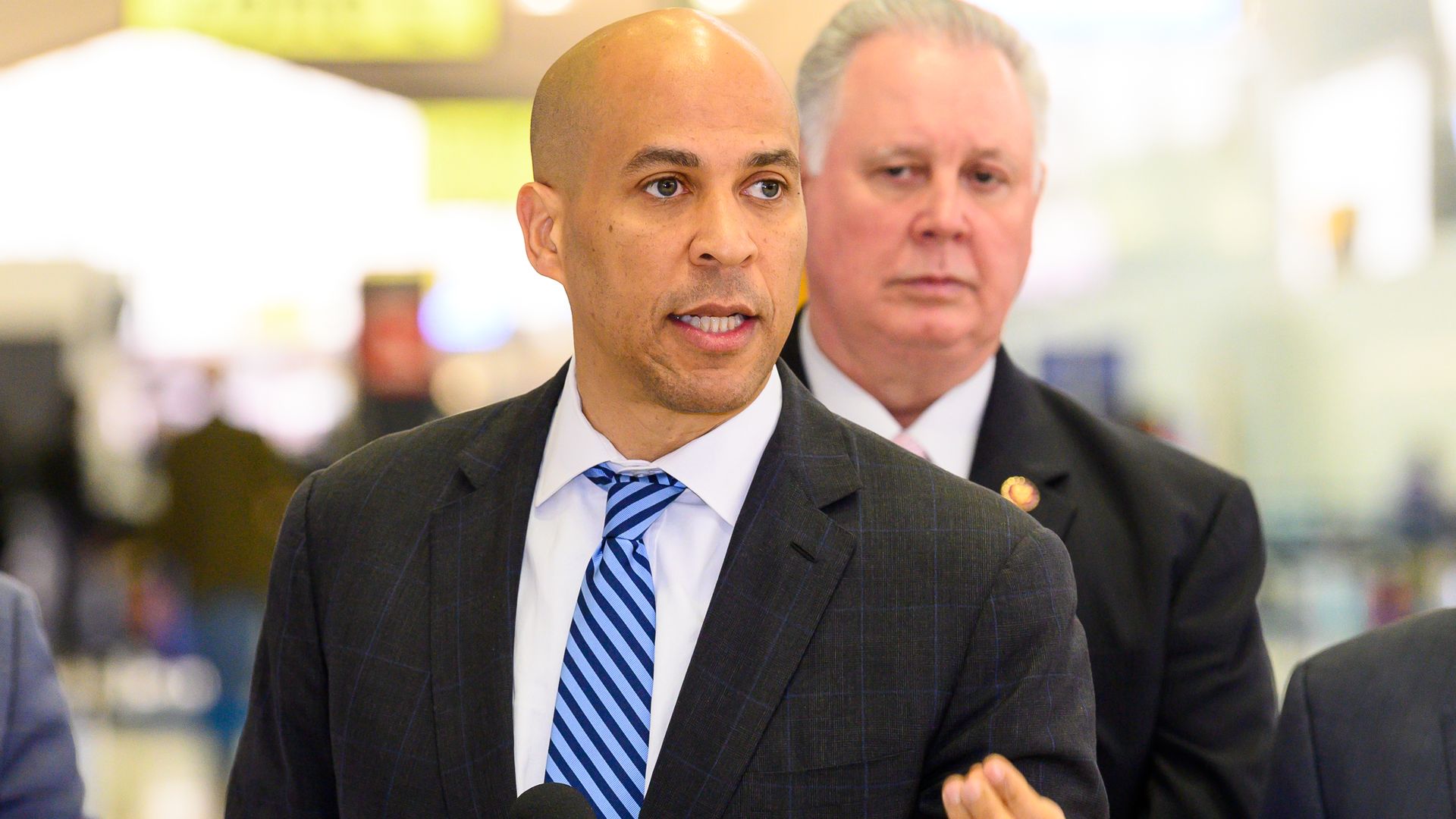
2020 presidential hopeful Sen. Cory Booker (D-N.J) tweeted out a criminal justice reform proposal on Thursday that suggests progressive ideas such as further cutting mandatory minimum sentences for nonviolent drug offenders and eliminating the discrepancies between crack and powder cocaine offenses.
Why it matters: Booker backed the "First Step Act" bill that was signed into law last year by President Trump. Recent state and national polls have shown increasing bipartisan support for criminal justice reform.
The House will vote on a resolution Thursday condemning anti-Semitism, anti-Muslim discrimination and bigotry against minorities "as hateful expressions of intolerance that are contrary to the values and aspirations of the United States."
The big picture: The resolution has caused tension within the Democratic caucus after some members thought it unfairly singled out Rep. Ilhan Omar (D-Minn.) for her controversial comments about Israel. The resolution does not name Omar specifically, but condemns stereotypes that some Democrats accused her of exploiting, including Jews having "dual loyalty" to the U.S. and Israel. Notably, it also references the 2017 white nationalist march in Charlottesville, Virginia, which brought scrutiny on President Trump after he said there were "very fine people" on both sides of the conflict.
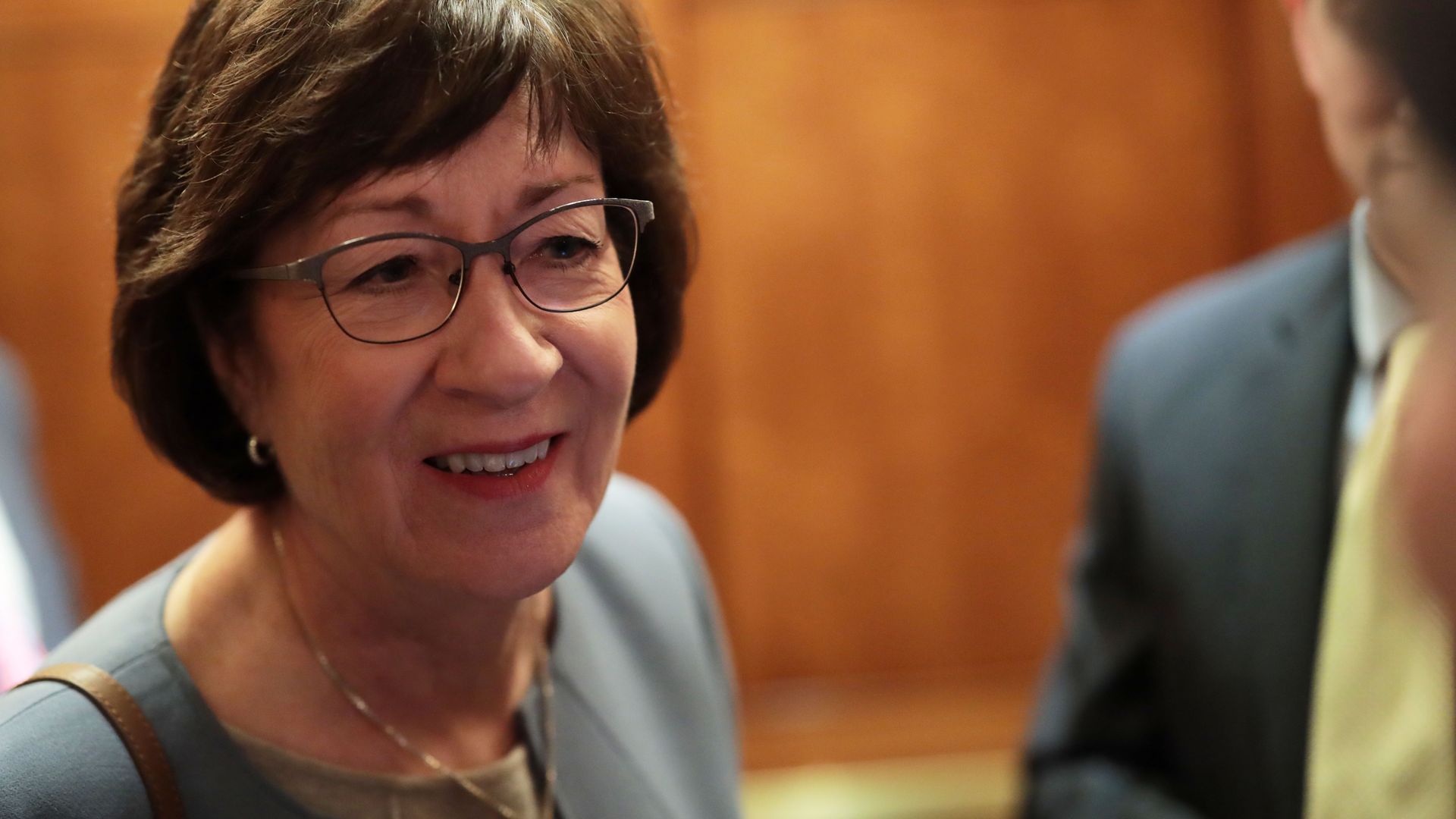
Republican Sen. Susan Collins and a bipartisan group of her colleagues are wading very gently into the debate about drug companies' patent protections, specifically the "thickets" of patents that keep competitors at bay for complex biologic drugs.
Driving the news: Collins introduced a bill yesterday that would ensure that biologics' patents are included on a list the FDA already maintains.
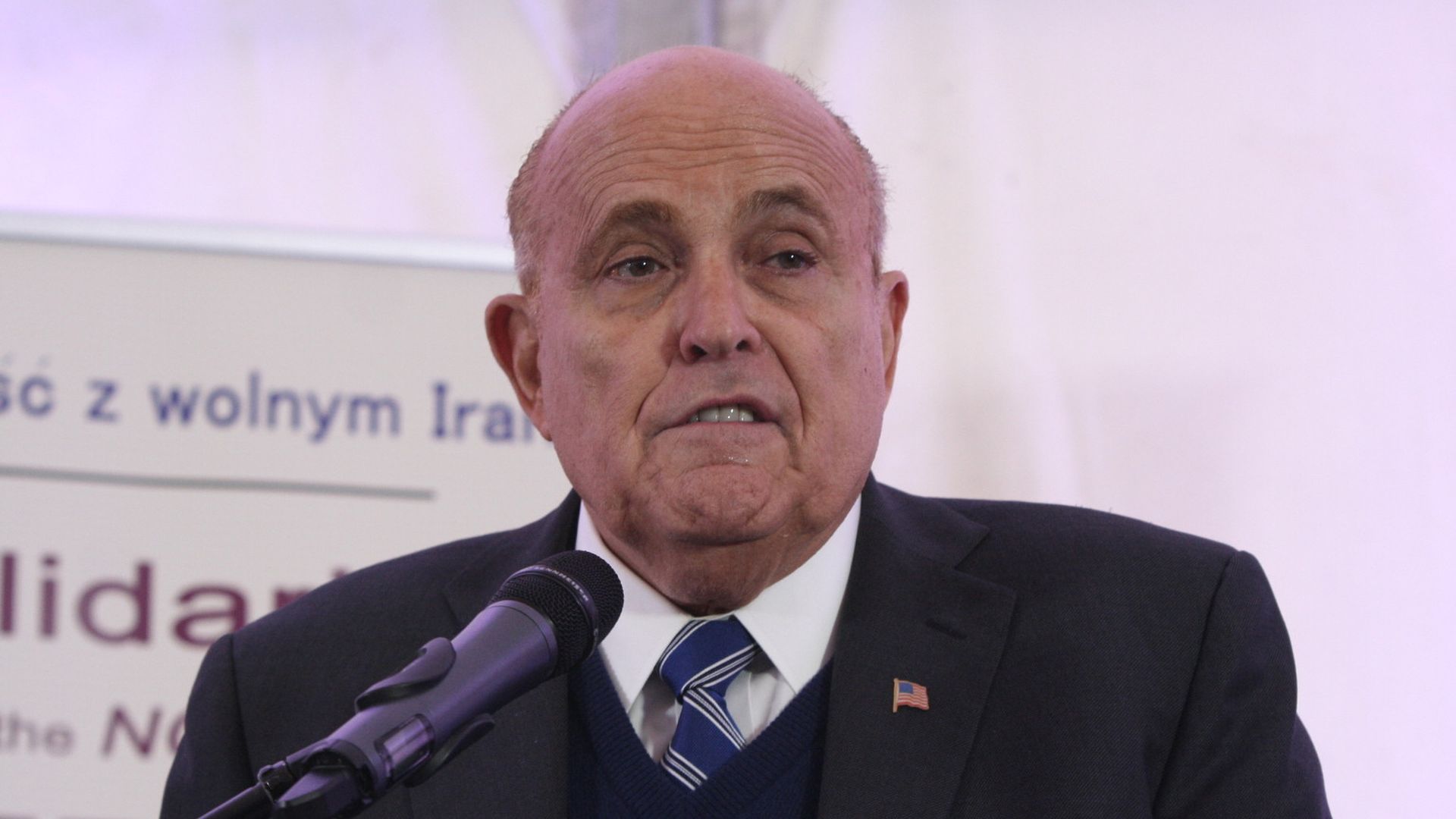
President Trump's lawyer Rudy Giuliani told the New York Times Wednesday attorneys for several people of interest to special counsel Robert Mueller's investigation had approached him to discuss possible presidential pardons.
The big picture: Giuliani gave the interview hours after The Washington Post reported Trump's former personal lawyer and fixer, Michael Cohen, had alleged to the House Intelligence Committee that he'd had discussions about receiving a pardon with Giuliani and Trump’s attorney Jay Sekulow. Giuliani told the Times he told all the lawyers the same message to relay to to their clients, whom he did not identify: Trump would not look at the issue of presidential pardons until a long time after the Mueller investigation had ended.
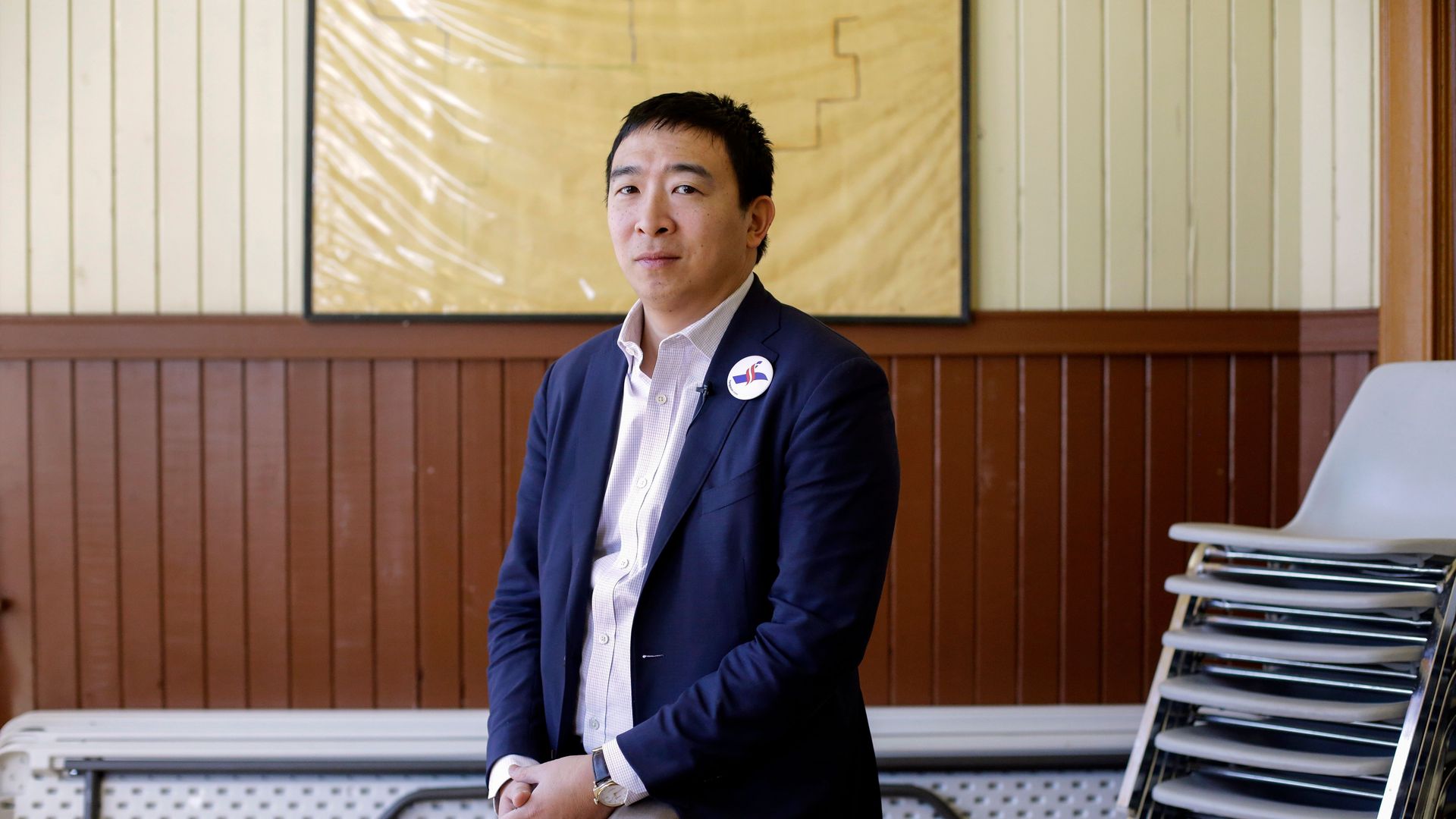
Andrew Yang, the self-described "entrepreneur who understands the economy," has wrangled more than 47,000 people to donate to his campaign as of Wednesday night, reports the Daily Beast.
Details: As of Dec. 31, 2018, his campaign committee had $38,730 in the bank, and he had spent $33,000 on Facebook ads. If Yang — whose platform largely concentrates on universal basic income — can get more 65,000 people to donate in the next 2 months, he will qualify to participate in the first presidential primary debate. Already, 44-year-old Yang has achieved a minimum of 200 donors per state in at least 20 states.
Democratic presidential candidates Sens. Bernie Sanders (I-Vt.), Kamala Harris (D-Calif.) Elizabeth Warren (D-Mass.) on Wednesday condemned anti-Semitism along with House Democratic leadership who planned to vote on a resolution rebuking Rep. Ilhan Omar (D-Minn.) over her recent comments about the influence of pro-Israel lobbying groups.
The big picture: Omar's remarks, characterized as anti-Semitic, have triggered a clash between House Democratic leaders and rank-and-file lawmakers who believe the Minnesota freshman was unfairly singled out. The internal backlash forced leadership to postpone Wednesday's vote, as the language of the resolution — which does not specifically reference Omar — would likely be broadened to reject other forms of bigotry, including Islamophobia.
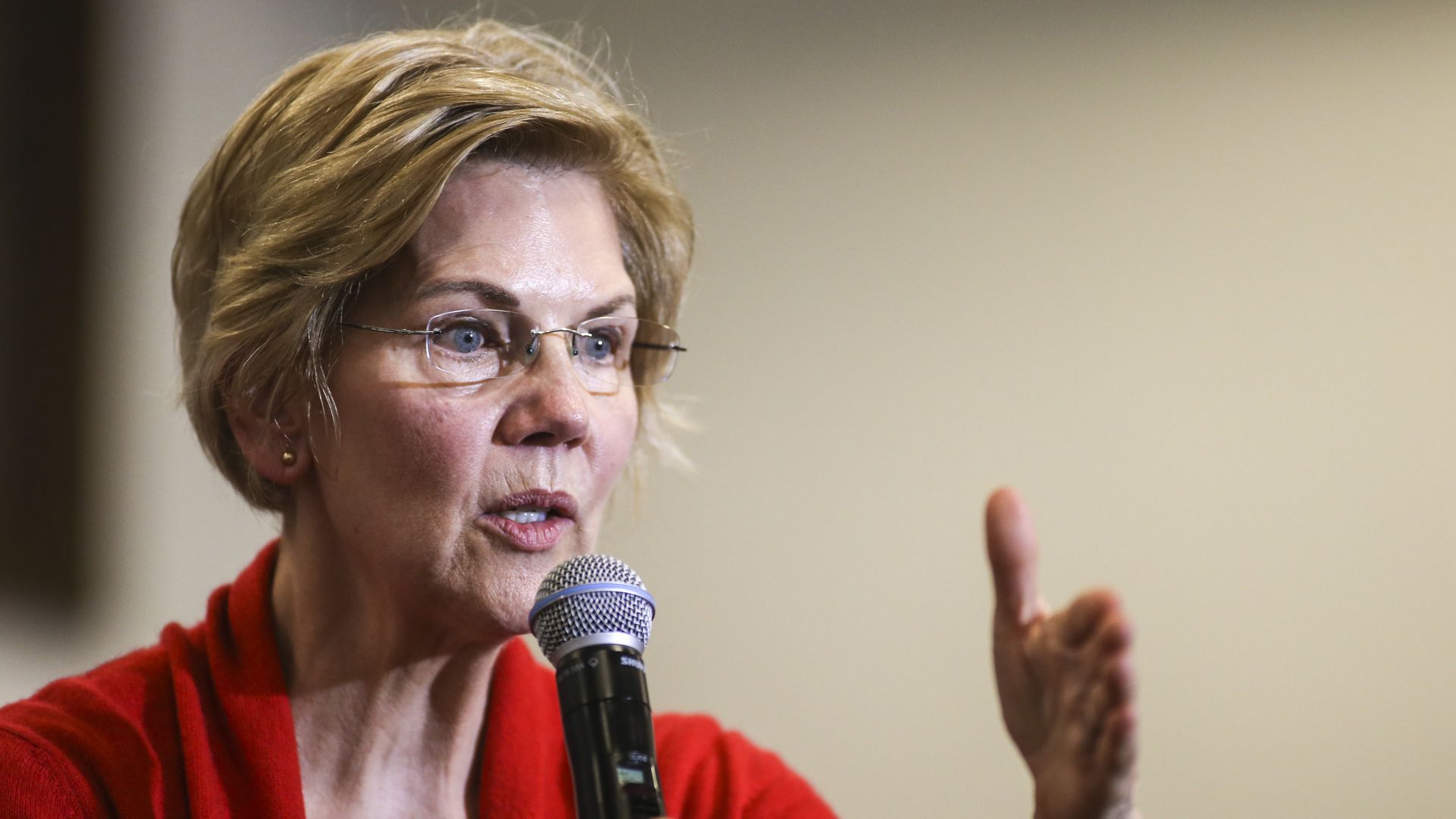
Sen. Elizabeth Warren (D-Mass.) opened her 2020 campaign with a wealth tax policy proposal that was inspired by University of California-Berkeley economists Emmanuel Saez and Gabriel Zucman. The plan would tax the wealthiest Americans on their assets.
U.S. District Judge Richard Seeborg in San Francisco on Wednesday became the second federal judge to block the Trump administration's plan to include a citizenship status question on the 2020 census, a controversial request that has triggered a slew of court challenges.
Details: Seeborg wrote that adding the question to the decennial census, which is used to apportion congressional seats, is "quite effective at depressing self-response rates among immigrants" and that it "poses a significant risk of distorting" congressional representation among the states. The Supreme Court is set to hold a hearing on April 23 to review the government's appeal of a New York federal judge's decision in January to eliminate the question.
House Democratic leaders asked Georgia Gov. Brian Kemp (R) and the state’s top election official on Wednesday to turn over documents relating to last year’s midterm election as part of an investigation into alleged voting irregularities.
Why it matters: Kemp pulled off a narrow victory over Democratic candidate Stacey Abrams in the 2018 midterms and came under fire for overseeing his own election as secretary of state. The fiercely contested gubernatorial race was clouded by allegations of voter suppression after Kemp’s office purged hundreds of thousands of voters from the rolls, placed tens of thousands of registrations on hold and oversaw a chaotic voting process on Election Day.
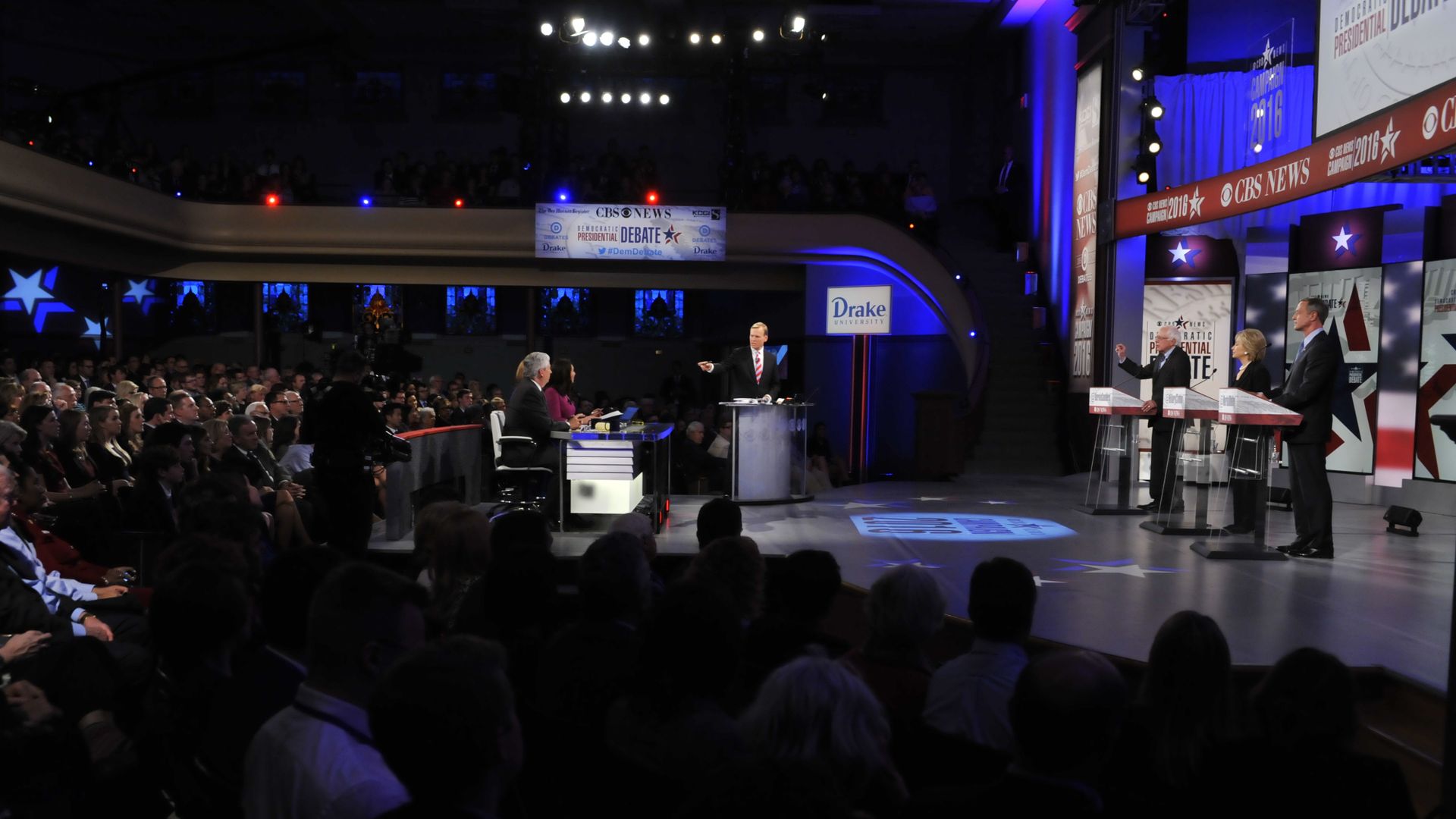
The Democratic National Committee will not permit Fox News to televise any of its 2019–2020 candidate debates because of the network's ties to the Trump administration, citing a New Yorker article.
Why it matters: There are 12 scheduled debates, 2 of which have already been awarded to CNN and MSNBC. Each tends to bring lucrative business to the network airing it — the first Republican debate in August 2015 had 24 million viewers. The DNC believes Fox News would be incapable of hosting a "fair and neutral debate" given its ties to President Trump — including the fact that he rates Fox News personalities' loyalty and solicits advice from them.
President Trump's former personal attorney Michael Cohen provided new documents Wednesday to the House Intelligence Committee, showing edits made to his false statement to Congress about the Trump Tower Moscow project in 2017, according to a CNN report.
The big picture: CNN's report said it's still "unclear" what "was specifically changed" in Cohen's 2017 testimony, but CNN previously reported that Trump's legal team had no indication what he said at the time was inaccurate. And, as the Washington Post pointed out over the weekend, the edits "may not implicate lawyers in knowingly passing along a lie — if their clients had not been truthful with them."
Testifying for the first time since President Trump declared a national emergency over illegal immigration, Homeland Security Secretary Kirstjen Nielsen was grilled about administration's family separation policy — at one point telling House Homeland Security chairman Bennie Thompson (D-Miss.): "Sir, we don't use cages for children."
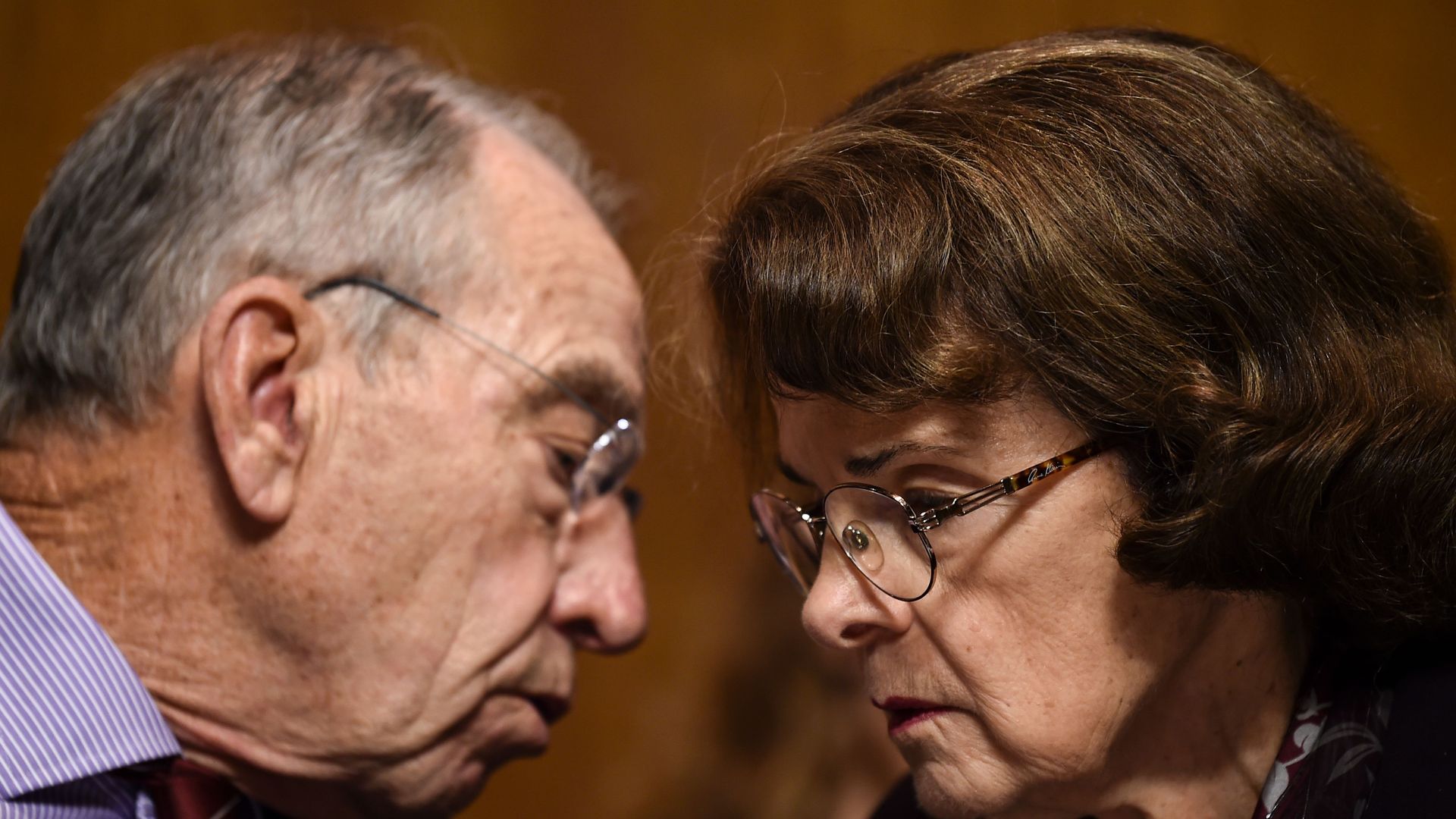
Former Senate Judiciary chair Chuck Grassley (R-Iowa) and current ranking member Dianne Feinstein (D-Calif.) have written to demand that the Department of Health and Human Services investigate reports of sexual abuse of unaccompanied minors (UACs) in the custody of the U.S. government, NBC News reports.
The big picture: As Axios reported last month, thousands of allegations of sexual abuse have been reported over the past four years, and include everything from rumors of relationships with UACs to showing pornographic videos to minors to forcibly touching minors' genitals. 178 of the total allegations involve claims that adult staff perpetrated the sexual abuse.
A proposal from the Trump re-election campaign to create a national, wholesale 5G network is drawing criticism from FCC commissioners on both sides of the aisle.
What's happening: On Tuesday, Republican FCC commissioner Brendan Carr joined Democratic colleague Jessica Rosenworcel in speaking out against the plan.
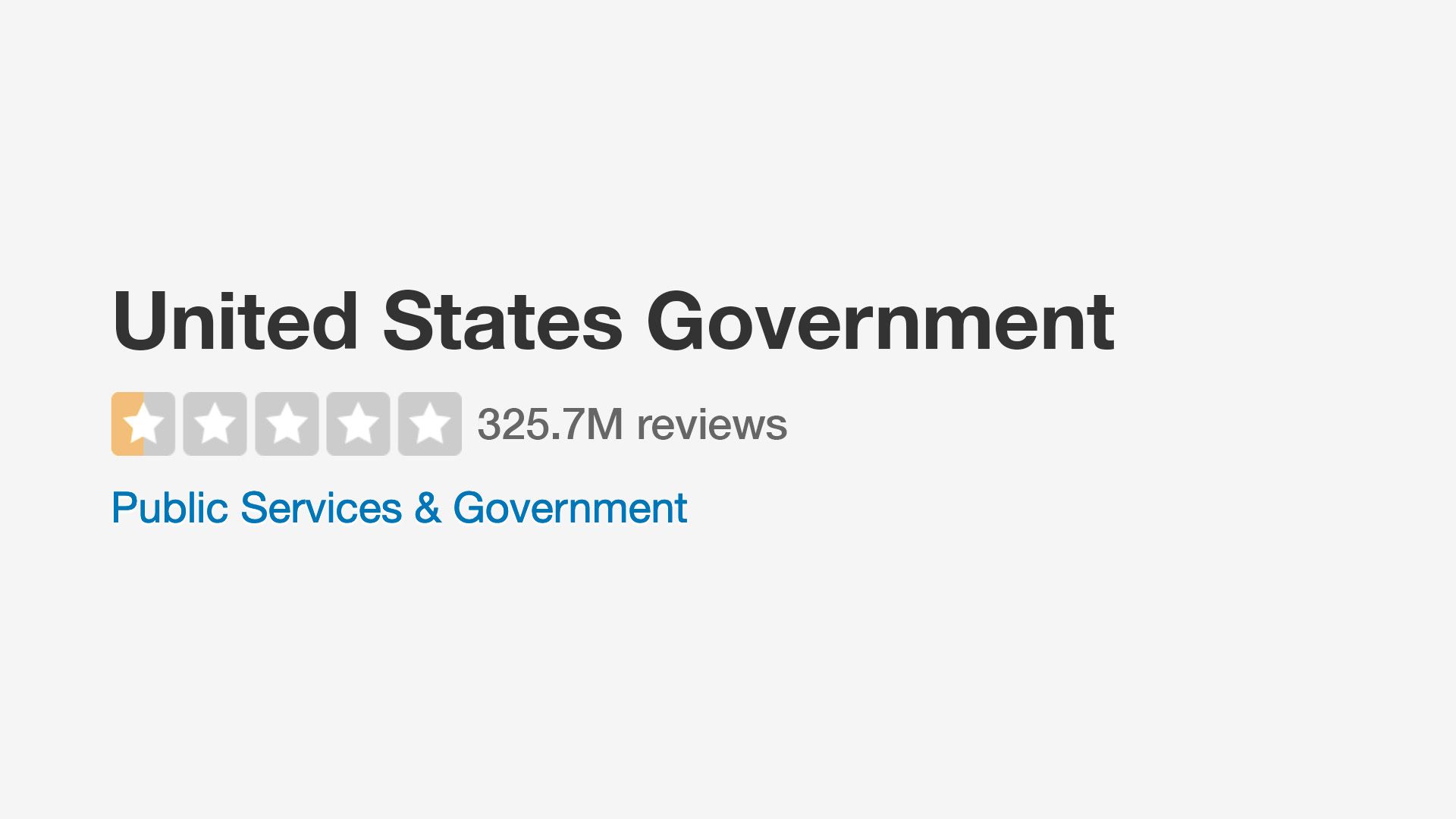
For 20 years, Harris Poll has been measuring the reputations of the most high-profile American companies. This year, for the first time, people mentioned the U.S. government as a "company" that they think about — and they hate it.
Why it matters: The fact that people would bring it up unprompted — and then give it the lowest score of the 100 companies on the list — suggests that Americans aren't just unimpressed with their government. They think it's a toxic waste dump.
The New York state insurance regulator issued a subpoena to the Trump Organization’s insurance broker Aon, which confirmed the move Tuesday.
What they're saying: "We can confirm that we received a subpoena from the New York State Department of Financial Services and, as is our policy, we intend to cooperate with all regulatory bodies," Aon said in a statement.
Why it matters: The subpoena demanding documents related to the Trump Organization from Aon marks a fresh line of inquiry into President Trump’s private business, via New York’s Department of Financial Services. It comes five days after Trump's former personal attorney and fixer Michael Cohen testified to Congress that the president had inflated company assets for insurance purposes. However, Cohen offered no proof for his allegation.
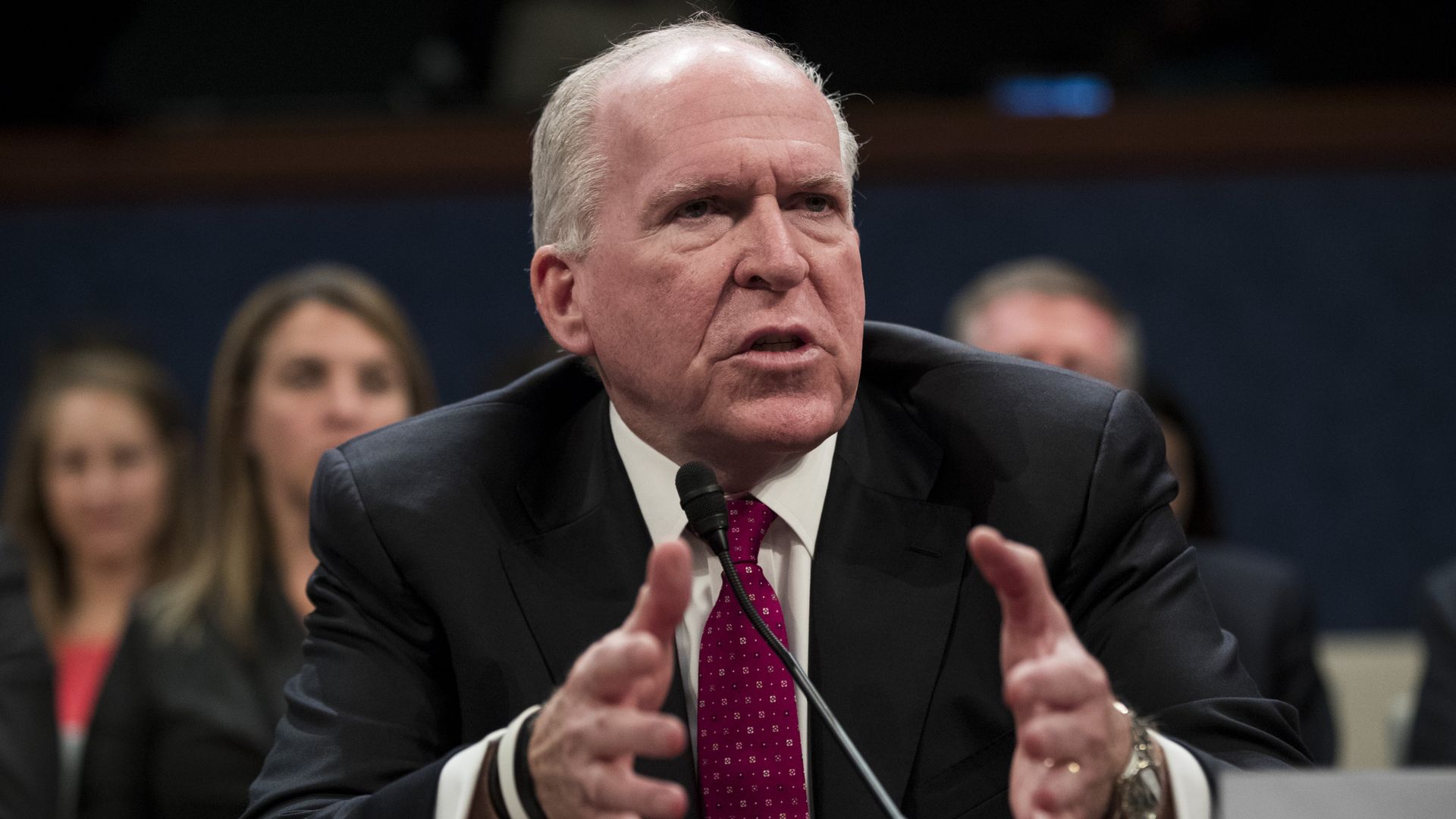
Former CIA Director John Brennan told MSNBC’s “The Last Word” with Lawrence O’Donnell he believes special counsel Robert Mueller could soon issue more indictments.
What he's saying: "I think Robert Mueller wants to be able to conclude his work and turn over the investigative threads to the Southern District of New York, the Eastern District of Virginia and other jurisdictions as appropriate ... I wouldn’t be surprised if, for example, this week on Friday — not knowing anything about it — but Friday is the day the Grand Jury indictments come down."
Details: Brennan told O’Donnell he believed more indictments were imminent because Mueller had yet to address issues related to criminal conspiracy involving Russian operatives and possible ties to U.S. persons. President Trump revoked the security clearance.
Biggest anecdote: "I do think also if anybody from the Trump family, extended family is going to be indicted, it would be the final act of Mueller's investigation because Bob Muller and his team knows if he were to do something, indicting a Trump family member or if he were to go forward with indictment on criminal conspiracy involving U.S. persons, that would be that would basically be the death knell of the special counsel's office because I don't believe Donald Trump would allow Bob Mueller to continue in the aftermath of those types of actions."
The other side: President Trump revoked Brennan's security clearance in August, accusing the former CIA director of "erratic conduct and behavior" after Brennan criticized Trump on Twitter for lacking civility in a tweet whereby the president attacked former White House aide Omarosa Manigault.
President Trump sent Michael Cohen payments while on official business, according to The New York Times, which published in the article accompanying images Tuesday of checks for $35,000.
What they're saying: "The dates on the newly available checks shed light on the parallel lives Mr. Trump was living by this account — at once managing affairs of state while quietly paying the price of keeping his personal secrets out of the public eye," the Times says in its report.
Details: The Times cites 11 occasions it alleges Trump or his trust sent checks. The paper said it was sent six of these checks this week.
Biggest anecdote:
The president hosted a foreign leader in the Oval Office, then wrote a check. He haggled over legislation, then wrote a check. He traveled abroad, then wrote a check. On the same day he reportedly pressured the F.B.I. director to drop an investigation into a former aide, the president’s trust issued a check to Mr. Cohen in furtherance of what federal prosecutors have called a criminal scheme to violate campaign finance laws at the direction of Mr. Trump.
The other side: Trump's defenders told the Times the checks proved only that the president had paid his personal lawyer; they did not prove he'd reimbursed Cohen for hush money paid to Stormy Daniels to conceal their alleged affair. Trump denies he had the affair and has accused Cohen of lying to reduce prison time following his conviction on charges relating to campaign finance violations, tax evasion and lying to Congress. The president claims the manuscript of Cohen's unpublished book discredits his former fixer's testimony.