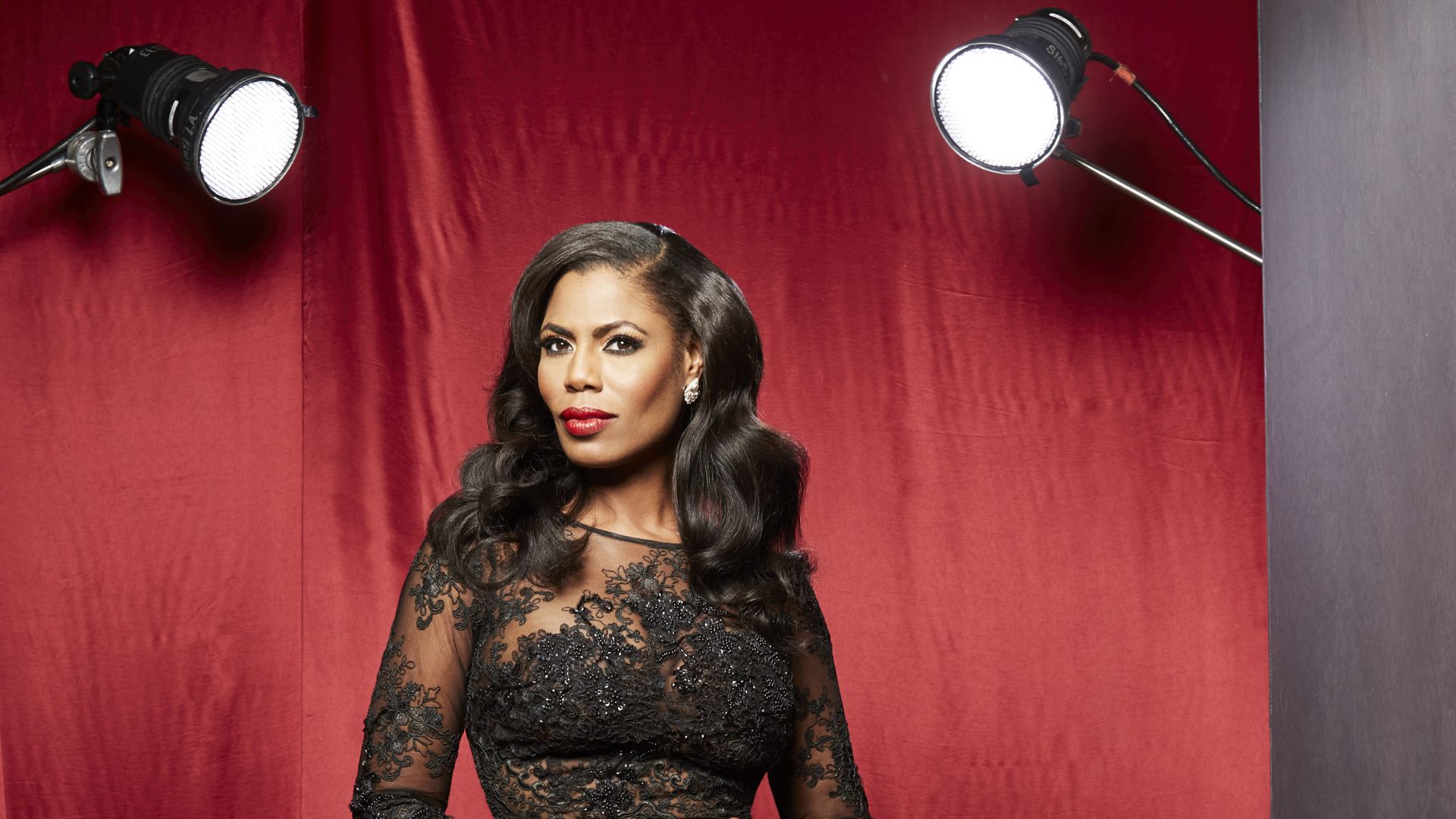
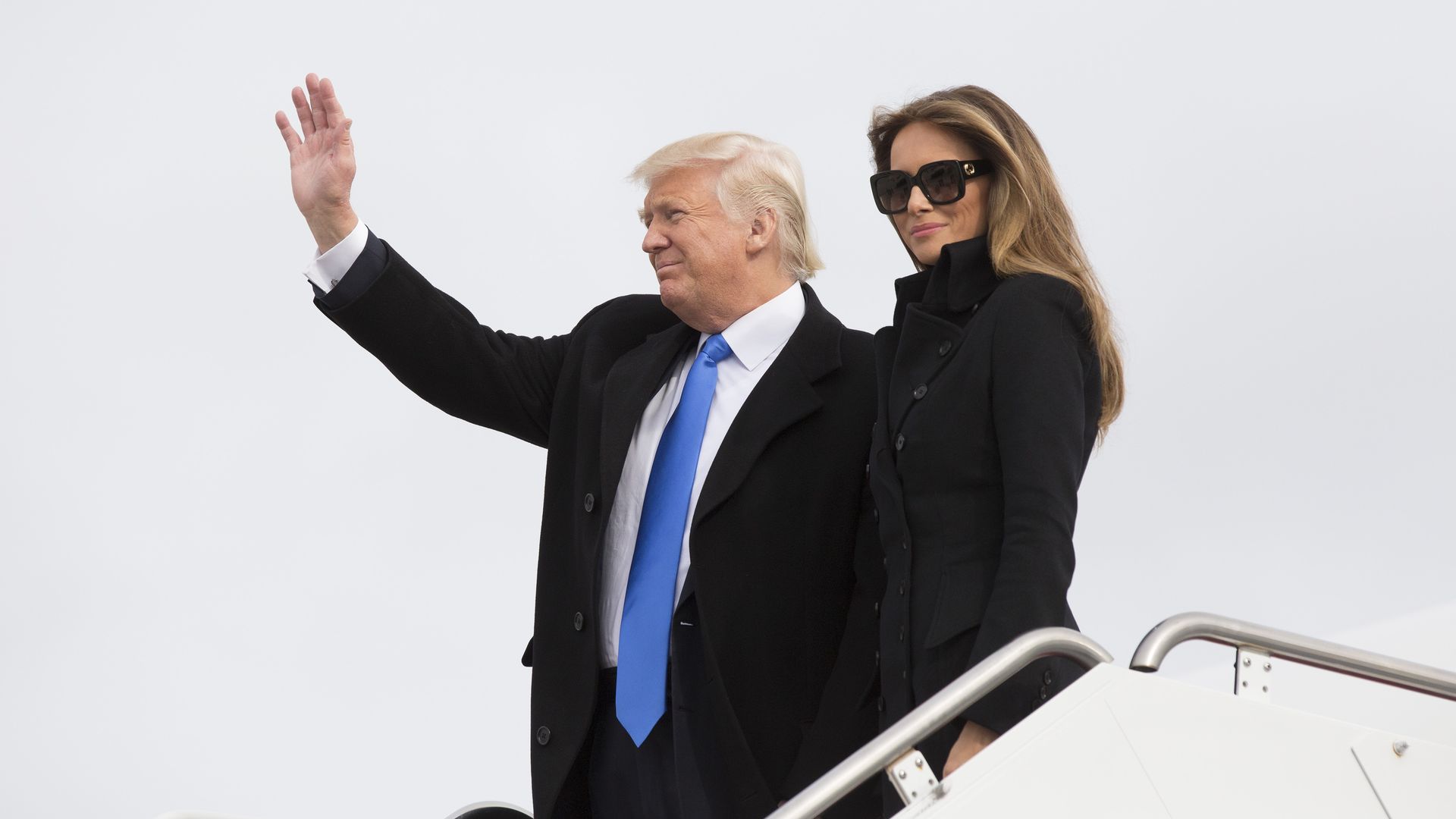
In her new book coming out next week, former White House staffer Omarosa calls Trump a "racist," claims there are tapes of him saying the "N-word," and says there is a tanning bed in the White House, according to the Washington Post and the Guardian who have received advanced copies.
The big picture: This will be the first book from a former Trump White House aide that goes after the president and his administration. Omarosa, who was one of the original contestants on Donald Trump's former reality TV show "The Apprentice" and went on to work for the Trump campaign and ultimately the White House, was fired by Chief of Staff John Kelly in December and was reportedly forcibly removed from the White House grounds.
In response to question's about former White House aide Omarosa Manigault's new book lambasting the president, Press Secretary Sarah Sanders told reporters that "this book is riddled with lies and false accusations," adding, "It’s sad that a disgruntled former White House employee is trying to profit off these false attacks."
The big picture: In the book out next week, Omarosa, an African-American woman, claims Trump is a "racist," has repeatedly used the "N-word," and there are tapes from the filming of The Apprentice to prove it, according to a copy of the book obtained by the Guardian. However, Omarosa doesn't explicitly say she heard him use the word in person. She also says that she was offered $15,000 a month to stay silent about her being fired, according to the Washington Post.
Both parties are making on-the-fly changes to their messages in the heat of midterm campaigning, because their go-to issues turn out to have problems.
Between the lines: Some Democrats salivated about running on impeachment, until their leaders convinced them that would backfire and the "Abolish ICE" boomlet was co-opted by Republicans. Meanwhile, the GOP planned to make the Trump tax cut the centerpiece of the fall. But that didn't even last through March, since the tax cuts don't have the broad popularity the party expected.
A "sizable share" of President Trump's large base had doubts when they voted for him, and continue to have reservations, New York Times' Nate Cohn and Alicia Parlapiano report, using data from Pew’s American Trends Panel.
Why it matters: This is an important factor to take into consideration as we approach November's election, Cohn and Parlapiano report. How the Republicans fare in the midterm elections could be decided "by voters at the edge of Mr. Trump's coalition" — so it's important to understand how broad that is.
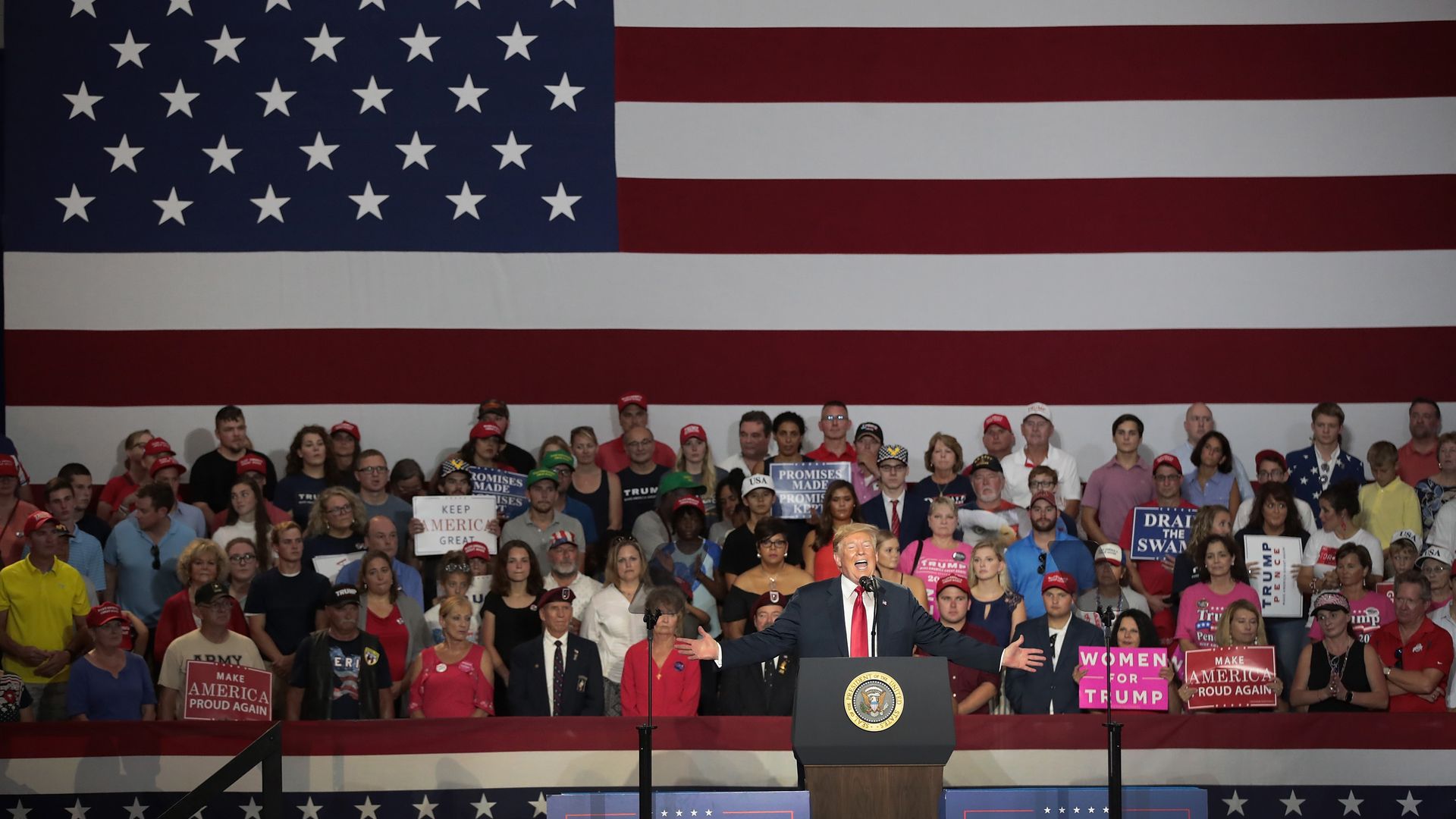
President Trump uses internal polling and approval rating data from the Republican National Committee to decide where to hold his midterm rallies — including one held just before Ohio's special election, a GOP official with knowledge of the data sharing told Axios.
Why it matters: This is the first look inside the data that gives Trump part of his power over the primaries. He knows how to energize his Republican base, but pushing long-shot candidates over the finish line only works if he's in the right place and speaking to the right people.
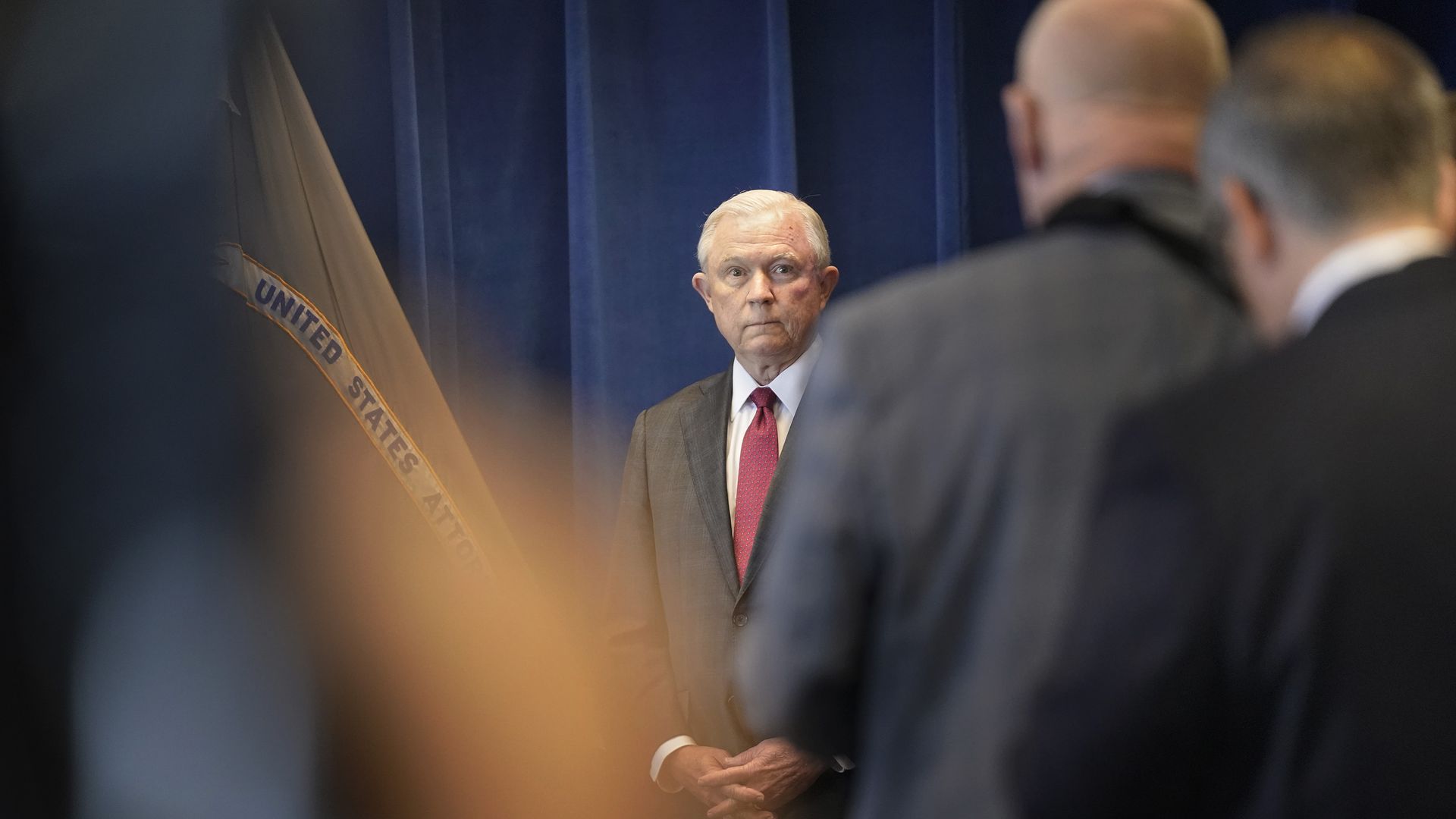
The union representing immigration judges is pushing back against the Trump administration for undermining judicial independence after the Justice Department stripped a Philadelphia judge of his authority over 87 deportation cases, reports the Washington Post.
Why it matters: This is a classic reflection of the growing rift between the Trump administration and immigration judges, who, unlike those under the judicial branch, have little protections to their judicial independence.
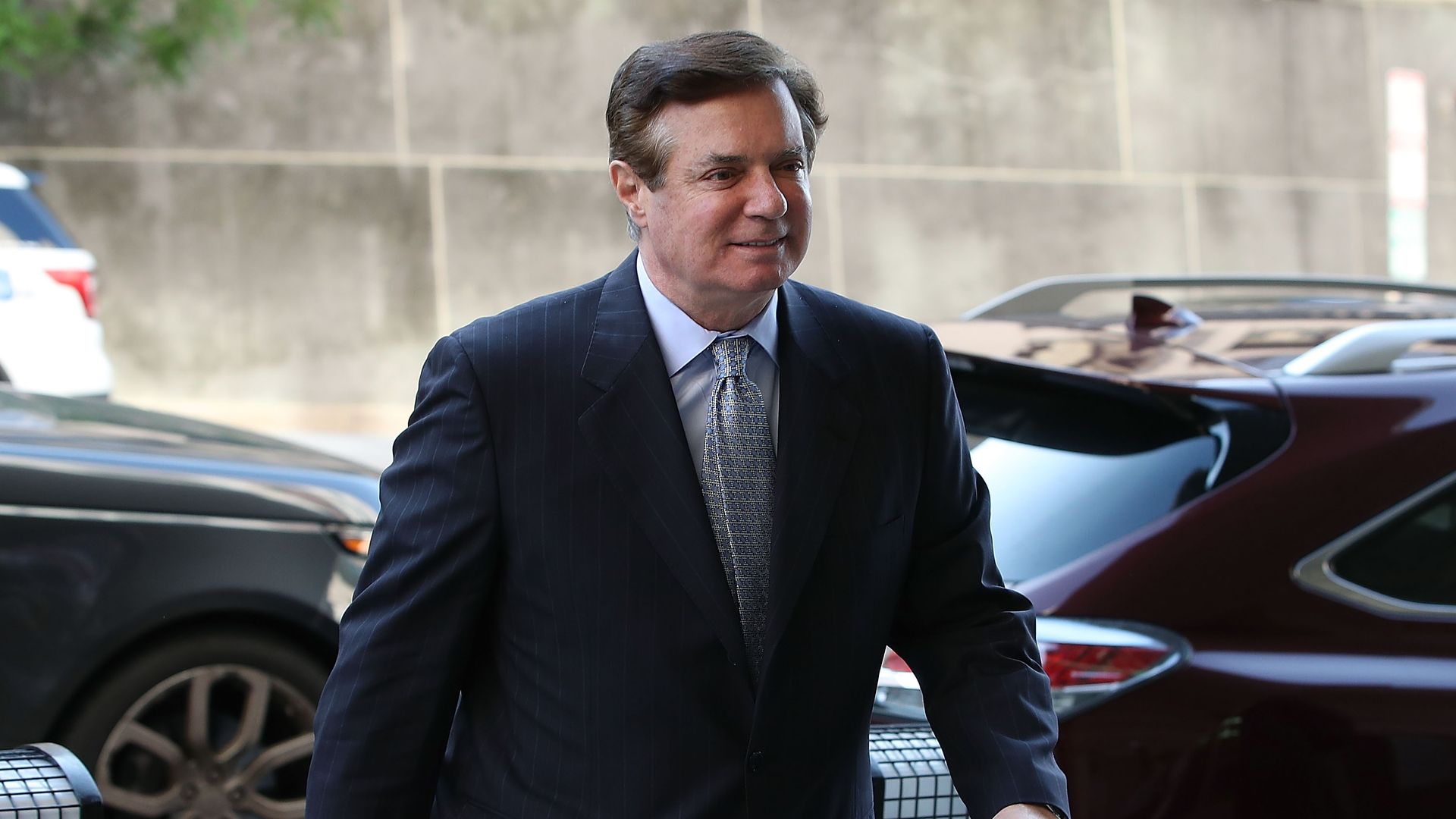
The financial fraud trial of President Trump’s former campaign chairman Paul Manafort entered its eighth day on Thursday with the special counsel's team presenting witnesses and evidence to illustrate how Manafort orchestrated a scheme to obtain millions of dollars and avoid paying taxes.
The big picture: This trial marks the first case that Special Counsel Robert Mueller has brought to court as a result of his probe into the 2016 Russian election meddling. However, the federal tax and financial fraud charges in dispute are separate from Manafort's time as President Trump’s campaign chairman. The proceeding is being closely watched by the president and his legal team as they negotiate a possible interview between Trump and Mueller.
Melania Trump's Slovenian parents, Viktor and Amalija Knavs, were sworn in as U.S. citizens today, according to the AP, after likely obtaining permanent residence through the very "chain migration" processes the Trump administration has tried to curtail.
Why it matters: Despite marrying into an immigrant family, Donald Trump has made toughening immigration laws and cracking down on illegal immigration a central part of his presidency. His administration has already made it more difficult to come to the U.S. legally, in addition to imposing harsher enforcement of laws for those who are here illegally.
An Army memo obtained by the Associated Press from last month directs high-ranking officials to immediately "suspend processing" discharges of enlistees in the special immigrant program, which can provide an expedited path to citizenship.
The backdrop: When the AP first broke the news regarding immigrant discharges last month, it was not immediately clear if the decisions marked a change in Army policy. But retired Army Reserve lieutenant colonel Margaret Stock, who was a part of the creation of the immigrant recruitment program, told the AP that the memo serves as an "admission by the Army that they've improperly discharged hundreds of soldiers."
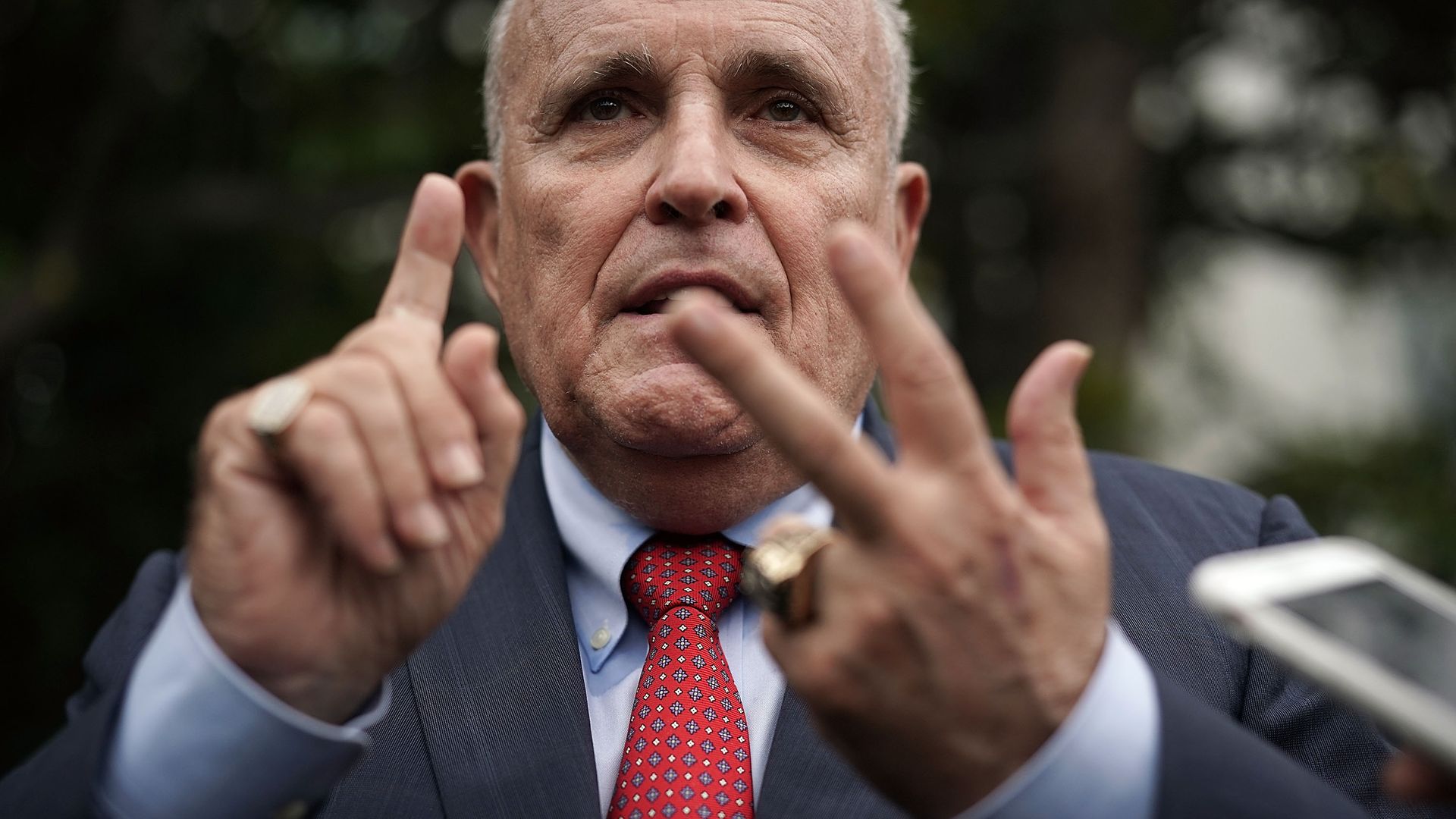
With his constant commentating and public negotiating, Trump lawyer Rudy Giuliani is setting up unmeetable expectations for special counsel Robert Mueller — a kind of insurance policy with the president's base.
What he's saying: The former New York mayor told Fox News' Sean Hannity in an interview last night that the investigation should be "over by September," and that Mueller's case "isn’t going to fizzle. It's going to blow up on them." He added, "[T]here's a lot more to what they did that nobody knows about yet ... a lot more to the obstruction of justice, to the collusion, to the fake dossier."
One Australian drug company — with only one (failed) product in one (failed) clinical trial — just keeps tripping up current and former House Republicans.
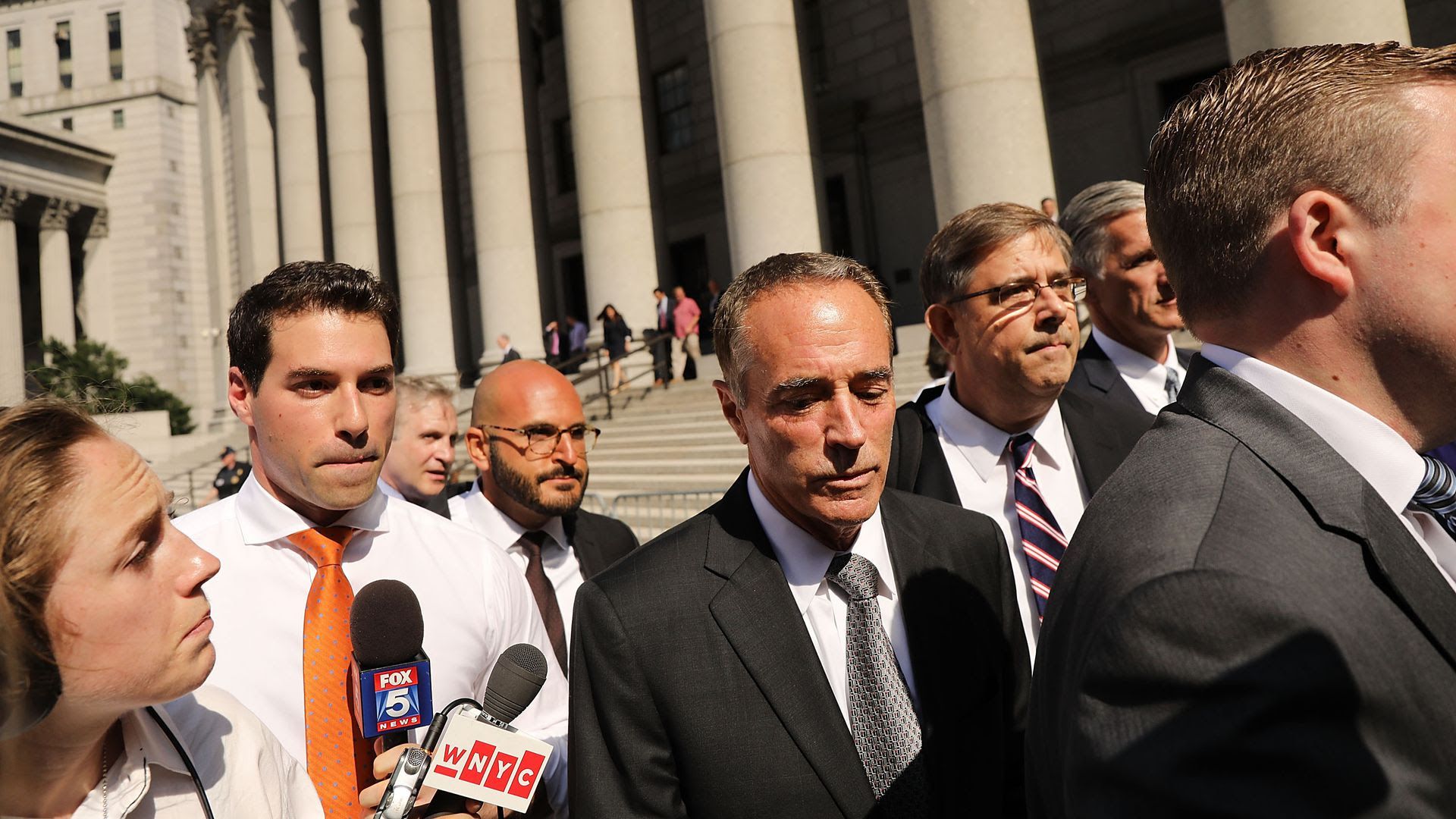
Driving the news: Federal prosecutors in New York indicted Rep. Chris Collins yesterday on charges of insider trading, stemming from the sale of shares in a company called Innate Immunotherapeutics.
Here's how badly the country has fractured over President Trump: He has a near-universal approval among Republicans, while three in four Democrats want him impeached. But it's not like the last few presidents united the country, either.
The back story: It wasn't always this way. Republican Dwight Eisenhower had 49% approval from Democrats during his presidency, as did John F. Kennedy from Republicans. Now, that kind of support for a president from the other party has practically disappeared: Barack Obama had 14% approval from Republicans, and 7% of Democrats approve of Trump.
Data: Pew Research Center, Gallup. Reproduced from a Pew Research Center report; Chart: Harry Stevens/Axios