Thursday's politics & policy stories

Trump says he's given full authorization to "my military"
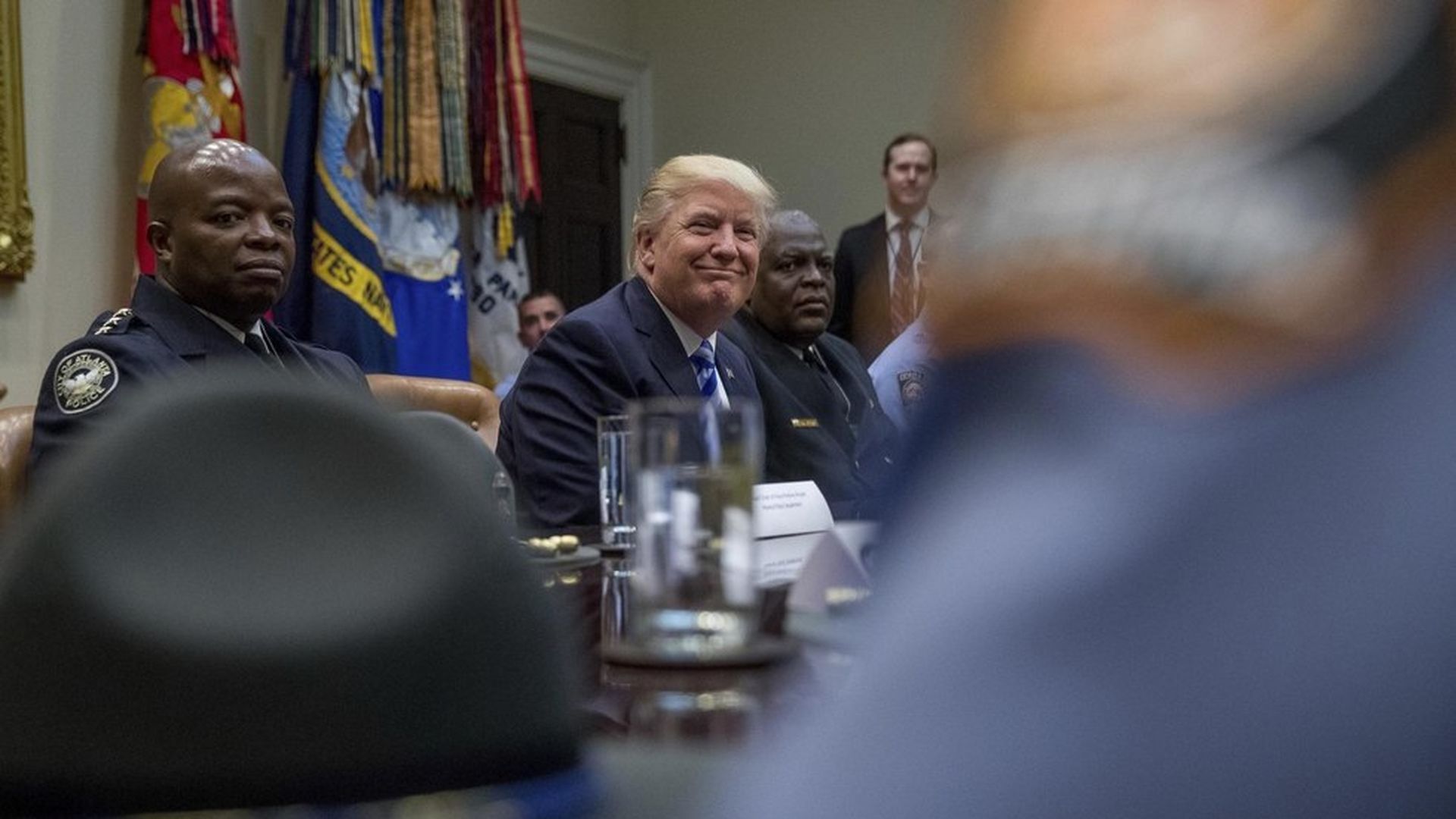
When asked by the White House press pool today if he had personally ordered the use of the "Mother of All Bombs" on an ISIS compound in Afghanistan today, President Trump responded:
Everybody knows exactly what happened. What I do is I authorize my military... we have given them total authorization.

Key takeaways from Spicer's Thursday briefing
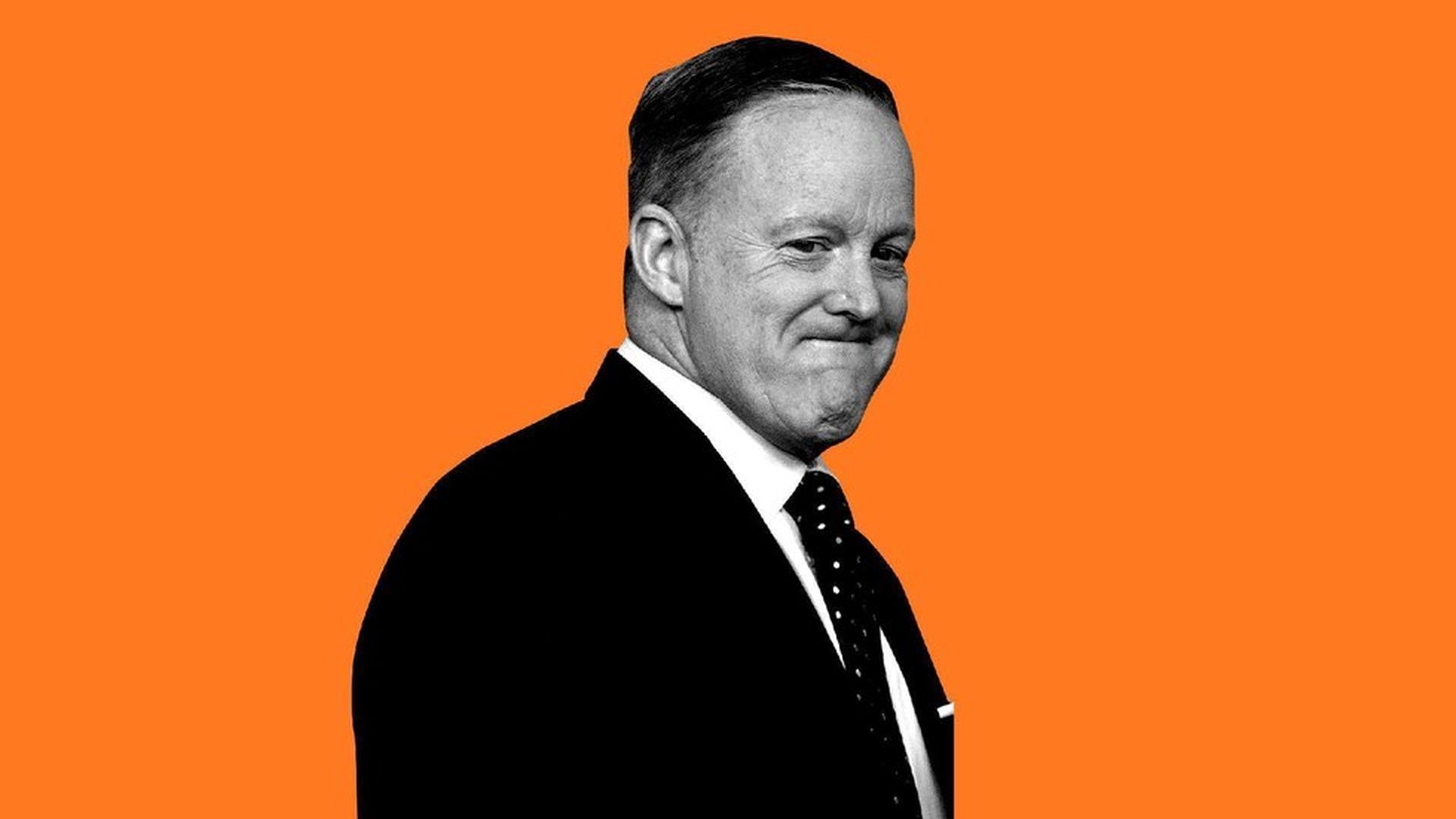
Today was a day of few answers from Sean Spicer. He would not say whether Trump personally ordered the use of the largest non-nuclear bomb ever dropped today in Afghanistan, or explain why the president had flip-flopped on labeling China a currency manipulator and supporting the Export/Import Bank. More highlights:
- Details of MOAB bomb: "We targeted a system of tunnels and caves that ISIS fighters use to move around freely," said Spicer, adding, "in order to defeat the group we must deny them operational space, which we did."
- Reversals/shifts in Trump policies: Spicer argued that it's not so much that Trump has shifted on issues so much as that the issues have shifted toward him, citing NATO as an example.
- Syria/North Korea: When asked whether the U.S. might drop a MOAB bomb on Syria or North Korea, Spicer said that all questions should be directed to the Defense Department.
- Italy visit: Trump will welcome Italy PM Paolo Gentiloni to the White House on April 20 to discuss the upcoming G7 summit, and a range of other issues.
Assad denies chemical weapons attack in Syria
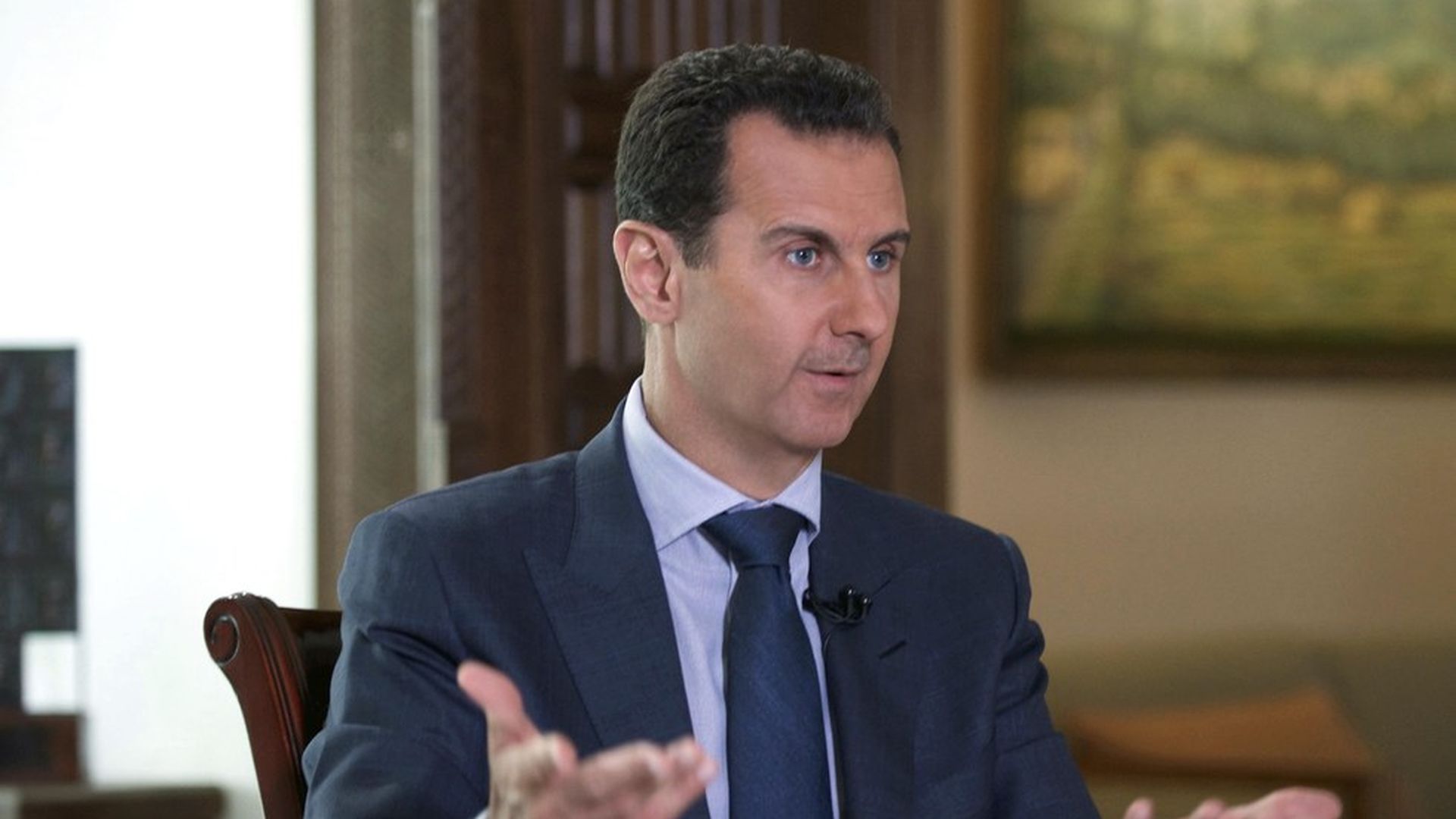
President Bashar al-Assad told AFP that last week's chemical weapons attack is "100 percent fabrication," and that the U.S. concocted the whole story in "order to have a pretext" for the missile strike on his forces.
"There was no order to make any attack. We don't have any chemical weapons. We gave up our arsenal three years ago. Even if we had them, we wouldn't use them. We have never used our chemical arsenal in our history, said Assad. "Our impression that the West, mainly the United States, is hand-in-glove with the terrorists. They fabricated the whole story in order to have a pretext for the attack."
An important detail: The AFP said that during the TV interview, the Syrian government wouldn't let them use their own cameras — only cameras belonging to the Syrian government were allowed. And afterward, the government only gave AFP the tape of the first 5 questions and answers.
Meanwhile: Samples taken from the attack in Syria tested positive for the nerve agent sarin, the British delegation at the world's chemical weapons watchdog said on Thursday, per Reuters.
Mar-a-Lago had 13 health violations
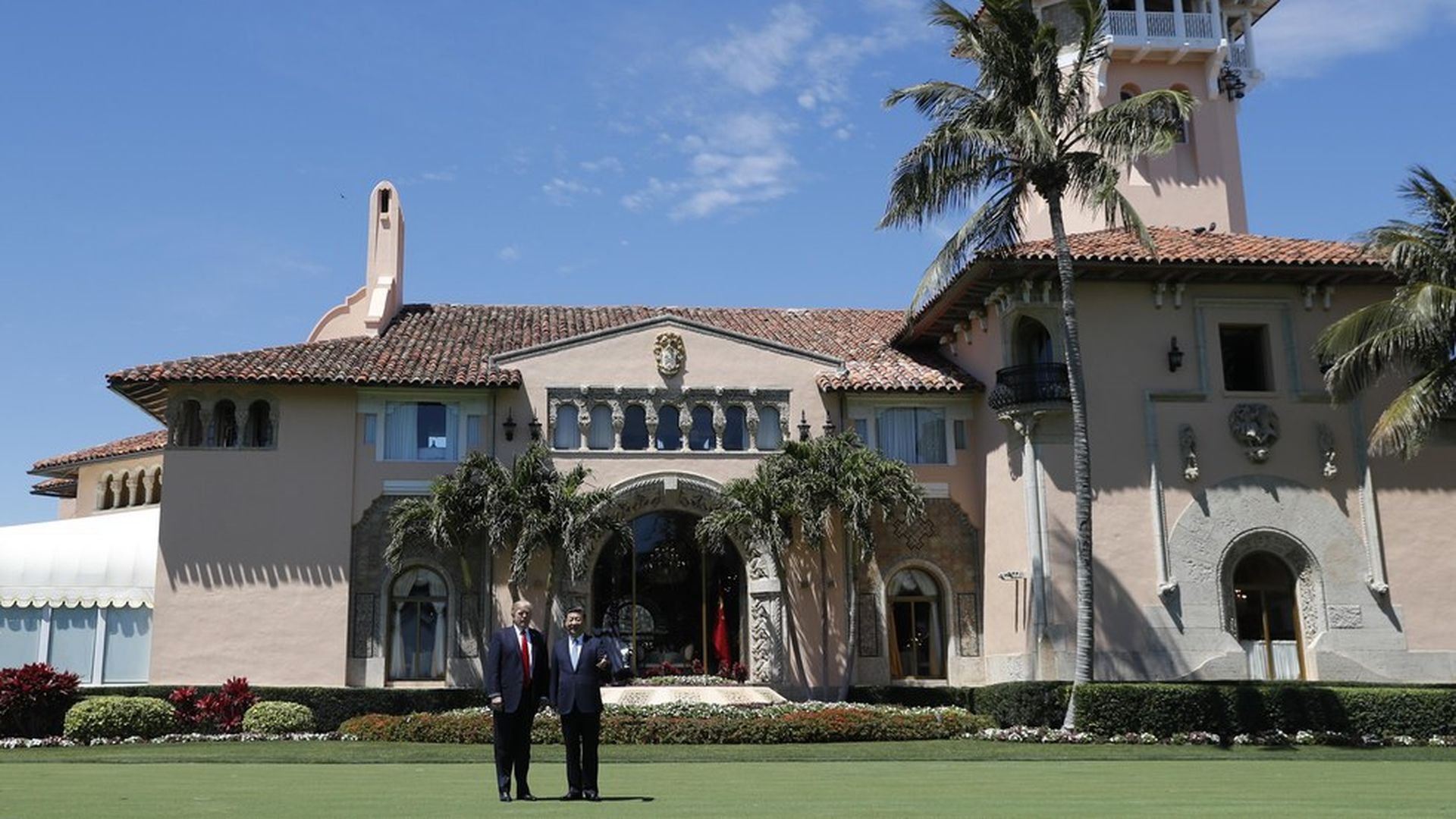
Florida inspectors dug around Trump's Mar-a-Lago resort in the days leading up to Japanese Prime Minister Shinzo Abe's state visit, and found 13 health violations in the club's kitchen, which is a record for a place that charges $200k in membership fees, according to the Miami Herald.
The violations: Three violations were deemed "high priority," meaning they were prone to carrying bacteria that could make customers violently ill. The other 10 violations weren't as serious, including one that described water at the sink where employees wash their hands as too cold to successfully sanitize them.

Operation Normal: Trump goes 🌎-al
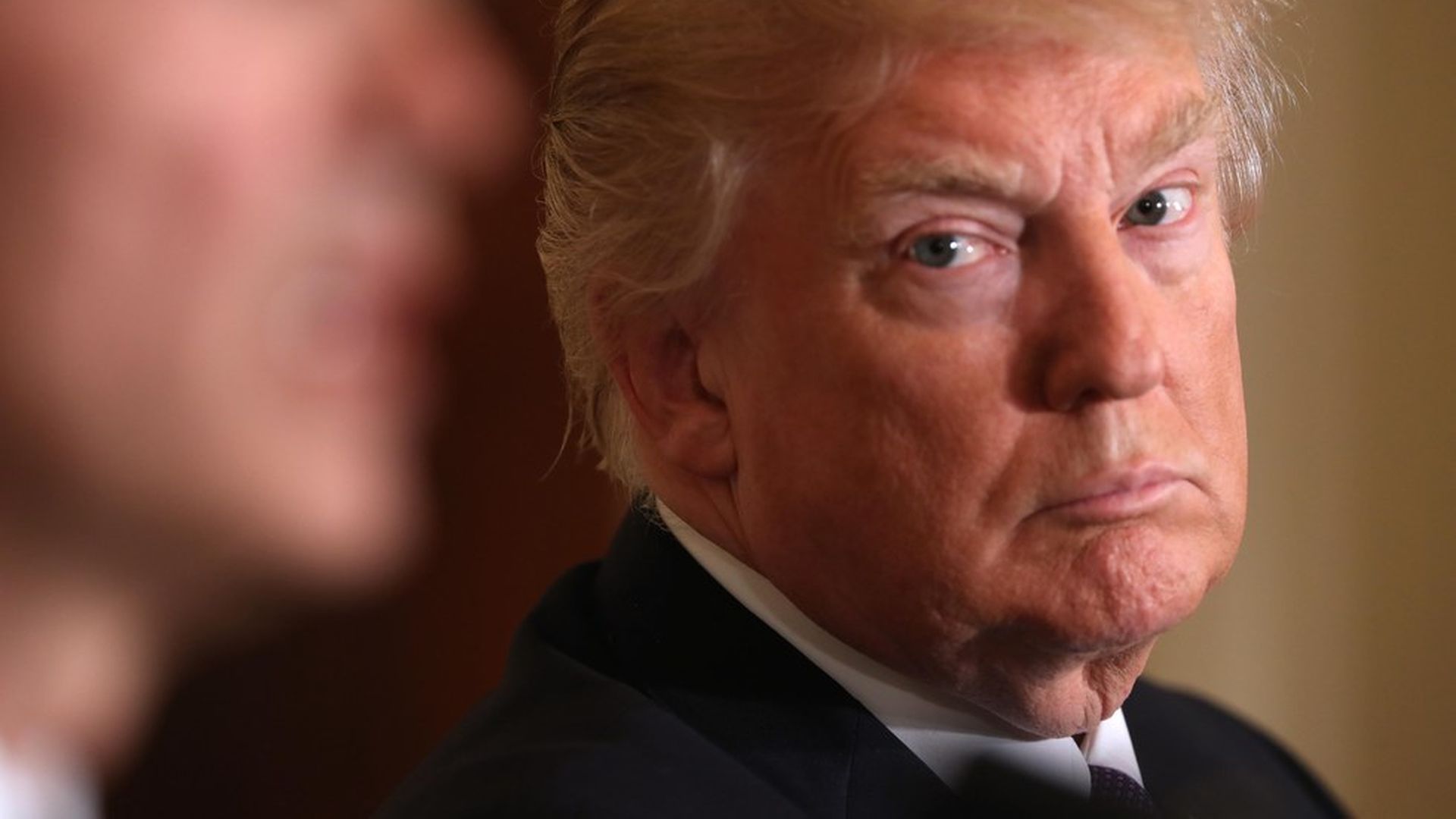
Operation Normal achieved supremacy yesterday — and a new phase of Trump's presidency begins.
Sound smart: conservatives should have seen this coming. Trump goes where the applause is loudest. If that means being a full-throated birther, fine! If that means inciting hysterics about Mexicans, game on! If that means hugging NATO or smiling at corporate cronyism, Trump's your man! It would be a hoot if he came full circle and morphed into Michael Bloomberg.

Trump's globalist reinvention
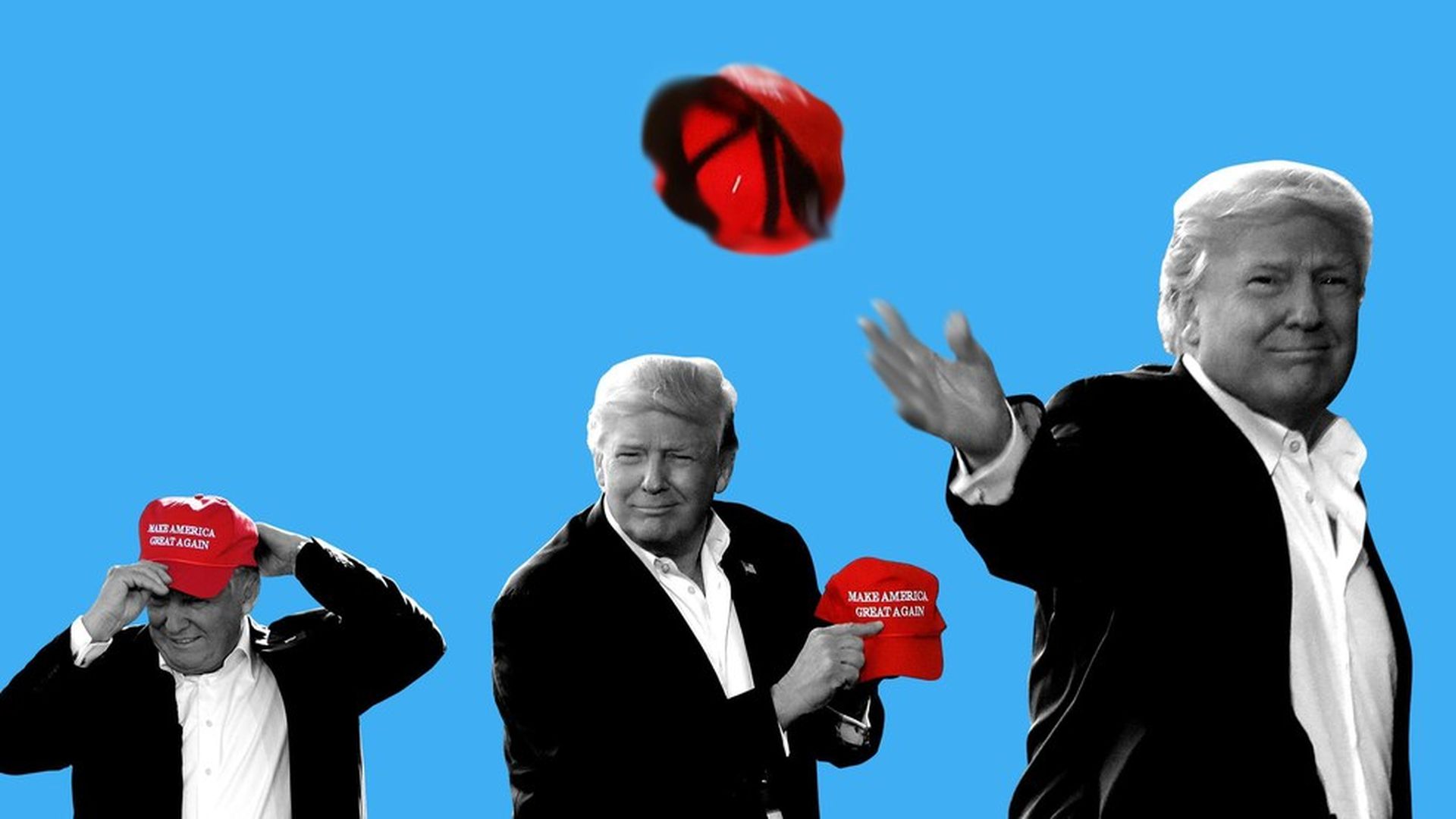
Trump campaigned as an ardent and unapologetic nationalist. He railed against international and regional institutions and said America needed to stop spending money overseas and start taking care of business at home. He told us Assad was not the problem and Putin was a guy with whom he could do business.
But in less than a week Trump has morphed into a guy who could almost be mistaken for a conventional Republican president. Trump appeared in the White House's East room yesterday and gave remarks that could've come from the mouth of George H.W. Bush.
Our thought bubble: We've been charting the ascendance of the Jared Kushner camp in the administration and there's no mistaking it. Jared, Ivanka, Gary Cohn, Dina Powell — they and their worldview are ascendant.
DHS outlines plans for Trump's "deportation force"
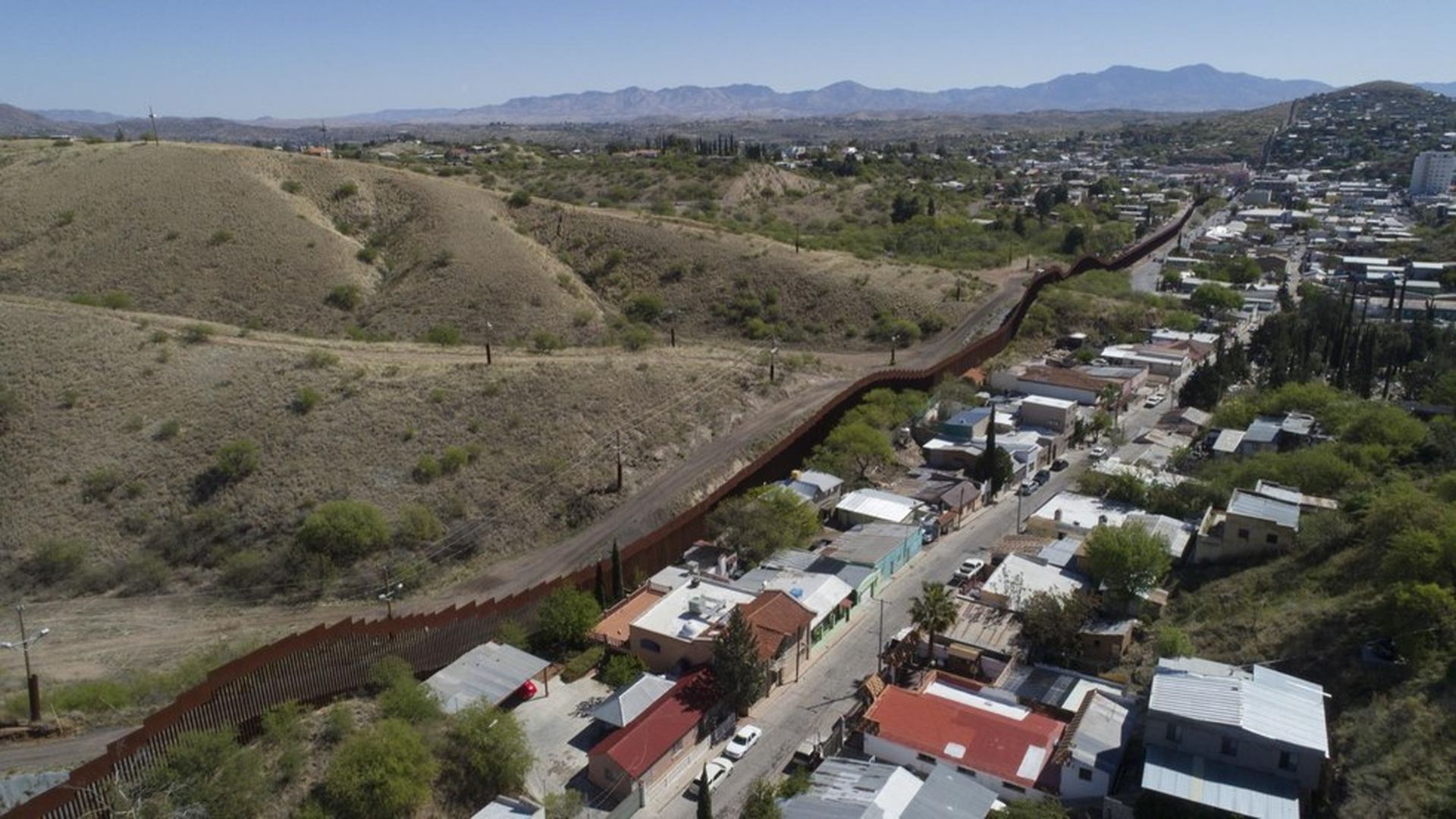
An internal Department of Homeland Security document outlines the steps that the Trump administration hopes to take to put together a nationwide deportation force for illegal immigrants, per the Washington Post.
The big things:
- 33,000 more beds on the border for detained illegal immigrants
- broader powers for local police forces to act as immigration enforcement
- lower hiring standards for CBP and ICE officers
- the construction of a border wall prototype by July
The caveats: DHS told WaPo that the document was "preliminary," so there's no guarantee that they undertake these steps. Additionally, the costs associated are likely to be enormous, making congressional appropriation of funds extremely difficult.

Trump: “I said [NATO] was obsolete, it’s no longer obsolete”
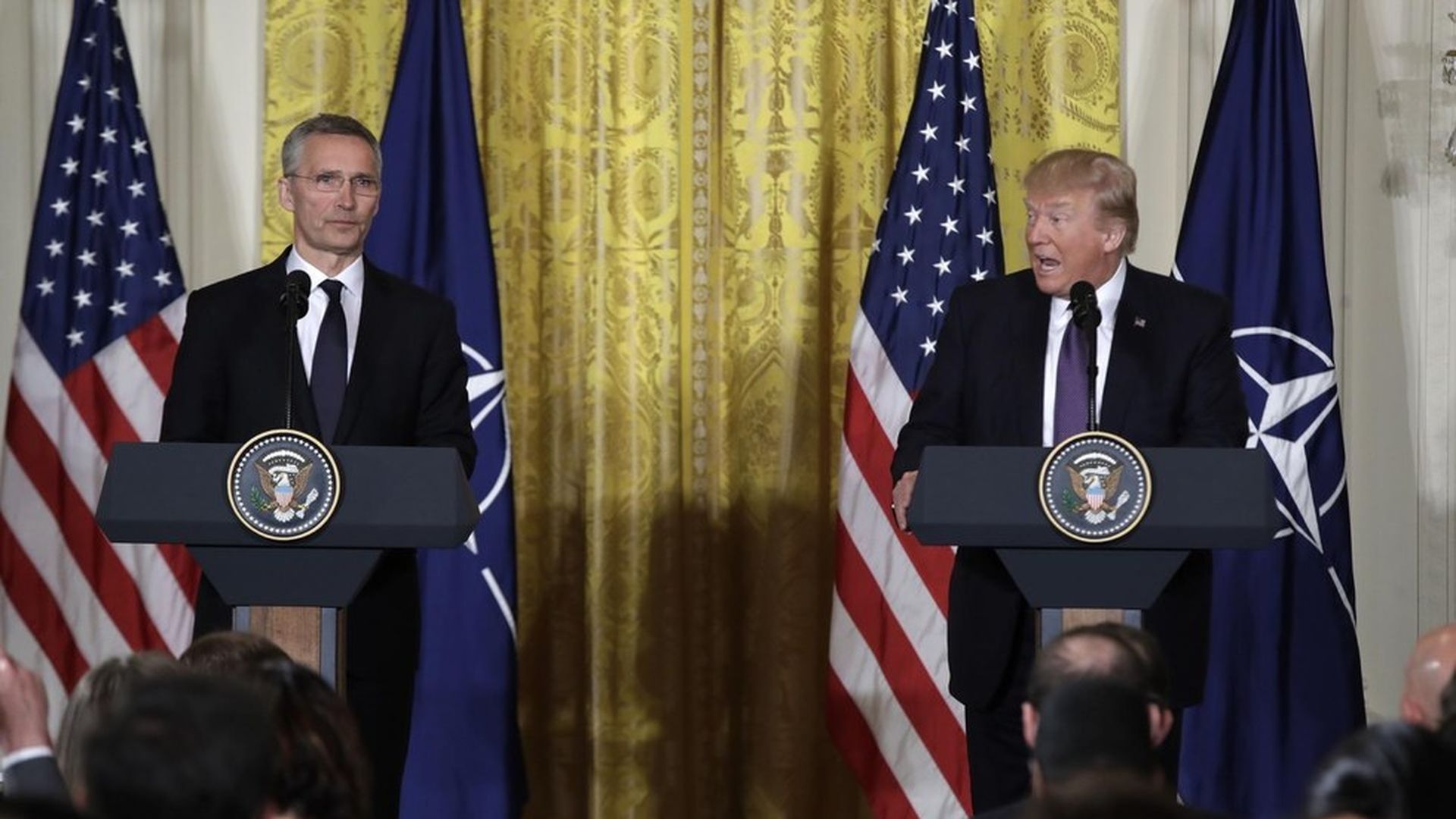
During his joint press conference with NATO Secretary-General Jens Stoltenberg in the White House's East Room, President Trump walked back some of his campaign trail rhetoric against the military alliance, saying "I said [NATO] was obsolete. It's no longer obsolete."
Some other news: Trump announced National Security Advisor H.R. McMaster will head to Afghanistan to consult with Afghan and NATO commanders on the ground.

How and when presidents pivot (and what Trump could do)
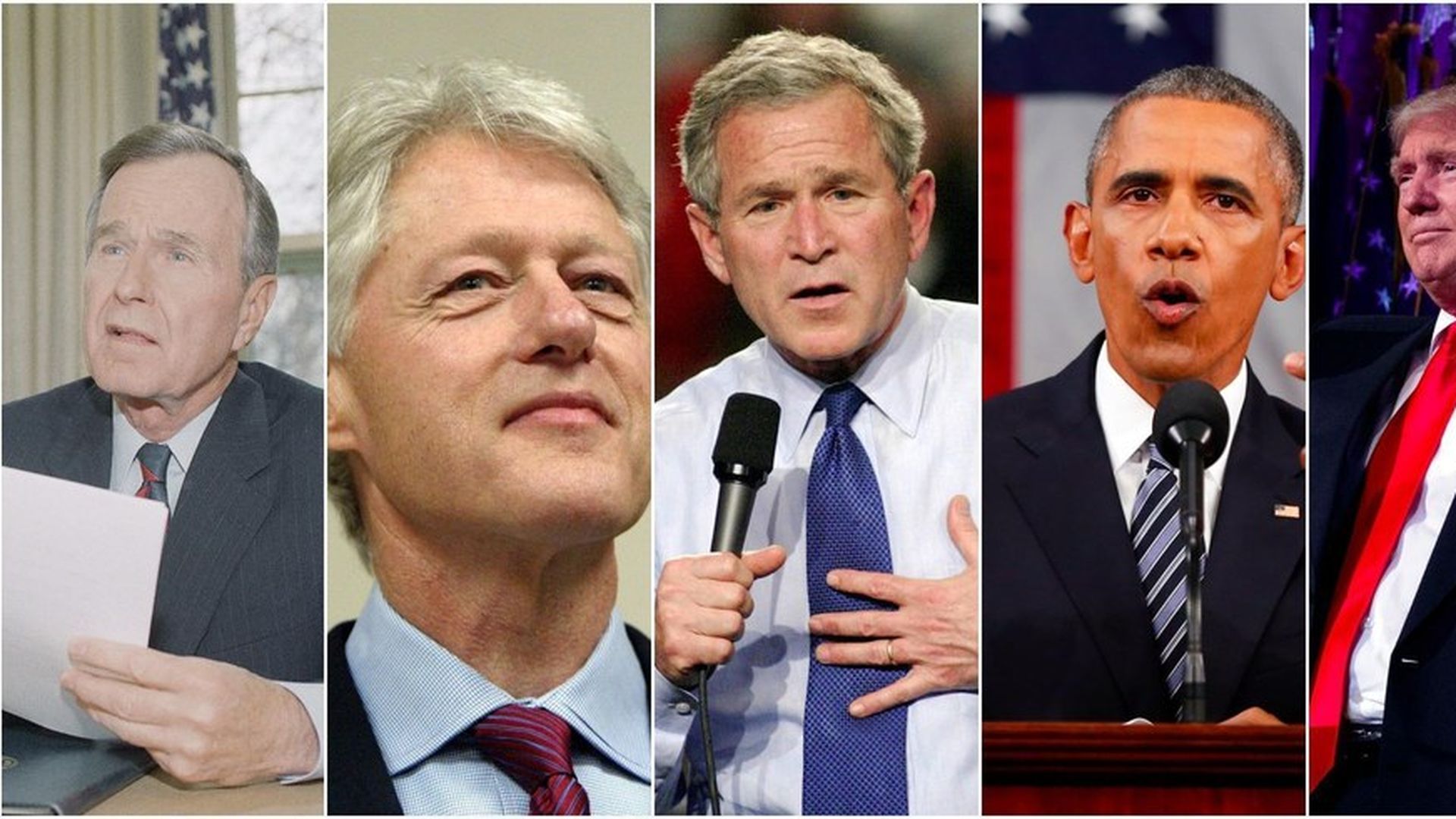
Presidents frequently have to change their tactics or message at some point during their presidency, as D.C. lobbying firm Mehlman Castagnetti points out in their "Understanding Trump's Washington" overview:
- George H. W. Bush relented to the Democratic Congress and agreed to tax increases to pass a budget in 1990.
- Bill Clinton reformed welfare and agreed to a more balanced budget after a disastrous 1994 midterm election for Dems.
- George W. Bush sent more troops to Iraq and backed an immigration bill allowing easier paths to citizenship after a bad 2006 midterm election for the GOP.
- Barack Obama, in 2014, used an Executive Order to pass DACA and promoted Clean Power Plan and the Paris Accord after failing to pass bipartisan legislation.
Trump vs Trump on China's currency manipulation
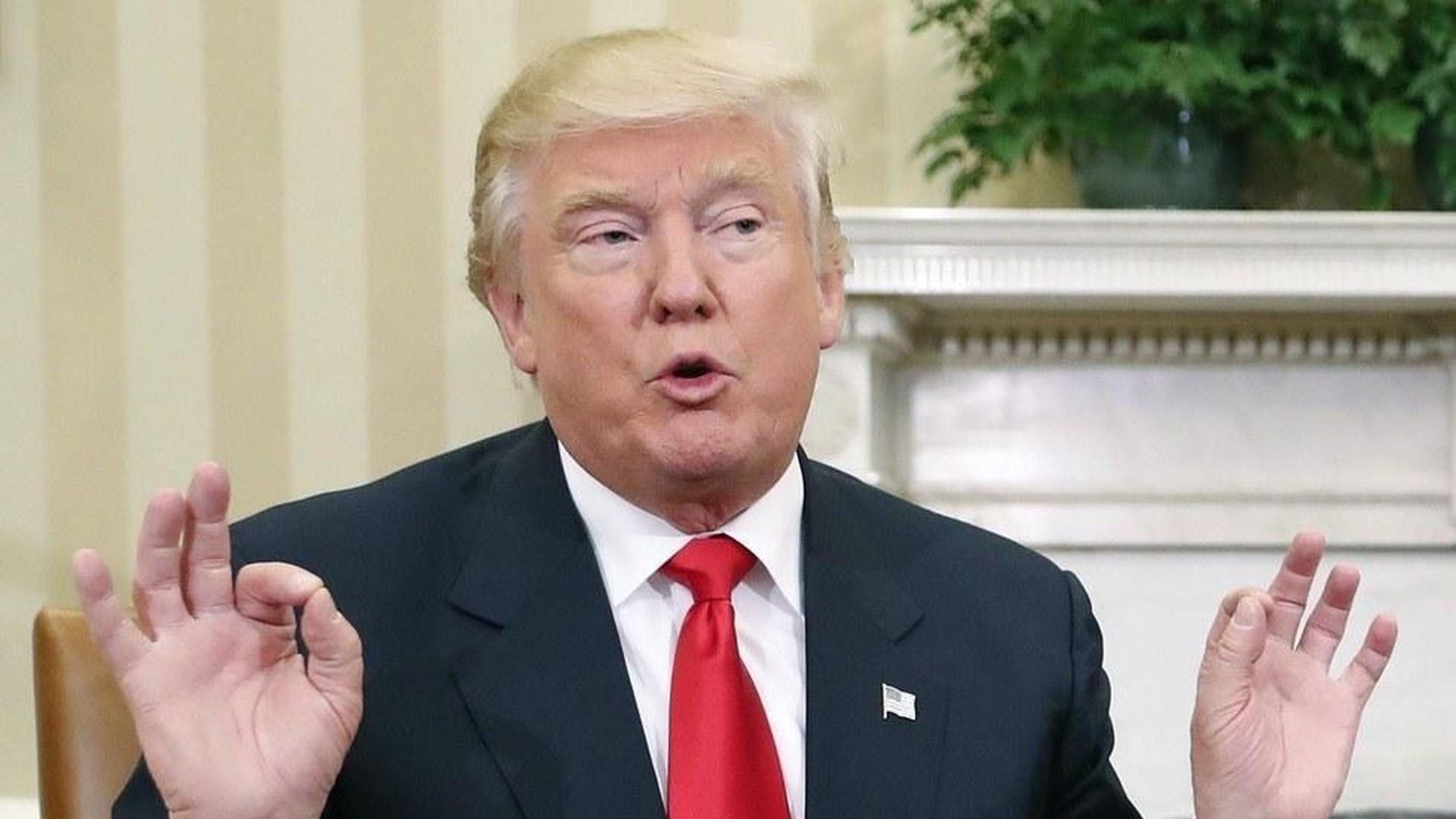
In an interview with the WSJ Wednesday, President Trump said the Chinese are "not currency manipulators." He used to feel differently:
@realDonaldTrump Oct. 2011: "When will Washington stand up to China. China is manipulating its currency and stealing our jobs. Washington should move on legislation."
@realDonaldTrump Dec. 2011: "When will the US government finally classify China as a currency manipulator? China is robbing us blind and @BarackObama defends them."
What you need to know about chemical weapons
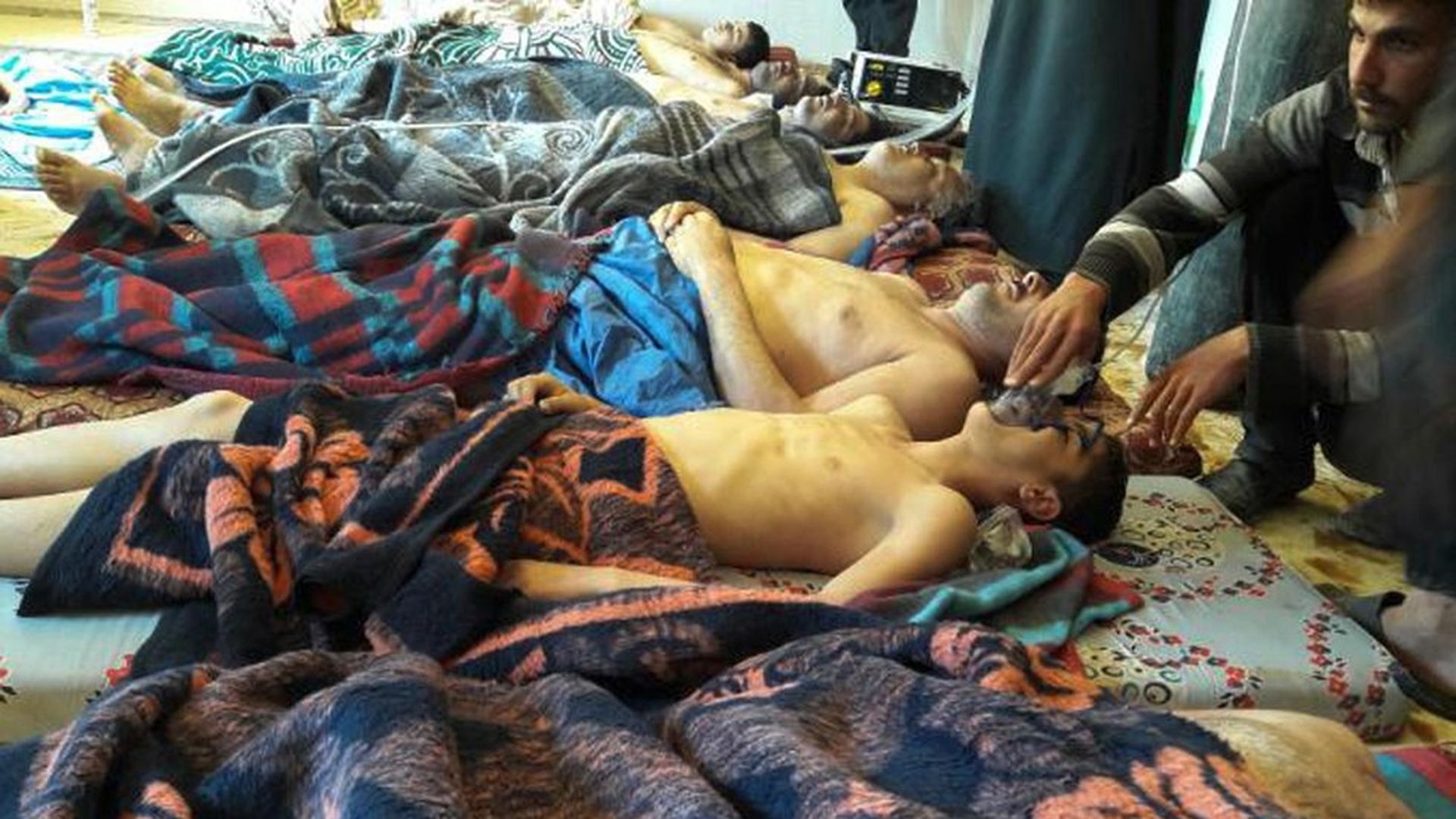
The issue
Russia, Syria, and the U.S. disagree about whether Syria used chemical weapons against its citizens in an April 4 attack. Russia and Syria claim Syria doesn't have chemical weapons, but the U.S. says it has evidence the Syrian government deployed the chemical attack and that Russia knew about it beforehand.
As the international community probes into who was behind the attack, here's what you need to know about chemical weapons:
The facts
A chemical weapon is commonly thought to be a commercial chemical that is used against people to cause mass casualties. But it's not just the chemical used in an attack — it's also the method of deployment, per the Chemical Weapons Convention (CWC). That means if a country possesses the munitions or equipment to deploy chemicals, but not the chemicals themselves, it is still in violation of humanitarian and criminal laws.
History: Chemical weapons were first used widely in World War I. Italian Prime Minister Benito Mussolini, Japanese Emperor Hirohito, Egyptian President Gamal Abdel Nasser, and Iraqi President Saddam Hussein have all been responsible for deploying chemical weapons.
Countries with declared chemical weapons production facilities, per the OPCW: Russia, Syria, Iran, China, Iraq, Libya, UK, U.S., France, India, Japan, Serbia, Bosnia and Herzegovina, each at various stages in destruction plans.
Syria's accountability: Although Syria is party to the Geneva Gas Protocol, it is not party to the CWC. And because Syria isn't party to the Statute of the International Criminal Court, the court prosecutor can only take up the matter if there is a Security Council resolution authorizing it.
Why it matters
The bottom line is using chemical weapons is a war crime, but no one wants to be tagged with this atrocity.

Trump says China is not a currency manipulator
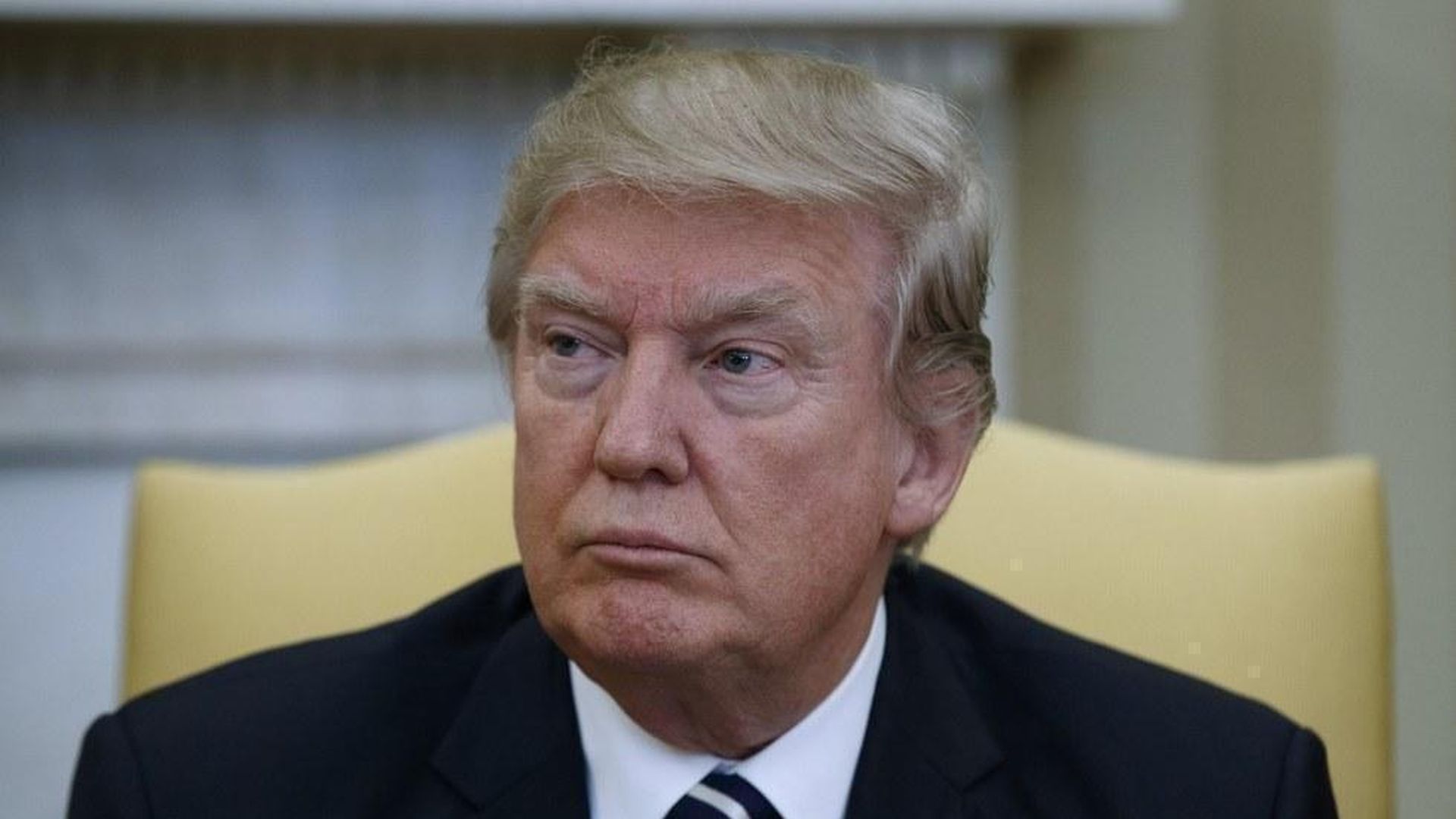
President Trump no longer plans to label China a currency manipulator, despite repeated campaign promises to do so "on day one," according to an interview published Thursday in the Wall Street Journal. And he was pretty blunt about it:
They're not currency manipulators.
What changed? Now that Trump is actually president, he realizes that such a public rebuke of China could endanger talks over bigger issues like North Korea. Plus, China stopped undervaluing its currency years ago.
Mulvaney's realistic approach to Trump's economy
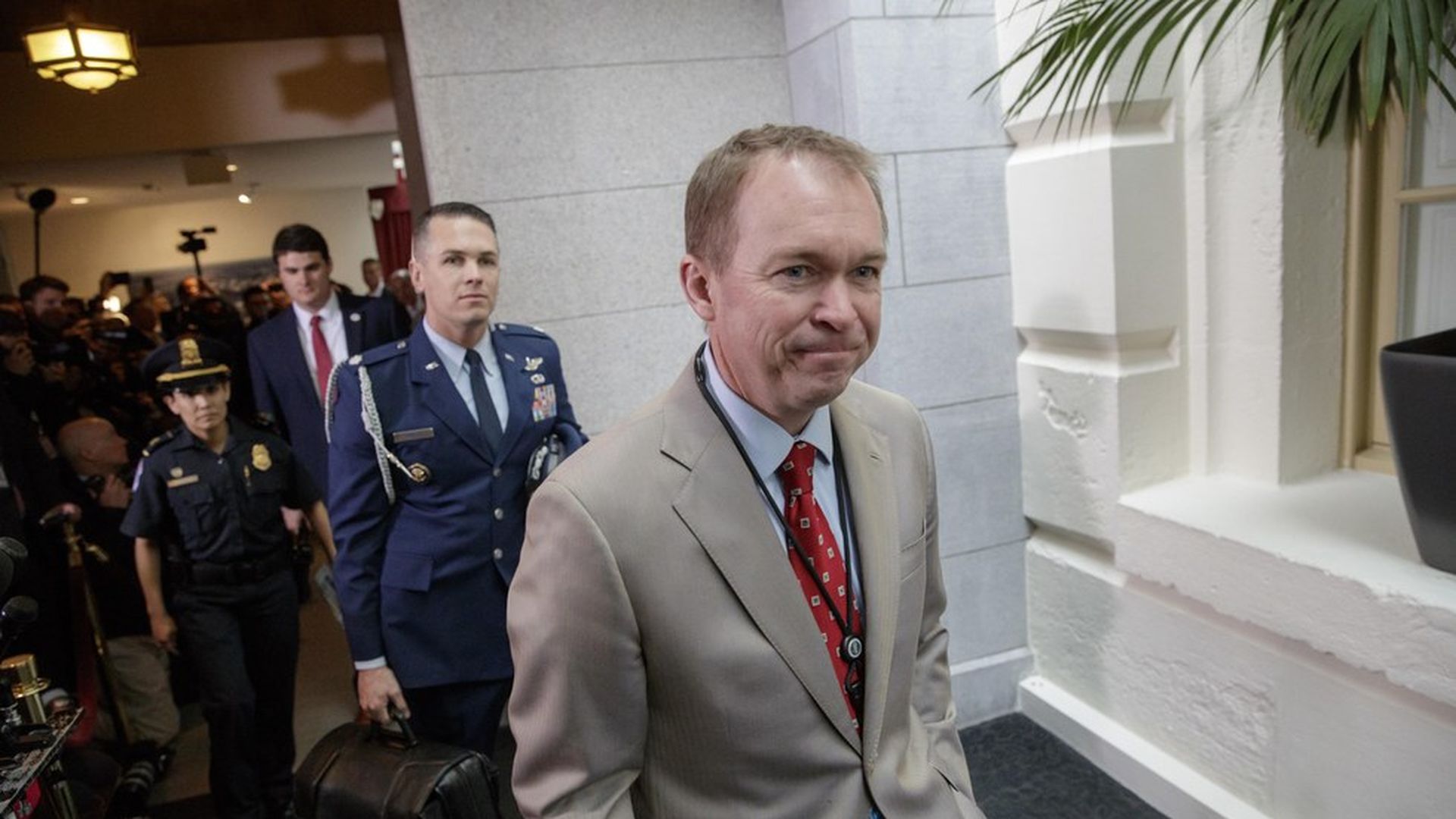
President Trump's Budget Director Mick Mulvaney spoke with CNBC's John Harwood about what to expect from the administration's four-year economic plan — and he's more realistic about what is and isn't possible.
Our thought bubble: Mulvaney is known as a deficit hawk, but he says he's planning to work within the constraints the president has set out (no entitlement cuts, infrastructure and military spending on the rise), so it won't be easy to cut spending and eliminate the debt to the degree he might otherwise like.
Kellyanne Conway: "I'm not the darkness"
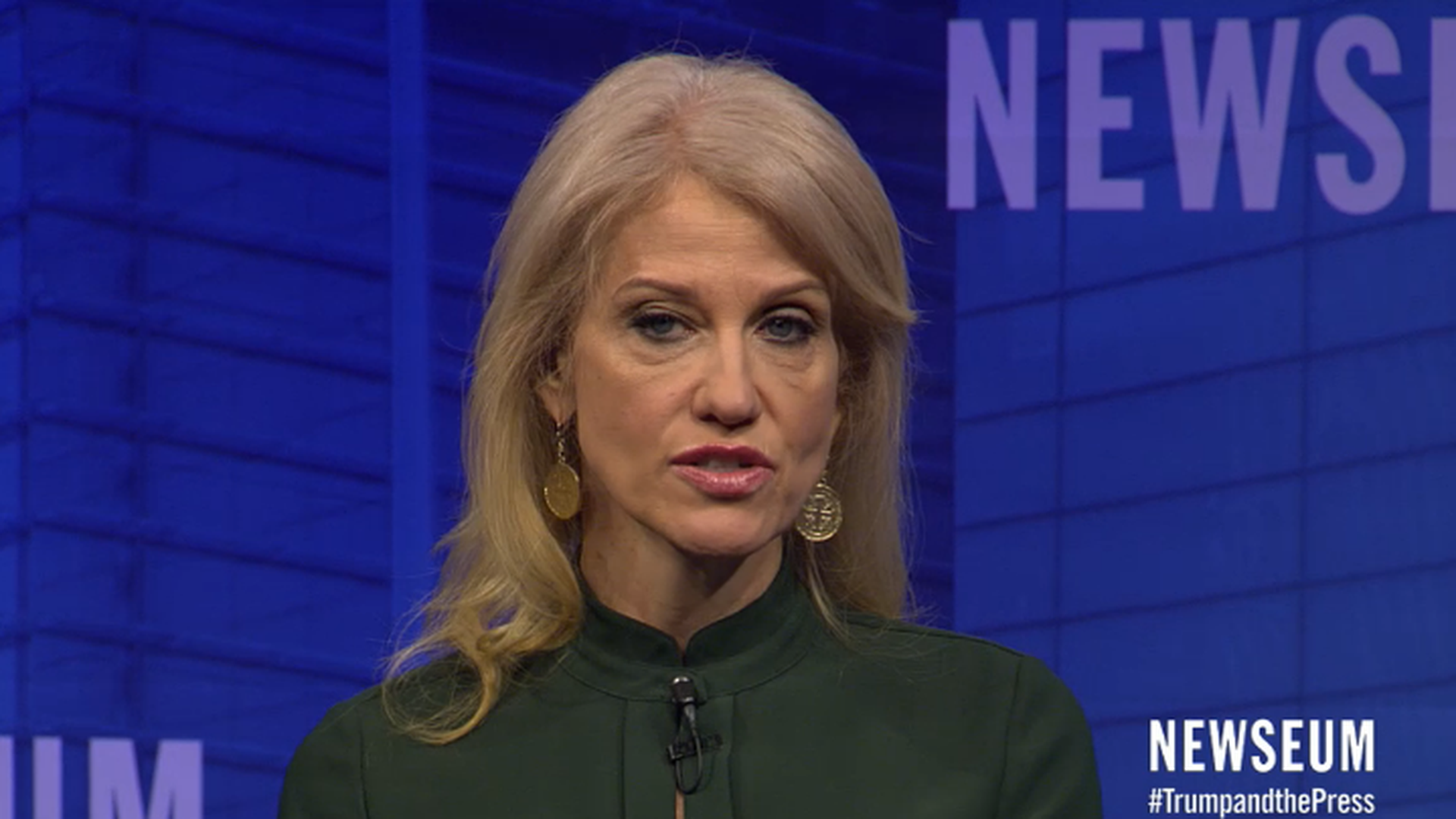
Kellyanne Conway shared her views on the media's relationship with President Trump and his administration at the Newseum's "The President and the Press" event this morning. One of her main talking points was her perception that the media is still unable to connect properly with the voters who carried Trump to the White House:
The forgotten man and woman didn't just come out of nowhere. They still feel like they're forgotten given how this administration — this president — is being presented to them.
Quick take: Conway's criticism of the media was consistent with the administration's rhetoric, but it was an interesting narrative to maintain given the event's focus on the First Amendment and the event's location at the Newseum.
Sean Spicer: "I screwed up"
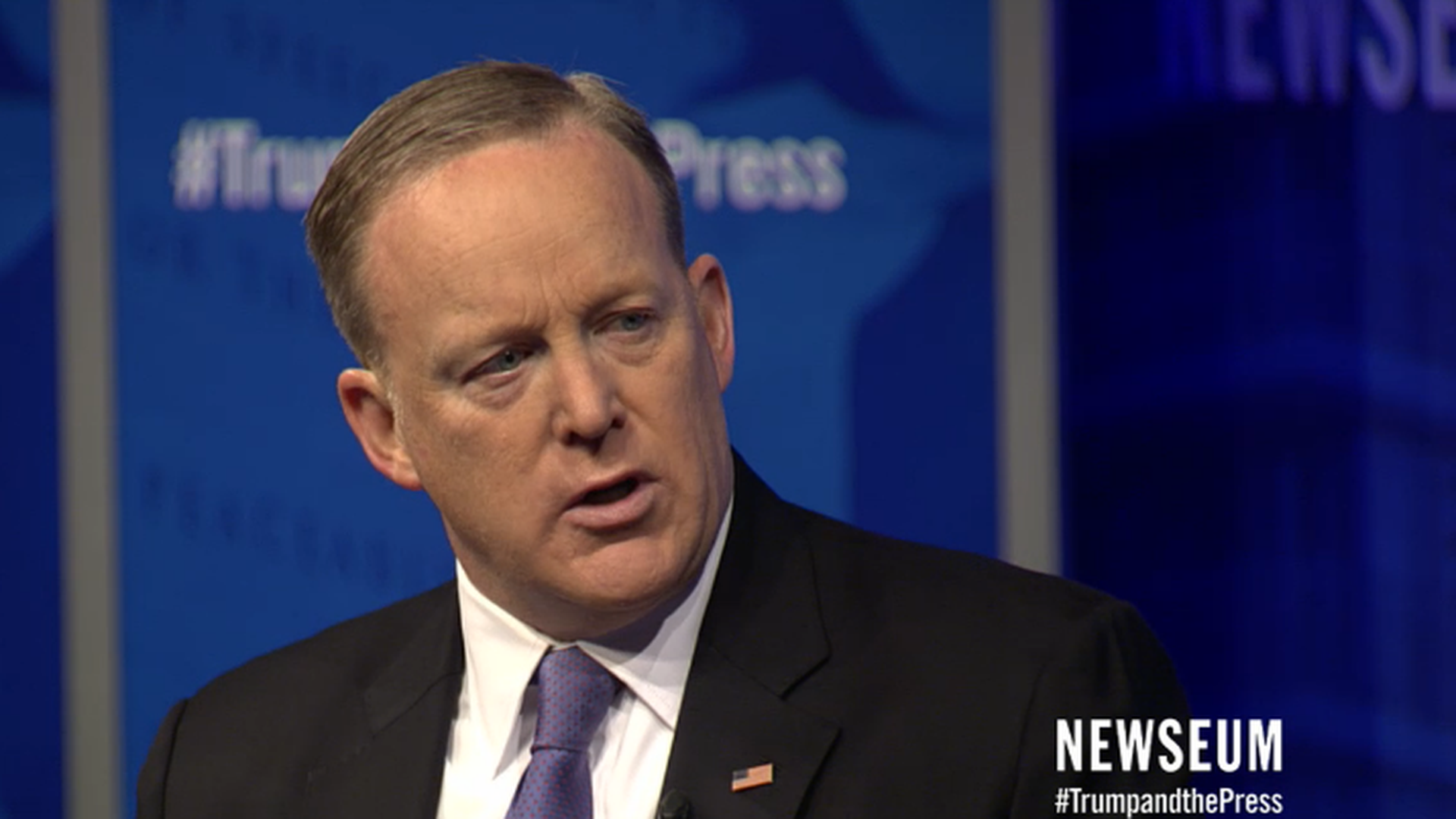
At the Newseum's "The President and the Press" event this morning, Greta van Susteren spoke with Sean Spicer, immediately asking him about the question on everyone's mind — yesterday's Holocaust moment:
"I made a mistake. There's no other way to say it. I got into a topic that I shouldn't have and I screwed up. I hope people understand that we all make mistakes. I hope I showed that I understand that I did that….And I hope each person can understand that part of existing is if you can own up to it, you do it — and I did."
His two big takeaways:
- Personal: "To make a gaffe like this is inexcusable. Of all weeks, this compounds that kind of mistake. It's painful to myself to know that I did something like that."
- Professional: "Your job as the spokesperson is to help amplify the president's actions and accomplishments…it's distracting, I feel like I've let the president down."
Here's who believes Trump's wiretapping claim
This morning on Fox Business, President Trump boasted that he's had "so many people" tell him that he was right about his claim that Obama had his "wires tapped" for political reasons. "What they did was horrible," he said.
Quick review: There was an investigation into the situation after Trump's first wiretapping tweet allegation, but it didn't prove anything. Then there was a twist in the plot when House Intel Committee Chairman Devin Nunes announced he'd received evidence of the Obama administration spying on Trump's people. But it later came out that Nunes got his info from Trump's people after he was caught on White House grounds in security footage. Eventually, Nunes dropped out of the investigation and it will continue without him.

Records confirm Manafort received payments from Ukraine
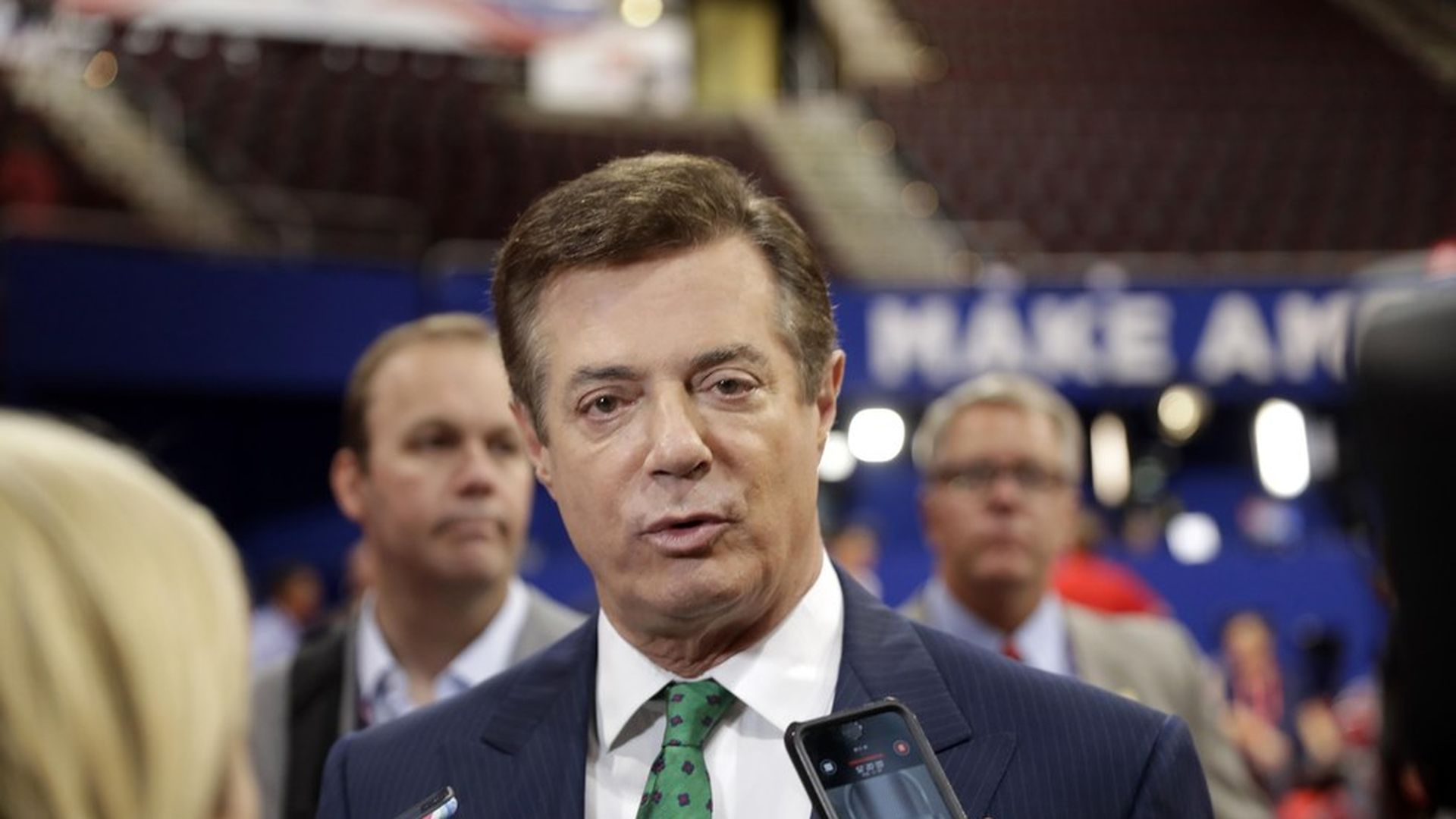
Financial records confirm that Paul Manafort's firm received at least $1.2 million in payments from clients, which were originally listed on a handwritten ledger that surfaced in Ukraine in August when Manafort was still Trump's campaign chairman, The Associated Press reported.
Why it matters: Although the details of the ledger are unrelated to the 2016 presidential election, the newly-confirmed payouts suggest Manafort had pro-Russia operations while he was managing Trump's presidential campaign — and he is currently part of a larger FBI investigation into Trump campaign members and their potential ties to Russia.
Trump kneecaps Bannon
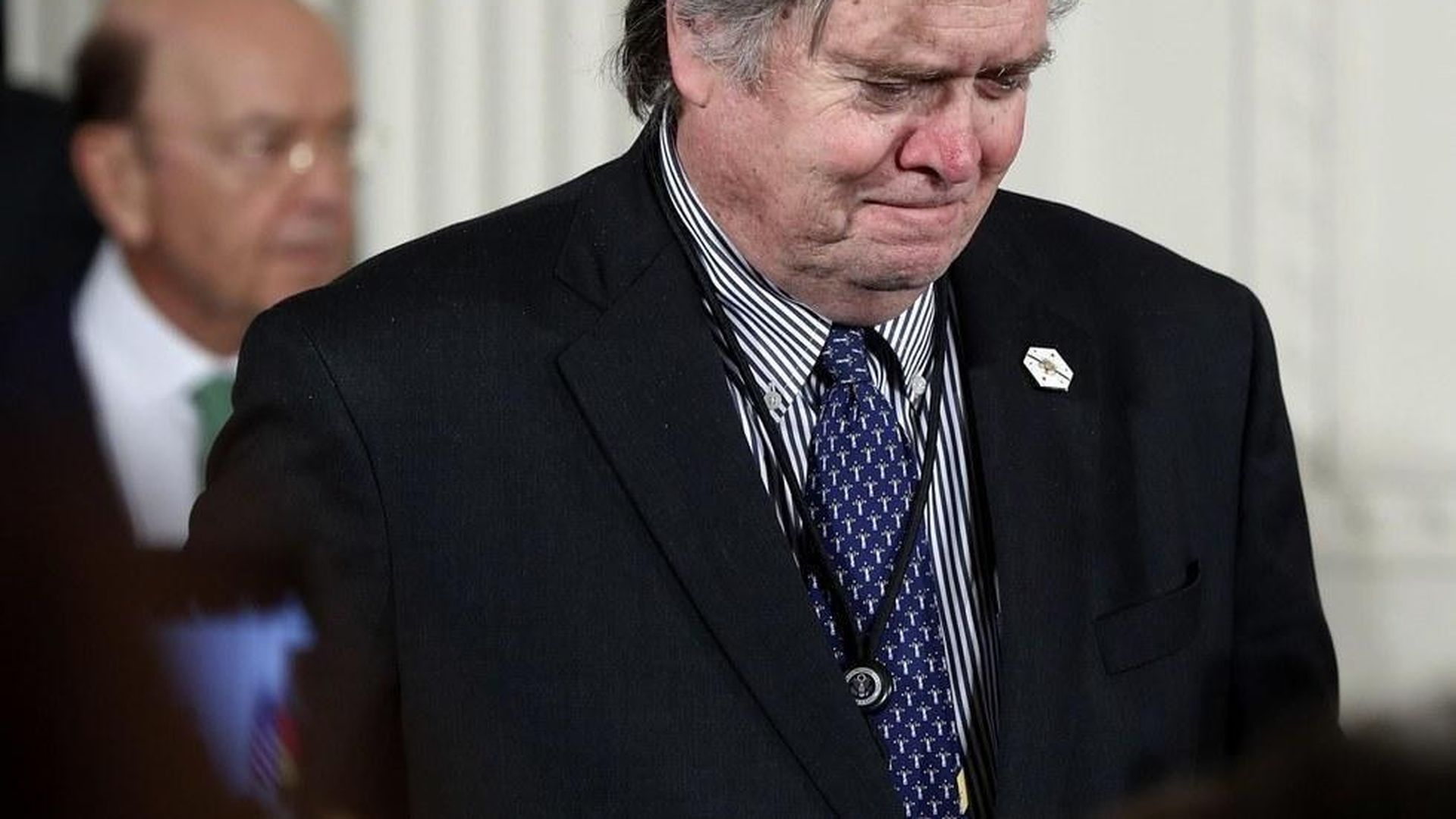
Allies of Steve Bannon fear the White House chief strategist is about to be pushed out, following the posting last night of an ominous interview with Trump by Michael Goodwin, a New York Post columnist and someone the president has been comfortable with over many years.
What it means: Axios' Jonathan Swan points out that if Bannon goes, there's no one of similar status in the White House who has the status to push the nationalist agenda to Trump – and more centrist figures are already ascendant (Jivanka, Gary Cohn). Without Bannon's voice, this becomes a much more conventional White House. It would be an acute normalizing of the staff, although no one can normalize Trump.
Trump claims victory on wiretapping
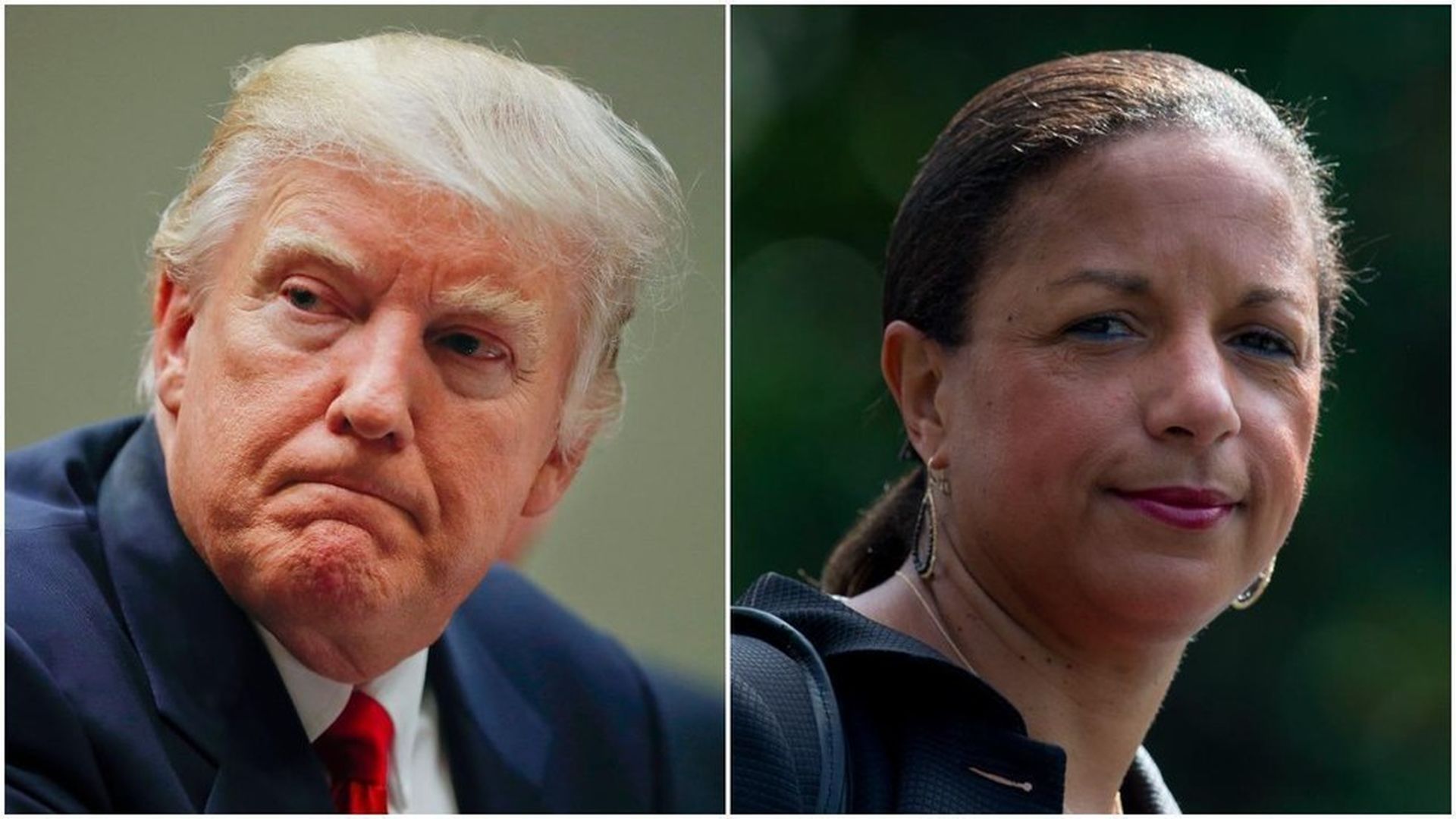
President Trump told Fox Business host Maria Bartiromo in an interview that aired Wednesday that the Susan Rice reports revealed his "wiretapping" claims were justified.
So many people have come up to me and said 'you were right.'— President Trump
Trump rolled his eyes when Bartiromo added that Rice claimed the surveillance wasn't for political reasons. He added: "Does anybody believe that? What they did was horrible."

Trump: Putin is backing "an evil person"
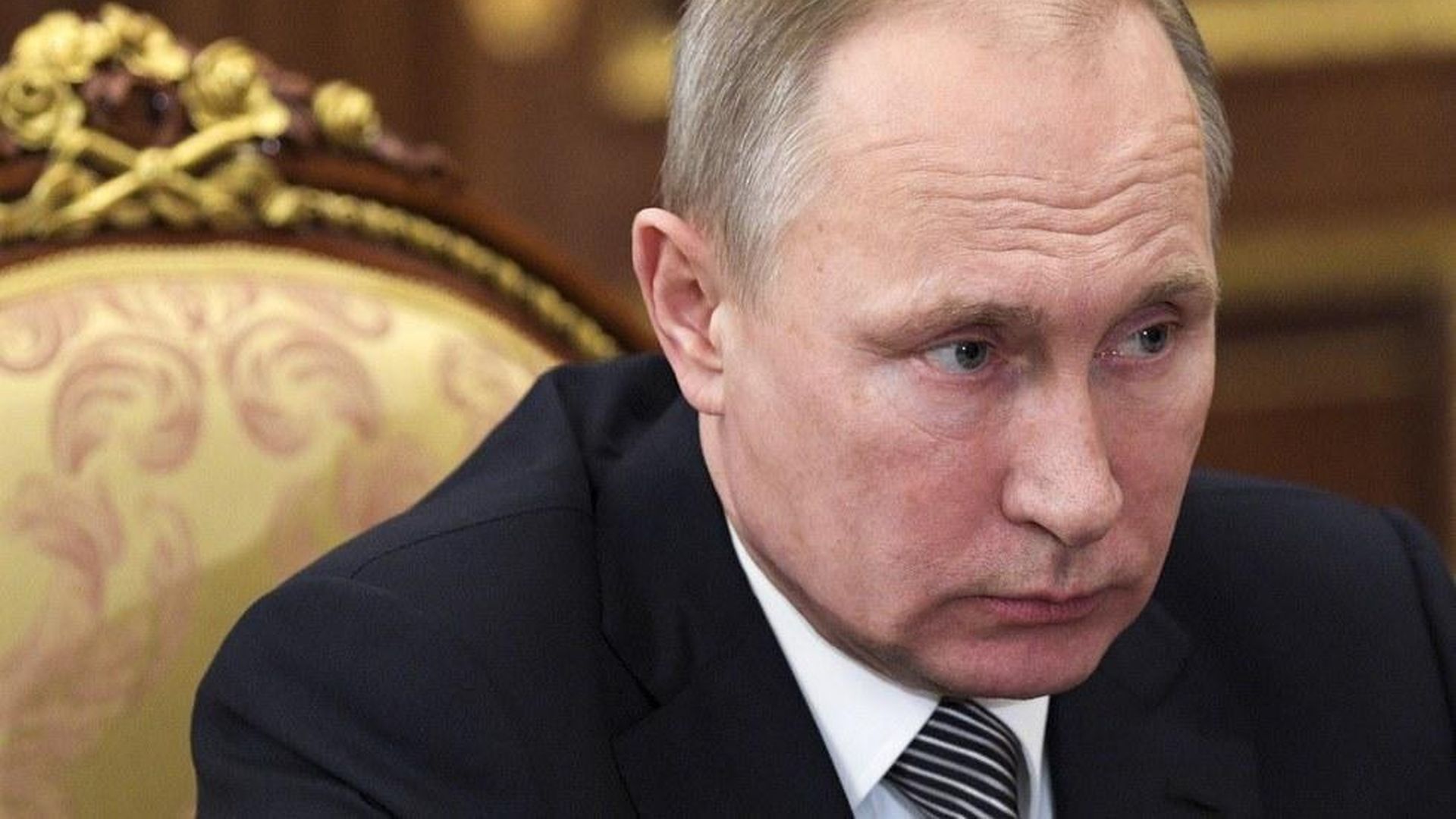
President Trump, in an interview with Maria Bartiromo that will air shortly on Fox Business, said the U.S. is "not going into Syria," even after last week's missile strikes.
The eye-popping quote: He also called Syrian dictator Bashar al-Assad an "animal," saying it was "very bad for Russia" that Vladimir Putin is backing an "evil person".
Trump's talk big, act small White House

Visitors to Steve Bannon's West Wing office are often taken by his whiteboard, covered with promises from the campaign trail. Trump's chief strategist checks off tasks when they're accomplished, but there are some pledges on Bannon's whiteboard that nobody believes will be met — not in the first 100 days, and in some conspicuous cases, not ever.
Why this matters: Trump has made a career of talking big — and, in many cases, delivering. In his 1987 book "The Art of the Deal," he describes his sales technique as "truthful hyperbole." Trump's grandest campaign promises, however, are crashing into an immovable object: Washington. When Trump's first term is up, his actual accomplishments — as opposed to his rhetoric — could look more like the Republican presidencies we're used to than the one Trump promised.