Boar's Head Provisions Co., Inc. is recalling approximately 7 million pounds of ready-to-eat meat and poultry products for possible listeria contamination.
Why it matters: There's a multi-state outbreak of listeria infections linked to meats sliced at delis, according to the recall notice on the U.S. Department of Agriculture's Food Safety and Inspection Service website.
The Biden administration on Tuesday said it signed off on a plan under which North Carolina will give hospitals additional Medicaid funds if they forgive the medical debt of approximately 2 million residents.
Why it matters: It's the latest administration move on an issue closely linked to Americans' broader economic concerns and comes on the heels of a separate proposal unveiled last month to wipe medical debt from 15 million people's credit reports.
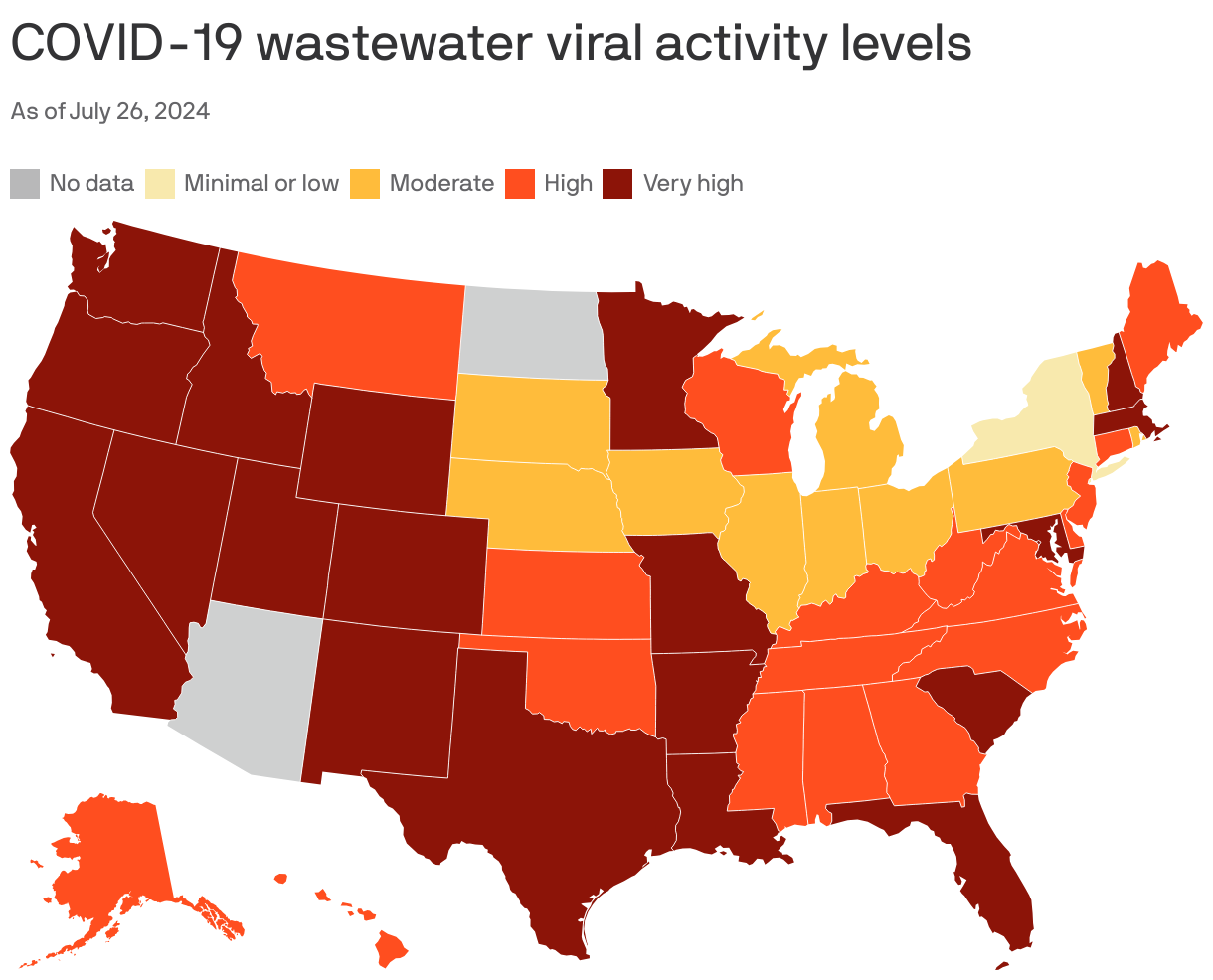
The summer's COVID-19 wave is continuing, with the latest wastewater surveillance data detecting "high" virus activity levels across the majority of the U.S. and "very high" levels in 19 states, per Centers for Disease Control and Prevention data.
Why it matters: The virus is especially prevalent across the western U.S. and the South, in particular a region that includes New Mexico, Texas, Oklahoma, Arkansas and Louisiana, where test positivity topped 23%, per agency data.
As drugmakers continue to try to overturn Medicare drug price negotiations in courts, they're telling Wall Street the negotiations won't materially affect their bottom lines in the short run.
Why it matters: Talks on the first 10 drugs will conclude by Thursday, and Medicare must release final negotiated prices by Sept. 1, though patients won't see lower price tags until 2026.
The quintessential summer pastime of going to the county fair could carry some risk this year with the threat of bird flu hanging over livestock exhibits and throngs of visitors, experts say.
Why it matters: The mingling of animals, people and equipment at 4-H competitions, milking demonstrations and petting farms creates the conditions for potential transmission to humans.
Tens of millions of dollars are fueling ads across platforms to push abortion rights measures that are expected to be on the ballot in Arizona, Nevada and Montana this year, according to AdImpact data.
Why it matters: Those same states could determine the next president and control of the Senate. Democrats hope having abortion on the ballot will keep the focus on their most potent issue — and turn out much-needed voters.
The federal government is pouring money into getting more farmworkers vaccinated to prevent them from being infected by the seasonal flu and bird flu viruses at the same time.
Why it matters: Officials said the mitigation efforts part of a wider effort to reduce a "theoretical" risk that the viruses could mix and become more transmissible in humans.
The emotional lives of most American kids and teens are complex, with sadness, anxiety and stress intermingled with happiness, according to a Gallup-Walton Family Foundation survey out today.
Why it matters: The survey provides a nuanced view of Gen Z's emotional lives and how that group copes with stressors amid growing concerns of a youth mental health crisis in America.
What they found: Negative feelings were more common among girls and teenagers between 16-18 years old, the poll of 1,625 kids and their parents or guardians found.
Private Medicare plans now cover more than half of Medicare beneficiaries, but how well they actually serve people differs from county to county.
Why it matters: Medicare enrollees living in communities of color and with high rates of poverty had less access to top-rated Medicare Advantage plans last year than those living in wealthier places that are majority white.
The Olympic men's individual triathlon race that was due to be held in Paris' River Seine Tuesday was rescheduled to the following day due to swimming safety concerns, per a statement first shared by governing body World Triathlon.
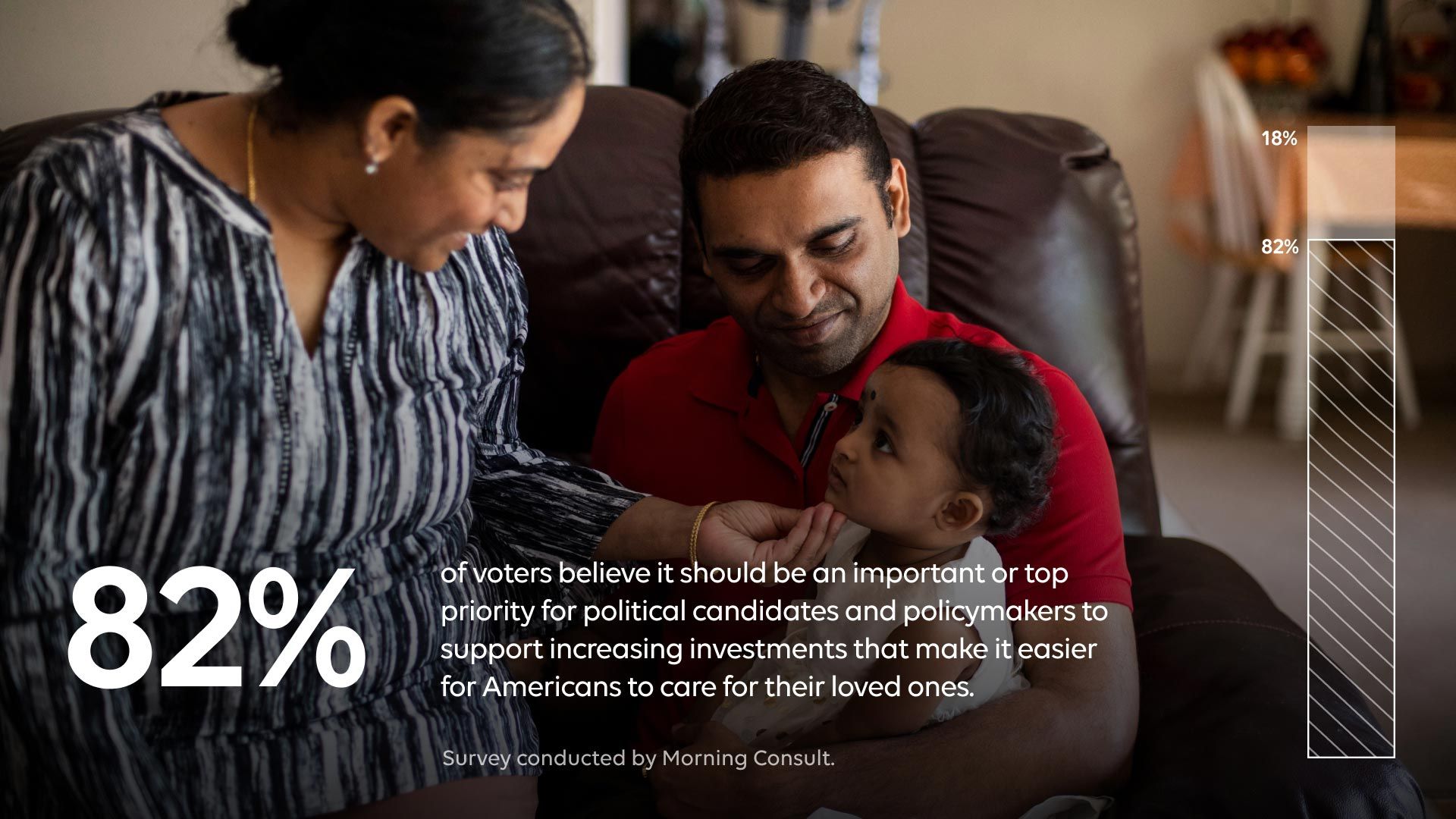
Caregivers power the U.S. economy, but insufficient investment in the care system forces families — especially women — to bear unsustainable costs.
What you need to know: A recent survey commissioned by Pivotal Ventures and Bipartisan Policy Center Action, and conducted by Morning Consult, reveals the widespread demand for caregiving solutions.
A small group of people around the world truly don't need more than four to six hours of sleep a night, thanks to a rare gene.
Why it matters: Very few people are natural short sleepers, but deeper study of the way their bodies and brains work offers valuable lessons for all of us.