Seine remains too polluted to host swimming events at Paris Olympics

Add Axios as your preferred source to
see more of our stories on Google.
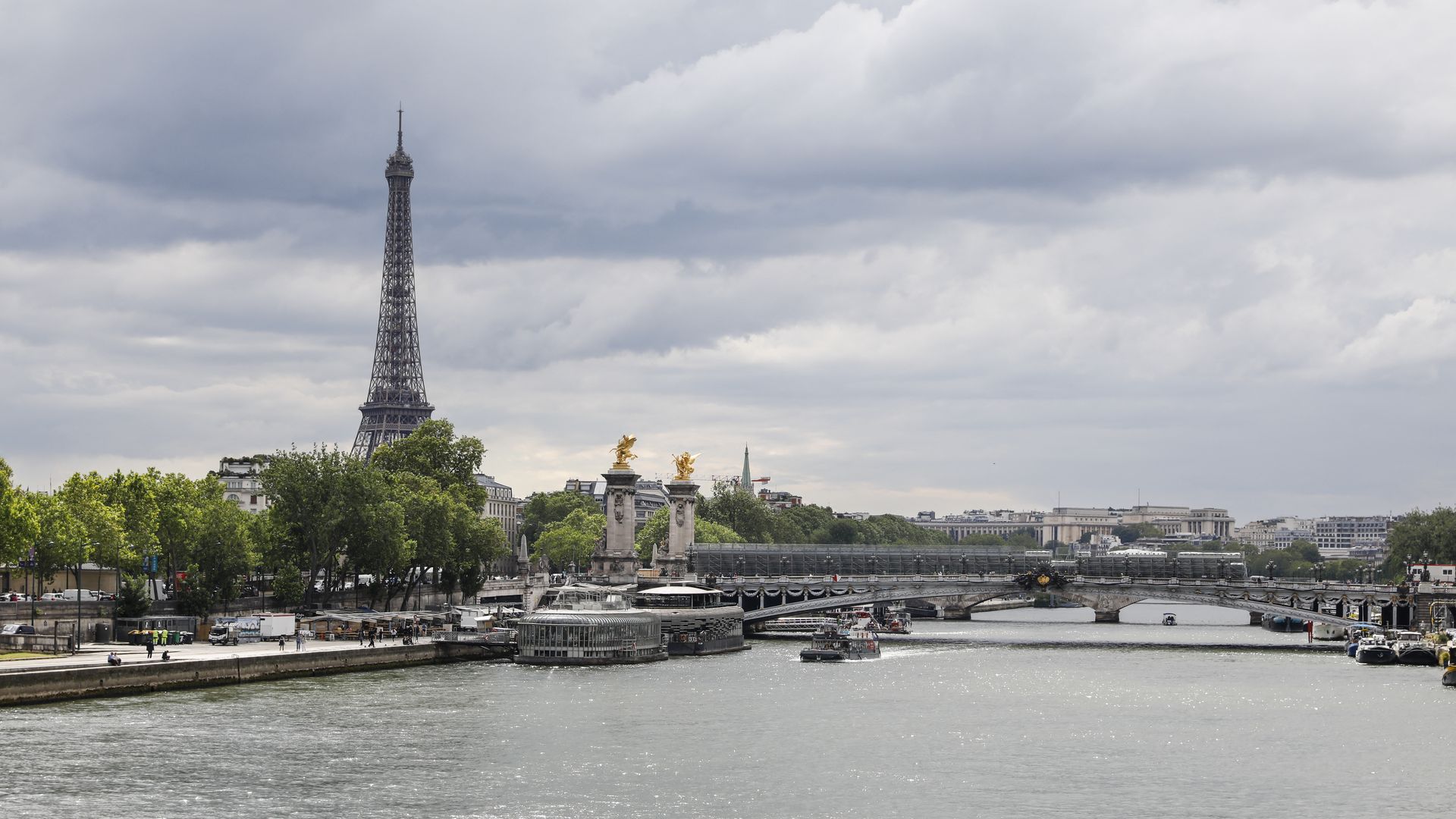
View of the Seine river on June 11. Photo: Laure Boyer/Hans Lucas/AFP via Getty Images
The River Seine is still falling short of the requirements needed to qualify for participation in this summer's Paris Olympic Games, Paris officials announced Friday.
Why it matters: Organizers hope that the Seine will have a starring role in the Paris Games, by playing host to the opening ceremony and swimming events during the tournament.
Catch up quick: The Seine has been undergoing a $1.5 billion cleanup effort in preparation for the Games, with regular testing of its bacteria levels to ensure participants' safety.
- This has involved trying to limit the amount of untreated water entering the Seine and retrofitting old pipes that connect to the city's sewage system.
- Ahead of the cleanup, the Seine's pollution levels were so formidable that swimming in the river has been banned since 1923.
State of play: Bacterial tests conducted in mid-June show that the Seine is still too polluted to host triathlon and marathon swimming events, Paris region official Marc Guillaume said at a press conference Friday.
- "There is no doubt that the quality of water today is not up to par," Guillaume said.
- However, he said he was "confident" the swimming events would go forward as planned, noting that heavy rains recently had hurt the results and likely don't reflect the weather anticipated for the Games' opening on July 26.
- "At one point or another, the weather will change, it's going to stop raining and we're going to have sunshine ... It is in summer conditions that we must be able to examine swimmability," he added.
- The first swimming events in the Seine are set to take place on July 30.
Reality check: To date, tests of the Seine's bacteria levels have failed to fall to the prerequisite safety levels.
- Heavy rainfall can overwhelm Paris' sewage system, increasing contamination.
- The city has experienced one of its wettest winters in decades this year, per France 24.
- Back in April, the Surfrider Foundation, an NGO focused on water quality in Europe, issued a stark warning that levels of E. Coli and enterococci — which indicate the presence of fecal matter in water — remained far too high.
Go deeper: Swimming could return to River Seine for Paris 2024 Olympics after century-long ban
