The Food and Drug Administration on Monday approved a blood test to detect colorectal cancer in individuals age 45 and older, adding another screening option for the second-most common cause of U.S. cancer deaths.
Why it matters: More than 1 out of 3 eligible Americans don't complete screening methods such as colonoscopy or a stool test, and a simple blood draw for the condition could be incorporated into routine physicals.
Data: KFF, Guttmacher Institute, Axios research; Map: Simran Parwani/Axios Visuals
One of the strictest abortion bans in the nation came into force in Iowa on Monday.
Why it matters: Most abortions are now prohibited after about six weeks of pregnancy, with exceptions in the cases of rape, incest or to save the life of the patient.
Prospective competitors to blockbuster weight-loss drugs are heading toward commercialization and posing a threat to industry behemoths Novo Nordisk and Eli Lilly, Axios' Nathan Bomey writes.
Why it matters: Booming sales of Novo Nordisk's Ozempic and Wegovy and Eli Lilly's Mounjaro and Zepbound have led to widespread shortages of GLP-1 treatments.
Driving the news: San Diego-based Viking Therapeutics is accelerating development of its own injectable GLP-1 treatment after receiving positive feedback from the Food and Drug Administration.
Trial results showing a 15% reduction in body weight after 13 weeks mean the treatment could make it to the market a year ahead of schedule, BTIG analyst Justin Zelin wrote in a research note.
🛑 European drug regulators rejected Biogen and Eisai's Alzheimer's treatment Leqembi, saying its effect on delaying cognitive decline doesn't outweigh the risk of serious side effects. (CNBC)
👨⚕️ Humana is leasing clinical space in Walmart Supercenter stores in Florida, Georgia, Missouri and Texas after the retail giant shuttered its health centers and virtual care business. (Healthcare Dive)
🏝️ As doctors leave Puerto Rico in droves, a rapper is trying to fill the gaps and help treat underserved, remote communities. (AP)
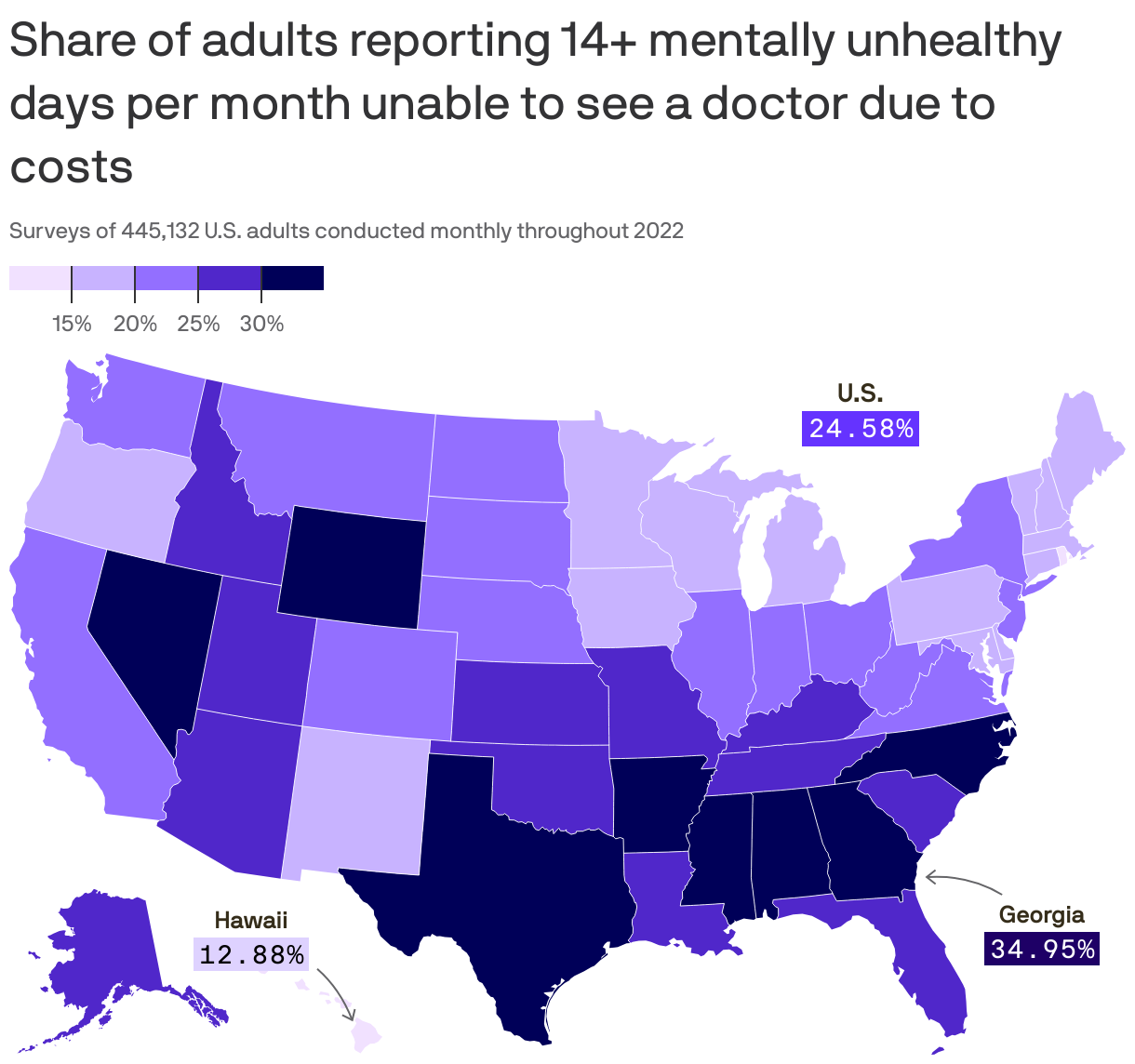
Almost 1 in 4 American adults with frequent mental distress reported not seeing a doctor because of the cost, Mental Health America found in a new survey based on 2022 federal data.
Why it matters: Delayed or forgone treatment for mental disorders is often linked to insurance status and medical debt, and is fueling a treatment gap that cuts across demographic groups.
The Biden administration is overhauling its health IT bureaucracy to address the proliferation of cyberattacks on the sector and the growth of data and artificial intelligence in medical settings.
Why it matters: The goals include setting an AI policy and strategy for HHS and streamlining critical infrastructure protection within the Administration for Strategic Preparedness and Response, or ASPR, per a notice to be published in the Federal Register on Monday.
There's growing evidence that blood tests can accurately diagnose Alzheimer's disease and pave the way for earlier treatment of more patients.
Why it matters: Making Alzheimer's easier to detect is seen as crucial now that new drugs that slow the disease's progression are coming onto the market.