States are drawing on laws first drafted in Hollywood's golden age to protect 21st Century children at risk of being exploited in the multibillion dollar influencer industry.
Why it matters: The content creation field is largely unregulated, and states are taking steps to ensure kids get a cut of the profit they brought in from vlogging or brand deals.
On Thursday Sen. Ed Markey (D-Mass.) and Rep. Pramila Jayapal (D-Wash.) introduced an updated version of the Health Over Wealth Act, legislation that would take aim at private equity firms and for-profit companies that own health care businesses.
Why it matters: Private equity ownership of health care companies is under the spotlight, especially the firms' practices around worker treatment and cost-cutting.
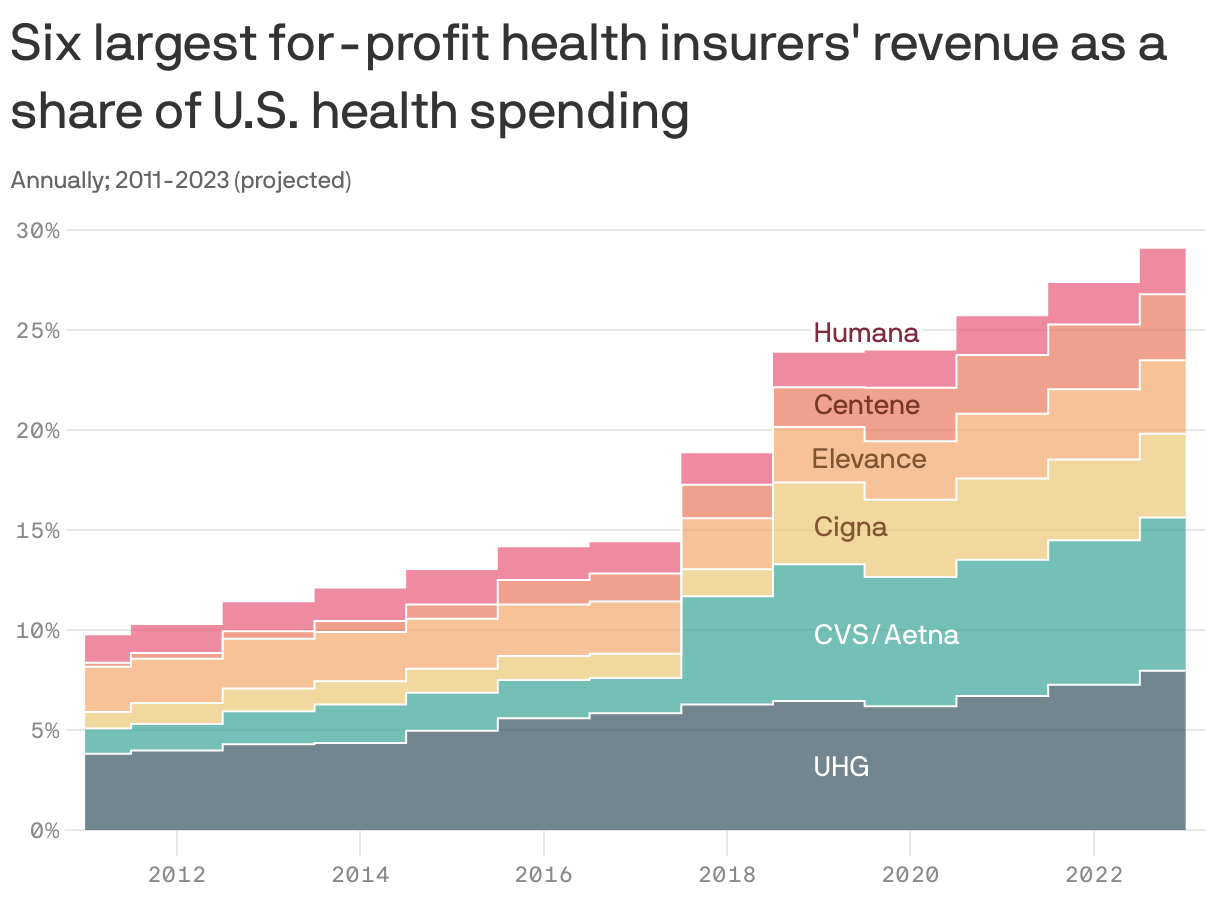
Attacking consolidation and related anti-competitive business practices in health care has emerged as something of a bipartisan cause over the last few years. There's just one big problem: Health care already is heavily consolidated, and most of the solutions can't change that.
Why it matters: Whether it's insurers, pharmacy benefit managers, hospitals or providers, today's health care landscape is increasingly dominated by large players wielding outsize market power, which experts say contributes to high and rising costs.
Most policymakers worried about health costs are still generally united around approaches that use market forces to lower or at least stabilize prices. Many measures that would ultimately help prevent future consolidation and preserve competition have widespread appeal.
Let's start by talking about the bucket of policies that Congress or the Biden administration are pursuing.
Particularly in the House, there's been bipartisan interest in measures promoting hospital price transparency and aligning payment rates for different settings of care, known as site-neutral payments. There's also been chatter (mostly among Democrats) about increasing resources and authorities for the FTC to pursue antitrust cases.
The FTC has been aggressive in challenging health care mergers under President Biden, and the administration this year put out a request for information about consolidation in health care markets.
I want to go deeper on one think tank plan in particular, partially because it's been turned into actual legislation on the Hill — and also because both versions are coming from the political right.
How it works: The plan, originally developed by the Foundation for Research on Equal Opportunity, would cap payment rates for commercial payers at Medicare Advantage rates in "extremely concentrated hospital markets," with exemptions for rural hospitals.
If hospitals in those markets didn't want to get paid MA rates — which generally are much lower than commercial rates — they could opt to break up instead.