Why it matters: Booming sales of Novo Nordisk's Ozempic and Wegovy and Eli Lilly's Mounjaro and Zepbound have led to widespread shortages of GLP-1 treatments.
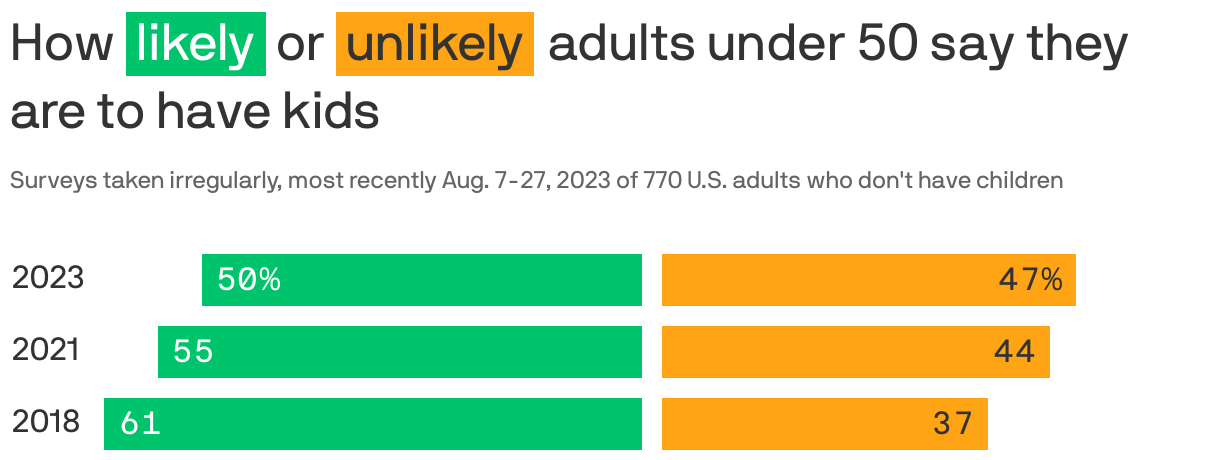
Data: Pew Research Center; Chart: Rahul Mukherjee/Axios
An increasing share of adults under 50 say they're unlikely to have kids — and the major reason is, well, they just don't want them, according to a report from Pew Research Center out Thursday morning.
Why it matters: The U.S. fertility rate is at a historic low, posing problems for future economic growth, and the survey takes a crack at figuring out what's going on.
🌎 The U.S. Treasury has committed $667 million for a global pandemic fund hosted by the World Bank, but a divided Congress still has to sign off. (Endpoints News)
🧬 An ultrarare disease that speeds up aging in children is getting closer to a cure via a gene editing technique. (NYT)
🥼 A neurological drug that Biogen gained rights to in a $1 billion research deal failed a key human trial and likely will be scrapped. (Reuters)
👩🍼 Why six months of paid parental leave is optimal but not realistic in the United States. (Axios)
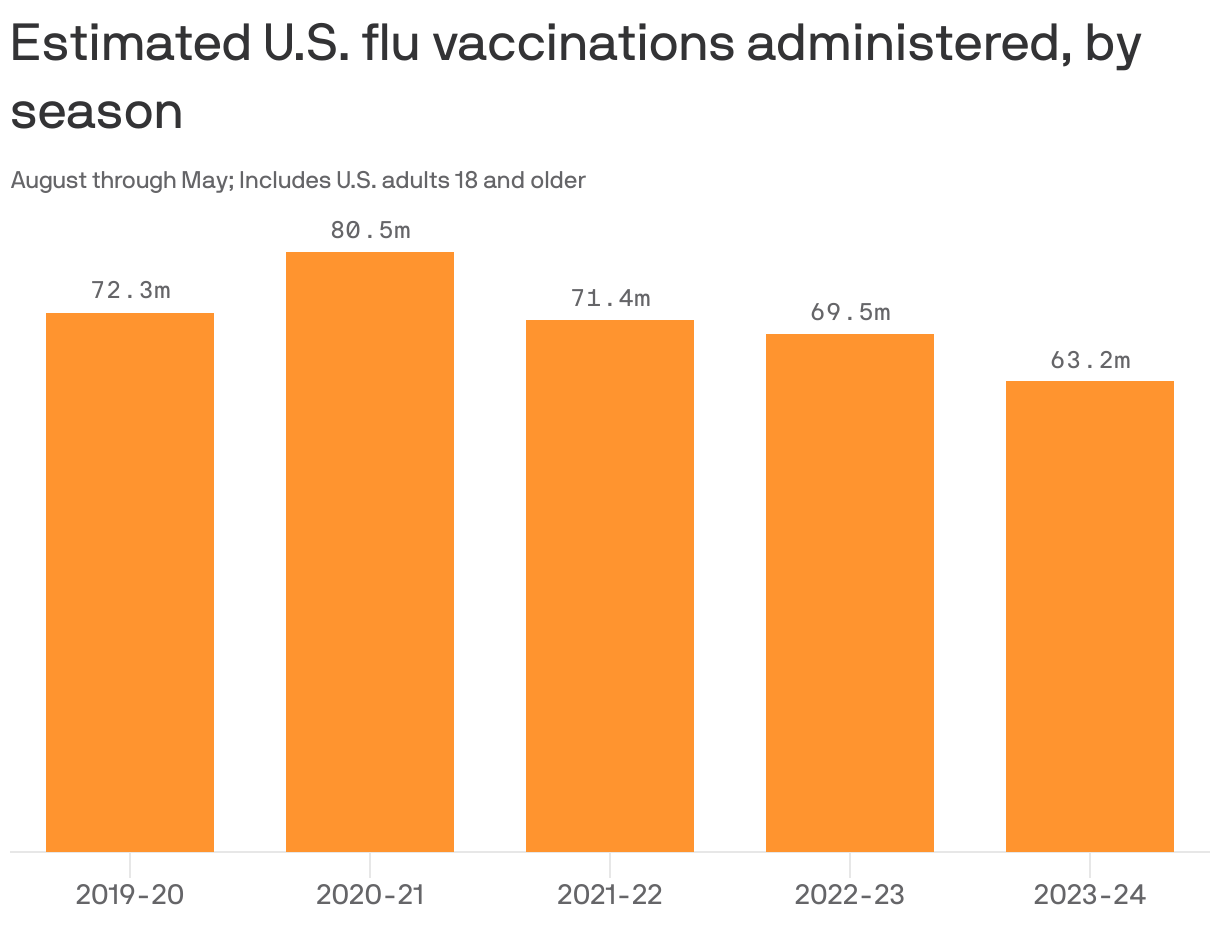
Data: CDC; Note: 2023-24 data as of May 4, 2024. Includes vaccinations given at pharmacies and doctors' offices; Chart: Axios Visuals
Demand for flu shots is declining, particularly among some of the most medically vulnerable groups, raising concerns that the vaccines may be falling out of favor in a post-pandemic world.
Why it matters: While uptake for flu shots has never been stellar, experts say vaccine fatigue, shifting attitudes and lowered public trust may be eroding demand.
Vials used for blood culture samples are in critically low supply.
Why it matters: The shortage of blood culture bottles made by Becton Dickinson (BD) could delay patients' diagnoses or lead to misdiagnoses or other challenges if not properly managed, the Centers for Disease Control and Prevention warned in a Tuesday alert.
Context: Health providers take blood cultures to diagnose patients with bloodstream infections or related conditions, like sepsis and endocarditis.
Sepsis is a leading cause of death in hospitals, affecting at least 1.7 million people in the U.S. annually.
About half of all laboratories in the country use a blood culture monitoring system that's only compatible with the BD bottles, the CDC said.
The shortage isthe result of supply chain disruptions, and more vials should be available in September, a BD vice president told clinicians during a Tuesday call.
In the meantime, the CDC advised health facilities to improve their blood culture collection practices to avoid unnecessary cultures that strain bottle supply.
Congress' boldest effort to date to crack down on social media platforms and protect kids' mental health is stoking a debate over whether the remedy could end up making youths less safe.
Why it matters: Curbing sources of anxiety, depression and other harms raises privacy and free speech concerns, and can turn into a subjective exercise that could sweep up content some people find empowering.
Massive wildfires burning across the unusually hot and dry western U.S. and Canada have led thousands to evacuate, with reports of at least one fire in California and another in Oregon creating their own weather.
The big picture: 78 large fires are burning in the West, per the National Interagency Fire Center (NIFC). This includes 31 blazes in Oregon and 12 in California, as dangerously hot temperatures continued to roast the West.
For expectant parents, making a leave plan can feel like putting together a confusing puzzle that might have missing pieces.
Why it matters: Employees who don't take advantage of time-off policies could miss out on payments and benefits crucial for recovery and family bonding.
Medicare Advantage beneficiaries account for a growing share of patients admitted to hospitals, making facilities increasingly reliant on private insurers and subject to pre-treatment approvals or claims denials, according to a new KFF analysis.
Why it matters: The findings help explain the growing tensions between hospitals and insurers that have seen some health systems cancel their Medicare Advantage contracts, citing low reimbursements and administrative hassles.
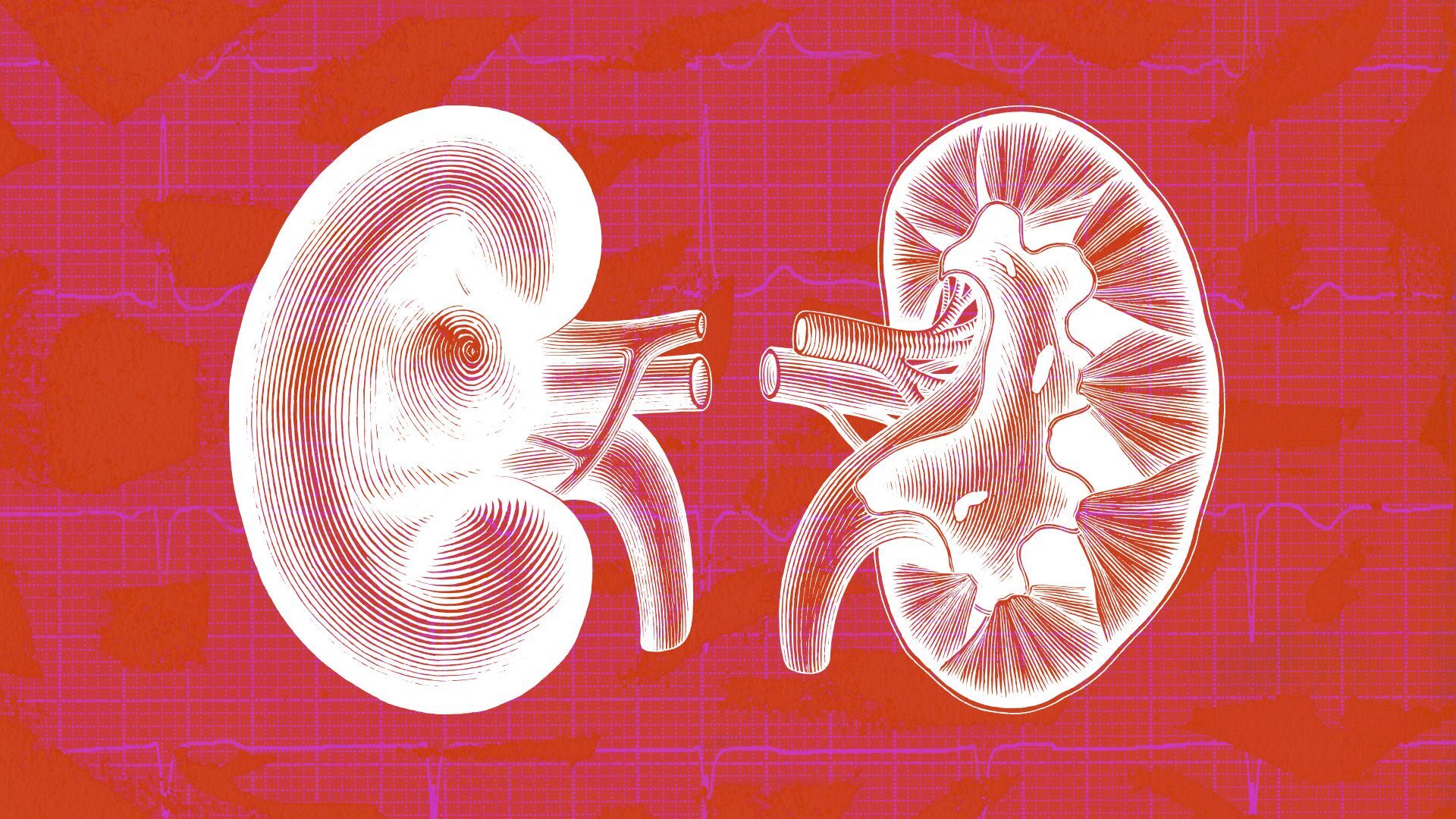
The Federal Trade Commission is expanding its scrutiny of the health care industry to the growing dialysis market and investigating whether dialysis giants DaVita and Fresenius Medical Care are squeezing out competitors by restricting kidney doctors from changing jobs.
Why it matters: The antitrust probe is part of a wider FTC focus on noncompete agreements that are often used in the health care labor force butthat the agency says stifle business innovation.
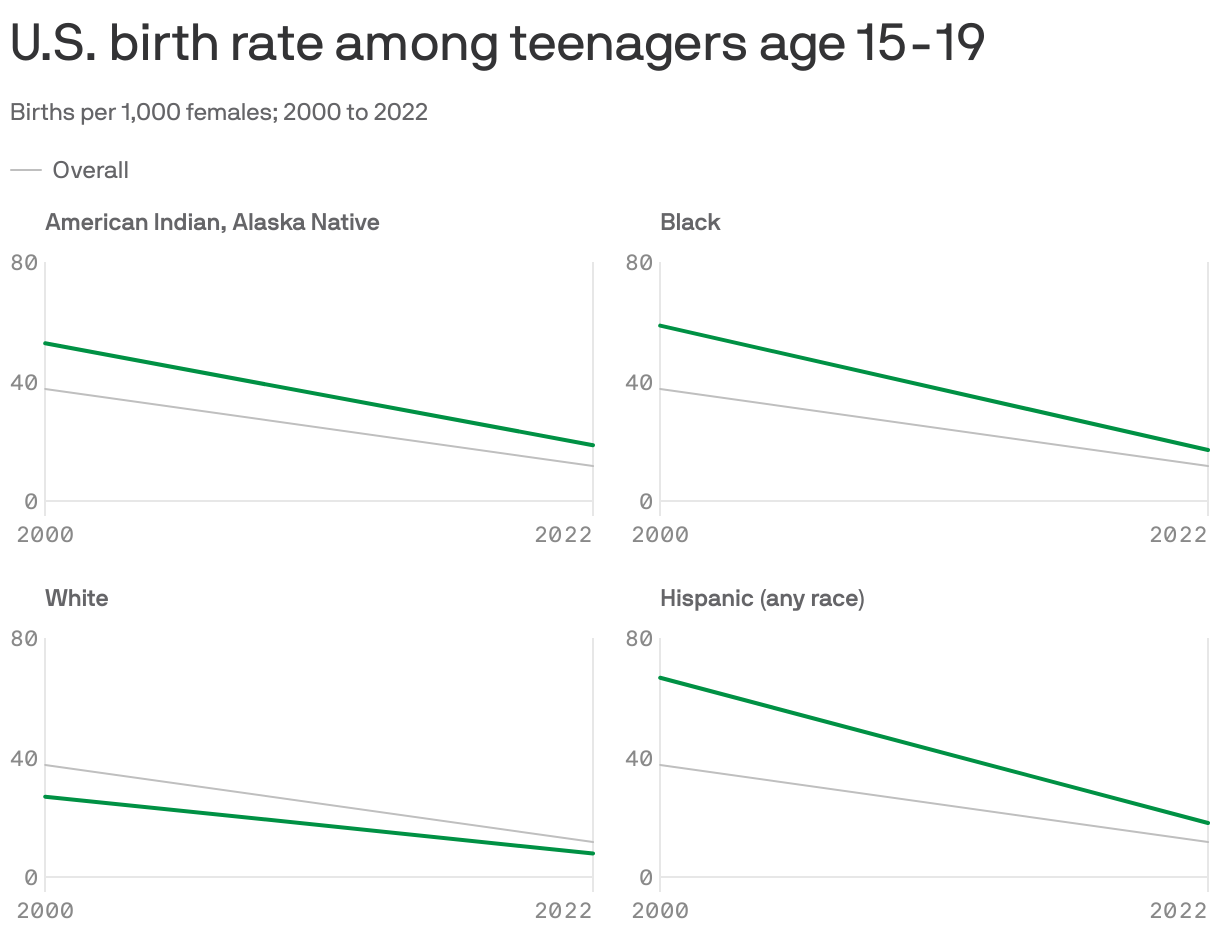
Data: National Vital Statistics System; Chart: Axios Visuals
Teen birth ratesin the United States have continued to decline significantly across the board since 2000, but racial and ethnic disparities still exist, federal data released Wednesday shows.
Why it matters: Decreasing teen births can positively affect adolescents' physical and mental health, lifetime income and education attainment, according to research organization Child Trends.
Taking extended time off to welcome a newborn is crucial for the health of parents, babies and businesses, but the U.S. still has no federal law mandating paid family leave.
Why it matters: Six months leave or more — paid — is associated with significantly better physical and mental health outcomes for mothers, researchsuggests.