Births dropped in 2023, ending pandemic baby boom

Add Axios as your preferred source to
see more of our stories on Google.
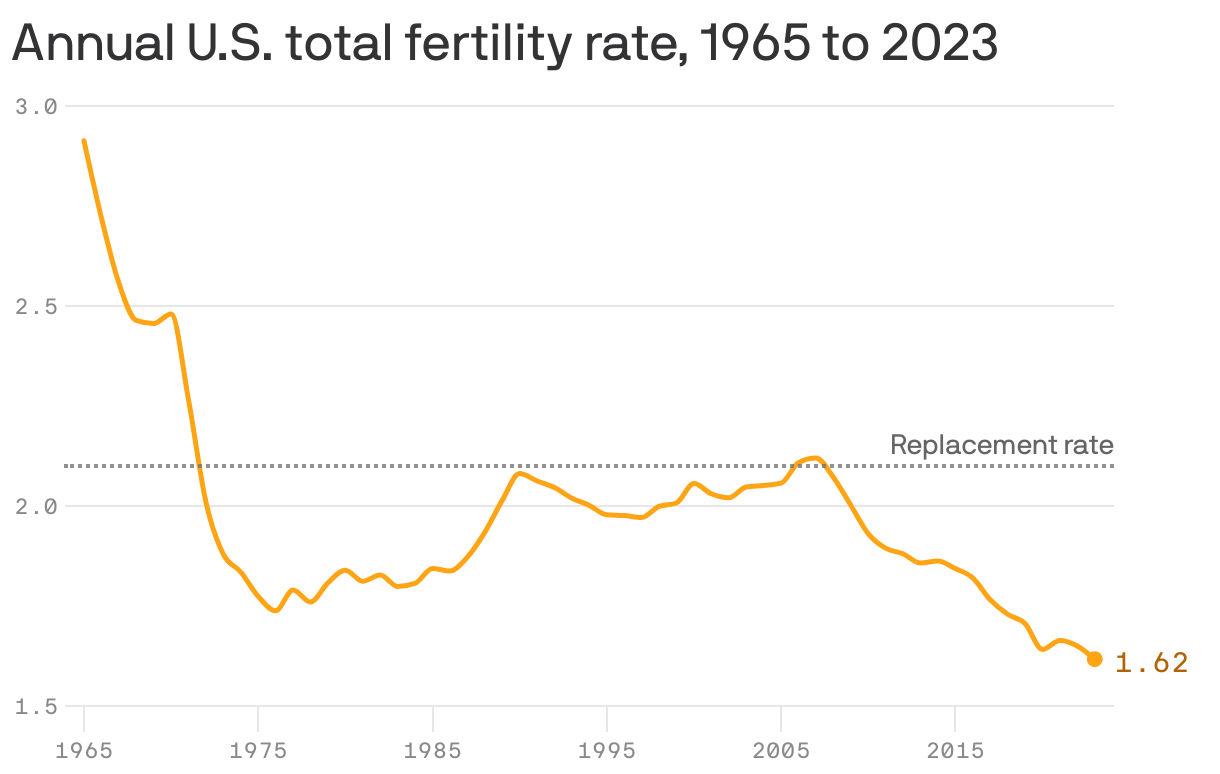
The total number of U.S. births dropped in 2023, bringing an end to a mini-baby boom that began in the pandemic.
Why it matters: The drop in births helped plunge the U.S. fertility rate to its lowest point in nearly a century.
The big picture: Nearly 3.6 million babies were born in the U.S. last year, a 2% drop from 2022, according to provisional data from the Centers for Disease Control and Protection released Thursday.
- The U.S. fertility rate in 2023 amounted to about 1.62 births per woman — well below the "replacement rate" of 2.1 that would allow a generation to completely replace itself.
Zoom in: Birth rates fell among adult women younger than 40 and were unchanged for women in their 40s, the data shows.
- The birth rate among teens aged 15-19 dropped 3%.
- Birth rates declined across nearly all racial groups.
State of play: The provisional data shows a return to a broader downward trend in the nation's birth rate.
- The total number of births in the U.S. declined an average of 2% per year from 2015 to 2020, then rose slightly in 2021 — but has now fallen off again.
Between the lines: The drop in birth rates comes as many Americans have struggled to come to grips with the impacts of inflation, high food prices, and high rents.
Go deeper: Remote work may have fueled a baby boom among U.S. women
